














Introduction
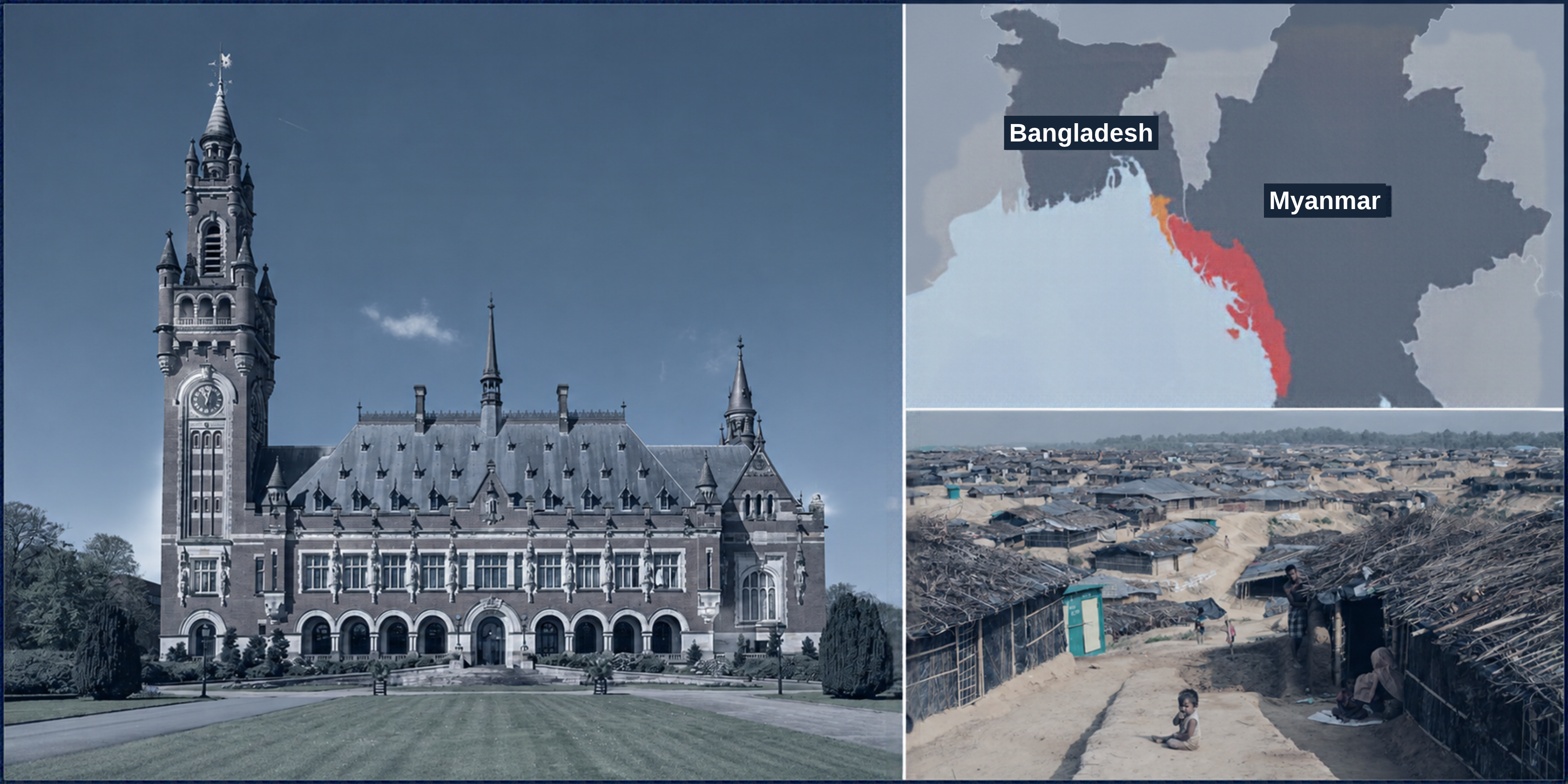
In a landmark ruling on November 19, 2026, the International Court of Justice (ICJ) held Myanmar responsible for committing genocide against the Rohingya Muslim minority. This decision is significant as it marks the first instance in which the principal judicial organ of the United Nations has held a state directly accountable for genocide. According to UN News, the President of the ICJ stated following the ruling that Myanmar had failed to fulfill its obligation to prevent and punish genocide. The President further detailed how the Myanmar military had employed "extreme violence" against predominantly Muslim Rohingya communities in Rakhine State, a primary administrative division of the country, formerly known as Arakan State.[1] The UN News also reports that instead of holding a traditional media Q&A press conference, the ICJ President delivered a nearly three-hour public reading of the judgment. In this context, it is noted that the President of the International Court of Justice stated, in essence, that Myanmar has violated its obligations under the Genocide Convention by failing to prevent acts of atrocity, failing to punish the perpetrators, and failing to enact the necessary national legislation.
Summary background of the case
The legal proceedings in this matter stem from a brutal military crackdown launched by the Myanmar armed forces in the northern Rakhine State in August 2017. Following attacks on police outposts and a military base, the Myanmar army initiated a "clearance operation" in northern Rakhine State, and as a result, thousands of Rohingya Muslims were forced to flee the country; thousands of them lost their lives. Survivors have reported mass killings, rapes, and the burning of villages to the international community. Further information regarding the events that took place during this period and the suffering endured by Rohingya people can be found in one of our 2017 AVİM analyses, titled "Arakan and the Plight of the Rohingya: Conflict Under an Umbrella of Definitions."[2] In this regard, the UN Human Rights Council, on 24 March 2017, with its resolution 34/22, titled “Situation of human rights in Myanmar,” established an independent international fact-finding mission on Myanmar. The said mission is tasked with establishing the facts and circumstances of the alleged human rights violations by military and security forces, and abuses, in Myanmar, in particular in Rakhine State, including but not limited to arbitrary detention, torture and inhuman treatment, rape and other forms of sexual violence, extrajudicial, summary or arbitrary killings, enforced disappearances, forced displacement and unlawful destruction of property, with a view to ensuring full accountability for perpetrators and justice for victims. The said mission presented the fact-finding report to the UN Human Rights on 27 August 2018, which concluded that there is sufficient information to warrant the investigation and prosecution of senior officials in the Myanmar military chain of command, so that a competent court can determine their liability for genocide in relation to the situation in Rakhine State. Detailed information on this matter can also be found in our AVIM analysis dated 12.09.2018, titled "UN Fact-Finding Mission Report On Myanmar Confirms the Importance of the Genocide Convention."[3]
Subsequently, on November 11, 2019, The Gambia, backed by the 57-member Organization of Islamic Cooperation, filed a case at the ICJ under Article IX of the 1948 Genocide Convention. Although The Gambia was not directly affected, it invoked erga omnes obligations, arguing that all signatories have a duty to prevent and punish genocide. In January 2020, the ICJ ordered legally binding provisional measures requiring Myanmar to protect the Rohingya and preserve evidence. After rejecting Myanmar’s preliminary jurisdictional objections in 2022 and holding merits hearings in January 2026, the court delivered its final, unappealable judgment in November 2026.
Explanation of the Main Points of the International Court of Justice Ruling:
As per the International Court of Justice Press Release No. 2026/30, dated 19 November 2026, some of the main operative clauses of the Court’s Judgment, which is final, without appeal and binding on the Parties, are as follows: [4]
- By nine votes to six, finds that the Republic of the Union of Myanmar has committed genocide against the Rohingya group in northern Rakhine State, in violation of its obligations under the Convention on the Prevention and Punishment of the Crime of Genocide;
- By nine votes to six, finds that the Republic of the Union of Myanmar has violated its obligation, under the Convention on the Prevention and Punishment of the Crime of Genocide, to prevent the commission of genocide by individuals alongside its security forces;
- By fourteen votes to one, finds that the Republic of the Union of Myanmar has not directly and publicly incited the commission of genocide against the Rohingya group by private persons in northern Rakhine State in violation of its obligation under the Convention on the Prevention and Punishment of the Crime of Genocide;
- By eleven votes to four, finds that the Republic of the Union of Myanmar has violated its obligation to punish genocide and other acts enumerated under Article III of the Convention on the Prevention and Punishment of the Crime of Genocide;
- By fourteen votes to one, finds that the Republic of the Union of Myanmar has violated its obligation under the Convention on the Prevention and Punishment of the Crime of Genocide to enact the necessary legislation to give effect to the provisions of the Convention;
- By fourteen votes to one, decides that the Republic of the Union of Myanmar must cease any ongoing violation of its obligations under Article V of the Convention on the Prevention and Punishment of the Crime of Genocide by enacting legislation giving full effect to its obligations under the Convention;
- By thirteen votes to two, decides that the Republic of the Union of Myanmar must take immediate and effective steps to investigate all persons reasonably suspected of having committed acts contrary to Article III of the Convention on the Prevention and Punishment of the Crime of Genocide in relation to the 2017 clearance operations and, if warranted, to prosecute and punish them;
- By nine votes to six, decides that the Republic of the Union of Myanmar must provide assurances and guarantees of non-repetition of the violations of its obligations under the Convention on the Prevention and Punishment of the Crime of Genocide and prevent similar violations from occurring in the future;
- By ten votes to five, decides that the Republic of the Union of Myanmar is under an obligation to adopt the measures of restitution defined in paragraph 615 of the present Judgment;
- By ten votes to five, decides that the question of the amount and modalities of compensation or other reparation due to the Rohingya group and its members shall be settled by the Court, and that, to this end, the Republic of the Union of Myanmar shall, within a period of two years of the delivery of the present Judgment, transmit to the Court the report described in paragraph 625; and reserves for this purpose the subsequent procedure in the case;
- By eleven votes to four, finds that the Republic of the Union of Myanmar has violated its obligation under paragraph 86 (3) of the Order of 23 January 2020 indicating provisional measures to take effective measures to prevent the destruction and ensure the preservation of evidence related to allegations of acts within the scope of Article II of the Convention on the Prevention and Punishment of the Crime of Genocide;
- Unanimously, rejects all other submissions of the Republic of The Gambia.
As can be understood from the above judgment, the court ruled for the first time that a state itself committed genocide under Article II of the Convention, alongside failing to prevent and punish it. Consequently, the ruling acknowledges direct state responsibility about genocide. The court, by a 13–2 vote, orders Myanmar to investigate and prosecute perpetrators, provide guarantees of non-repetition, ensure the safe and voluntary return of displaced Rohingya, and pay reparations, giving Myanmar two years to report back on restitution and compensation modalities.
In our judgment, this decision by the International Court of Justice, which for the first time since the adoption of the 1948 Genocide Convention has held a state directly responsible for committing genocide, deserves to be described as a historic decision. By holding a state party to the Convention directly liable, the ruling establishes that state institutions and militaries cannot hide behind the actions of individual commanders when systematic atrocities occur.
Undoubtedly, detailed legal assessments regarding this decision will be made in the coming days. It is also likely that these assessments will have a significant impact on other ongoing genocide cases before the International Court of Justice—such as the case brought by South Africa against Israel concerning Gaza. Viewed from this perspective, the significance of the International Court of Justice’s ruling on Myanmar becomes even greater.
*Picture: Aljazeera, Wikipedia and Wikipedia
[1] United Nations. UN News Global Perspective Human Stories.” World’s top court finds Myanmar guilty of genocide against Rohingya”. 19 November 2026/ Law and Crime Prevention.
[2] Teoman Ertuğrul Tulun. Arakan and the Plight of the Rohingya: Conflict Under an Umbrella of Definitions. 09.10.2017. AVİM Analysis No: 2017/ 30, DOI: 10.5281/ZENODO.24458111, https://avim.org.tr/en/Analiz/ARAKAN-AND-THE-PLIGHT-OF-THE-ROHINGYA-CONFLICT-UNDER-AN-UMBRELLA-OF-DEFINITIONS
[3] Teoman Ertuğrul Tulun. UN Fact-Finding Mission Report On Myanmar Confirms the Importance of the Genocide Convention. 12.09.2018. AVİM Analysis No: 2018/47 , Doi: 10.5281/zenodo.24458560 , https://avim.org.tr/en/Yorum/UN-FACT-FINDING-MISSION-REPORT-ON-MYANMAR-CONFIRM-THE-IMPORTANCE-OF-GENOCIDE-CONVENTION
[4] ICJ Press Release No. 2026/30, 19 November 2026. Application of the Convention on the Prevention and Punishment of the Crime of Genocide -(The Gambia v. Myanmar: 11 States intervening) The Court delivers its Judgment on the merits. https://www.icj-cij.org/sites/default/files/case-related/178/178-20261119-pre-01-00-en.pdf
© 2009-2025 Center for Eurasian Studies (AVİM) All Rights Reserved
No comments yet.
-
 THE EUROPEAN PARLIAMENT RESOLUTION AND THE TERRORIST ATTACK AT CHRISTCHURCH
Teoman Ertuğrul TULUN 15.03.2019 -
 WORRYING RISE IN ANTI-MUSLIM RACIST DISCOURSE IN INDIA
Teoman Ertuğrul TULUN 29.11.2022 -
 JOE BIDEN’S STATEMENT ON 1915 EVENTS: PURPOSEFUL POLITICAL ACTIONS MAY CAUSE UNANTICIPATED CONSEQUENCES, AN ANALYSIS FROM THE SOCIOLOGICAL VIEWPOINT
Teoman Ertuğrul TULUN 03.05.2021 -
 DISTORTING THE HISTORY THROUGH THE REALNESS OF NAİM BEY
Teoman Ertuğrul TULUN 04.01.2017 -
 POPE FRANCIS’ INTERVIEW: RELIGIOUS DISCRIMINATION AGAINST BUDDHISTS, SHAMANS, AND MUSLIMS IN THE HOPES OF CHRISTIAN UNITY
Teoman Ertuğrul TULUN 26.12.2022
-
ECONOMIC CRISIS IN THE EUROPEAN UNION AND THE GREEK ADMINISTRATION OF SOUTHERN CYPRUS
Alev KILIÇ 14.01.2013 -
 EUROPE AND THE EUROPEAN UNION - THE EUROPEAN SEGREGATION
Alev KILIÇ 29.01.2018 -
 COMMEMORATIVE STAMPS FOR GULBENKIAN
AVİM 19.04.2019 -
 TURBULENT TIMES IN KYRGYZSTAN
Turgut Kerem TUNCEL 14.12.2020 -
 THE 2020 PRESIDENTIAL ELECTIONS IN MOLDOVA: A NEW POLITICAL CONTEXT IN THE POST-SOVIET SPACE?
Turgut Kerem TUNCEL 02.12.2020
-
25.01.2016
THE ARMENIAN QUESTION - BASIC KNOWLEDGE AND DOCUMENTATION -
12.06.2024
THE TRUTH WILL OUT -
27.03.2023
RADİKAL ERMENİ UNSURLARCA GERÇEKLEŞTİRİLEN MEZALİMLER VE VANDALİZM -
17.03.2023
PATRIOTISM PERVERTED -
23.02.2023
MEN ARE LIKE THAT -
03.02.2023
BAKÜ-TİFLİS-CEYHAN BORU HATTININ YAŞANAN TARİHİ -
16.12.2022
INTERNATIONAL SCHOLARS ON THE EVENTS OF 1915 -
07.12.2022
FAKE PHOTOS AND THE ARMENIAN PROPAGANDA -
07.12.2022
ERMENİ PROPAGANDASI VE SAHTE RESİMLER -
01.01.2022
A Letter From Japan - Strategically Mum: The Silence of the Armenians -
01.01.2022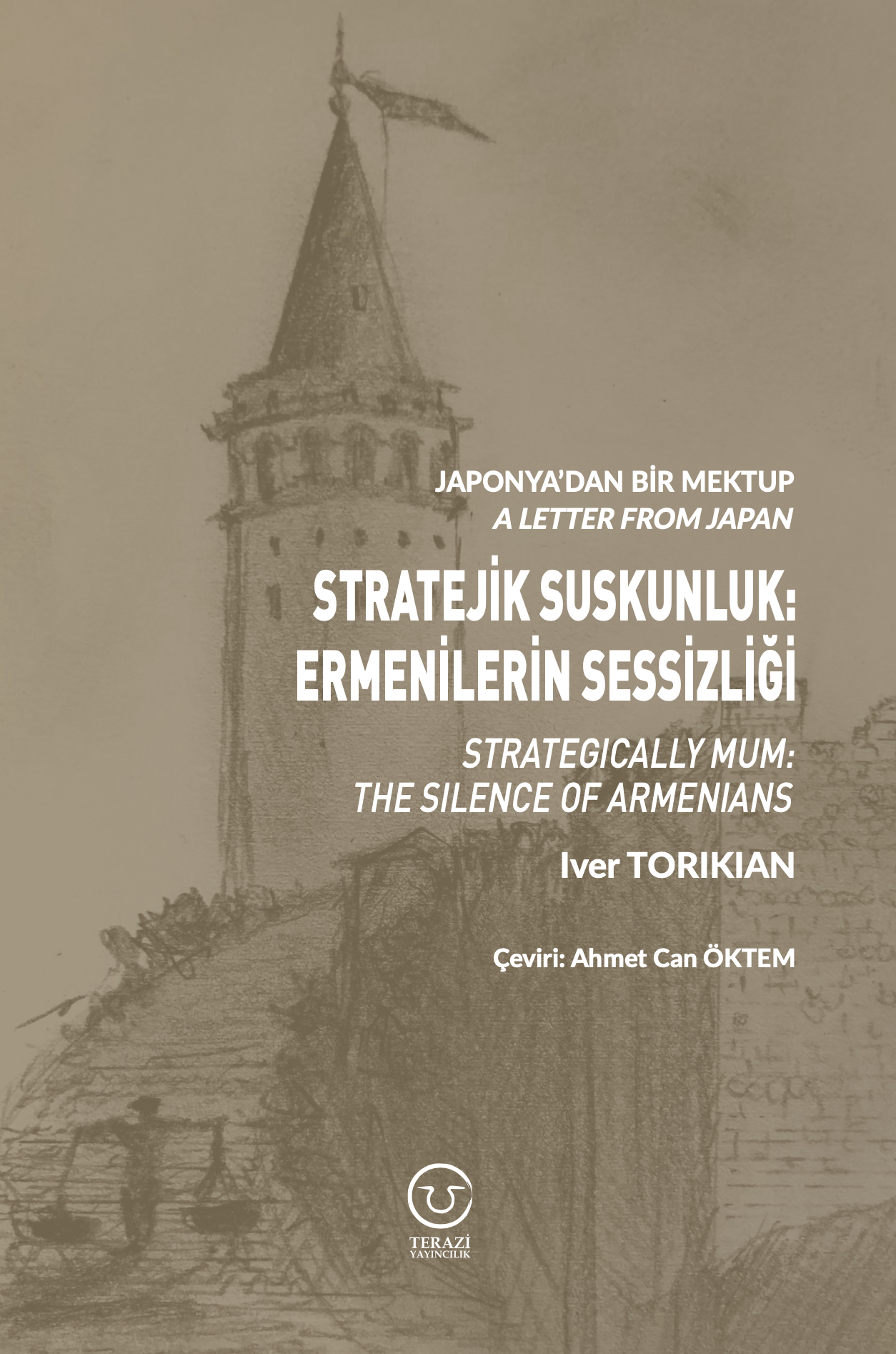
Japonya'dan Bir Mektup - Stratejik Suskunluk: Ermenilerin Sessizliği -
03.06.2020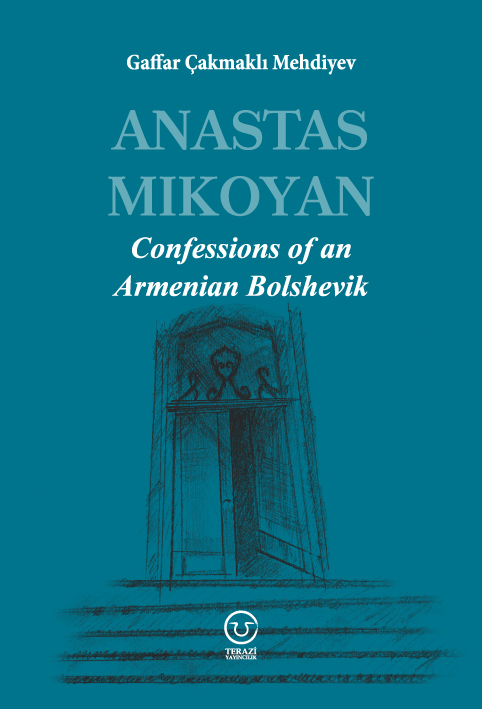
Anastas Mikoyan: Confessions of an Armenian Bolshevik -
08.04.2020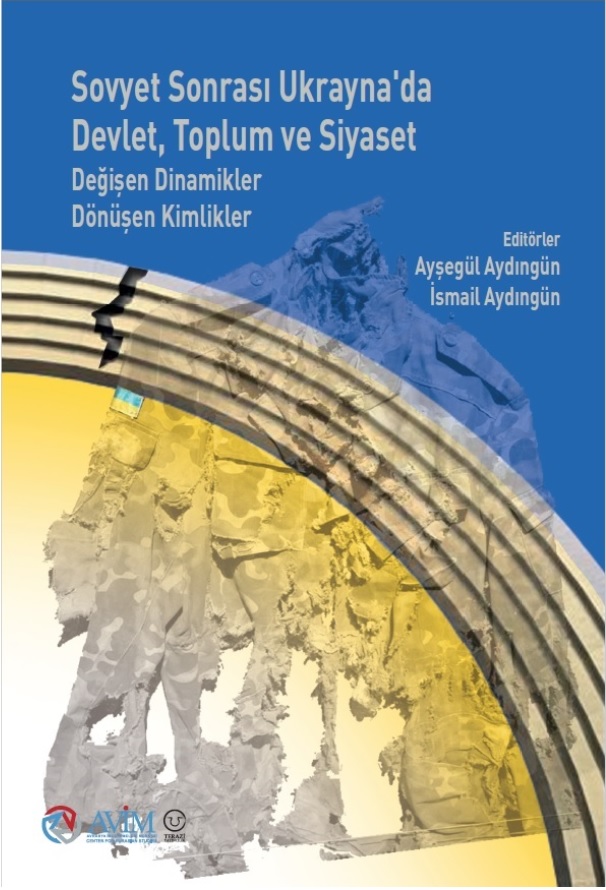
Sovyet Sonrası Ukrayna’da Devlet, Toplum ve Siyaset - Değişen Dinamikler, Dönüşen Kimlikler -
12.06.2018
Ermeni Sorunuyla İlgili İngiliz Belgeleri (1912-1923) - British Documents on Armenian Question (1912-1923) -
02.12.2016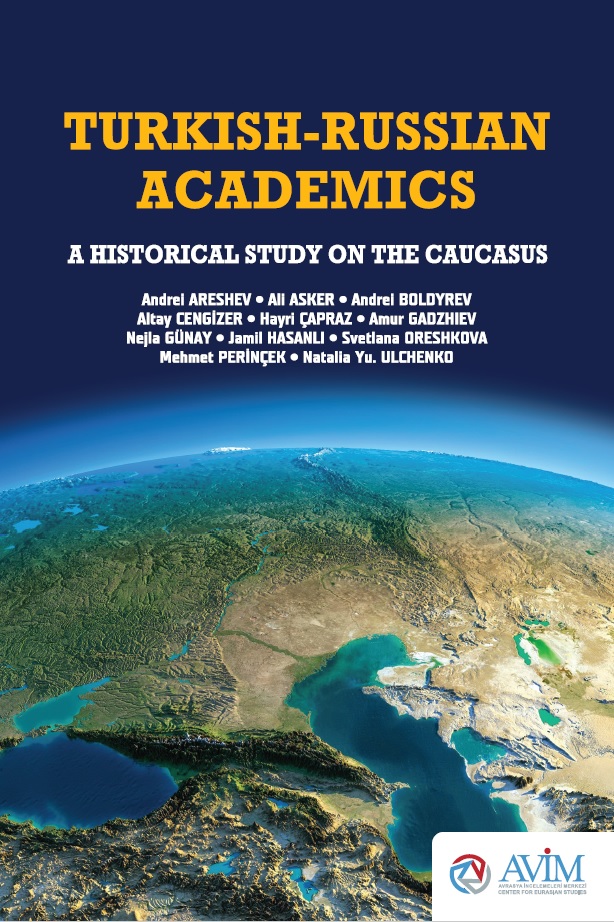
Turkish-Russian Academics: A Historical Study on the Caucasus -
01.07.2016
Gürcistan'daki Müslüman Topluluklar: Azınlık Hakları, Kimlik, Siyaset -
10.03.2016
Armenian Diaspora: Diaspora, State and the Imagination of the Republic of Armenia -
24.01.2016
ERMENİ SORUNU - TEMEL BİLGİ VE BELGELER (2. BASKI)
-
AVİM Conference Hall 24.01.2023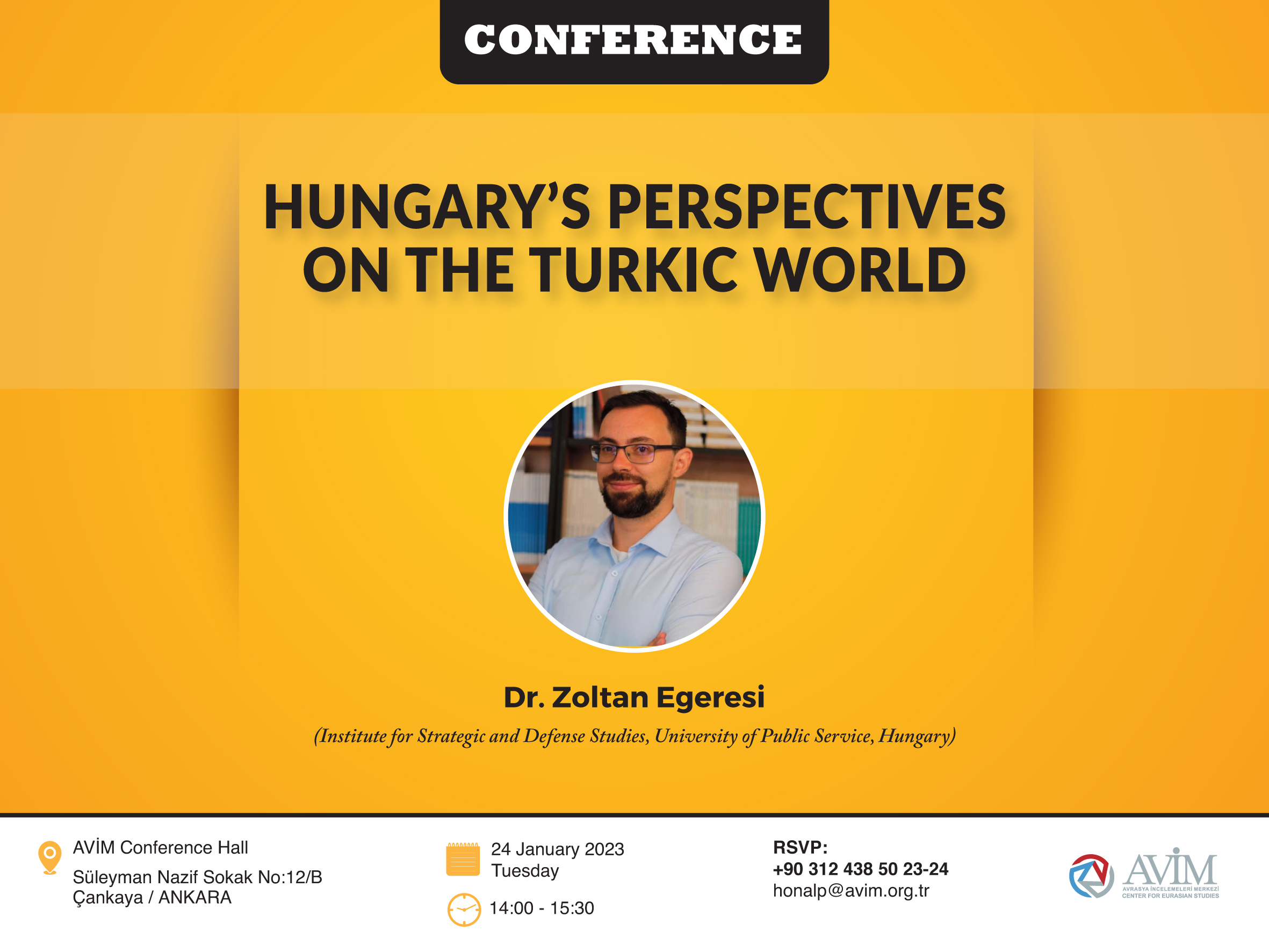
CONFERENCE TITLED “HUNGARY’S PERSPECTIVES ON THE TURKIC WORLD"