In our commentary dated February 12, 2026, we provided information about the report entitled "Under Destruction," prepared to guide deliberations at the 62nd Munich Security Conference, and explained our assessments of the report. [1] Following the completion of the conference, detailed information on the speeches by the key speakers, the course of deliberations, and its outcomes, together with our assessments, was presented in our comprehensive analysis dated February 20, 2026.[2]
The Conference Secretariat recently published a debrief regarding the assessment and key takeaways of the conference, entitled “An Order Broken, Bruised, or Bolstered? Key Takeaways From the Munich Security Conference 2026.” [3] In consonance with the views presented in our referred AVIM analysis, the debrief illustrates, with examples, the different perspectives put forward at the conference regarding a rules-based international order. Per debrief, in conference, some argued that the international order has been damaged or has completely collapsed. Others expressed the belief that it is possible to repair it, and work on this has already begun. Debrief notes that, despite these differing interpretations, the responses converge on two types of urgent efforts: building stronger defence mechanisms in Europe to protect cherished values and rules, and forming new coalitions to fill at least some of the gaps in global governance.
Debrief, similar to our AVİM analysis, brings to the forefront German Chancellor Friedrich Merz's disagreement with the conference report's title—that the rules-based international order is under destruction—and his assertion that this order is, in essence, no longer exist. It also comprehensively considers Merz's idea of creating new coalitions and formats to fill the existing void.
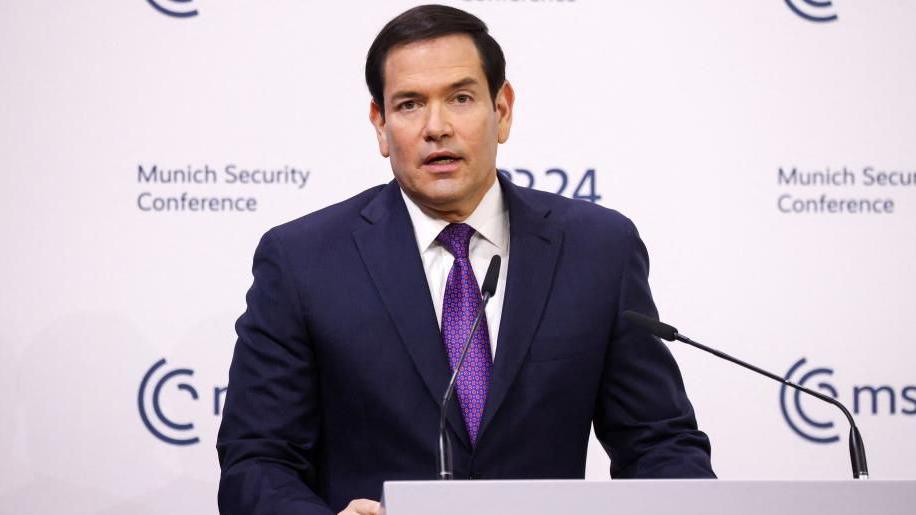
Debrief again similarly, underlines that while Secretary of State Marco Rubio's speech was tone-wise different from Vice President J.V. Vance's rather harsh and offensive speech at last year's conference. Nevertheless, it states that Rubio’s speech was just as hard on substance as JD Vance's 2025 speech.
The debrief summarizes the key takeaways from the conference in four points. The first is that the conference involves a comprehensive discussion on the future of the rules-based international order; the second is that various views are put forward regarding whether the current order still exists and what its future holds. This point is illustrated by the "Broken, Bruised, or Bolstered" trilogy. The third point is formulated as "efforts to build better lines of defence to protect cherished values and rules." In this context, debrief specifically addresses how Europeans articulate comprehensive ideas about how their continent can manifest itself in a world shaped by power politics, and touches on disagreements between US and European leaders over what constitutes the West and the values that should underpin the international order. The third point refers specifically to the EU Treaty’s mutual defense clause (Article 44/7) and the nuclear deterrence issue. As to the nuclear deterrence, it states that “Leaders, notably of Germany, France, and the United Kingdom, emphasized the need for dialogue on the European dimension of the French and British nuclear deterrent.”
The fourth and last point is “formation of new coalitions and formats that could bring together those who are willing to fortify and reinvent efforts of global problem-solving.” It will be recalled that German Chancellor Merz proposed building a strong network of global partnerships. In this respect, he stated that “ No matter how important European integration and the transatlantic partnership will remain for us, they will no longer be enough to preserve our freedom. Partnership is not an absolute term here. A partnership does not require total agreement on all values and interests”[4]. In expressing this view, Chancellor Merz specifically mentioned Canada, Japan, Türkiye, India, Brazil, South Africa, and the Gulf countries by name.
As we stated in our referred AVIM analysis, this approach to forming new coalitions, while initially giving the impression of valuing Türkiye, evokes an approach that does not consider Türkiye, a leading member of the NATO Alliance and whose EU membership has been pending for years, as part of Europe and indirectly considers it outside of Europe. Besides, it would be more appropriate to view this approach as a "sweet-coated" indirect exclusion of Türkiye from the European context, to approach it cautiously, and to continue pursuing policies that will strengthen Türkiye's "strategic autonomy" during a possible period of turmoil in the international order ahead.
*Picture: BBC
[3] Randolf Carr and Sophie Eisentraut, “An Order Broken, Bruised, or Bolstered? Key Takeaways From the Munich Security Conference 2026,” Munich: Munich Security Conference, Munich Security Debrief 1, February 2026, https://doi.org/10.47342/TSJU1651. DOI: 10.47342/TSJU1651
© 2009-2025 Center for Eurasian Studies (AVİM) All Rights Reserved
















 UN FACT-FINDING MISSION REPORT ON MYANMAR CONFIRM THE IMPORTANCE OF GENOCIDE CONVENTION
 POPE FRANCIS’ INTERVIEW: RELIGIOUS DISCRIMINATION AGAINST BUDDHISTS, SHAMANS, AND MUSLIMS IN THE HOPES OF CHRISTIAN UNITY
 AN EXEMPLARY FIGURE IN DIPLOMACY AND HISTORY: IN MEMORY OF RETIRED AMBASSADOR BİLAL ŞİMŞİR
 BOSNIA AND THE BALKANS: SECESSIONISM, EUROCENTRIC PARTITIONING
 JOE BIDEN’S STATEMENT ON 1915 EVENTS: PURPOSEFUL POLITICAL ACTIONS MAY CAUSE UNANTICIPATED CONSEQUENCES, AN ANALYSIS FROM THE SOCIOLOGICAL VIEWPOINT
 DISTURBING PUBLICATION TREND AT PRINCETON UNIVERSITY PRESS
 THE QUAD: TURNING POINT FOR THE INDO-PACIFIC
 VENEZUELAN CONGRESS SEEKS PROBE OF OPPOSITION LEADER OVER PROTESTS