














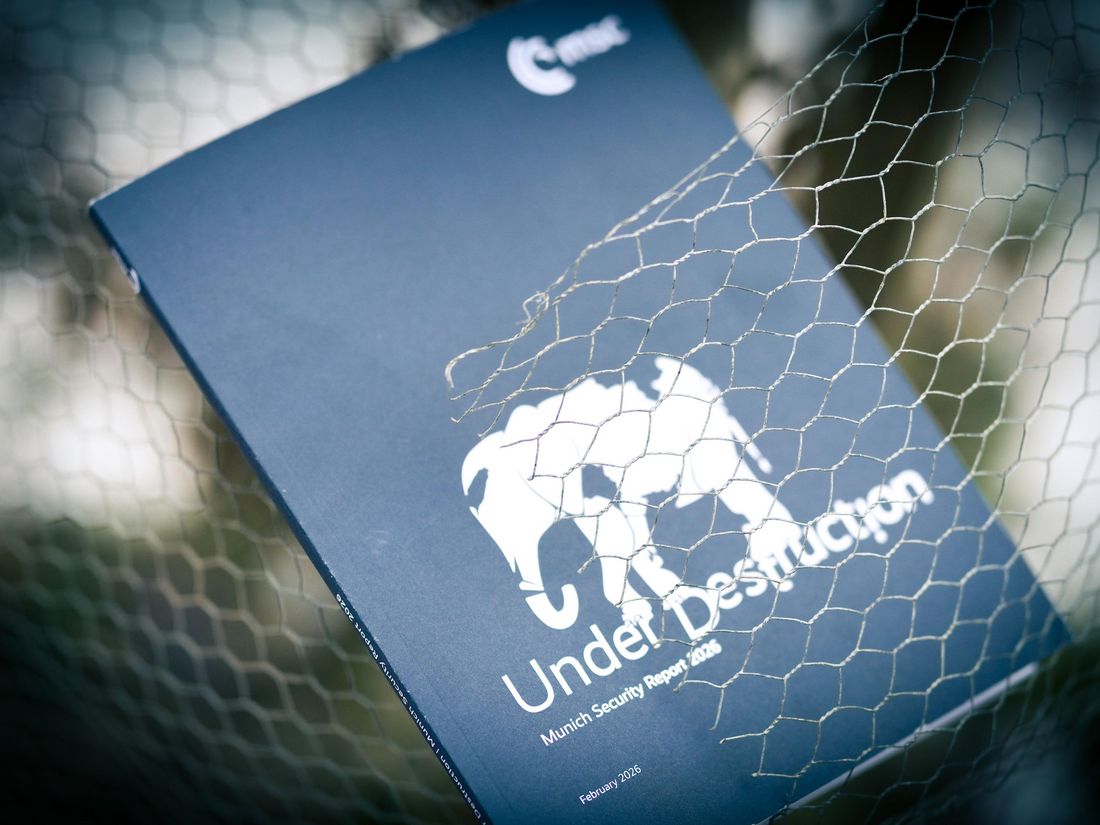
The 62nd Munich Security Conference, to be held between February 13-15, 2026, will take place at a time when long-standing alliances are being questioned, the rules-based international order is eroding, instability is increasing, conflicts are escalating around the world, and the impression that the international order is undergoing a period of rupture is growing stronger. The report traditionally prepared to guide the conference proceedings was recently published under the title of "Under Destruction."[1]
The report essentially argues that the international order has entered a period of destructive politics, that political forces preferring destruction over reform are gaining momentum in many Western societies, and that these forces, acting out of anger and regret towards the liberal trajectory their societies have followed, aim to destroy structures they believe will prevent the emergence of stronger and more prosperous nations, and have adopted destructive agendas to this end. In this context, the report argues that widespread disappointment with the performance of democratic institutions and widespread erosion of confidence in meaningful reforms and political course corrections have led to political structures appearing excessively bureaucratized and judicialized, both domestically and internationally. and that the perception has grown stronger that it is now impossible to carry out reforms that would better serve the needs of the people. It is noted that " the result is a new climate in which those who employ bulldozers, wrecking balls, and chainsaws are often cautiously admired if not openly celebrated.”
The report states that the most powerful figures undermining existing rules and institutions are US President Donald Trump and his supporters. Washington's "bulldozer policy" promises to break institutional inertia and find solutions to gridlock through force and in this respect Washington's “breakthroughs on NATO defense spending targets and on a ceasefire between Israel and Hamas are cases in point.” However, it is unclear whether this destruction is actually paving the way for policies that will increase public security, welfare, and freedom. Attention is drawn to the fact that this situation is giving rise to a world order shaped by commercial agreements rather than principled cooperation, private interests rather than public interests, and regional hegemonies rather than universal norms.
The report essentially emphasizes that "more than 80 years after construction began, the US-led post-1945 international order is now under destruction."
The report states that the magnitude of the challenges faced must be acknowledged, but also suggests that there are still actors invested in a rules-based order, that these actors are organizing, attempting to control the effects of disruptive policies, and exploring new approaches independent of Washington's leadership. It stresses that if this is not done and destructive policies are allowed to continue unchecked, these actors will be " at the mercy of great power politics and should not be surprised to find cherished rules and institutions in rubble." To control the policy of destruction, it argues that these actors must “to step up – above all, by significantly investing in their own power resources and pooling them through closer cooperation [and they] also have to credibly demonstrate that meaningful reforms and political course corrections are viable – and much more likely to satisfy growing demands for improvements than a policy of widespread destruction.”
Taken as a whole, it is possible to say that the report prepared by the Munich Security Conference shows that Europe has been forced to accept as a "bitter truth" that it must be more assertive and, especially militarily, more independent from an authoritarian US administration that no longer shares its commitment to liberal democratic norms and values. In this context, the report emphasizes that, as Europeans have recently been forced to accept, rejecting trade agreements that conflict with open trade rules or speaking out against the blatant violation of other countries' sovereignty is nearly impossible if you are heavily dependent on the military aid of a country that uses coercive tactics and undermines existing norms. It notes that “for Europeans and some of their partners in the Indo-Pacific, who have long relied on Washington to do the heavy lifting of defending their interests, this is a particularly painful realization. ”
The final paragraph of the report's introduction clearly articulates the critical juncture we have reached:
“In an era of wrecking-ball politics, those who simply stand by are at constant risk of entombment. And given the amount of demolition already happening, it is no longer enough to only engage in reactive, small-scale efforts to reconstruct the old status quo. Those who oppose the politics of destruction have to fortify essential structures, draw up new, more sustainable designs, and become bold builders themselves. Too much is at stake. In fact, everything is at stake.”[2]
In the context of the 2026 Munich Security Report summarized above, we at AVİM would like to remind that we have long been emphasizing the importance of the concept of "strategic autonomy" for Türkiye, and we present below the final section of our commentary on this subject dated September 23, 2025:
“We believe that our claim that the structure and normative foundations of the international order that has prevailed since World War II are being fundamentally questioned is no longer a controversial issue, but a reality that deserves in-depth study. Our observations and interpretations regarding the radical shifts in alliance models, development paradigms, and foreign policy orientations are no longer fanciful predictions, as some claim, but rather the reality of our times, which some find dreadful for the Eurocentric/Western-centric world order. It is not possible to build the future by ignoring these facts and burying our heads in the sand. Like any intellectual endeavour, these realities of the time must be discussed objectively, and new dimensions must be given to stereotyped approaches.” [3]
*Image: Security Conference
[1] Tobias Bunde and Sophie Eisentraut (eds.), Munich Security Report 2026: Under Destruction, Munich: Munich Security Conference, February 2026, https://doi.org/10.47342/JWIE5806.
[2] Munich Security Report 2026, p. 34.
[3] Teoman Ertuğrul Tulun. Constructive Eurasianism and a Look Back at the Past. Commentary No: 2025 / 85. 9/23/2025. https://avim.org.tr/tr/Yorum/YAPICI-AVRASYACILIK-VE-GECMISE-BAKIS-1
© 2009-2025 Center for Eurasian Studies (AVİM) All Rights Reserved
No comments yet.
-
 THE AUTONOMOUS TERRITORIAL UNIT OF GAGAUZIA AND MOLDOVA'S EU CANDIDACY
Teoman Ertuğrul TULUN 30.10.2025 -
 LAUSANNE AT 103: SELECTIVE ABIDANCE BY GREECE
Teoman Ertuğrul TULUN 24.07.2026 -
 DISTORTING THE HISTORY THROUGH THE REALNESS OF NAİM BEY
Teoman Ertuğrul TULUN 04.01.2017 -
 AN EXEMPLARY FIGURE IN DIPLOMACY AND HISTORY: IN MEMORY OF RETIRED AMBASSADOR BİLAL ŞİMŞİR
Teoman Ertuğrul TULUN 10.05.2024 -
 MADE-UP SOCCER TOURNAMENT IN NAGORNO-KARABAKH: AN ASSAULT ON THE TERRITORIAL INTEGRITY OF THE UN MEMBER STATES
Teoman Ertuğrul TULUN 19.02.2019
-
 THE NEW US CONGRESS WILL BE UNDER ARMENIAN INFLUENCE
AVİM 19.02.2021 -
 THE NEW REVENGE OF LAW ON POLITICS
Maxime GAUIN 25.10.2015 -
 PASHINYAN AND MNATSAKANYAN’S DISCREPANCIES REGARDING RELATIONS WITH TURKEY
Berfin Mahide ERTEKİN 02.10.2019 -
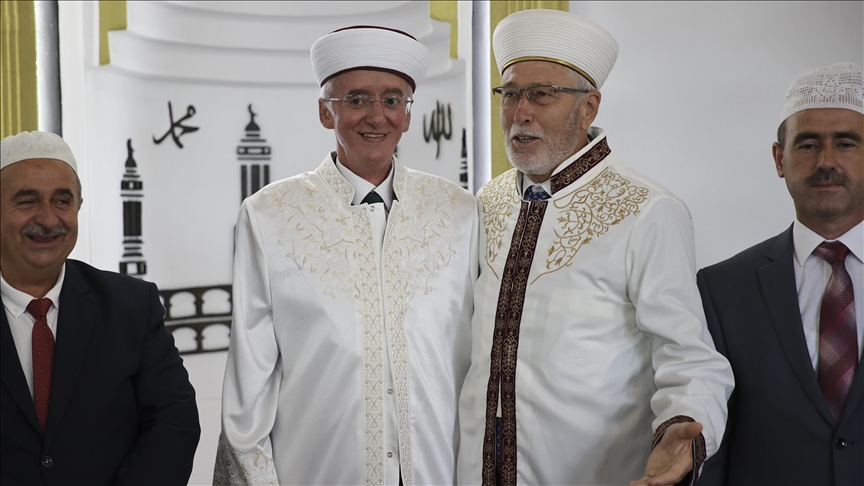 RELIGIOUS ASSIMILATION POLICIES IN GREECE: PRESSURE ON TURKISH MUFTIS AS A CONTINUATION OF MINORITY RIGHTS VIOLATIONS
Teoman Ertuğrul TULUN 21.08.2025 -
 PROSPECTS FOR PEACE IN UKRAINE? SUMMIT IN MINSK: FROM AUGUST 2014 TO FEBRUARY 2015
Maryna SHEVTSOVA 25.02.2015
-
25.01.2016
THE ARMENIAN QUESTION - BASIC KNOWLEDGE AND DOCUMENTATION -
12.06.2024
THE TRUTH WILL OUT -
27.03.2023
RADİKAL ERMENİ UNSURLARCA GERÇEKLEŞTİRİLEN MEZALİMLER VE VANDALİZM -
17.03.2023
PATRIOTISM PERVERTED -
23.02.2023
MEN ARE LIKE THAT -
03.02.2023
BAKÜ-TİFLİS-CEYHAN BORU HATTININ YAŞANAN TARİHİ -
16.12.2022
INTERNATIONAL SCHOLARS ON THE EVENTS OF 1915 -
07.12.2022
FAKE PHOTOS AND THE ARMENIAN PROPAGANDA -
07.12.2022
ERMENİ PROPAGANDASI VE SAHTE RESİMLER -
01.01.2022
A Letter From Japan - Strategically Mum: The Silence of the Armenians -
01.01.2022
Japonya'dan Bir Mektup - Stratejik Suskunluk: Ermenilerin Sessizliği -
03.06.2020
Anastas Mikoyan: Confessions of an Armenian Bolshevik -
08.04.2020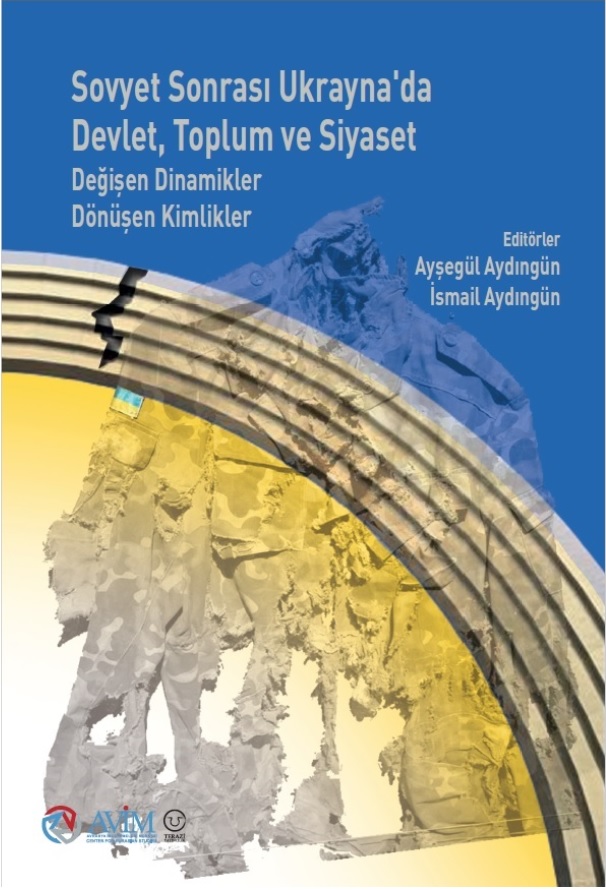
Sovyet Sonrası Ukrayna’da Devlet, Toplum ve Siyaset - Değişen Dinamikler, Dönüşen Kimlikler -
12.06.2018
Ermeni Sorunuyla İlgili İngiliz Belgeleri (1912-1923) - British Documents on Armenian Question (1912-1923) -
02.12.2016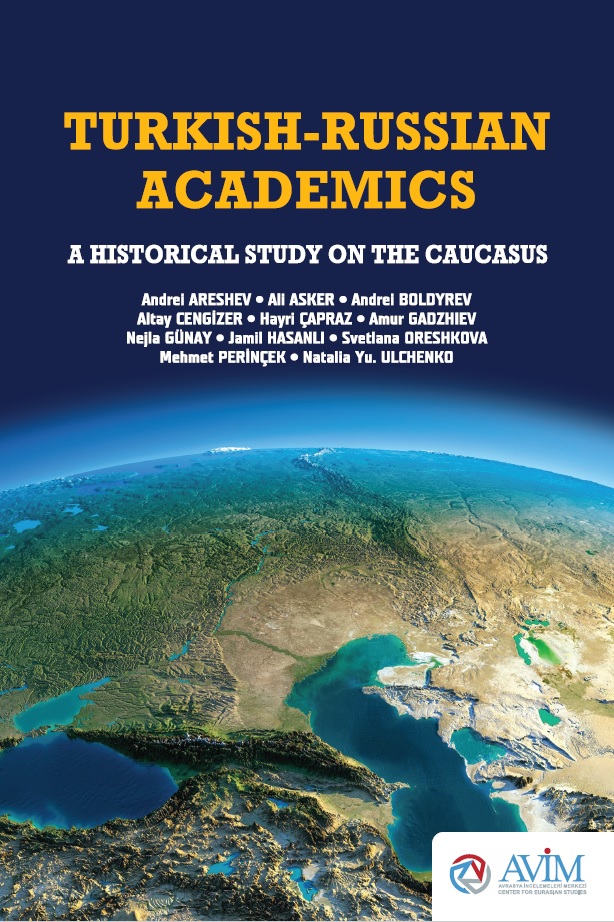
Turkish-Russian Academics: A Historical Study on the Caucasus -
01.07.2016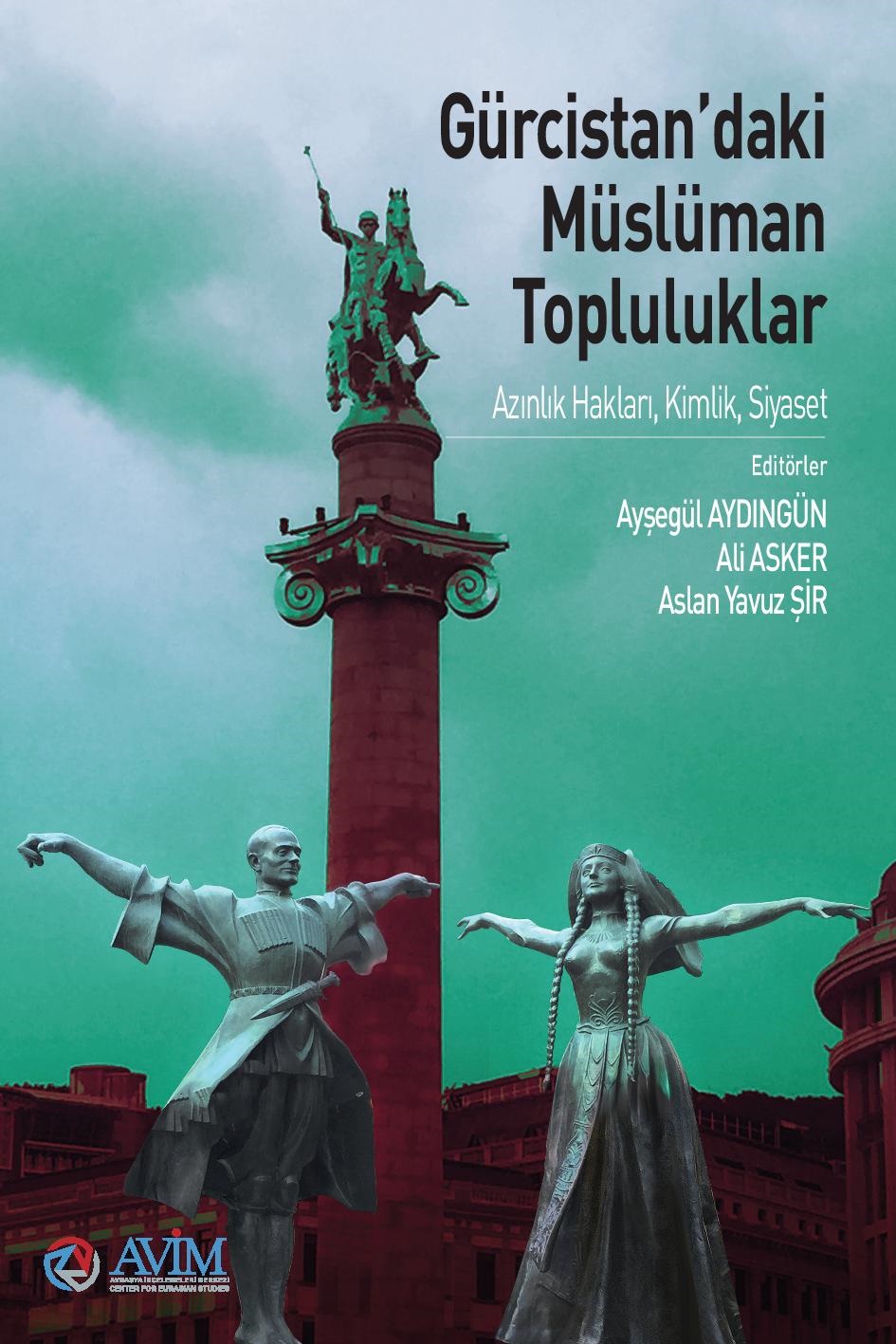
Gürcistan'daki Müslüman Topluluklar: Azınlık Hakları, Kimlik, Siyaset -
10.03.2016
Armenian Diaspora: Diaspora, State and the Imagination of the Republic of Armenia -
24.01.2016
ERMENİ SORUNU - TEMEL BİLGİ VE BELGELER (2. BASKI)
-
AVİM Conference Hall 24.01.2023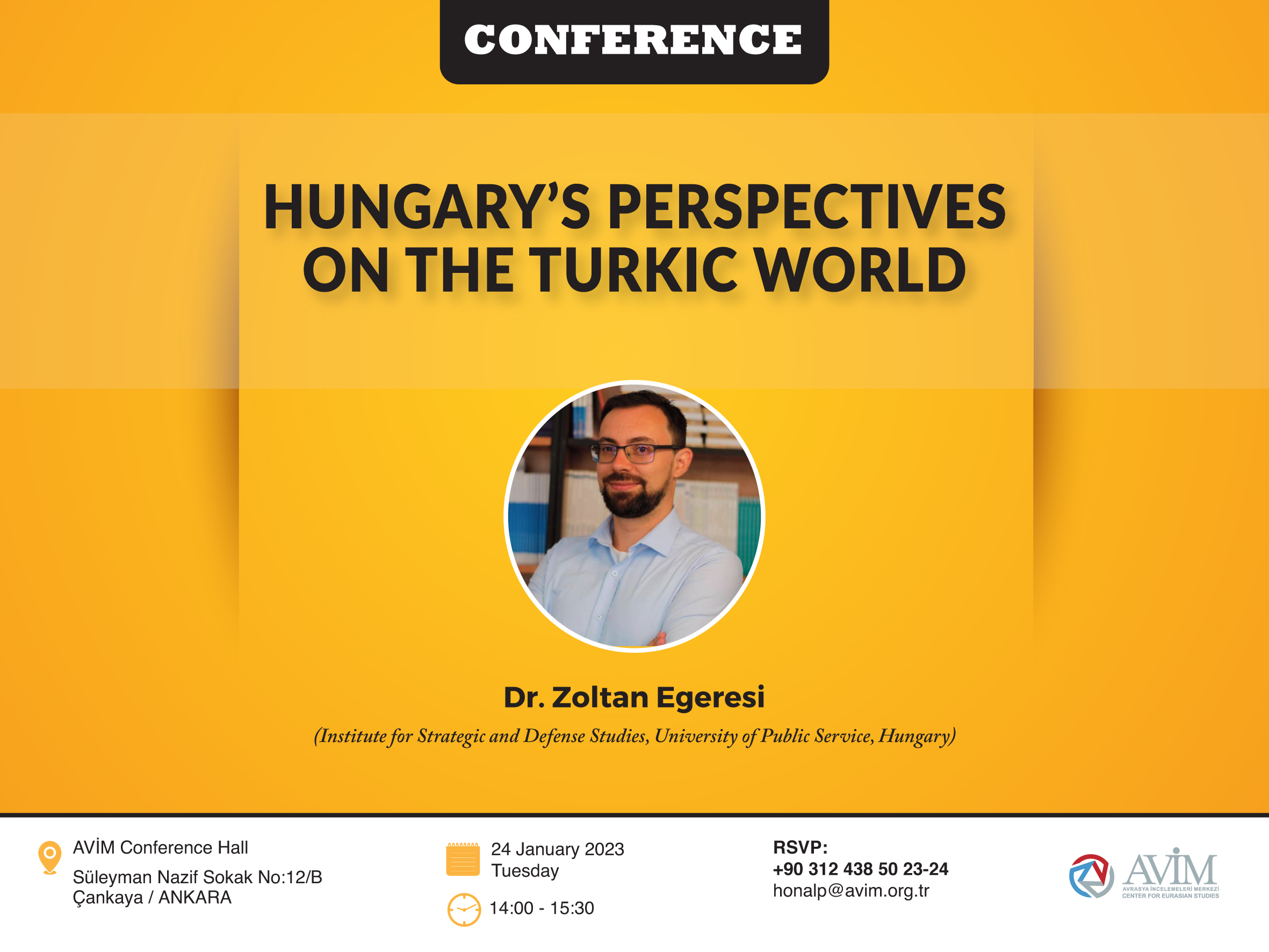
CONFERENCE TITLED “HUNGARY’S PERSPECTIVES ON THE TURKIC WORLD"