














1. Introduction: A Third Tanker Attack and a New Threshold in the Black Sea
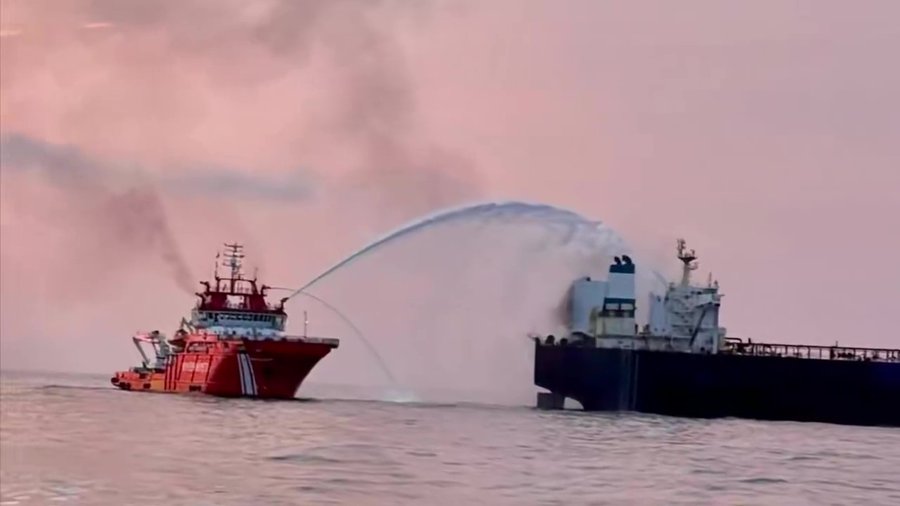
The series of attacks against the tankers KAIROS, VIRAT, and MIDVOLGA‑2 in the Black Sea within the span of a single week has marked a qualitatively new phase in the maritime dimension of the Russia–Ukraine war. While previous stages of the conflict had already seen port infrastructure hit and coastal areas threatened, the deliberate targeting of commercial tankers in or near Türkiye’s maritime jurisdiction off its northern shores has brought the risks directly to the vicinity of Turkish waters. In its public statements, the Presidency has characterised these actions as unacceptable threats to the safety of navigation and stated that attacks in Türkiye’s Exclusive Economic Zone (EEZ) cannot be excused under any circumstance. At the same time, the Ministry of Foreign Affairs has warned of “serious risks” to navigational, human, property, and environmental security and underlined that the war must not be allowed to spread across the entire Black Sea[1]. These official reactions signal that what is at stake is not merely the immediate security of individual vessels, but the integrity of a wider regional order.
AVİM's recent work on the Black Sea has consistently framed this order as resting on a set of legal and political ‘foundational pillars,’ with the Montreux Convention and Türkiye’s coastal‑state responsibilities at the centre. Earlier analyses have also underlined that the Black Sea was envisaged as a basin of economic cooperation and controlled militarisation, using legal restraint and functional interdependence to offset geopolitical rivalries. The present commentary builds on this line of argumentation by examining how the latest tanker attacks intersect with Ukraine's pressure strategy, Türkiye's EEZ and the Montreux‑centred legal architecture, and Türkiye's role as a balanced mediator.
2. Ukraine’s Logic in Targeting the Shadow Fleet and Its Limits
Ukraine’s recent strikes against tankers linked to the so-called “shadow fleet” in the Black Sea reflect a deliberate attempt to constrain the Russian Federation’s war economy and to raise the costs of sanctions evasion conducted via seaborne oil exports.[2] In Kyiv’s strategic calculus, targeting vessels such as the KAIROS, VIRAT, and MIDVOLGA‑2 is intended to undermine a critical revenue stream sustaining the war effort, while simultaneously signalling that Ukraine possesses the operational capability to project force into maritime domains previously regarded as relatively insulated from direct hostilities[3].
Yet, from the perspective of regional order, these operations inhabit a grey zone between action against “military‑relevant” targets and attacks on commercial shipping, particularly when they occur in or near the Exclusive Economic Zone of a coastal state such as Türkiye. As AVİM’s earlier analyses on Black Sea safety and the Ukraine–Russia war have underlined, any blurring of this boundary risks eroding the long-standing distinction between combatants and civilian maritime traffic and may trigger spirals of escalation that outstrip the original, ostensibly limited, objectives[4]. When commercial tankers become routine instruments of coercive signalling, the cumulative effect is to increase legal ambiguity, heighten insurance and navigational risks, and place additional strain on the already tested architecture centred on the Montreux Convention[5]. For this reason, even where Ukraine’s intent to curtail the Russian Federation’s sanction‑dodging capacity is understandable, the regional side‑effects of these methods underscore the urgent need—emphasised in AVİM commentary—to prioritise de-escalation at sea and to preserve the inviolability of merchant shipping as a functional norm[6].
3. Türkiye’s EEZ, Navigational Safety and the Montreux Regime
Whereas the previous section focused on Ukraine’s coercive logic, it is precisely at the level of coastal state rights and obligations that the recent incidents acquire their most significance for Türkiye. The attacks against the KAIROS, VIRAT, and subsequent tankers in or near Türkiye’s Exclusive Economic Zone are not merely another episode in the economic warfare between Ukraine and the Russian Federation; they directly implicate Türkiye’s responsibility to ensure the safety of navigation, the protection of human life at sea, and the preservation of the marine environment. In its official statements, the Ministry of Foreign Affairs has underlined that these incidents, occurring within Türkiye’s EEZ, create “serious risks” for navigational, life, property, and environmental security, and has stressed that the war must not be allowed to spread across the entire surface of the Black Sea[7]. This language reflects a legal and political red line: any normalisation of attacks on commercial vessels in such proximity to Turkish coasts is incompatible with Türkiye’s duties as a coastal state and with its long-standing policy of keeping the Black Sea outside the direct line of fire.
This coastal‑state perspective intersects with a broader architecture that AVİM has repeatedly described as the “foundational pillars of stability” in the Black Sea. The Montreux Convention is characterised as a cornerstone of maritime stability, precisely because it institutionalises a special regime for the Black Sea, including Turkish control of the Straits and strict limits on non‑littoral warships[8].
The same study links Montreux to the Black Sea Economic Cooperation (BSEC), arguing that legal restraints and economic interdependence were deliberately designed to transform the basin into a “zone of prosperity” rather than a theatre of great-power confrontation. When one situates the current tanker attacks alongside earlier practices such as blockades and mining, the cumulative picture is one of mounting pressure on this balanced order. The durability of the Montreux Convention depends on Türkiye’s ability to exercise stewardship in the Black Sea that both adapts to operational challenges and resists external or regional attempts at the informal revision of the regime’s core principles[9].
In this sense, Türkiye’s firm reaction to attacks in or near its EEZ should be read not only as the defence of immediate national interests, but also as an effort to cushion the strain on the Montreux-centred order and to preserve the legal‑strategic continuity that underpins any realistic de-escalation in the Black Sea.
4. Türkiye’s Balanced Mediator Role and Policy Message
From the outset of the full-scale invasion in 2022, Türkiye has articulated a position that combines explicit support for Ukraine's sovereignty and territorial integrity with a refusal to join the comprehensive sanctions regime imposed by many Western states on the Russian Federation[10]. This dual track has enabled Türkiye to maintain defence cooperation with Ukraine and political solidarity against the violation of international law, while preserving economic and high‑level political channels with the Russian Federation.
Türkiye’s mediation, has allowed Türkiye to emerge as one of the few actors capable of serving as a point of contact between Ukraine, Western partners, and the Russian Federation simultaneously, hosting both the Antalya and İstanbul negotiations as well as multiple prisoner‑exchange arrangements[11].
In the specific context of the Black Sea, this “balanced” approach is underpinned by Türkiye’s scrupulous enforcement of the Montreux Convention, which has limited the risk of confrontation naval forces by restricting the entry of additional warships into the Black Sea theatre.
The tanker attacks in or near Türkiye’s Exclusive Economic Zone, therefore, test but do not fundamentally alter this calibrated posture. On the one hand, Türkiye has signalled that it understands Ukraine’s security predicament and continues to oppose any attempt to legitimise the occupation of Ukrainian territory. On the other hand, it has drawn a clear line on the methods for applying pressure in the maritime domain. With respect to Ukraine, the policy message is that any strategy targeting the “shadow fleet” must remain compatible with the inviolability of merchant shipping and full respect for Türkiye’s maritime jurisdiction; instruments that generate disproportionate risks for civilian navigation in the Black Sea are at odds with the goal of containing the conflict. Türkiye has consistently argued, that any external Black Sea security architecture must be anchored in full respect for the Montreux Convention and for Türkiye’s custodial role, rather than seeking to bypass or dilute these arrangements through new naval formats[12].
In this sense, Türkiye’s balanced mediator role in the wake of the tanker attacks should be understood as an attempt to align three imperatives: support for Ukraine’s legitimate security concerns, preservation of a functioning relationship with the Russian Federation, and defence of a legal‑political order in the Black Sea that rests on regional ownership and treaty-based restraint.
*Picture: Sabah
[1] “Karadeniz’de bir gemi daha ‘saldırıya uğradığını’ duyurdu,” BBC Türkçe, November 28, 2025, accessed December 3, 2025, https://www.bbc.com/turkce/articles/c9qej1g54peo.bbc
[2] “UKRAINE HITS TANKERS IN BLACK SEA IN ESCALATION AGAINST RUSSIA,” AVİM Bulletin, December 1, 2025, accessed December 3, 2025, https://avim.org.tr/en/Bulten/UKRAINE-HITS-TANKERS-IN-BLACK-SEA-IN-ESCALATION-AGAINST-RUSSIA
[3] Ibid.
[4] Gözde Kılıç Yaşın, “RISKS AND OPPORTUNITIES REGARDING THE BLACK SEA SAFETY,” Analysis No. 2022/17, AVİM, June 29, 2022, accessed December 3, 2025, https://avim.org.tr/en/Analiz/RISKS-AND-OPPORTUNITIES-REGARDING-THE-BLACK-SEA-SAFETY; Turgut Kerem Tuncel, “THE UKRAINE-RUSSIA WAR AND THE BLACK SEA SECURITY,” Commentary No. 2023/14, AVİM, May 30, 2023, accessed December 3, 2025, https://avim.org.tr/en/Yorum/THE-UKRAINE-RUSSIA-WAR-AND-THE-BLACK-SEA-SECURITY.
[5] “Black Sea Security,” AVİM thematic page, accessed December 3, 2025, https://avim.org.tr/Tags/Black-Sea-Security ; “Montreux Convention,” AVİM thematic page, accessed December 3, 2025, https://avim.org.tr/Tags/Montreux-Convention .
[6] “Black Sea Security,” AVİM; Turgut Kerem Tuncel, “NOT ESCALATION BUT DE-ESCALATION NEEDED IN THE BLACK SEA,” AVİM Commentary (date listed under Black Sea Security tag), accessed December 3, 2025, https://avim.org.tr/Tags/Black-Sea-Security
[7] “Dışişleri Bakanlığı: Karadeniz’de tankerlere saldırıları endişeyle karşılıyoruz,” Haber7, November 28, 2025, accessed December 3, 2025, https://www.haber7.com/guncel/haber/3583798-disisleri-bakanligi-karadenizde-tankerlere-saldirilari-endiseyle-karsiliyoruz.haber7
[8] Teoman Ertuğrul Tulun, “THE FOUNDATIONAL PILLARS OF STABILITY IN THE BLACK SEA,” Analysis No. 2025/8, AVİM, October 15, 2025, accessed December 3, 2025, https://avim.org.tr/en/Analiz/THE-FOUNDATIONAL-PILLARS-OF-STABILITY-IN-THE-BLACK-SEA .
[9] Teoman Ertuğrul Tulun, “GUARDIANSHIP OR EQUILIBRIUM? POWER, AND THE LEGACY OF ORDER IN THE BLACK SEA,” Analysis No. 2025/9, AVİM, November 17, 2025, accessed December 3, 2025, https://avim.org.tr/en/Analiz/GUARDIANSHIP-OR-EQUILIBRIUM-POWER-AND-THE-LEGACY-OF-ORDER-IN-THE-BLACK-SEA .
[10] “Black Sea Security,” AVİM thematic page, accessed December 3, 2025, https://avim.org.tr/Tags/Black-Sea-Security
[11] Mehmet Oğuzhan Tulun, “TÜRKİYE’S MEDIATION IN THE UKRAINE-RUSSIA WAR,” Analysis No. 2025/7, AVİM, October 15, 2025, accessed December 3, 2025, https://avim.org.tr/en/Analiz/TURKIYE-S-MEDIATION-THE-UKRAINE-RUSSIA-WAR
[12] Ibid; Teoman Ertuğrul Tulun, “SOVEREIGNTY AND SYNERGY: INTEGRATING MONTREUX CONVENTION COMPLIANCE INTO EU BLACK SEA SECURITY ARCHITECTURE,” Analysis No. 2025/6, AVİM, June 30, 2025, accessed December 3, 2025, https://avim.org.tr/en/Analiz/SOVEREIGNTY-AND-SYNERGY-INTEGRATING-MONTREUX-CONVENTION-COMPLIANCE-INTO-EU-BLACK-SEA-SECURITY-ARCHITECTURE.
© 2009-2025 Center for Eurasian Studies (AVİM) All Rights Reserved
No comments yet.
-
 POPE FRANCIS IN AZERBAIJAN
Teoman Ertuğrul TULUN 14.10.2016 -
 WORRYING RISE IN ANTI-MUSLIM RACIST DISCOURSE IN INDIA
Teoman Ertuğrul TULUN 29.11.2022 -
 MONTREUX, CONSTRUCTIVE EURASIANISM, AND BLACK SEA STABILITY: REASSESSING TÜRKİYE’S STRAITS REGIME ON ITS 90TH ANNIVERSARY
Teoman Ertuğrul TULUN 22.07.2026 -
 WHAT WILL RUSSIA DO IN RESPONSE TO THE REVISIONIST MILITARIZATION OF THE DODECANESE BY GREECE?
Teoman Ertuğrul TULUN 01.08.2022 -
BLACK SEA ATTACKS ON MERCHANT VESSELS: TÜRKIYE’S EEZ, THE MONTREUX REGIME, AND THE RISK OF WAR SPILLOVER
Teoman Ertuğrul TULUN 03.12.2025
-
COMMEMORATION OF OUR MARTYR DIPLOMATS
Oya EREN ÖZER 29.01.2012 -
THE WAY OUT TO TURKISH-ARMENIAN RECONCILIATION COULD BE MUTUAL FORGIVENESS
Alev KILIÇ 11.11.2012 -
 A LOOK INTO THE YEAR 2025
AVİM 02.01.2025 -
 THERE ARE JUDGES IN STRASBOURG
Alev KILIÇ 15.10.2015 -
OLD INSURANCE POLICIES
Ömer Engin LÜTEM 20.12.2010
-
25.01.2016
THE ARMENIAN QUESTION - BASIC KNOWLEDGE AND DOCUMENTATION -
12.06.2024
THE TRUTH WILL OUT -
27.03.2023
RADİKAL ERMENİ UNSURLARCA GERÇEKLEŞTİRİLEN MEZALİMLER VE VANDALİZM -
17.03.2023
PATRIOTISM PERVERTED -
23.02.2023
MEN ARE LIKE THAT -
03.02.2023
BAKÜ-TİFLİS-CEYHAN BORU HATTININ YAŞANAN TARİHİ -
16.12.2022
INTERNATIONAL SCHOLARS ON THE EVENTS OF 1915 -
07.12.2022
FAKE PHOTOS AND THE ARMENIAN PROPAGANDA -
07.12.2022
ERMENİ PROPAGANDASI VE SAHTE RESİMLER -
01.01.2022
A Letter From Japan - Strategically Mum: The Silence of the Armenians -
01.01.2022
Japonya'dan Bir Mektup - Stratejik Suskunluk: Ermenilerin Sessizliği -
03.06.2020
Anastas Mikoyan: Confessions of an Armenian Bolshevik -
08.04.2020
Sovyet Sonrası Ukrayna’da Devlet, Toplum ve Siyaset - Değişen Dinamikler, Dönüşen Kimlikler -
12.06.2018
Ermeni Sorunuyla İlgili İngiliz Belgeleri (1912-1923) - British Documents on Armenian Question (1912-1923) -
02.12.2016
Turkish-Russian Academics: A Historical Study on the Caucasus -
01.07.2016
Gürcistan'daki Müslüman Topluluklar: Azınlık Hakları, Kimlik, Siyaset -
10.03.2016
Armenian Diaspora: Diaspora, State and the Imagination of the Republic of Armenia -
24.01.2016
ERMENİ SORUNU - TEMEL BİLGİ VE BELGELER (2. BASKI)
-
AVİM Conference Hall 24.01.2023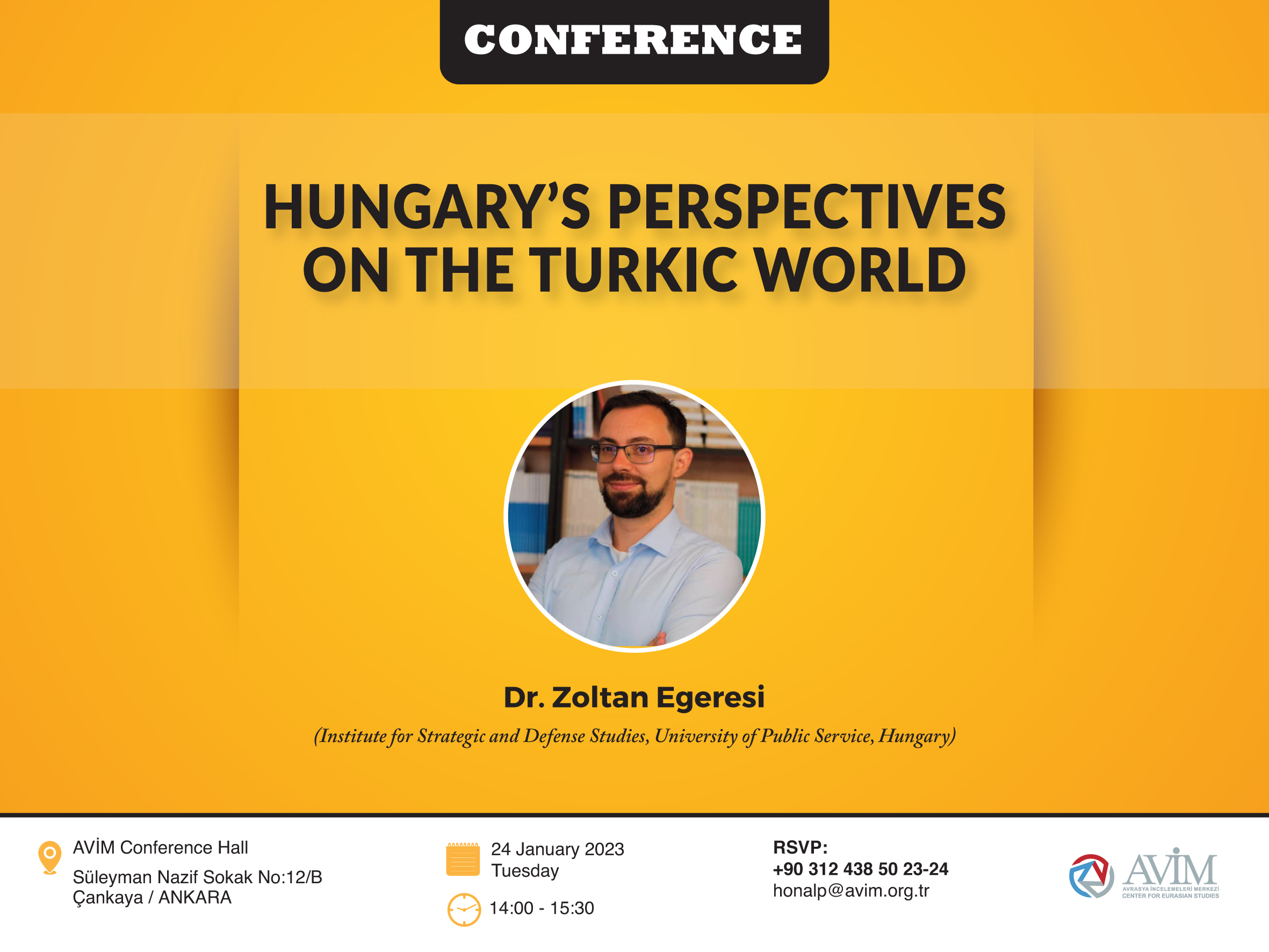
CONFERENCE TITLED “HUNGARY’S PERSPECTIVES ON THE TURKIC WORLD"