














A New Phase in Türkiye–Serbia Relations
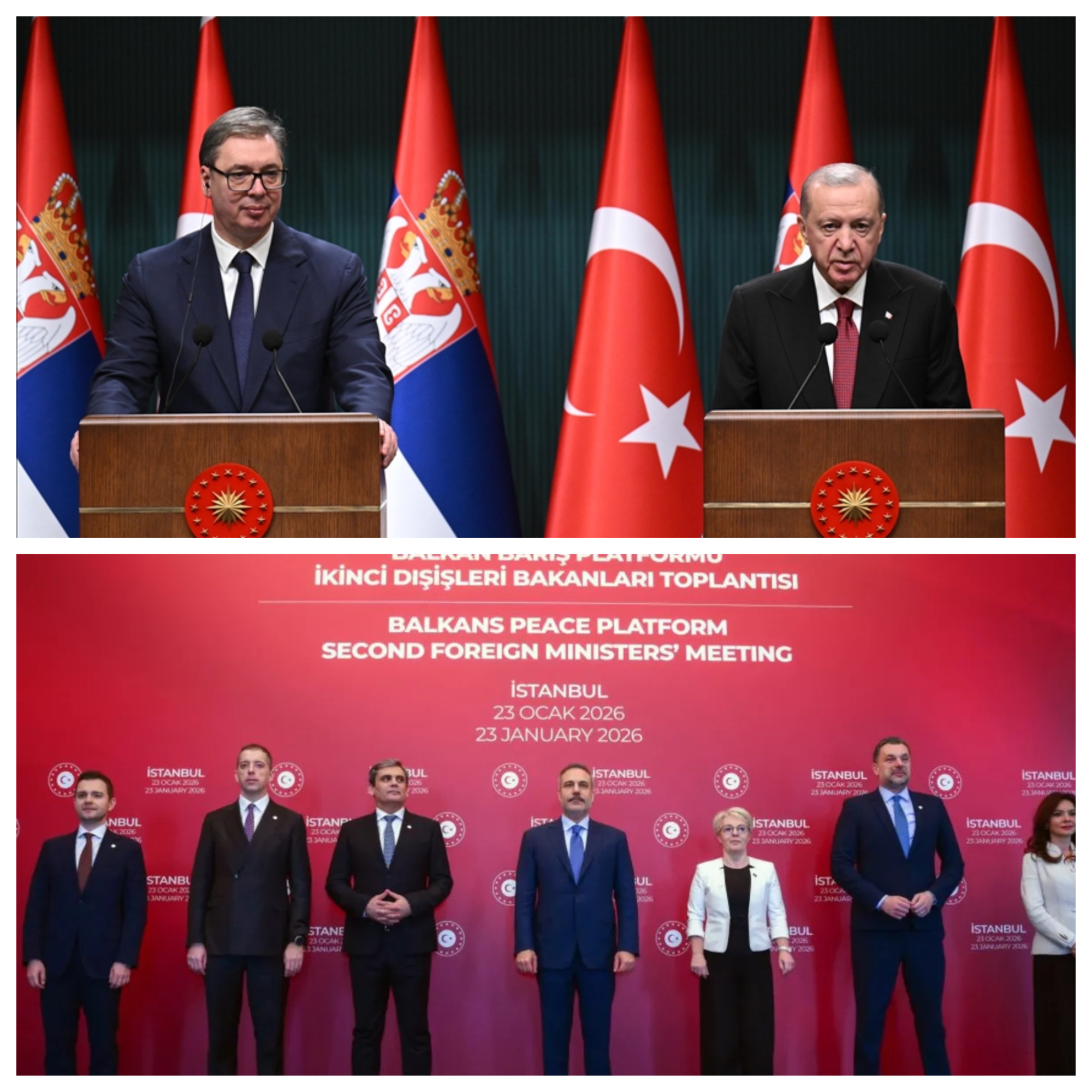
Türkiye–Serbia ties have entered a qualitatively new phase marked by institutionalized high‑level dialogue, expanding trade and investment, and concrete connectivity projects such as the Belgrade–Sarajevo highway, alongside growing cooperation in the defense industry and security‑related fields. This dense agenda, formalized through joint declarations and high‑level cooperation mechanisms, signals that the relationship is no longer episodic, but structured around long‑term sectoral commitments.[1]
Vučić’s emphatically positive tone, portraying Türkiye as an “extremely important partner” and President Erdoğan as a regional and even global leader, reinforces the perception of Türkiye as a major political, economic, and military reference point in the Balkans. Such framing from Belgrade matters because it comes from a country that maintains close ties with both the EU and other external actors, thereby amplifying the message that Türkiye is a power that must be factored into any serious regional calculus.[2]
This bilateral opening dovetails with Türkiye’s long‑term objective of being a central, not peripheral, player in Balkan stability, complementing its activism in Bosnia‑Herzegovina and Kosovo and bolstering its claim to be an inseparable part of the region rather than an outside stakeholder.[3]
Bosnia-Herzegovina, EU Missteps, and the Emerging Space
The qualitative deepening of Türkiye–Serbia relations acquires additional significance when viewed against the backdrop of the European Union’s protracted and often inconsistent engagement with Bosnia-Herzegovina and the wider Balkans. Over the past decade, the enlargement process has slowed markedly, conditionality has been applied unevenly, and key initiatives on Bosnia’s constitutional and institutional reform have either stalled or produced meager results. This combination of delayed integration, fragmented policy approaches, and unfulfilled expectations has contributed to widespread frustration among local elites and societies, undermining the EU’s image as the primary anchor of stability and transformation.[4]
In this environment, a perceptible legitimacy and governance vacuum has emerged, which non‑EU actors are increasingly able to exploit or, more benignly, to fill. Türkiye’s recent diplomatic activism—symbolized by its upgraded relationship with Serbia and parallel initiatives in Bosnia-Herzegovina and Kosovo—can thus be interpreted as a response to genuine regional demand for alternative channels of dialogue and support. At the same time, these moves clearly serve Türkiye’s strategic interest in enhancing its diplomatic weight, allowing it to translate historical ties and economic presence into structured influence over the evolving security order in the Balkans.[5]
The Balkan Peace Platform and Türkiye’s Mediation Claim
Building on this emerging vacuum and Türkiye’s upgraded ties with Belgrade, the Balkan Peace Platform represents the most visible attempt to translate Türkiye’s bilateral capital into a region‑wide dialogue framework. Convened in Istanbul and bringing together political, academic and civil society representatives from across the Balkans, the platform is explicitly framed around the goals of de‑escalation, confidence‑building and exploring practical avenues for cooperation. Its Istanbul setting is not merely logistical, but emblematic of Türkiye’s claim to be both geographically and historically embedded in the Balkans, rather than acting as a detached facilitator.[6]
The inclusion—direct or indirect—of stakeholders linked to both Kosovo and Serbia, as well as to Bosnia-Herzegovina’s internal divisions, underscores the ambition to create a format where mutually distrustful actors can at least share a common discursive space. Türkiye’s role in making such encounters politically acceptable is crucial, as it relies on the same network of dense, cross‑cutting relationships that underpin its rapprochement with Serbia and long‑standing ties to Bosniak and Kosovar actors. This approach mirrors Türkiye’s broader foreign policy pattern of convening adversaries in other theatres—from the Middle East to the Black Sea—by leveraging a combination of strategic ambiguity, economic incentives, and security cooperation.[7]
At the same time, the Balkan Peace Platform has attracted criticism from commentators who view it less as disinterested mediation and more as an instrument for projecting Turkish influence into a region where other external actors are perceived to be retreating or underperforming. From this perspective, the initiative is seen as simultaneously filling a diplomatic gap and institutionalizing Türkiye’s role as an indispensable gatekeeper in the evolving security and governance architecture of the Balkans.
Scope and Limits of Türkiye’s Balancing Act
Taken together, Türkiye’s parallel engagement with Bosnia-Herzegovina, Serbia, and Kosovo suggests a deliberate strategy of positioning itself as a stabilizing, rather than polarizing, actor in the Balkans. By upgrading ties with Belgrade while maintaining long‑standing relations with Bosniak and Kosovar partners and sponsoring multilateral platforms in Istanbul, Türkiye increases its capacity to shape agendas and reduce the risk of exclusionary alignments. This potential, however, depends critically on sustaining a minimum level of trust among all sides; any perception that Türkiye is sliding too far toward one camp would quickly erode its claimed role as a balancer.[8]
At the same time, the room for maneuver opened by EU missteps and the current legitimacy vacuum is neither unlimited nor permanent. A more assertive and coherent EU policy, intensified great‑power competition, or renewed local crises could all narrow Türkiye’s options and expose the structural limits of its activist diplomacy. In this sense, the present Türkiye–Serbia rapprochement and the Balkan Peace Platform together constitute a revealing test case of Türkiye’s aspiration to act as an inseparable Balkan actor and a genuine mediator, rather than a merely opportunistic external stakeholder.
*Picture: AA and Caspian Post
[1] Nurbanu Tanrıkulu Kızıl , “President Erdoğan, Vucic, Vow to Deepen Türkiye-Serbia Cooperation,” Daily Sabah, February 12, 2026, accessed February 23, 2026, https://www.dailysabah.com/politics/diplomacy/president-erdogan-vucic-vow-to-deepen-turkiye-serbia-cooperation ; Hürriyet Daily News Editorial, “Türkiye, Serbia Agree to Deepen Defense, Energy and Trade Cooperation,” Hürriyet Daily News, February 13, 2026, accessed February 23, 2026, https://www.hurriyetdailynews.com/turkiye-serbia-agree-to-deepen-defense-energy-and-trade-cooperation-218902
[2] Yenişafak English Editorial, “Türkiye and Serbia Pledge Deeper Ties across Defense, Economy and Diplomacy,” Yeni Şafak, February 13, 2026, accessed February 23, 2026, https://en.yenisafak.com/turkiye/turkiye-and-serbia-pledge-deeper-ties-across-defense-economy-and-diplomacy-3714553
[3] Talha Ozturk , “Serbia, Bosnia Sign Pact on Belgrade-Sarajevo Highway,” Anadolu Agency (AA), December 13, 2019, accessed February 23, 2026 , https://www.aa.com.tr/en/europe/serbia-bosnia-sign-pact-on-belgrade-sarajevo-highway/1673231
[4] Bodo Weber, “The EU’s Failing Policy Initiative for Bosnia and Herzegovina,” Democratization Policy Council, [publication date], accessed [access date], http://www.democratizationpolicy.org/summary/the-eu-s-failing-policy-initiative-for-bih/
[5] Kevork Yacoubian, “Filling the Vacuum: Türkiye and the Balkan Peace Platform,” The Armenian Weekly, February 12, 2026, accessed February 23, 2026, https://armenianweekly.com/2026/02/12/filling-the-vacuum-turkiye-and-the-balkan-peace-platform/ ; Spasimir Domaradzki, “Western Balkans – a Slow Death of the EU Enlargement Policy,” [Site Name], May 16, 2018, accessed February 23, 2026, https://usa-ue.pl/teksty-i-komentarze/english/western-balkans-a-slow-death-of-the-eu-enlargement-policy// ; Büşra Bağdat Okursoy, “Balkans Peace Platform: Türkiye’s Path to Bridge Regional Divides,” Daily Sabah, February 02, 2026, accessed February 23, 2026, https://www.dailysabah.com/opinion/op-ed/balkans-peace-platform-turkiyes-path-to-bridge-regional-divides
[6] Caspian Post Editorial Team], “Balkans Peace Platform: Türkiye’s Approach to Uniting Regional Divisions,” Caspian Post, February 02, 2026, accessed February 23, 2026, https://caspianpost.com/politics/balkans-peace-platform-turkiye-s-approach-to-uniting-regional-divisions
[7] Diyar Guldogan, “Ties between Türkiye, Serbia Continue to Strengthen in Every Field: President Erdogan,” Anadolu Agency (AA), September 29, 2026, accessed February 23, 2026, https://www.aa.com.tr/en/europe/ties-between-turkiye-serbia-continue-to-strengthen-in-every-field-president-erdogan/3337751
[8] Teoman Ertuğrul Tulun “Bosnia and the Balkans: Secessionism, Eurocentric Partitioning,” Center for Eurasian Studies (AVİM), No: 2026/12, February 17, 2026, accessed February 23, 2026, https://avim.org.tr/en/Yorum/BOSNIA-AND-THE-BALKANS-SECESSIONISM-EUROCENTRIC-PARTITIONING
© 2009-2025 Center for Eurasian Studies (AVİM) All Rights Reserved
No comments yet.
-
 19 MAY AND PONTUS STORIES
Teoman Ertuğrul TULUN 20.05.2019 -
 MONTREUX, CONSTRUCTIVE EURASIANISM, AND BLACK SEA STABILITY: REASSESSING TÜRKİYE’S STRAITS REGIME ON ITS 90TH ANNIVERSARY
Teoman Ertuğrul TULUN 22.07.2026 -
 THE FAILURE OF THE EU’S STRATEGY OF FRAGMENTATION IN THE BALKANS, AMIDST THE FRACTURING INTERNATIONAL RULES-BASED ORDER
Teoman Ertuğrul TULUN 23.09.2026 -
 THE NINETY-SEVENTH ANNIVERSARY OF THE SIGNING OF THE PEACE TREATY OF LAUSANNE
Teoman Ertuğrul TULUN 21.07.2020 -
TÜRKİYE-SERBIA RAPPROCHEMENT AND THE BALKAN PEACE PLATFORM: TESTING BALANCING ROLE
Teoman Ertuğrul TULUN 24.02.2026
-
 TÜRKİYE PROUDLY CELEBRATING THE CENTENNIAL OF THE SIGNING OF THE LAUSANNE PEACE TREATY
Teoman Ertuğrul TULUN 24.07.2023 -
 PARLIAMENTARY ELECTIONS IN ARMENIA AND THE IRREGULARITIES TOLERATED BY THE EU
Hazel ÇAĞAN ELBİR 18.04.2017 -
TURKEY IS NOW A MEMBER OF THE G-20 TROIKA
Alev KILIÇ 12.09.2013 -
 PRESIDENT ERDOĞAN AND POPE FRANCIS’ MEETING AT THE VATICAN
AVİM 02.02.2018 -
 CONSTRUCTIVE EURASIANISM AND PAST REFLECTIONS
Teoman Ertuğrul TULUN 22.09.2025
-
25.01.2016
THE ARMENIAN QUESTION - BASIC KNOWLEDGE AND DOCUMENTATION -
12.06.2024
THE TRUTH WILL OUT -
27.03.2023
RADİKAL ERMENİ UNSURLARCA GERÇEKLEŞTİRİLEN MEZALİMLER VE VANDALİZM -
17.03.2023
PATRIOTISM PERVERTED -
23.02.2023
MEN ARE LIKE THAT -
03.02.2023
BAKÜ-TİFLİS-CEYHAN BORU HATTININ YAŞANAN TARİHİ -
16.12.2022
INTERNATIONAL SCHOLARS ON THE EVENTS OF 1915 -
07.12.2022
FAKE PHOTOS AND THE ARMENIAN PROPAGANDA -
07.12.2022
ERMENİ PROPAGANDASI VE SAHTE RESİMLER -
01.01.2022
A Letter From Japan - Strategically Mum: The Silence of the Armenians -
01.01.2022
Japonya'dan Bir Mektup - Stratejik Suskunluk: Ermenilerin Sessizliği -
03.06.2020
Anastas Mikoyan: Confessions of an Armenian Bolshevik -
08.04.2020
Sovyet Sonrası Ukrayna’da Devlet, Toplum ve Siyaset - Değişen Dinamikler, Dönüşen Kimlikler -
12.06.2018
Ermeni Sorunuyla İlgili İngiliz Belgeleri (1912-1923) - British Documents on Armenian Question (1912-1923) -
02.12.2016
Turkish-Russian Academics: A Historical Study on the Caucasus -
01.07.2016
Gürcistan'daki Müslüman Topluluklar: Azınlık Hakları, Kimlik, Siyaset -
10.03.2016
Armenian Diaspora: Diaspora, State and the Imagination of the Republic of Armenia -
24.01.2016
ERMENİ SORUNU - TEMEL BİLGİ VE BELGELER (2. BASKI)
-
AVİM Conference Hall 24.01.2023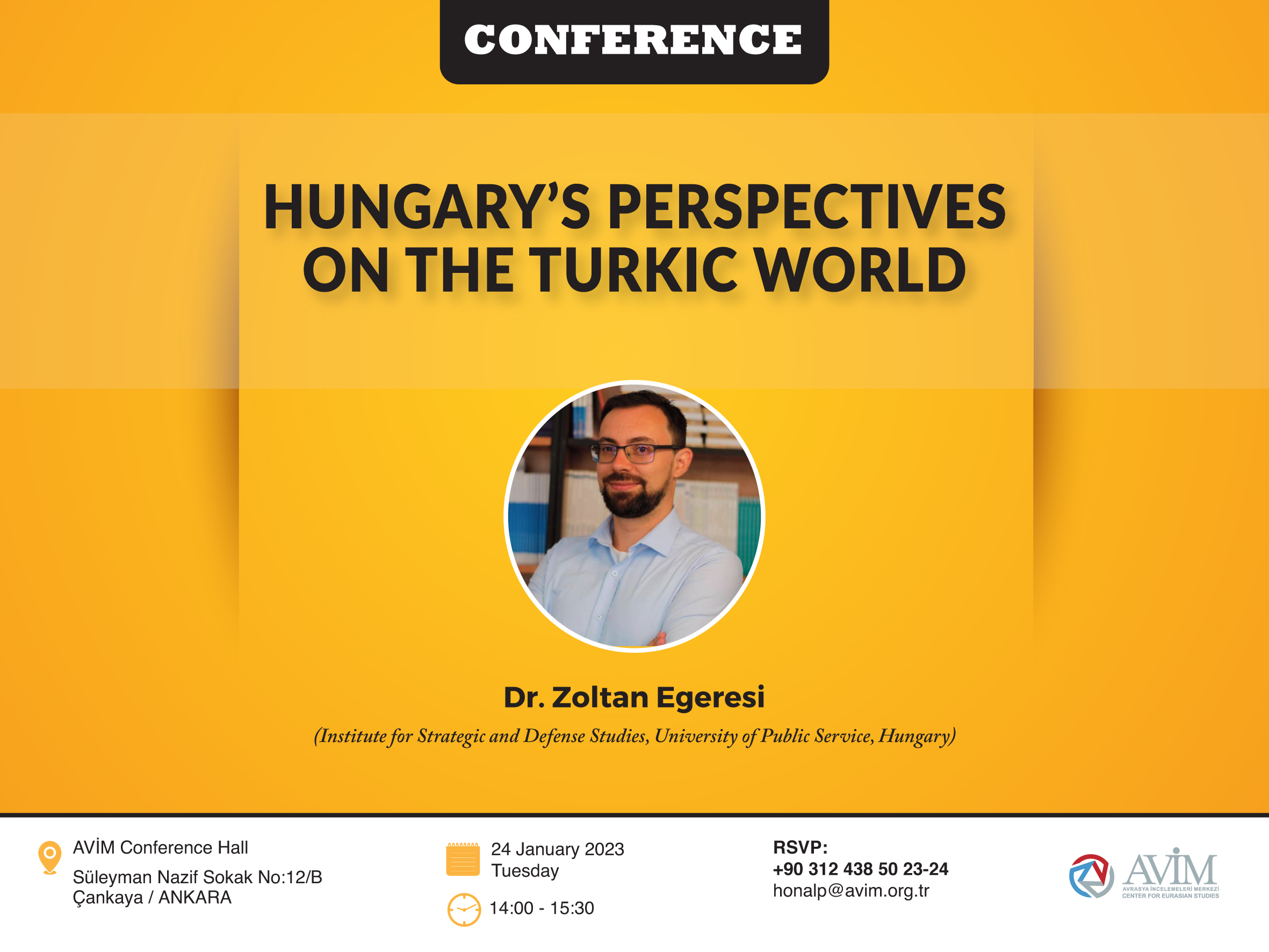
CONFERENCE TITLED “HUNGARY’S PERSPECTIVES ON THE TURKIC WORLD"