














Romania’s “passivity” debate
Recent discussions about Black Sea security increasingly portray Romania as hesitant or insufficiently proactive, suggesting that it suffers from a persistent “crisis of strategic voice.” In this framing, Bucharest is often invited to speak and act as a leading Western voice in the region, expected to assume a more pronounced role in signalling resolve and shaping deterrence. This commentary takes these claims as its point of departure but questions whether the role thus envisaged for Romania is compatible with its geographic profile, capabilities, and institutional position. It argues that inflating expectations in this way may be less a recipe for regional stability than a form of strategic substitution with potentially destabilizing consequences[1].
Geography, capability, and Black Sea frameworks
Romania’s Black Sea profile is shaped by a relatively short coastline, concentrated around the port of Constanța, and by finite military and economic resources that limit its capacity to project power seaward. At the same time, the country is embedded in overlapping institutional frameworks: it is both an EU and NATO member, participates in regional initiatives such as the Black Sea Economic Cooperation, and operates within a maritime environment whose overall legal architecture is strongly influenced by the Montreux‑based regime governing access through the Turkish Straits. Historically, Black Sea stability has depended on the interaction between such legal regimes, the concrete capabilities of coastal states, and the strategies of extra‑regional powers seeking influence or access, rather than on unilateral activism by any single medium‑sized actor[2].
Structural limits versus accusations of passivity
Given these structural features, accusations that Romania suffers from a chronic “crisis of strategic voice” or from undue timidity risk overlooking the constraints embedded in its objective position. Romania’s defence posture, fiscal space, and domestic political bandwidth necessarily shape the scale and tempo of its regional initiatives, making it unsurprising that Bucharest often opts for calibrated contributions within alliance formats rather than unilateral activism. Many choices that are portrayed as passivity can thus be read instead as attempts to align ambitions with available capabilities and to manage risk in a crowded and volatile theatre. Interpreting such prudence as weakness creates its own dangers, not least by encouraging external actors to project onto Romania leadership roles, symbolic responsibilities, or escalation thresholds that exceed what its geography, forces, and institutions can realistically sustain over time.[3]
Strategic substitution and the marginalization of coastal anchors
Extending this line of reasoning, narratives that seek to elevate Romania into a primary regional pillar can be understood as a form of strategic substitution, whereby external actors symbolically transfer expectations of leadership and risk‑taking onto a state whose structural profile remains that of a medium‑sized coastal power. Such narratives implicitly downplay the centrality of larger Black Sea states that possess treaty‑based responsibilities, long‑standing naval infrastructures, and accumulated experience in managing the legal and political complexities of the region. When expectations of leadership are thus decoupled from material capacities and institutional mandates, the likely outcome is not enhanced deterrence but instability: misaligned ambitions in Bucharest, overlapping and potentially contradictory initiatives in the regional environment, and greater uncertainty among both allies and adversaries about who actually anchors the Black Sea security order.[4]
Realistic division of roles
Against this backdrop, a more sustainable approach would encourage Romania to act as an active but measured contributor, rather than as an artificially elevated regional pivot. A realistic framework would anchor Bucharest’s role in the concrete parameters of its geography, economic and military resources, and the obligations arising from its EU and NATO memberships. Regional security, in turn, should rest on a clear differentiation between those coastal states that bear legal gatekeeping responsibilities and possess the institutional tools to exercise them, and those whose function is primarily supportive and complementary. External partners ought to resist narratives that instrumentalize Romania as a proxy for broader strategic ambitions, and instead prioritize calibrated cooperation, targeted capacity‑building, and burden‑sharing arrangements that do not outstrip Romania’s structural position. [5]
Stability over symbolic activism
Taken together, these considerations indicate that durable security in the Black Sea cannot be built on symbolic role‑redefinitions that ignore basic constraints of geography, capability, and law. Sustainable arrangements require that expectations placed on each coastal state be aligned with what its territory, resources, and institutional position can credibly support, and that existing legal and organizational frameworks be treated as structuring realities rather than obstacles to be rhetorically bypassed. Casting Romania as a substitute regional anchor may offer short‑term political appeal, yet it risks producing instability, confusion over responsibilities, and unmet promises. A more balanced, region‑centered approach that differentiates clearly between anchoring and supporting roles, and that privileges calibrated cooperation over declaratory activism, offers a sounder basis for long‑term Black Sea stability.[6]
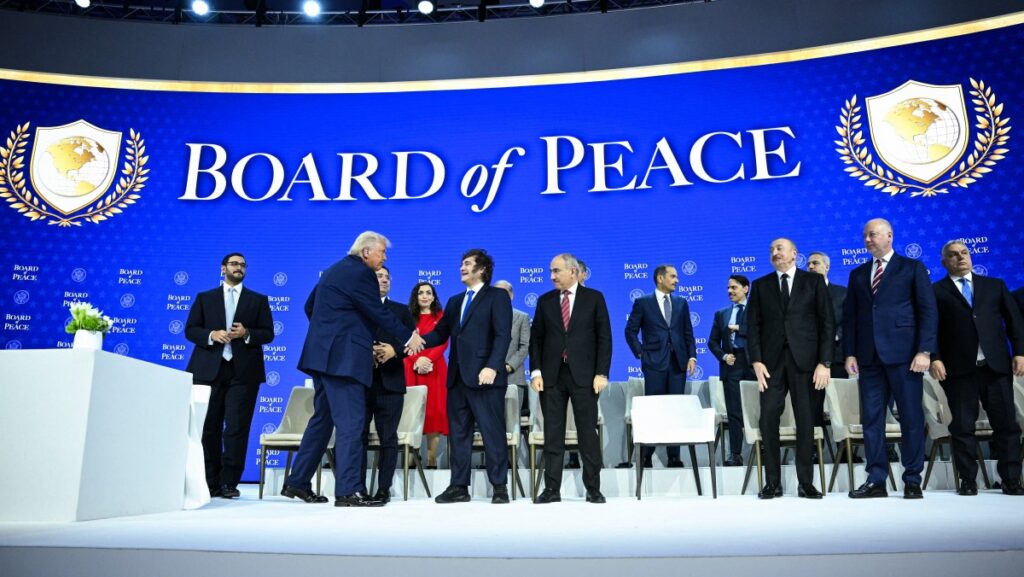
*Picture: European Conservative
[1] Mădălin Sârbu, “Romania and the Crisis of Strategic Voice,” The European Conservative, January 27, 2026, accessed February 10, 2026, https://europeanconservative.com/articles/commentary/romania-and-the-crisis-of-strategic-voice/
[2]Editorial Board, A Security Strategy for the Black Sea, Atlantic Council, report, January 21, 2024, accessed February 10, 2026, https://www.atlanticcouncil.org/in-depth-research-reports/report/a-security-strategy-for-the-black-sea/ ; George Vișan, “Guardian of the Danube: Romania’s Mixed Progress in Implementing a Black Sea Strategy,” Eurasia Daily Monitor (Jamestown Foundation) Black Sea Battleground Series, December 20, 2021, accessed February 10, 2026, https://jamestown.org/romania-the-danube-and-the-black-sea-growing-security-challenges-and-underutilized-economic-potential/
[3] Kamil Całus, Adam Michalski, Jan Nowinowski and Jacek Tarociński , “Romania, Bulgaria and Turkey in the Black Sea Region: Increased Cooperation under NATO,” OSW Commentary, June 26, 2025, accessed February 10, 2026, https://www.osw.waw.pl/en/publikacje/osw-commentary/2025-06-26/romania-bulgaria-and-turkey-black-sea-region-increased ; Teoman Ertuğrul Tulun, “Türkiye and the Battle for Black Sea Order,” Center for Eurasian Studies (AVİM), analysis, October 21, 2025, accessed February 10, 2026, https://avim.org.tr/en/Analiz/AT-THE-CROSSROADS-TURKIYE-AND-THE-BATTLE-FOR-BLACK-SEA-ORDER
[4] Teoman Ertuğrul Tulun, “France, Türkiye, And The Black Sea Order: Legal Realities Versus Strategic Shortcutting,” Center for Eurasian Studies (AVİM), analysis, February 02, 2026, accessed February 10, 2026, https://avim.org.tr/en/Yorum/FRANCE-TURKIYE-AND-THE-BLACK-SEA-ORDER-LEGAL-REALITIES-VERSUS-STRATEGIC-SHORTCUTTING
[5] Teoman Ertuğrul Tulun, “Guardianship or Equilibrium? Power, and the Legacy of Order in the Black Sea,” Center for Eurasian Studies (AVİM), analysis, October 15, 2025, accessed February 10, 2026, https://www.avim.org.tr/en/Analiz/GUARDIANSHIP-OR-EQUILIBRIUM-POWER-AND-THE-LEGACY-OF-ORDER-IN-THE-BLACK-SEA
[6] Teoman Ertuğrul Tulun, “Guardianship Of Meaning: Russian Disinformation, European ‘Gospels Of Hate,’ And Türkiye’s Legal Stability In The Black Sea,” Eurasian Security Bulletin (EurasiaSec), analysis, January 12, 2026, accessed February 4, 2026, https://www.eurasiasec.org/guardianship-of-meaning
© 2009-2025 Center for Eurasian Studies (AVİM) All Rights Reserved
No comments yet.
-
 NATO’S DIGITAL EXPOSURES: ARMENIA’S US-BACKED AI MEGAPROJECT IN THE SOUTH CAUCASUS
Teoman Ertuğrul TULUN 03.03.2026 -
 GERMANY’S EURASIAN OPENING AND ITS STRATEGIC BLIND SPOTS
Teoman Ertuğrul TULUN 08.09.2026 -
 DENMARK’S MIGRATION DISCOURSE AND THE RISK OF ANTI-ISLAM POLITICAL GENERALIZATION
Teoman Ertuğrul TULUN 16.09.2026 -
 THE AUTONOMOUS TERRITORIAL UNIT OF GAGAUZIA AND MOLDOVA'S EU CANDIDACY
Teoman Ertuğrul TULUN 30.10.2025 -
 TÜRKİYE IS THE GUARDIAN OF THE MONTREUX CONVENTION REGARDING THE REGIME OF THE STRAITS AND THE BACKBONE OF SECURITY AND STABILITY IN THE BLACK SEA
Teoman Ertuğrul TULUN 03.04.2026
-
 THE FINAL THRESHOLD OF THE PEACE AGREEMENT: THE ISSUE OF CONSTITUTIONAL AMENDMENT
Selenay Erva YALÇIN 02.10.2026 -
 THE 20 JUNE 2021 SNAP PARLIAMENTARY ELECTIONS IN ARMENIA - III: REGIONAL IMPLICATIONS
Turgut Kerem TUNCEL 28.06.2021 -
 DR. PAT WALSH’S RECENT ARTICLE ON THE TALAT PASHA QUESTION
AVİM 22.07.2020 -
 THE HUMANITARIAN APPROACH AND ACKNOWLEDGMENT OF THE IDENTITY OF THE ROHINGYA SHOULD NOT BE SEPARABLE
AVİM 06.12.2017 -
 URGENT NEED TO STRENGTHEN THE EFFECTIVE IMPLEMENTATION OF THE BIOLOGICAL WEAPONS CONVENTION
Teoman Ertuğrul TULUN 16.04.2020
-
25.01.2016
THE ARMENIAN QUESTION - BASIC KNOWLEDGE AND DOCUMENTATION -
12.06.2024
THE TRUTH WILL OUT -
27.03.2023
RADİKAL ERMENİ UNSURLARCA GERÇEKLEŞTİRİLEN MEZALİMLER VE VANDALİZM -
17.03.2023
PATRIOTISM PERVERTED -
23.02.2023
MEN ARE LIKE THAT -
03.02.2023
BAKÜ-TİFLİS-CEYHAN BORU HATTININ YAŞANAN TARİHİ -
16.12.2022
INTERNATIONAL SCHOLARS ON THE EVENTS OF 1915 -
07.12.2022
FAKE PHOTOS AND THE ARMENIAN PROPAGANDA -
07.12.2022
ERMENİ PROPAGANDASI VE SAHTE RESİMLER -
01.01.2022
A Letter From Japan - Strategically Mum: The Silence of the Armenians -
01.01.2022
Japonya'dan Bir Mektup - Stratejik Suskunluk: Ermenilerin Sessizliği -
03.06.2020
Anastas Mikoyan: Confessions of an Armenian Bolshevik -
08.04.2020
Sovyet Sonrası Ukrayna’da Devlet, Toplum ve Siyaset - Değişen Dinamikler, Dönüşen Kimlikler -
12.06.2018
Ermeni Sorunuyla İlgili İngiliz Belgeleri (1912-1923) - British Documents on Armenian Question (1912-1923) -
02.12.2016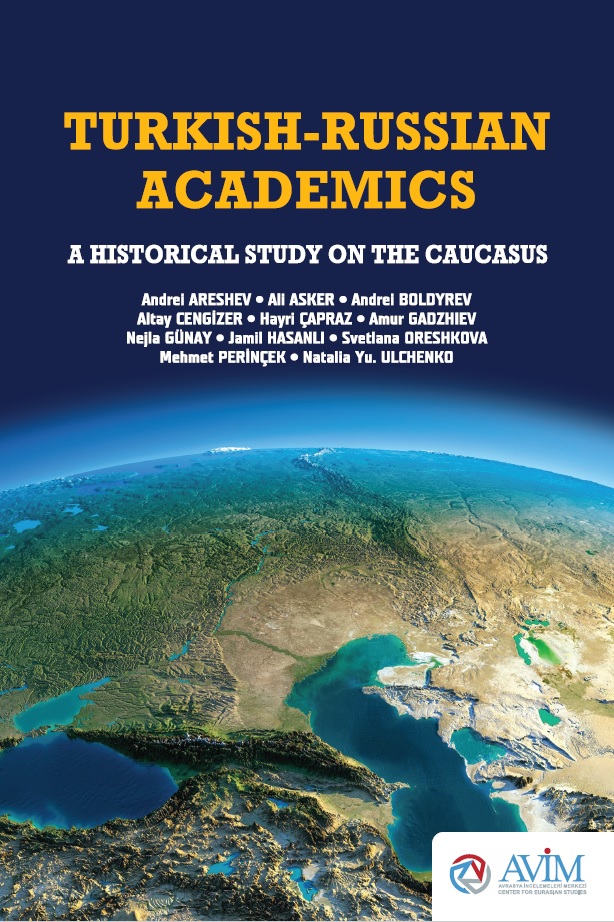
Turkish-Russian Academics: A Historical Study on the Caucasus -
01.07.2016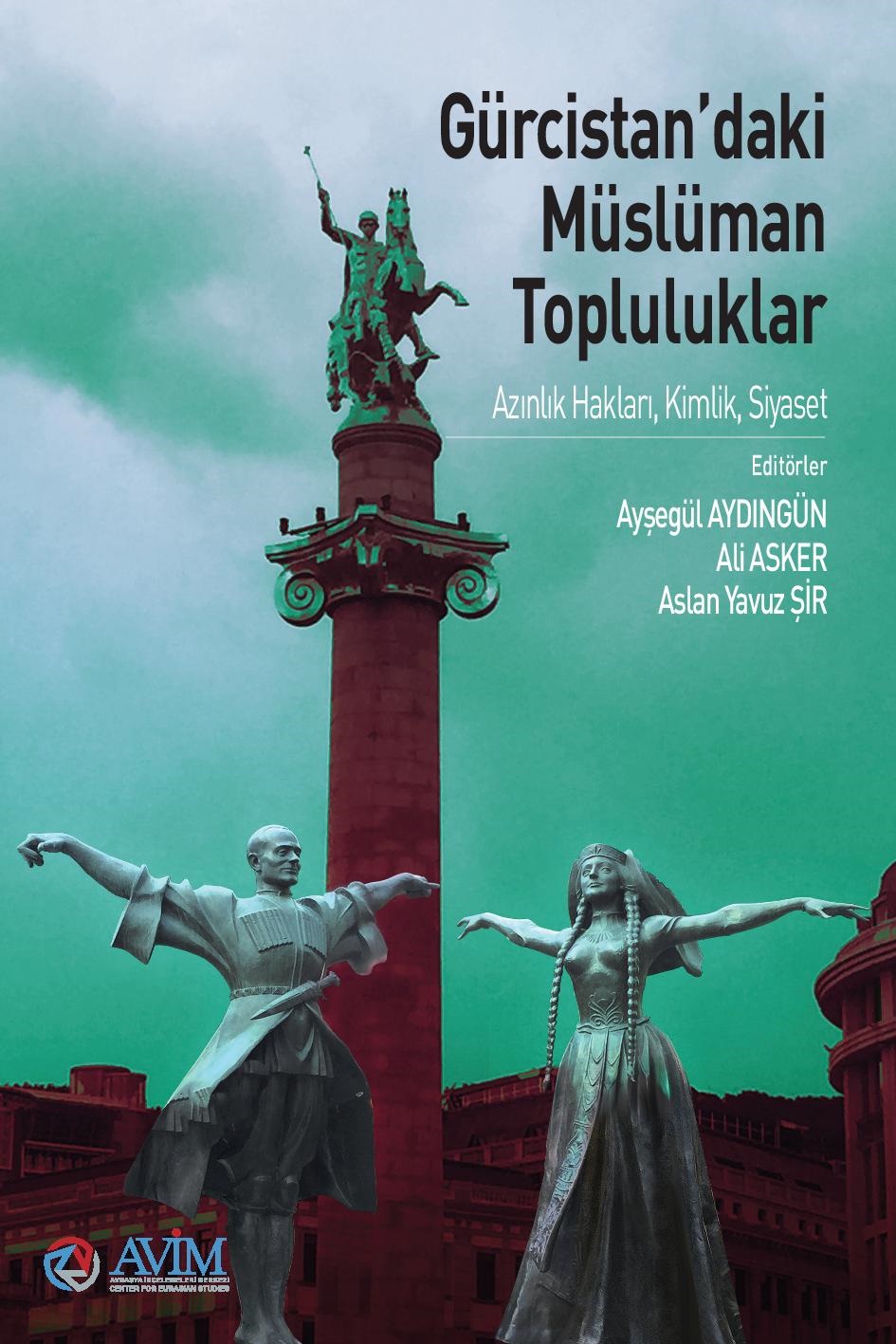
Gürcistan'daki Müslüman Topluluklar: Azınlık Hakları, Kimlik, Siyaset -
10.03.2016
Armenian Diaspora: Diaspora, State and the Imagination of the Republic of Armenia -
24.01.2016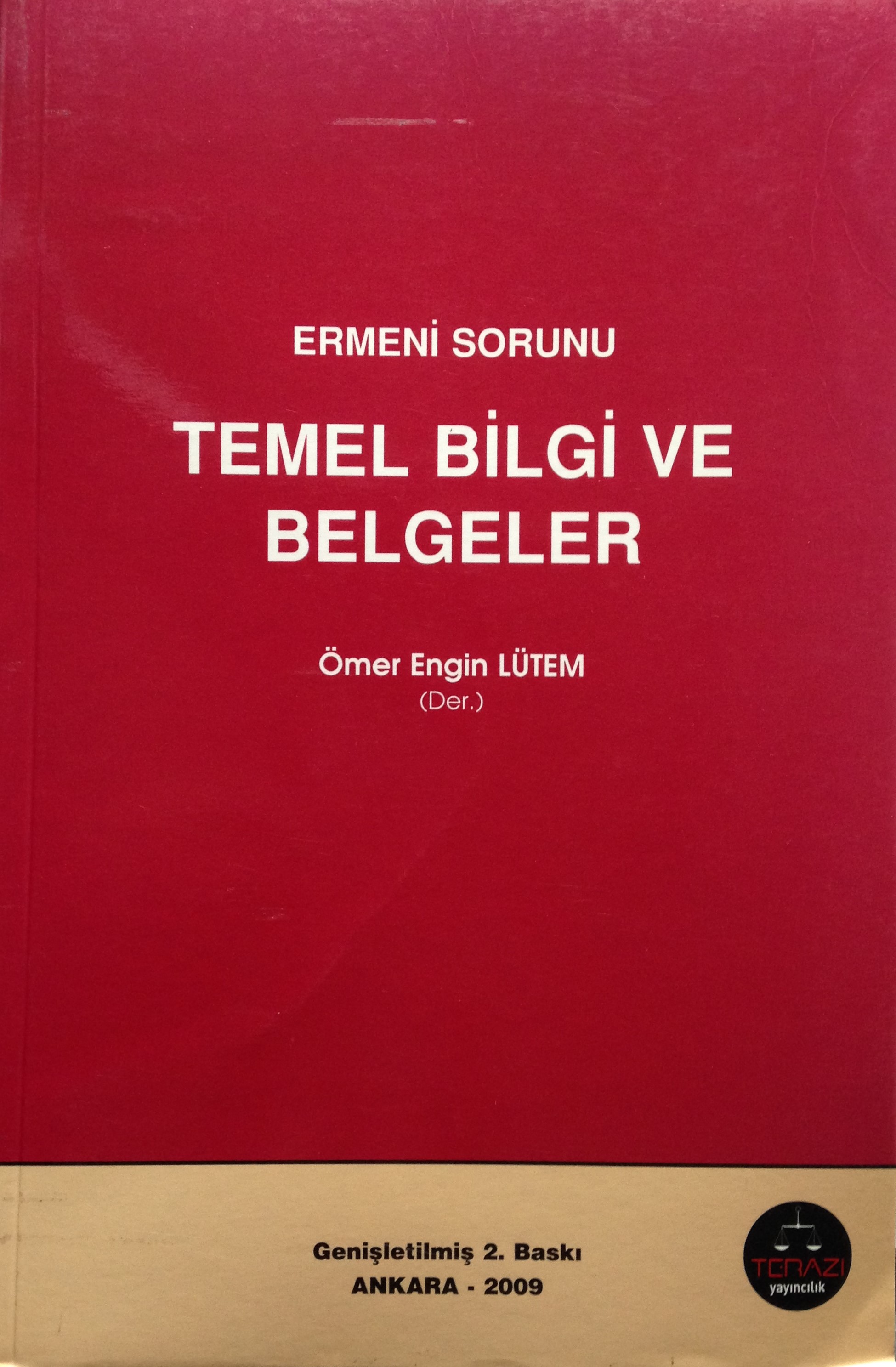
ERMENİ SORUNU - TEMEL BİLGİ VE BELGELER (2. BASKI)
-
AVİM Conference Hall 24.01.2023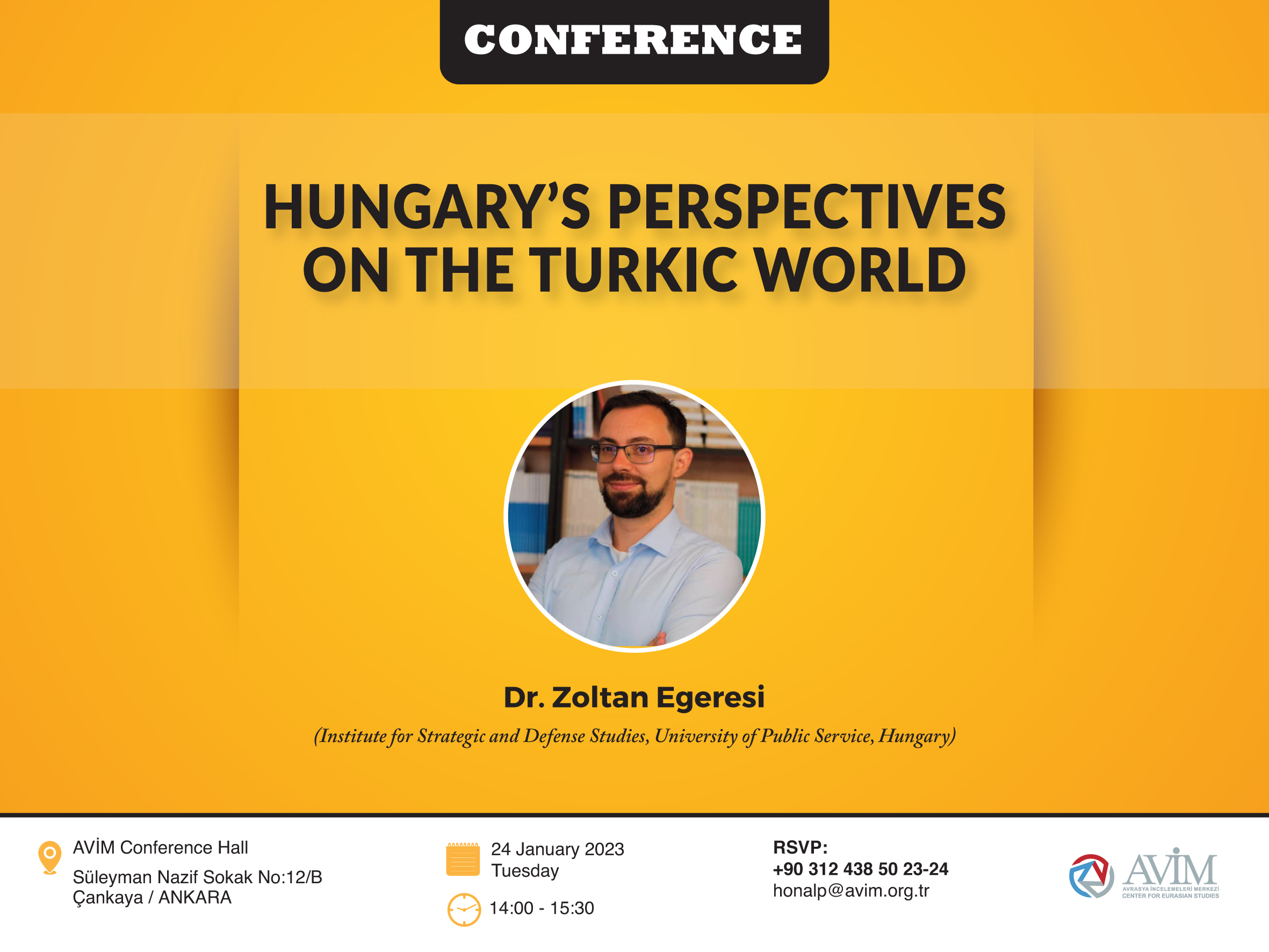
CONFERENCE TITLED “HUNGARY’S PERSPECTIVES ON THE TURKIC WORLD"