














This is the English translation of a Turkish language article that was originally published by AVİM on 7 August 2026.
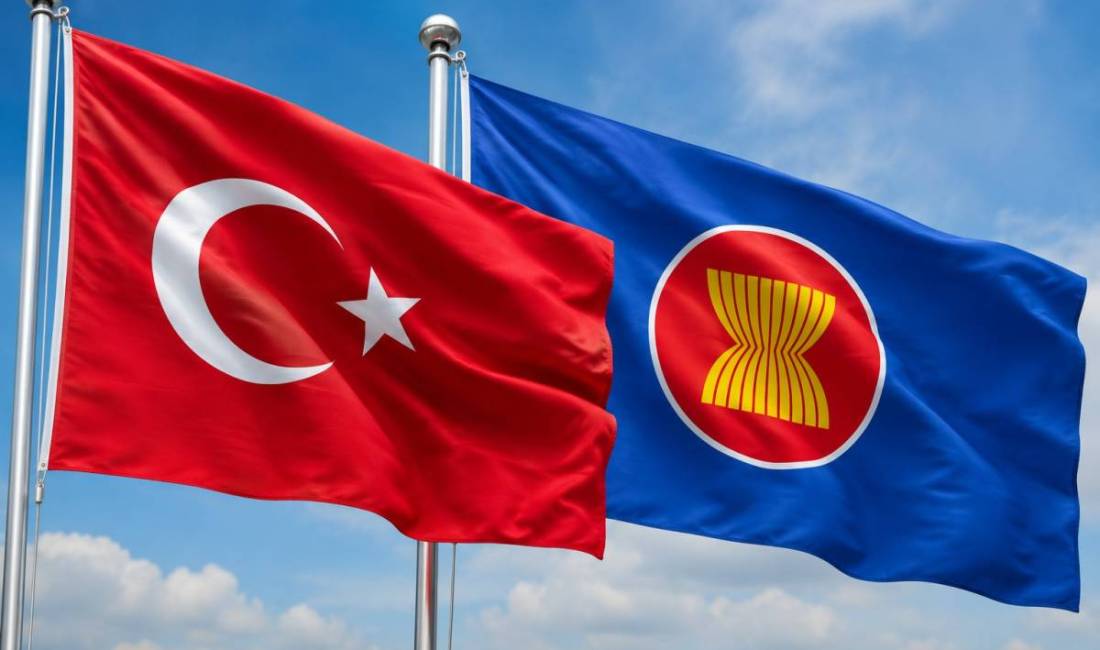
The 59th ASEAN (Association of Southeast Asian Nations) Foreign Ministerial Meeting, held in Pasay, Philippines between 18 and 23 July 2026 has had significant outcomes for Turkish foreign policy and the Southeast Asian region. At the meeting on 21 July 2026, it was decided to establish a Dialogue Partnership between Türkiye and ASEAN. Thus, following United Kingdom’s acceptance as a Dialogue Partner in 2021, Türkiye became the 12th country to be accepted as an ASEAN Dialogue Partner.
In the early 1990s, Türkiye sought to develop institutional relations with ASEAN. Institutional relations between Türkiye and ASEAN began in 2010 with Türkiye’s accession to The Treaty of Amity and Cooperation in Southeast Asia. Following this step, Türkiye attained the status of Sectoral Dialogue Partner with ASEAN in 2017 and established institutional cooperation with ASEAN in the fields of economy, transportation, disaster management, education, and other sectoral areas. In 2024, Türkiye applied for 'Dialogue Partner' status with ASEAN to further strengthen its institutional ties. After being accepted in principle in 2025, Türkiye was officially admitted as an ASEAN Dialogue Partner on 21 July 2026.[1] This marked the highest level of institutional relations with ASEAN. When the factors that played a role in the process leading to Türkiye’s ASEAN Dialogue Partnership are examined, the “Strategic Autonomy” approach that Türkiye has pursued in its foreign policy stands out first. In line with the concept of strategic autonomy, Türkiye has adopted a policy of diversifying its foreign policy strategies and collaborating with multiple actors, rather than the unilateral foreign policy approach followed in earlier periods. The transformations in the international system, debates on multipolarity, and the emergence of new areas of competition have increased the importance of middle powers while also offering new opportunities for cooperation among them. In this context, ASEAN stands out as an important platform for Türkiye to diversify its relations with Southeast Asian countries and strengthen its political, economic, and diplomatic interaction in the region.
Second, Türkiye’s “Asia Anew” initiative, launched in 2019, recognizes the regional importance of Asian countries and Asia as a region and aims to develop economic, commercial, security, and institutional cooperation. In line with this, Türkiye has signed free trade agreements with many countries. In 2025, significant progress was made in relations between Türkiye and ASEAN countries; cooperation deepened in various fields, and high-level visits took place. Turkish President Recep Tayyip Erdoğan embarked on an Asian tour in 2025 that included the Philippines, Malaysia, and Indonesia, during which he expressed Türkiye’s willingness to advance relations with countries in the region. Turkish Minister of Foreign Affairs Hakan Fidan attended the ASEAN Summit held in Malaysia in 2025 and expressed Türkiye’s desire to strengthen its relations with ASEAN once again during the “Türkiye-ASEAN Sectoral Dialogue Partnership Seventh Trilateral Meeting.” In 2025, the leaders of Malaysia, which held the ASEAN chairmanship that year, and Indonesia visited Türkiye.
Finally, it is necessary to state the role of Türkiye’s recent success in the field of defense industry. Türkiye signed various agreements and developed partnerships with Malaysia, Indonesia and the Philippines regarding the export of defense industry products in 2025. This demonstrates that the defense industry has become an increasingly important area of cooperation in Türkiye’s relations with Southeast Asian countries and has contributed to the deepening of its diplomatic and economic ties in the region. As we emphasized after the 2025 ASEAN Summit, during its ASEAN Chairmanship, Malaysia achieved various diplomatic successes, particularly in the area of mediation.[2] It is also claimed that Malaysia played a facilitating role in Türkiye’s Dialogue Partnership process.[3]
Ultimately, the Dialogue Partnership has not only marked a new phase in Türkiye-ASEAN relations but has also been a significant outcome for Türkiye’s aim to strengthen its ties with the Asia-Pacific region under the “Asia Anew” initiative. This partnership will likely lead to an expansion of Türkiye’s areas of cooperation with ASEAN. The Dialogue Partnership offers countries the opportunity to participate in high-level consultation meetings and summits in a broader sense.[4] It enables consultation meetings with ASEAN countries at the ASEAN+1 leadership level and facilitates meetings with member countries at the foreign minister level, instead of the Trilateral Sectoral Partnership meetings that previously took place at the level of Foreign Ministers and the ASEAN Secretary-General.
From another perspective, Türkiye has recently strengthened its bilateral relations with various countries and regions through new cooperation mechanisms and agreements; such as Türkiye’s hosting of the NATO Summit on 10-11 July 2026 and its admission as an ASEAN Dialogue Partner on 21 July 2026. These are indicators of Türkiye’s growing diplomatic influence at the regional and global levels.
The ASEAN Dialogue Partnership offers an important opportunity for Türkiye to enhance its diplomatic visibility in Southeast Asia and develop more regular and institutionalized relations with countries in the region. It is important for Türkiye to effectively take advantage of the opportunities offered by the Dialogue Partnership.[5] In this context, it also is important to strengthen political dialogue with ASEAN countries, increase and facilitate trade and investments, and develop new cooperation mechanisms with different countries in areas such as defense industry.
*Image: https://antakyagazetesi.com/turkiye-asyada-gucunu-artirdi/
[1] Sercan İrkin, “Dışişleri Bakanlığı, Türkiye’nin ASEAN Diyalog Ortaklığına Kabul Edilmesini Memnuniyetle Karşıladı,” Anadolu Ajansı, 21 Temmuz 2026, https://www.aa.com.tr/tr/gundem/disisleri-bakanligi-turkiyenin-asean-diyalog-ortakligina-kabul-edilmesini-memnuniyetle-karsiladi/4004821
[2] Seyda Nur Osmanlı, “HIGHLIGHTS FROM THE 47TH ASEAN SUMMIT,” Center for Eurasian Studies (AVİM), January 20, 2026, https://avim.org.tr/en/Analiz/HIGHLIGHTS-FROM-THE-47TH-ASEAN-SUMMIT
[3] Muhammad Syameer Luthfy bin Hamzah, “Türkiye Enters ASEAN’s Inner Circle, While Malaysia Takes Lead,” Daily Sabah, July 25, 2026, https://www.dailysabah.com/opinion/op-ed/turkiye-enters-aseans-inner-circle-while-malaysia-takes-lead
[4] Sercan İrkin, “Dışişleri Bakanlığı, Türkiye’nin ASEAN Diyalog Ortaklığına Kabul Edilmesini Memnuniyetle Karşıladı,” Anadolu Ajansı, 21 Temmuz 2026, https://www.aa.com.tr/tr/gundem/disisleri-bakanligi-turkiyenin-asean-diyalog-ortakligina-kabul-edilmesini-memnuniyetle-karsiladi/4004821
[5] Ali Oğuz Diriöz, “Türkiye’nin ASEAN Diyalog Ortaklığı: Yeniden Asya’dan Somut Ortaklığa,” Independent Türkçe, July 31, 2026, https://www.indyturk.com/node/780611/yazarlar/türkiyenin-asean-diyalog-ortaklığı-yeniden-asyadan-somut-ortaklığa
© 2009-2025 Center for Eurasian Studies (AVİM) All Rights Reserved
No comments yet.
-
 THE 16TH BRICS SUMMIT REGARDING CHINA AND THE GLOBAL SOUTH
Seyda Nur OSMANLI 26.12.2024 -
 TURKIYE-CHINA RELATIONS: OPPORTUNITIES AND CHALLENGES
Seyda Nur OSMANLI 22.11.2024 -
 CHINA’S GROWING PRESENCE IN GEORGIA
Seyda Nur OSMANLI 30.04.2025 -
 HIGHLIGHTS FROM THE 47TH ASEAN SUMMIT
Seyda Nur OSMANLI 20.01.2026 -
 HIGHLIGHTS FROM THE US PRESIDENT TRUMP’S ASIA TRIP
Seyda Nur OSMANLI 29.01.2026
-
 THE MANAGEMENT BLUNDERS IN THE EU
Hazel ÇAĞAN ELBİR 11.03.2021 -
 GENOCIDE ACCUSATION AS A FORM OF PUNISHMENT - III
Mehmet Oğuzhan TULUN 27.04.2021 -
 MACEDONIA NAME CHANGE REFERENDUM: DIFFERENT INTERESTS, DIFFERENT PERSPECTIVES
Vuslat Nur ŞAHİN 16.10.2018 -
 GUARDIANSHIP IN PRACTICE: LEADERSHIP, ADAPTATION, AND SECURITY CHALLENGES IN THE BLACK SEA
Teoman Ertuğrul TULUN 16.10.2025 -
 ARMENIA’S CHOICE: EAST OR WEST?
Hande Apakan 22.02.2015
-
25.01.2016
THE ARMENIAN QUESTION - BASIC KNOWLEDGE AND DOCUMENTATION -
12.06.2024
THE TRUTH WILL OUT -
27.03.2023
RADİKAL ERMENİ UNSURLARCA GERÇEKLEŞTİRİLEN MEZALİMLER VE VANDALİZM -
17.03.2023
PATRIOTISM PERVERTED -
23.02.2023
MEN ARE LIKE THAT -
03.02.2023
BAKÜ-TİFLİS-CEYHAN BORU HATTININ YAŞANAN TARİHİ -
16.12.2022
INTERNATIONAL SCHOLARS ON THE EVENTS OF 1915 -
07.12.2022
FAKE PHOTOS AND THE ARMENIAN PROPAGANDA -
07.12.2022
ERMENİ PROPAGANDASI VE SAHTE RESİMLER -
01.01.2022
A Letter From Japan - Strategically Mum: The Silence of the Armenians -
01.01.2022
Japonya'dan Bir Mektup - Stratejik Suskunluk: Ermenilerin Sessizliği -
03.06.2020
Anastas Mikoyan: Confessions of an Armenian Bolshevik -
08.04.2020
Sovyet Sonrası Ukrayna’da Devlet, Toplum ve Siyaset - Değişen Dinamikler, Dönüşen Kimlikler -
12.06.2018
Ermeni Sorunuyla İlgili İngiliz Belgeleri (1912-1923) - British Documents on Armenian Question (1912-1923) -
02.12.2016
Turkish-Russian Academics: A Historical Study on the Caucasus -
01.07.2016
Gürcistan'daki Müslüman Topluluklar: Azınlık Hakları, Kimlik, Siyaset -
10.03.2016
Armenian Diaspora: Diaspora, State and the Imagination of the Republic of Armenia -
24.01.2016
ERMENİ SORUNU - TEMEL BİLGİ VE BELGELER (2. BASKI)
-
AVİM Conference Hall 24.01.2023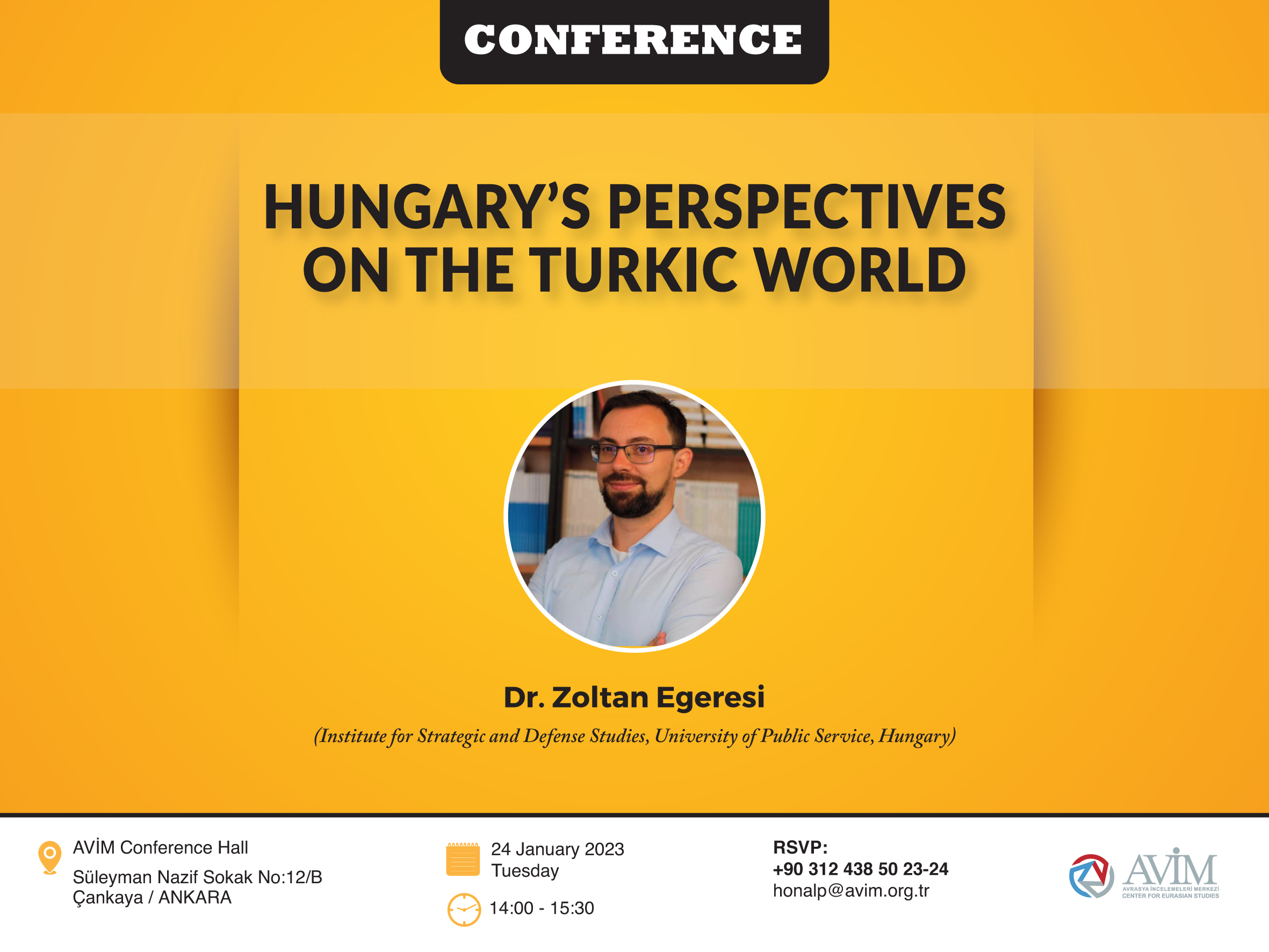
CONFERENCE TITLED “HUNGARY’S PERSPECTIVES ON THE TURKIC WORLD"