














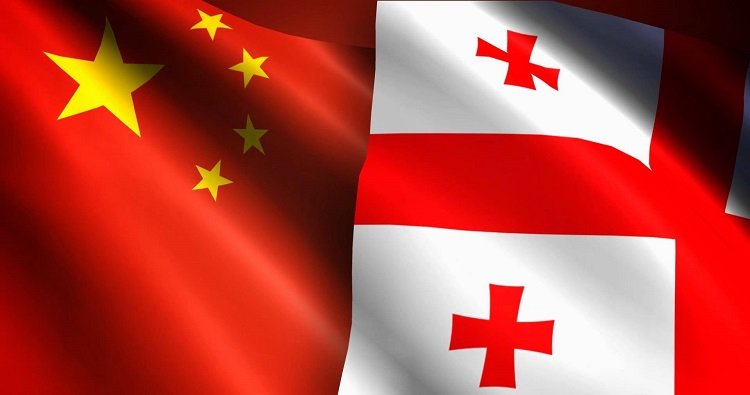
Georgia occupies an important place in China’s South Caucasus policy. Becoming a member of the Asian Infrastructure Investment Bank in 2015, Georgia joined China’s comprehensive project, the Belt and Road Initiative (BRI), in 2016. Through this, Georgia also became a participant in the Middle Corridor. In 2017, Georgia signed a Free Trade Agreement (FTA) with China, becoming the first country in the South Caucasus with which China signed a free trade agreement. To evaluate Georgia’s relations with China in recent years, it is important to briefly address the foreign policy pursued by the Tbilisi administration in the near past.
Georgia’s foreign policy has been shaped between two opposing poles: a pro-EU and pro-US foreign policy approach and a pro-Russian foreign policy approach. Two major developments have played a role in the foreign policy vision of the Tbilisi administration, which pursued pro-EU and pro-US policies in the early 2000s. The first was the 2008 Russia-Georgia War and the subsequent occupation of South Ossetia and Abkhazia. The second major development was the Russia-Ukraine War in 2022. Currently in its fourth term in power, the Georgian Dream Party has adopted a pragmatic foreign policy approach, particularly after the Ukraine War, rather than positioning the country against Russia. While this has provoked reactions from the EU and the US, it has also led to serious domestic opposition and anti-Russian sentiment. In particular, the law “On Transparency of Foreign Influence,” also known as the “foreign agents law”, which was introduced to reduce Western influence in the country, triggered strong reactions from the opposition. During the parliamentary elections held in October 2024, allegations—raised primarily by the Georgian President and Western leaders—that Russia interfered in the elections led to months-long protests by the Georgian opposition.[1]
While maintaining pragmatic relations with Russia and refraining from joining sanctions imposed on Russia, Georgia has not abandoned its goal of EU membership. Consequently, the foreign policy pursued by the Tbilisi administration has been described as a “multi-vector foreign policy”. In this context, Georgia has recently sought to develop relations with China, another actor besides the West and Russia. Within the framework of its status-quo-oriented foreign policy vision, China has refrained from recognizing the independence of South Ossetia and Abkhazia following the 2008 War, while also avoiding making anti-Russian statements. In 2024, China did not participate in the UN vote regarding the South Ossetia issue. Despite the FTA signed between Georgia and China in 2017, there has not been a significant leap in bilateral trade and economic relations. However, the sanctions imposed on Russia following the Russia-Ukraine War have brought the Middle Corridor, which includes Georgia, back into focus for China, replacing the Northern Corridor that passes through Russia.
By 2023, a significant turning point occurred in China-Georgia relations. In that year, China and Georgia signed a “Strategic Partnership Agreement,” thereby elevating bilateral relations to the level of a strategic partnership. China’s designation of Georgia as a “strategic partner” has been interpreted as a new orientation in China’s South Caucasus policy.[2] With the Strategic Partnership Agreement, it is aimed to increase cooperation in the fields of education and culture, as well as economic, commercial, and infrastructure investments. Georgia expressed its support for the Global Development Initiative, the Global Civilization Initiative, and the Global Security Initiative. Strengthening investments in the Middle Corridor was also placed on the agenda. In this way, Georgia has sought to strengthen its logistics network by developing cooperation with Middle Corridor countries such as Türkiye, Kazakhstan, and Azerbaijan.[3] The Tbilisi administration has made various attempts to become a logistics hub in the South Caucasus and has therefore not been receptive to the idea of creating alternative routes in the region, particularly the Zangezur Corridor.[4]
Georgia’s limited maritime capacity constitutes an obstacle to its logistics-centered policy objectives. During the period of former Prime Minister Mikheil Saakashvili, the construction of a port in Anaklia, which was first proposed during the Soviet era, was initiated as a solution to this problem.[5] In 2016, a US-Georgia joint consortium won the tender for the construction of a port in Anaklia. However, the project led to numerous financial and political disputes and was officially canceled in 2020. In 2024, a new tender was issued for the construction of the port and while the Georgian state retained a 51% stake, a China-Singapore joint consortium acquired the remaining 49% and won the tender.
With the consortium involving China winning the tender, the Anaklia port became an important connection point for the BRI. China’s Ambassador to Georgia emphasized Georgia’s importance for the Middle Corridor and stated that the Anaklia port could be the final link in the chain in terms of this connection.[6] Thus, the Anaklia Port has diversified China’s connectivity routes by adding a new corridor to the Middle Corridor, while simultaneously increasing China’s presence in Georgia and, more broadly, in the South Caucasus. In the field of education, a memorandum of understanding was signed in 2023 to promote the Chinese language. In April 2025, in connection with this agreement, it was announced that Chinese would be introduced as a second language in schools.[7] China has thus gained cultural influence as well. In 2024, the two countries agreed on mutual visa-free travel.[8] This aims to enhance cultural relations between the two societies.
Some of China’s other investments in Georgia include the Kvesheti-Kobi highway, also known as the North-South Corridor, and the Rikoti highway connecting the cities of Tbilisi and Batumi. With the infrastructure projects under BRI investments providing development services to Georgia, it has been argued that this has created space for the ruling Georgian Dream Party to deal with the domestic opposition.[9] In addition, the Tbilisi administration has recently developed cooperation with various Chinese technology companies, particularly Huawei. This has been interpreted as Georgia violating the agreement it signed with the United States in 2021 regarding 5G investments by purchasing technologies from China that allegedly lack data security.[10] It has also been claimed that these technologies are needed to counter opposition protests.[11] This situation has emerged as an obstacle in Georgia’s relations with the West.
The Tbilisi administration, which signed an FTA with China in 2017, had previously signed a “Deep and Comprehensive Free Trade Area” agreement with the EU in 2014. Thus, Georgia is the only country that has signed free trade agreements with both the EU and China. While Brussels frequently criticizes Tbilisi over its relations with Russia—particularly following recent elections—it has not explicitly described Georgia’s relationship with China as a threat. This allows Georgia to frame its relations with China as a “multi-vector foreign policy.” For Georgia, which has faced Western sanctions following the latest parliamentary elections, China stands out as a balancing partner, particularly due to its economic power.
In conclusion, Georgia is the first country in the South Caucasus with which China has signed both a Free Trade Agreement and a Strategic Partnership Agreement. Relations that have strengthened since 2023 provide China with opportunities to reinforce the Middle Corridor and establish a new connection route to European countries via the Anaklia port on the Black Sea. Through its relations with Georgia, China has thus increased its presence in the South Caucasus. From Georgia’s perspective, these relations offer an opportunity to diversify foreign policy instruments and strengthen a multi-vector and pragmatic foreign policy strategy at a time when it is being pressured to choose between Russia and the West. However, relations with China may pose a risk by creating the perception that the Tbilisi administration is drifting away from its existing foreign policy goals with the West, particularly EU membership, due to the close relationship between Russia and China. If the Tbilisi administration seeks to achieve its current objectives, it must pursue a balanced foreign policy to overcome this risk. Moreover, as in many countries with strong economic and trade ties to China, there is a risk of running a trade deficit in China’s favor. Furthermore, digital investments like smart city projects in Georgia have led to criticism from the West regarding authoritarianism and surveillance technologies.
*Picture: Basenton
[1] Ramin Sadık, “İki Ateş Arasında Sıkışmış Gürcistan”, Fikir Turu, December 9, 2024, https://fikirturu.com/jeo-politika/iki-ates-arasinda-sikismis-gurcistan/
[2] “Greater Consensus on Improving the Middle Corridor”, IISS, December 2023 Volume 29 Comment 39, https://www.iiss.org/publications/strategic-comments/2023/greater-consensus-on-improving-the-middle-corridor/
[3] “Full text: Joint Statement of the People's Republic of China and Georgia on Establishing a Strategic Partnership”, Embassy of the People’s Republic of China in Georgia, August 7, 2023, http://ge.china-embassy.gov.cn/eng/xwdt/202308/t20230807_11123383.htm
[4] Ramin Sadık, “İki Ateş Arasında Sıkışmış Gürcistan”, Fikir Turu, December 9, 2024, https://fikirturu.com/jeo-politika/iki-ates-arasinda-sikismis-gurcistan/
[5] Maximilian Hess, Maia Otarashvili, “Georgia’s Doomed Sea Port Ambitions: Geopolitics of the Cancelled Anaklia Project”, Foreign Policy Research Institute, October 2020.
[6] Ivan Nechepurenko, “Plans for a Chinese Port Roil the Politics of a Former Soviet Nation”, The New York Times, March 13, 2025, https://www.nytimes.com/2025/03/13/world/europe/china-georgia-port.html
[7] “Georgia to Introduce Chinese as a Second Language in Schools amid Strengthening Ties with China”, Georgia Today, April 17, 2025, https://georgiatoday.ge/georgia-to-introduce-chinese-as-a-second-language-in-schools-amid-strengthening-ties-with-china/
[8] “Çin ile Gürcistan Karşılıklı Vize Muafiyeti için Anlaştı”, CGTN Türk, April 11, 2024, https://www.cgtnturk.com/cin-ile-gurcistan-karsilikli-vize-muafiyeti-icin-anlasti
[9] Ketevan Chincharadze, “Georgia’s Tacit Pivot to China”, The Diplomat, May 23, 2024, https://thediplomat.com/2024/05/georgias-tacit-pivot-to-china/
[10] Miro Popkhadze, “China’s Georgian Gamble”, FPRI, March 17, 2025, https://www.fpri.org/article/2025/03/chinas-georgian-gamble/
[11] “Georgia Expands Surveillance Network Amid Privacy and Security Concerns”, ID Tech, February 7, 2025, https://idtechwire.com/georgia-expands-surveillance-network-amid-privacy-and-security-concerns/
© 2009-2025 Center for Eurasian Studies (AVİM) All Rights Reserved
No comments yet.
-
 HIGHLIGHTS FROM THE US PRESIDENT TRUMP’S ASIA TRIP
Seyda Nur OSMANLI 29.01.2026 -
 TURKIYE-CHINA RELATIONS: OPPORTUNITIES AND CHALLENGES
Seyda Nur OSMANLI 22.11.2024 -
 THE 16TH BRICS SUMMIT REGARDING CHINA AND THE GLOBAL SOUTH
Seyda Nur OSMANLI 26.12.2024 -
 BANGLADESH: CHANGING INTERNATIONAL BALANCES IN SOUTH ASIA
Seyda Nur OSMANLI 07.03.2025 -
 HIGHLIGHTS FROM THE 47TH ASEAN SUMMIT
Seyda Nur OSMANLI 20.01.2026
-
 SHANGHAI COOPERATION ORGANIZATION (SCO) BISHKEK SUMMIT
Özge Emine ÖZÇELİK 15.09.2026 -
 THE MANAGEMENT BLUNDERS IN THE EU
Hazel ÇAĞAN ELBİR 11.03.2021 -
 THE GRAIN INITIATIVE AND THE BLACK SEA SECURITY - I
Turgut Kerem TUNCEL 03.08.2023 -
 THE “NEJDEHISM” REMAINS OFFICIAL IN ARMENIA
Maxime GAUIN 30.10.2019 -
 ALEXANDER LAPSHIN’S EXTRADITION TO AZERBAIJAN: A NEW EPISODE IN KARABAKH DISPUTE
Turgut Kerem TUNCEL 21.02.2017
-
25.01.2016
THE ARMENIAN QUESTION - BASIC KNOWLEDGE AND DOCUMENTATION -
12.06.2024
THE TRUTH WILL OUT -
27.03.2023
RADİKAL ERMENİ UNSURLARCA GERÇEKLEŞTİRİLEN MEZALİMLER VE VANDALİZM -
17.03.2023
PATRIOTISM PERVERTED -
23.02.2023
MEN ARE LIKE THAT -
03.02.2023
BAKÜ-TİFLİS-CEYHAN BORU HATTININ YAŞANAN TARİHİ -
16.12.2022
INTERNATIONAL SCHOLARS ON THE EVENTS OF 1915 -
07.12.2022
FAKE PHOTOS AND THE ARMENIAN PROPAGANDA -
07.12.2022
ERMENİ PROPAGANDASI VE SAHTE RESİMLER -
01.01.2022
A Letter From Japan - Strategically Mum: The Silence of the Armenians -
01.01.2022
Japonya'dan Bir Mektup - Stratejik Suskunluk: Ermenilerin Sessizliği -
03.06.2020
Anastas Mikoyan: Confessions of an Armenian Bolshevik -
08.04.2020
Sovyet Sonrası Ukrayna’da Devlet, Toplum ve Siyaset - Değişen Dinamikler, Dönüşen Kimlikler -
12.06.2018
Ermeni Sorunuyla İlgili İngiliz Belgeleri (1912-1923) - British Documents on Armenian Question (1912-1923) -
02.12.2016
Turkish-Russian Academics: A Historical Study on the Caucasus -
01.07.2016
Gürcistan'daki Müslüman Topluluklar: Azınlık Hakları, Kimlik, Siyaset -
10.03.2016
Armenian Diaspora: Diaspora, State and the Imagination of the Republic of Armenia -
24.01.2016
ERMENİ SORUNU - TEMEL BİLGİ VE BELGELER (2. BASKI)
-
AVİM Conference Hall 24.01.2023
CONFERENCE TITLED “HUNGARY’S PERSPECTIVES ON THE TURKIC WORLD"