













This is the English translation of a Turkish language article that was originally published by AVİM on 4 September 2026.
Marking the 25th anniversary of its establishment, the Shanghai Cooperation Organization (SCO) Summit took place in Bishkek, the capital of Kyrgyzstan, on 31 August-1 September 2026. Held under the theme “25 Years of the SCO: Together for Sustainable Peace, Development and Prosperity,” the 26th Summit of Heads of State brought together leaders from 21 countries in Bishkek this year. The summit addressed the organization’s 25-year history and future priorities, focusing on regional security, counter-terrorism, alternative financial mechanisms, and the development of transport corridors.
The Transformation of the SCO Over 25 Years
The foundations of the organization were laid following the dissolution of the Soviet Union to ensure border security and mutual trust between China and the newly independent Central Asian states. Formed in 1996 by China, Kazakhstan, Kyrgyzstan, Russia, and Tajikistan, the ‘Shanghai Five’ focused on issues such as military confidence-building measures and the reduction of armed forces in border regions. With Uzbekistan joining the structure in 2001, the Shanghai Five was renamed the Shanghai Cooperation Organization.
Focusing on combating the ‘three evils’ of terrorism, separatism and extremism in its early years, the SCO’s agenda expanded and evolved over time. Economic cooperation, energy, transport, trade, investment, environment, technology and cultural relations were integrated into the organization’s fields of activity. With India and Pakistan becoming full members in 2017, Iran in 2023 and Belarus in 2024, the organization transformed from a five-member security mechanism into a broader Eurasian platform with 10 members. Today, the SCO members comprise China, Russia, India, Pakistan, Iran, Kazakhstan, Kyrgyzstan, Tajikistan, Uzbekistan and Belarus. These countries represent over 40% of the world’s population. The organization also has two observer states, Afghanistan and Mongolia, and 15 dialogue partners, including Türkiye.
Initially functioning as a Central Asia-centered security organization, the structure today brings together the world’s most populous countries such as China and India, a key global actor like Russia and energy-rich countries such as Iran and the Gulf states within the same framework of cooperation. Therefore, the 25-year transformation of the SCO stands out not merely as an expansion from ‘5 to 10 countries’, but also through its surrounding network of partnerships.
2026 Bishkek Summit
At the SCO Summit held in Bishkek on 1 September 2026, issues aimed at strengthening the organization’s cooperation in security, the economy, and politics were discussed. Coinciding with the 25th anniversary of the SCO’s establishment, regional security matters took center stage, particularly the fight against terrorism, separatism, extremism, and drug trafficking. In addition, increasing trade and investment, improving energy and transport connectivity and deepening cooperation in industry, environment, tourism, and new technologies were brought to the agenda. Meanwhile, at the ‘SCO+’ (SCO Plus) meeting held under the theme “The UN as a Key Element of a Just World Order: The Contribution of the SCO Plus States to the Formation of a Multipolar World”, discussions focused on strengthening the UN’s central role in the international system, forming a multipolar and more equitable world order, and increasing the representation of developing nations in global governance.
At the summit, common positions regarding international and regional developments were outlined. SCO members emphasized the need to preserve the organization’s peaceful and non-aligned character, respect the sovereignty and territorial integrity of states, and resolve international issues through political and diplomatic means. Supporting stability in Afghanistan and maintaining the joint fight against terrorism and the drug threat were also among the prominent topics. In the economic sphere, an agreement was reached to continue cooperation on advancing trade and investment relations among member countries, strengthening energy security, and enhancing regional connectivity.
28 documents were signed at the conclusion of the summit. Chief among these was the Bishkek Declaration, marking the 25th anniversary of the SCO. In addition, a protocol amending the SCO Charter and new regulations regarding assistance to states in emergencies, combating security threats, and the fight against drugs were also adopted. Furthermore, a decision was reached to sign a memorandum to enhance cooperation between the SCO and the African Union Commission. Following Kyrgyzstan’s chairmanship, Pakistan has assumed the SCO chairmanship for the 2026-2027 term.
Türkiye’s Relations with the SCO
Within the expanding structure of the SCO, Türkiye obtained the status of ‘dialogue partner’ in 2012. Thus, Türkiye became one of the countries closely following key issues on the SCO agenda, such as security, energy and regional connectivity. Furthermore, by assuming the chairmanship of the SCO Energy Club in 2017, Türkiye became the first non-member country to hold such a position within the organization.
One of the most significant steps in Türkiye’s relations with the SCO came in 2022. Turkish President Recep Tayyip Erdoğan attended the Samarkand Summit as a special guest at the invitation of Uzbekistan and Türkiye was represented at the highest level at an SCO meeting for the first time. President Erdoğan also attended the summit held in Tianjin, China, in 2025 as a guest of honor and delivered a speech at the SCO+ session.
At the 2026 Bishkek Summit, President Erdoğan sent a clear message regarding Türkiye’s intention to advance its relations with the SCO to a higher level and evaluate full membership. However, Erdoğan specifically emphasized that Türkiye developing its relations with Russia and China does not mean moving away from NATO and the West. This approach holds strategic importance for Türkiye’s foreign policy choices. Interpreting Türkiye’s interest in the SCO as a ‘move away from the West’ is inconsistent with Türkiye’s multifaceted foreign policy approach. For Türkiye, the SCO serves as a distinct platform for deepening political and economic relations with Central Asia, China, Russia, and South Asia. Transport and connectivity stand out as key priorities, particularly given Türkiye’s position within the Middle Corridor initiative. Diversifying trade routes between China and Europe, improving economic relations with Central Asian countries and strengthening regional transport networks are areas that simultaneously concern Türkiye’s relations with both SCO countries and Europe, owing to its geographical position at the easternmost edge of the West and the westernmost edge of the East.
Therefore, Türkiye advancing its relations with the SCO can be evaluated less as a matter of choice and more as a natural component of its geopolitical position across different regional platforms.
The SCO’s Place in the New World Order
In recent years, it has been observed that the centers of economic and political gravity in the international system have diversified, with the influence of different actors increasing in global politics. The rise of Asia, the growing political clout of the Global South and the emergence of alternative trade and financial instruments are among the key indicators of this transformation. A current example of this shift is visible when comparing the combined weight of SCO and G7 countries in the global economy. According to data based on the IMF’s April 2026 projections, the SCO economies’ share of the global GDP is expected to reach 34.3% in 2026, while the G7’s share is projected to remain at 28%. Based on this comparison, the SCO’s share of the global economy surpassed that of the G7 for the first time in 2021.[1]
The two organizations differ in terms of their objectives, institutional structures and forms of cooperation, and these figures do not imply that the SCO is an alternative to the G7. However, the comparison is noteworthy in that it demonstrates that global economic weight is increasingly shifting toward Eurasia and Asia-centered powers.
The core challenge facing the SCO is translating its existing potential into the capacity for collective action. Major powers like China, India, and Russia provide the organization with significant economic and political weight through cooperation and coordination. On the other hand, the differing priorities of these countries can also make it difficult for the SCO to generate common policies. Tensions between India and Pakistan, the Russia-Ukraine war, and the conflict involving Iran demonstrate that SCO members struggle to develop a unified and effective stance in the face of regional crises. Indeed, at the summit, despite the SCO’s ambition to strengthen security and regional stability, members exhibited a limited posture toward these crises. While its expanding structure and growing economic weight bring distinct advantages, the ultimate impact of the SCO will be determined by the extent to which it can act together on shared issues despite internal differences, as well as by the concrete steps to be taken.
The Bishkek Summit was an important meeting demonstrating the point reached in the SCO’s 25-year transformation. On the other hand, the summit has not eliminated the question marks facing the organization in the face of the challenges confronting today’s world. The SCO has transformed from a five-country border security mechanism into a broad structure with significant political weight, bringing together China, Russia, India, Iran, and Central Asian countries. The continuity and impact of this weight can only be achieved if differences among members’ foreign policy priorities, security approaches, and mutual rivalries are effectively managed and if they can act together. Therefore, the future trajectory of the SCO holds strategic importance not only for its member states but also for Türkiye, which forms an integral part of the shifting dynamics in Eurasia.
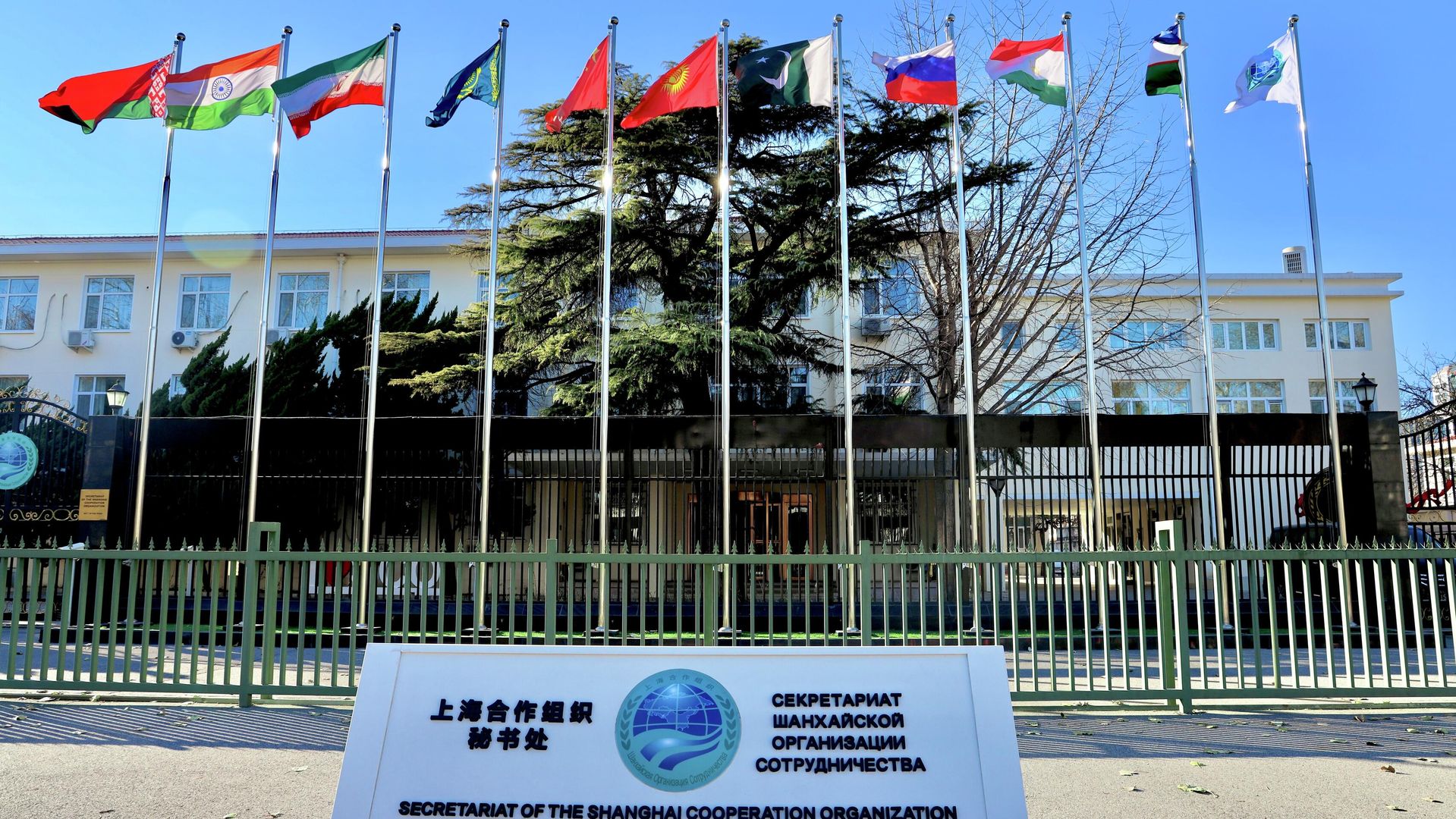
*Picture: The Shanghai Cooperation Organisation
[1] Samrat Sharma, “SCO vs G7: How The Emerging Bloc Is Challenging Decades Of Western Dominance,” NDTV World, September 2, 2026, https://www.ndtv.com/world-news/sco-vs-g7-how-the-emerging-bloc-is-challenging-decades-of-western-dominance-11990164
© 2009-2025 Center for Eurasian Studies (AVİM) All Rights Reserved
No comments yet.
-
 TÜRKİYE’S ROLE IN EUROPE’S CHANGING SECURITY STRATEGY
Özge Emine ÖZÇELİK 16.03.2026 -
 TÜRKİYE-TRNC STRATEGIC COOPERATION
Özge Emine ÖZÇELİK 27.07.2026 -
 TÜRKİYE-EU TRADE RELATIONS: OPPORTUNITIES AND CHALLENGES
Özge Emine ÖZÇELİK 01.04.2026 -
SHANGHAI COOPERATION ORGANIZATION (SCO) BISHKEK SUMMIT
Özge Emine ÖZÇELİK 15.09.2026 -
 INDIA’S STRATEGIC BALANCING CHALLENGES THE QUAD
Özge Emine ÖZÇELİK 21.01.2026
-
 THE EU’S WORRIES ON THE US’ MILITARY EXISTENCE/ABSENCE
Hazel ÇAĞAN ELBİR 11.01.2021 -
 IGNORED DANGER: MEDZAMOR NUCLEAR POWER PLANT
Tutku DİLAVER 19.12.2018 -
 OUTSIDE INTERVENTION TO THE ELECTION OF THE ARMENIAN PATRIARCH OF ISTANBUL
Mehmet Oğuzhan TULUN 15.03.2017 -
 HYDROPOLITICS, TRANSBOUNDARY RIVERS, AND THE SOUTH CAUCASUS
Tutku DİLAVER 11.04.2022 -
 THE SPANISH LEGISLATION ON GENOCIDE DENIAL: DEBATES AND THE CURRENT LEGAL SITUATION
Miguel MORENO - Turgut Kerem TUNCEL 04.05.2015
-
25.01.2016
THE ARMENIAN QUESTION - BASIC KNOWLEDGE AND DOCUMENTATION -
12.06.2024
THE TRUTH WILL OUT -
27.03.2023
RADİKAL ERMENİ UNSURLARCA GERÇEKLEŞTİRİLEN MEZALİMLER VE VANDALİZM -
17.03.2023
PATRIOTISM PERVERTED -
23.02.2023
MEN ARE LIKE THAT -
03.02.2023
BAKÜ-TİFLİS-CEYHAN BORU HATTININ YAŞANAN TARİHİ -
16.12.2022
INTERNATIONAL SCHOLARS ON THE EVENTS OF 1915 -
07.12.2022
FAKE PHOTOS AND THE ARMENIAN PROPAGANDA -
07.12.2022
ERMENİ PROPAGANDASI VE SAHTE RESİMLER -
01.01.2022
A Letter From Japan - Strategically Mum: The Silence of the Armenians -
01.01.2022
Japonya'dan Bir Mektup - Stratejik Suskunluk: Ermenilerin Sessizliği -
03.06.2020
Anastas Mikoyan: Confessions of an Armenian Bolshevik -
08.04.2020
Sovyet Sonrası Ukrayna’da Devlet, Toplum ve Siyaset - Değişen Dinamikler, Dönüşen Kimlikler -
12.06.2018
Ermeni Sorunuyla İlgili İngiliz Belgeleri (1912-1923) - British Documents on Armenian Question (1912-1923) -
02.12.2016
Turkish-Russian Academics: A Historical Study on the Caucasus -
01.07.2016
Gürcistan'daki Müslüman Topluluklar: Azınlık Hakları, Kimlik, Siyaset -
10.03.2016
Armenian Diaspora: Diaspora, State and the Imagination of the Republic of Armenia -
24.01.2016
ERMENİ SORUNU - TEMEL BİLGİ VE BELGELER (2. BASKI)
-
AVİM Conference Hall 24.01.2023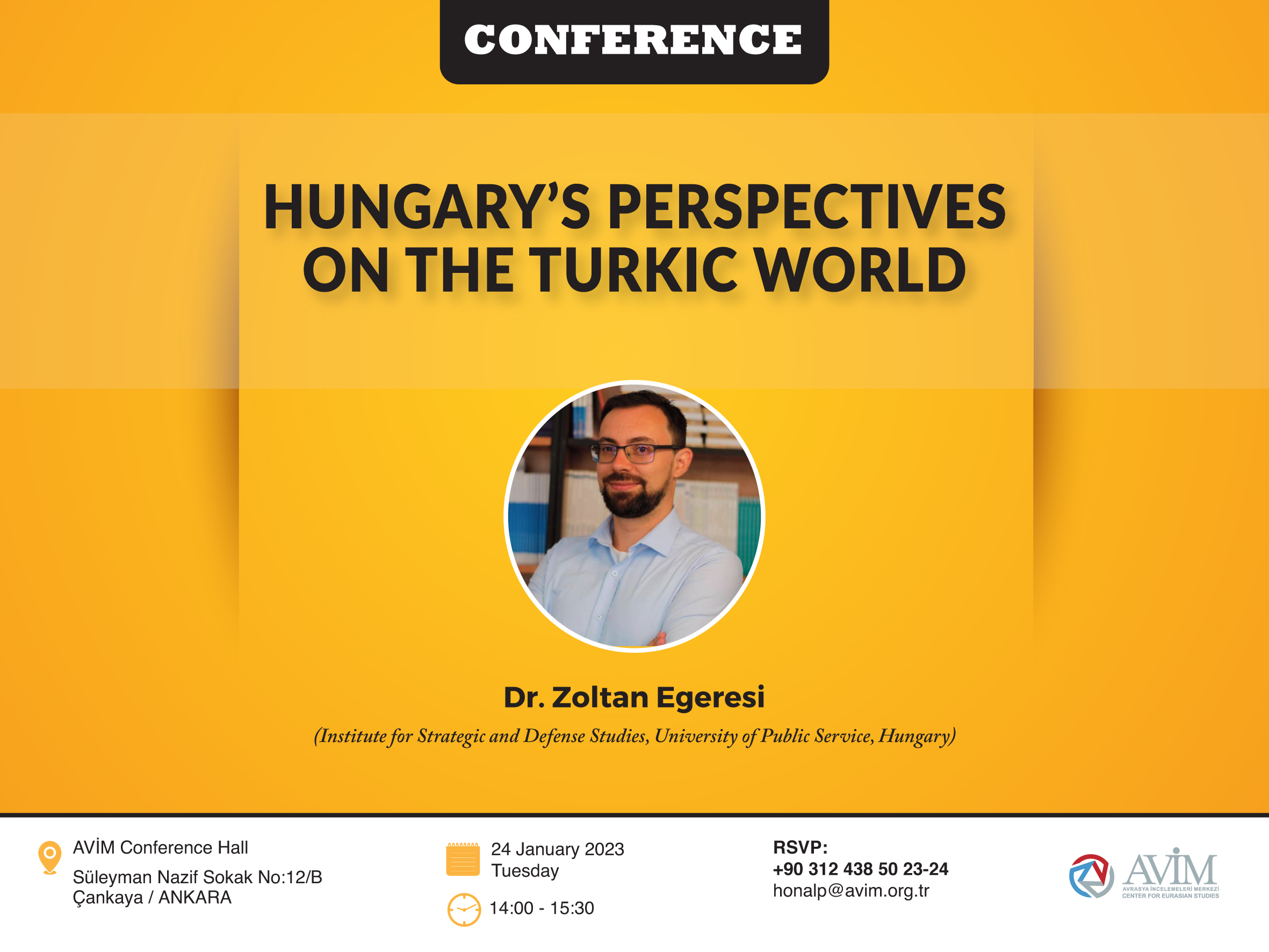
CONFERENCE TITLED “HUNGARY’S PERSPECTIVES ON THE TURKIC WORLD"