














This is the English translation of a Turkish language article that was originally published by AVİM on 1 June 2026.
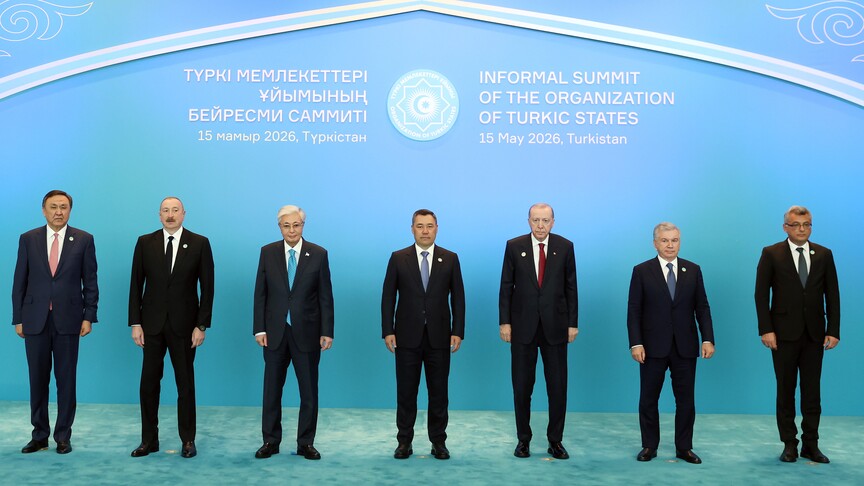
The Informal Summit of the Organization of Turkic States (OTS) was held on 15 May 2026 in Turkistan, Kazakhstan. In addition to the presidents of Türkiye, Azerbaijan, Uzbekistan, Kyrgyzstan, and Kazakhstan, the Summit was attended by representatives of the Turkish Republic of Northern Cyprus as an Observer State. Within the framework of the Summit, the Meeting of the Council of Foreign Ministers of the OTS was also convened.
Held under the theme “Artificial Intelligence and Digital Development”, the Summit brought attention to issues such as digital transformation, cooperation in the field of technology, economic investments, the Middle Corridor, and the Zangezur Corridor, which is regarded as one of its key components. These developments demonstrate that the Turkic World is acting not only in pursuit of cultural ties but also strategic and geopolitical objectives.[1]
The selection of Turkistan as the host city for this year’s Summit is significant in terms of emphasizing the shared historical, cultural, and civilizational heritage of the Turkic World. Turkistan is not only a historic city but also an important symbol representing the collective memory and civilizational legacy of Turkic peoples. In this context, holding the Summit in Turkistan can be regarded as an initiative aimed at revitalizing and strengthening the sense of common identity among Turkic states.
In recent years, the increasing number of meetings among Turkic states, economic and strategic cooperation, and mutual declarations of support have indicated that OTS is evolving beyond being a merely cultural platform and transforming into a structure of geopolitical significance in Eurasia. For this reason, the geopolitical implications of the strengthening relations among Turkic states are interpreted differently by regional actors. From Russia’s perspective, the strengthening relations among Turkic states may imply a decline in Moscow’s traditional influence over Central Asia. Moreover, Russia has at times viewed the growing role of OTS as a geopolitical project supported by the West. Particularly, the emergence of the Middle Corridor as an alternative to Russia’s south-north transport routes has generated concerns in Moscow from both economic and strategic perspectives.
Indeed, assessments within Russian academic and political circles suggest that, following Türkiye’s accession to NATO, pan-Turkist ideology has once again been used as an ideological instrument in international politics.[2] It is further argued that the growing integration tendencies within the Turkic world could eventually evolve into a “Pan-Turkist” structure and serve as the basis for a Western-backed effort directed against Russia.[3] The emergence of studies which imply Western support for pan-Turkism may be regarded as an indication that Russia views cooperation among Turkic states with a certain degree of suspicion.
However, when the historical background of the concept of “pan-Turkism” is examined, it becomes evident that many contemporary assessments are detached from historical context. Pan-Turkism emerged as an intellectual movement during the decline of the Ottoman State in the early twentieth century. Shaped particularly by the efforts of Turkic peoples living within the borders of the Russian Empire to preserve their identities and cultural heritage, this idea developed as an alternative to the ideological currents of the period, such as pan-Islamism and Ottomanism. During the Republican era, however, it came to be regarded mainly as a cultural approach.
For this reason, interpreting the economic, political, and strategic cooperation among Turkic states today as a direct “pan-Turkist threat” may be regarded as an unrealistic approach. The development of cooperation among states that share common historical, cultural, and linguistic ties should be viewed as a natural process within the international system, as exemplified by the European Union.
A more complex picture emerges when the growing integration among Turkic states is viewed from China’s perspective. On the one hand, the growing influence of the Turkic world and the sensitive issue of East Turkistan give rise to certain concerns for China. On the other hand, China’s economic relations with Central Asia, Azerbaijan, and Türkiye within the framework of the Belt and Road Initiative are transforming the OTS region into an important trade and transportation corridor for China. Indeed, recent years have witnessed growing cooperation between China and Turkic states in the fields of economy, transportation, investment, and tourism.
Iran, another key actor in the region, is also closely monitoring the growing ties among Turkic states. In addition to historical, cultural, and religious ties, the large Turkic population residing in Iran contributes to Tehran’s sensitive approach toward this process. In particular, the potential implementation of transportation projects such as the Zangezur Corridor, also referred to as TRIPP, is regarded by Iran as developments that could alter existing regional dynamics. Furthermore, Türkiye’s central role in cooperation among Turkic states is being closely observed by both Iran and Russia.
The Republic of Türkiye is regarded as one of the central actors of the Turkic World due to its historical state tradition, military capability, diplomatic influence, and economic ties. This development is being carefully assessed not only by Russia and Iran but also by Western countries, since the possibility of the emergence of a new Turkic axis in Eurasia with significant political, economic, and strategic influence has the potential to affect global power dynamics as well.
In conclusion, the strengthening of relations among Turkic states in the post-Soviet period indicates not only a cultural but also an economic, political, and strategic transformation. Cooperation that initially developed in the fields of education and culture has been expanding to encompass energy, transportation, technology, defense, and geopolitical fields. Azerbaijan’s emergence as a link between Central Asia and Türkiye, together with Middle Corridor projects and critical energy routes, has further increased the significance of this process.
Today, when viewed in light of Türkiye’s political and institutional capacity, Azerbaijan’s energy resources and transportation networks, and Central Asia’s strategic geography, its position along the Silk Road, and its critical mineral reserves, Turkic states collectively constitute a geopolitical space of significant global importance. The combination of a shared historical memory, cultural ties, and common strategic interests may position the Turkic world as a more influential actor in international politics in the years to come.
*Image: Anadolu Agency
[1] "Türk Devletleri Teşkilatı Gayriresmi Zirvesi yapıldı," Anadolu Agency, May 29, 2026, https://www.aa.com.tr/tr/gundem/turk-devletleri-teskilati-gayriresmi-zirvesi-yapildi/3938418
[2] Курочкин Руслан Владимирович, “Идеи национального единства в мусульманском и тюркском мире: панисламизм, пантюркизми пантуранизм в сравнении”, Мифологемы пантюркизма и безопасность России и Евразии в XXI веке, Москва, 2025, 67.
[3] “Moscow Worried by Rise of Pan-Turkism Across Central Asia,” Jamestown Foundation, June 4, 2026, https://jamestown.org/moscow-worried-by-rise-of-pan-turkism-across-central-asia/
© 2009-2025 Center for Eurasian Studies (AVİM) All Rights Reserved
No comments yet.
-
 EU-ARMENIA COOPERATION AND CHANGING REGIONAL BALANCES IN THE SOUTH CAUCASUS
İlaha KHANTAMİROVA 24.07.2026 -
 THE MIGRATION OF ARMENIANS FROM KARABAKH AND THE CLAIMS OF A NEW “GENOCIDE”
İlaha KHANTAMİROVA 13.07.2026 -
 OVERLAPPING INTERESTS IN THE SOUTH CAUCASUS: THE AZERBAIJAN, ISRAEL AND IRAN TRIANGLE
İlaha KHANTAMİROVA 29.05.2025 -
THE INTEGRATION OF THE TURKIC WORLD AND ITS IMPLICATIONS FOR REGIONAL POWER DYNAMICS
İlaha KHANTAMİROVA 16.06.2026 -
 CHOLPON-ATA SUMMIT: NEW PERIOD IN AZERBAIJAN'S CENTRAL ASIA INTEGRATION
İlaha KHANTAMİROVA 31.08.2026
-
 NATO IS NOT BRAIN-DEAD: HOW CAN OSCE AND NATO HELP STOP THE WAR IN UKRAINE?
Teoman Ertuğrul TULUN 08.03.2022 -
 TAIWAN ELECTION 2020: MORE AMBITIOUS TAIWANESE IDENTITY AND DEVELOPING CONSTRUCTIVE APPROACHES
Teoman Ertuğrul TULUN 10.02.2020 -
 THE EU'S ENLARGEMENT PARADOX: POLITICS OVER PRINCIPLES?
Teoman Ertuğrul TULUN 25.01.2024 -
 CHINA’S GROWING PRESENCE IN GEORGIA
Seyda Nur OSMANLI 30.04.2025 -
 TÜRKİYE-EU TRADE RELATIONS: OPPORTUNITIES AND CHALLENGES
Özge Emine ÖZÇELİK 01.04.2026
-
25.01.2016
THE ARMENIAN QUESTION - BASIC KNOWLEDGE AND DOCUMENTATION -
12.06.2024
THE TRUTH WILL OUT -
27.03.2023
RADİKAL ERMENİ UNSURLARCA GERÇEKLEŞTİRİLEN MEZALİMLER VE VANDALİZM -
17.03.2023
PATRIOTISM PERVERTED -
23.02.2023
MEN ARE LIKE THAT -
03.02.2023
BAKÜ-TİFLİS-CEYHAN BORU HATTININ YAŞANAN TARİHİ -
16.12.2022
INTERNATIONAL SCHOLARS ON THE EVENTS OF 1915 -
07.12.2022
FAKE PHOTOS AND THE ARMENIAN PROPAGANDA -
07.12.2022
ERMENİ PROPAGANDASI VE SAHTE RESİMLER -
01.01.2022
A Letter From Japan - Strategically Mum: The Silence of the Armenians -
01.01.2022
Japonya'dan Bir Mektup - Stratejik Suskunluk: Ermenilerin Sessizliği -
03.06.2020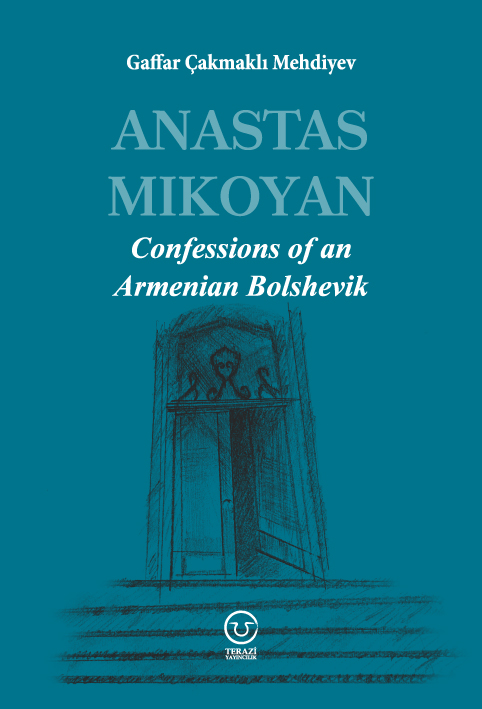
Anastas Mikoyan: Confessions of an Armenian Bolshevik -
08.04.2020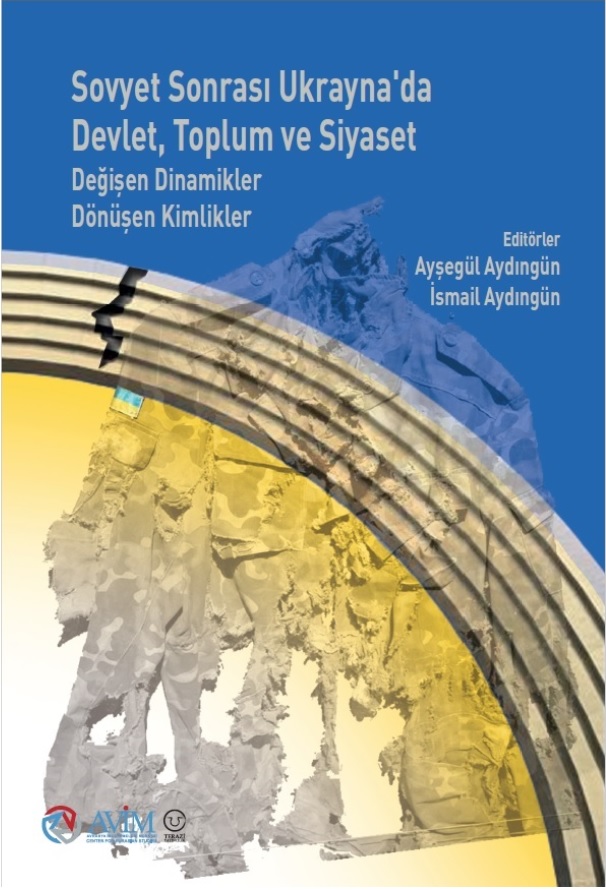
Sovyet Sonrası Ukrayna’da Devlet, Toplum ve Siyaset - Değişen Dinamikler, Dönüşen Kimlikler -
12.06.2018
Ermeni Sorunuyla İlgili İngiliz Belgeleri (1912-1923) - British Documents on Armenian Question (1912-1923) -
02.12.2016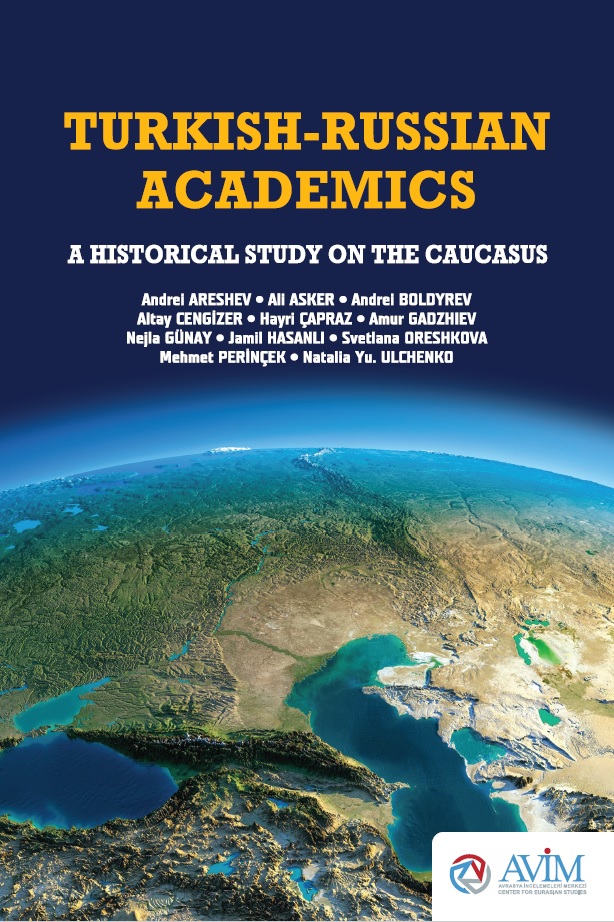
Turkish-Russian Academics: A Historical Study on the Caucasus -
01.07.2016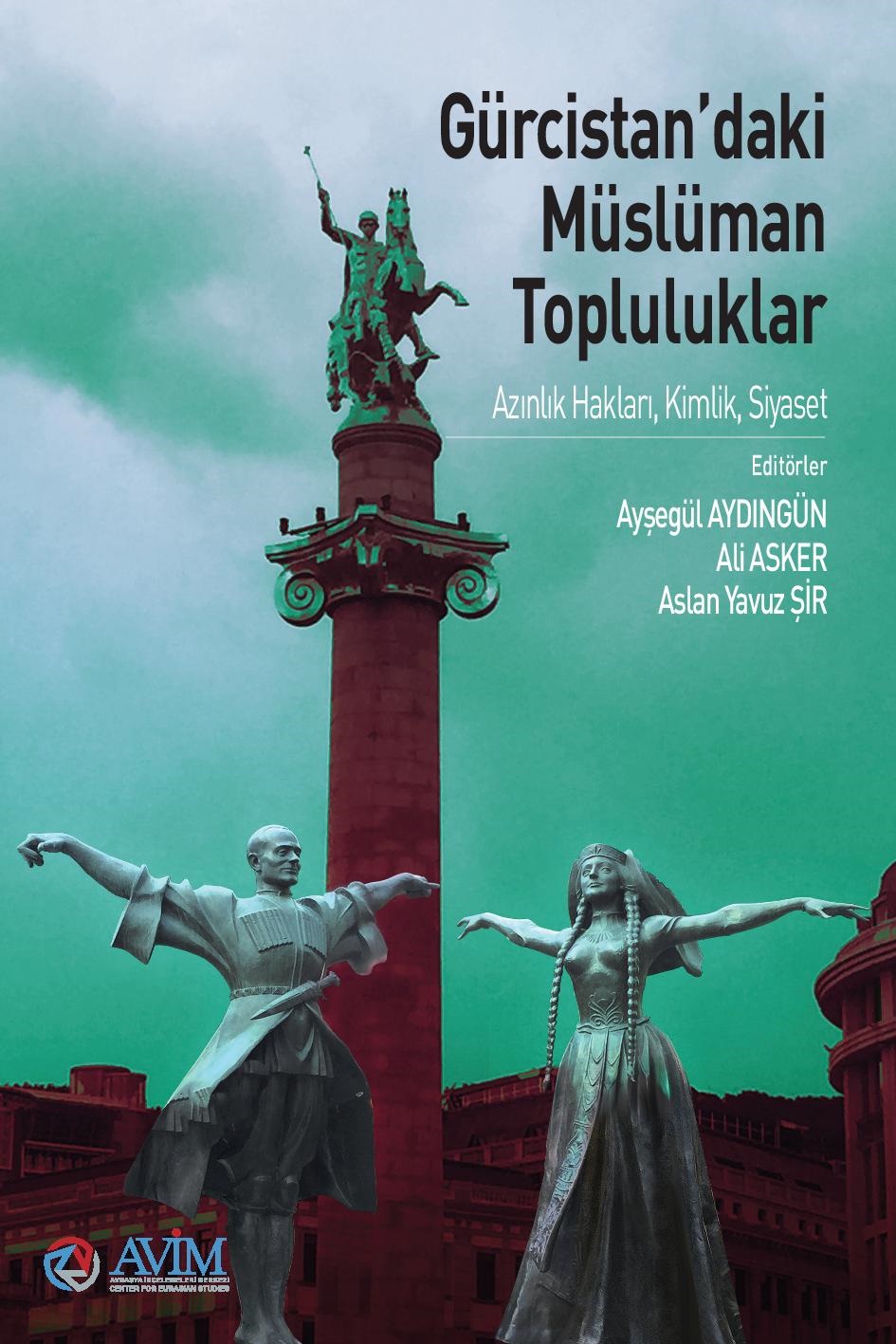
Gürcistan'daki Müslüman Topluluklar: Azınlık Hakları, Kimlik, Siyaset -
10.03.2016
Armenian Diaspora: Diaspora, State and the Imagination of the Republic of Armenia -
24.01.2016
ERMENİ SORUNU - TEMEL BİLGİ VE BELGELER (2. BASKI)
-
AVİM Conference Hall 24.01.2023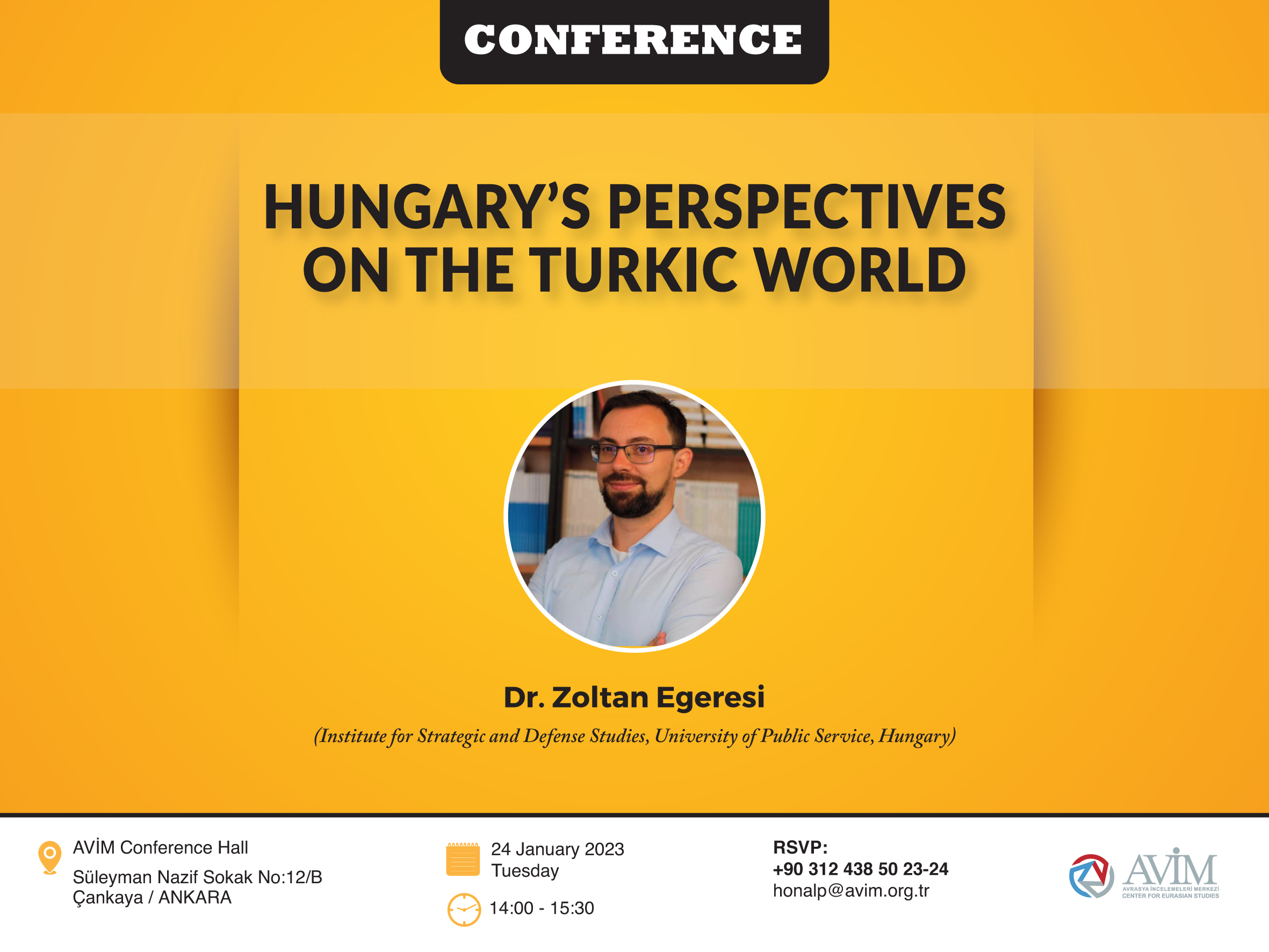
CONFERENCE TITLED “HUNGARY’S PERSPECTIVES ON THE TURKIC WORLD"