














This is the English translation of a Turkish language article that was originally published by AVİM on 20 July 2026.
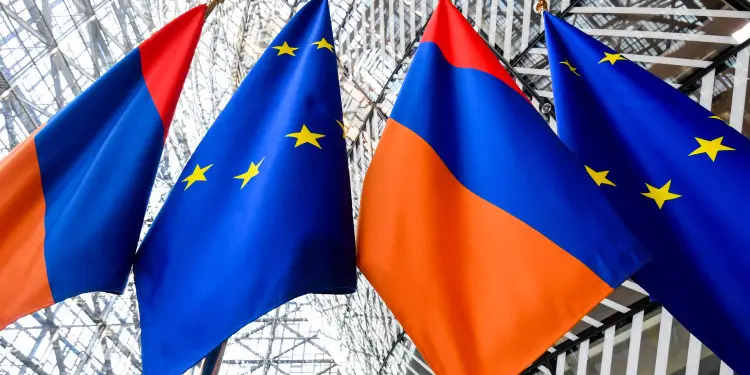
The European Union Partnership Mission in Armenia (EUPM Armenia) officially began operations on 13 July 2026. Aimed at strengthening Armenia’s resilience, this initiative marks the EU’s second mission in the country. The first mission, the European Union Mission in Armenia (EUMA), was established in 2023 to monitor the security situation on the Armenian side of the Armenia-Azerbaijan border, contribute to human security, and support confidence-building measures between the two countries.[1] In contrast, the Partnership Mission in Armenia is designed as a more comprehensive cooperation mechanism aimed at enhancing the Armenian authorities’ resilience to hybrid threats and strengthening their ability to address emerging security challenges. Within this framework, the mission is envisaged to work in close cooperation with Armenian institutions through strategic advisory services, technical expertise, and institutional capacity-building activities; thereby contributing to the strengthening of the relevant policy framework, the enhancement of the government’s capacity in related areas, and the improvement of inter-agency coordination.[2]
Established at the request of the Government of Armenia on 21 April 2026, the priorities of this Partnership Mission include combating cyber threats, enhancing resilience against foreign information manipulation and interference, and providing support to Armenian institutions in the fight against illicit financial flows. One notable aspect of the mission is that Kaja Kallas, the EU’s High Representative for Foreign Affairs and Security Policy, views this initiative as part of a broader process of economic and political support aimed at strengthening Armenia’s resilience against pressure from Russia.[3]
Considering these statements and the political, economic, and institutional support the EU has provided to Armenia in recent times, it can be concluded that the EU is not only conducting technical cooperation with Armenia, but is also adopting an approach that aligns with the political orientation of with the country’s current administration. Armenia’s gradual distancing from Russia and the deepening of its relations with the EU signal a transformation in the country’s foreign policy axis, while the potential effects of this process on regional geopolitical balances are also bringing new debates to the fore.
In this context, the fact that Georgia’s relations with the EU have followed a more limited course compared to previous years, in line with the foreign policy pursued by Georgia’s current administration, reinforces the assessments that the EU is concentrating its political and institutional influence in the region on Armenia. Azerbaijan, meanwhile, while continuing to pursue a multifaceted and balanced foreign policy approach, retains its importance for the EU, particularly in terms of energy security and the Middle Corridor. For this reason, the EU’s deepening of its relations with Armenia does not eliminate the need for cooperation with other partners in the region, foremost among them Azerbaijan.
The EU’s recent comprehensive cooperation with Armenia and its placement of increasing emphasis on Armenia in its South Caucasus policy also raise certain questions. Although the EU emphasizes that it aims to develop balanced relations with the countries in the region, how this approach will be perceived by various actors in the South Caucasus and how it will affect regional security and the peace process in the long term are among the issues that must be closely monitored in the coming period.
Furthermore, the diaspora factor has also drawn attention within the framework of the cooperation developed between the EU and Armenia in recent times. During the EU-Armenia Summit held in Yerevan on 5 May 2026, the parties signed a Connectivity Partnership Declaration and announced letters of intent to develop cooperation with various Armenian companies and organizations to support this partnership with concrete projects. The inclusion of the Armenian General Benevolent Union (AGBU) among these organizations stands out as a notable development.[4]
To better assess the significance of this cooperation, it would be helpful to briefly touch upon the history of AGBU. Controversial for its activities supporting the Armenian genocide claims and its rhetoric directed at neighboring countries, the Union traces its founding to 1906. It is known that AGBU, which began operations in Egypt, later moved its headquarters to Paris and New York and maintains a broad network of branches operating in Europe, the Americas, and the Caucasus.[5] Although its founding charter states that it would refrain from political activities and that its primary purpose is to provide material and moral support to Armenians in need, its activities throughout history have gone beyond this framework. Indeed, various studies have revealed that AGBU maintained close ties with Armenian revolutionary committees and was linked to anti-Turkish activities in Anatolia during the final period of the Ottoman State.
In this regard, the EU’s decision to develop cooperation with AGBU raises various concerns. At a time when the normalization process between Armenia and Türkiye is ongoing and diplomatic efforts to establish lasting peace in the South Caucasus are continuing, cooperation with an organization that is the subject of historical and political debate raises some questions regarding what role the EU is seeking to play in the region. This situation also sparks debate regarding the extent to which the EU’s rhetoric on peace and reconciliation aligns with the policies it actually implements.
On the other hand, considering the sometimes tense relations between the Armenian administration and the Diaspora in the South Caucasus, the EU’s decision to develop cooperation with AGBU can be evaluated from various perspectives. This initiative lays the groundwork for interpretations suggesting that the EU aims not only to strengthen Armenia’s resilience against Russia or contribute to the country’s political and economic development, but also to indirectly contribute to the reshaping of relations between the Armenian administration and the Diaspora. Thus, EU-Armenia relations possess a multidimensional character that simultaneously influences security, the economy, and internal political dynamics.
In conclusion, it can be said that the cooperation that has taken shape between the EU and Armenia in recent times has a multifaceted nature, encompassing various areas such as security, the economy, institutional capacity, and diaspora relations. However, the fact that certain choices and policies are open to different interpretations also raises various questions. The developments in the coming period will allow for a better assessment of the effects of both the cooperation developed with diaspora organizations and the selective approach pursued in the South Caucasus on regional security and lasting peace.
[1] About European Union Mission in Armenia, July 17, 2026, https://www.eeas.europa.eu/european-union-mission-armenia/about-european-union-mission-armenia_en?s=410283
[2] “Deputy Foreign Minister of Armenia and Civilian Operations Commander and Managing Director of the EEAS hosted expert roundtable dedicated to the launch of EUPM Armenia,” July 14, 2026, https://armenpress.am/tr/article/1255464
[3] EU Launches New Mission in Armenia to Fight ‘Against Hybrid Threats’, July 17, 2026, https://asbarez.com/eu-launches-new-mission-in-armenia-to-against-hybrid-threats/
[4] First Armenia–EU summit in Yerevan adopts 44-point joint declaration, July 17, 2026, https://jam-news.net/first-armenia-eu-summit-in-yerevan/
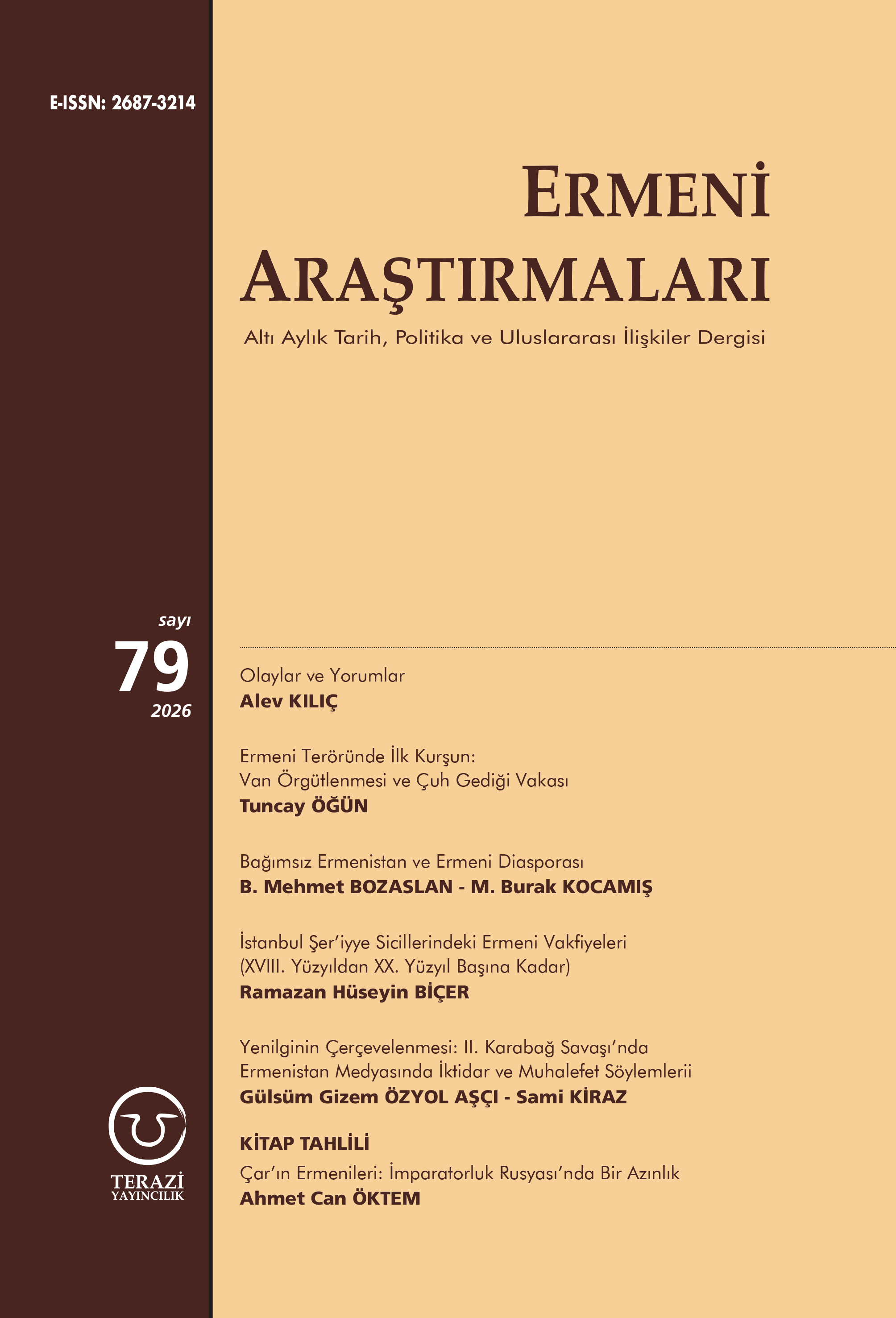
[5] Aslan, Taner. 2016. “ERMENİ YARDIMSEVER HAYIR CEMİYETİ (ERMENİ CEMİYYET-İ HÂYRİYE-İ UMÛMİYESİ) VE NİZAMNAMESİ”. Ermeni Araştırmaları, sy 53: 141-74. https://izlik.org/JA56GS54WU.
© 2009-2025 Center for Eurasian Studies (AVİM) All Rights Reserved
No comments yet.
-
EU-ARMENIA COOPERATION AND CHANGING REGIONAL BALANCES IN THE SOUTH CAUCASUS
İlaha KHANTAMİROVA 24.07.2026 -
 OVERLAPPING INTERESTS IN THE SOUTH CAUCASUS: THE AZERBAIJAN, ISRAEL AND IRAN TRIANGLE
İlaha KHANTAMİROVA 29.05.2025 -
 CHOLPON-ATA SUMMIT: NEW PERIOD IN AZERBAIJAN'S CENTRAL ASIA INTEGRATION
İlaha KHANTAMİROVA 31.08.2026 -
 THE MIGRATION OF ARMENIANS FROM KARABAKH AND THE CLAIMS OF A NEW “GENOCIDE”
İlaha KHANTAMİROVA 13.07.2026 -
 THE INTEGRATION OF THE TURKIC WORLD AND ITS IMPLICATIONS FOR REGIONAL POWER DYNAMICS
İlaha KHANTAMİROVA 16.06.2026
-
 TÜRKİYE-EU TRADE RELATIONS: OPPORTUNITIES AND CHALLENGES
Özge Emine ÖZÇELİK 01.04.2026 -
 WE ARE LOOKING FORWARD TO A WORLD FREE FROM THE CRUEL AND ODIOUS CRIME OF GENOCIDE
AVİM 18.12.2017 -
 INVOLUNTARY XENOPHOBIC REFLEX SHOWS ENTRENCHED XENOPHOBIA IN WESTERN EUROPEAN ACADEMIA: THE SWEDISH CASE
Teoman Ertuğrul TULUN 10.02.2023 -
 SWEDEN’S CORONAVIRUS FIGHT STRATEGY AND BITTER MEMORIES OF PAST EUGENIC PRACTICES
Teoman Ertuğrul TULUN 04.05.2020 -
 ARMENIAN ALLEGATIONS, LAW, AND POLITICAL LOBBYING
Gözde KILIÇ YAŞIN 26.05.2023
-
25.01.2016
THE ARMENIAN QUESTION - BASIC KNOWLEDGE AND DOCUMENTATION -
12.06.2024
THE TRUTH WILL OUT -
27.03.2023
RADİKAL ERMENİ UNSURLARCA GERÇEKLEŞTİRİLEN MEZALİMLER VE VANDALİZM -
17.03.2023
PATRIOTISM PERVERTED -
23.02.2023
MEN ARE LIKE THAT -
03.02.2023
BAKÜ-TİFLİS-CEYHAN BORU HATTININ YAŞANAN TARİHİ -
16.12.2022
INTERNATIONAL SCHOLARS ON THE EVENTS OF 1915 -
07.12.2022
FAKE PHOTOS AND THE ARMENIAN PROPAGANDA -
07.12.2022
ERMENİ PROPAGANDASI VE SAHTE RESİMLER -
01.01.2022
A Letter From Japan - Strategically Mum: The Silence of the Armenians -
01.01.2022
Japonya'dan Bir Mektup - Stratejik Suskunluk: Ermenilerin Sessizliği -
03.06.2020
Anastas Mikoyan: Confessions of an Armenian Bolshevik -
08.04.2020
Sovyet Sonrası Ukrayna’da Devlet, Toplum ve Siyaset - Değişen Dinamikler, Dönüşen Kimlikler -
12.06.2018
Ermeni Sorunuyla İlgili İngiliz Belgeleri (1912-1923) - British Documents on Armenian Question (1912-1923) -
02.12.2016
Turkish-Russian Academics: A Historical Study on the Caucasus -
01.07.2016
Gürcistan'daki Müslüman Topluluklar: Azınlık Hakları, Kimlik, Siyaset -
10.03.2016
Armenian Diaspora: Diaspora, State and the Imagination of the Republic of Armenia -
24.01.2016
ERMENİ SORUNU - TEMEL BİLGİ VE BELGELER (2. BASKI)
-
AVİM Conference Hall 24.01.2023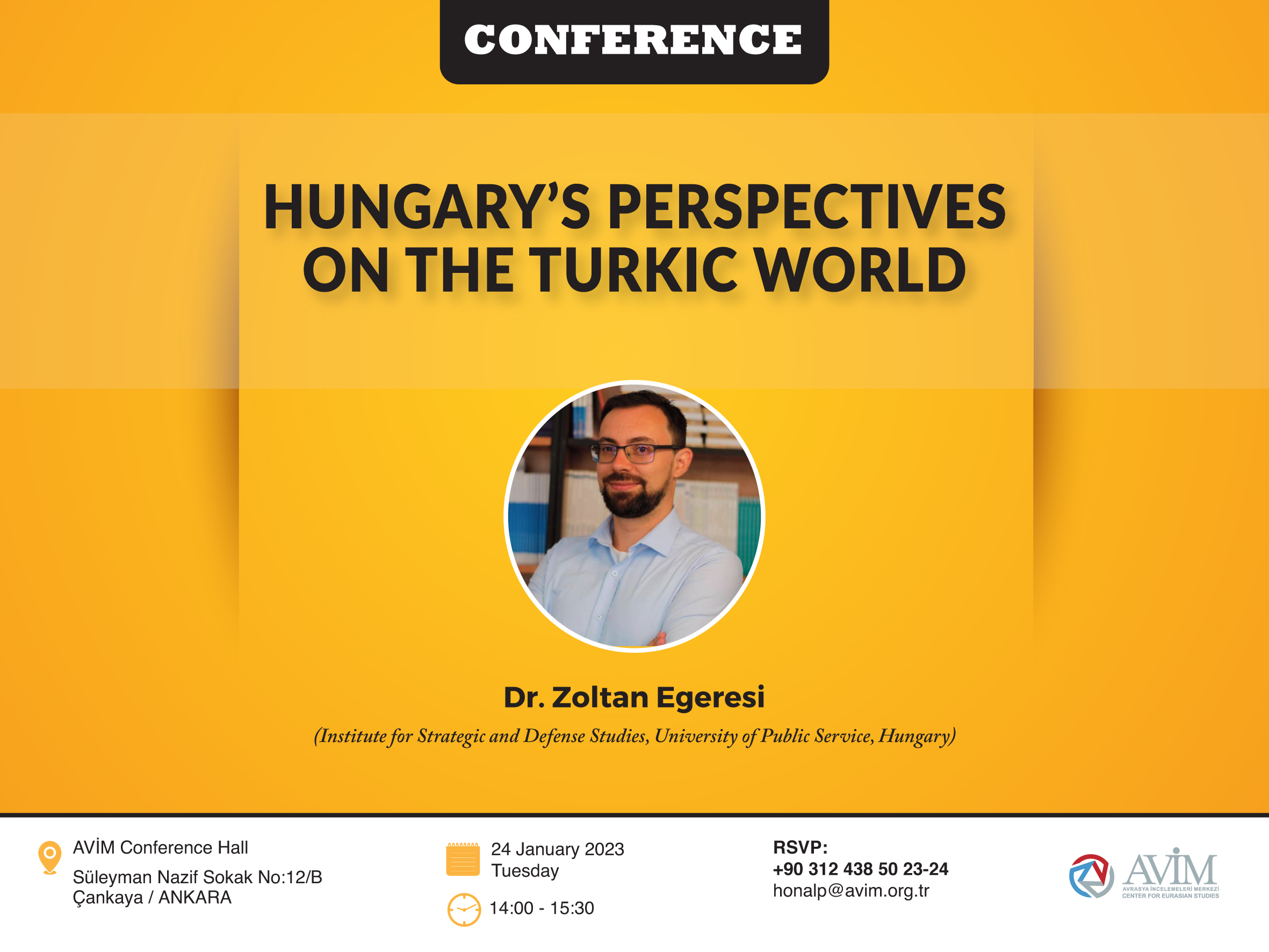
CONFERENCE TITLED “HUNGARY’S PERSPECTIVES ON THE TURKIC WORLD"