














How the “Western Balkans” Terminology Was Created and Developed
The political notion of the "Western Balkans" was first formally tabled, institutionalized, and adopted into EU terminology during the Vienna European Council in December 1998, which took place under the Austrian Presidency of the Council of the European Union.[1] As the chair of the meetings, Austria steered the drafting of the Presidency Conclusions that officially codified it. It was institutionalized via the Stabilization and Association Process (SAP) in 1999–2000 to manage relations with southeastern European nations that emerged from the collapse of Yugoslavia, including Albania. The EU, by bundling specific post-conflict nations (Albania, Bosnia and Herzegovina, Kosovo, Montenegro, North Macedonia, and Serbia) into a separate tier, distinguished them from other Balkan neighbors like Bulgaria and Romania, which were placed on accelerated paths to full integration. Nearly thirty years have passed since this concept was first introduced. Over this period, the concept has evolved and—unfortunately—become synonymous with "Balkanization," which carries a negative connotation. It is crucial to emphasize that at this stage the concept has become a tool of exclusion rather than inclusion.
It is anticipated that the European Commission will release a comprehensive EU enlargement document on September 30th, which will serve as the basis for discussions at the European Council meeting in October. This document will likely confirm that Montenegro and Albania could soon conclude their negotiations. It is also noted that the document should offer insights into how other countries in the region that do not yet share this prospect might advance their EU accession processes. Furthermore, attention is drawn to the fact that both of these countries face significant bilateral issues that need to be resolved or have challenging neighbors with whom they must reach an understanding.[2]
The EU’s "Othering" and Intentional “Exclusion” of Türkiye from Balkans
For years, AVİM has argued that the “Western Balkans” terminology has created artificial geopolitical dividing lines in a historically interconnected region and disrupted the integrity of the Balkans. [3]Although Türkiye is geographically, historically, socially, and economically tied to the Balkans and has been a formal candidate since 1999, the "Western Balkans" framework not only excluded Türkiye but also made no reference to its Balkan identity. By designing an enlargement envelope that stopped at the Turkish border, the EU politically sequestered Türkiye into an entirely separate bilateral track, decoupling it from the regional integration architecture of southeastern Europe. Disappointingly, even in some studies by EU-related think tanks, Türkiye is characterized as an "adversary country in the so-called “Western Balkans." [4]
The EU's inconsistent double standards in its accession processes have not only undermined its credibility and reputation but also exposed the limits of its actual power.
The European Union's enlargement policy, once grounded in legal and structural principles, has increasingly shifted towards political pragmatism and strategic maneuvers. This shift, while offering short-term strategic advantages, raises profound questions about its long-term reliability and, in fact, the EU’s real economic and military power capacity. To put it briefly, without going into detail, when viewed through the lens of the Copenhagen criteria, which lay down the fundamental rules determining a country's eligibility to join the European Union, it is safe to say that the admission of the Greek Cypriot Administration of Southern Cyprus and Bulgaria in previous years obviously did not align with the EU's founding standards.
In the Balkans, the EU's varied and often inconsistent standards reflect a policy deeply influenced by strategic interests, overshadowing the consistency and fairness of the accession process. This approach, while pragmatic at first glance, risks disillusioning aspiring member states and undermining the EU's credibility, potentially opening the door for global powers to extend their influence in the region.[5] It is highly probable that rapidly changing conditions in the international arena and the prevailing state of war in the region north of the Black Sea, right next to the Balkans, will confront the EU with a very difficult situation in adopting new decisions in the coming period, particularly concerning the Balkans. It should not be forgotten that every Balkan country is a Southeast European country. Still, not every Southeast European country is considered a Balkan country in the traditional sense. The Balkans possess a unique internal dynamic of a historical nature. Whether the EU desires it or not, and whether it welcomes it or not, this internal dynamic positions Türkiye in a privileged position in the region. The EU's recent statements, which we will discuss below, indicate that the EU is also seriously seeking new structures for the period ahead. This pursuit will undoubtedly have aspects that influence the future structure of the Balkan region.
EU and Fracturing International Rule-Based Order
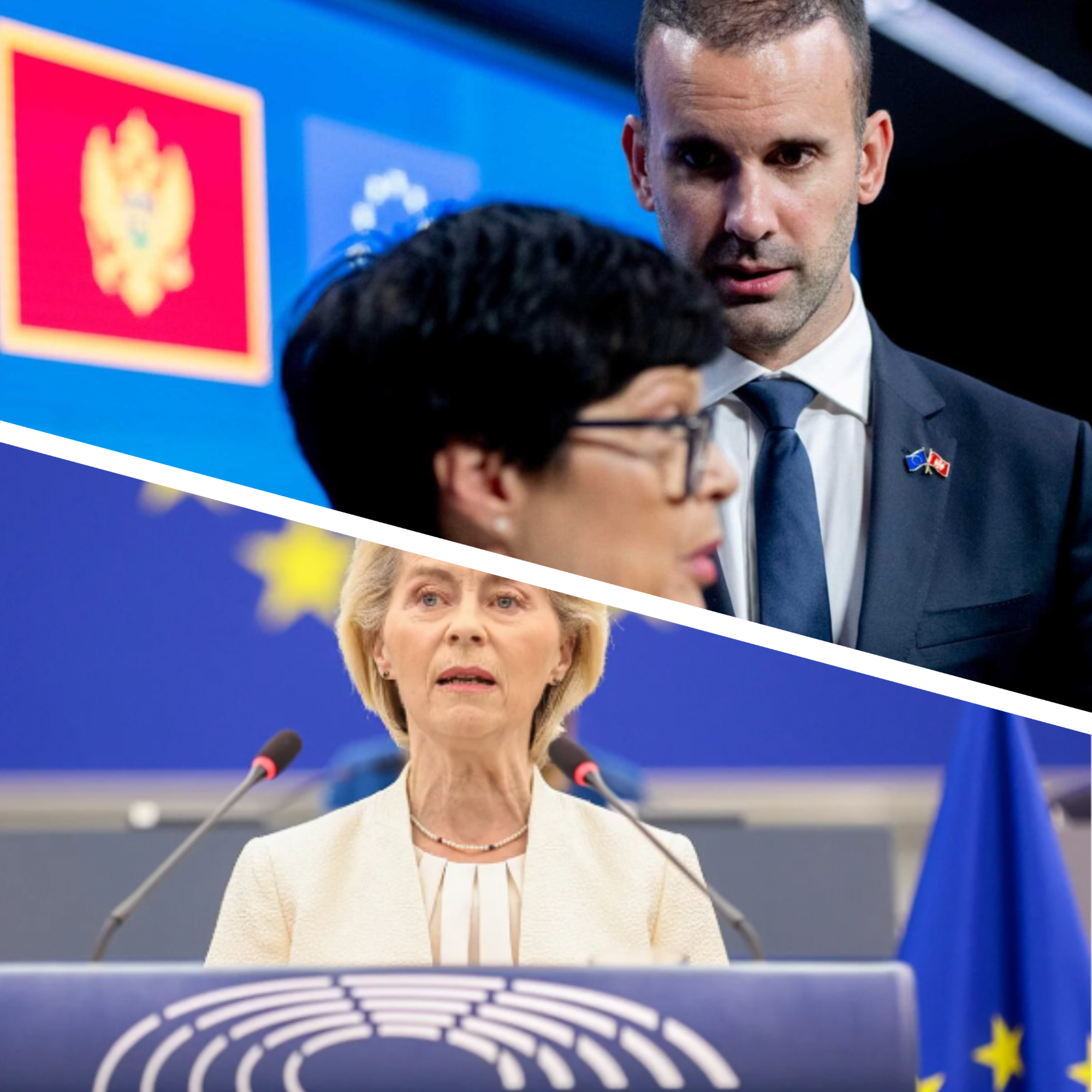
In her recent statement and most notably during her September 2026 State of the European Union (SOTEU) address, European Commission President Ursula von der Leyen explicitly noted that the rules-based international system is fracturing and can no longer be single-handedly relied upon to shelter European interests. She underscored the urgent need to reimagine new partnerships and build resilient security structures. She underscored the importance of new partnerships and stated the following:
“Partnerships are a strategic choice for Europe. But they also respond to the fracture in the international rules-based system. For some, the answer is to go it alone. But this is not an option for us. Europe will always lead in defending the rules-based system. But we can no longer rely on it as our only means of securing our interests. Or assume that its rules will shelter us from the complex threats that we face. In this new world, we must urgently reimagine our partnerships. And build global coalitions for our resilience and democracies... For a long time, we have discussed a leaders' format focused on the security of our continent. With partners like Canada, Norway, Ukraine, the United Kingdom, and others involved. This is even more urgent now, given the nature and scale of the risks at play. This is why we will set out our ideas to make a European Security Council a reality.” [6]
Ursula von der Leyen, besides, for some, unexpectedly and allegedly without consulting EU capitals, said that “we want to bring the relationship with Canada to the highest level possible ... [we are] opening the door for Canada to be the first associate member of the EU.” In this context, certain press reports claimed that “The idea was not run past European capitals in advance and has caused considerable confusion... No one seems to know exactly what associate membership would entail. And within hours, Canada was tamping down expectations. ‘We’re not there,’ Jonathan Wilkinson, Canada’s incoming ambassador to the EU, told reporters in Strasbourg when asked about associate membership. ‘What we are focused on is actually driving results.“’[7]
Conclusion
As the foregoing explanations make clear, the EU has long categorized Balkan countries into tiers, devised artificial concepts incompatible with regional realities, and clumsily attempted to exclude a key actor like Türkiye, which is a country of critical importance that shares not only geographical continuity with the region but also deep-rooted historical and societal ties. The EU kept Balkan nations in bureaucratic "waiting rooms" for years, adhering rigidly—at least on paper—to strict institutional rules. An insular "Western Balkans" framework left the countries in question in a state of perpetual institutional uncertainty. At this juncture, the EU itself openly acknowledges the erosion of the rules-based order and is scrambling to devise new security arrangements, driven solely by the instinct for self-preservation. In such a climate, treating a pivotal regional power like Türkiye as an "outsider" increasingly clashes with the realities of an era that demands comprehensive and holistic alliances. Gone are the days when the EU believed it could fix everything while gazing into a magnifying mirror and looking down on those around it. The time has come for the EU to pause, reflect deeply, and, however painful it may be, face reality.
[1] Vienna European Council. 1998. “Presidency Conclusions.” Vienna, 11 and 12 December. https://www.europarl.europa.eu/summits/wie1_en.html . Paragraphs 102-108 (accessed September 22, 2026).
[2] Milica Delević. The EU’s unfinished business in the Western Balkans. The European Council on Foreign Relations. 11 September 2026. https://ecfr.eu/article/the-eus-unfinished-business-in-the-western-balkans/?amp
[3] Teoman Ertuğrul Tulun. A MISNOMER: WESTERN BALKANS. AVİM Analysis No: 2017 / 24. 10.07.2017. doi: 10.31219/osf.io/wfs2j. https://avim.org.tr/en/Analiz/A-MISNOMER-WESTERN-BALKANS ; Teoman Ertuğrul Tulun. THE THREAT OF THE BALKANIZATION OF “WESTERN BALKANS” AVİM Blog No: 2017 / 14. 13.02.2017. https://avim.org.tr/Blog/THE-THREAT-OF-THE-BALKANIZATION-OF-WESTERN-BALKANS ; Teoman Ertuğrul Tulun. WESTERN NARRATIVES OF THE “WESTERN BALKANS” AND REGIONALLY OWNED COOPERATION. Commentary No: 2026 / 34. 18.06.2026. https://avim.org.tr/en/Yorum/WESTERN-NARRATIVES-OF-THE-WESTERN-BALKANS-AND-REGIONALLY-OWNED-COOPERATION ; Bekir Caner Şafak. A POLITICAL DISCRIMINATION: THE “WESTERN BALKANS” DISCOURSE AND THE QUESTIONING OF BALKAN IDENTITY. AVİM Commentary No: 2025 / 4. 23.09.2025. https://avim.org.tr/en/Yorum/A-POLITICAL-DISCRIMINATION-THE-WESTERN-BALKANS-DISCOURSE-AND-THE-QUESTIONING-OF-BALKAN-IDENTITY
[4] Teoman Ertuğrul Tulun. CHANGING PERCEPTIONS: THE EUROPEAN UNION INSTITUTE AND TÜRKİYE'S ROLE IN EU SECURITY POLICY. AVİM Analysis No: 2024 / 10. 26.06.2024. https://avim.org.tr/en/Analiz/CHANGING-PERCEPTIONS-THE-EUROPEAN-UNION-INSTITUTE-AND-TURKIYE-S-ROLE-IN-EU-SECURITY-POLICY
[5] Teoman Ertuğrul Tulun. THE EU'S ENLARGEMENT PARADOX: POLITICS OVER PRINCIPLES? Analysis No: 2024 / 2. 25.01.2024. https://avim.org.tr/en/Analiz/THE-EU-S-ENLARGEMENT-PARADOX-POLITICS-OVER-PRINCIPLES
[6] European Commission. 2026 State of the Union Address by President von der Leyen. Sep 16, 2026. (accessed 22 September 2026) https://ec.europa.eu/commission/presscorner/detail/en/speech_26_1868
[7] POLITICO. EU blindsided by von der Leyen’s Canada ‘associate member’ pitch. September 16, 2026, By Sebastian Starcevic and Max Griera. (accessed September 22, 2026). https://www.politico.eu/article/ursula-von-der-leyen-blindside-eu-canada-associate-member-pitch/
© 2009-2025 Center for Eurasian Studies (AVİM) All Rights Reserved
No comments yet.
-
 BOSNIA AND THE BALKANS: SECESSIONISM, EUROCENTRIC PARTITIONING
Teoman Ertuğrul TULUN 17.02.2026 -
 TÜRKİYE PROUDLY CELEBRATING THE CENTENNIAL OF THE SIGNING OF THE LAUSANNE PEACE TREATY
Teoman Ertuğrul TULUN 24.07.2023 -
 RELIGIOUS ASSIMILATION POLICIES IN GREECE: PRESSURE ON TURKISH MUFTIS AS A CONTINUATION OF MINORITY RIGHTS VIOLATIONS
Teoman Ertuğrul TULUN 21.08.2025 -
 ROMANIA, THE BLACK SEA, AND THE LIMITS OF STRATEGIC SUBSTITUTION
Teoman Ertuğrul TULUN 12.02.2026 -
 TÜRKİYE IS THE GUARDIAN OF THE MONTREUX CONVENTION REGARDING THE REGIME OF THE STRAITS AND THE BACKBONE OF SECURITY AND STABILITY IN THE BLACK SEA
Teoman Ertuğrul TULUN 03.04.2026
-
 IRAN AND SHANGHAI COOPERATION ORGANIZATION
Özge Nur ÖĞÜTCÜ 27.06.2016 -
 BEDROS ŞİRİNOĞLU IS ON THE TARGET
AVİM 28.09.2018 -
 AUTHORITARIANISM AND THE WEST’S DILEMMA
Gülperi GÜNGÖR 31.05.2024 -
 AVİM HELD A MEETING ENTITLED “TURKISH-ARMENIAN QUESTION: IN THE LIGHT OF THE HEARING OF PERINÇEK v. SWITZERLAND CASE ON JANUARY 28TH”
AVİM 04.02.2015 -
“HABEMUS PAPAM”
Alev KILIÇ 13.03.2013
-
25.01.2016
THE ARMENIAN QUESTION - BASIC KNOWLEDGE AND DOCUMENTATION -
12.06.2024
THE TRUTH WILL OUT -
27.03.2023
RADİKAL ERMENİ UNSURLARCA GERÇEKLEŞTİRİLEN MEZALİMLER VE VANDALİZM -
17.03.2023
PATRIOTISM PERVERTED -
23.02.2023
MEN ARE LIKE THAT -
03.02.2023
BAKÜ-TİFLİS-CEYHAN BORU HATTININ YAŞANAN TARİHİ -
16.12.2022
INTERNATIONAL SCHOLARS ON THE EVENTS OF 1915 -
07.12.2022
FAKE PHOTOS AND THE ARMENIAN PROPAGANDA -
07.12.2022
ERMENİ PROPAGANDASI VE SAHTE RESİMLER -
01.01.2022
A Letter From Japan - Strategically Mum: The Silence of the Armenians -
01.01.2022
Japonya'dan Bir Mektup - Stratejik Suskunluk: Ermenilerin Sessizliği -
03.06.2020
Anastas Mikoyan: Confessions of an Armenian Bolshevik -
08.04.2020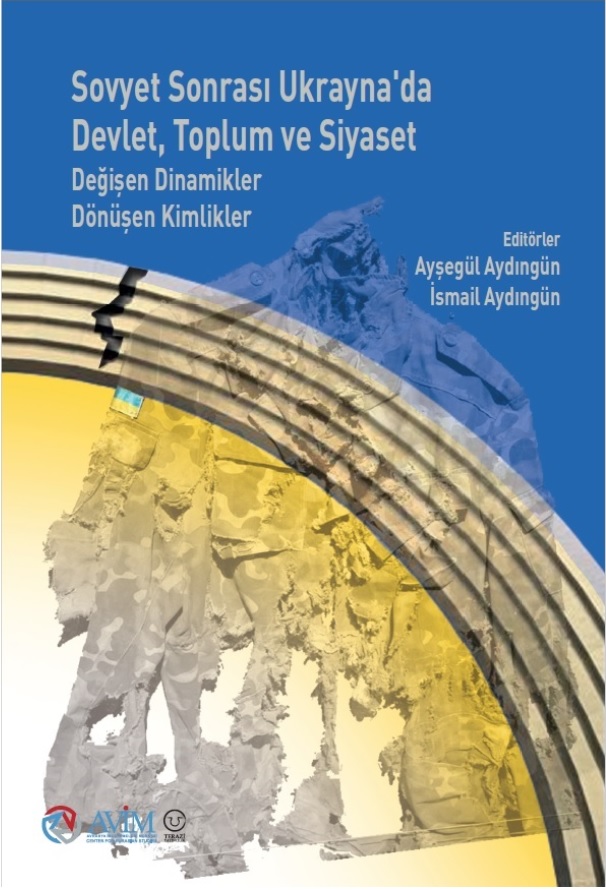
Sovyet Sonrası Ukrayna’da Devlet, Toplum ve Siyaset - Değişen Dinamikler, Dönüşen Kimlikler -
12.06.2018
Ermeni Sorunuyla İlgili İngiliz Belgeleri (1912-1923) - British Documents on Armenian Question (1912-1923) -
02.12.2016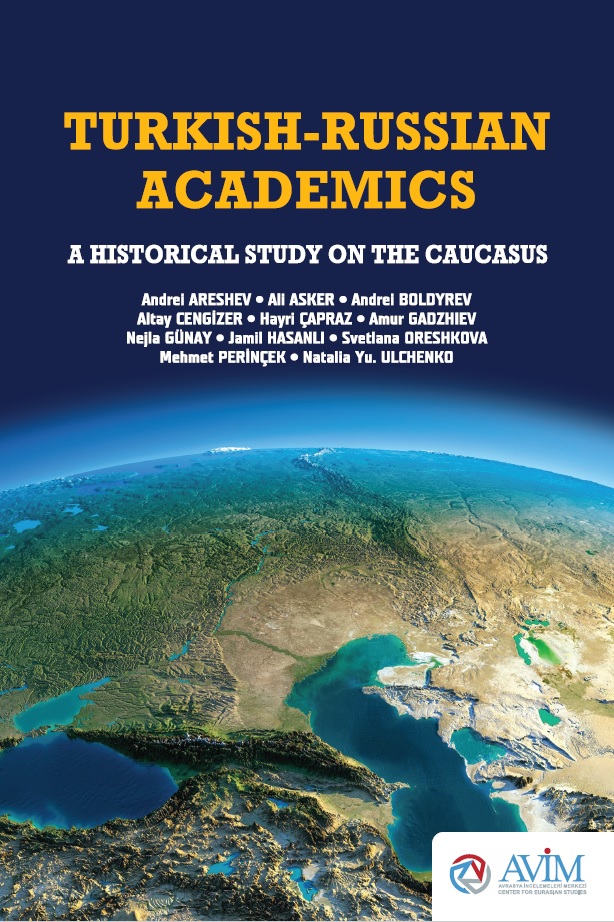
Turkish-Russian Academics: A Historical Study on the Caucasus -
01.07.2016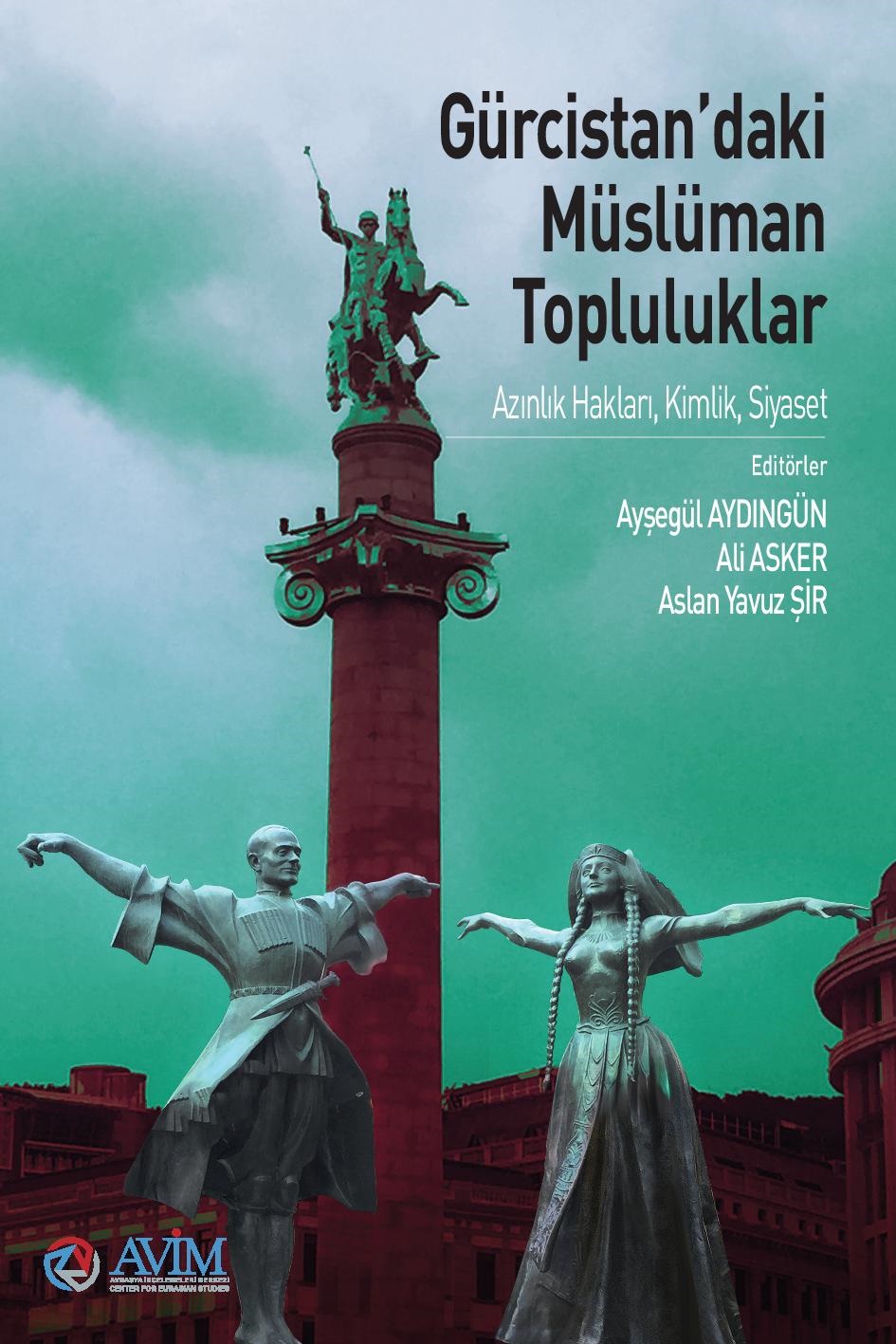
Gürcistan'daki Müslüman Topluluklar: Azınlık Hakları, Kimlik, Siyaset -
10.03.2016
Armenian Diaspora: Diaspora, State and the Imagination of the Republic of Armenia -
24.01.2016
ERMENİ SORUNU - TEMEL BİLGİ VE BELGELER (2. BASKI)
-
AVİM Conference Hall 24.01.2023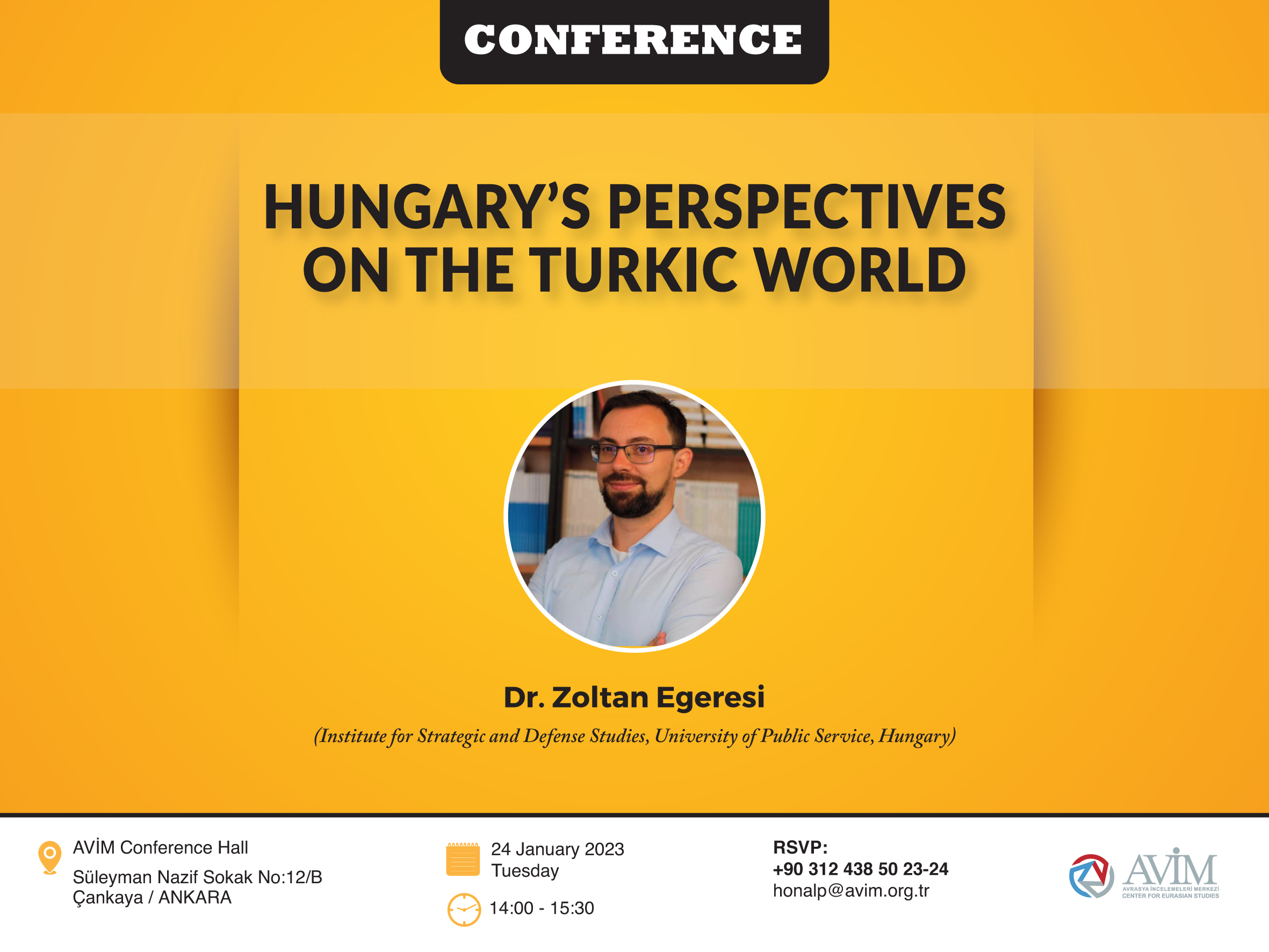
CONFERENCE TITLED “HUNGARY’S PERSPECTIVES ON THE TURKIC WORLD"