As mentioned in our previous articles[1], the “Swiss Peace Initiative for Nagorno Karabakh”, formed by Swiss parliament members and which held its first meeting in Bern on 26 May, is a propaganda tool created by opponents of the Azerbaijan-Armenia peace process to harm, delay, and if possible, block the said process. The peace process, based on sensitive parameters, requires careful steps to maintain balance. However, the parliamentarians and church representatives who gathered on 26 May prioritized their own radical ideas without considering the region or the states involved, and once again displayed their biased and anti-peace attitude.
The fact that Swiss parliamentarians gathered to discuss the Karabagh issue, which has already been resolved between the Azerbaijan and Armenia and is no longer on the agenda, and thereby brought a closed topic back into discussion has undoubtedly led to criticisms. Among those who have expressed criticism is the Azerbaijani religious leader Allahshukur Pashazade.
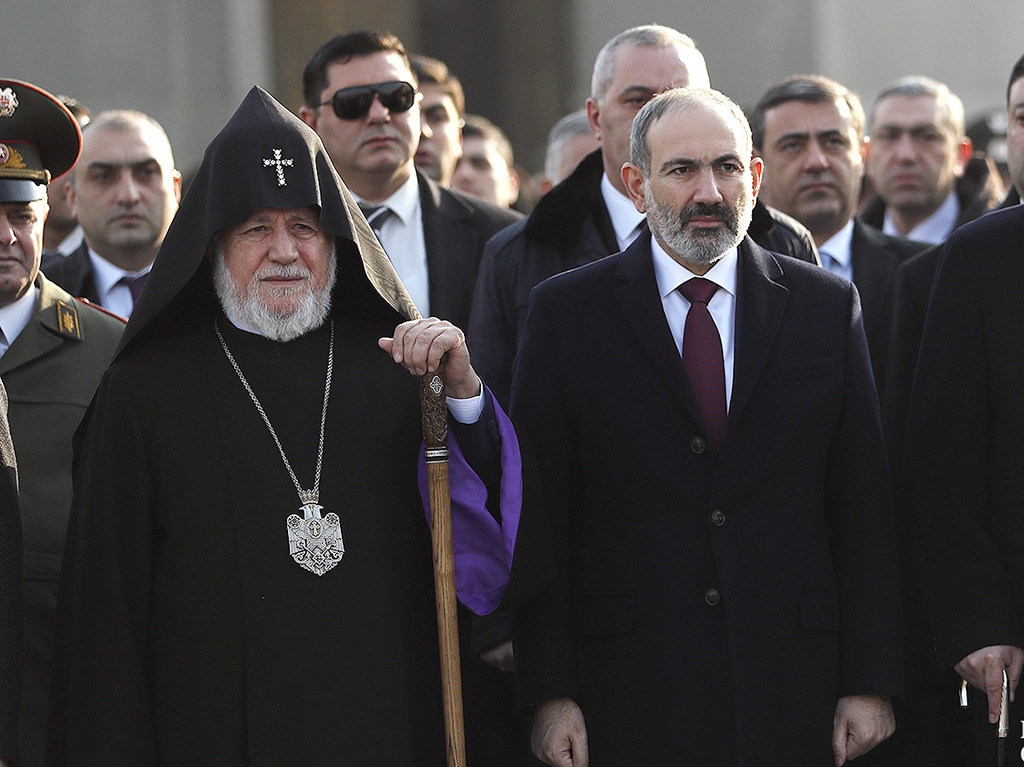
Following the ongoing tension between Armenian Prime Minister Nikol Pashinyan and the Armenian Catholicos of Etchmiadzin Karekin II, Pashazade wrote a letter criticizing the activities of the Christian Solidarity International (CSI) that served as the main sponsor of the 26 May event and which supported the parliamentarians who accused Azerbaijan of baseless claims of ethnic cleansing and fake trials. Pashazade also criticized Karekin II, who made a speech at the event in line with these accusations.[2] The addressee of the letter was the World Council of Churches, which has not offered any criticism regarding the Apostolic Church turning from a spiritual institution inside and outside Armenia into a part of the opposition camp. The Council has also made no comment on propaganda efforts such as the meeting in Bern that instrumentalized religion for ulterior motives. Even when the said Council does break its silence, it has been observed to a adopt a biased position.
In his letter to the World Council of Churches, Pashazade stated that the Apostolic Church was inciting Armenians toward war. He also wrote, “I call upon the World Council of Churches not to support the provocative, revanchist propaganda of the Armenian Church that violates the fragile peace environment.”[3] Pashazade’s message serves as a brief summary of the meeting in Bern. Indeed, the meetings and the statements made by Karekin II, who has consistently supported unfounded accusations targeting Azerbaijan and claims ethnic cleansing without any legal basis, aim to damage the relationship between Azerbaijan and Armenia and transfer this fragile process onto the international stage.[4] The parties have repeatedly stated that the peace process does not have an international character and must move forward between the two states alone. It is therefore concerning that non-party states and the Armenian Diaspora, in cooperation with the Apostolic Church, are attempting to obstruct this process.
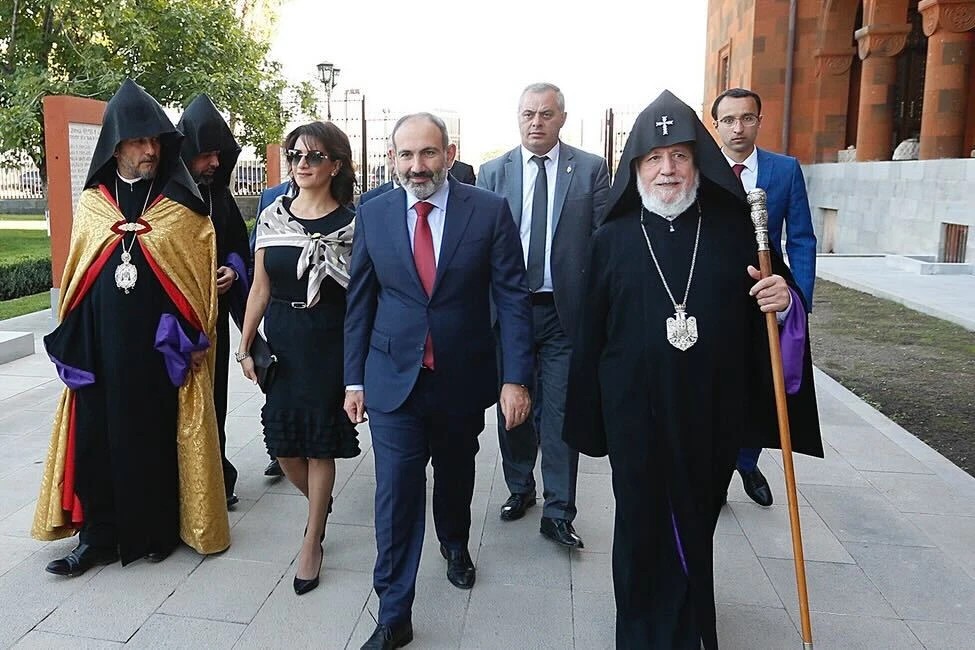
In light of the ongoing verbal disputes between Karekin II and Pashinyan, it has become inevitable for the issue transform into one concerning the absolute separation of religion and state affairs. As Pashazade also emphasized, the Apostolic Church is using its influence within the country and its religious presence in the international arena to gather support for the opposition and to undermine the peace process. No Christian organization, including the World Council of Churches, appears to be disturbed by this situation. Just as “freedom of expression” became a principle ignored by Switzerland in the ECtHR Perinçek vs. Switzerland case, the principle of the separation of religion and state (Article 17/2 of the Constitution of Armenia)[5], which Karekin II is clearly transgressing by assuming an oppositional political role, is now being overlooked by Western and Christian organizations.
In conclusion, the Bern meeting -described by Pashazade as being shaped by motives of retaliation and as a provocation towards the relevant parties and the international community- and the statements made by Karekin II are in fact developments that should also raise concern within the Christian world. The issue of the “coordination council” proposed for the election of the Church leadership and the Catholicos, which Pashinyan has recently emphasized, has once again demonstrated its importance in this context. The Apostolic Church, which is increasingly losing its religious character and taking on a political identity, must stop acting as an obstructive opposition force in the peace process and return to its spiritual role. This is critically important today both for the vision of a modern Armenia and for the healthy continuation of the peace process between Armenian and Azerbaijan.
*Image: Eurasianet
[3] “Azerbaijan’s Muslim Leader Attacks Armenian Church as Pashinyan Ramps Up Campaign Against Catholicos”, Asbarez, June 11, 2025.
© 2009-2025 Center for Eurasian Studies (AVİM) All Rights Reserved
















 GERMANY'S CONTRADICTORY STANCE ON THE GAZA ISSUE
 THE FINAL THRESHOLD OF THE PEACE AGREEMENT: THE ISSUE OF CONSTITUTIONAL AMENDMENT
 TENSIONS IN ARMENIA BETWEEN THE CHURCH ADMINISTRATION AND THE GOVERNMENT OVER SECULARISM
 THE ORGANIZATION OF TURKIC STATES AND THE CLAIMS OF TURANISM AND PANTURKISM
 THE EU'S REFUGEE POLICY IN LIGHT OF VON DER LEYEN'S VISIT TO EGYPT AND THE CASE OF RWANDA
 PROTESTS AGAINST THE “SOCIAL PARASITE TAX” IN BELARUS
 MONTE MELKONIAN AND HIS TERRORIST IDENTITY
 THE AFTERMATH OF THE DENIAL OF TERRORIST SASSOUNIAN’S PAROLE
 ATTEMPTS AT DIASPORIZING TURKISH ARMENIANS - IV