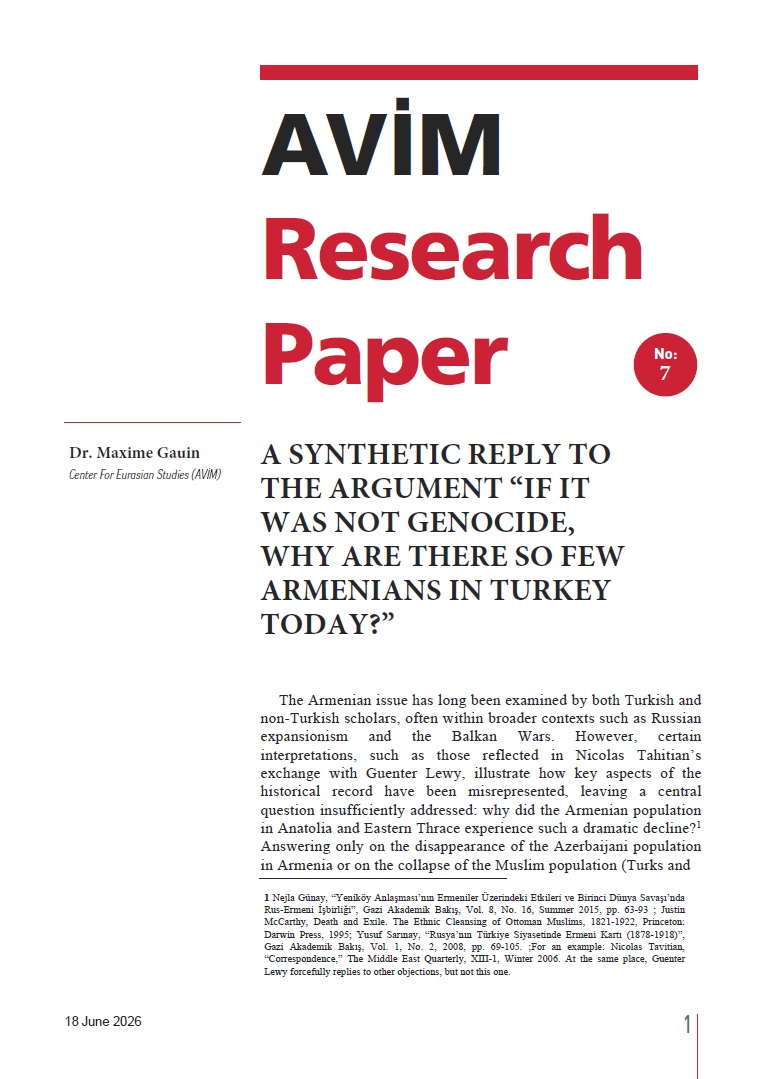
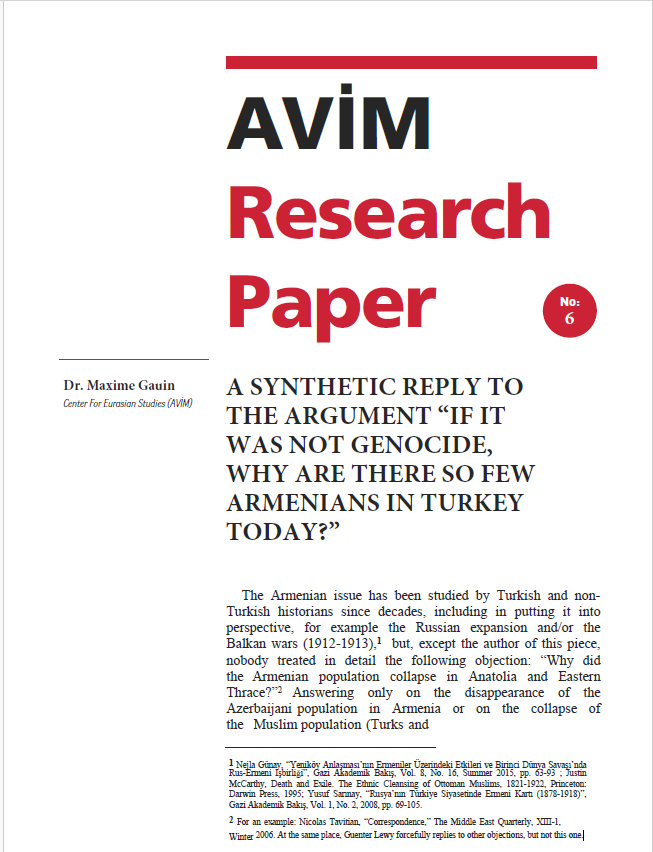
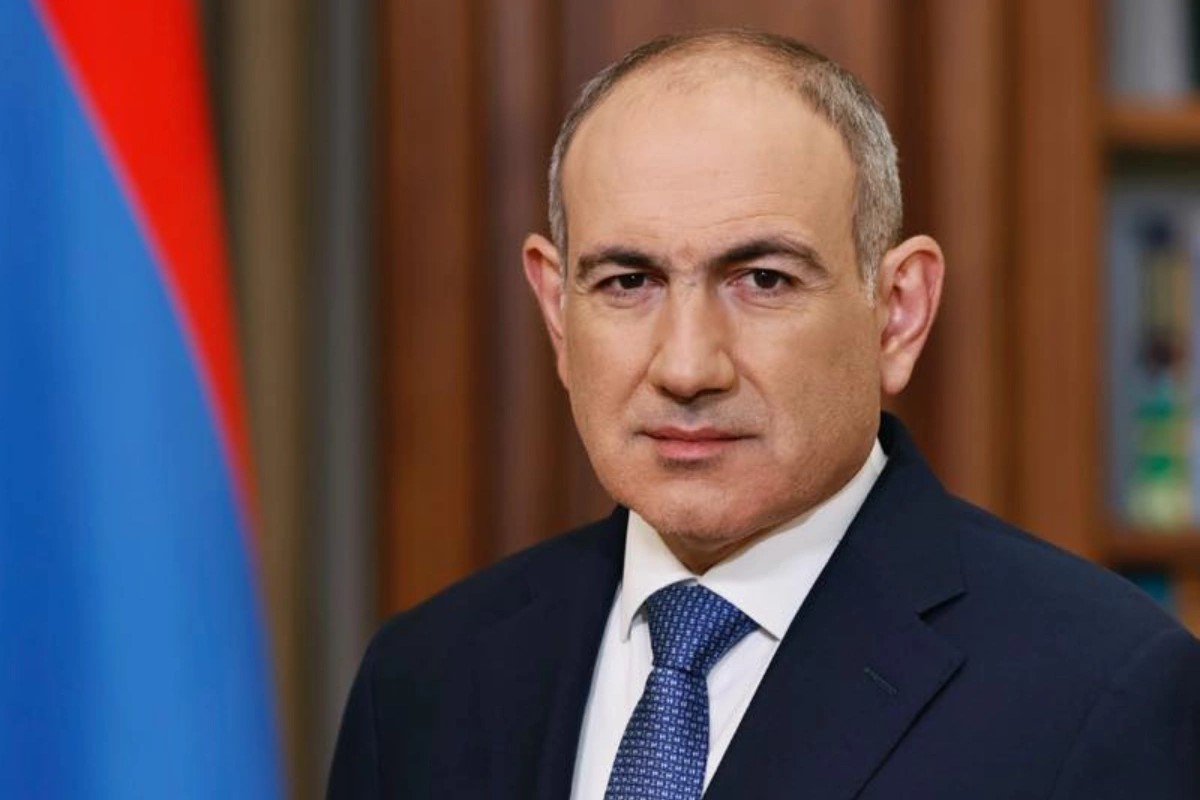
It is known that Armenian Prime Minister Nikol Pashinyan has recently adopted a different approach to the "Armenian genocide" allegation in contrast to the rhetoric of his early years in power. In recent years, Pashinyan's statements regarding the genocide allegation have evolved in response to new trade routes, strategic goals, and steps taken to foster good neighborly relations. Pashinyan's new approach, contrary to Armenia's long-standing policy, aims to establish peaceful and prosperous relations with neighboring states. However, this new approach has provoked a reaction from Armenia’s opposition and the radical and militant segments of the Diaspora.
On 24 January 2025, during a meeting with representatives of the Swiss community in Zurich, Pashinyan made questioning remarks, stating that Armenians needed to understand why the “genocide occurred”, what was happening at the time, and why a discourse on the “Armenian genocide” did not exist in 1939 but emerged in 1950. These statements by Pashinyan resonated strongly among opposition circles, including the Church, as well as within the Diaspora. In another statement, when referring to the Events of 1915, he used the terms “Meds Yeghern” (Great Calamity) and “massacre” instead of ‘genocide,’ demonstrating Pashinyan’s changing approach to the issue.
Within this context, Pashinyan reacted to Israeli Prime Minister Netanyahu’s statement recognizing the “Armenian genocide”, emphasizing that Netanyahu’s statement was unrelated to the interests of Armenia or its people. Pashinyan indicated that Armenia does wish to become a “geopolitical pawn” and that the focus should remain on the interests of the Armenian state[1].
During the early years of his tenure, Pashinyan had adopted a different stance than he does today, making statements supportive of the genocide claim. In a speech delivered in parliament on 8 May 2018, he had pledged to introduce the Events of 1915 to the world[2]. In the following period, he continued to make similar declarations, including during his speech at the Paris Peace Forum commemorating the centenary of the end of World War I, where he issued statements closely aligned with his previous remarks[3].
Over time, Pashinyan came to the conclusion that this policy, pursued with the support of the Armenian administration, the Diaspora, and the conservative segments within Armenia, had not brought security, prosperity, or peace to the Armenian state and its people. He understood that promoting the genocide discourse offered no benefit to the country’s interests within the framework of Armenia’s strategic and economic development.
Within the framework of the Türkiye-Armenia normalization process, Pashinyan has pursued a policy aimed at regulating political and economic relations with Türkiye. In this context, he recognized that the genocide claims provided no benefit and, on the contrary, fueled anti-Türkiye sentiment, which worked against his efforts to normalize relations.
Genocide is a crime defined in detail in Article 2 of the 1948 Convention on the Prevention and Punishment of Genocide, and is used within the terminology of law. In relation to this, there is no international court ruling that defines the 1915 relocation and resettlements as “genocide”.
Türkiye has firmly rejected the allegations and unjust accusations directed at it on this matter. International courts, including the European Court of Justice and the European Court of Human Rights, have also affirmed that the resolutions adopted on this matter by the parliaments of certain countries are political in nature and lack binding legal effect.
In conclusion, the current Armenian administration demonstrates a new approach, recognizing that the longstanding efforts of the Armenian Diaspora to have the genocide claims accepted have not been successful, that Türkiye has not really suffered any harm in this process, and that the Armenian state and its people have gained no benefit from framing a century-old historical reality through a distorted narrative. Although Pashinyan’s policies have occasionally shifted, under the present conditions aimed at normalizing Türkiye-Armenia relations, it is essential for the sake of regional peace and stability that policies based on unfounded claims give way to more realistic and peaceful discourse.
© 2009-2025 Center for Eurasian Studies (AVİM) All Rights Reserved
















 THE SOLIDARITY AMONG TURKIC STATES TARGETED THROUGH TÜRKİYE-AZERBAIJAN RELATIONS
 THE ARMENIAN DIASPORA’S OPPOSITION TO THE PASHINYAN ADMINISTRATION
 OPPOSITION TO THE ONGOING PEACE PROCESS BETWEEN ARMENIA AND AZERBAIJAN
 THE POST-WAR LANDMINE ISSUE IN KARABAKH
 DIASPORA MOBILIZATION CONFERENCE OR PRE-ELECTION PROPAGANDA ACTIVITY
 ARMENIA: THE COUNTRY THAT ISOLATES ITSELF IN THE CAUCASUS
 FURTHER QUESTIONS ON THE INTEGRITY OF WATS ORGANIZERS
 AMERICA ON THE WANE: THE HOUSE OF REPRESENTATIVES DISGRACES ITSELF AND LOSES CREDIBILITY
 THE LATEST ISSUE OF THE JOURNAL OF INTERNATIONAL CRIMES AND HISTORY HAS BEEN RELEASED.
 EU OBSERVER IN THE SPOTLIGHT AGAIN