















The Diaspora Mobilization Conference, held in Paris on 11-12 April 2026, brought together representatives of the Armenian diaspora from various geographies. The meeting, which was also attended by Karekin II, Catholicos of Etchmiadzin, and Aram I, Catholicos of Cilicia, drew approximately 150 representatives from 26 countries across Armenia and the Diaspora. The primary objective of the conference was stated as comprehensively evaluating Armenia-Diaspora relations and emphasizing the urgent need for a coordinated mobilization around a unified pan-Armenian agenda.[1]
The conference declaration contended that the Armenian state and national identity are under serious threat; and in this context, it was stated that it has become imperative for the Diaspora to assume a more active role and initiate a mobilization process on a pan-Armenian scale. Throughout the meeting, various decisions were taken within the framework of four main agenda items, and a roadmap for the future was set forth.
When issues such as the "Armenian genocide," the Karabakh question, and the strengthening of Armenian statehood, which were addressed as priority topics at the conference, are examined, it can be observed that the Diaspora did not diverge significantly from its traditional discourse and priorities. This situation demonstrates that, rather than generating innovation in terms of content, the meeting in question served as a reaffirmation of the existing political and ideological framework.
The geopolitical transformations experienced in the South Caucasus in recent years, the new balance emerging after the Karabakh war, the peace initiatives, the steps taken within the scope of the normalization process between Türkiye and Armenia, and the discussions shaping around the Zangezur corridor are important in terms of understanding the context in which this meeting took place. In addition to this, the timing of the conference becomes more meaningful when the upcoming parliamentary elections in Armenia are also taken into consideration. Within this framework, the meeting in question can be evaluated not only as a call for mobilization but also as a reaction given by the Diaspora to the loss of power and influence experienced in the post-conflict period.
The declaration adopted at the conference clearly demonstrates that the Diaspora seeks to become a political actor within the Armenian state. A critical language is used toward the Armenian state and it is implied that the Diaspora should be more actively involved in state affairs. As a matter of fact, the distinction made in the declaration between the "Diaspora" and "Armenian authorities" shows that the Diaspora positions itself as the primary guardian of the national value system. It also demonstrates that the political spectrum in Armenia is criticized for failing to adequately defend these values.
In this direction, it is emphasized that the institutional ties between Armenia and the Diaspora must be re-established, and it is proposed that the Diaspora should assume a more active role in areas such as politics, diplomacy, the military-industrial complex, education, and culture. However, this approach reflects the Diaspora’s pursuit of penetrating the state's decision-making mechanisms and becoming a decisive force in domestic politics, moving beyond merely being a supportive element. In some respects, this situation can also be interpreted as an attempt to "create a parallel sphere of influence within the state."
This desire of the Diaspora to be involved becomes more meaningful when evaluated within the framework of the concept of long-distance nationalism. As a matter of fact, the attempts of actors geographically located outside the country to determine a political orientation relatively independent of local social and economic realities may generate various tensions in terms of domestic balances. In this context, the attempts of Diaspora members living in different parts of the world to assume a guiding role on behalf of segments of society living under more limited economic and social conditions in Armenia can be considered a paradoxical situation, especially at a time when steps toward normalization and development are being taken.
Furthermore, in the declaration, the Diaspora evaluates the Armenian state from a critical standpoint within the framework of identity, church, and national unity issues, and it can be observed that historical memory and the political discourse developed by the Diaspora for many years toward neighboring peoples, especially Turks, are directed this time toward actors in Armenia’s domestic politics. In this context, the church is brought forward as a central element in the text, and the positioning of the Armenian Apostolic Church against the state is emphasized through the church-government tension that has recently become more pronounced in Armenia.
In the declaration, the church, rather than the state, is pointed out as the fundamental pillar of social unity, while the Diaspora makes a call for an organized and collective mobilization. This approach proposes the redefinition of national integrity through a religious and spiritual axis instead of political institutions. Within this framework, the Diaspora puts forward a sense of unity shaped around the church rather than a state-centered national structure. The proposed mobilization has not only a political dimension, but also a cultural and ideological reproduction dimension by targeting education and the younger generations.
Another important point is the criticism of the Armenian state in the diaspora discourse over the results of the 44-day war and the "genocide" issue. These two topics stand out as the fundamental reference areas used particularly to question the legitimacy of Armenia’s current administration and to generate political pressure. Within this framework, it can be said that the diaspora discourse attempts to produce an emotional impact through areas where Armenian society is historically sensitive, thereby bearing a tendency toward indirect intervention in domestic politics. Similarly, keeping the "genocide" and the Karabakh question constantly on the agenda in international platforms can also evaluated as a part of this strategy.
The term "pan-Armenian," frequently used in the conference texts, is also remarkable. This concept implies not only the unity of Armenian communities worldwide but also the imagination of a broader political and cultural sphere with ambiguous boundaries. In this context, the mention of expressions such as "Western Armenian language" and Karabakh within this framework points to a tendency of historical and symbolic spatial expansion in the diaspora discourse. This situation can be read as an alternative understanding of belonging and geography legitimized through Armenian identity and values.
In conclusion, the call for mobilization toward electoral processes in the declaration and the guidance offered by Diaspora members in Armenia during election periods can be evaluated not merely as a symbolic participation, but also as an attempt to exert influence over political processes in the country.
[1] Declaration of the Diaspora Mobilization Conference, 01.05.2026, https://armenianweekly.com/2026/04/13/declaration-of-the-diaspora-mobilization-conference/
© 2009-2025 Center for Eurasian Studies (AVİM) All Rights Reserved
No comments yet.
-
 DIASPORA PERSPECTIVES ON ARMENIAN FOREIGN POLICY AND TÜRKİYE
İlaha KHANTAMİROVA 30.06.2026 -
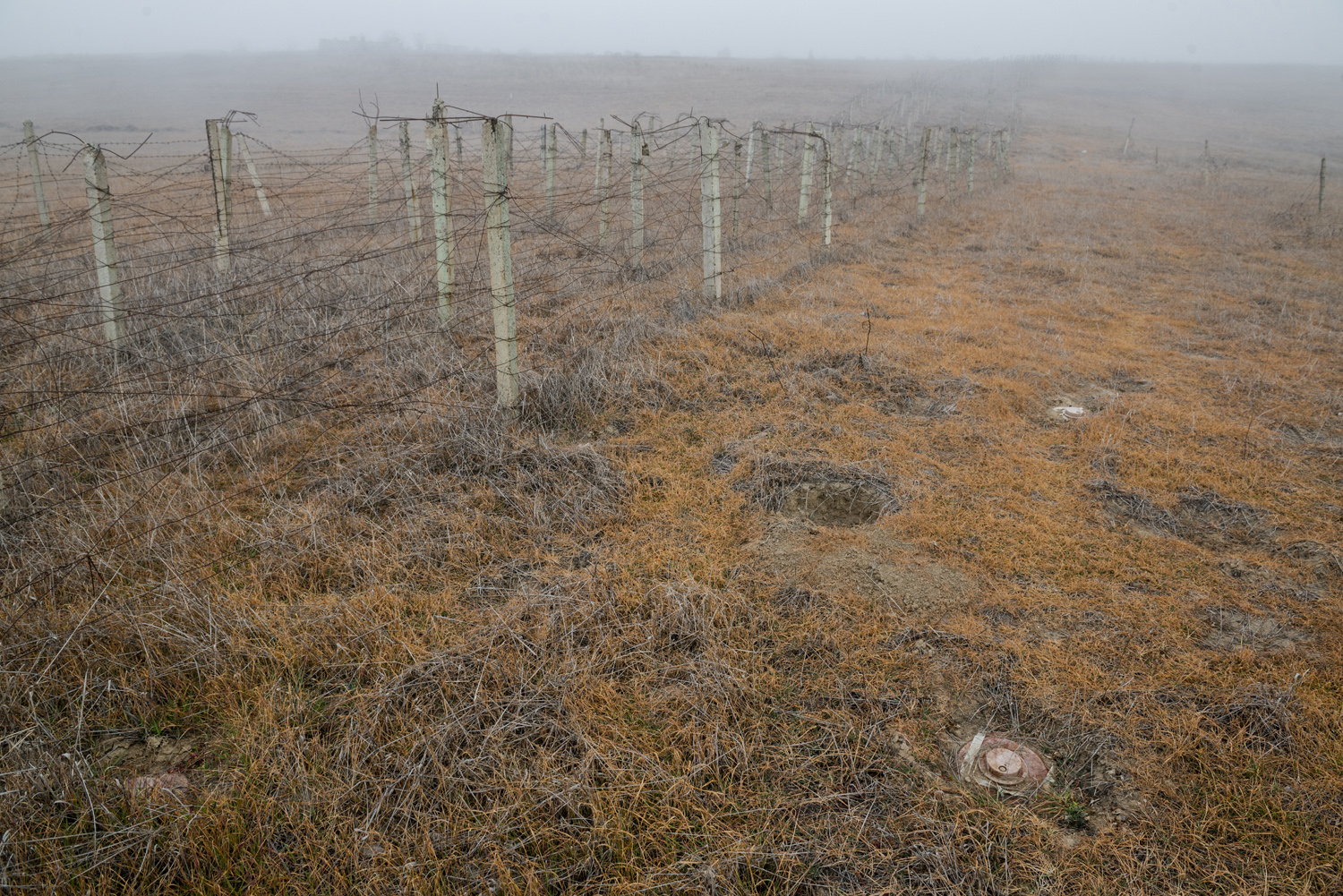 THE POST-WAR LANDMINE ISSUE IN KARABAKH
İlaha KHANTAMİROVA 12.06.2025 -
 PASHINYAN INTRODUCES A NEW APPROACH TO THE PRESENTATION OF THE GENOCIDE ALLEGATION
İlaha KHANTAMİROVA 03.09.2025 -
 THE ARMENIAN DIASPORA’S OPPOSITION TO THE PASHINYAN ADMINISTRATION
İlaha KHANTAMİROVA 08.06.2026 -
 AZERBAIJAN-ARMENIA NORMALIZATION AND ITS REFLECTIONS IN THE CULTURAL SPHERE: THE CASE OF THE MONTREUX-VEVEY SEPTEMBRE MUSICAL
İlaha KHANTAMİROVA 28.09.2026
-
 AN AREA OF GLOBAL COMPETITION: THE BALKANS
Şevval Beste GÖKÇELİK 17.06.2021 -
 SARDARAPAT: THE VICTORY THAT NEVER HAPPENED
Ömer Engin LÜTEM 28.05.2015 -
 THE RIGHT TIME TO HASTEN COOPERATION AMONG THE CENTRAL ASIAN REPUBLICS
Turgut Kerem TUNCEL 23.08.2021 -
 FRANCE ADAMANT IN COUNTERING TURKEY
Ali Murat TAŞKENT 25.10.2016 -
DEATH OF A SHEPHERD
Alev KILIÇ 05.08.2013
-
25.01.2016
THE ARMENIAN QUESTION - BASIC KNOWLEDGE AND DOCUMENTATION -
12.06.2024
THE TRUTH WILL OUT -
27.03.2023
RADİKAL ERMENİ UNSURLARCA GERÇEKLEŞTİRİLEN MEZALİMLER VE VANDALİZM -
17.03.2023
PATRIOTISM PERVERTED -
23.02.2023
MEN ARE LIKE THAT -
03.02.2023
BAKÜ-TİFLİS-CEYHAN BORU HATTININ YAŞANAN TARİHİ -
16.12.2022
INTERNATIONAL SCHOLARS ON THE EVENTS OF 1915 -
07.12.2022
FAKE PHOTOS AND THE ARMENIAN PROPAGANDA -
07.12.2022
ERMENİ PROPAGANDASI VE SAHTE RESİMLER -
01.01.2022
A Letter From Japan - Strategically Mum: The Silence of the Armenians -
01.01.2022
Japonya'dan Bir Mektup - Stratejik Suskunluk: Ermenilerin Sessizliği -
03.06.2020
Anastas Mikoyan: Confessions of an Armenian Bolshevik -
08.04.2020
Sovyet Sonrası Ukrayna’da Devlet, Toplum ve Siyaset - Değişen Dinamikler, Dönüşen Kimlikler -
12.06.2018
Ermeni Sorunuyla İlgili İngiliz Belgeleri (1912-1923) - British Documents on Armenian Question (1912-1923) -
02.12.2016
Turkish-Russian Academics: A Historical Study on the Caucasus -
01.07.2016
Gürcistan'daki Müslüman Topluluklar: Azınlık Hakları, Kimlik, Siyaset -
10.03.2016
Armenian Diaspora: Diaspora, State and the Imagination of the Republic of Armenia -
24.01.2016
ERMENİ SORUNU - TEMEL BİLGİ VE BELGELER (2. BASKI)
-
AVİM Conference Hall 24.01.2023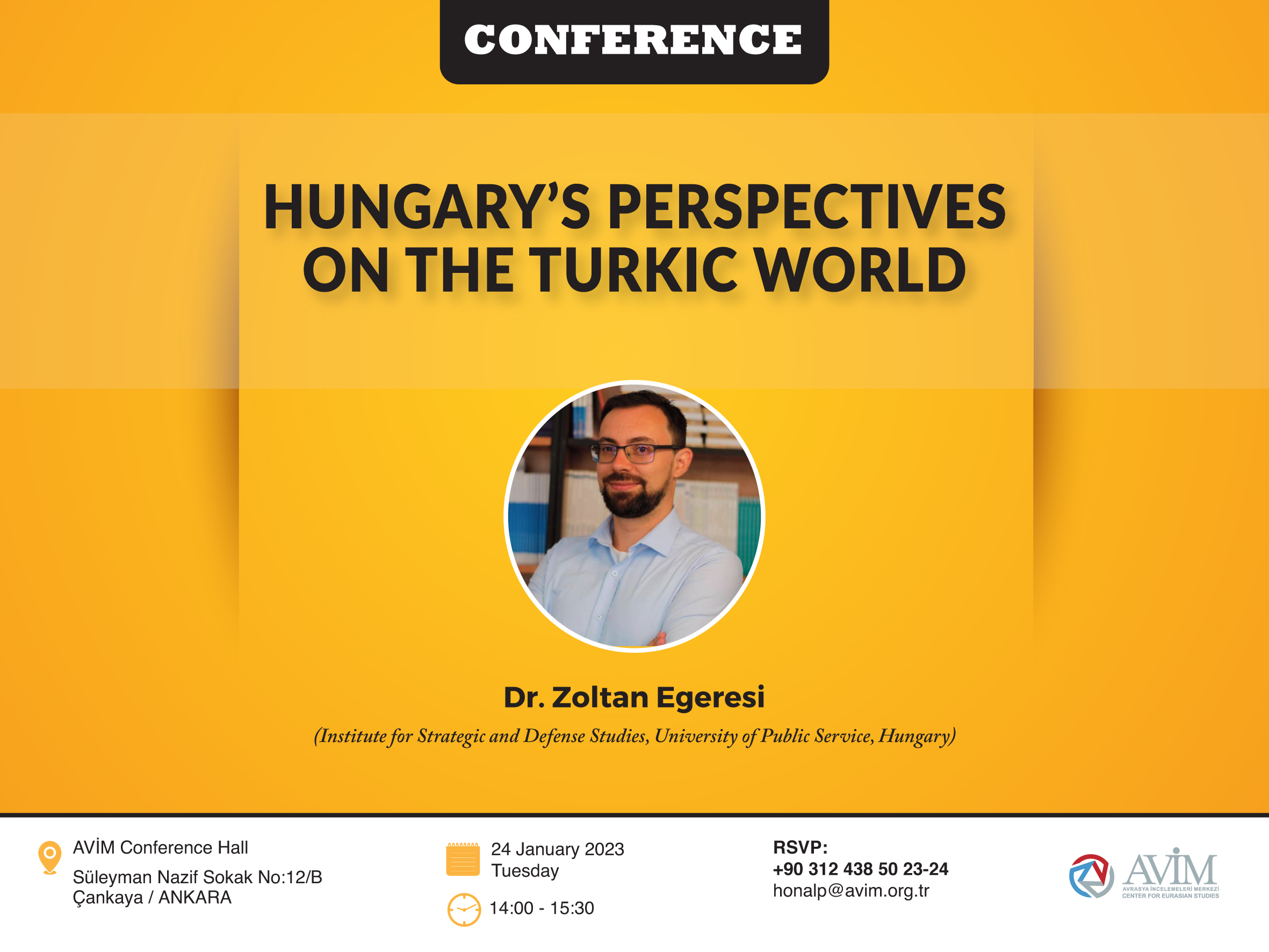
CONFERENCE TITLED “HUNGARY’S PERSPECTIVES ON THE TURKIC WORLD"