

















TWSJ 05/11/2014
Despite Threats, Washington Finds Ability to Influence Moscow Foreign Policy LimitedU.S.-Russian relations headed into a new slide over the crisis in Ukraine following a lull that ended Monday with Moscow’s embrace of disputed elections in rebel-controlled areas, according to U.S. officials.
U.S. officials warned Russia that such “destabilizing and dangerous actions,” including what they called a new buildup of Russian military close to the Ukraine border, would carry a cost.
At the same time, they acknowledged the limits of the U.S. ability to influence Russian foreign policy.
“For the Russian leadership, Ukraine is the central national-security issue, and it wasn’t going to be easy to change their policy, certainly not in the short run,” a senior U.S. official said. “We’ve seen some change in tactics, but I think we don’t see a fundamental change in the strategic direction on Ukraine, which is to intervene, to destabilize.”
The latest manifestation of that tactic was Sunday’s vote held in the areas of east Ukraine held by pro-Russia insurgents, which saw rebel militia leaders installed as “prime ministers” of two self-declared republics carved out of eastern Ukraine with Moscow’s backing.
Kiev and Western officials denounced the vote as a sham and a threat to the fragile peace there, and had urged Russia—which had helped broker the two-month-old truce—to follow suit.
But Russia’s Foreign Ministry said it “respected the will expressed by the population in the southeast” of Ukraine. “The elected officials received a mandate to solve practical tasks of the restoration of normal life in the regions,” the ministry said.
As part of the peace deal, Ukrainian President Petro Poroshenko signed a law granting special status to the separatist regions and providing for local elections there in December, but the rebels ignored it and went ahead with their own vote. On Monday, Mr. Poroshenko said the law would likely be repealed.
“The fake elections torpedoed the law and sharply aggravated the situation,” he said in a speech. “Those sweeping powers envisaged by the law we are only ready to provide to legitimately elected self-governing authorities, but not to thugs who crown themselves.”
The European Union also said it wouldn’t recognize the results. A spokesman for German Chancellor Angela Merkel called it “incomprehensible that there are official Russian voices either respecting or recognizing these so-called elections.”
The White House also expressed concern about what National Security Council spokeswoman Bernadette Meehan called Russia’s attempt “to legitimize these sham ‘elections.’ ”
Separately, U.S. Air Force Gen. Philip Breedlove, the North Atlantic Treaty Organization’s top military commander, said Russian troops had moved closer to the Ukrainian border in the run-up to the separatist ballot.
“We believe that was probably to bring some pressure and make sure that the elections went according to the separatist plans,” he said Monday. He added there are roughly 250 to 300 Russian troops inside Ukraine providing advice and training to separatist forces.
“These are not fighting formations. These are formations and specialists that are in there doing training and equipping of the separatist forces,” Gen. Breedlove said.
Russia denies any military involvement in Ukraine.
Although Election Day was calm, the Organization for Security and Cooperation in Europe, which is monitoring the cease-fire, said one of four drones being used to watch the border was shot at multiple times from an antiaircraft gun to the east of the border.
“Given the location of the incident, it was clear that this was done by Russia-backed separatists,” the U.S. envoy to the OSCE Daniel Baer said. Rebel authorities couldn’t be immediately reached for comment.
The navigation signal for the same drone was jammed last week, an OSCE spokeswoman said Monday.
The rebel ballot appeared to knock out the foundations of the Sept. 5 peace accords signed by the separatists, Russia and Ukraine in the Belarus capital of Minsk, raising concerns about Moscow’s intentions.
“Should Moscow continue to ignore the commitments that it made in Minsk and continue its destabilizing and dangerous actions, the costs to Russia will rise,” Ms. Meehan said.
Early on in the crisis, the White House decided not to give Ukraine lethal military aid, which officials said could have provoked Moscow into an even bigger escalation.
U.S. officials have instead relied on economic sanctions as a way to pressure Moscow, and say more could follow. “We are looking at appropriate measures, we are still discussing them with our allies and partners,” the senior U.S. official said.
Citing examples like Iran and Myanmar, U.S. officials say the strategy needs more time to work and that it would have been unrealistic to expect the Kremlin to change its Ukraine policy so quickly.
In his speech Monday, Mr. Poroshenko said he would propose another law to define the boundaries of the separatist regions and decentralize power in what seemed to be a further tacit admission that the central government has lost control in the region.
No comments yet.
- NATIONAL BANK OF SERBIA MARKED THE BEGINNING OF OFFICIAL TALKS WITH IMF The Balkans 04.11.2014
- RUSSIA SNUBS NUCLEAR SECURITY MEETING Asia - Pacific 04.11.2014
- THE RISE AND FALL OF THE ‘SONS OF IRAQ’ Iraq 04.11.2014
- IMF SAYS KAZAKHSTAN CAN SHIELD CURRENCY FROM DEVALUATION Asia - Pacific 04.11.2014
- RENZI CONTINUES ROW WITH NEW EU COMMISSION CHIEF Europe - EU 04.11.2014
-
25.01.2016
THE ARMENIAN QUESTION - BASIC KNOWLEDGE AND DOCUMENTATION -
12.06.2024
THE TRUTH WILL OUT -
27.03.2023
RADİKAL ERMENİ UNSURLARCA GERÇEKLEŞTİRİLEN MEZALİMLER VE VANDALİZM -
17.03.2023
PATRIOTISM PERVERTED -
23.02.2023
MEN ARE LIKE THAT -
03.02.2023
BAKÜ-TİFLİS-CEYHAN BORU HATTININ YAŞANAN TARİHİ -
16.12.2022
INTERNATIONAL SCHOLARS ON THE EVENTS OF 1915 -
07.12.2022
FAKE PHOTOS AND THE ARMENIAN PROPAGANDA -
07.12.2022
ERMENİ PROPAGANDASI VE SAHTE RESİMLER -
01.01.2022
A Letter From Japan - Strategically Mum: The Silence of the Armenians -
01.01.2022
Japonya'dan Bir Mektup - Stratejik Suskunluk: Ermenilerin Sessizliği -
03.06.2020
Anastas Mikoyan: Confessions of an Armenian Bolshevik -
08.04.2020
Sovyet Sonrası Ukrayna’da Devlet, Toplum ve Siyaset - Değişen Dinamikler, Dönüşen Kimlikler -
12.06.2018
Ermeni Sorunuyla İlgili İngiliz Belgeleri (1912-1923) - British Documents on Armenian Question (1912-1923) -
02.12.2016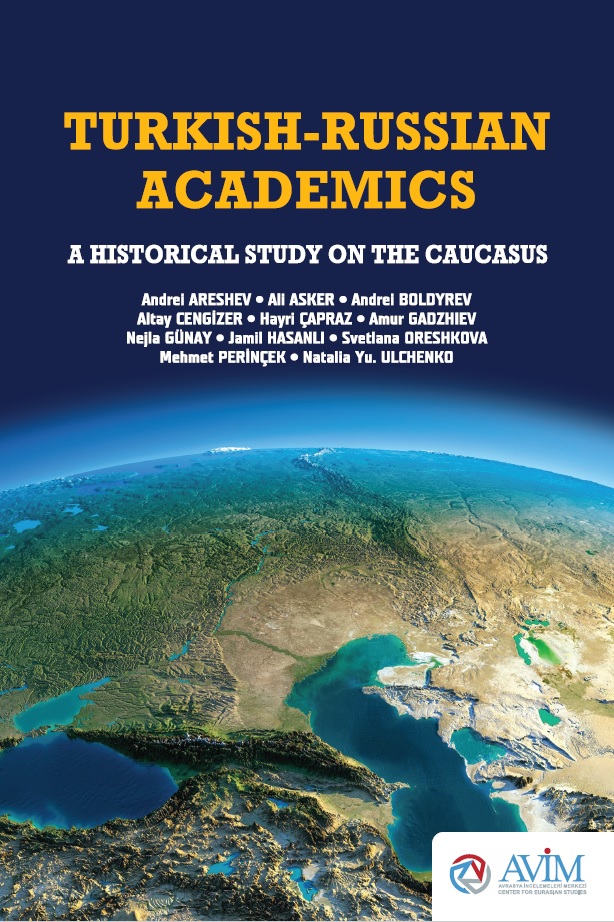
Turkish-Russian Academics: A Historical Study on the Caucasus -
01.07.2016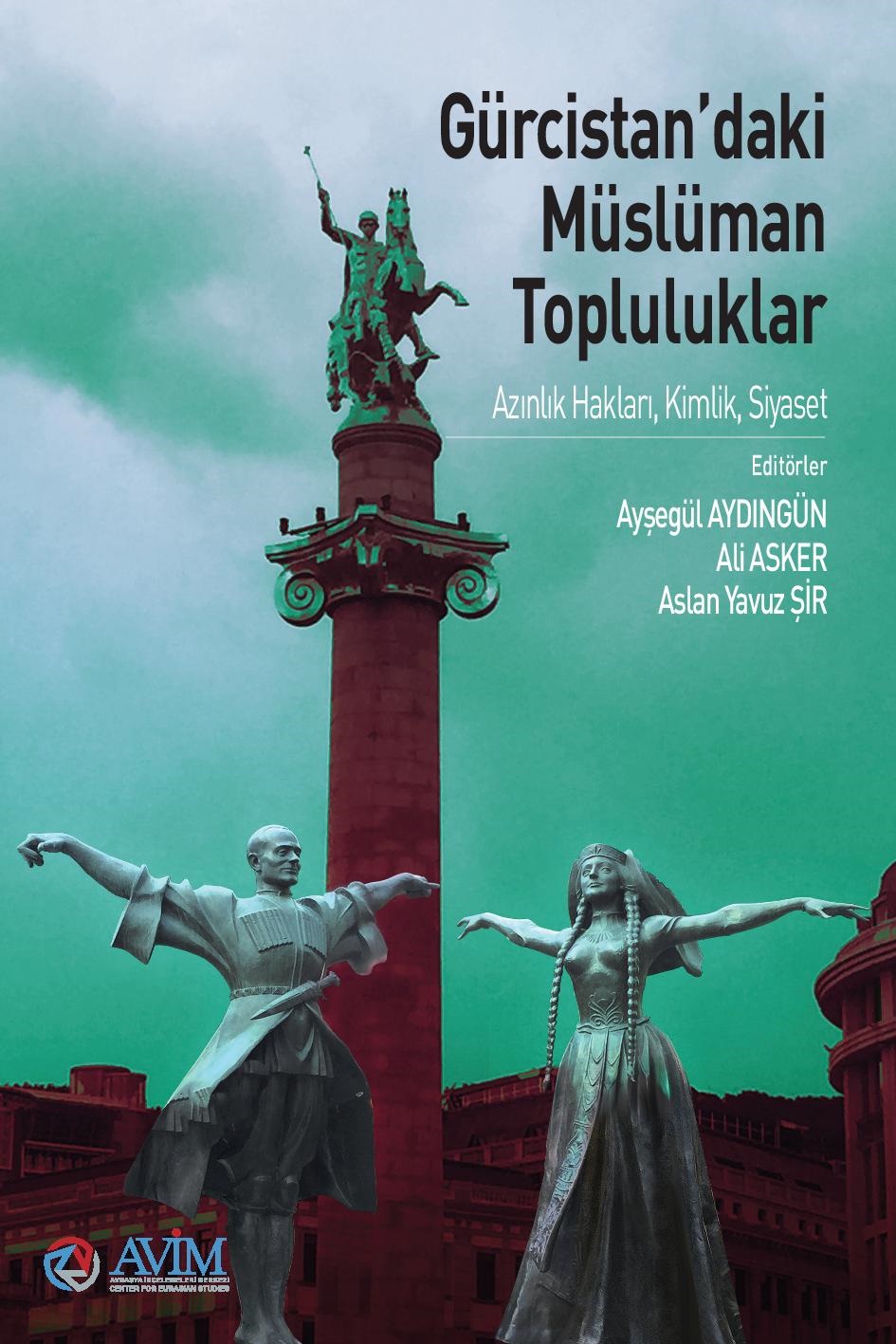
Gürcistan'daki Müslüman Topluluklar: Azınlık Hakları, Kimlik, Siyaset -
10.03.2016
Armenian Diaspora: Diaspora, State and the Imagination of the Republic of Armenia -
24.01.2016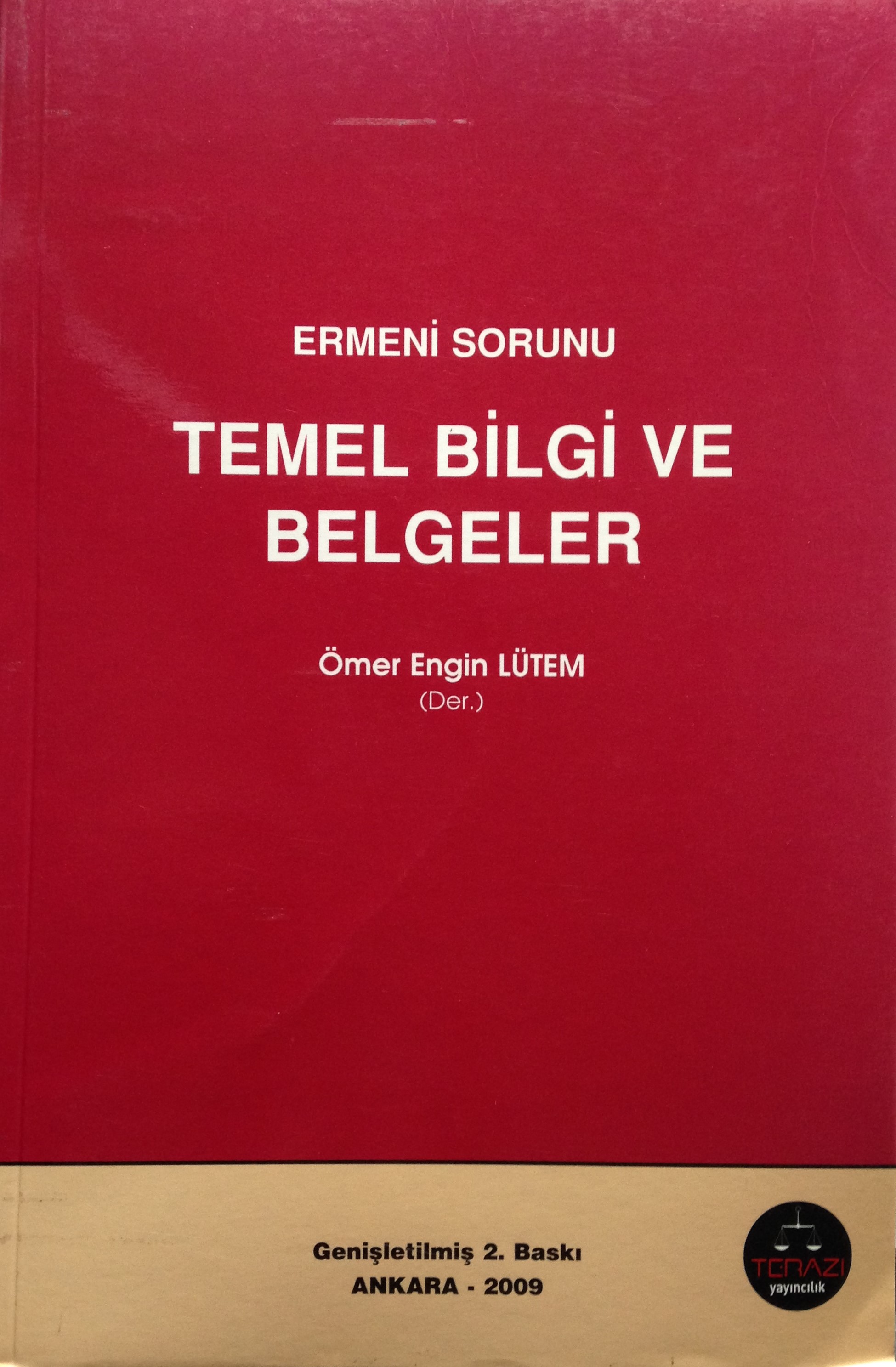
ERMENİ SORUNU - TEMEL BİLGİ VE BELGELER (2. BASKI)
-
AVİM Conference Hall 24.01.2023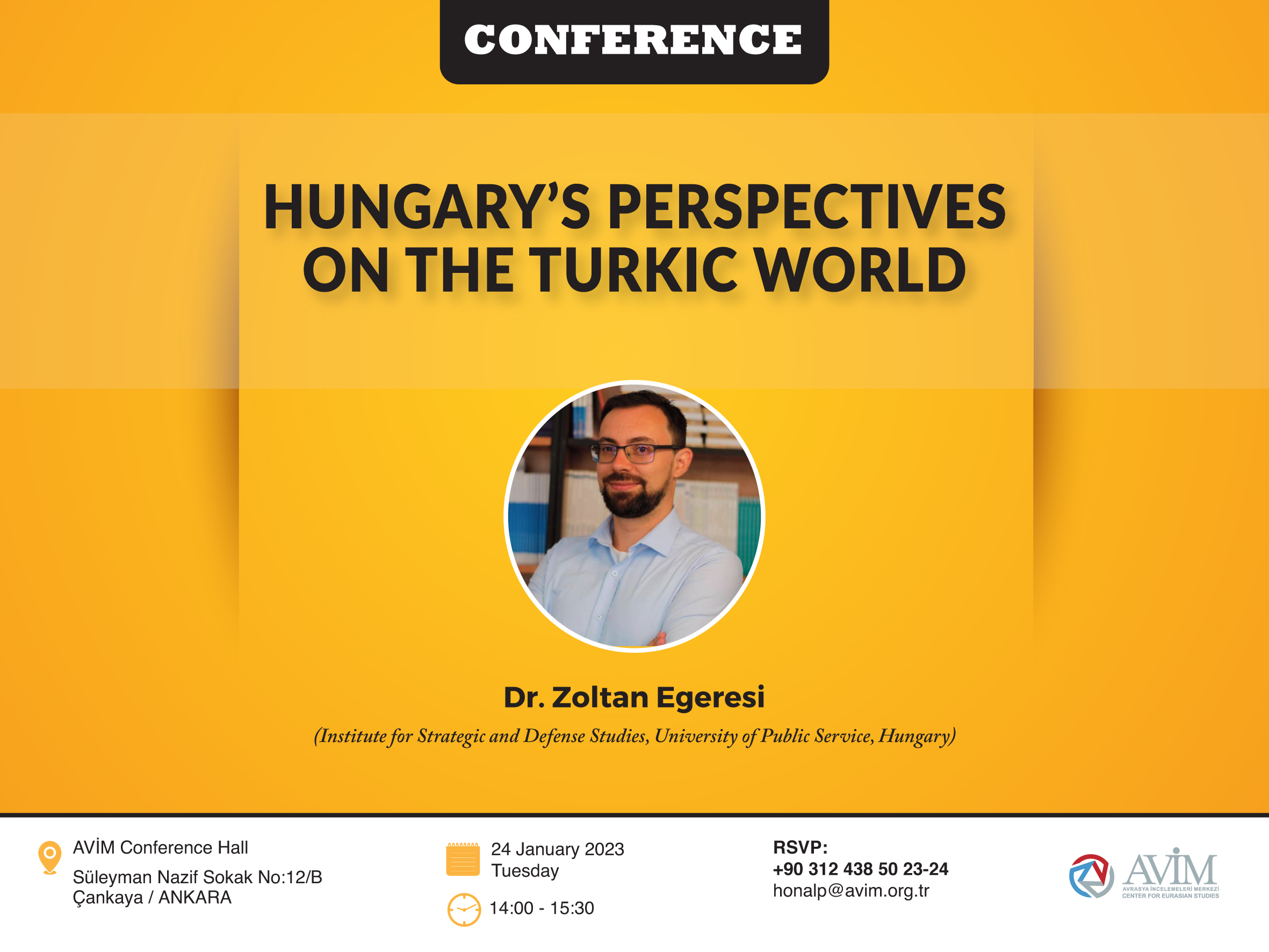
CONFERENCE TITLED “HUNGARY’S PERSPECTIVES ON THE TURKIC WORLD"