















Sheikh Hasina, who is known as “the Iron Lady” of Bangladesh and has held the longest term in office as the head of state in the country, fled to India after resigning from her position in August 2024. The daughter of Sheikh Mujibur Rahman, who was the leader of the independence war fought by Bangladesh against Pakistan in 1971, Sheikh Hasina’s drift towards an oppressive regime, high inflation, foreign debt, corruption, and the claims of irregularities in elections led to severe disgruntlement in Bangladesh society. A quota system that had ensured approximately one-third privilege for appointment in the public sector for families who fought against Pakistan in 1971 was abolished in 2018, but was restored with the verdict of a court of Bangladesh in July 2024.[1] This situation paved the way for severe anger in society, which was faced with bad economic conditions, and protests began with the students’ leadership in July 2024. In a statement he made on 12 February 12 based on the report of the UN, the UN High Commissioner for Human Rights indicated that “serious and systematic violation of human rights” had taken place during the events.[2] The said events resulted in Hasina’s leaving the country and the establishment of a provisional government under the leadership of Muhammad Yunus. This new situation has brought along with it a new geopolitical transformation in South Asia.
During Bangladesh’s pursuit of its independence process against Pakistan, India gave a significant amount of support to Bangladesh and became an important ally for the country after 1971. The relations with India continued vigorously within the Hasina term as well, and her government was seen as the most significant tool in India’s projection of influence in the country.[3] After Hasina’s escape to India, the Bangladeshi government demanded the return of Hasina to the country. However, India has not complied with this demand. In Bangladesh, several protests have been organized against India, which is seen as the supporter of the Hasina government. India’s demand for the taking of more steps for the protection of the rights of Hindus in Bangladesh and their protection against reprisals, India’s setting up of wire fences along the border of Western Bengal, Hasina’s critical discourse towards Muhammad Yunus' governance in her statements while she is residing in India have all paved the way for political tensions between the two countries.[4] Attacks have also been carried out against Bangladesh’s diplomatic missions in India.[5] These developments demonstrate the state of the relations between Bangladesh and India (which are diplomatically and politically complex), at the same time, they demonstrate the scale of the tensions that have occurred between the two countries. It is claimed that the other reason for the problematic relations is Indian Prime Minister Narendra Modi’ Hindu-nationalist policies.[6] Also, India’s disregarding the demand for the return of Hasina to the country has been interpreted as India valuing its relations with the Mujib family more than its relations with the state of Bangladesh.[7] On the other hand, official Dhaka is taking significant steps that reshape the historiography in the country. In the country’s history books, India’s role during the 1971 War (which Bangladesh pursued against Pakistan) is being downplayed, and the government is making modifications in the said books so as to reduce the importance of Sheik Hasina and Mujibur Rahman, who is founding president of the country and is also Sheik Hasina’s father.[8] This situation demonstrates that the intention to reduce India’s impact in Bangladeshi politics.
Bangladesh, whose relations have been weakened with India, wants to improve its relations with China. The Adviser for Foreign Affairs of Bangladesh, Husseyin, who visited Beijing in January 2025, discussed with the Beijing government commercial subjects like alleviating credit repayments and the request for support in the medical field from China.[9] The meeting about the health sector is an important example in terms of the changes in the relations between India-Bangladesh-China. Bangladeshi citizens used to go to Indian hospitals for medical treatment. However, due to the disrupted relations lately, Bangladeshis have not been able to receive treatment in India.[10] Meanwhile, China, which has responded positively to Bangladesh’s request, is constructing various hospitals in order to support the health services in the country. However, it should be indicated that China-Bangladesh relations were already getting closer during the Hasina government as well. For example, Bangladesh is one of the countries included in the Belt and Road Initiative. Since 2006, China has become the most significant trading partner of Bangladesh, which has been the case for numerous other countries in the Global South. There is substantial collaboration between the two countries, especially in the defense field. China is the only country with which Bangladesh has made a defense agreement, and Chinese weapons constitute a significant portion of the Bangladeshi military’s inventory.[11] A short time ago before Hasina's resignation from her office, the relations between China and Bangladesh had been elevated to the level of "strategic partnership" and 21 treaties were signed between the two countries.[12]
The close relations between China and Bangladesh have been continued in the provisional Yunus government as well. Most recently, in February 2025, a committee of 22 people composed of different political groups and different parts of Bangladesh like journalists, leaders of civil society, and students, visited China.[13] China has easily adapted to the changed dynamics in Bangladesh and has established good relations with the changed actors. The main reason for this is that, even during Hasina’s term, China had established relations with different political parties, including the Bangladesh Nationalist Party. However, when India’s approach is examined, it is seen that due to the Bangladesh Nationalist Party’s relations with Pakistan and pro-Islamic groups, which posed a problem for India, India established relations through the Awami National Party and the Hasina government.[14] This situation provides advantage to China regarding its relations with Bangladesh. As previously indicated, there were also student leaders in the committee that visited Beijing. The students who led the protests in July-August 2024 have established new political party in February of this year.[15] In this respect, it is seen that China has the chance to maintain relations with the new actors in Bangladesh as well.
Another significant shift in Bangladesh politics is taking place in the relations with Pakistan. In December 2024, direct trade was carried out between the two countries for the first time since 1971.[16] On 13 January, a memorandum of understanding was signed to establish the “joint business council” with the aim of easing trade between the two countries, and also, collaboration was enhanced in the fields of education, culture, and defense. It is being reported that Bangladesh is interested in the JF-17 Thunder fighter aircraft, which Pakistan developed together with China.[17] The Bangladesh navy participated in “AMAN-2025”, the multinational sea exercise of Pakistan, and high-level military delegations carried out reciprocal visits. After the Bangladeshi delegation paid a visit to the Siliguri Corridor, India fenced off the West Bengal border. It is possible to say that this situation shows the threat perception of India from the rapprochement taking place between Pakistan and Bangladesh.[18] The close relations that China defines as “all-weather partnership” with Pakistan is another facilitative factor for Bangladesh-Pakistan relations.
Türkiye has recently signed various agreements, notably defense agreements, with Indonesia, Malaysia, and Pakistan during the visits Turkish President Recep Tayyip Erdoğan made to the aforementioned countries. In view of the negotiations Bangladesh is carrying out with Pakistan for the procurement of new military equipment, new defense collaborations that Türkiye could advance with Bangladesh will contribute to both countries. Considering that its weapons mostly originate from China, Bangladesh will be able to diversify its inventory with Turkish weapons, which will also allow it to diversify its foreign policy tools as well. Türkiye-Bangladesh relations can thus gain an extra momentum.
Consequently, the weakened relations with India, together with the provisional government that was established in Bangladesh in August 2024, has paved the way for major transformations in domestic policies in Bangladesh, such as the rewriting of the country’s national history. This situation has also brought with it the development of new foreign policy tools. The relations that have been discussed above have reshaped regional dynamics and strategies. Bangladesh’s relations with Pakistan, which have been established for the first time after more than 50 years, and Bangladesh’s relations that have been strengthened with China in new fields, offer new commercial and strategic opportunities to the relevant countries. At the same time, they carry the risk of intensifying regional competitions, such as the one that exists between India and Pakistan.
*Image: The Diplomat
[1] Duygu Çağla Bayram, “Hindistan-Bangladeş İlişkilerinde İyimser Olmak Zor: Toplumsal Kırılganlık Prizmasından Bakış”, Kriter, January 2025 ,Year 9, Issue 97, https://kriterdergi.com/dis-politika/hindistan-banglades-iliskilerinde-iyimser-olmak-zor-toplumsal-kirilganlik-prizmasindan-bakis
[2] “Bangladesh Protests Probe Reveals Top Leaders Led Brutal Repression”, UN News, February 12, 2025, https://news.un.org/en/story/2025/02/1160046
[3] Soutik Biswas, “Bangladesh: Can India Help its Special Ally Defuse the Crisis?”, BBC, August 5, 2024, https://www.bbc.com/news/articles/c39kkkdjkzwo
[4] SM Najmus Sakib, “Bangladesh Slams Attack on its Mission in India”, Anadolu Agency, December 3, 2024, https://www.aa.com.tr/en/asia-pacific/bangladesh-slams-attack-on-its-mission-in-india/3411565 ; SM Najmus Sakib, “Bangladesh Summons Indian Envoy Over Building Wire Fences Along Border”, Anadolu Agency, January 12, 2025, https://www.aa.com.tr/en/asia-pacific/bangladesh-summons-indian-envoy-over-building-wire-fences-along-border/3448298
[5] SM Najmus Sakib, “Bangladesh Slams Attack on its Mission in India”, Anadolu Agency, December 3, 2024,
https://www.aa.com.tr/en/asia-pacific/bangladesh-slams-attack-on-its-mission-in-india/3411565
[6] Soutik Biswas, “Bangladesh: Can India Help its Special Ally Defuse the Crisis?”, BBC, August 5, 2024, https://www.bbc.com/news/articles/c39kkkdjkzwo
[7] Safia Khan, “Bangladesh-Pakistan Thaw and a Regional Realignment”, Modern Diplomacy, February 23, 2025, https://moderndiplomacy.eu/2025/02/23/bangladesh-pakistan-thaw-and-a-regional-realignment/
[8] “Bangladesh Revises School Textbooks: Mujibur Rahman’s Legacy Trimmed; India’s Role in 1971 War Curtailed”, Hindustan Times, February 28, 2025, https://www.hindustantimes.com/india-news/bangladesh-revises-school-textbooks-mujibur-rahmans-legacy-trimmed-india-s-role-in-1971-war-curtailed-101740721000931.html
[9] Sudha Ramachandran, “China Promises Support to Bangladesh’s Interim Government”, The Diplomat, February 6, 2025, https://thediplomat.com/2025/02/china-promises-support-to-bangladeshs-interim-government/
[10] “China Woos Bangladesh with Healthcare as India Ties Sour”, The Straits Times, February 20, 2025, https://www.straitstimes.com/asia/south-asia/china-woos-bangladesh-with-healthcare-as-india-ties-sour
[11] Sudha Ramachandran, “China Promises Support to Bangladesh’s Interim Government”, The Diplomat, February 6, 2025, https://thediplomat.com/2025/02/china-promises-support-to-bangladeshs-interim-government/
[12] Sudha Ramachandran, “China Promises Support to Bangladesh’s Interim Government”, The Diplomat, February 6, 2025, https://thediplomat.com/2025/02/china-promises-support-to-bangladeshs-interim-government/
[13] Saqlain Rizve, “The Revival of Bangladesh-Pakistan Ties”, Lowy Institute, February 3, 2025 https://www.lowyinstitute.org/the-interpreter/contributors/articles/saqlain-rizve
[14] Safia Khan, “Bangladesh-Pakistan Thaw and a Regional Realignment”, Modern Diplomacy, February 23, 2025, https://moderndiplomacy.eu/2025/02/23/bangladesh-pakistan-thaw-and-a-regional-realignment/ ; Duygu Çağla Bayram, “Hindistan-Bangladeş İlişkilerinde İyimser Olmak Zor: Toplumsal Kırılganlık Prizmasından Bakış”, Kriter, January 2025 ,Year 9, Issue 97, https://kriterdergi.com/dis-politika/hindistan-banglades-iliskilerinde-iyimser-olmak-zor-toplumsal-kirilganlik-prizmasindan-bakis
[15] Moudud Ahmmed Sujan, “Bangladesh Students Who Deposed PM Hasina form Party to Fight Elections”, Al Jazeera, February 28, 2025, https://www.aljazeera.com/news/2025/2/28/bangladesh-students-who-deposed-pm-hasina-form-party-to-fight-elections
[16] Saqlain Rizve, “The Revival of Bangladesh-Pakistan Ties”, Lowy Institute, February 3, 2025, https://www.lowyinstitute.org/the-interpreter/contributors/articles/saqlain-rizve
[17] Saqlain Rizve, “The Revival of Bangladesh-Pakistan Ties”, Lowy Institute, February 3, 2025, https://www.lowyinstitute.org/the-interpreter/contributors/articles/saqlain-rizve
[18] Safia Khan, “Bangladesh-Pakistan Thaw and a Regional Realignment”, Modern Diplomacy, February 23, 2025, https://moderndiplomacy.eu/2025/02/23/bangladesh-pakistan-thaw-and-a-regional-realignment/
© 2009-2025 Center for Eurasian Studies (AVİM) All Rights Reserved
No comments yet.
-
 TÜRKİYE’S ASEAN DIALOGUE PARTNERSHIP
Seyda Nur OSMANLI 26.08.2026 -
 CHINA’S GROWING PRESENCE IN GEORGIA
Seyda Nur OSMANLI 30.04.2025 -
 THE 16TH BRICS SUMMIT REGARDING CHINA AND THE GLOBAL SOUTH
Seyda Nur OSMANLI 26.12.2024 -
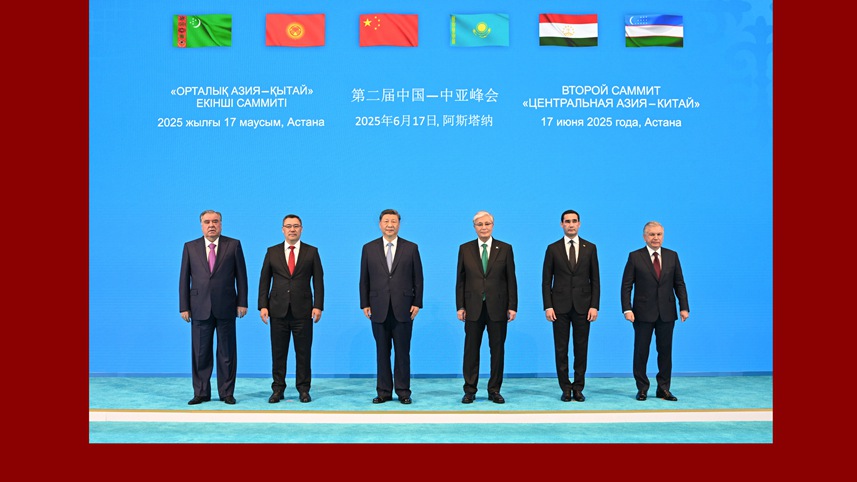 CHINA’S INCREASING INVOLVEMENT IN CENTRAL ASIA: THE SECOND CHINA-CENTRAL ASIA SUMMIT
Seyda Nur OSMANLI 18.08.2025 -
BANGLADESH: CHANGING INTERNATIONAL BALANCES IN SOUTH ASIA
Seyda Nur OSMANLI 07.03.2025
-
 ARE THE SEEDS OF HOSTILITY AGAINST TURKS BEING SOWN IN AUSTRALIA?
Teoman Ertuğrul TULUN 10.05.2019 -
 PATRICK DEVEDJIAN: A NEO-FASCIST WHO WAS A LIFE-LONG SUPPORTER OF TERRORISM
Maxime GAUIN 02.04.2020 -
 ARMENIA’S CHOICE: EAST OR WEST?
Hande Apakan 22.02.2015 -
 AN ANALYSIS OF THE POLITICS IN ARMENIA AFTER THE “VELVET REVOLUTION”
Turgut Kerem TUNCEL 01.06.2018 -
 A STRATEGIC CROSSROADS IN EURASIAN GEOPOLITICS: THE EUROPEAN UNION’S CENTRAL ASIA POLICY IN THE CONTEXT OF THE C5+1 FORMAT AND TÜRKİYE’S ROLE
Hazel ÇAĞAN ELBİR 22.01.2026
-
25.01.2016
THE ARMENIAN QUESTION - BASIC KNOWLEDGE AND DOCUMENTATION -
12.06.2024
THE TRUTH WILL OUT -
27.03.2023
RADİKAL ERMENİ UNSURLARCA GERÇEKLEŞTİRİLEN MEZALİMLER VE VANDALİZM -
17.03.2023
PATRIOTISM PERVERTED -
23.02.2023
MEN ARE LIKE THAT -
03.02.2023
BAKÜ-TİFLİS-CEYHAN BORU HATTININ YAŞANAN TARİHİ -
16.12.2022
INTERNATIONAL SCHOLARS ON THE EVENTS OF 1915 -
07.12.2022
FAKE PHOTOS AND THE ARMENIAN PROPAGANDA -
07.12.2022
ERMENİ PROPAGANDASI VE SAHTE RESİMLER -
01.01.2022
A Letter From Japan - Strategically Mum: The Silence of the Armenians -
01.01.2022
Japonya'dan Bir Mektup - Stratejik Suskunluk: Ermenilerin Sessizliği -
03.06.2020
Anastas Mikoyan: Confessions of an Armenian Bolshevik -
08.04.2020
Sovyet Sonrası Ukrayna’da Devlet, Toplum ve Siyaset - Değişen Dinamikler, Dönüşen Kimlikler -
12.06.2018
Ermeni Sorunuyla İlgili İngiliz Belgeleri (1912-1923) - British Documents on Armenian Question (1912-1923) -
02.12.2016
Turkish-Russian Academics: A Historical Study on the Caucasus -
01.07.2016
Gürcistan'daki Müslüman Topluluklar: Azınlık Hakları, Kimlik, Siyaset -
10.03.2016
Armenian Diaspora: Diaspora, State and the Imagination of the Republic of Armenia -
24.01.2016
ERMENİ SORUNU - TEMEL BİLGİ VE BELGELER (2. BASKI)
-
AVİM Conference Hall 24.01.2023
CONFERENCE TITLED “HUNGARY’S PERSPECTIVES ON THE TURKIC WORLD"