














Denmark’s Migration Discourse and the Question of Religious Attribution
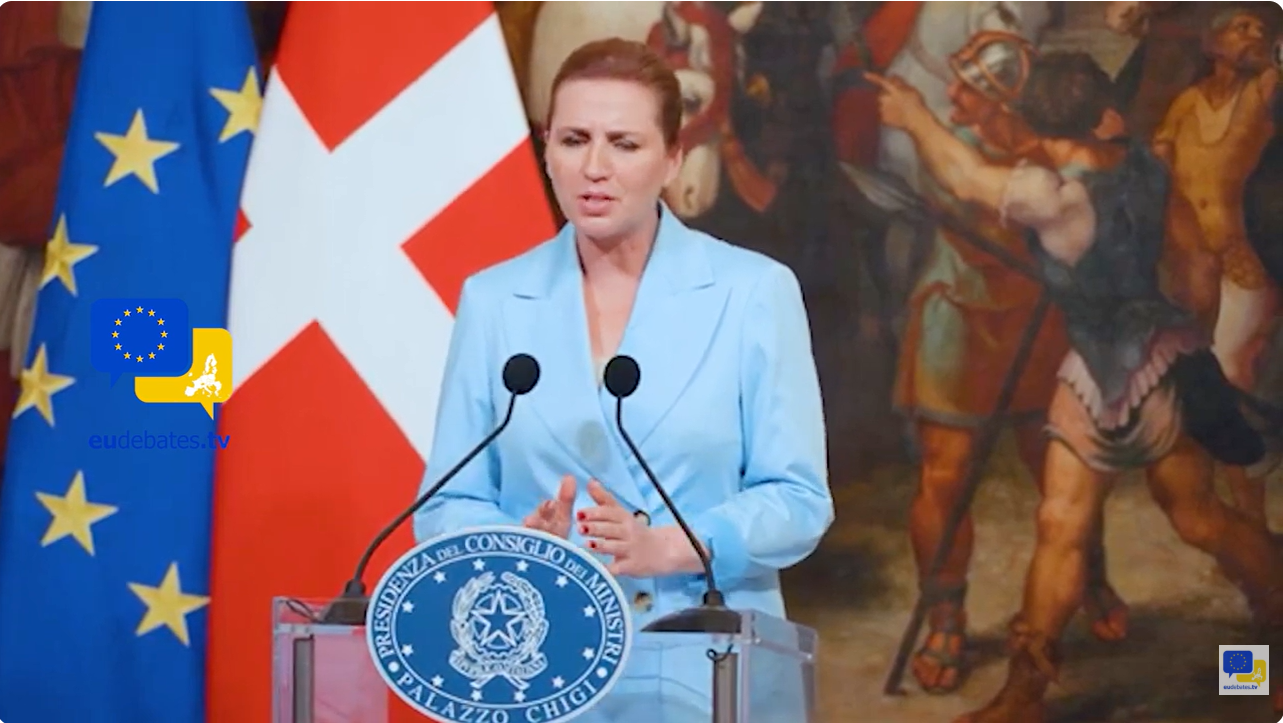
According to press reports, during a 12 August 2026 Danish parliamentary debate concerning the Ceuta-related migration developments, Prime Minister Mette Frederiksen referred to “people with an Islamic background” who did not want an “open, free European society.”[1] Although states are entitled to address irregular migration, violent extremism, and integration failures through lawful means, the reported statement warrants closer examination. It raises the question of whether a political discourse directed at specific unlawful conduct is being broadened to treat a religiously defined population as a source of societal threat.
Islamophobia, Anti-Muslim Hatred, and the Rule of Law
For present purposes, Islamophobia—or anti-Muslim hatred—denotes prejudice, hostility, discrimination, or violence directed at Muslims and persons perceived as Muslim. The Council of Europe’s European Commission against Racism and Intolerance similarly characterizes anti-Muslim racism and discrimination as encompassing hate speech, violence, and discriminatory acts targeting Muslims or those perceived to be Muslim. “Anti-Islamism,” by contrast, is employed here only as a tentative analytical category: a political framing that represents Islam, or Muslim identity as such, as incompatible with the European civic order. Criticism of religions, their leaders, or practices remains protected expression. Equally, states must counter terrorism, incitement, and violence. Yet neither principle permits collective guilt or religious profiling, which conflict with equality and freedom of religion.[2]
From Conduct-Based Security to Religious Generalization
Against this normative framework, two propositions must be kept distinct. States have the sovereign responsibility to manage their borders, examine asylum applications in accordance with applicable law, combat migrant smuggling and human trafficking, prosecute terrorism and other criminal offenses, and pursue integration policies consistent with human rights. These responsibilities concern identifiable conduct, individual responsibility, and legally defined risks. A public statement that broadly treats persons with an “Islamic background” as a societal threat does not maintain that distinction. “Islamic background” is a religiously framed and potentially expansive category, not a description of unlawful conduct. Its use, therefore, risks converting legitimate concern over particular acts, organizations, or policies into a generalized suspicion of a religiously identified minority.
The concern should not be overstated as a settled Europe-wide transformation. Nevertheless, it merits scrutiny in light of existing indicators. The OSCE’s Office for Democratic Institutions and Human Rights has warned that Muslims across the OSCE region are often associated with terrorism and extremism, portrayed as a monolithic group, or represented as incompatible with human rights and democracy.[3] AVİM’s analyses have likewise noted how xenophobic populism, anti-Muslim discourse, and the historically embedded image of the “Muslim Turk” may reinforce exclusionary narratives.[4] When mainstream political actors employ comparable language, it may signal an emerging discursive shift rather than merely a dispute over migration policy.
European Implications: Equal Citizenship and Rights-Based Governance
If such rhetoric becomes normalized, its consequences may extend beyond a particular migration controversy. It may weaken equal citizenship by treating religious identity as a proxy for political loyalty or security risk; impair social cohesion and integration by deepening mistrust; and increase Muslims’ exposure to discrimination. It also blurs the boundary between democratic, rights-compliant security policy and identity-based exclusion. A further inconsistency arises when public authorities formally condemn anti-Muslim hatred while language employed in political debate homogenizes Muslims as a potential threat. European governments and institutions should therefore maintain a strictly conduct-based approach: assess individuals and organizations based on evidence and applicable law, reject collective religious attribution, apply legal standards equally, and safeguard freedom of religion. Such an approach protects public security without compromising the democratic pluralism it is intended to defend.[5]
Safeguarding Security Through Equal Protection
Accordingly, border management and counter-terrorism remain legitimate state responsibilities, but their democratic legitimacy depends on individualised evidence, proportionality, due process, and equal protection. The Danish remarks should therefore be monitored not merely as an episode in migration politics, but as a possible indication that Islamophobia is being recast into a more explicit anti-Islam political vocabulary. Preserving the distinction between unlawful conduct and religious identity remains indispensable to European pluralism and the rule of law
*Picture: Youtube
[1] “Danish PM Calls Migrants with ‘Islamic Background’ the Greatest Threat as Europe Braces for Second Migrant Wave,” Gazette, August 14, 2026,https://gazette.com/2026/08/14/danish-pm-calls-migrants-with-islamic-background-the-greatest-threat-as-europe-braces-for-second-migrant-wave/; Tyler Speicher, “Denmark’s Left-Wing PM Warns: ‘Big Enemy Has Started to Grow from Within’ as Europe Faces Migrant Reckoning,” Fox News, August 14, 2026, https://www.foxnews.com/world/denmarks-left-wing-pm-warns-big-enemy-has-started-grow-from-within-europe-faces-migrant-reckoning; “Danish PM Warns of ‘Enemy Within,’” Brussels Signal, August 14, 2026, https://brusselssignal.eu/2026/08/danish-pm-warns-of-enemy-within-as-she-links-migration-to-hamas-and-terrorism/ .
[2] European Union, Charter of Fundamental Rights of the European Union, 2012/C 326/02, Official Journal of the European Union C 326 (October 26, 2012): 391–407, arts. 10, 20, 21, and 52; European Commission against Racism and Intolerance (ECRI), ECRI General Policy Recommendation No. 5 (Revised) on Preventing and Combating Anti-Muslim Racism and Discrimination (Strasbourg: Council of Europe, 2022), paras. 1–3
[3] Organization for Security and Co-operation in Europe, Office for Democratic Institutions and Human Rights, Anti-Muslim Hate Crime, Hate Crime Factsheet (Warsaw: OSCE/ODIHR, n.d.), accessed September 14, 2026, https://odihr.osce.org/odihr/373441
[4] Mehmet Oğuzhan Tulun, “Rising Islamophobia in the Western World and the Turkish-Armenian Controversy,” Center for Eurasian Studies (AVİM), 2019 / 4, March, 15, 2019, accessed September 15, 2026, https://avim.org.tr/en/Analiz/RISING-ISLAMOPHOBIA-IN-THE-WESTERN-WORLD-AND-THE-TURKISH-ARMENIAN-CONTROVERSY; Shada Islam, “Europe’s Dangerous Art of Anti-Muslim Doublespeak ,” ; Center for Eurasian Studies (AVİM), August 19, 2026, https://avim.org.tr/en/Bulten/EUROPE-S-DANGEROUS-ART-OF-ANTI-MUSLIM-DOUBLESPEAK .
[5] European Commission against Racism and Intolerance (ECRI), ECRI General Policy Recommendation No. 5 (Revised) on Preventing and Combating Anti-Muslim Racism and Discrimination (Strasbourg: Council of Europe, 2022), paras. 8, 16–18; European Commission, “Combating Anti-Muslim Hatred,” accessed September 14, 2026, https://commission.europa.eu/strategy-and-policy/policies/justice-and-fundamental-rights/combatting-discrimination/racism-and-xenophobia/combating-anti-muslim-hatred_en
© 2009-2025 Center for Eurasian Studies (AVİM) All Rights Reserved
No comments yet.
-
 THE MYTH OF RULES-BASED INTERNATIONAL ORDER IS UNDER DESTRUCTION
Teoman Ertuğrul TULUN 13.02.2026 -
 GREEK DEFENSE MINISTER DENDIAS'S STATEMENT REGARDING THE "GREEK CHRISTIAN IDENTITY" OF THE DODECANESE ISLANDS REFLECTS A CRUSADER MENTALITY
Teoman Ertuğrul TULUN 11.03.2026 -
 THE ARMENIAN DIASPORA, STATE CONTROL, AND THE LIMITS OF DIASPORA POLITICS
Teoman Ertuğrul TULUN 27.02.2026 -
 POPE FRANCIS’ INTERVIEW: RELIGIOUS DISCRIMINATION AGAINST BUDDHISTS, SHAMANS, AND MUSLIMS IN THE HOPES OF CHRISTIAN UNITY
Teoman Ertuğrul TULUN 26.12.2022 -
 19 MAY AND PONTUS STORIES
Teoman Ertuğrul TULUN 20.05.2019
-
 THE IMAGE OF ISLAM IN THE WEST AND THE CONFERENCE IN ISTANBUL: “RETHINKING VIOLENT EXTREMISM IN THE MENA REGION”
Hazel ÇAĞAN ELBİR 20.04.2016 -
 THE POLITICS OF NAMING THE 1915 EVENTS
AVİM 18.11.2021 -
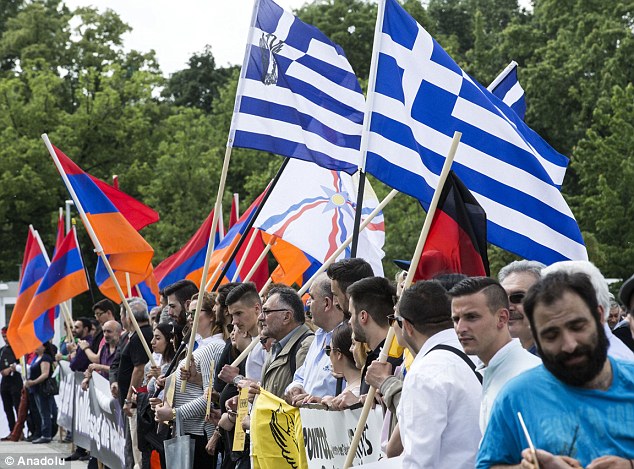 PONTIC GREEK GENOCIDE LOBBY FOLLOWS THE FOOTSTEPS OF THE ARMENIAN GENOCIDE LOBBY
Turgut Kerem TUNCEL 07.06.2017 -
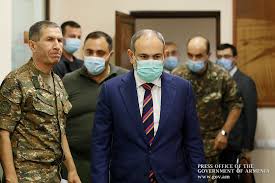 DEVELOPMENTS IN POST-2020 KARABAKH WAR ARMENIA AND THEIR IMPLICATIONS - II: THE BRAWL BETWEEN PASHINYAN AND THE GENERAL STAFF
Turgut Kerem TUNCEL 10.03.2021 -
THE MOSCOW SUMMIT OF THE COLLECTIVE SECURITY TREATY ORGANIZATION
Alev KILIÇ 24.12.2012
-
25.01.2016
THE ARMENIAN QUESTION - BASIC KNOWLEDGE AND DOCUMENTATION -
12.06.2024
THE TRUTH WILL OUT -
27.03.2023
RADİKAL ERMENİ UNSURLARCA GERÇEKLEŞTİRİLEN MEZALİMLER VE VANDALİZM -
17.03.2023
PATRIOTISM PERVERTED -
23.02.2023
MEN ARE LIKE THAT -
03.02.2023
BAKÜ-TİFLİS-CEYHAN BORU HATTININ YAŞANAN TARİHİ -
16.12.2022
INTERNATIONAL SCHOLARS ON THE EVENTS OF 1915 -
07.12.2022
FAKE PHOTOS AND THE ARMENIAN PROPAGANDA -
07.12.2022
ERMENİ PROPAGANDASI VE SAHTE RESİMLER -
01.01.2022
A Letter From Japan - Strategically Mum: The Silence of the Armenians -
01.01.2022
Japonya'dan Bir Mektup - Stratejik Suskunluk: Ermenilerin Sessizliği -
03.06.2020
Anastas Mikoyan: Confessions of an Armenian Bolshevik -
08.04.2020
Sovyet Sonrası Ukrayna’da Devlet, Toplum ve Siyaset - Değişen Dinamikler, Dönüşen Kimlikler -
12.06.2018
Ermeni Sorunuyla İlgili İngiliz Belgeleri (1912-1923) - British Documents on Armenian Question (1912-1923) -
02.12.2016
Turkish-Russian Academics: A Historical Study on the Caucasus -
01.07.2016
Gürcistan'daki Müslüman Topluluklar: Azınlık Hakları, Kimlik, Siyaset -
10.03.2016
Armenian Diaspora: Diaspora, State and the Imagination of the Republic of Armenia -
24.01.2016
ERMENİ SORUNU - TEMEL BİLGİ VE BELGELER (2. BASKI)
-
AVİM Conference Hall 24.01.2023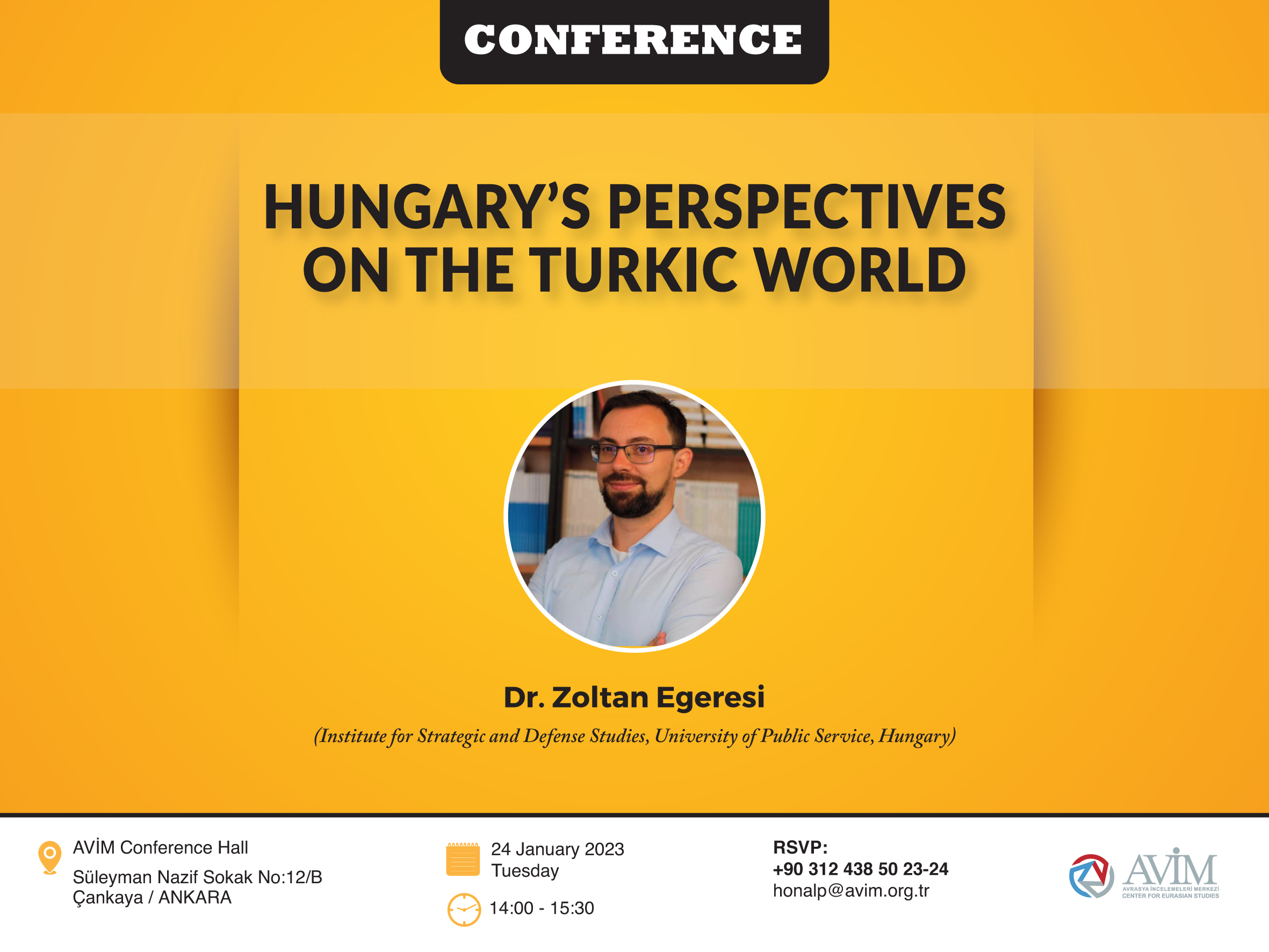
CONFERENCE TITLED “HUNGARY’S PERSPECTIVES ON THE TURKIC WORLD"