This is the English translation of a Turkish language article that was originally published by AVİM on 30 December 2025.
On 28 December 2025, the Lemkin Institute issued a statement regarding the pressure being applied on the Armenian Apostolic Church.[1] The Institute's statement criticizing the state policy towards the Armenian Apostolic Church may initially seem to focus on concepts such as religious freedom and democratic regression; however, critical historical and political misconceptions emerge when the text is examined closely. The text frames an ongoing internal political crisis as almost a “process leading to genocide” by deliberately intertwining legal debates with identity and cultural traumas. This reveals an approach that is quite problematic from both a conceptual and a moral standpoint.
The tension between the government and the church in Armenia can be considered a fundamental issue of principle that must be evaluated in the context of the rule of law and maintaining the balance between the state and religious authorities. However, the Lemkin Institute approaches this debate within the framework of “identity erasure” and “oppressive state”, instead of seriously addressing the state's allegations of corruption within the church, political interference, threats to the constitutional order, etc. Indeed, in democratic regimes, religious institutions are not above the law regardless of the roles they have played throughout history. Although this situation is a recurring indicator of the Lemkin Institute's unscientific and biased stance, a priest coming under investigation cannot by default be presented as an “attack on freedom of belief” or a “sign of cultural genocide”.
At this point, the approach of K.M. Greg Sarkissian, the President of the Zoryan Institute (another organization that plays a prominent role in the spreading of the Armenian claims), portrays the issue in a more realistic manner. As Sarkissian emphasizes, just because the Armenian Apostolic Church historically assumed an authoritative role in the absence of a state does not mean that the church has the right to claim a degree of authority equivalent or parallel to that of the state within the modern understanding of sovereignty. Sovereignty is singular and indivisible; and the presence of two separate ultimate decision-making authorities on the same piece of land inevitably leads to crisis.[2]
Despite what the Lemkin statement claims, an attempt to balance between the state and religious authorities does not constitute an attack intending to weaken Armenian identity. On the contrary, it is a fundamental approach that maintains both the legitimacy of the state and the spiritual authority of the church. The point to underline is not to deny the historical significance of the church, but to base this significance correctly within the modern state order. Armenia's long-term stability and sovereignty depend on the position of the church and the principles of the constitutional state being treated not as opposing but as complementary elements.
Another noteworthy aspect of the text is its direct linking of the Ottoman State’s Armenian Relocation and Resettlement Law to Armenia's current domestic politics. Using the Relocation and Resettlement Law in a manner that draws parallels with the power struggle between the elected government in Armenia and the church today is an approach that trivializes the concept of genocide, considered the “crime of crimes”, and turns it into a political tool. This is because the genocide concept is not a simple tool that can be resorted for the sake of criticizing a state or political power. Such comparisons diminish the legal significance of the concept while also amplifying social polarization by dragging all manner of internal political disagreements into the realm of an “existential threat”.
The statement alleges that the Armenian government's actions directly or indirectly serve the strategic objectives of Türkiye and Azerbaijan. This approach reflects a classic nationalist reflex that attributes every internal development to external conspiracies. However, a state's aim of normalization with its neighbors does not mean the abandonment of its national identity. Such claims are the product of a mindset that undermines peace processes and perpetuates conflict.
Ultimately, the statement dramatizes the issue and presents a biased perspective by placing constructed social traumas and identity discourses above matters related to Armenia's domestic politics. The Institute interprets the church-state tension, which should be addressed within a legal framework, through the discourses of “identity erasure” and “oppressive state”, putting forth a conceptually and morally problematic perspective. Such assessments also exploit and trivialize the concept of genocide. Therefore, like many of its previous approaches, the Lemkin Institute's approach on this matter frames events within an ideological framework rather than analyzing them impartially, and thus misleading the public.
*Image: Lemkin Institute
© 2009-2025 Center for Eurasian Studies (AVİM) All Rights Reserved
















 IDENTITY POLITICS AND THE REGIONAL NORMALIZATION PROCESS IN ARMENIA WITHIN THE FRAMEWORK OF THE “TURKIFICATION” DISCOURSE OF THE DASHNAK ARMENIAN REVOLUTIONARY FEDERATION
 RAFAEL GROSSI’S STATEMENTS ON METSAMOR
 PASHINYAN’S EMPHASIS ON DEMOCRACY
 A NEW STAGE IN THE TÜRKİYE-ARMENIA NORMALIZATION PROCESS: THE YEREVAN MEETING
 THE EUROPEAN UNION’S CONNECTIVITY STRATEGY AND TÜRKİYE
 LESSONS TO BE LEARNED FROM THE 10 NOVEMBER EVENTS IN CALIFORNIA
 AZERBAIJAN-ARMENIA PEACE TREATY PROCESS AND ATTEMPTS TO UNDERMINE TÜRKİYE-AZERBAIJAN RELATIONS
 A NAZI WHO IS ARMENIA’S NATIONAL HERO
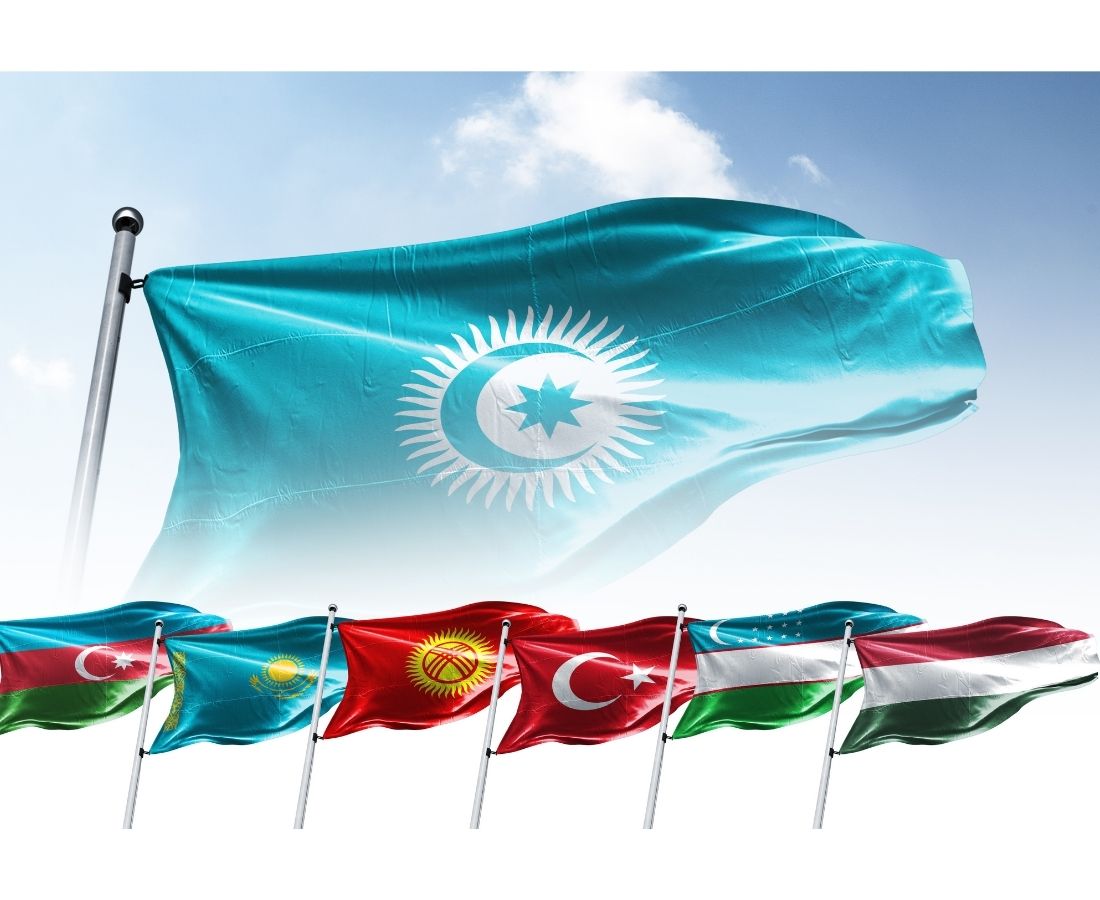 ORGANIZATION OF TURKIC STATES: THE INSTITUTIONALIZATION OF THE TURKIC WORLD