

















By Norman Byrd
Global Research, September 21, 2016
The war drums of a possible World War Three seem to have gotten considerably louder in the last few days, especially since an American air raid hit a Syrian Arab Army base in Deir ez-Zor on Saturday. And now, a top Russian defense official has accused the United States of “deliberately and thoughtfully” conducting an airstrike against Syrian troops that left 62 servicemen dead and more than a hundred wounded.
Sputnik News reported September 18 that top Russian military officials are questioning the veracity of their American counterparts who claim that the airstrike on the Syrian military base was a mistake. But one Russian official, First Deputy Chairman of the Defense and Security Committee and Federation Council member Franz Klintsevich, told Russian news agency RIA Novosti that he believes the coordinated attack by two F-16 fighter jets and two A10 ground attack aircraft — which originated out of Iraq — was deliberate.
“The US conducted airstrikes on government forces in Syria deliberately and thoughtfully. Any aerial operation is coordinated with commanders on the ground. In this case [the US] used information received from their intelligence units who infiltrated Daesh [derogatory term for ISIS, the Islamic State in Iraq and Syria].”
Others have been more restrained in their allegations toward the United States. Russian Defense Ministry spokesman, Maj. Gen. Igor Konashenkov noted that if the U.S. airstrike was accidental, the incident was “a direct consequence of the US’ unwillingness to coordinate its actions against terrorist groups with Russia.”
Klintsevich pointed out that the airstrike was in line with policymaking in Washington, which takes the position that Syria’s president, Bashar al-Assad, should be deposed and replaced by the U.S.-backed rebels. He said that the U.S. was acting to “maintain their economic interests” in the area.
Accusations and allegations aside, all agreed that the cease-fire being negotiated between U.S. Secretary of State John Kerry and Russian Foreign Minister Sergei Lavrov in Geneva was in jeopardy.
Russia’s United Nations envoy, Vitaly Churkin, stated that he found the timing of the U.S. airstrike “suspicious,” given the ongoing cease-fire negotiations. He said that “some aspects of the situation suggest that it could have well been a provocation.” But, he was quick to add, the attack did not necessarily mean that the ceasefire deal was over.
It is unclear whether or not the U.S. airstrike against the Syrian Army base at Deir ez-Zor had anything to do with the several bombings in late July of a U.S. base in Syria. According to the Wall Street Journal (via Fox News), U.S. defense and intelligence officials reported that Russian aircraft had bombed a base maintained by U.S. and British forces, and had done so again 90 minutes after being warned that it was not to be targeted. The officials said they believed that Russia was attempting to pressure the U.S. into coordinating its air war with the Russian military.
Heightened tensions have only increased fears of an escalation of events in the region to the point of World War 3. Of course, this has been an ongoing concern since Russia entered the multinational fray (September 30, 2015, according to BBC News), ostensibly to join in the fight against ISIS but seen by the world as to act as an ally and prop for the then tottering regime of Bashar al-Assad. Regardless, Russia’s entrance also increased the chances of accidental incidents that could quickly spiral into military confrontations — incidents like Russia bombing a known American base and the U.S. bombing a known Syrian Army base. (Russian officials have also voiced concern over the possibility, after Saturday’s attack, that the U.S. could mistakenly bomb a Russian airbase.)
Similar scenarios of a potential World War Three trigger have been presented before. In a September 2015 article, the Telegraph offered that the advent of World War 3 could very well be a confrontation or accident in Syria’s crowded skies.
“Indeed, the skies over Syria are starting to get dangerously crowded, with Russian jets flying near US planes on bombing runs, and sparring with NATO air defenses in neighboring Turkey.”
For the record, Turkey is also now involved in the war inside Syria. As reported by Al Jazeera, tensions with Russia escalated in November when a Turkish fighter shot down a Russian bomber that was claimed to have entered Turkish airspace and repeatedly warned to depart the area.
The U.S. airstrike against the Syrian Army base is just the latest incident of potential diplomatic and political calamity in an already volatile region of the world. According to the New York Times, American military officials admitted that U.S. pilots had targeted a Syrian Army base, but the pilots had thought they were attacking ISIS facilities in the area. A senior Obama administration official, speaking on the condition of anonymity, told the Times that the United States had stated its regrets to Syria’s government through the Russians for the “unintentional loss of life of Syrian forces” in the ongoing war against ISIS.
Will historians one day look back on the events of the last few months as the precursors to World War Three? Or will they go back further to when Russia entered the conflict? Of course, historians could go even further back to the creation of the caliphate of the Islamic State or even the creation of ISIS. Regardless, for now, World War Three history is only the province of speculation, but the fears of a major multinational conflict, given the historical ease with which other world wars have begun, are founded in realistic potentialities.
No comments yet.
-
 BOSNIA MAYOR AND SERBIAN PM APPEAL FOR PEACE
The Balkans
22.09.2016
BOSNIA MAYOR AND SERBIAN PM APPEAL FOR PEACE
The Balkans
22.09.2016
- IRANIAN MILITARY PARADES MARK IRAN-IRAQ WAR ANNIVERSARY Iraq 22.09.2016
-
 A 13-EURO ENTRY FEE FOR THE EU?
Europe - EU
22.09.2016
A 13-EURO ENTRY FEE FOR THE EU?
Europe - EU
22.09.2016
- 5,500 UK-BASED FINANCE FIRMS COULD LOSE EU ‘PASSPORTING’ RIGHTS Europe - EU 22.09.2016
- OSCE MG CO-CHAIRS MEETS WITH ARMENIA FM IN NEW YORK The Caucasus and Turkish-Armenian Relations 22.09.2016
-
25.01.2016
THE ARMENIAN QUESTION - BASIC KNOWLEDGE AND DOCUMENTATION -
12.06.2024
THE TRUTH WILL OUT -
27.03.2023
RADİKAL ERMENİ UNSURLARCA GERÇEKLEŞTİRİLEN MEZALİMLER VE VANDALİZM -
17.03.2023
PATRIOTISM PERVERTED -
23.02.2023
MEN ARE LIKE THAT -
03.02.2023
BAKÜ-TİFLİS-CEYHAN BORU HATTININ YAŞANAN TARİHİ -
16.12.2022
INTERNATIONAL SCHOLARS ON THE EVENTS OF 1915 -
07.12.2022
FAKE PHOTOS AND THE ARMENIAN PROPAGANDA -
07.12.2022
ERMENİ PROPAGANDASI VE SAHTE RESİMLER -
01.01.2022
A Letter From Japan - Strategically Mum: The Silence of the Armenians -
01.01.2022
Japonya'dan Bir Mektup - Stratejik Suskunluk: Ermenilerin Sessizliği -
03.06.2020
Anastas Mikoyan: Confessions of an Armenian Bolshevik -
08.04.2020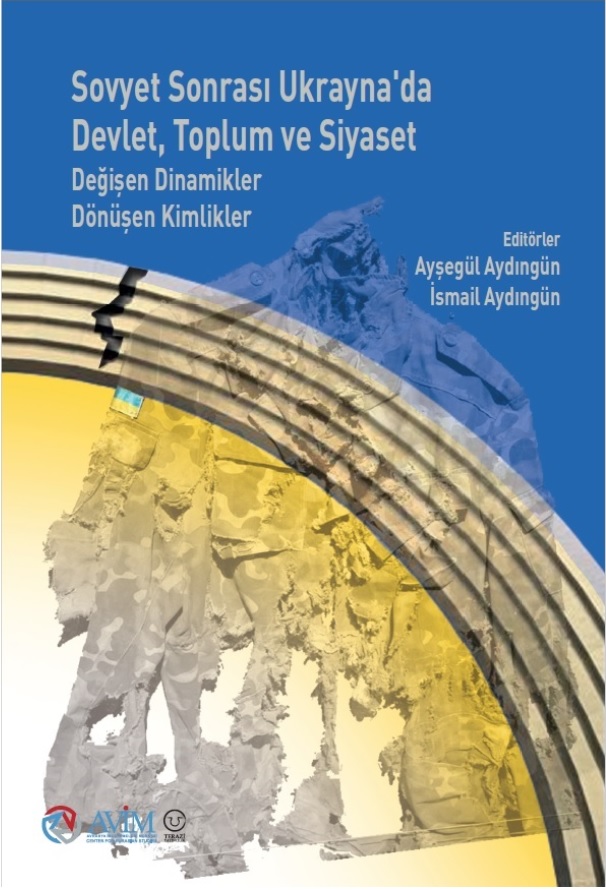
Sovyet Sonrası Ukrayna’da Devlet, Toplum ve Siyaset - Değişen Dinamikler, Dönüşen Kimlikler -
12.06.2018
Ermeni Sorunuyla İlgili İngiliz Belgeleri (1912-1923) - British Documents on Armenian Question (1912-1923) -
02.12.2016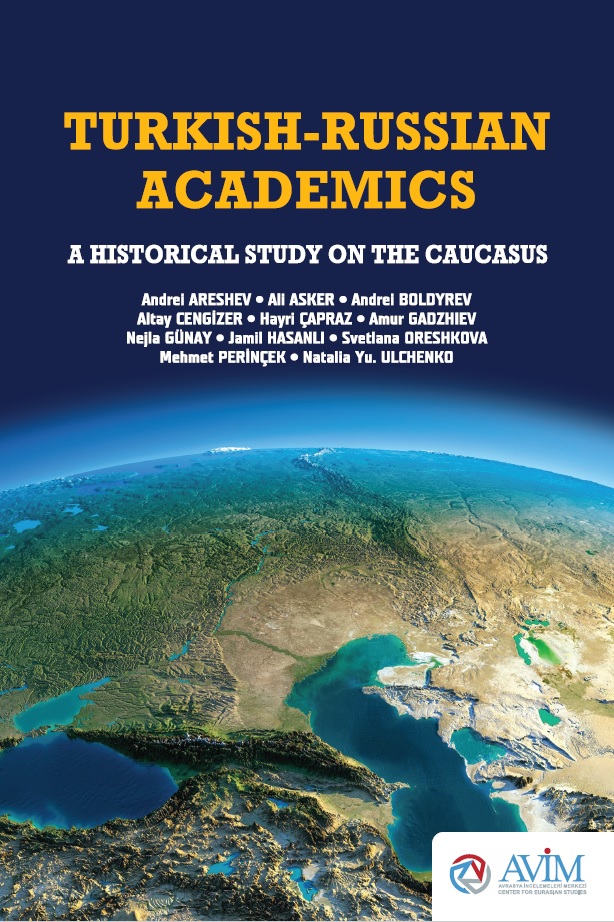
Turkish-Russian Academics: A Historical Study on the Caucasus -
01.07.2016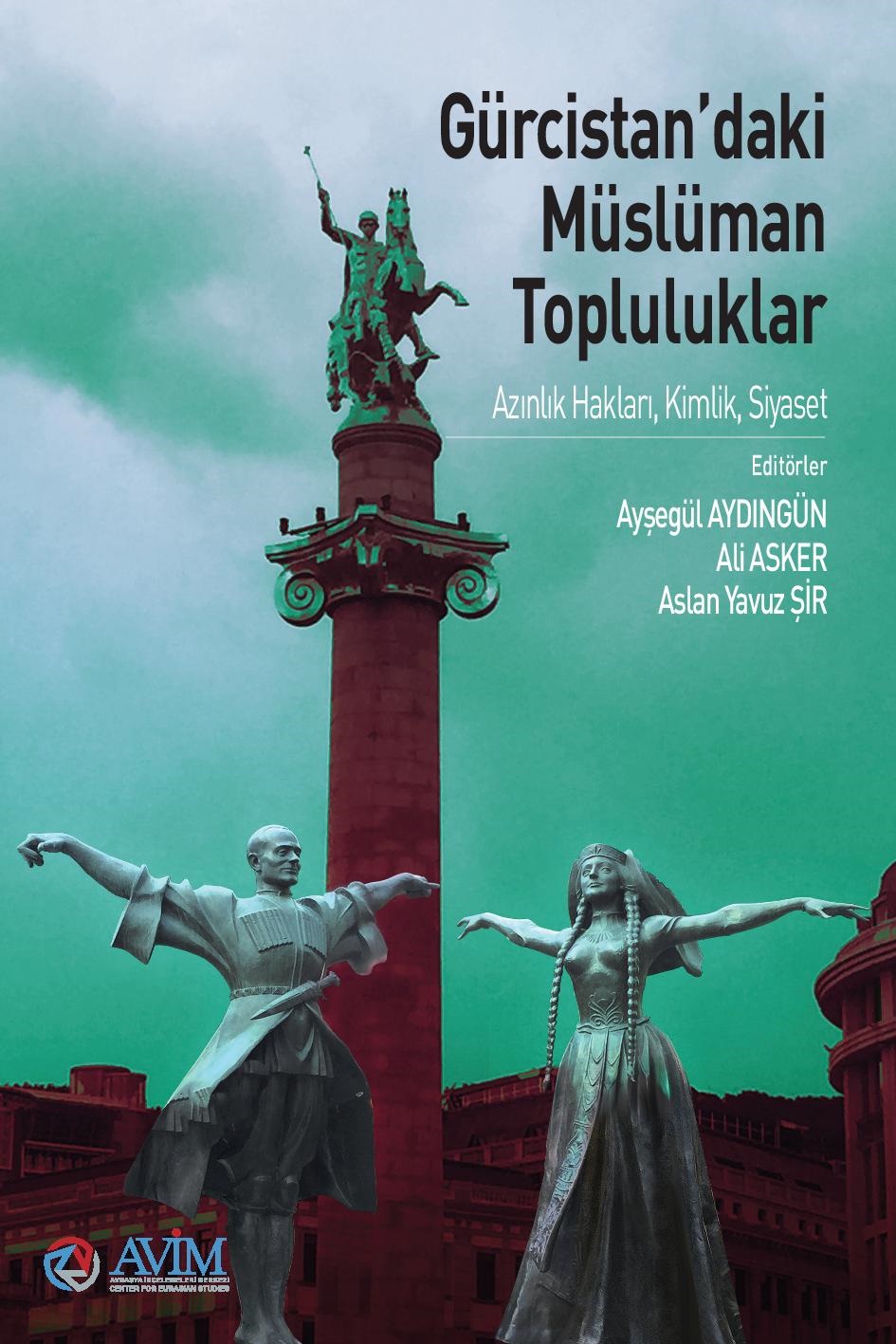
Gürcistan'daki Müslüman Topluluklar: Azınlık Hakları, Kimlik, Siyaset -
10.03.2016
Armenian Diaspora: Diaspora, State and the Imagination of the Republic of Armenia -
24.01.2016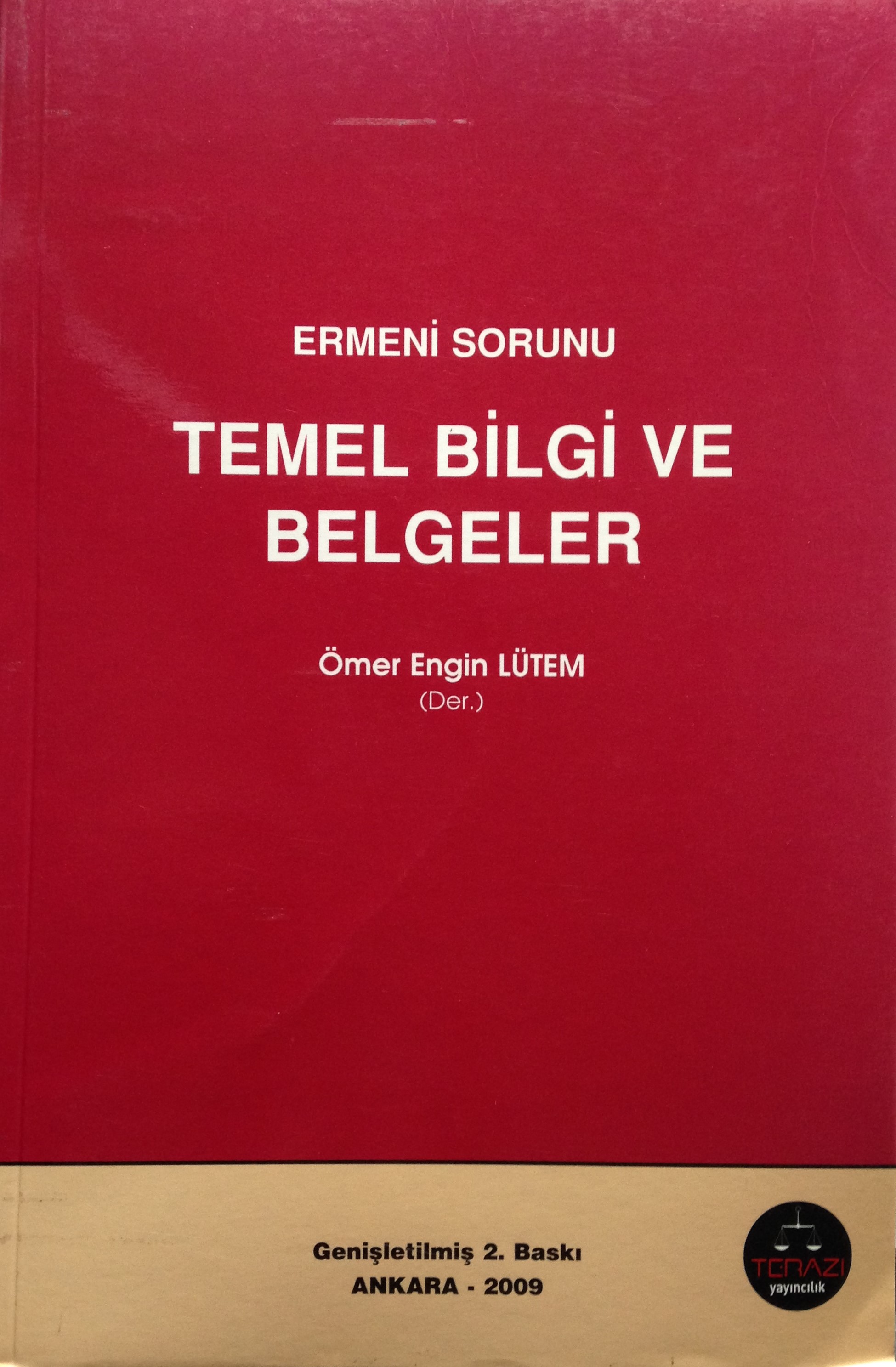
ERMENİ SORUNU - TEMEL BİLGİ VE BELGELER (2. BASKI)

-
AVİM Conference Hall 24.01.2023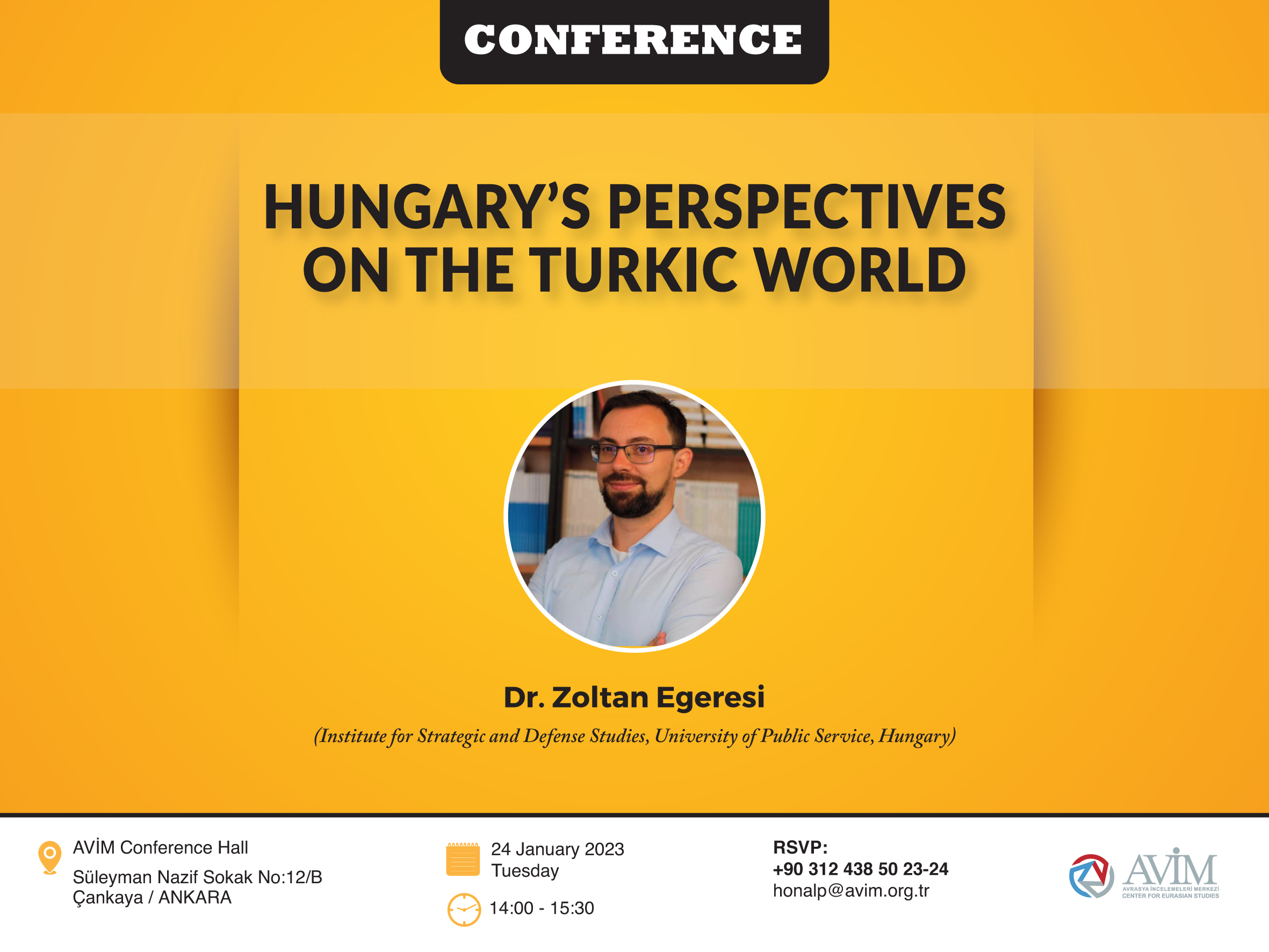
CONFERENCE TITLED “HUNGARY’S PERSPECTIVES ON THE TURKIC WORLD"