

















Wall Street Journal, 28 September 2016
This column has long argued that the journalistic genre known as “fact checking” is a corruption of journalism. “The ‘fact check’ is opinion journalism or criticism, masquerading as straight news,” we wrote in 2008. “The object is not merely to report facts but to pass a judgment.”
Eight years later, we’d amend that slightly. “Fact checking” doesn’t pretend to be straight news exactly, but something more authoritative. The conceit of the “fact checker” is that he has some sort of heightened level of objectivity qualifying him to render verdicts in matters of public controversy.
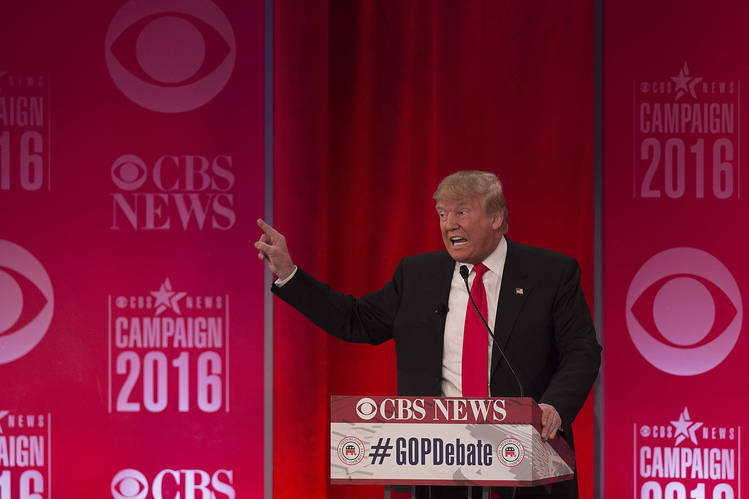
Lately the “fact checkers” have been waging a campaign to portray Donald Trump as a contemporaneous supporter of the Iraq war, contrary to his assertions that he was an opponent. In Monday’s debate, Hillary Clinton pleaded for their help: “I hope the fact checkers are turning up the volume and really working hard. Donald supported the invasion of Iraq.” Moderator Lester Holt obliged, basing a question to Trump on the premise that the matter was settled: “You supported the war in Iraq before the invasion.”
Trump somewhat inarticulately rebutted the claim: “The record shows that I’m right. When I did an interview with Howard Stern, very lightly, the first time anybody’s asked me that, I said, very lightly, I don’t know, maybe, who knows.”
What Trump actually said on Sept. 11, 2002, when Stern asked him if he favored an invasion, was: “Yeah, I guess so.” That was an affirmative statement, but a highly equivocal one. Is it fair or accurate to characterize it as sufficient to establish that Trump was a “supporter”? In our opinion, no. He might well have had second thoughts immediately after getting off the air with Stern.
He certainly had second thoughts in the ensuing months, and he came to oppose the invasion long before Mrs. Clinton did. Even FactCheck.org was unable to come up with any other Trump statement supportive of the decision to go to war. By December 2003, according to the site’s timeline, Trump was observing (in an interview with Fox News Channel’s Neil Cavuto) that “a lot of people” were “questioning the whole concept of going in, in the first place.” Five years later, according to PolitiFact.com, Trump was calling for President Bush’s impeachment because, as he told CNN’s Wolf Blitzer, “he got us into the war with lies.”
Trump repeated that last claim in a February debate in South Carolina (in the transcript at the link, the second Trump quote is erroneously attributed to moderator John Dickerson):
Trump: George [W.] Bush made a mistake. We can make mistakes. But that one was a beauty. We should have never been in Iraq. We have destabilized the Middle East.
Dickerson: But so I’m going to—so you still think he should be impeached?
Jeb Bush: I think it’s my turn, isn’t it?
Trump: You do whatever you want. You call it whatever you want. I want to tell you. They lied. They said there were weapons of mass destruction, there were none. And they knew there were none. There were no weapons of mass destruction.
When Trump said that, it shocked many conservative commentators and intellectuals, including the Weekly Standard’s Jonathan Last:
Nine months ago, if you had asked Sarah Palin, Scott Brown, Jerry Falwell Jr., or Ann Coulter whether they would endorse a figure who takes the Code Pink, Michael Moore, MoveOn.org view of Iraq (”Bush lied, people died”), one suspects they all would have recoiled at the prospect. Yet in the hours after Trump insisted that George W. Bush intentionally lied the country into war, not one of the major figures who have endorsed him was willing to contradict his claim. . . .
One needn’t be an admirer of George W. Bush, or a believer in his freedom agenda, or even a supporter of the Iraq war to understand how pernicious this is. Whatever your views on the wisdom of Iraq, no serious person believes that Bush masterminded a massive fraud, with the help of his cabinet and the entire national security apparatus; that his “lies” then managed to fool the governments and intelligence agencies of a dozen allies; and that, somehow, none of the evidence of this scheme ever managed to leak into the open.
Which leads to an obvious question: Where were the “fact checkers” in February, when Trump made that patently false claim? The only related “fact check” we could find was one from FactCheck.org, rebutting Trump’s denial, a month later, that he had said what he said: “I didn’t say lie. I said he may have lied. I don’t know.” It was a rare example of a “fact check” that simply checked a fact.
A funny thing happened after the South Carolina debate: Trump won the state’s primary and went on to win the nomination. The Republican electorate did not see Trump’s opposition to the Iraq war, or even his endorsement of the “Code Pink, Michael Moore, MoveOn.org view of Iraq,” as disqualifying.
“[Trump] secured the Republican nomination against a field of 16 candidates described last summer by George F. Will as ‘the most impressive since 1980, and perhaps the most talent-rich since the party first had a presidential nominee, in 1856,’ ” notes William Voegeli in the Claremont Review of Books:
How did Trump achieve this? One crucial difference from all those competitors is that he could deplore the Middle East policies of both Presidents Bush and Obama as “a tremendous disservice” and a “disaster.” No other GOP candidate possessed so much leeway to denounce the war in Iraq, the most recent Republican president’s “signature idea,” as the New York Times’s Ross Douthat termed it. At the other end of the spectrum of 17 candidates, Jeb Bush’s campaign never recovered from making a terrible first impression: the 12 years since the launch of Operation Iraqi Freedom had, apparently, been too little time for him to form an opinion as to whether, knowing what we do now, his brother’s decision to invade that country had been a good idea.
It’s not hard to see why Republican voters might have been more attracted by Trump’s repudiation of the Iraq war than repelled by the bumptious and scurrilous way in which he expressed it. That conflict turned out to be a strategic disaster for the U.S., in part (as Trump has noted) because of Obama’s decision to withdraw all troops in 2011.
It also turned out to be a political disaster for the GOP. After re-electing George W. Bush, voters turned against the war. They also turned against the Republican Party, handing control of Congress to the Democrats in 2006 and the White House to an antiwar Democrat two years later, after he defeated the still pro-war Mrs. Clinton for the party’s nomination.
The Iraq war helped make ObamaCare, and much else that is anathema to GOP voters, possible. Trump offered Republicans an opportunity to move beyond the Iraq mistake. Under the pretense of “fact checking,” journalists now are furiously attempting to scuttle that opportunity.
Worst Appeals to Authority
“Dan Rather: Hillary Clinton ‘Calm and Substantive’ in First Debate”—headline, USA Today, Sept. 27
Fox Butterfield, Is That You?
“Bill Clinton: Places That Fear Immigrants Have Few Immigrants”—headline, Washington Examiner, Sept. 27
Hypothesis and Disproof
“Tim Kaine: If You Can’t Tell the Truth, You Can’t Be President”—headline, Breitbart.com, Sept. 26
“Obama: ‘If You Like Your Health Care Plan, You’ll Be Able to Keep Your Health Care Plan’ ”—headline, PolitiFact.com, undated
Problem and Solution
“Clinton Won Last Night’s Debate, But We’re Not Out of the Woods”—headline, Gothamist, Sept. 27
“ ‘Lurking Clown’ Arrested in Kentucky Woods”—headline, FoxNews.com, Sept. 25
Answers to Questions Nobody Is Asking
“Mark Cuban Won’t Accept a Position in Clinton Administration”—headline, TheHill.com, Sept. 27
Question and Answer—I
“Why Some People Think Trump Snorted Cocaine or Adderall Before Monday’s Presidential Debate”—headline, RawStory.com, Sept. 27
“How They Do It: Secrets of People Who Are Always Full of Energy”—headline, ApartmentTherapy.com, Sept. 26
Question and Answer—II
“Forget Making America Great, What the Hell Would Donald Trump Mean for Australia?”—headline, Sydney Morning Herald, Sept. 28
“Trump Backs Down Under Republican Fire in Race Row”—headline, DailyMail.com, June 7
Question and Answer—III
“I’m Black. Does America Have a Plan for My Life?”—headline, New York Times website, Sept. 26
“Get the Life and Career You Deserve: A Five-Step Plan”—headline, Forbes.com, Aug. 28
Question and Answer—IV
“Adam Sandler Gives Three Men and a Baby Remake a Polyamory Spin?”—headline, MovieWeb.com, Feb. 26
“First ‘Three Person Baby’ Born Using New Method”—headline, BBC website, Sept. 27
Cop Blame Elves—Now That Would Be News
“Elves Cop Blame for Mudslides and Flooding in Iceland”—headline, Sydney Morning Herald, Sept. 28
Look Out Below!
“Blue Cross Blue Shield of Tennessee Is Dropping Most of Its Obamacare Customers”—headline, HotAir.com, Sept. 27
News You Can Use
“Kansas Cops Remind Everyone Not to Call 911 Just Because They Hate a Candidate”—headline, Complex.com, Sept. 27
Many People Say
“For many women, the presidential debate between Hillary Clinton and Donald Trump was a case study in deja vu,” the Associated Press “reports”:
For more than 90 minutes on a national stage, they said Tuesday, Trump subjected the first female presidential candidate from a major party to indignities they experience from men daily, in the workplace and beyond.
The headline: “Many Women Say Trump Showed Too Much Testosterone at Debate.” The story never mentions testosterone, but whatever. Last month CNN mocked Trump for offering “roundabout endorsements to conspiracy theories and outright lies” by prefacing them with “many people are saying.” Many news organizations do the same thing.
No comments yet.
- EU EXECUTIVE PROPOSES TIGHTER LOBBYING RULES Europe - EU 29.09.2016
- AUSTRALIA SUPPORTS BAKU’S EFFORTS FOR SOLVING KARABAKH CONFLICT The Caucasus and Turkish-Armenian Relations 29.09.2016
- HOW THE US'S NUCLEAR WEAPONS COMPARE TO RUSSIA'S Asia - Pacific 29.09.2016
- ALTERING EU'S FREE MOVEMENT STANCE COULD START DOMINO EFFECT: AUSTRIA Europe - EU 29.09.2016
- BABYN YAR: UKRAINE'S DARK ANNIVERSARY Europe - EU 29.09.2016
-
25.01.2016
THE ARMENIAN QUESTION - BASIC KNOWLEDGE AND DOCUMENTATION -
12.06.2024
THE TRUTH WILL OUT -
27.03.2023
RADİKAL ERMENİ UNSURLARCA GERÇEKLEŞTİRİLEN MEZALİMLER VE VANDALİZM -
17.03.2023
PATRIOTISM PERVERTED -
23.02.2023
MEN ARE LIKE THAT -
03.02.2023
BAKÜ-TİFLİS-CEYHAN BORU HATTININ YAŞANAN TARİHİ -
16.12.2022
INTERNATIONAL SCHOLARS ON THE EVENTS OF 1915 -
07.12.2022
FAKE PHOTOS AND THE ARMENIAN PROPAGANDA -
07.12.2022
ERMENİ PROPAGANDASI VE SAHTE RESİMLER -
01.01.2022
A Letter From Japan - Strategically Mum: The Silence of the Armenians -
01.01.2022
Japonya'dan Bir Mektup - Stratejik Suskunluk: Ermenilerin Sessizliği -
03.06.2020
Anastas Mikoyan: Confessions of an Armenian Bolshevik -
08.04.2020
Sovyet Sonrası Ukrayna’da Devlet, Toplum ve Siyaset - Değişen Dinamikler, Dönüşen Kimlikler -
12.06.2018
Ermeni Sorunuyla İlgili İngiliz Belgeleri (1912-1923) - British Documents on Armenian Question (1912-1923) -
02.12.2016
Turkish-Russian Academics: A Historical Study on the Caucasus -
01.07.2016
Gürcistan'daki Müslüman Topluluklar: Azınlık Hakları, Kimlik, Siyaset -
10.03.2016
Armenian Diaspora: Diaspora, State and the Imagination of the Republic of Armenia -
24.01.2016
ERMENİ SORUNU - TEMEL BİLGİ VE BELGELER (2. BASKI)




-
AVİM Conference Hall 24.01.2023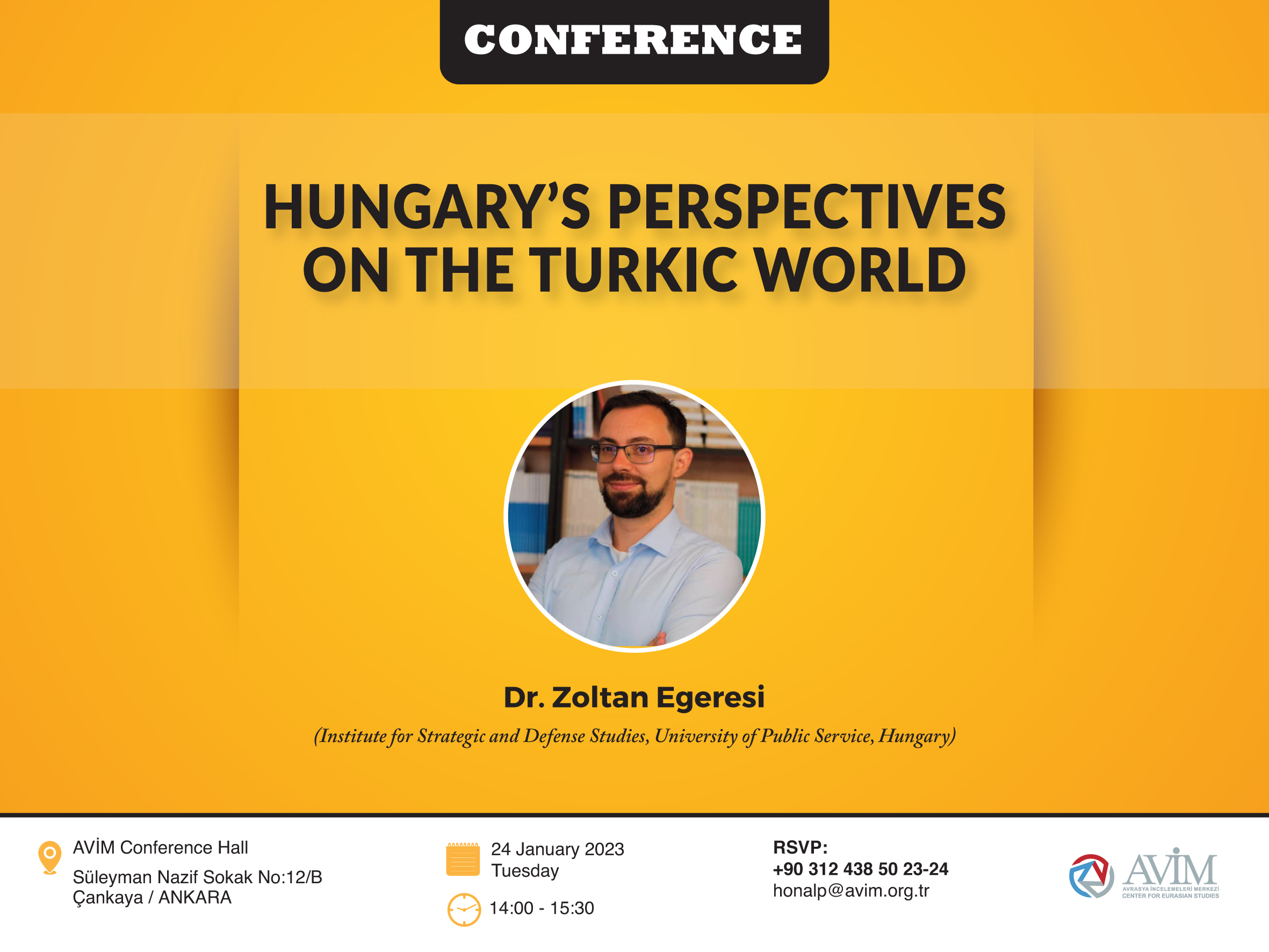
CONFERENCE TITLED “HUNGARY’S PERSPECTIVES ON THE TURKIC WORLD"