

















29.09.2016
DW.de
Ukrainian officials have organized several events to mark the anniversary of the Babyn Yar massacres. Seventy-five years ago, Nazi forces rounded up and shot around 34,000 Jewish residents of Kyiv. David Stern reports.
Vasily Mikhailovsky was four years old when, in late September, 1941, flyers appeared around German-occupied Kyiv, instructing "all Yids" to assemble at an appointed location on the edge of the city. He remembers the day well.
"It was wonderful weather," Vasily, who is one of three Babyn Yar survivors in Kyiv who is still living, told DW. "Sunny. A truly golden autumn day."
"There were a huge number of people walking," he remembered. "And they were carrying their entire households on these carts."
Vasily was the only one left in his immediate family. His mother had died shortly after he was born. His father was taken prisoner as a Red Army soldier and escaped captivity, only to be captured and shot when he returned home to Kyiv.
So the caretaker of his apartment block told his nanny, Anastasiya Fomin – Nadya – that she must "take that Jewish child to Babi Yar."
Nadya – whom Vasily remembers as "not very attractive, but very, very kind" – followed instructions. The next morning, the two of them set out for the ravine, which was located about seven kilometers (four miles) to the northwest. They were joined by thousands of others.
"I was tired and my nanny set me on one of the carts,” he said. "There were also other children on the cart, and there were bags and lots of children's toys. These interested me.”
"I was very happy, because I thought it was a demonstration like on May Day or Revolution Day,” he said. "And I said to Nadya, ‘Nadya, buy me a balloon or a little flag.' But this wasn't a holiday.”
Holocaust by bullets
Indeed, it was the furthest thing from a holiday. What was to transpire was to be the largest single mass shooting by Nazi German forces during World War II. Over the next two days, nearly 34,000 Jews were gunned down in Babyn Yar - which translates to "old woman's ravine."
Vasily Mikhailovsky, aged four, taken a few months before the massacre
As Vasily, Nadya and the rest drew closer to the ravine, German soldiers and locally recruited policemen - "Polizei” as they were called, using the German word - lined the sides of the road and forced them towards the killing area.
"No one held back," he said. "They beat people, shoved them with rifle butts and clubs, and drove them like cattle. The street couldn't hold so many people - they forced them to move faster and faster. And so we reached some sort of barrier."
A dog bit Nadya, Vasily said, and she was beaten from behind and fell down. He hit his head on the metal barrier and was covered in blood.
Nadya held out her passport to the policemen. "I'm Ukrainian, I'm Ukrainian," he remembers her saying.
"Someone from the guards picked her up by her collar and pushed her behind the cordon," Mikhailovsky said. "He pointed to a small gateway and said, 'Go and put the child over there.'"
As they sat to the side, they could hear what was happening to those who reached the end. "We heard cries and screams, but there were also planes that flew low and drowned out all those sounds," he said.
"And music was playing somewhere up ahead."
Coming to terms
For decades, what happened at Babyn Yar was a blank space in Ukraine's history. Soviet authorities first refused to recognize it, and then, when they finally erected a monument on the site - a towering bronze structure with figures contorted in agony - the victims were described simply as "Soviet citizens."
A more modest monument, off to the side, shaped like a Jewish menorah was set up by Jewish groups in the Soviet Union's last days. Then, after Ukraine gained independence, the government started to mark the event with official ceremonies, the largest taking place on the 65th and 70th anniversaries.
Now, however, for the 75th anniversary, Ukraine's leadership and international organizations are commemorating the shootings with a full-scale program, including conferences, film showings, concerts and historical exhibits. This will be capped off with a major ceremony on the actual day, which will be attended by German President Joachim Gauck.
The commemorative activities won't end with the anniversary. Jewish groups plan to build a major Holocaust museum near the site, and a Canadian organization, the Ukrainian Jewish Encounter, is sponsoring a competition to design a major memorial complex for the area.
But there are challenges - brought about by Babyn Yar and Ukraine's complex histories. Jews were not the only victims - Roma, Ukrainians, Russians, mentally and physically disabled and other groups were murdered there over the course of the war.
Yet the majority of those killed were overwhelmingly Jewish - two-thirds of the estimated 100,000-strong population. Some observers fear that by emphasizing the mass grave's multi-ethnic character, though, Ukrainian officials risk diluting Babyn Yar's role as one of the Holocaust's main sites.
Equally, some the victims whom Ukrainian nationalist groups would like to commemorate are eliciting controversy. The Nazis executed members of the wartime Organization of Ukrainian Nationalists (OUN) at Babyn Yar. The OUN, however, was also allied with the Germans at the war's beginning and end, and are accused by prominent Western historians of participating in the Holocaust.
Attempts to include the OUN in the official ceremony have failed, however. And organizers say that the scale of the commemorations - as well as their educational scope - is unprecedented in Ukrainian history.
Mikhailovsky with his foster parents, Vasily and Berta
"The purpose is to use this landmark date to create as wide of a discussion of the Holocaust and racial hatred and its dangers," said Adrian Karatnycky, co-director of the Ukrainian Jewish Encounter. "It's to honor the dead, but also to educate the living."
Living next to the past
After they escaped, Nadya found Vasily an orphanage that was hiding a number of other Jewish children.
Then at the war's end, he was placed with a family. Vasily was born Caesar Katz, but he adopted his new father's name. During the war, his father saved two Jewish women, his wife and mother-in-law. Vasily proudly displays two medals which Yad Vashem, Israel's official memorial to Holocaust victims, awarded his father and Nadya for saving Jews - "The Righteous Among the Nations."
The family apartment, where he still lives, is just 100 meters from the street that he, Nadya and the other Jewish Kyivians followed on their way to Babyn Yar.
Vasily doesn't think about this though. He's more occupied by the present and the conflict against Russian-supported insurgents in eastern Ukraine - especially the children who are being affected as he was 75 years ago.
"There's a war going on," he said. "How do those poor children deal with this? Especially those who have lost their parents."
"Being an orphan is a terrible thing," he said. "You can't imagine what it's like."
No comments yet.
- ADB TO ALLOCATE $95MLN TO ROAD CORRIDOR IN KYRGYZSTAN Asia - Pacific 29.09.2016
- U.S. TO SEND MORE TROOPS TO IRAQ AHEAD OF MOSUL BATTLE Iraq 29.09.2016
- AUSTRALIA SUPPORTS BAKU’S EFFORTS FOR SOLVING KARABAKH CONFLICT The Caucasus and Turkish-Armenian Relations 29.09.2016
-
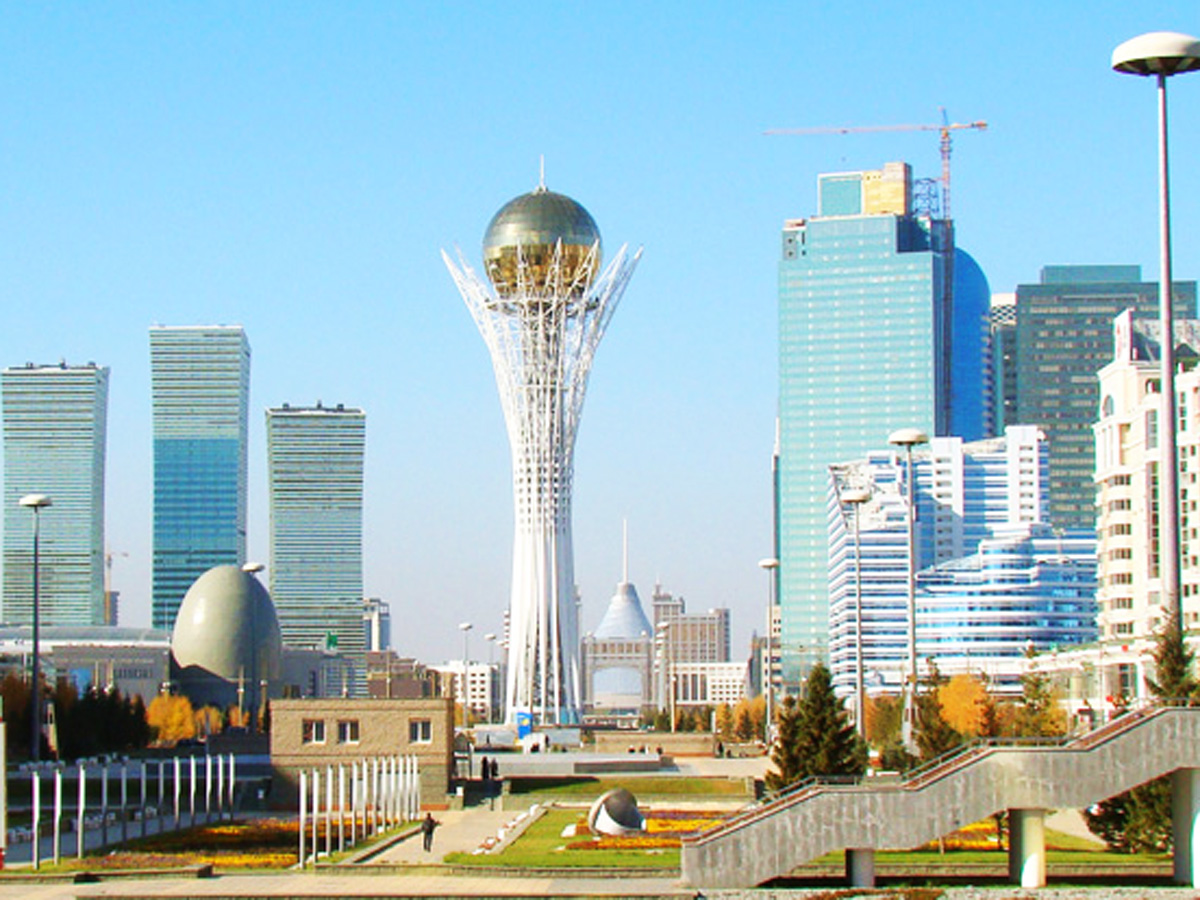 NEW COMMANDER OF GROUND FORCES APPOINTED IN KAZAKHSTAN
Asia - Pacific
29.09.2016
NEW COMMANDER OF GROUND FORCES APPOINTED IN KAZAKHSTAN
Asia - Pacific
29.09.2016
- ‘SILENCE IS NOT A STRATEGY’ THINK TANK WARNS ON BREXIT Europe - EU 29.09.2016
-
25.01.2016
THE ARMENIAN QUESTION - BASIC KNOWLEDGE AND DOCUMENTATION -
12.06.2024
THE TRUTH WILL OUT -
27.03.2023
RADİKAL ERMENİ UNSURLARCA GERÇEKLEŞTİRİLEN MEZALİMLER VE VANDALİZM -
17.03.2023
PATRIOTISM PERVERTED -
23.02.2023
MEN ARE LIKE THAT -
03.02.2023
BAKÜ-TİFLİS-CEYHAN BORU HATTININ YAŞANAN TARİHİ -
16.12.2022
INTERNATIONAL SCHOLARS ON THE EVENTS OF 1915 -
07.12.2022
FAKE PHOTOS AND THE ARMENIAN PROPAGANDA -
07.12.2022
ERMENİ PROPAGANDASI VE SAHTE RESİMLER -
01.01.2022
A Letter From Japan - Strategically Mum: The Silence of the Armenians -
01.01.2022
Japonya'dan Bir Mektup - Stratejik Suskunluk: Ermenilerin Sessizliği -
03.06.2020
Anastas Mikoyan: Confessions of an Armenian Bolshevik -
08.04.2020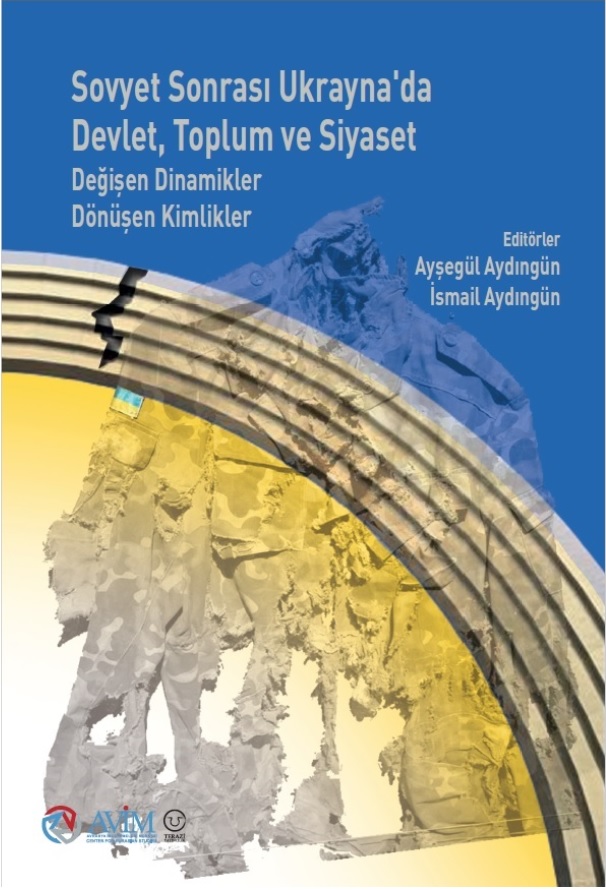
Sovyet Sonrası Ukrayna’da Devlet, Toplum ve Siyaset - Değişen Dinamikler, Dönüşen Kimlikler -
12.06.2018
Ermeni Sorunuyla İlgili İngiliz Belgeleri (1912-1923) - British Documents on Armenian Question (1912-1923) -
02.12.2016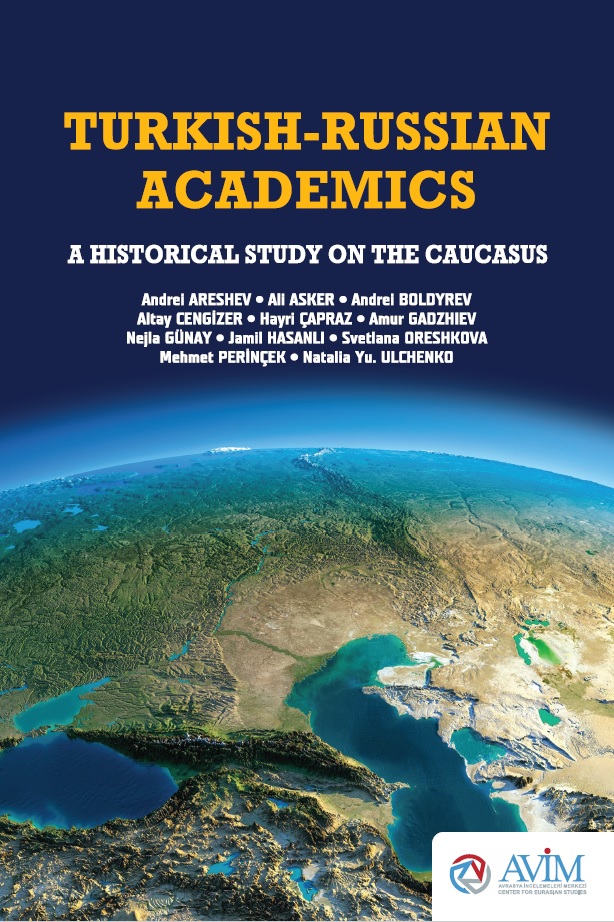
Turkish-Russian Academics: A Historical Study on the Caucasus -
01.07.2016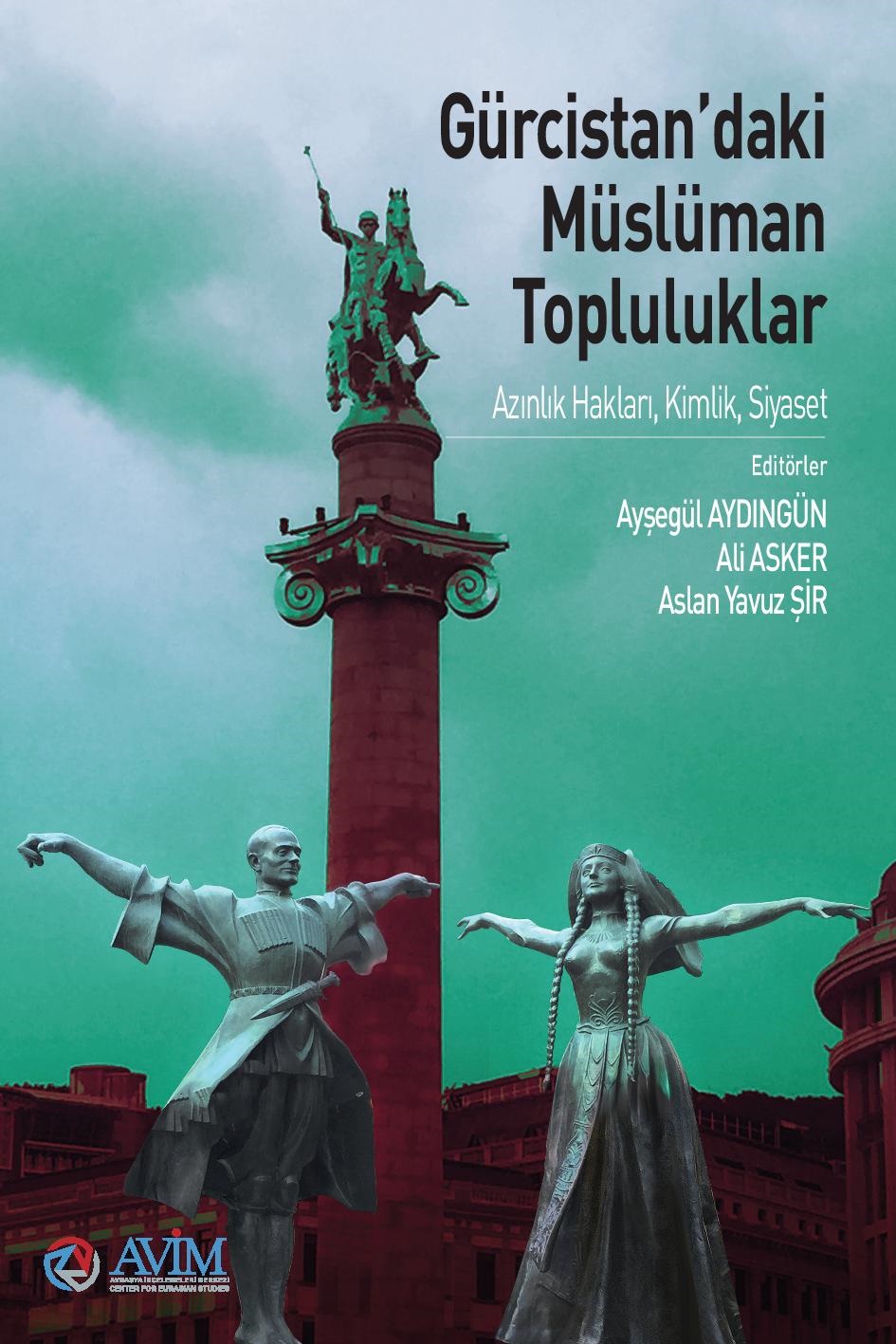
Gürcistan'daki Müslüman Topluluklar: Azınlık Hakları, Kimlik, Siyaset -
10.03.2016
Armenian Diaspora: Diaspora, State and the Imagination of the Republic of Armenia -
24.01.2016
ERMENİ SORUNU - TEMEL BİLGİ VE BELGELER (2. BASKI)


-
AVİM Conference Hall 24.01.2023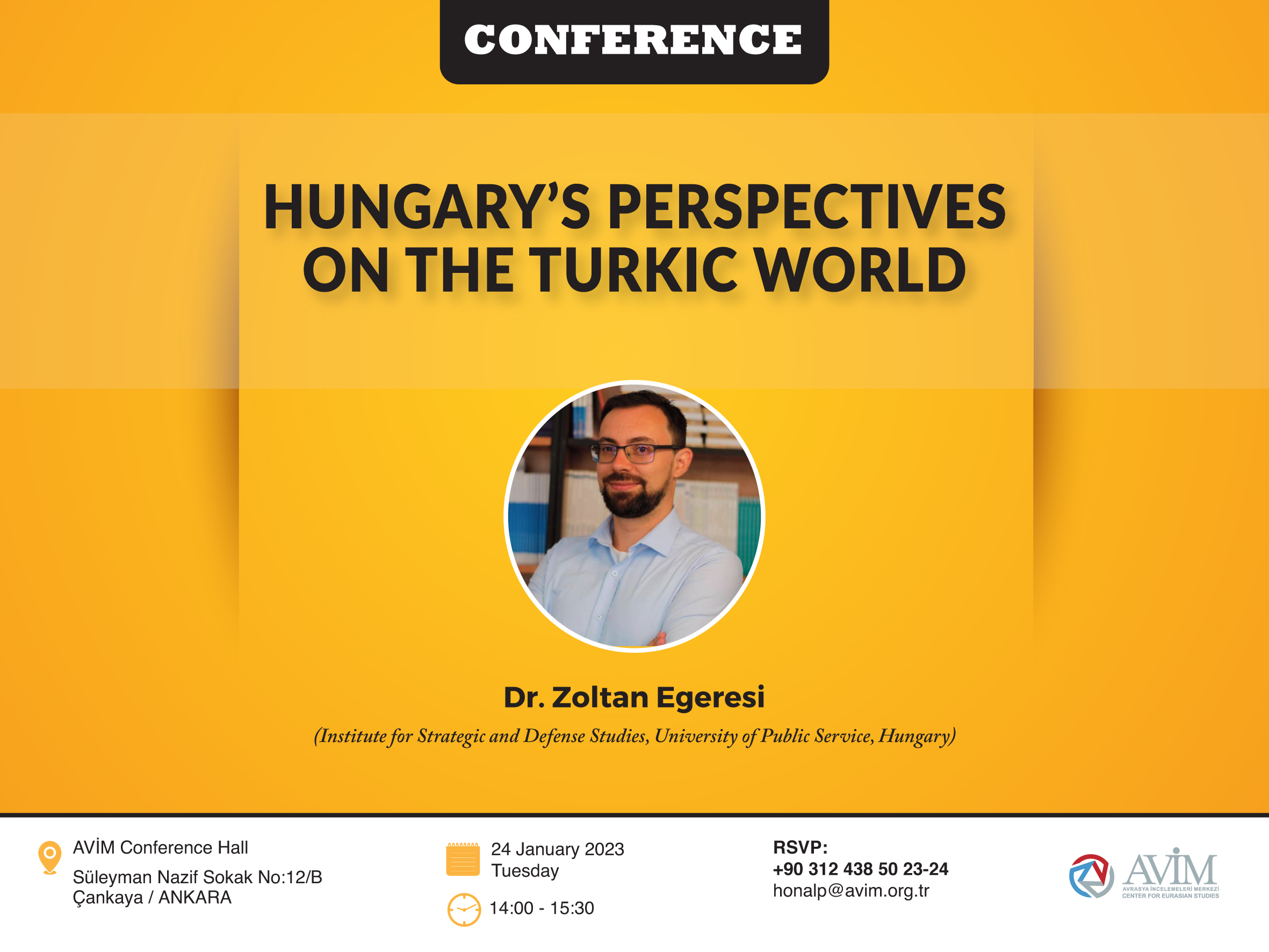
CONFERENCE TITLED “HUNGARY’S PERSPECTIVES ON THE TURKIC WORLD"