

















Gulf News, 20 Nov 2016
Beirut: While receiving world acclaim for their role in the fight against Daesh, Kurdish-Iraqi Peshmerga forces are also raising eyebrows and being accused of war crimes for evicting hundreds of Sunni Arabs and demolishing their homes in Mosul and Kirkuk, two cities thought to once be predominantly Kurdish overrun by Arab Sunnis since the mid-1970s.
Reportedly, 170 Arab families have been recently expelled from Kirkuk, 83km south of Arbil, at the hands of the Peshmerga. The official reason behind such action is that Daesh has left behind booby traps in these homes, and that for security reasons, they need to be torn down completely, or that these homes belong to Daesh members or sympathisers.
The real reason, however, runs much deeper and is in direct response to the controversial “Arabisation” campaign of Saddam Hussain, carried out in Kurdish cities and towns 30 years ago.
Last Sunday, Human Rights Watch said that between September 2014 and May 2016, Kurdish militias had attacked, destroyed, and uprooted residents of 20 towns and villages in northern Iraq. In total, 62 villages were destroyed — almost always after the battles with Daesh had ended. It was revenge destruction, rather than the result of crossfire. Not all of the villages were Daesh-controlled, and the only crime of their residents was that they were Arabs, brought to live in Kurdish territory by Saddam’s totalitarian state.
Male residents are bundled into trucks and driven out of the Kurdish towns, and their homes are bulldozed before their very eyes. Those still standing in the ruined space are painted with graffiti: “Attention: this is a Kurdish Home.”
For years, the Kurds have laid claim to Mosul. In 1923, the city was registered as 50 per cent Kurdish, 13 per cent Arab, and 37 per cent being a combination of Jews, Turkmen, Assyrians, and Chaldeans. Fifteen years later, Kurdish leaders petitioned the League of Nations with a list of their cities in Iraq, topped with Mosul, a step that was repeated to the founding conference of the United Nations in San Francisco in 1945. In future years, they claimed, with due right, that they had been evicted from Mosul by Saddam Hussain and were now planning sweet revenge.
The same applies to oil-rich Kirkuk, which they hoped to incorporate into Iraqi Kurdistan after the collapse of Saddam’s regime in 2003.
Nikolaos van Dam, a prominent Dutch scholar on the Middle East who served as his country’s ambassador to Iraq, told Gulf News: “I remember former Kurdish leader Mustafa Barazani saying to me with a deep voice: “I want Kirkuk.” That was in 1971, high in the Kurdish mountains in Hajj Umran, close to Iran. Now the Kurds have driven Daesh out of Kirkuk, and they will never want to give it back to the central authorities of Baghdad, unless forced to do so militarily.”
Many displaced Kurds returned to reclaim their homes in Kirkuk after 2003, often with keys in hand, only to find that they had been sold or just given away to Iraqi Arabs.
According to the interim Iraqi Constitution, a referendum would be held in Kirkuk to decide whether its residents wanted to remain part of Iraq or join Iraqi Kurdistan. It was originally scheduled for December 2007 but due to a number of political and military challenges, the referendum has been constantly postponed ever since, and has not taken place as yet.
Van Dam points out, however, that in modern history and contrary to what the Kurds are now saying “Kirkuk did not have a Kurdish majority, but [only] it’s countryside did”.
Sunni Arabs, now frantic over the Peshmerga attacks in Mosul, are crying foul play. They point to a controversial 1997 census that showed Arabs, both Sunni and Shiite, made up 58 per cent of the city’s population. Iraqi Kurds laugh off the argument, claiming that this census was conducted under Saddam, when Kurds were forced to list themselves as “Arabs” so as not be expelled from their homes.
Saddam’s Arabisation campaign in northern Iraq did not apply only to the Kurds, but also to Yazidis, Assyrians, Armenians, and Turkmen. Saddam’s aim was to shift demographics towards Arab ethnic domination of Iraq, compatible with the ideology of his ruling Baath Party. This actually started before the Baathists came to power in 1968 and reached new heights under Saddam ten years later when he ordered the demolition of 600 Kurdish villages and the deporting of their 200,000 residents, an act that Kurds then described as “internal colonialism.” He also drove out at least 70,000 Kurds from the western half of Mosul, making it fully Arab Sunni. The Kurds were pushed away from the oilfields, creating an Arab-belt around them, and stripped of their lands.
Officially, their property went to the Iraqi government, which rented the land only to landless Arab farmers and their families.
The legal basis of the Arabisation measures was decree No. 795 from 1975, signed off by the Iraqi Revolutionary Command Council, authorising the confiscation of property from the Kurdish National Movement, and resettlement of Kurdish regions by Iraqi Arabs. In 1977-1978, entire swaths of land were cleared and 500 Kurdish villages were destroyed mainly in the Sulaimaniya Governorate.
During the infamous Al Anfal Campaign (1986-1989), Saddam’s cousin Ali Hasan Al Majid, then member of the Regional Command of the Baath Party and later minister of defence, destroyed 4,000 Kurdish villages and killed 100,000 Kurds. In 1987, he famously declared that “not one house was left to be standing” in the Kurdish villages of the Arbil plain.
Ali Allawi, a former Iraqi defence minister and current research professor at The National University of Singapore, told Gulf News: “There is no doubt that the expulsion of the Kurds in the Arab/Kurdish borderlands of Iraq in the 1970s and 1980s were designed to change the ethnic composition of the area for the ideological (Arab nationalist rhetoric) and security reasons of a totalitarian state. Now, we have an attempt to change the demographic composition for specifically nationalist reasons as a basis for an ethnically homogeneous or indisputably majoritarian Kurdish proto-state. Both programmes run counter to the idea of an accommodating multi-ethnic, multicultural Iraqi homeland.”
He added, “I know the temptation is to find a moral (or immoral) equivalent with the Saddam era Arabisation settlements, but the sickness is in the idea of the ethno-sectarian, culturally and religiously monochromatic nation state.”
No comments yet.
- ARMENIAN PRESIDENT: WE HAD TO BUY ISKANDER-M MISSILES FROM RUSSIA The Caucasus and Turkish-Armenian Relations 21.11.2016
- RECOGNITION OF 1915 EVENTS AS "ARMENIAN GENOCIDE" CHANGES NOTHING The Caucasus and Turkish-Armenian Relations 21.11.2016
- ROMANIA TO AWARD ARMORED VEHICLES DEAL TO GERMANY'S RHEINMETALL The Balkans 21.11.2016
- TURKISH FM: ARMENIAN “FRIENDS” ARE NEVER HONEST The Caucasus and Turkish-Armenian Relations 21.11.2016
- RUSSIA’S ECONOMIC LINE AFTER MINISTER’S DISMISSAL TO REMAIN UNCHANGED - VIEW Asia - Pacific 21.11.2016
-
25.01.2016
THE ARMENIAN QUESTION - BASIC KNOWLEDGE AND DOCUMENTATION -
12.06.2024
THE TRUTH WILL OUT -
27.03.2023
RADİKAL ERMENİ UNSURLARCA GERÇEKLEŞTİRİLEN MEZALİMLER VE VANDALİZM -
17.03.2023
PATRIOTISM PERVERTED -
23.02.2023
MEN ARE LIKE THAT -
03.02.2023
BAKÜ-TİFLİS-CEYHAN BORU HATTININ YAŞANAN TARİHİ -
16.12.2022
INTERNATIONAL SCHOLARS ON THE EVENTS OF 1915 -
07.12.2022
FAKE PHOTOS AND THE ARMENIAN PROPAGANDA -
07.12.2022
ERMENİ PROPAGANDASI VE SAHTE RESİMLER -
01.01.2022
A Letter From Japan - Strategically Mum: The Silence of the Armenians -
01.01.2022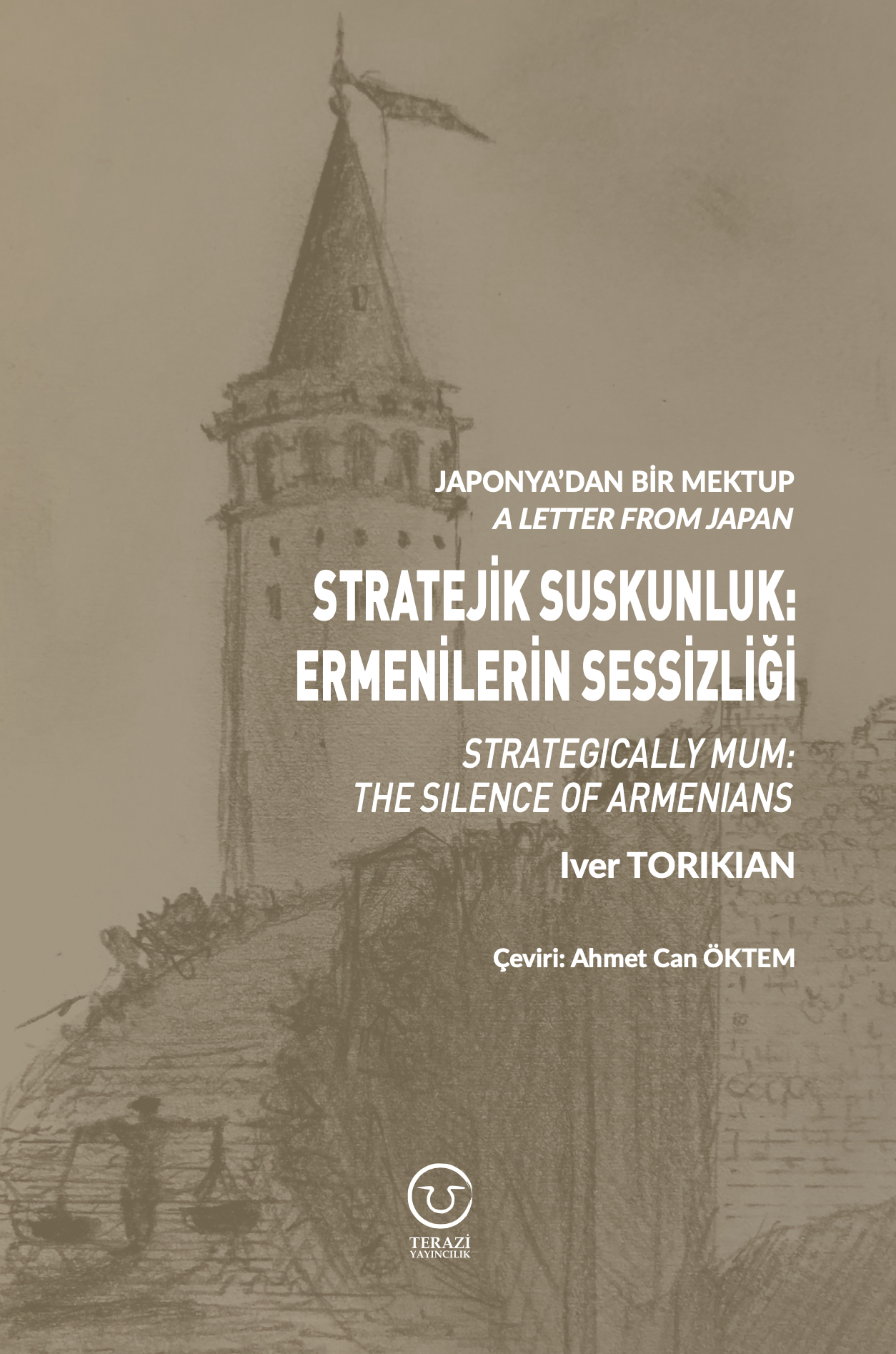
Japonya'dan Bir Mektup - Stratejik Suskunluk: Ermenilerin Sessizliği -
03.06.2020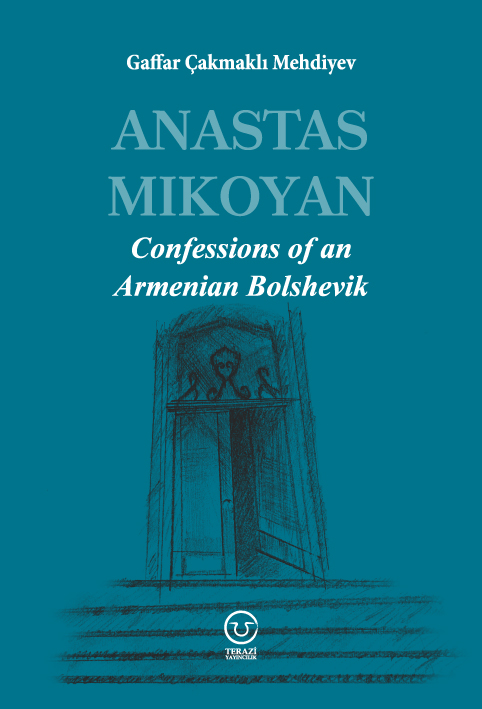
Anastas Mikoyan: Confessions of an Armenian Bolshevik -
08.04.2020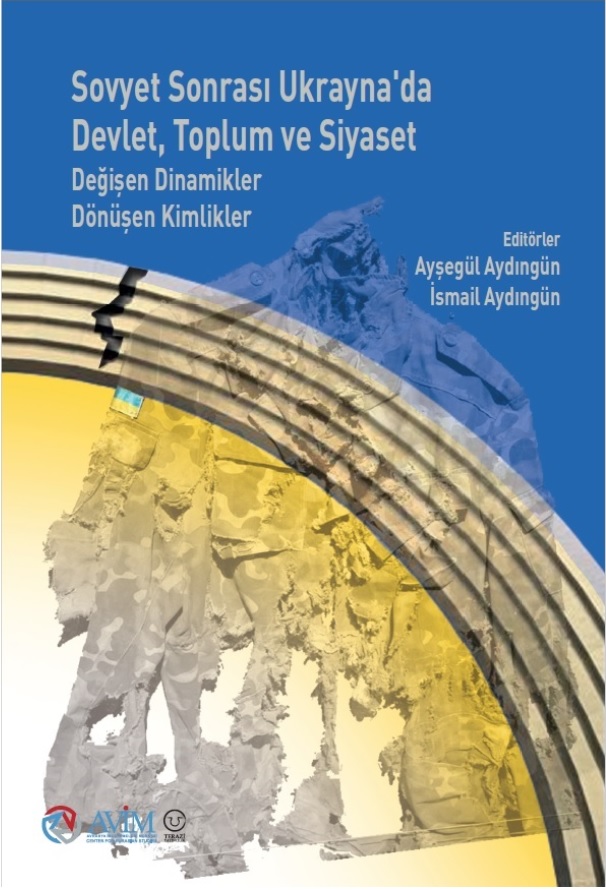
Sovyet Sonrası Ukrayna’da Devlet, Toplum ve Siyaset - Değişen Dinamikler, Dönüşen Kimlikler -
12.06.2018
Ermeni Sorunuyla İlgili İngiliz Belgeleri (1912-1923) - British Documents on Armenian Question (1912-1923) -
02.12.2016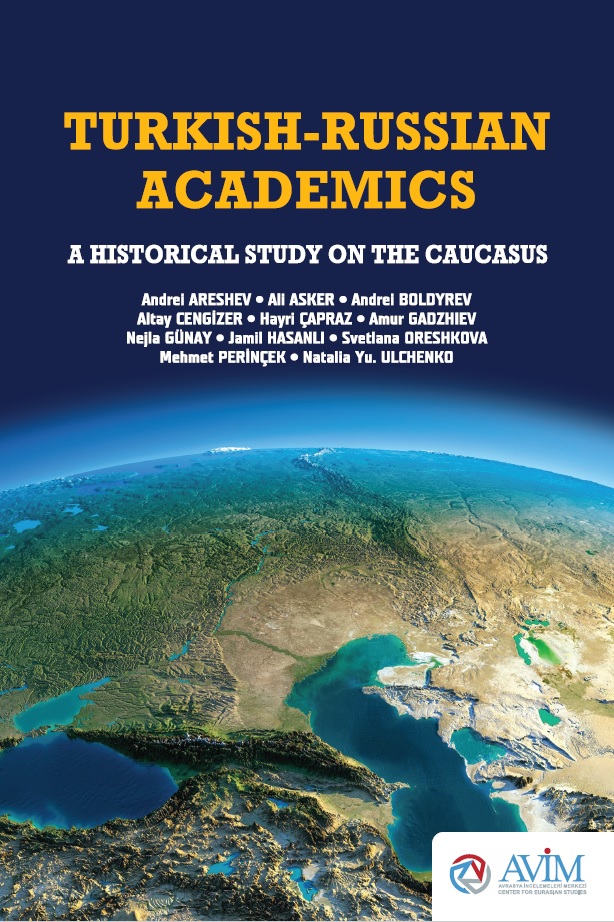
Turkish-Russian Academics: A Historical Study on the Caucasus -
01.07.2016
Gürcistan'daki Müslüman Topluluklar: Azınlık Hakları, Kimlik, Siyaset -
10.03.2016
Armenian Diaspora: Diaspora, State and the Imagination of the Republic of Armenia -
24.01.2016
ERMENİ SORUNU - TEMEL BİLGİ VE BELGELER (2. BASKI)

-
AVİM Conference Hall 24.01.2023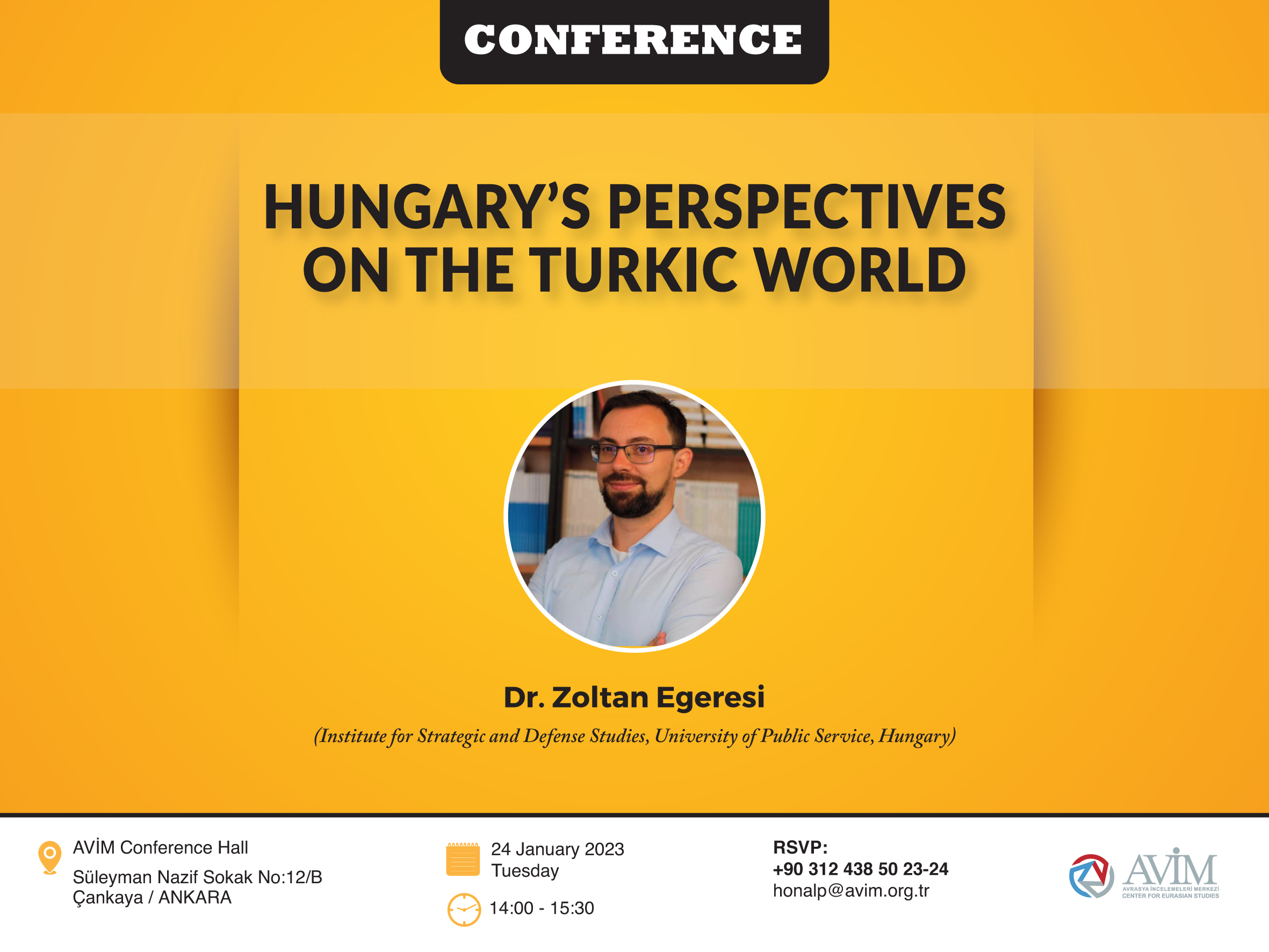
CONFERENCE TITLED “HUNGARY’S PERSPECTIVES ON THE TURKIC WORLD"