

















Euractiv (23 January 2018)
First, it was the United Patriots, the junior partner in Borissov’s cabinet, who stood up against the ratification of the 2011 convention, known as the Istanbul Convention.
Borissov’s majority in parliament depends on the coalition with the United Patriots, a bloc of three nationalist parties often described as homophobic, xenophobic and, at least in case of one of them, Ataka, ideologically close to the far-right.The junior coalition force stated that the Istanbul Convention “legitimises the third sex” and may force Bulgaria to accept “transvestites from Iran” on its territory.
The government disregarded the arguments and on 3 January took the decision that Bulgaria should adopt the convention. However, heated debates are expected in parliament, which needs to ratify it. Valery Simeonov, deputy prime minister and co-president of the United Patriots, tried to tone down the scandal saying that this was not political rebellion, but a clash of principle positions.
In a separate development, Borissov’s government faces a confidence vote in parliament, requested by the main opposition party which cited lack of progress in fighting corruption. The vote is due on Wednesday (24 January) and is likely to fail.
The vote on the Istanbul Convention, whose outcome is more difficult to predict, has not been scheduled yet.
So far, the Istanbul Convention has been ratified by 17 EU members. As early as 2014, the Bulgarian Animus Foundation, which helps women and girls who have been victims of domestic violence, called for the ratification of the Council of Europe convention, open for signature on 1 May 2011 in Istanbul.
For the last 23 years, more than 100,000 women and children who have been victims of violence at home have sought the assistance of this Bulgarian NGO. Very large numbers remain out of statistics because they have not sought help.
The Istanbul Convention is the first instrument in Europe to create a comprehensive framework for the protection of women and girls from all forms of violence. It is also aimed at preventing, prosecuting and abolishing violence against them.
The Council of Europe urged Bulgaria to ratify the Convention, and so did Commission First Vice-President Frans Timmermans on a visit to Sofia on Monday (22 January).
Lost in translation?
The Convention is also the first international treaty containing a definition of “gender” as “social roles, behaviours, activities and characteristics that a particular society considers appropriate for women and men” – according to Art. 3 of the Convention. A careful look at the texts shows that the political scandal in Bulgaria is based on a wrong translation.
The original English version of the Convention uses the word ‘gender’. In English, there is a significant difference between the term “sex” used for the biologically determined role of the individual, while “gender” refers to a person’s social role or social identification. But the Bulgarian language has only one word – “sex” and it was used in the Bulgarian translation of the convention.
According to one of the three nationalist parties involved in power – VMRO – the definition opens the doors to legalising same-sex marriages.
“In practice, this makes it possible to legalise same-sex marriages – if one of the two married partners in a legally married couple changes their sex, according to the Istanbul Convention, a same-sex” family “is created, VMRO stated.
According to the verbatim record of the cabinet meeting published today (5 January), the leader of VMRO, Krassimir Karakachanov, who is also deputy prime minister and defence minister of Defence, said the following:
“Okay, suppose there are problems with family violence – yes, there are in some communities and that’s a fact, women are beaten, and some women beat men. I agree, but if we want to clear the problem of a convention, hurriedly accepted without broad public discussion, perhaps we will open the door for new claims with a perspective and we will not solve the problems.”
Deputy Prime Minister and Foreign Minister Ekaterina Zaharieva says the convention does not force Bulgaria to introduce a “third sex” or engage in debate about gay marriages.
“Ratification will not lead to a change in the constitution, nor will it entail an obligation for Bulgaria to introduce same-sex marriages,” Zaharieva said. She explained that the convention aims to break the stereotypes rooted in people from childhood in some parts of the world, that it is normal for women to be subjected to domestic violence, including rape in the family.
The Convention aims at better educating citizens in tolerance and respect for gender equality, which is also a fundamental principle of the Bulgarian Constitution, she explained.
The ratification will impose changes not only in the legislation on the protection of victims of domestic violence but also in specific texts of the Penal Code relating to violence against women. The Convention provides for the creation of a sufficient number of crisis centres to support victims of violence and the opening of free of charge 24-hour hotlines.
However, nationalists from VMRO have their own interpretation: “Every transgender in Iran, for example, can be granted refugee status in our country because of his ‘gender specificity’ in its homeland”, they stated. The main opposition force, the Bulgarian Socialist Party (BSP) also opposes ratification. Although the party identifies itself as centre-left-wing, it is against one of the Convention’s aims – the eradication of prejudices, customs, traditions and any other practices based on stereotyped roles for women and men.
The Bulgarian socialists are against educating children about sexuality, if it is different from the traditional definition of man and woman. BSP accuses the government of raising the issue of the Convention’s ratification by “creating tension and hatred” in society.
The Party of European Socialists (PES), headed by former BSP leader Sergei Stanishev, is one of the main advocates for the ratification of the convention. At the end of November, Stanishev called not only for the adoption of the Istanbul Convention but also for specific European legislation in this area.
On Saturday (20 January) after a five-hour debate, the BSP leadership decided that its MPs will vote against the Convention, despite internal divisions in the party. The socialists have introduced a no-confidence motion against Borissov’s cabinet over the issue of corruption and the debates will take place today.“As we have repeatedly called for, the European Union must put forward sound and concrete legislation to eradicate violence against women, and I believe that the EU Framework Directive would be a major step in the right direction,” said Stanishev.
The extra-parliamentary centre-right party Union of Democratic Forces (SDS, the historic anti-communist force) is also against the convention.
“Bulgarian society is conservative and not liberal, as some political and non-governmental organizations are trying to instigate”, says SDS, who called upon the Bulgarian Orthodox Church to state its position on the Istanbul Convention.
‘Moral decay’
The Bulgarian Orthodox Church joined the chorus of opponents, saying the convention was opening the door to “moral decay”.
“It is a tool that instils a value system that is unfamiliar to us in order to allow society to be governed by a new model in the interests of a small part of it,” the Church’s Holy Synod, its top executive body, said in a statement.
The Church said the treaty opens the door to spiritual death and is totally opposed to Christianity.
“It raises concerns about the future of the European Christian civilization because it contains a new understanding of man – man as an absolute master, the man without God who follows his desires and passions to such an extent that he can even determine his gender,” the Holy Synod said.
“The consequences of denying biblical truths are tragic and we are witnessing them in many societies where “gender” ideology has long been a state policy,” the church said.
The Convention has been ratified by other Balkan countries such as Albania, Montenegro, Serbia, Turkey. None of them has the intention of introducing the notion of “third sex” into their constitution, nor of regulating same-sex marriages.
So far, GERB is the only party in the Bulgarian parliament that supports ratification. The party may rely on the support of the opposition mainly ethnic Turkish force Movement of Rights and Freedoms (DPS), which is part of the Liberal ALDE group in the European Parliament.
https://www.euractiv.com/section/freedom-of-thought/news/istanbul-convention-spells-trouble-for-bulgarias-ruling-coalition/
No comments yet.
- ARMENIA MUST SUBMIT NEW NUCLEAR REACTOR’S EIA REPORT TO NEIGHBORING STATES The Caucasus and Turkish-Armenian Relations 24.01.2018
- INDIA, RUSSIA FAIL TO FINALIZE S-400 AIR-DEFENSE DEAL Asia - Pacific 24.01.2018
- AUSTRIA'S STRABAG FILES COMPLAINT WITH CROATIA OVER BRIDGE TENDER The Balkans 24.01.2018
- ISLAMIC STATE DESERT BASES STILL A HEADACHE FOR IRAQ Iraq 24.01.2018
- 450,000 DISPLACED HAVE RETURNED TO IRAQ'S NINEVEH: GOVT Iraq 24.01.2018
-
25.01.2016
THE ARMENIAN QUESTION - BASIC KNOWLEDGE AND DOCUMENTATION -
12.06.2024
THE TRUTH WILL OUT -
27.03.2023
RADİKAL ERMENİ UNSURLARCA GERÇEKLEŞTİRİLEN MEZALİMLER VE VANDALİZM -
17.03.2023
PATRIOTISM PERVERTED -
23.02.2023
MEN ARE LIKE THAT -
03.02.2023
BAKÜ-TİFLİS-CEYHAN BORU HATTININ YAŞANAN TARİHİ -
16.12.2022
INTERNATIONAL SCHOLARS ON THE EVENTS OF 1915 -
07.12.2022
FAKE PHOTOS AND THE ARMENIAN PROPAGANDA -
07.12.2022
ERMENİ PROPAGANDASI VE SAHTE RESİMLER -
01.01.2022
A Letter From Japan - Strategically Mum: The Silence of the Armenians -
01.01.2022
Japonya'dan Bir Mektup - Stratejik Suskunluk: Ermenilerin Sessizliği -
03.06.2020
Anastas Mikoyan: Confessions of an Armenian Bolshevik -
08.04.2020
Sovyet Sonrası Ukrayna’da Devlet, Toplum ve Siyaset - Değişen Dinamikler, Dönüşen Kimlikler -
12.06.2018
Ermeni Sorunuyla İlgili İngiliz Belgeleri (1912-1923) - British Documents on Armenian Question (1912-1923) -
02.12.2016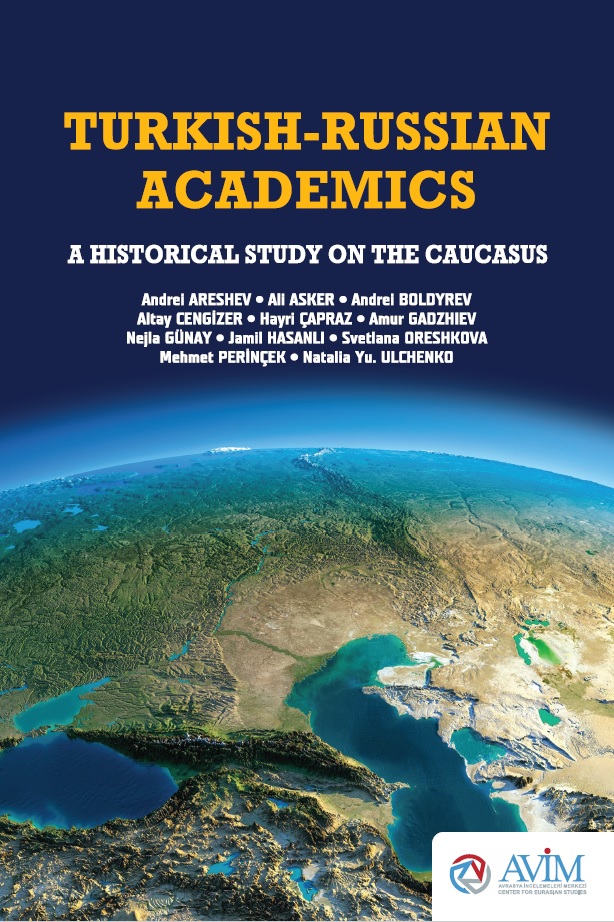
Turkish-Russian Academics: A Historical Study on the Caucasus -
01.07.2016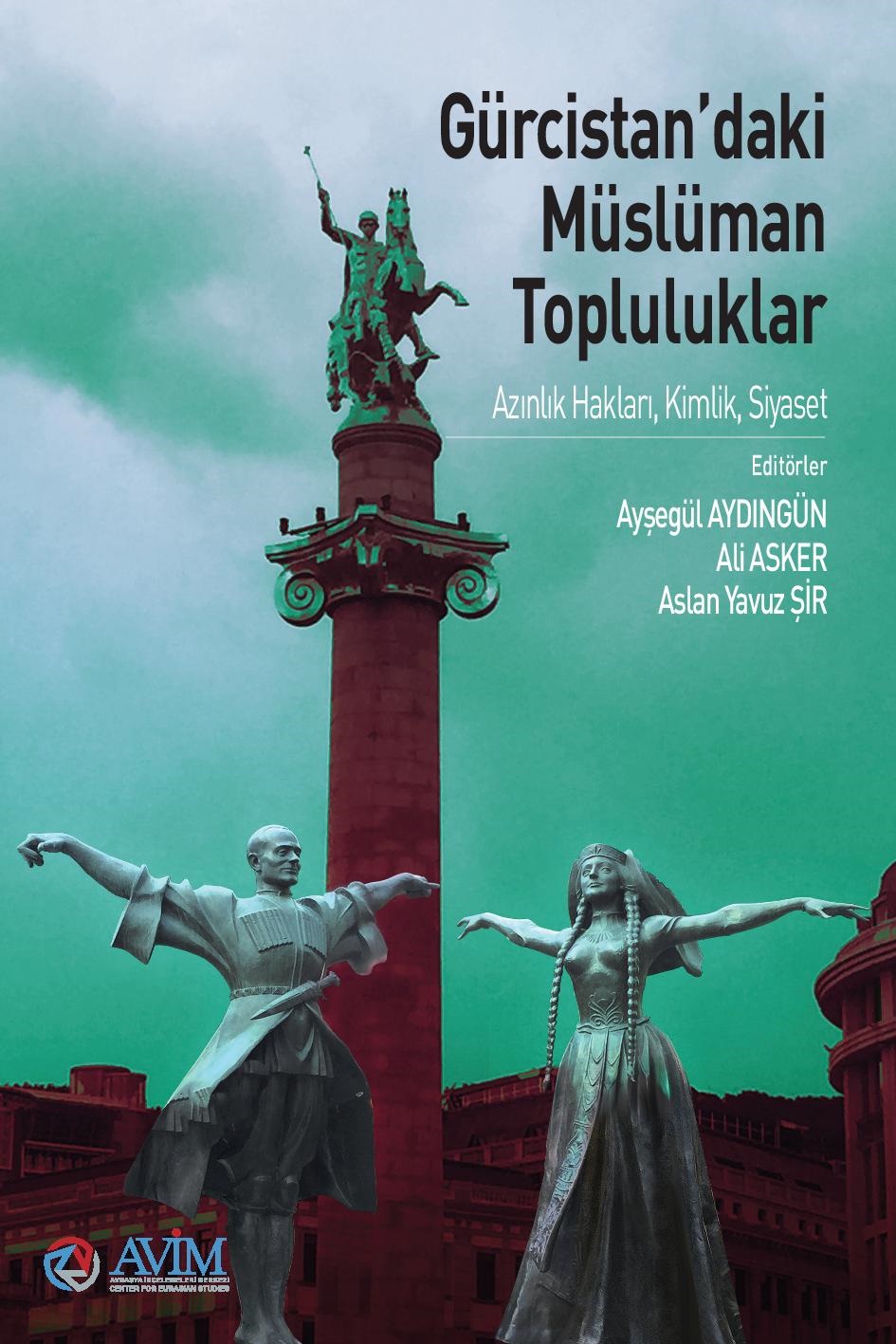
Gürcistan'daki Müslüman Topluluklar: Azınlık Hakları, Kimlik, Siyaset -
10.03.2016
Armenian Diaspora: Diaspora, State and the Imagination of the Republic of Armenia -
24.01.2016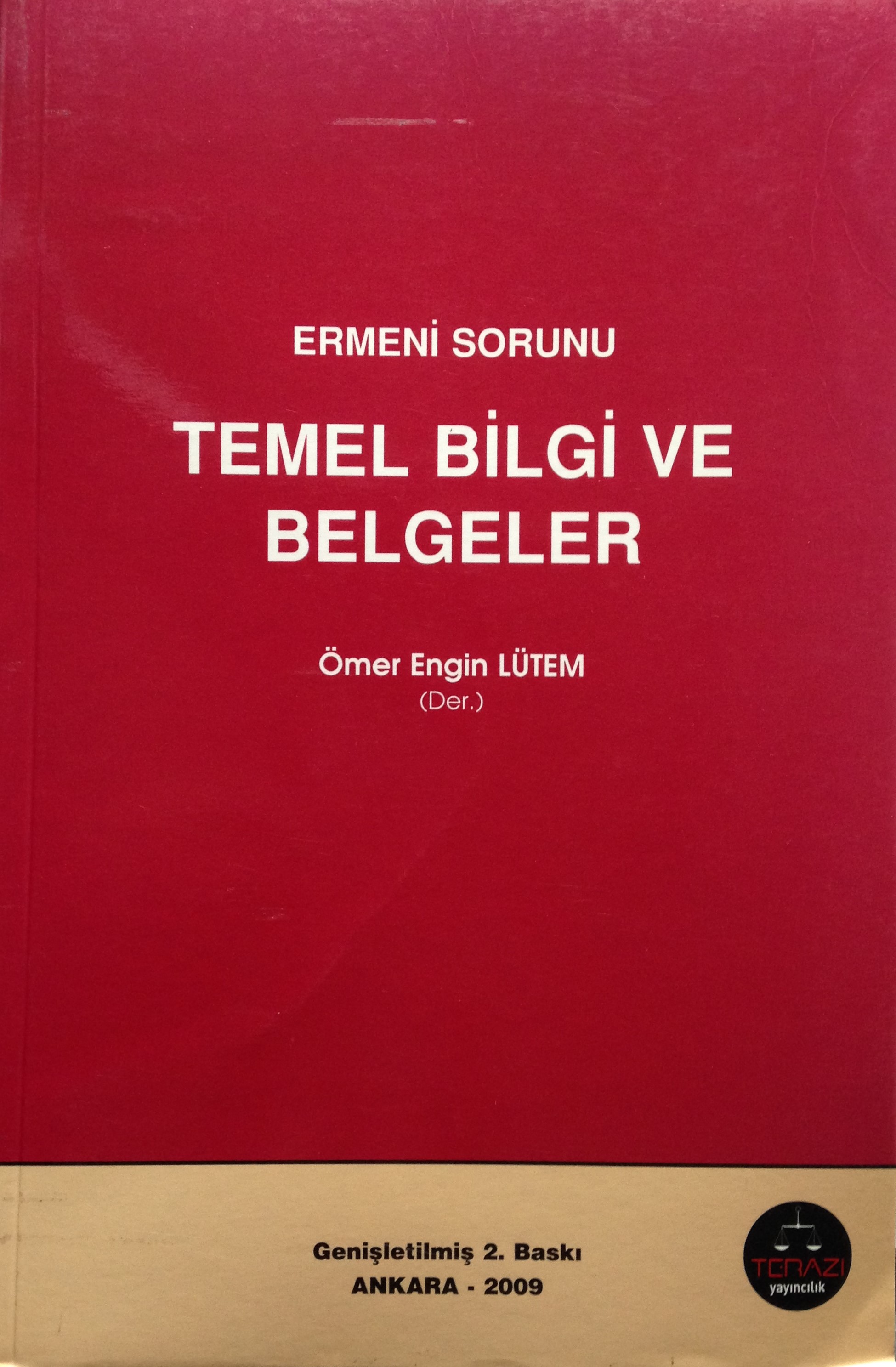
ERMENİ SORUNU - TEMEL BİLGİ VE BELGELER (2. BASKI)


-
AVİM Conference Hall 24.01.2023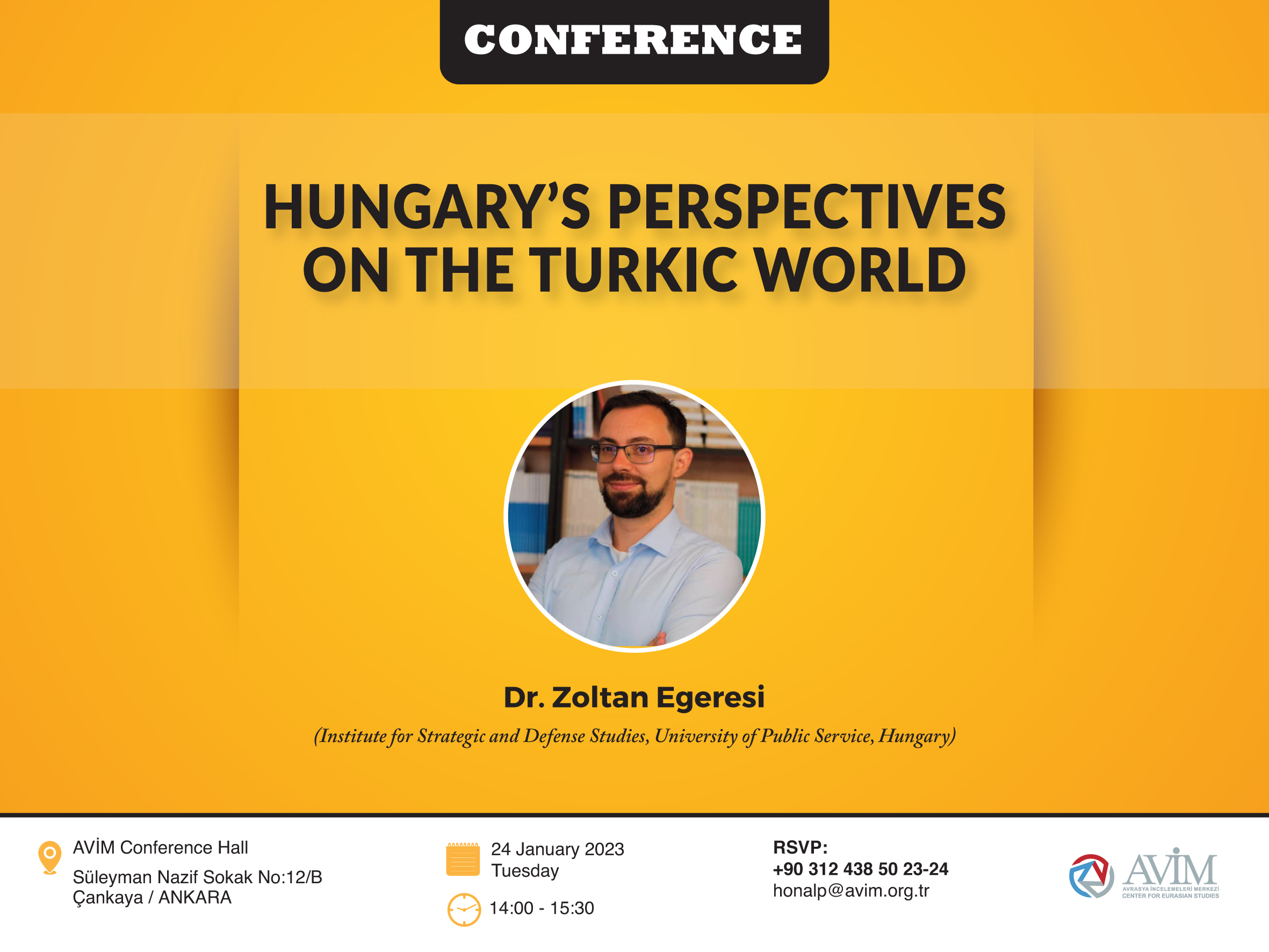
CONFERENCE TITLED “HUNGARY’S PERSPECTIVES ON THE TURKIC WORLD"