

















11.10.2016
DW.de
In the past, asylum applications could be a bit of a lottery for Syrians in Germany: While, for some, the interview involved a grueling, seven-hour "marathon session", as one Syrian told DW, others simply had to fill in a questionnaire to state why they had fled to Germany.
Take Bakri, a student in Leipzig who prefers to go by his first name. Back in 2015, all he had to do was fill in an application and mail it to the regional immigration office. It was easy, he told DW. "I understand why they did it that way: It was much faster than a personal interview", he said. "And they had so much on their plate."
Back in 2015, German authorities were faced with, and often overwhelmed by, the record influx of refugees, many of whom lacked any kind of official papers. Others registered in one city, only to move on to other parts of Germany, or indeed elsewhere in Europe. That is why the decision was taken to waive the obligatory interview process for Syrians, Iraqis and Eritreans. Instead, asylum seekers could fill out a written application.
Calls for more extensive powers for security services
But accusations surfaced that Moroccans and other North Africans were registering as Syrian nationals and, as security concerns grew, authorities reverted back to individual application hearings, conducted by Germany's Federal Migration Office, BAMF.
The asylum process, according to BAMF, involves security checks. Case workers take an applicant's fingerprints and photos and run them through the Federal Police database. ID documents are also verified, it says.
But after a SWAT team raided an apartment in a drab communist-era housing block in Chemnitz over the weekend, several politicians are calling for even more stringent security checks.
The raid followed a tip-off by security services that Jaber Albakr., a 22-year-old from Syria, was planning an imminent bombing attack in Germany. The suspect, who narrowly evaded police and wasfinally overpowered by three Syrian compatriots in Leipzig, arrived in Germany and was granted asylum last year.
While authorities have confirmed "links" to the self-proclaimed Islamic State, more details have yet to emerge on the extent of these ties and possible IS networks in Germany.
Shortly after Albakr's arrest, Hans-Peter Uhl, the Bavarian CSU's interior affairs spokesman, called for more extensive powers for German security services regarding refugees, including unrestricted access to the BAMF's database of asylum seekers.
Opposition rejects callsf or unrestricted access to database
Uhl's party has long been very vocal in its opposition to Angela Merkel's decision in 2015 to open the country's borders to refugees stranded along the so-called Balkan route.
But coalition partner, the SPD, and the opposition were quick to reject the demands: Irene Mihalic from the Green party dismissed the calls as "crazy", pointing out that they might further polarize an already divided society.
And Ulla Jelpke (Left Party) concurred that the demands were "out of place", given that the BAMF already cooperates with the security services, sharing data in suspicious cases.
Others point to the fact that some of the recent attacks in Germany in Ansbach, Munich and Würzburg were in fact perpetrated by German citizens - or refugees who arrived before 2015. Others may simply be lying low, passing under the security service radar.
Another problem is more structural: As yet there is no exhaustive, Europe-wide data base of radicalized, potential attackers. That's something that Interior Minister Thomas de Maiziere has in the past called "problematic". And, officials concede, the spelling of Arabic names often doesn't match across countries.
Bakri, the Syrian studying in the town were Albakr was apprehended, is convinced that the real work begins after the asylum process has ended: mosques, security services and, importantly, Syrian community should work together to spot radicals who, like Jaber Albakr, may be planning an attack.
It's in everyone's interest, he says: "The vast majority of Syrians fled because of the terrorists", he said. "They'd do what they can to prevent something similar happening here."
No comments yet.
- TURKEY’S ALLIANCE WITH WEST MAY WEAKEN AFTER RUSSIA DEAL Asia - Pacific 12.10.2016
- AFGHANISTAN: TALIBAN CAPTURES GHORMACH DISTRICT Asia - Pacific 12.10.2016
- FROSTY FRANCO-RUSSIAN RELATIONS Europe - EU 12.10.2016
- OSCE MG CO-CHAIRS TO VISIT OCCUPIED AZERBAIJANI TERRITORIES The Caucasus and Turkish-Armenian Relations 12.10.2016
- ANGER BETWEEN TURKEY AND IRAQ AHEAD OF BATTLE FOR MOSUL Iraq 12.10.2016
-
25.01.2016
THE ARMENIAN QUESTION - BASIC KNOWLEDGE AND DOCUMENTATION -
12.06.2024
THE TRUTH WILL OUT -
27.03.2023
RADİKAL ERMENİ UNSURLARCA GERÇEKLEŞTİRİLEN MEZALİMLER VE VANDALİZM -
17.03.2023
PATRIOTISM PERVERTED -
23.02.2023
MEN ARE LIKE THAT -
03.02.2023
BAKÜ-TİFLİS-CEYHAN BORU HATTININ YAŞANAN TARİHİ -
16.12.2022
INTERNATIONAL SCHOLARS ON THE EVENTS OF 1915 -
07.12.2022
FAKE PHOTOS AND THE ARMENIAN PROPAGANDA -
07.12.2022
ERMENİ PROPAGANDASI VE SAHTE RESİMLER -
01.01.2022
A Letter From Japan - Strategically Mum: The Silence of the Armenians -
01.01.2022
Japonya'dan Bir Mektup - Stratejik Suskunluk: Ermenilerin Sessizliği -
03.06.2020
Anastas Mikoyan: Confessions of an Armenian Bolshevik -
08.04.2020
Sovyet Sonrası Ukrayna’da Devlet, Toplum ve Siyaset - Değişen Dinamikler, Dönüşen Kimlikler -
12.06.2018
Ermeni Sorunuyla İlgili İngiliz Belgeleri (1912-1923) - British Documents on Armenian Question (1912-1923) -
02.12.2016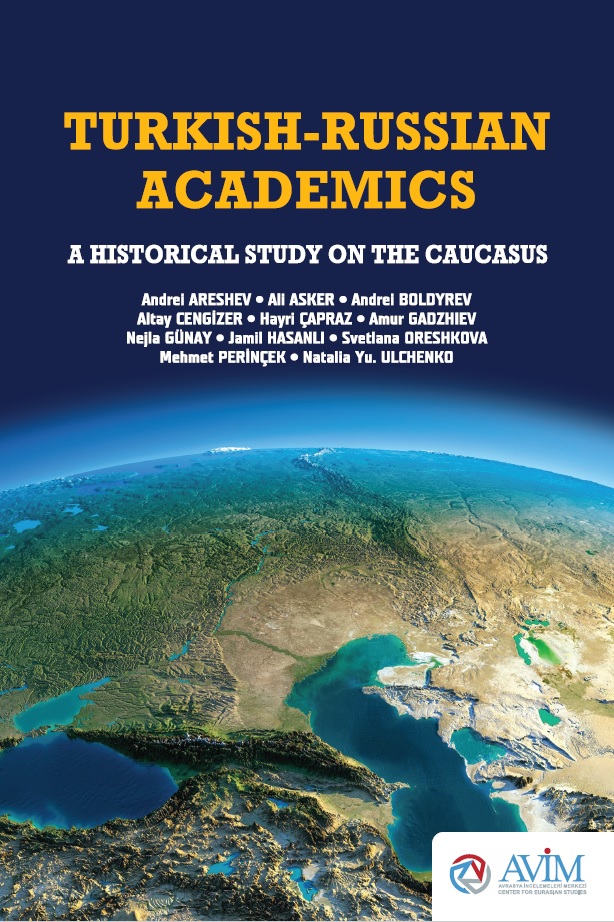
Turkish-Russian Academics: A Historical Study on the Caucasus -
01.07.2016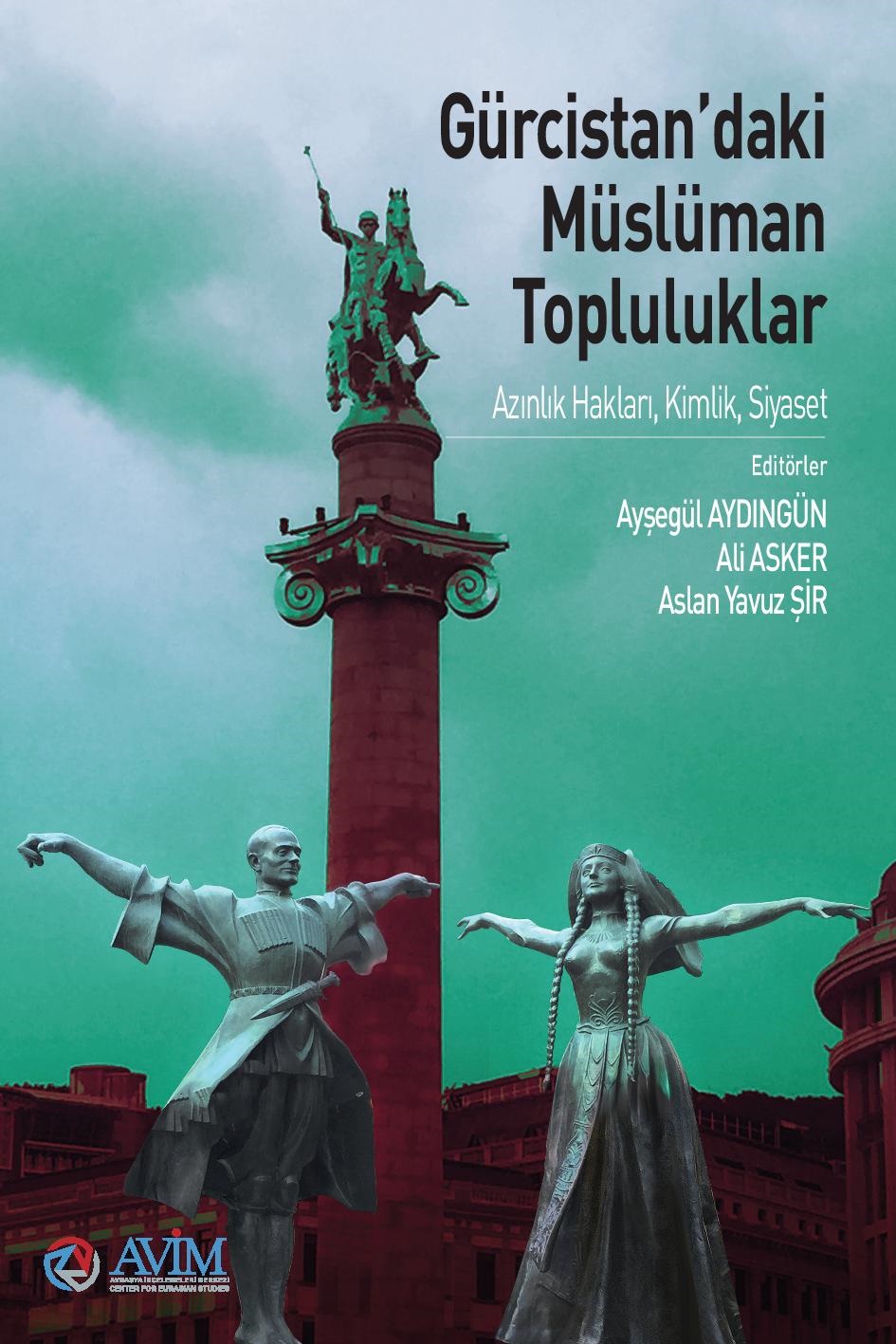
Gürcistan'daki Müslüman Topluluklar: Azınlık Hakları, Kimlik, Siyaset -
10.03.2016
Armenian Diaspora: Diaspora, State and the Imagination of the Republic of Armenia -
24.01.2016
ERMENİ SORUNU - TEMEL BİLGİ VE BELGELER (2. BASKI)
-
AVİM Conference Hall 24.01.2023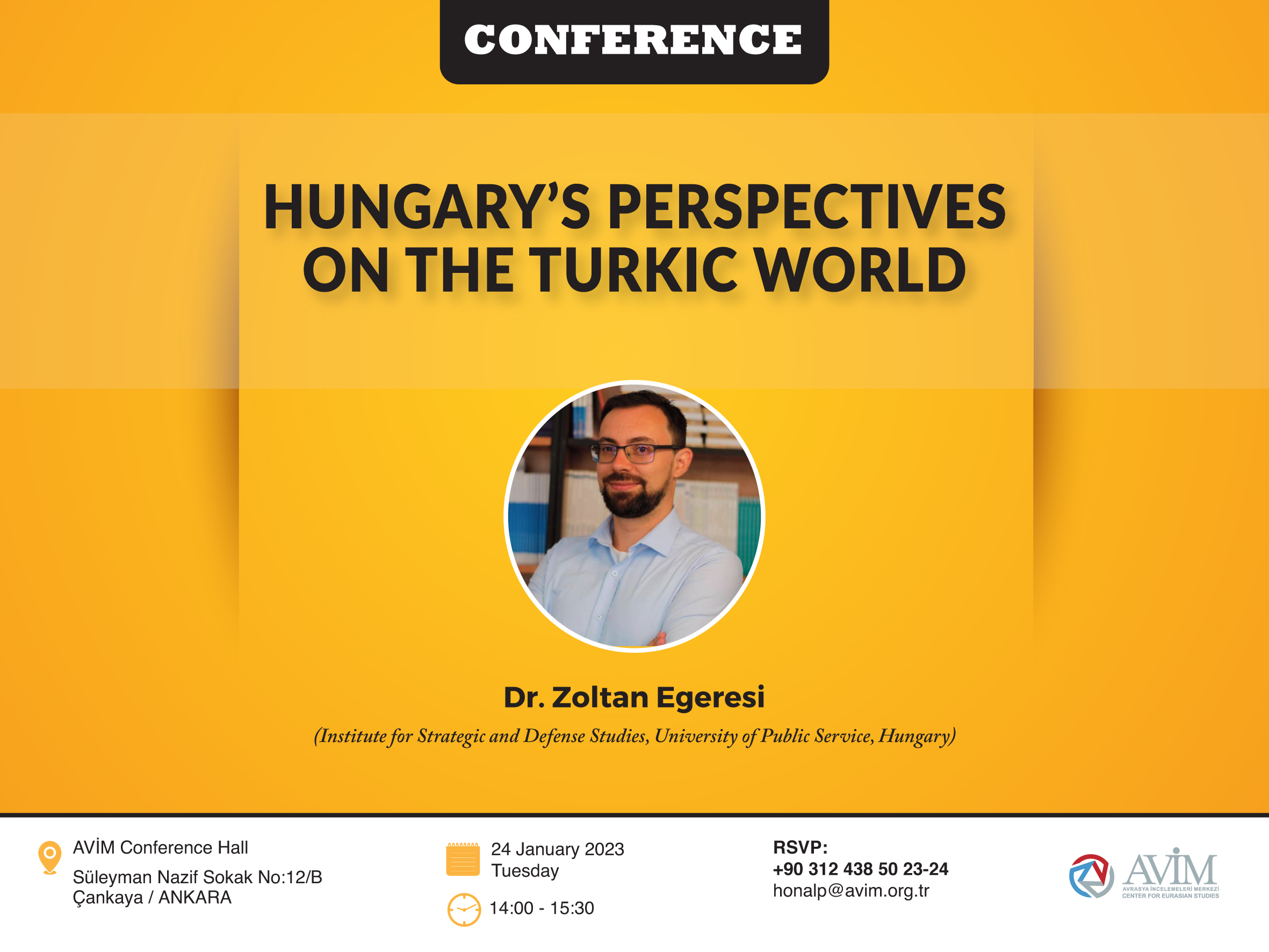
CONFERENCE TITLED “HUNGARY’S PERSPECTIVES ON THE TURKIC WORLD"