

















HurriyET Daily News, 25 August 2016
Just before Turkey’s attempted military coup in July, conservative Russian ideologue Alexandr Dugin was in the Turkish capital meeting officials including Mayor Melih Gökçek. Dugin is best known for popularizing Eurasianism, an imperial form of nationalism which sees Russia as a distinct anti-liberal civilization that has inherited the mantle of the Russian Empire and the Soviet Union, both of which were transient permutations of a mystical unity that has persisted since deep antiquity. Dugin himself may not have a direct hotline to Vladimir Putin, (it isn’t clear whether the two have even met), but he has exerted an influence on the national idea of Russia articulated by the Kremlin.
Dugin’s bizarre life and wild theories are among the subjects of “Black Wind, White Snow,” by Charles Clover, Moscow bureau chief of the Financial Times from 2008 to 2013. An unsettling dive into some very murky places, the book charts how post-Cold War Russia has become consumed by the fantasies of Eurasianism. Clover writes that as scholarship Eurasianism is barely credible; its appeal “stems not from its accuracy or explanatory power or its rigour ... but from the way in which it exorcises demons, heals psychic wounds and papers over ruptures in Russia’s crude and disjointed history.” Clearly we have moved far beyond the realm of the “end of history” posited by American political scientist Francis Fukuyama at the end of the Cold War.
Dugin’s ideas have deep roots. Clover takes us back to the 1920s, when a group of Russian nationalist émigrés began to reinterpret Russia’s history following the 1917 revolution and civil war. The threads can be traced in various underground and opposition figures inside and outside the Soviet Union through the 20th century. One of the major figures was dissident historian Lev Gumilev. Gumilev spent 14 years in Soviet prison camps, but managed to develop an alternative theory of history based on studies of the ancient steppe tribes of inner Asia. In his Ibn Khaldun-like vision, the tribes, societies and nations that flourished throughout history were not the most rational, enlightened or advanced,
but those that contained the highest proportion of ‘passionaries,’ who were defined by their desire to sacrifice themselves, and the highest level of ‘complementarity,’ a sense of attraction of its members for each other. Society was held together not by civilizing humanism, historical progress and cumulative reason, but by natural, unconscious instincts which had changed very little over the last few millennia.
There is no such thing as social progress or universal history common to all mankind, Gumilev argued. There are discrete civilizations defined by common cultural and geographical boundaries. Hence, there is a unique “Eurasian” civilization destined to follow a different path of development to the West.
These ideas have once again taken flight in post-Soviet Russia. Nationalism of all types, allowed to flourish by the Kremlin, has become the center of gravity in Russian politics. Over Putin’s 15 years in power, Clover writes, the accent has increasingly been on “nationalism and patriotic symbols, in an effort to consolidate support around a tough, authoritarian Kremlin.” Amplified by the mass media, a message has been hammered home over and over again: “Russia is unique, Russia is different, Russia is superior, Russia is under attack, Russia must defend itself.” Liberalism has replaced capitalism as the official enemy of the people.
The wounded psychological landscape of contemporary Russia is fertile territory for these ideas to take root. Like Germany after the Great War, Russia today is a continental power, impoverished in defeat, whose diminished place in the international system does not suit its ambitions. Clover writes: “The turmoil and economic chaos of Russia’s ‘Weimar era’ provided fertile ground for narratives of cultural humiliation and victimization by a global elite, as well as of identity, national purity, anti-liberalism and geopolitics.”
Eurasianism floats around in this nationalist firmament. In the words of Clover, over 80-odd years Eurasianists’ ideas have gone from “from somewhat tendentious scholarship, to popular history, to a political platform, a more recently to become the officially sanctioned national idea of Russia, articulated by its head of state.” This brings us to Dugin, described by Clover as the “inventor, architect and impresario of Eurasia.” Clover writes that “just as Dugin began his march towards the mainstream, he found the mainstream … marching towards him.” The Kremlin has adapted many of his ideas, “aimed not at mass mobilization behind public slogans, but at consolidating an elite behind a set of understood (if unspoken) truths, deniably vague statements and opaque policies.”
The book is terrific read and Clover has a knack for snappy one-liners. Russia, he writes, is “a country brimming with ideas and unique in its capacity to be totally carried away by them.” With tragic consequences, its ruling elite has historically been susceptible to the temptations of philosophical dogma: “Fierce attachment to ideas is a tragically recurring theme throughout the history of Russia, a nation where intellectuals are noted, and have long been judged, on the basis of total commitment to their principles.”
But it is not only Russia where irrationality is spiraling out of control. Look out the window and nationalism is setting the agenda. Its ideas may be nonsense, but that makes them no less powerful. They provide people with deeper, more comforting truths at a time of disorienting change. Clover writes that his book is about how “even hopelessly abstruse ideas, ideas that have been soundly disproven, renounced by their creators as demagoguery, labelled ‘fairy tales’ in authoritative journals, censored … and proven forgeries can change the world.” That certainly resonates in a world where nationalism is the spirit of the age.
No comments yet.
-
 FICO TO ACT AS PUTIN’S MESSENGER TO THE EU
Europe - EU
25.08.2016
FICO TO ACT AS PUTIN’S MESSENGER TO THE EU
Europe - EU
25.08.2016
- ARMENIA CONTINUES ARSONS ON FRONTLINE The Caucasus and Turkish-Armenian Relations 25.08.2016
- SOURCE: RUSSIA HAS NO PLANS TO USE AIR BASES IN YEMEN Asia - Pacific 25.08.2016
- RUSSIA MAY SET UP CAMP IN THE BASE THE US AND NATO USE TO BOMB ISIS Asia - Pacific 25.08.2016
- HOW MANY GUNS DID THE U.S. LOSE TRACK OF IN IRAQ AND AFGHANISTAN? HUNDREDS OF THOUSANDS. Iraq 25.08.2016
-
25.01.2016
THE ARMENIAN QUESTION - BASIC KNOWLEDGE AND DOCUMENTATION -
12.06.2024
THE TRUTH WILL OUT -
27.03.2023
RADİKAL ERMENİ UNSURLARCA GERÇEKLEŞTİRİLEN MEZALİMLER VE VANDALİZM -
17.03.2023
PATRIOTISM PERVERTED -
23.02.2023
MEN ARE LIKE THAT -
03.02.2023
BAKÜ-TİFLİS-CEYHAN BORU HATTININ YAŞANAN TARİHİ -
16.12.2022
INTERNATIONAL SCHOLARS ON THE EVENTS OF 1915 -
07.12.2022
FAKE PHOTOS AND THE ARMENIAN PROPAGANDA -
07.12.2022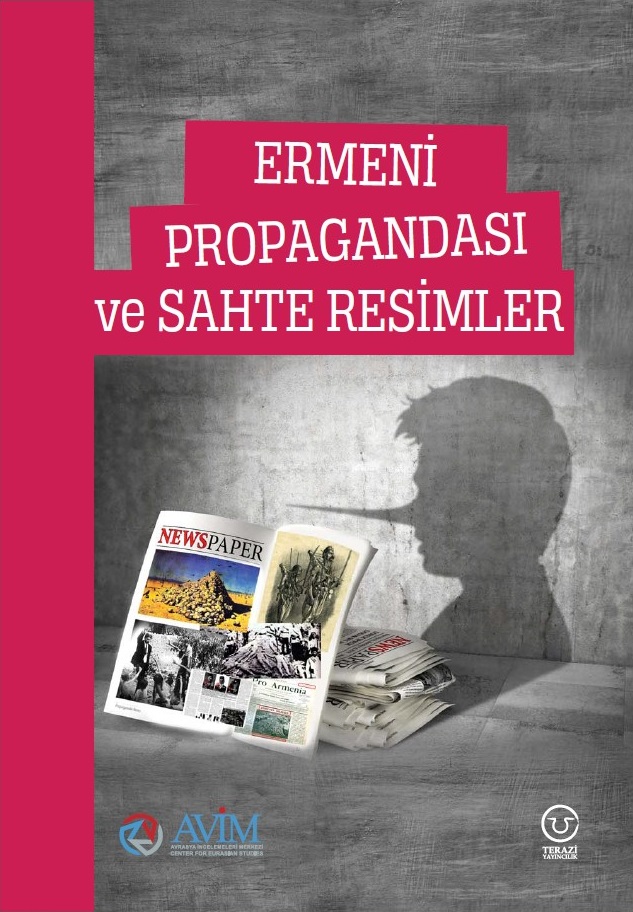
ERMENİ PROPAGANDASI VE SAHTE RESİMLER -
01.01.2022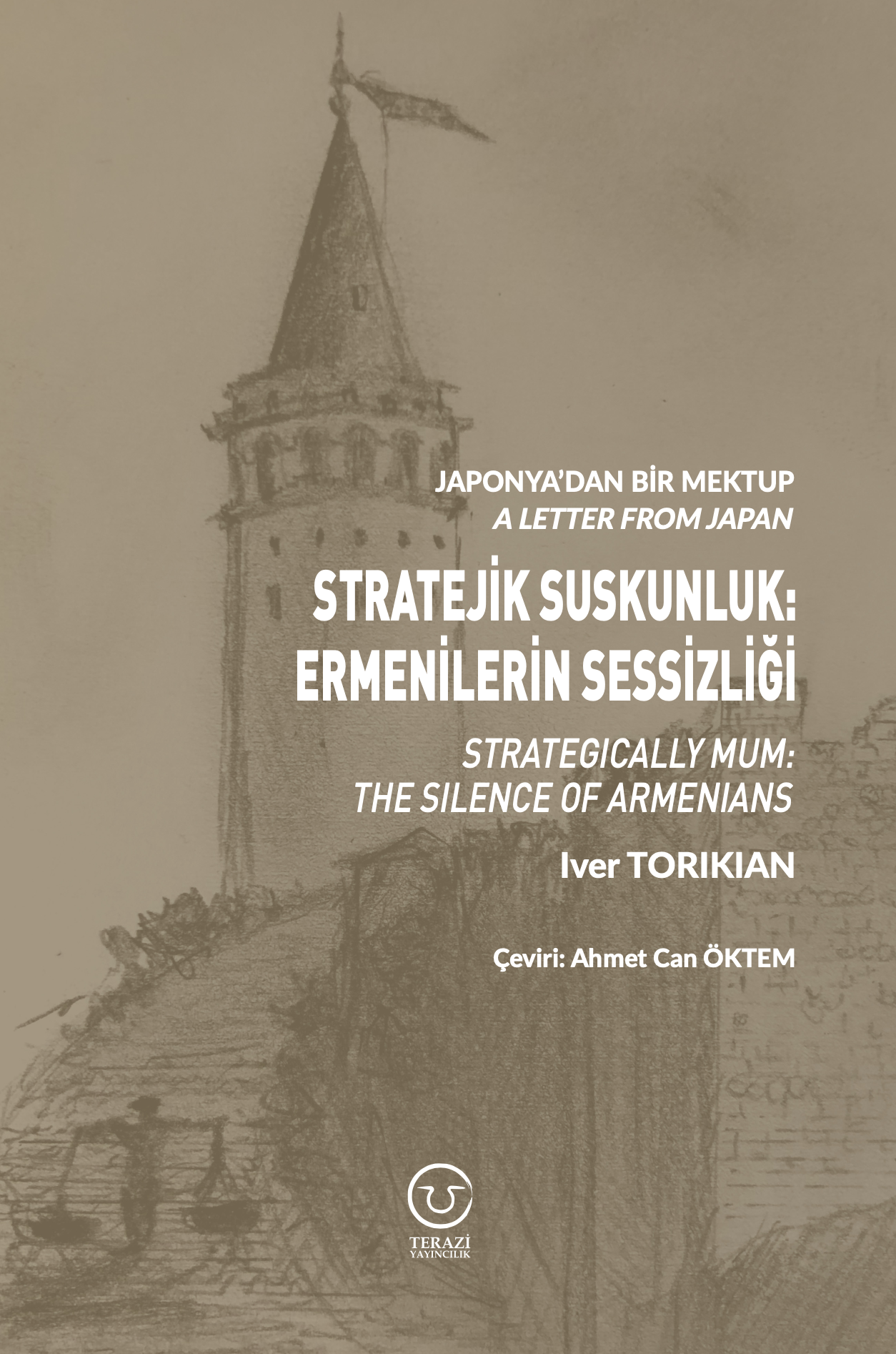
A Letter From Japan - Strategically Mum: The Silence of the Armenians -
01.01.2022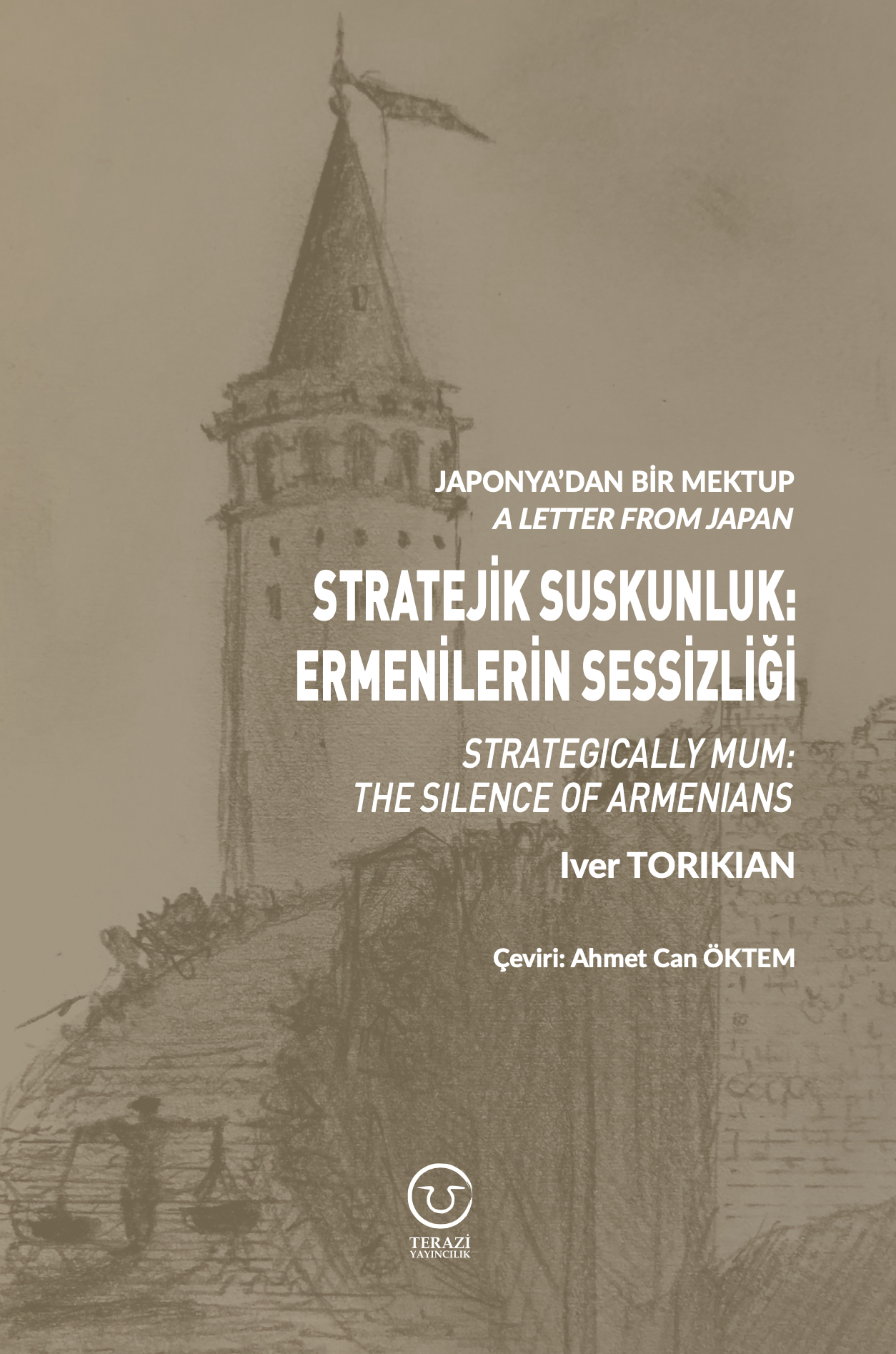
Japonya'dan Bir Mektup - Stratejik Suskunluk: Ermenilerin Sessizliği -
03.06.2020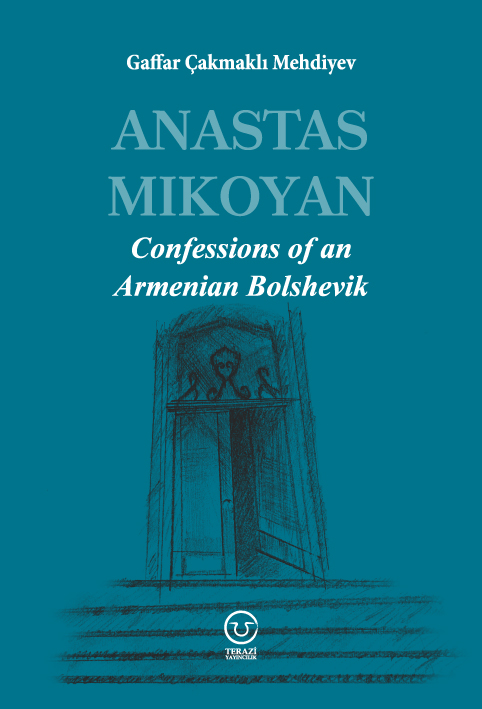
Anastas Mikoyan: Confessions of an Armenian Bolshevik -
08.04.2020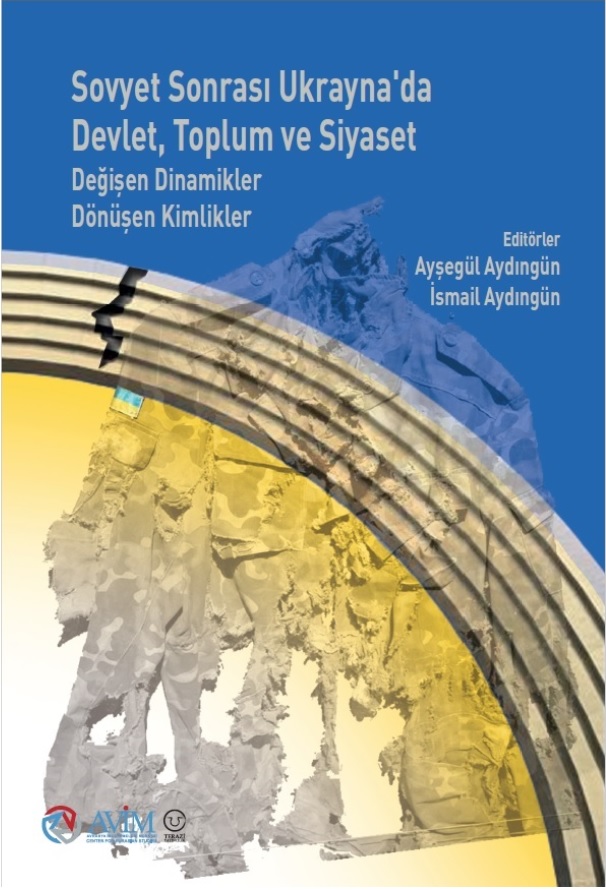
Sovyet Sonrası Ukrayna’da Devlet, Toplum ve Siyaset - Değişen Dinamikler, Dönüşen Kimlikler -
12.06.2018
Ermeni Sorunuyla İlgili İngiliz Belgeleri (1912-1923) - British Documents on Armenian Question (1912-1923) -
02.12.2016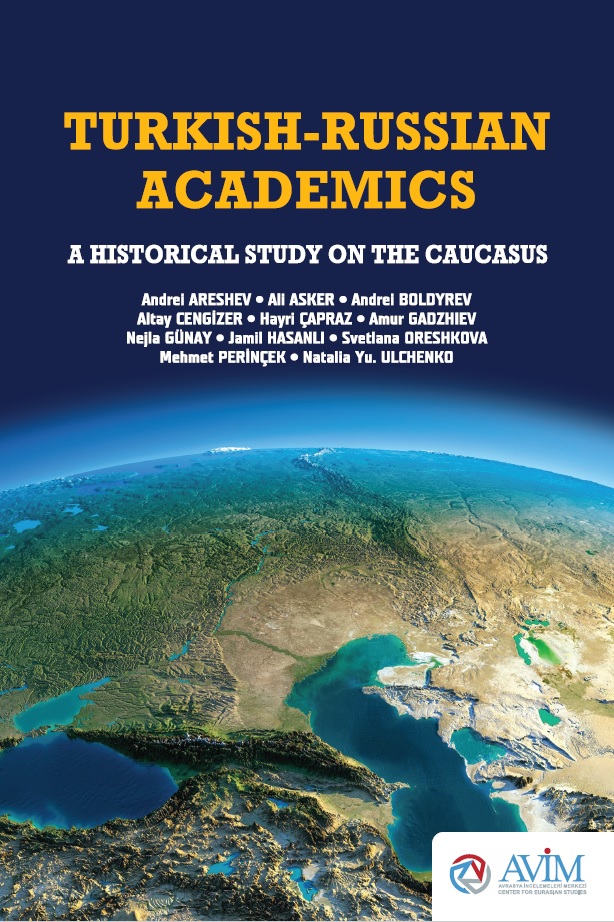
Turkish-Russian Academics: A Historical Study on the Caucasus -
01.07.2016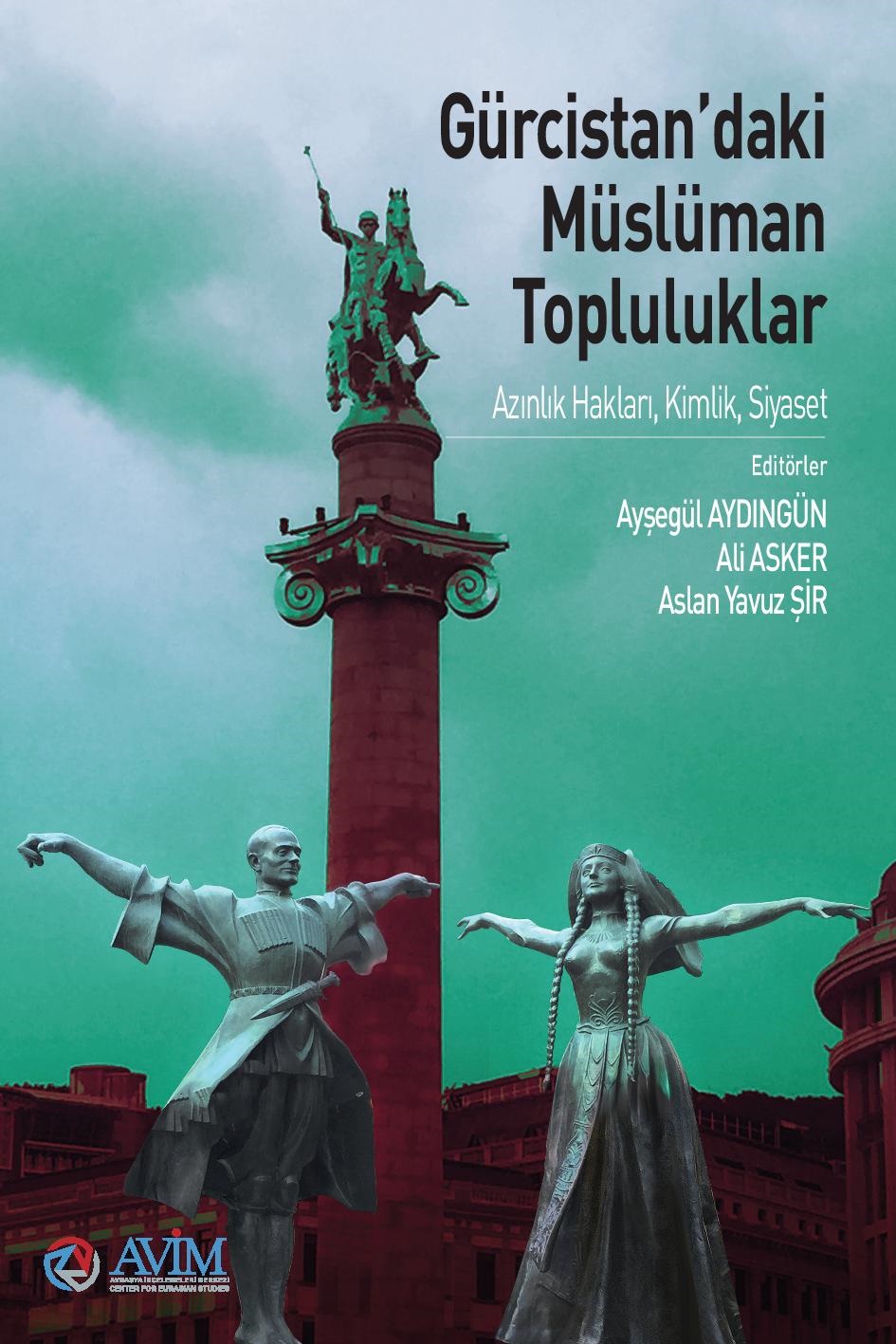
Gürcistan'daki Müslüman Topluluklar: Azınlık Hakları, Kimlik, Siyaset -
10.03.2016
Armenian Diaspora: Diaspora, State and the Imagination of the Republic of Armenia -
24.01.2016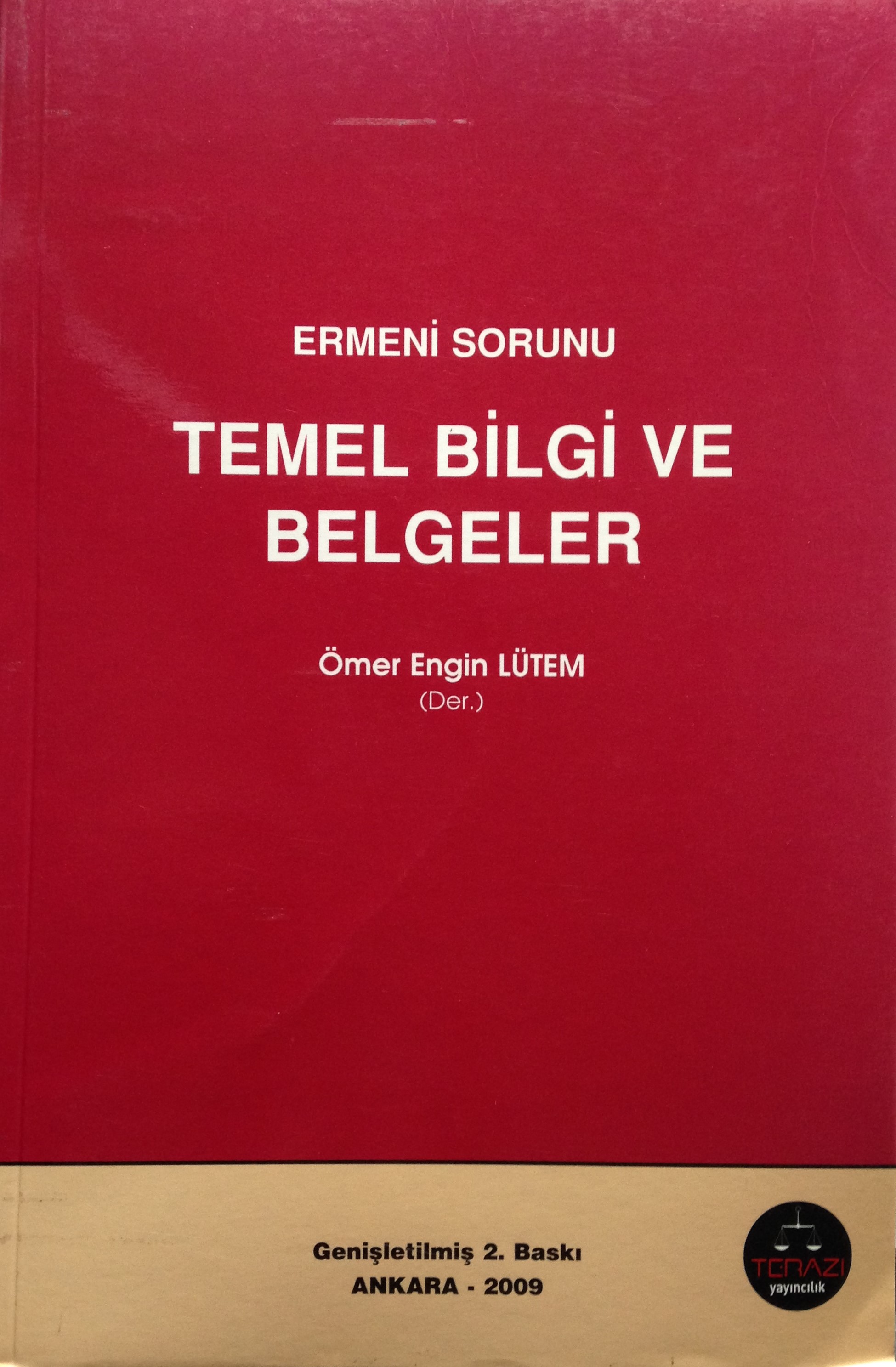
ERMENİ SORUNU - TEMEL BİLGİ VE BELGELER (2. BASKI)
-
AVİM Conference Hall 24.01.2023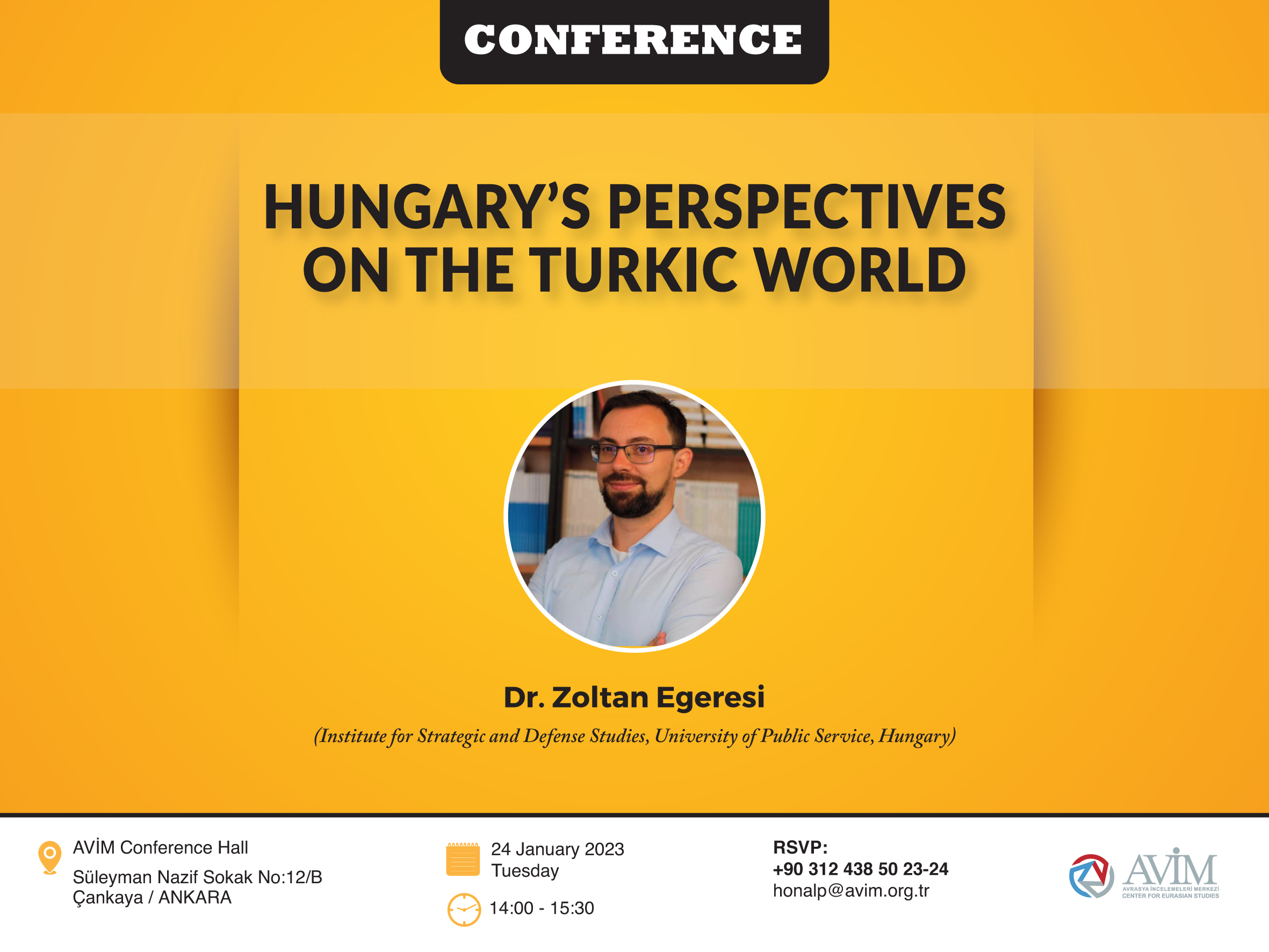
CONFERENCE TITLED “HUNGARY’S PERSPECTIVES ON THE TURKIC WORLD"