

















21.09.2016
DW.de
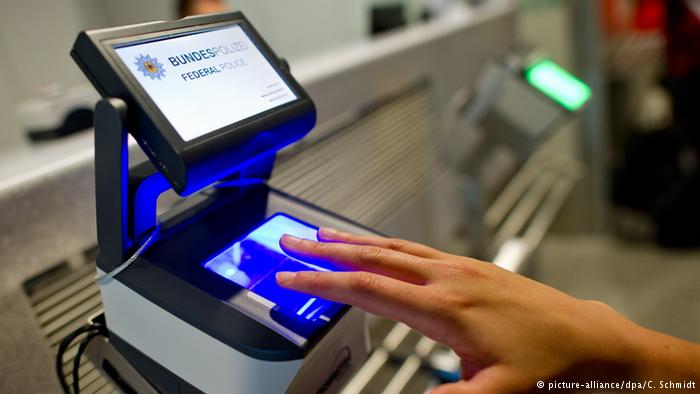
The EU is planning to massively increase its border controls. Those who want to enter have to register, or apply for a visa. The goal is more security, though EU citizens will be spared.
Australia's had one for a long time, and the United States has had one since 2007: An electronic entry system for travelers who don't need a visa. Now, the EU wants to implement such a system in order to have better control over who is actually entering and leaving the bloc. In the US, the online electronic registration system is known as "ESTA." In Europe, it will be known as "Etias" (European Travel Information and Authorisation System). The EU Commission is currently carrying out a feasibility study to determine how Etias can be set up at hundreds of airports and border crossings. The legislative process would then begin at the end of the year.
EU interior ministers called for a digital registration system last year following the terror attacks in Paris. But the system, designed to close recognized security loopholes, has been in planning for much longer. Now, it's going to become a reality. Similar to the US system, travelers who don't need a visa for the EU will be required to register online. A fee will be charged for the process; according to EU officials, it could be anywhere between 13 and 50 euros ($15 and $56). Based on the current 30 million travelers from non-EU countries who do not need a visa, that would create income of between 390 million to 1.5 billion euros per year.
Entry for the British?
The number of people who don't need a visa but who will have to pay this "entry fee" could increase considerably in the next few years. After Brexit, millions of British people traveling to the EU for vacations or business trips will also have to pay and register with Etias. The same goes for people from Turkey or Ukraine, in the event that the EU grants them visa-free travel. According to Camino Mortera-Martinez of the Brussels-based think tank, the Center for European Reform, it's a bad deal. "It would be damaging for British business," she told Britain's "Guardian" newspaper.
[Infografik Die Staaten des Schengener Abkommens Englisch Stand September 2015]
Complex system of control
Etias is just one building block in a wider initiative by the EU Commission to boost security following the terrorist attacks and uncontrolled migration over the past year. The system to record the movements of all travelers from non-EU states is at the heart of the new security measures. This network, called "EES" should be agreed on by the end of the year. Currently, the technical details are still being worked out.
Starting in 2020, every entry and exit will be saved in a databank. At the same time, the validity of IDs and visas will be checked. In addition, there will be a system query with the Schengen Information System, or SIS, which records information on possible terrorist suspects.
[Brüssel EU Kommission Aufhebung Visumspflicht für türkische Staatsbürger Dimitris Avramopoulos]
Avramopoulos: record all entries
Dimitris Avramopoulos, the EU commissioner responsible for the new system, has promised an end to the co-existence of numerous European databanks. "The systems will help to make Europe's borders safer. At the same time, strengthening the power of the European police authority, Europol, is a concrete step toward an efficient exchange of information, as well as identification of falsified travel documents," said Avramopoulos. The entry and exit records will be kept for a period of five years. Data protection activists are already criticizing the planned system, calling it a "data leech."
Exception: EU citizens' movement not recorded
[Grenzposten Ukraine-Rumänien]
The EU's eastern border between Romania and Ukraine
In the wake of last year's terrorist attacks in France, the French and German interior ministers called for the introduction of systematic controls, including for EU citizens. Currently, people with an EU identity card have been able to cross external borders after a simple check of their travel documents. But that means it's not possible to see whether, and how often, a radicalized jihadist with a European passport has traveled in and out of Syria, for example. This loophole was supposed to be closed, but now it appears that there is political resistance.
The EU Commission has since watered down its proposals, as the current Schengen rules forbid any "systematic" checks on EU citizens at the external borders. However, in the future EU citizens will also be required to pass through automated entry points where the biometric data in their passports is read and compared with their faces. But unlike people from non-EU countries, their data will not be saved.
It will likely be at least another four years until the new systems are up and running, the scanners are set up, and all the databanks are connected. "We need closer coordination between the EU and the member states," said EU Commission Vice President Frans Timmermans. "We have to concede that there's no other way in our mobile world to achieve more security." The papers from the EU Commission also point to the new border controls, scanners, and registration procedures having a "deterrent effect" on illegal immigrants.
No comments yet.
- KAZAKHSTAN SECRETARY OF STATE TO VISIT AZERBAIJAN Asia - Pacific 22.09.2016
- FORMER COMMISSIONER KROES NAMED IN NEW OFFSHORE LEAK Europe - EU 22.09.2016
- UKRAINE REPORTS RUSSIA IS PRACTICING ITS READINESS FOR NUCLEAR CONFLICT Asia - Pacific 22.09.2016
- WORLD WAR THREE STARTING IN SYRIA? US ACCUSED BY RUSSIA OF ‘DELIBERATE’ DEADLY AIRSTRIKES ON SYRIAN TROOPS Asia - Pacific 22.09.2016
- U.S. INTELLIGENCE CHIEF SUGGESTS RUSSIA WAS BEHIND ELECTION-LINKED HACKS Asia - Pacific 22.09.2016
-
25.01.2016
THE ARMENIAN QUESTION - BASIC KNOWLEDGE AND DOCUMENTATION -
12.06.2024
THE TRUTH WILL OUT -
27.03.2023
RADİKAL ERMENİ UNSURLARCA GERÇEKLEŞTİRİLEN MEZALİMLER VE VANDALİZM -
17.03.2023
PATRIOTISM PERVERTED -
23.02.2023
MEN ARE LIKE THAT -
03.02.2023
BAKÜ-TİFLİS-CEYHAN BORU HATTININ YAŞANAN TARİHİ -
16.12.2022
INTERNATIONAL SCHOLARS ON THE EVENTS OF 1915 -
07.12.2022
FAKE PHOTOS AND THE ARMENIAN PROPAGANDA -
07.12.2022
ERMENİ PROPAGANDASI VE SAHTE RESİMLER -
01.01.2022
A Letter From Japan - Strategically Mum: The Silence of the Armenians -
01.01.2022
Japonya'dan Bir Mektup - Stratejik Suskunluk: Ermenilerin Sessizliği -
03.06.2020
Anastas Mikoyan: Confessions of an Armenian Bolshevik -
08.04.2020
Sovyet Sonrası Ukrayna’da Devlet, Toplum ve Siyaset - Değişen Dinamikler, Dönüşen Kimlikler -
12.06.2018
Ermeni Sorunuyla İlgili İngiliz Belgeleri (1912-1923) - British Documents on Armenian Question (1912-1923) -
02.12.2016
Turkish-Russian Academics: A Historical Study on the Caucasus -
01.07.2016
Gürcistan'daki Müslüman Topluluklar: Azınlık Hakları, Kimlik, Siyaset -
10.03.2016
Armenian Diaspora: Diaspora, State and the Imagination of the Republic of Armenia -
24.01.2016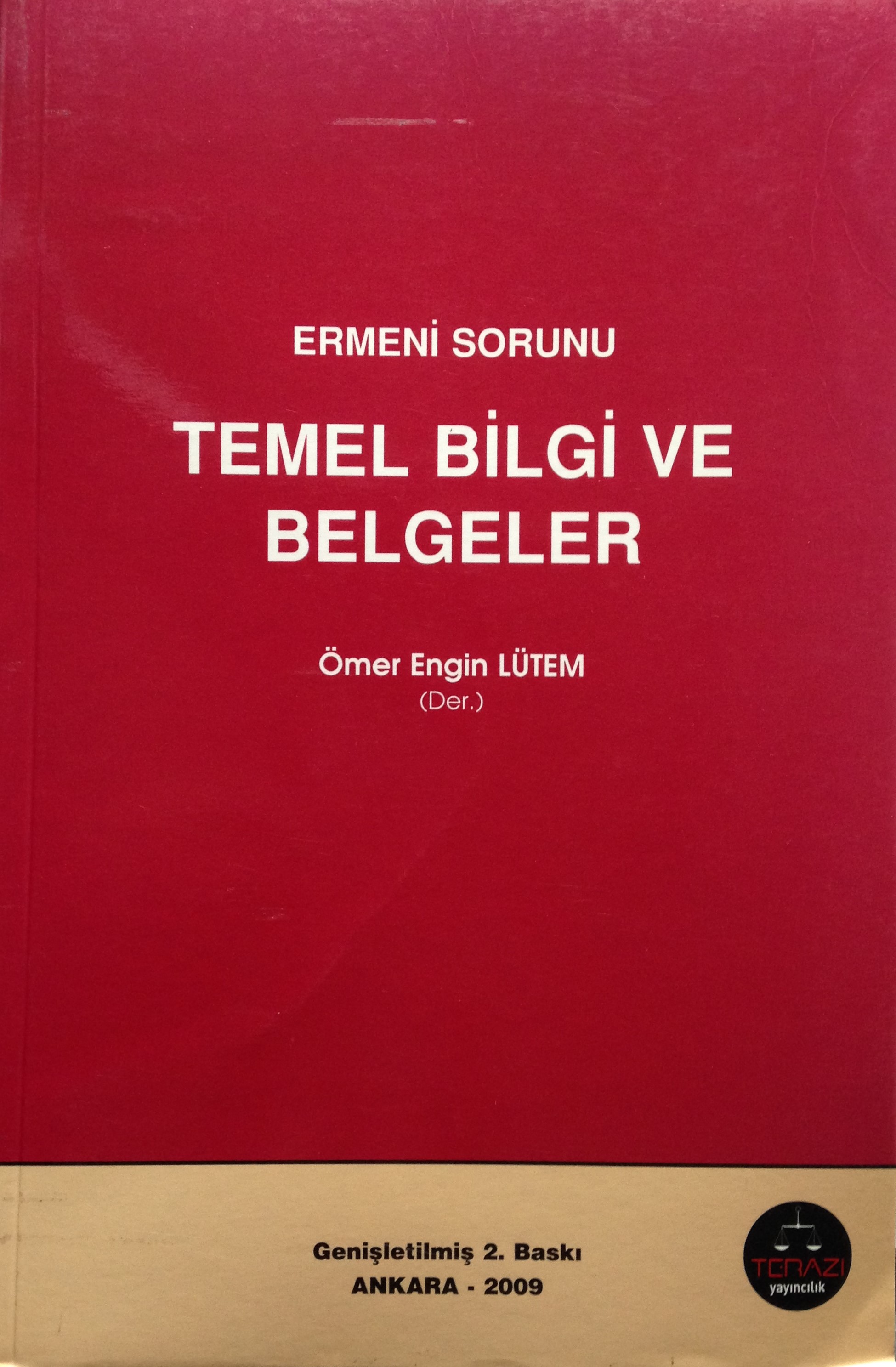
ERMENİ SORUNU - TEMEL BİLGİ VE BELGELER (2. BASKI)


-
AVİM Conference Hall 24.01.2023
CONFERENCE TITLED “HUNGARY’S PERSPECTIVES ON THE TURKIC WORLD"