














Introduction: What are we facing in the Black Sea region?
Across a vast region stretching from the far east of Europe to the Black Sea and extending as far as Eurasia, we face serious security risks stemming from the profound instability caused by the Russia-Ukraine war. Situated at the very heart of this vast region, the Black Sea has become a globally critical area, not merely in geographical terms but also in terms of security, energy, and food security. The war in Ukraine, the intensification of Russia’s military presence, new structural developments along NATO’s eastern flank, and the competition over energy corridors have effectively turned the Black Sea into one of the front lines of the global power struggle. Consequently, any fluctuation that emerges here has a direct impact not only on the countries of the region but also on the balance of power across Europe and the broader Eurasian space.
In this context, Türkiye’s position takes on a distinct significance. Geographically, Türkiye is situated at the crossroads of the Black Sea, the Mediterranean, the Middle East, the Caucasus, and the Balkans. This unique position provides it with a valuable political and diplomatic advantage. As a matter of fact, by leveraging this advantage and pursuing a balanced and consistent approach, Türkiye has been able to engage simultaneously with various power blocs, assume the role of a facilitator or mediator when necessary, and act as an active participant in crisis management. In this connection, Türkiye has categorically rejected Russia’s annexation of Crimea in 2014. It has pronounced strong and unwavering support for Ukraine's sovereignty, independence, political unity, and territorial integrity. At the same time, despite being a NATO member and having a long history of negotiations with the European Union, Türkiye, unlike most of its NATO allies and EU parties, has managed to maintain frank, functional dialogue with Russia to this day.
It would be accurate to say that, thanks to the effectiveness of this multifaceted policy, Türkiye has sustained its central role in the broader Black Sea region. This centrality refers not merely to a geographical position, but rather to the capacity to assume a pivotal role in decision-making processes, in efforts toward facilitation and mediation, and in shaping the regional norms. Furthermore, it encompasses the ability to take a leading role when necessary in overcoming emerging challenges, as well as the capacity to guide the development of new security frameworks.[1]
In such an environment, recent developments in the Black Sea region, particularly attacks of uncertain origin targeting civilian maritime traffic, such as cargo ships, have created a situation that destabilizes the existing arrangements that previously defined the security landscape.
How have the UAV/drone and other attacks against commercial vessels in the Black Sea supposedly linked to the ongoing war between Ukraine and Russia affected the security environment?
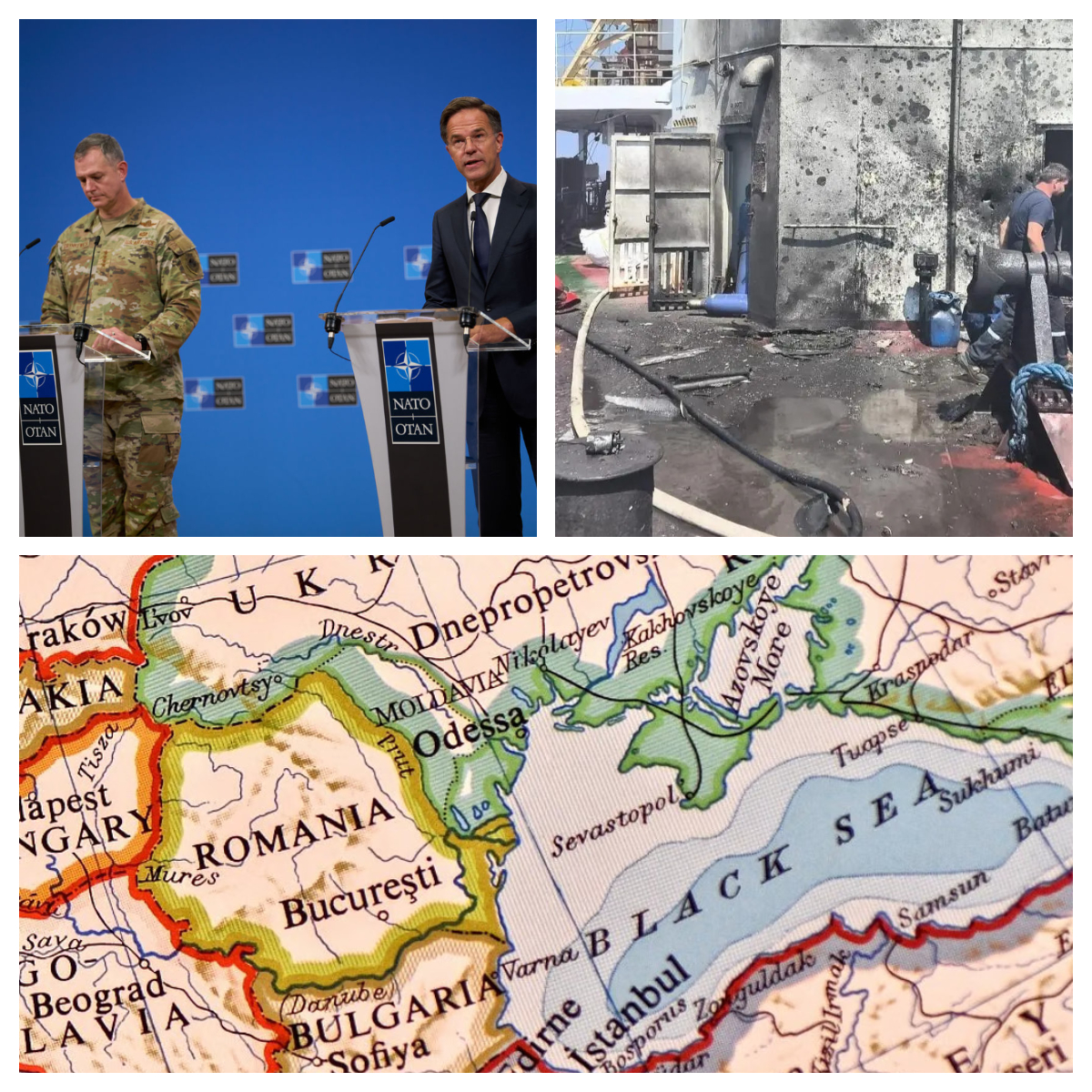
With the expansion of the Russia-Ukraine War into the Black Sea basin, there has been a dramatic increase in UAV/drone and missile attacks targeting commercial and civilian vessels in recent months. Throughout 2026, multiple commercial vessels in the Black Sea have been targeted by aerial and maritime drones. Some notable attacks that resulted in losses are listed below in chronological order:
- May 2026: A Turkish-owned, Vanuatu-flagged vessel transporting dry cargo from the Port of Odesa, Ukraine, to Türkiye was attacked last night (28 May) by an unmanned aerial vehicle, resulting in minor injuries to two of our citizens in the crew.[2]
- July 2026: the Turkish-flagged dry cargo ship Reyhan Sarı was hit by a drone while transporting coal from Taman to Trabzon. One crew member was killed, and three others were injured, according to Turkish maritime reports.[3]
- August 2026: Turkish-owned civilian vessels “Yaşar” and “Nadezhda” were reported to be attacked by unmanned aerial vehicles on the evening of 3 August after departing from the Port of Novorossiysk, resulting in injuries to a group of crew members including Turkish citizens.[4]
- October 5-6, 2026: Successive drone attacks occurred off the coasts of Romania and Bulgaria. The Turkish-owned Royad Mammadov, carrying grain from Ukraine to Italy, was struck and sunk off the coast of Romania (2 dead). Immediately afterward, the Turkish-linked Alfa Watan cargo ship was targeted and sunk by both aerial and naval drones in Bulgaria's exclusive economic zone.[5]
- Towards the end of October, a container ship sailing off the coast of Bulgaria—near the city of Varna—was struck by three maritime drones and subsequently sank.[6] The Liberian-flagged Contshıp Jet, loaded with 421 containers, was badly damaged by three sea drones as it passed through Bulgaria's Exclusive Economic Zone (EEZ) - but outside its territorial waters - en route from Haifa in Israel to Constanța in Romania.[7]
Eastern Sentry: NATO's decision to bolster posture along eastern flank
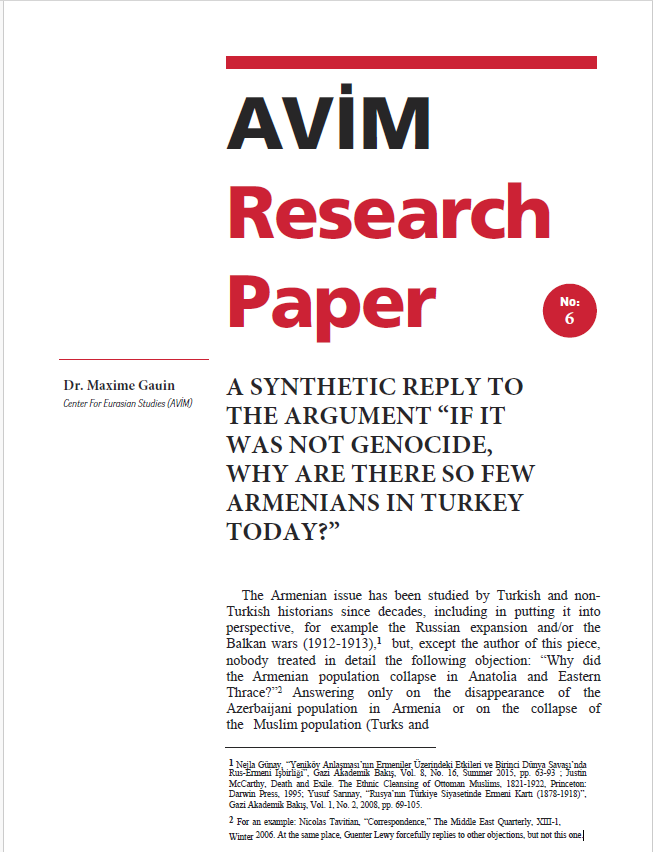
At a meeting of the North Atlantic Council on 10 September 2025, Allies, in light of Poland’s request for Article 4 consultations regarding the violation of Polish airspace by Russian drones. Subsequently, on 12 September 2025, NATO Secretary General Mark Rutte and Supreme Allied Commander Europe (SACEUR) General Alexus G. Grynkewich held a joint press conference and announced the launch of NATO’s “Eastern Sentry,” a military activity aimed at bolstering NATO’s posture along the eastern flank which will involve a range of Allied assets and feature both traditional capabilities and novel technologies, including elements designed to address challenges associated with drones.[8] NATO Allied Command Operations[9] describes the task and operation of “ Eastern Sentry” as follows:
“Eastern Sentry, a flexible, multi-domain activity that is enhancing NATO’s vigilance along the entire eastern flank. Through Eastern Sentry, Allies are contributing additional capabilities and assets to NATO’s deterrence and defense – for instance, more fighter jets, helicopters, transport aircraft, air defense systems, surveillance aircraft and frigates – and improving the coordination of these assets through NATO. Furthermore, Eastern Sentry is building on the experience from Baltic Sentry and is incorporating innovative technologies and tactics to address new challenges.”[10]
France’s deployment of maritime patrol aircraft to Romania
It was recently announced that France has temporarily deployed Atlantique 2 maritime patrol aircraft to Romania. Accordingly, it is understood that the French aircraft began operating from the Mihail Kogălniceanu airbase in Romania on October 18 and are scheduled to continue their reconnaissance missions until November 6.[11] As per media reports, the Romanian Defense Ministry announced that the purpose of the deployment is "to identify dangers to navigation and increase the ability to protect critical infrastructure in Romania's exclusive economic zone." Ministry also stressed that "the response from NATO and the French Navy added to measures enforced by Romanian naval forces, including increased maritime patrol missions with ships, helicopters and drones."[12] Reports on this matter also state that the deployment was carried out at Romania's request.[13] Online sources also report that "during his visit to Bulgaria on October 24, French Foreign Minister Jean-Noël Barrot stated that the aircraft in question was operating in the region as part of NATO missions."[14]
In this context, it is also worth noting reports of the visit to the Naval Academy in Varna by the French Minister of Foreign Affairs, together with the Bulgarian Minister of Foreign Affairs, Velislava Petrova, during the former’s visit to Bulgaria on October 24. According to a Bulgarian News Agency report on the visit two ministers discussed “security in the Black Sea region and bilateral cooperation in the context of the two countries' strategic partnership [and ] Barrot pledged support for the establishment of a Black Sea Maritime Security Hub, to be based in Varna (Bulgaria) and Constanta (Romania)."[15] The said news report also mentions the following details regarding the referred Hub :
“Petrova said the future security platform which will operate from Varna and Constanta is part of the European strategic approach to security in the region. She noted that at the beginning of the term of the current Bulgarian government, which took office in May, an agreement was reached on a partnership with Romania on the issue, focusing on resisting hybrid and cyber threats and on environmental protection.The finalized project for the future hub was unveiled by Romanian Foreign Minister Oana Toiu in Luxembourg in June. Toiu said the main goal is to strengthen the Black Sea region's joint risk analysis capabilities and help protect critical maritime infrastructure. Earlier that month, Bulgarian President Iliana Iotova said that Bulgaria and Romania were jointly developing plans to establish such a facility ... Barrot also addressed the signing of the roadmap for the strategic partnership between Bulgaria and France, vowing that Paris will support the establishment of the Black Sea Maritime Security Hub in Varna and Constanta. He said this is an EU project demonstrating the bloc's intention to protect its eastern flank against hybrid attacks. In his view, the only response to Russia's escalating aggression is solidarity within Europe: countries should not have to fend for themselves, but should always act together.”[16]
Meeting of the Defense Ministers of Türkiye, Bulgaria, and Romania Held in Sofia
On October 28, 2026, the Defense Ministers and Chiefs of General Staff of Türkiye, Bulgaria, and Romania held an emergency trilateral security meeting in Sofia, Reports regarding the meeting indicate that the high-level gathering was organized at short notice in response to a sharp escalation of drone and missile strikes on commercial shipping vessels in the Black Sea linked to the Russia-Ukraine war. It is mentioned in reports that a joint declaration issufromed after the meeting. Verbatim key passages from joint declaration outlined in the Anatolian New Agency report include the following points:
- The ministers “strongly condemned” attacks against commercial vessels in the Black Sea and reaffirmed the importance of freedom of navigation and maritime security. Disruptions to maritime traffic threaten global supply chains, food and energy security, particularly in vulnerable regions of Africa, the Middle East, and Asia.
- They called all on all parties to refrain from any further actions that could endanger commercial vessels, maritime infrastructure and freedom of navigation in the Black Sea and expressede their deep regret for the loss of innocent seafarers.
- They urged all parties to obey international law, including the Montreux Convention and applicable international humanitarian law, in order to safeguard security in the Black Sea, preserve regional stability, and facilitate safe maritime activities.
- The Ministers noted that Türkiye, Bulgaria and Romania, as NATO allies, contribute to meeting the region’s security needs and expressed their appreciation for NATO’s support in the areas of deterrence and defense.
- Three countries agreed to take appropriate measures, in coordination with NATO where necessary, to increase information and intelligence sharing, strengthen maritime situational awareness, and improve early-warning capabilities in pursuit of these objectives.
- They noted that cooperation and coordination between the three countries’ armed forces would continue to be strengthened to support security and stability in the Black Sea and stated that consultations, information exchanges and the identification of practical measures contributing to regional security and stability would be facilitated.
- The Ministers decided that next round of consultations will take place in Ankara and Bucharest.[17
Conclusion
There is no doubt that the Russia-Ukraine war, which has been ongoing for approximately five years, has significant implications for security in the Black Sea. Since the very first day of the conflict, Türkiye has maintained its clear support for Ukraine’s sovereignty and territorial integrity. However, at the same time, simultaneously strived to prevent the escalation of regional crises through the channels of dialogue it has kept open with Russia. Despite Türkiye’s sincere and intensive efforts to bring an end to this unfortunate conflict and contribute to the establishment of peace, as outlined above, a number of commercial vessels in the Black Sea, particularly in recent times, have come under attack by the parties involved. The presence of drifting naval mines, uncrewed maritime and aerial vehicles that have gone out of control or been struck, and missile debris has reached a level that poses a serious threat became great concern to the littoral states, and to Türkiye in particular.
As the littoral state with the longest coastline on the Black Sea, Türkiye bears the responsibility for implementing the 1936 Montreux Convention, which is the essential element in the context of Black Sea security and stability. Since the onset of the Russia-Ukraine conflict, Türkiye has meticulously fulfilled the requirements of the Montreux Convention; in doing so, it has successfully prevented the war, at least at the sea, from spreading to a wider area and has made a vital contribution to keeping the conflict’s impact on the Black Sea to a minimum. Türkiye has done its utmost in this regard, applying legally binding international treaties with strict impartiality and in full accordance with their terms. To address the threat of naval mines stemming from the Russia-Ukraine War and to help maintain navigational safety, Türkiye has independently deployed its own Naval Forces and naval aviation assets. Furthermore, Türkiye spearheaded the establishment of the Black Sea Mine Countermeasures Task Group, formed by three littoral states based on the principle of regional ownership. Despite these efforts, attacks targeting civilian commercial vessels in the Black Sea have steadily escalated, reaching a level that threatens not only general maritime security in the region but also the individual security of the littoral states, most notably Türkiye. It has become increasingly imperative to put an end to these attacks, regardless of their source. Therefore, beyond individual security measures, it has become essential to foster more effective and results-oriented cooperation among coastal states with which Türkiye shares a common destiny and is united within the framework of an alliance The aforementioned meeting in Sofia, attended by the Defense Ministers and top-ranking military officials of Türkiye Bulgaria, and Romania, should be interpreted within this context.
It should be borne in mind that attacks on civilian vessels and actions that escalate tensions in the Black Sea day by day serve no one’s interests. Moreover, there is an ever-increasing possibility that such attacks could create a "boomerang effect," ultimately backfiring on the very parties that initiated them and causing them serious, adverse consequences. It is now time to think reasonably, act reasonably, and strive to forge a fair, negotiated peace agreement in which neither side is considered defeated. Given its track record of result-oriented initiatives, Türkiye appears to be the most suitable country to take on a facilitating role in the process of achieving such a goal.
*Picture: Bairdtime , Türkiye Today and NATO
[1] Teoman Ertuğrul Tulun. Güç Dengeleri Ve Türkiye’nin Merkez Ülke Rolü: Karadeniz’den Avrasya’ya - HBV - 27.04.2026. AVİM Blog No : 2026 / 10. https://avim.org.tr/Blog/GUC-DENGELERI-VE-TURKIYE-NIN-MERKEZ-ULKE-ROLU-KARADENIZ-DEN-AVRASYA-YA-HBV-27-04-2026
[2] Turkish Ministry of Foreighn Affairs. No: 102, 29 May 2026, Regarding the Attack on a Turkish-Owned Dry Cargo Vessel in the Black Sea. https://www.mfa.gov.tr/no_-102_-karadeniz-de-turk-sahipli-kuru-yuk-gemisine-yonelik-saldiri-hk.en.mfa .
[3] Hürriyet Daily News. Turkish-flagged cargo ship hit by drone off Russia.August 08 2026. https://www.hurriyetdailynews.com/turkish-flagged-cargo-ship-hit-by-drone-off-russia-225378
[4] Turkish Ministry of Foreighn Affairs. No: 151, 4 August 2026, Regarding Attacks on Turkish-Owned Civilian Vessels in the Black Sea. https://www.mfa.gov.tr/no_-151_-karadeniz-de-turk-sahipli-sivil-gemilere-yonelik-saldirilar-hk.en.mfa
[5] Euronews. Karadeniz ‘de 'Türk gemisine' drone saldırısı iddiası: İki ölü, 11 yaralı. Angela Skujins & Euronews. 5 Ekim 2026. https://tr.euronews.com/2026/10/05/karadenizde-turk-gemisine-drone-saldirisi-iki-olu-11-yarali
[6] Türkiye Today. Drone-hit container ship sinks off Bulgaria in latest Black Sea attack. October 29, 2026. https://www.turkiyetoday.com/world/drone-hit-container-ship-sinks-off-bulgaria-in-latest-black-sea-attack-3231277?s=1
[7] Reuters. Greek container ship sinks after drone attack off Bulgaria. October 29, 2026. https://www.reuters.com/world/europe/greek-container-ship-sinks-after-drone-attack-off-bulgaria-2026-10-29/
[8] NATO launches “Eastern Sentry” to bolster posture along eastern flank. 12 September 2025. https://www.nato.int/en/news-and-events/articles/news/2025/09/12/nato-launches-eastern-sentry-to-bolster-posture-along-eastern-flank
[9] Allied Command Operations (ACO) is responsible for the planning and execution of all Alliance operations. It consists of a small number of permanently established headquarters, each with a specific role. Supreme Allied Commander Europe (SACEUR) assumes the overall command of operations at the strategic level and exercises his responsibilities from the headquarters in Mons, Belgium: Supreme Headquarters Allied Powers Europe, more commonly known as SHAPE. https://shape.nato.int/about
[10] NATO. Eastern Sentry. https://shape.nato.int/operations/operations-and-missions/eastern-sentry
[11] EU Today. NATO Confronts Growing Black Sea Threat as Drone Attacks Target Commercial Shipping. October 28, 2026. https://eutoday.net/nato-black-sea-shipping-attacks-france-romania-2026/
[12] Baird Maritime. France moves military aircraft to Romania as Black Sea navigation dangers escalate. 28 October 2026. https://www.bairdmaritime.com/security/france-moves-military-aircraft-to-romania-as-black-sea-navigation-dangers-escalate
[13] Romania Insider. France deploys maritime patrol aircraft to western Black Sea at Romania’s request. By Radu Dumitrescu. 28 October 2026. https://www.romania-insider.com/society/france-deploys-maritime-patrol-aircraft-western-black-sea
[14] Maritime Insider. France Temporarily Deploys Maritime Patrol Aircraft To Black Sea As Ship Attacks Increase. By MI News Network. October 28, 2026. https://www.marineinsight.com/france-temporarily-deploys-maritime-patrol-aircraft-to-black-sea-as-ship-attacks-increase/
[15] Bulgarian News Agency. France Pledges Support for Bulgarian Romanian Black Sea Security Hub.
24.10.2026. https://www.bta.bg/en/news/1231741-france-pledges-support-for-bulgarian-romanian-black-sea-security-hub
[16] Bulgarian News Agency. France Pledges Support for Bulgarian Romanian Black Sea Security Hub.
[17] Anadolu Agency, Türkiye, Bulgaria, Romania stress importance of Black Sea for int'l trade, supply of grain. By Esra Tekin. 28 October 2026. https://www.aa.com.tr/en/world/turkiye-bulgaria-romania-stress-importance-of-black-sea-for-intl-trade-supply-of-grain/4104129
© 2009-2025 Center for Eurasian Studies (AVİM) All Rights Reserved
No comments yet.
-
 MUNICH SECURITY CONFERENCE 2020 REVEALS THE NECESSITY OF "CONSTRUCTIVE EURASIANISM"
Teoman Ertuğrul TULUN 21.02.2020 -
 CONSTRUCTIVE EURASIANISM IN THE EASTERN MEDITERRANEAN: TÜRKİYE’S ROLE IN BALANCING COOPERATION, SOVEREIGNTY, AND REGIONAL STABILITY
Teoman Ertuğrul TULUN 28.03.2025 -
 MESUT ÖZIL’S RESIGNATION STATEMENT UNVEILS THE OPEN SECRET OF LATENT RACISM AND BLATANT DISCRIMINATION IN GERMANY
Teoman Ertuğrul TULUN 07.08.2018 -
 AFTER BREXIT: THE FOOTSTEPS OF A TRULY CAROLINGIAN EUROPEAN UNION
Teoman Ertuğrul TULUN 15.03.2019 -
 ATTACK ON THESSALONIKI MAYOR: PONTIAN GREEK HATE SPEECH TURNS INTO HATE CRIMES
Teoman Ertuğrul TULUN 30.05.2018
-
 TÜRKİYE-TRNC STRATEGIC COOPERATION
Özge Emine ÖZÇELİK 27.07.2026 -
 THE JUNE 7 ELECTIONS IN ARMENIA: POLITICAL CONTINUITY AND REGIONAL TRANSFORMATION
Tuğçe TECİMER 25.06.2026 -
 2019 ARMENIAN PATRIARCH OF ISTANBUL ELECTION
Mehmet Oğuzhan TULUN 25.12.2019 -
 FAR-RIGHT VIOLENCE AND TERRORISM RISES IN GERMANY: NATIONAL SOCIALIST UNDERGROUND (NSU) TERRORIST GROUP AND THE MURDERS OF EIGHT TURKISH-GERMAN CITIZENS
Teoman Ertuğrul TULUN 26.08.2019 -
 CHOLPON-ATA SUMMIT: NEW PERIOD IN AZERBAIJAN'S CENTRAL ASIA INTEGRATION
İlaha KHANTAMİROVA 31.08.2026
-
25.01.2016
THE ARMENIAN QUESTION - BASIC KNOWLEDGE AND DOCUMENTATION -
12.06.2024
THE TRUTH WILL OUT -
27.03.2023
RADİKAL ERMENİ UNSURLARCA GERÇEKLEŞTİRİLEN MEZALİMLER VE VANDALİZM -
17.03.2023
PATRIOTISM PERVERTED -
23.02.2023
MEN ARE LIKE THAT -
03.02.2023
BAKÜ-TİFLİS-CEYHAN BORU HATTININ YAŞANAN TARİHİ -
16.12.2022
INTERNATIONAL SCHOLARS ON THE EVENTS OF 1915 -
07.12.2022
FAKE PHOTOS AND THE ARMENIAN PROPAGANDA -
07.12.2022
ERMENİ PROPAGANDASI VE SAHTE RESİMLER -
01.01.2022
A Letter From Japan - Strategically Mum: The Silence of the Armenians -
01.01.2022
Japonya'dan Bir Mektup - Stratejik Suskunluk: Ermenilerin Sessizliği -
03.06.2020
Anastas Mikoyan: Confessions of an Armenian Bolshevik -
08.04.2020
Sovyet Sonrası Ukrayna’da Devlet, Toplum ve Siyaset - Değişen Dinamikler, Dönüşen Kimlikler -
12.06.2018
Ermeni Sorunuyla İlgili İngiliz Belgeleri (1912-1923) - British Documents on Armenian Question (1912-1923) -
02.12.2016
Turkish-Russian Academics: A Historical Study on the Caucasus -
01.07.2016
Gürcistan'daki Müslüman Topluluklar: Azınlık Hakları, Kimlik, Siyaset -
10.03.2016
Armenian Diaspora: Diaspora, State and the Imagination of the Republic of Armenia -
24.01.2016
ERMENİ SORUNU - TEMEL BİLGİ VE BELGELER (2. BASKI)

-
AVİM Conference Hall 24.01.2023
CONFERENCE TITLED “HUNGARY’S PERSPECTIVES ON THE TURKIC WORLD"