
















Rudaw, 27 September 2016
By Judit Neurink
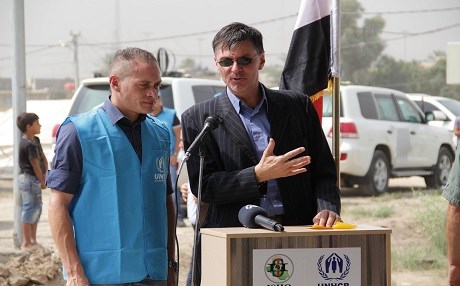
Aid workers and organizations should not succumb to Iraq fatigue, says Bruno Geddo, the representative for the UN refugee agency UNHCR in Iraq. His organization is working hard to prepare for the flow of up to a million internally displaced people (IDPs) when the battle starts to retake Iraq’s second largest city Mosul from the Islamic State (ISIS). New camps are being built, and solutions are created. The whole operation however, still lacks money, and Geddo warns that a disaster like what happened in Falluja where refugees poured out of the city without camps being ready, should not be repeated.
Rudaw: How far have you come with preparations for the waves of IDPs expected out of Mosul?
Our budget for the Iraqi situation has been funded for forty percent now. But we are counting on the lessons learned from Falluja, where the donors realized that if you are not willing to fund a contingency plan because the news about a humanitarian disaster has not yet hit the screens, you will pay a price later on. There, we were not prepared, we did not dare to put up tents without a minimum of infrastructure and we had exhausted all the money we had.
The positive thing about Mosul, is that because we know it is coming and could be massive, the donors are willing to fund the building of camps in advance. We have sufficient money for three camps, for 6,300 families in total. And 1,600 more will be in Daquq near Kirkuk; near Salahadin another 1,000. All these are at the fringes of the Kurdistan Region. Also we try to get 3,000 extra places for Debaga camp that already is highly congested.
That does not sound like enough for all the internally displaced expected to flee…
This is not enough, because the outflow of the city only is expected to be 710,000 An odd number, yes, it is the result of planning and planning.
There are also camps built by the Baghdad Ministry of Migration and Displacement, three for a total of 20,000 families. And there is spare capacity in other camps in Sulaimani and Garmiyan, for some 2,000 families.
Still there will be a deficit, so we will also have emergency camps, where we provide a shelter kit, with basic tools, hammer, nails, timber, plastic sheeting, wire and rope. People can make a shelter in an open space that the military and NGOs identify and that is not contaminated with unexploded ordinance, not too near to mines, and has sanitation.
The next category are the displaced people who go to abandoned and unfinished buildings. Already, 80 percent of the IDP community lives out of camp. For them we provide a sealing off kit, with plywood to make partitions for privacy.
And will that cover the needs?
No, finally we have sponsorships. Some 50,000 people went through Debaga since May. Now it has 38,000 people living there. The difference between the numbers is thanks to sponsorships of families that take people in, friends, farmers … The Jibouri tribe for instance has an active sponsorship, as it does not want people left outside. That is why the sponsorship works well in Salahadin: every Jibouri coming in there, is taken in by a family or put in an institution. All the institutions in Tikrit are full with IDPs.
In Karbala and Najaf religious institutions are filled with refugees from the previous wave, mainly Shiite but also Sunni, Yezidi, Shabak… For Mosul, we advocate also for institutions to take people in. In this way a percentage of them will be able to fan out across the country, which is symbolically important as it shows some signs of national unity.
For how much of this have you got the money?
We still need around $16 million for the emergency and seal off kits, and for core life items that every family gets to set up a household. And crucially we need another $90 million for a winter program, with kerosene, heater, blankets, matrasses, plastic sheeting and jerry cans for water and kerosene. We already have 270,000 families that we aim to support that way, but for Mosul we will have another 600,000 people.
What impact does the economic crisis in the Kurdistan Region have for refugees and IDPs?
Because of the creativity refugees per definition own, they are managing somehow. It is borderline but so far not a disaster. And we offer as many services as we can, equal access under equal conditions to schools and clinics and we boost the capacities there. Everybody should profit from the services, including the local population. Peaceful coexistence and social cohesion are important.
We see that the Kurdish government has problems in paying its health and education staff in the camps, and cannot pay the officials managing the camps. We had an agreement that the government would take over that payment from us, but it cannot and we continue.
And there is the unavailability of jobs for refugees. When the Syrian refugees came in 2012 and 2013, they found jobs in the construction, but for two years now that sector is completely frozen. Now there is the competition with the IDPs, and for much fewer jobs.
And as the Syrian crisis is prolonged, the refugees become more and more impoverished because they exhausted their resources and job opportunities are less. Through the cash assistance program, we try to partly compensate this. After visiting 54,000 families all over Iraq, over 21,000 received a cash injection from the UNHCR, the most vulnerable will get it up to three times. It is $200 for a single, $400 for a family of four, and $50 for each extra member. This comes on top of the $840 provided by Bagdad and the food packets.
We try to help people to continue to live out of camp. Putting people in camps is not ideal, in terms of their ability to provide for their families nor for their self-respect, as they become completely dependent on others.
In respect to Mosul, everything will be even more complicated as people’s movement will be more controlled because of security. I expect those with ISIS will flee to Syria, but that is another ball game.
Prime Minister Barzani mentioned recently that he cannot afford to take in any more refugees without foreign aid; is the campaign for the Mosul IDPs affected by the Kurdish crisis too?
The KRG is hosting over 1.5 million IDPs and refugees. It is contributing significantly and has to be helped so they can continue to do so. We have the maximum of respect for the hospitality and generosity that has been shown and are constantly advocating with donors and with Baghdad that Kurdistan should receive its fair share. We are pleased that we understand they will get help from Baghdad now.
You say most of the new camps are being built on the fringes of Kurdistan Region. Who decides where, as these are disputed areas?
The Kurdish authorities decide about it. Yes, even though it is in disputed territories. Whatever is under control of the Peshmerga, we will deal with the KRG, as we deal with the authority that is in control. We can only make sure that the land is not contaminated, not too near to the front lines, and is suitable for camps.
How long do you expect these Mosul IDPs to stay?
For at least six months, if there were political arrangements for the post conflict period - which are not there yet. If things go wrong again, it might be longer. But it would be diabolical if after 40 years of wars in Iraq, there would be another war after Mosul, because the parties have not learned from the mistakes made.
Elsewhere, there are large numbers of IDPs returning: more than 800,000 people to Salahdin and Anbar. The problem is that the pace of returns is much slower than that of people fleeing. But it is a good sign, as it shows that not everything is negative in Iraq.
The Iraqis have been traumatized by wars, which led to a situation of deep trauma, as there was no break to catch your breath. The international community should not succumb to Iraq fatigue, because this situation might just mark a turning point. If with the lessons learned from these terrible atrocities the people of Iraq find a way to work together, we could see a small light at the end of the tunnel.
No comments yet.
- MORE THAN 800 ATTACKS ON GERMAN POLITICIANS SO FAR THIS YEAR Europe - EU 28.09.2016
- THE BRIEF FROM BRUSSELS: EU SPLIT ON DEFENCE Europe - EU 28.09.2016
- TALIBAN WATCHES CLINTON, TRUMP DEBATE FROM SECRET AFGHANISTAN LOCATION Asia - Pacific 28.09.2016
- BULGARIAN PM BORISOV TALKS WITH RUSSIAN PRESIDENT PUTIN The Balkans 28.09.2016
- OSCE MANAGES TO IRRITATE TAJIKISTAN, KYRGYZSTAN AND HUMAN RIGHTS ADVOCATES, TOO Asia - Pacific 28.09.2016
-
25.01.2016
THE ARMENIAN QUESTION - BASIC KNOWLEDGE AND DOCUMENTATION -
12.06.2024
THE TRUTH WILL OUT -
27.03.2023
RADİKAL ERMENİ UNSURLARCA GERÇEKLEŞTİRİLEN MEZALİMLER VE VANDALİZM -
17.03.2023
PATRIOTISM PERVERTED -
23.02.2023
MEN ARE LIKE THAT -
03.02.2023
BAKÜ-TİFLİS-CEYHAN BORU HATTININ YAŞANAN TARİHİ -
16.12.2022
INTERNATIONAL SCHOLARS ON THE EVENTS OF 1915 -
07.12.2022
FAKE PHOTOS AND THE ARMENIAN PROPAGANDA -
07.12.2022
ERMENİ PROPAGANDASI VE SAHTE RESİMLER -
01.01.2022
A Letter From Japan - Strategically Mum: The Silence of the Armenians -
01.01.2022
Japonya'dan Bir Mektup - Stratejik Suskunluk: Ermenilerin Sessizliği -
03.06.2020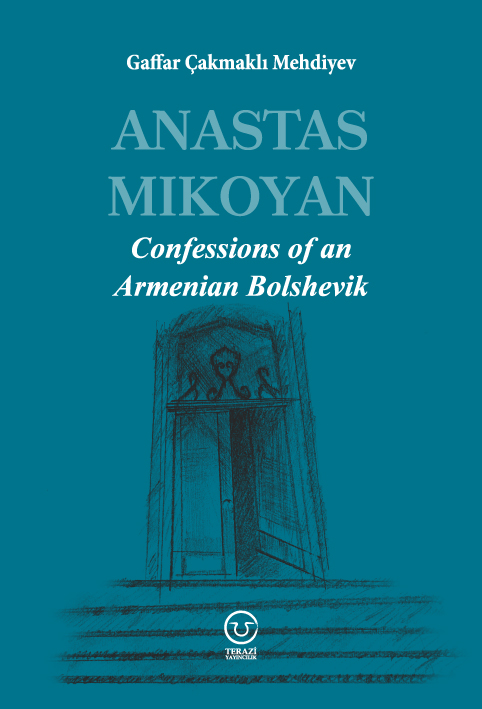
Anastas Mikoyan: Confessions of an Armenian Bolshevik -
08.04.2020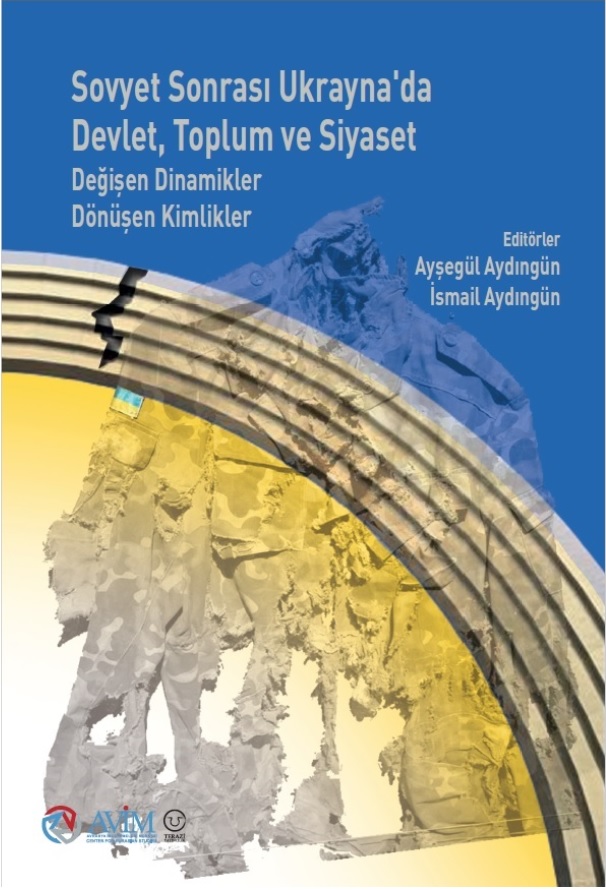
Sovyet Sonrası Ukrayna’da Devlet, Toplum ve Siyaset - Değişen Dinamikler, Dönüşen Kimlikler -
12.06.2018
Ermeni Sorunuyla İlgili İngiliz Belgeleri (1912-1923) - British Documents on Armenian Question (1912-1923) -
02.12.2016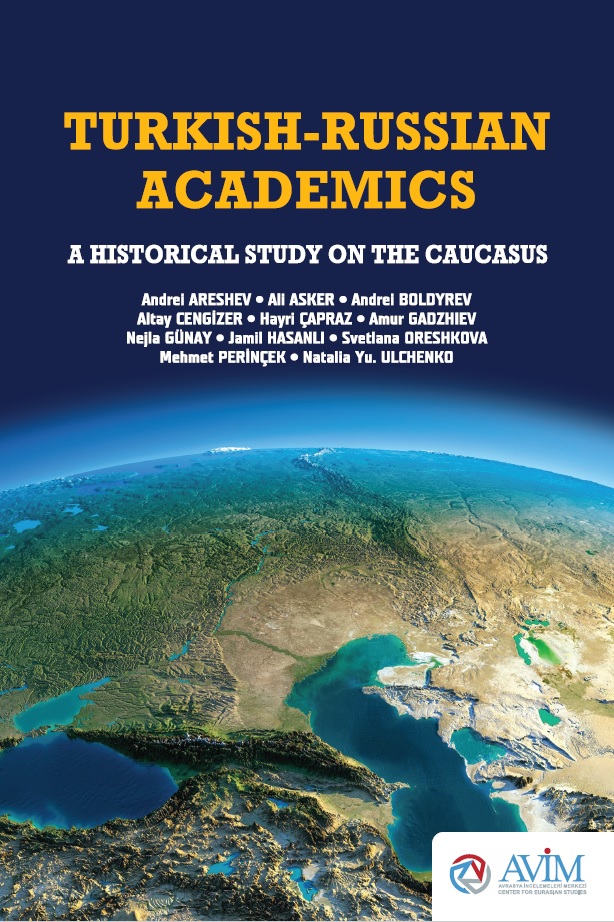
Turkish-Russian Academics: A Historical Study on the Caucasus -
01.07.2016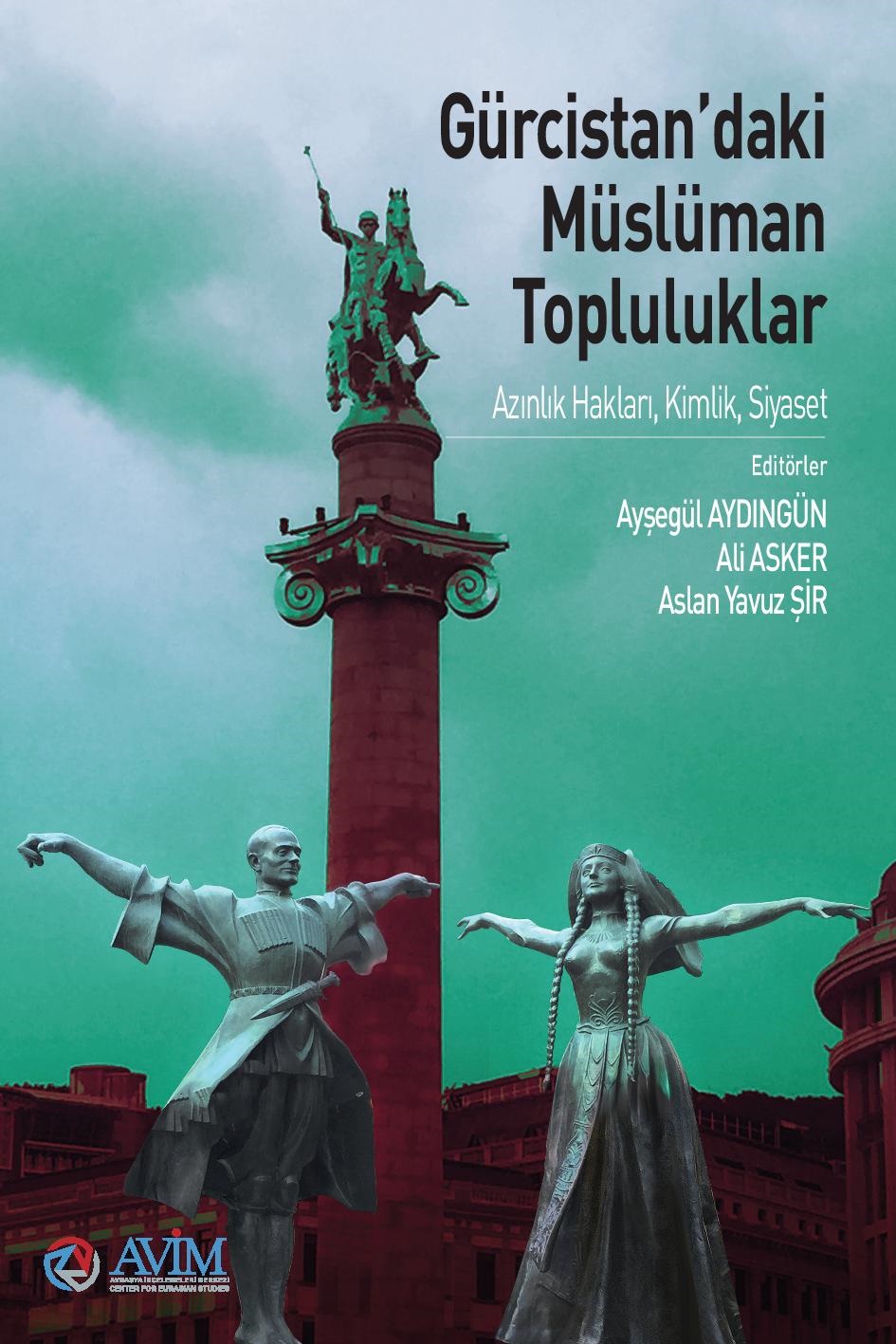
Gürcistan'daki Müslüman Topluluklar: Azınlık Hakları, Kimlik, Siyaset -
10.03.2016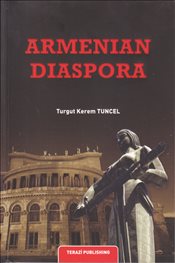
Armenian Diaspora: Diaspora, State and the Imagination of the Republic of Armenia -
24.01.2016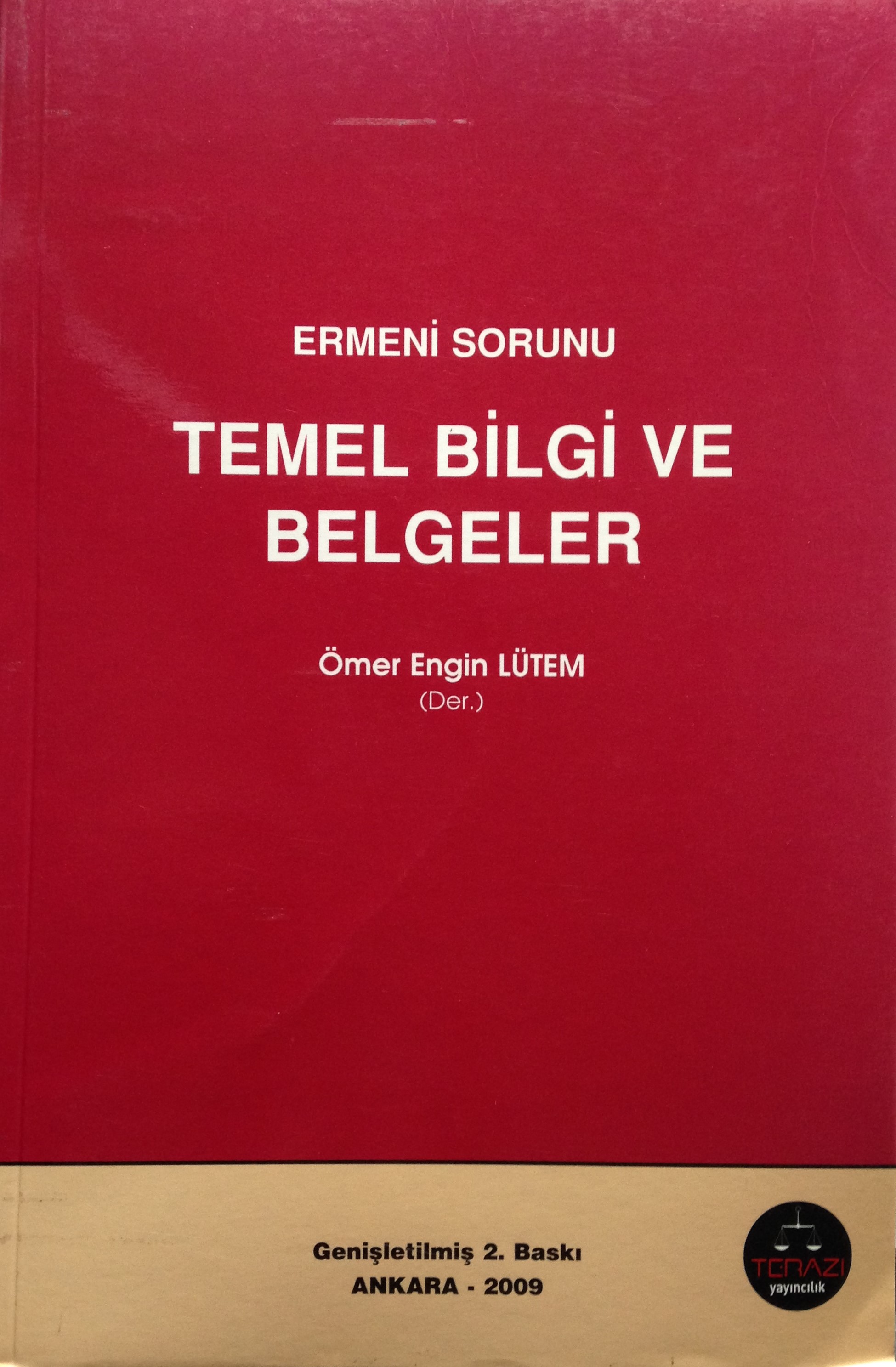
ERMENİ SORUNU - TEMEL BİLGİ VE BELGELER (2. BASKI)


-
AVİM Conference Hall 24.01.2023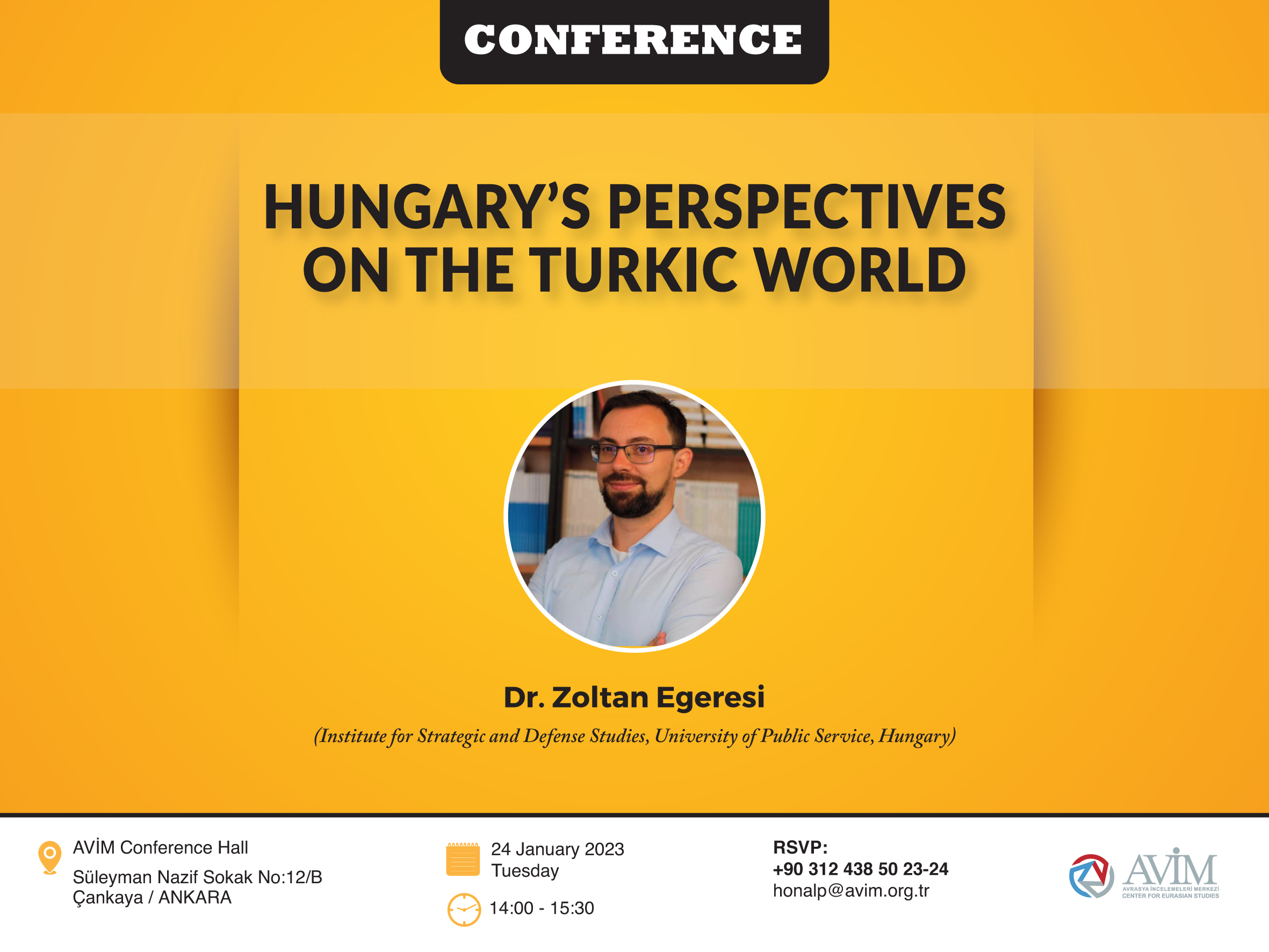
CONFERENCE TITLED “HUNGARY’S PERSPECTIVES ON THE TURKIC WORLD"