

















July 13, 2016, The Associated Press
In this July 12, 2016, photo, Secretary of State John Kerry speaks at the Washington Passport Agency in Washington. Frustrated by months of failure in Syria, the U.S. is taking what might be its final offer to Russia. Officials say Moscow would get long-sought intelligence and military cooperation to fight the Islamic State and other extremist groups, if Syria’s Russian-backed leader upholds a ceasefire with U.S.-supported rebel groups and starts a political transition. Kerry, who will travel to Moscow later this week, has spoken of an August deadline for Syria’s transition to begin. (AP Photo/Alex Brandon) THE ASSOCIATED PRESS
By BRADLEY KLAPPER and MATTHEW LEE, Associated Press
WASHINGTON (AP) — Frustrated by months of failure in Syria, the Obama administration is taking what might be its final offer to Moscow: Enhanced intelligence and military cooperation against the Islamic State and other extremist groups if Syria's Russian-backed president Bashar Assad upholds a ceasefire with U.S.-supported rebel groups and starts a political transition.
When Secretary of State John Kerry meets Russia's top diplomat and possibly President Vladimir Putin in Moscow later this week, Syria's civil war and Assad's future will top the agenda. Kerry is trying to reverse a trend in which he has hailed a series of agreements with the Russians only for them to fall short, according to officials with knowledge of internal American deliberations.
Kerry is making the trip "to try to resuscitate the cessation of hostilities," and get Russia's "buy-in on a process that can lead to a nationwide ceasefire," State Department spokesman Mark Toner said Wednesday. "We haven't seen that thus far, but we're having another go at this."
Kerry will have to thread a needle. He's watched the Syrian military and Russian air force violate truce after truce in recent months. This time, the officials said, Kerry is dangling in front of the Kremlin Russia's long-sought requests for intelligence sharing and targeting assistance in return for Russia using its influence to end the fighting and start ushering Assad out of power. But Kerry will be wary about offering too much.
The talks in Moscow are scheduled fewer than three weeks before an August ultimatum for diplomatic progress. All signs augur poorly for a breakthrough. Fighting is intensifying near Aleppo, Syria's largest city. Assad has reasserted control over more areas of the country he had once lost. Humanitarian aid deliveries to besieged, rebel-held areas are sporadic and grossly insufficient. And counterterrorism campaigns against the Islamic State and al-Qaida show no end in sight, meaning any peace would only be partial.
"The target date for the transition is 1st of August," Kerry told reporters two months ago, hoping to get Russia and Syria to halt military operations. "So either something happens in these next few months or they are asking for a very different track."
But that "very different track" has remained undefined beyond vague hints of a military intervention involving Saudi troops. The White House and Pentagon have resisted a greater U.S. role.
As a result, Washington is stuck with a familiar strategy: Asking Russia to force Assad to halt military offensives against moderate rebels, stop bombing civilian areas and allow aid to reach besieged communities.
But as added carrots, the U.S. is now offering more robust military cooperation against IS and the Nusra Front, Syria's al-Qaida branch, and information to help Russia target affiliated militants. Kerry won't go as far as to suggest joint U.S.-Russian operations, according to the American officials, who weren't authorized to speak on the matter and demanded anonymity.
"We have teed up ideas to the Russians," State Department spokesman John Kirby told reporters Tuesday, saying the Moscow discussions would be an indicator of Russia's sincerity.
In Azerbaijan, Russian Foreign Minister Sergey Lavrov blamed the U.N.'s Syria envoy for the diplomatic impasse, and said he would try to work with Kerry on a common approach after the top U.S. diplomat's arrival Thursday.
Much of Washington is wary about working too closely with Russia. The U.S. doesn't want to be seen as entrenching Assad, whom American officials have referred to as a "butcher" and "mass murderer." Russia's bombers also have attacked anti-Assad rebel groups that have received weapons, training and other forms of support from the U.S. and allies such as Saudi Arabia — whose foreign minister Kerry met in Washington on Tuesday before a weeklong Europe trip.
And, as a dissent cable signed by 51 State Department officials illustrated last month, a sizeable part of America's diplomatic establishment believe a U.S. military response is necessary to resolve the Syrian conflict, given Moscow's increased leverage through its presence on the ground.
When Russia intervened in Syria last September, the administration took a different view, branding it a move of desperation and weakness. The U.S. initially sought to shut Russia out of diplomatic discussions, but quickly reversed course and created the International Syria Support Group with Moscow's help. American officials including Kerry then softened demands for Assad's prompt departure from power.
A cessation of hostilities was reached in February. Several temporary and regional truces have followed, though none have ended the violence that has killed as many as a half-million people since 2011, contributed to a global migration crisis and spawned IS' international expansion.
On Tuesday evening, Kerry announced that the U.S. will provide another $439 million in humanitarian aid to refugees and others affected by the ongoing conflict in Syria, bringing to $5.6 billion the total amount of American aid given since the start of the crisis in 2012.
While some U.S. officials downplay the military significance of what is now being offered to Russia, the symbolic effect is clear. Russia has been keen to present its intervention as part of the global effort against IS and other extremist groups, and not as a ploy to keep Assad in power. More cooperation with the U.S. could reinforce that narrative. The arrangement also could give Moscow greater cover to expand operations against forces the U.S. considers moderate.
The Pentagon is concerned about such a scenario, according to the officials. But the administration has few options right now, given the various, unfulfilled threats throughout Syria's civil war to apply greater U.S. force — from declaring Assad's days "numbered" five years ago to Obama's vow of a military response if chemical weapons were used and then backing down in 2013.
No comments yet.
- REFUGEES FACE ASYLUM REJECTION IF THEY LEAVE COUNTRY OF ARRIVAL, UNDER NEW EU RULES Europe - EU 14.07.2016
- BAGHDAD BOMBING IGNITES DEMAND FOR BETTER SECURITY IN IRAQ Iraq 14.07.2016
- MARTYRED DIPLOMATS The Caucasus and Turkish-Armenian Relations 14.07.2016
- RUSSIA BUILDING HYPERSONIC AIRCRAFT CAPABLE OF DROPPING NUCLEAR BOMB ON US FROM SPACE Asia - Pacific 14.07.2016
- BULGARIA PM: ANOTHER CABINET RESHUFFLE POSSIBLE The Balkans 14.07.2016
-
25.01.2016
THE ARMENIAN QUESTION - BASIC KNOWLEDGE AND DOCUMENTATION -
12.06.2024
THE TRUTH WILL OUT -
27.03.2023
RADİKAL ERMENİ UNSURLARCA GERÇEKLEŞTİRİLEN MEZALİMLER VE VANDALİZM -
17.03.2023
PATRIOTISM PERVERTED -
23.02.2023
MEN ARE LIKE THAT -
03.02.2023
BAKÜ-TİFLİS-CEYHAN BORU HATTININ YAŞANAN TARİHİ -
16.12.2022
INTERNATIONAL SCHOLARS ON THE EVENTS OF 1915 -
07.12.2022
FAKE PHOTOS AND THE ARMENIAN PROPAGANDA -
07.12.2022
ERMENİ PROPAGANDASI VE SAHTE RESİMLER -
01.01.2022
A Letter From Japan - Strategically Mum: The Silence of the Armenians -
01.01.2022
Japonya'dan Bir Mektup - Stratejik Suskunluk: Ermenilerin Sessizliği -
03.06.2020
Anastas Mikoyan: Confessions of an Armenian Bolshevik -
08.04.2020
Sovyet Sonrası Ukrayna’da Devlet, Toplum ve Siyaset - Değişen Dinamikler, Dönüşen Kimlikler -
12.06.2018
Ermeni Sorunuyla İlgili İngiliz Belgeleri (1912-1923) - British Documents on Armenian Question (1912-1923) -
02.12.2016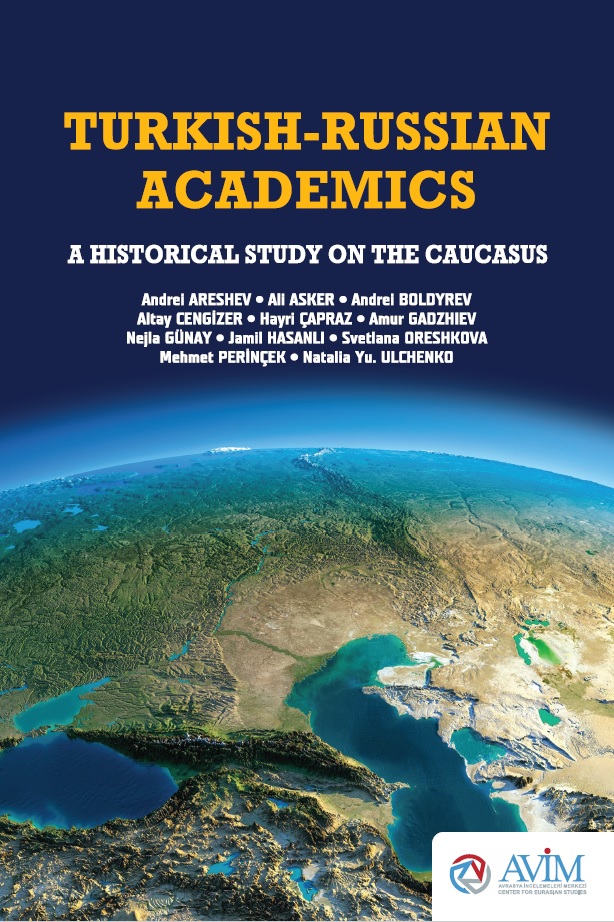
Turkish-Russian Academics: A Historical Study on the Caucasus -
01.07.2016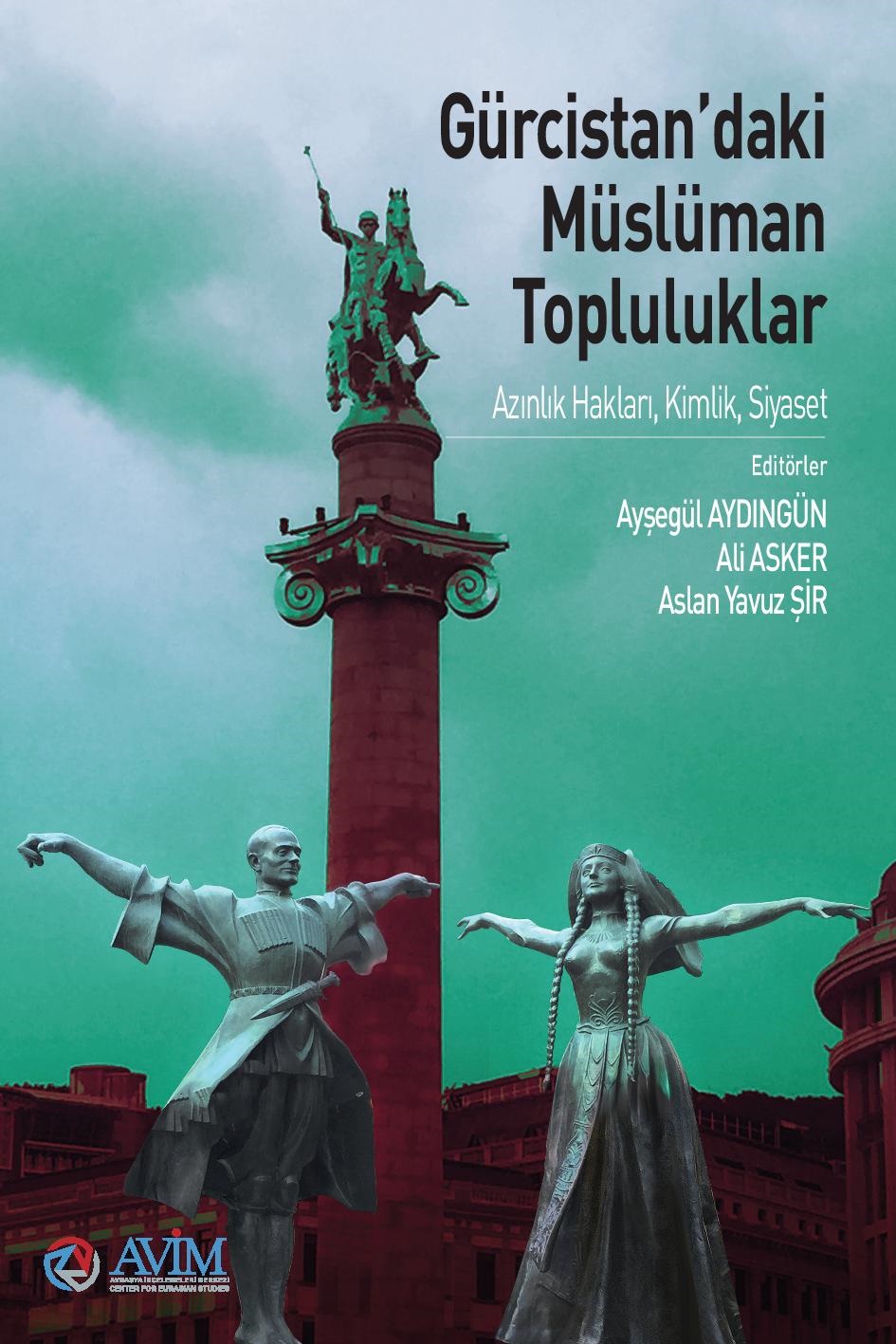
Gürcistan'daki Müslüman Topluluklar: Azınlık Hakları, Kimlik, Siyaset -
10.03.2016
Armenian Diaspora: Diaspora, State and the Imagination of the Republic of Armenia -
24.01.2016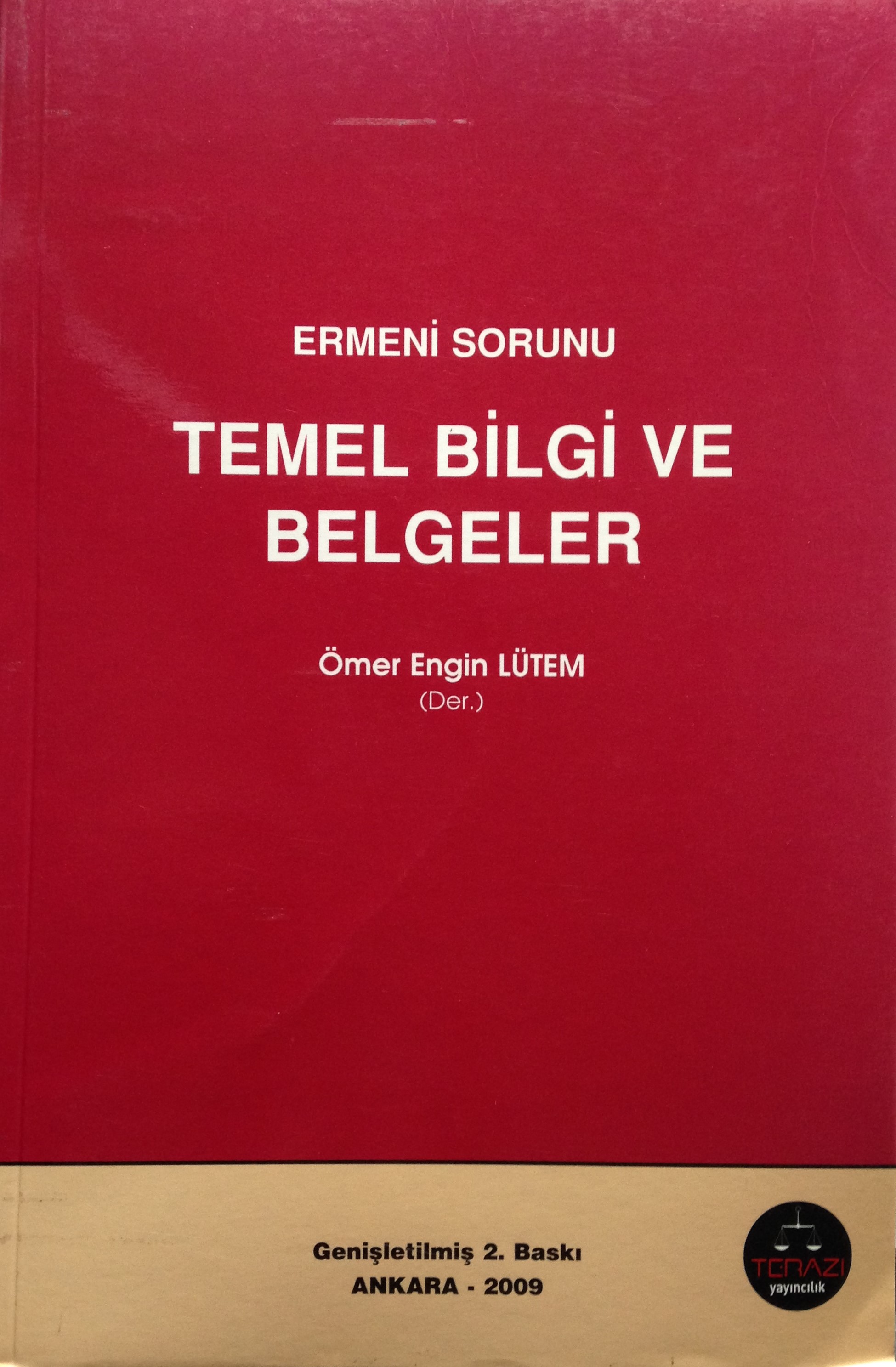
ERMENİ SORUNU - TEMEL BİLGİ VE BELGELER (2. BASKI)


-
AVİM Conference Hall 24.01.2023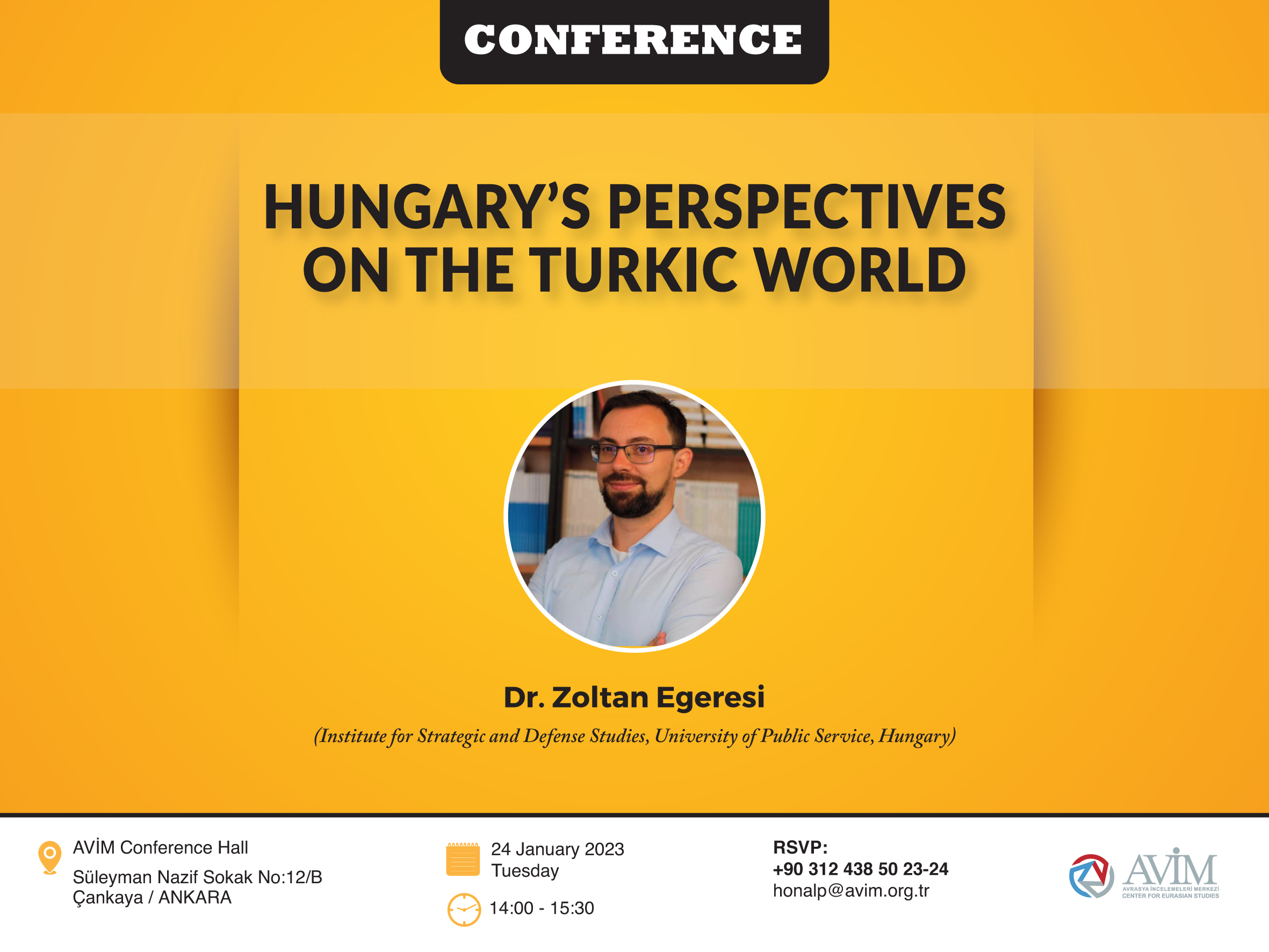
CONFERENCE TITLED “HUNGARY’S PERSPECTIVES ON THE TURKIC WORLD"