

















EU Observer (27 July 2018)
Europe has been distracted by its many populists and the Football World Cup to notice that Viktor Orban and Jaroslaw Kaczynski have further pushed their countries towards authoritarianism.
After the almost undetected seventh amendment of the Hungarian constitution, and just as the Polish president signed on Thursday (27 July) the fifth government amendment of the Polish law on supreme court - both to inject new judges, closer to the power, into the justice system - it is even more timely to wonder why the EU launched the Article 7 procedure against Poland while Hungary, which has been criticised for a much longer period of time, successfully avoided this procedure.
Breaking democratic rules when introducing changes in the judiciary is certainly one of the critical elements of the illiberal change in Poland.
In none of the remaining central European states has the usurpation of power gone so far.
The governing Law and Justice (PiS) party in Poland, under the guise of anticommunism, tries to take judiciary under full control under in violation of the constitution.
Even though they insist that the changes will help fight corruption and improve the courts' efficiency, the party has de facto taken control of Poland's judicial system, including prosecutors and the constitutional tribunal.
Their position is that they have a mandate stemming from the general will of the people.
Despite the fact that in opinion polls the voices for reform are still prevailing, these changes have been rejected by a large segment of the population – hence the general protests in the streets.
Tactical retreats, separate infringements procedures
After gaining another two-thirds majority of Fidesz for the third time in the row in April, Orban has turned towards institutions that had still enjoyed some autonomy.
In line with the Polish model, where PiS extended the supreme court with a separate department, he also added judges to the system.
He completed the competitive authoritarian regime by restricting the remaining independence of the judiciary and creating regional "special administrative courts" and an Administrative High Court where the most politically sensitive cases could be adjudicated separately.
It limits the freedom of judges to interpret the law because the new court is entitled to issue binding interpretative guidance on the uniform application of the law.
The whole concept widen opportunities for Fidesz to put pressure on judges.
The intention is the same as Jaroslaw Kaczynski's, and yet it is easier for the EU to charge Poland with assassination attempts on their democratic institutions.
Orban definitely sets an example for his Polish counterpart by appearing to retreat on a couple of issues.
For instance, he respected the judgment of the Court of Justice of the European Union regarding the early retirement of judges - but only after he could get rid of most of the head judges of courts and replace them with loyalists.
He will easily continue handling criticism regarding the "Stop Soros" law in the same manner as before: through tactical retreats and comfortable infringements procedures without political consequences.
Meanwhile this legislative package goes way beyond the "naming, shaming and blaming" logic.
Threatening the act of providing humanitarian and legal aid to migrants with imprisonment is unacceptable in a democratic country.
Local autonomies matter
An important systemic difference between the two regimes is that civil society in Poland has more manoeuvring space especially because the multi-level system of government is partly decentralised.
However, ever since PiS came into power some concerns have been raised that the centralisation of funding leaves many NGOs with a lack of financial resources.
Also from a systemic aspect, Poland remains more stable than Hungary due to factors such as the proportional electoral system that helps block the formation of a super-majority, and the multi-level structure of local self-governments that provide at least some balance to the central administration.
On the contrary, Orban weakened local municipalities as a form of decentralised checks and balances.
Also, the media environment, especially in rural areas, created an informational ghetto where only the government's campaign based on generating fears about migration could succeed.
Last but not least, corruption cases with ties to the government have not been investigated by the authorities, especially by the Office of the Prosecutor General, properly.
These informal exercises of power play a central role in the illiberal system in Hungary.
Contrary to the Polish governmental framework, the essence of the Hungarian system is dissolving social autonomy through the establishment of feudal relationships of dependence.
On the plus side, the scale of corruption being witnessed today in Hungary would be unthinkable in Poland. It's not without reason that Hungary is 30 places behind Poland in the transparency ranking.
The toothless lion
In the case of Orban's regime, the EU has had limited leverage so far given that most of the legal and political practices of the EU were designed for formal institutional issues, such as the early retirement of the judges.
Moreover, these procedures (infringement, and European Parliament hearings) even play into the hands of Fidesz domestically: the government is able to refer to these when it depicts itself as the protector of national sovereignty against Brussels.
One of the biggest systemic risks across Europe that became true in Hungary and Poland is the dominance of the executive power over the judiciary and informal channels of political dependency.
Hungary set the illiberal trends for the other countries in many other areas.
The language of authoritarian populism has spread from Budapest to Warsaw but also to Bratislava and Prague, where, instead of minority rights, the state defends the privileges of the majority.
It only takes time before other countries follow suit.
Especially that after Brexit, non-liberal democrats are celebrating triumphs, and soon more democracies may surrender to this wave.
It is also obvious that in the shadow of the EU has been distracted by its own problems with Western populists have been on the rise, there will be even less political will to manage authoritarian Eastern regimes.
Hence, promoting decentralised political autonomy and strengthening electoral techniques that would reinforce consensual political culture are desirable in the entire region.
Moreover, had the European Commission have taken a lesson from the Hungarian case, it would not confine itself with merely cosmetic amendments implemented by the Polish government.
Moving further down this road, it will not only undermine its own credibility but it will irreversibly endanger the legal order of the EU.
Poland's political masters have extended their control over the supreme court, while continuing to denigrate EU concerns.
The ruling Law and Justice (PiS) party made it easier for itself to name the next supreme court head under an amendment signed by Polish president Andrzej Duda on Thursday (26 July).
Thousands of people protested against the move outside his residence in Warsaw, amid minor clashes with police.
Protests also took place in 14 other towns, including Gdansk, Krakow, Lodz, Poznan, and Wroclaw.
The episode was the latest in a judicial affair which has unfolded in Poland over the past two years.
PiS has purged judges in the constitutional court, forcibly retired supreme court ones, and seized hold of judicial disciplinary panels in what the European Commission has said added up to a "clear risk of a serious breach of the rule of law".
PiS also tried force out Malgorzata Gersdorf, the supreme court president, who became an opposition symbol when she refused to go.
The attack on judicial independence could end in EU sanctions on Poland in what would be a first in European history.
It has already seen the EU court rule that Ireland could halt extraditions there on grounds that Poland no longer guaranteed fair trials.
But those concerns were stood on their head by PiS chairman and de facto Polish leader Jaroslaw Kaczynski on Thursday.
"It's we who are trying to make sure that courts aren't political, that they're objective," he told state broadcaster TVP.
The purge was needed because Poland's judges were loyal to a political "mainstream" of former communists and liberals, he added.
"The representatives of the mainstream in public life were once the Democratic Union [party], later on the SLD [party], then Civic Platform. So if you want to talk about [political] control, then it was by those formations, not the one I represent," Kaczynski said.
"There'll be no new control, but the old one, which was clear for all to see, will be dismantled," he said.
The party chief recently scotched Duda's plan to hold a referendum on updating the Polish constitution in November.
But Kaczysnki told TVP that his "deep reform" of the judiciary ought to be enshrined in Poland's charter in future. "We really do need a new constitution," he said.
EU elections
The EU clash on rule of law comes amid other confrontations - on migrants, press freedom, and electoral reform - as the right-wing PiS tries to entrench its hold on power.
Proposals to carve Poland into 13 new districts for the European Parliament election in 2019, put forward this week, would also give it a louder voice on the EU stage.
The changes would see the threshold for returning MEPs raised to 21 percent in the Warsaw district and up to 16 percent in other ones, leaving only PiS and Civic Platform, the main opposition party, in the running.
The net result would be up to five extra MEPs for Kaczynski in the EU assembly, Polish daily Gazeta Wyborcza calculated.
"We want to win the [EU] elections, but we want a fair fight," Civic Platform senator Piotr Florek said as the Polish upper house prepared to vote on the project.
"Polish people will get better representation in the European Parliament," Jerzy Czerwinski, a PiS senator, averred. "Our voice will count for something in the [EU] parliamentary clubs. I'd rather have strong representation by two groups than by five," he said.
No comments yet.
-
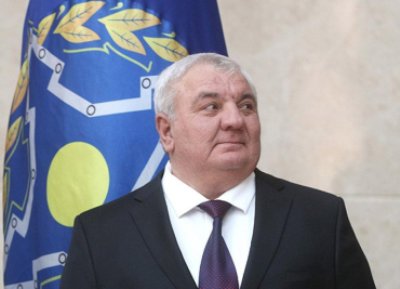 NEWSPAPER: KAZAKHSTAN, BELARUS CONSIDER DISMISSING CSTO’S ARMENIAN CHIEF
The Caucasus and Turkish-Armenian Relations
27.07.2018
NEWSPAPER: KAZAKHSTAN, BELARUS CONSIDER DISMISSING CSTO’S ARMENIAN CHIEF
The Caucasus and Turkish-Armenian Relations
27.07.2018
- MACEDONIA STARTS WORK ON REFERENDUM PREPARATIONS The Balkans 27.07.2018
- TWO KOREAS' FOREIGN MINISTERS TO MEET IN ASEAN FORUM IN SINGAPORE Asia - Pacific 27.07.2018
- GEORGIAN PM DISMISSES 5 GOVERNORS The Caucasus and Turkish-Armenian Relations 27.07.2018
- SHIAS IN SOUTHERN IRAQ ARE FED UP WITH THE GOVERNMENT Iraq 27.07.2018
-
25.01.2016
THE ARMENIAN QUESTION - BASIC KNOWLEDGE AND DOCUMENTATION -
12.06.2024
THE TRUTH WILL OUT -
27.03.2023
RADİKAL ERMENİ UNSURLARCA GERÇEKLEŞTİRİLEN MEZALİMLER VE VANDALİZM -
17.03.2023
PATRIOTISM PERVERTED -
23.02.2023
MEN ARE LIKE THAT -
03.02.2023
BAKÜ-TİFLİS-CEYHAN BORU HATTININ YAŞANAN TARİHİ -
16.12.2022
INTERNATIONAL SCHOLARS ON THE EVENTS OF 1915 -
07.12.2022
FAKE PHOTOS AND THE ARMENIAN PROPAGANDA -
07.12.2022
ERMENİ PROPAGANDASI VE SAHTE RESİMLER -
01.01.2022
A Letter From Japan - Strategically Mum: The Silence of the Armenians -
01.01.2022
Japonya'dan Bir Mektup - Stratejik Suskunluk: Ermenilerin Sessizliği -
03.06.2020
Anastas Mikoyan: Confessions of an Armenian Bolshevik -
08.04.2020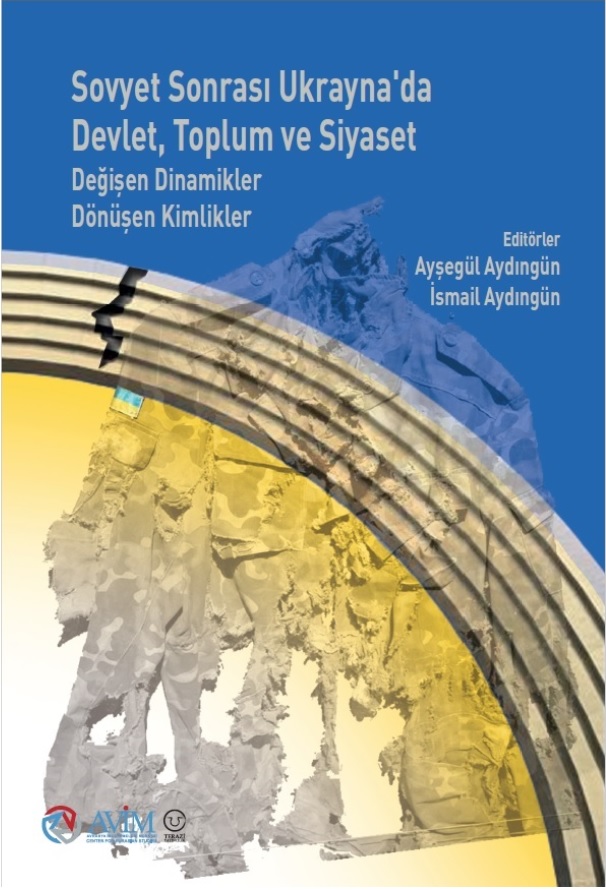
Sovyet Sonrası Ukrayna’da Devlet, Toplum ve Siyaset - Değişen Dinamikler, Dönüşen Kimlikler -
12.06.2018
Ermeni Sorunuyla İlgili İngiliz Belgeleri (1912-1923) - British Documents on Armenian Question (1912-1923) -
02.12.2016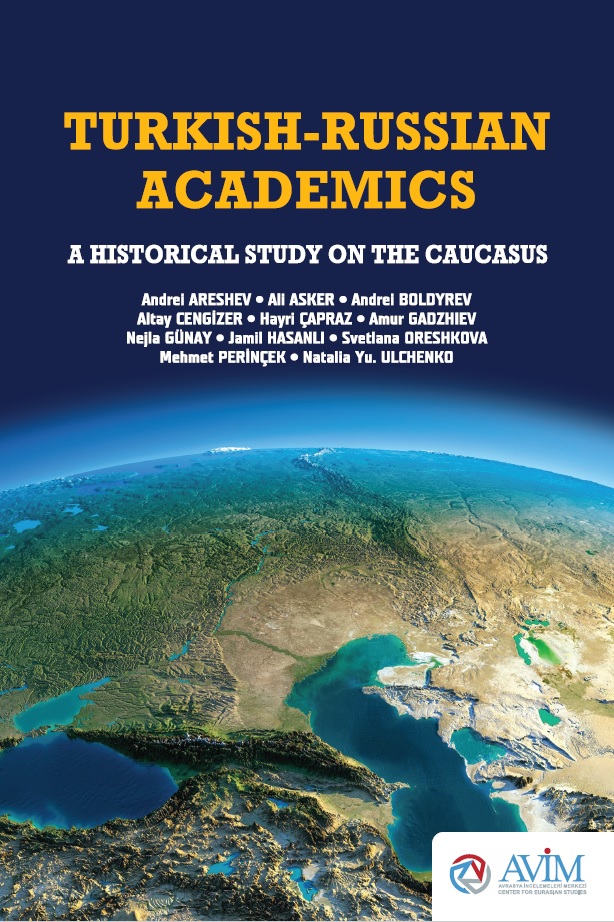
Turkish-Russian Academics: A Historical Study on the Caucasus -
01.07.2016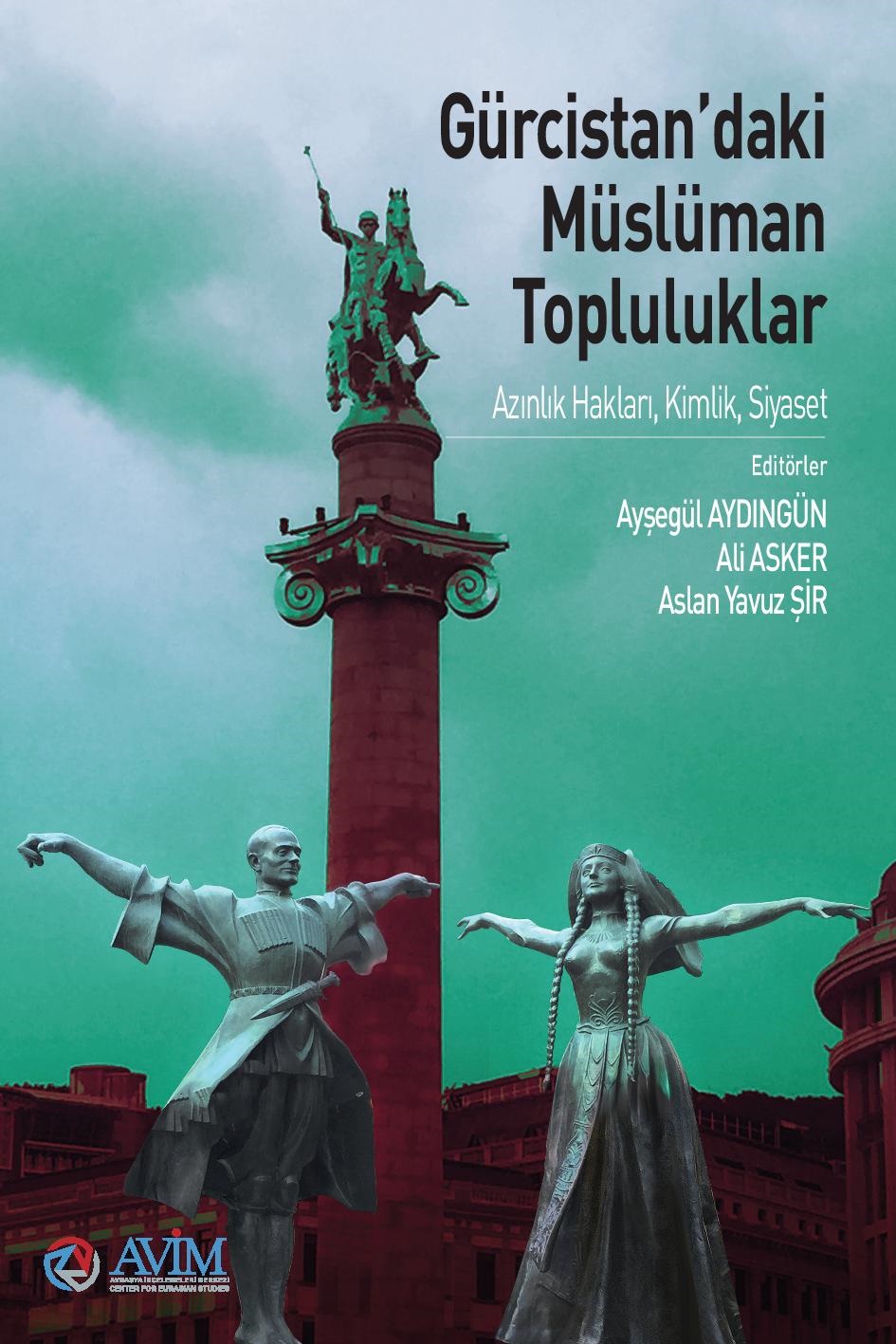
Gürcistan'daki Müslüman Topluluklar: Azınlık Hakları, Kimlik, Siyaset -
10.03.2016
Armenian Diaspora: Diaspora, State and the Imagination of the Republic of Armenia -
24.01.2016
ERMENİ SORUNU - TEMEL BİLGİ VE BELGELER (2. BASKI)

-
AVİM Conference Hall 24.01.2023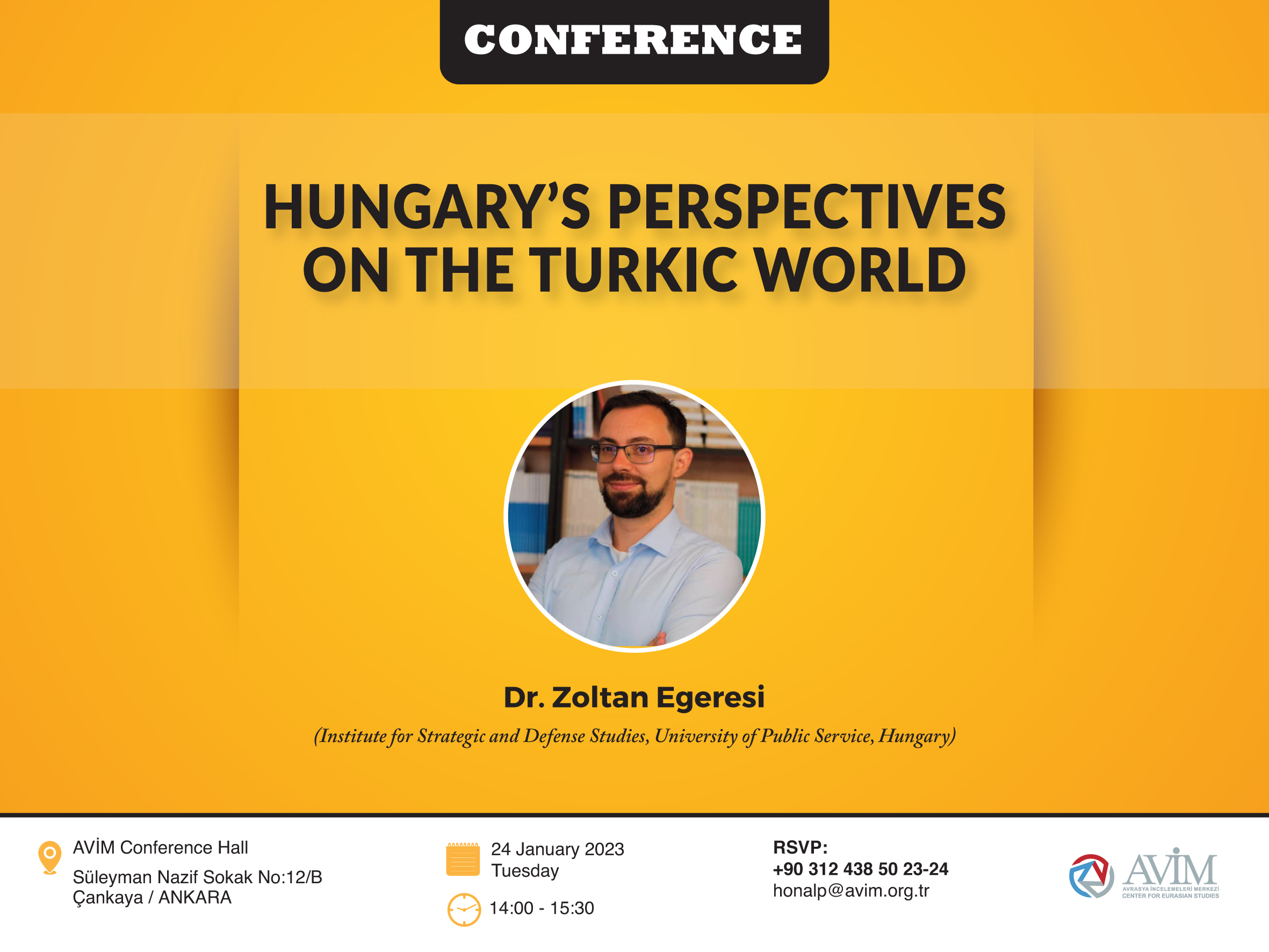
CONFERENCE TITLED “HUNGARY’S PERSPECTIVES ON THE TURKIC WORLD"