

















Business Insider, 06 September 2016
Saudi Arabia and Russia agreed on Monday at the G-20 summit in China to cooperate on oil and to create a "working group" to stabilize markets. This comes just weeks ahead of the informal oil talks to be held in Algiers, Algeria, on September 26 and 27.
However, the two oil powerhouses didn't announce any concrete action plan, which had some analysts wondering whether this latest development would actually lead to anything — especially given that Khalid al-Falih, Saudi Arabia's oil minister, dismissed the need for a production freeze.
Moreover, the team at Capital Economics pointed out that most OPEC members and Russia are already pumping oil at record levels, which suggests that they have little spare capacity.
"The upshot is that there was nothing in Monday's announcement to change our view that oil prices will finish the year a little lower than they are now," Tom Pugh, the firm's commodities economist, wrote in a note to clients.
And big oil players remain at odds in various geopolitical situations, including in Syria and Yemen, which adds another dimension to all potential decisions.
Prices for Brent crude oil, the international benchmark, surged by as much as 6%, to $49.90 per barrel, in the immediate aftermath before giving back most of the gains later in the day.
However, other analysts have argued that there's more to the latest overture than meets the eye.
Monday's announcement, "while short on details and immaterial for actual supply and demand balances, is another indicator of the extreme economic duress that producers are enduring, and in our view, increases the likelihood of some type of collective action if prices remain under significant pressure," Helima Croft, the global head of commodity strategy at RBC Capital Markets, wrote in a note to clients.
"We take the view that potential joint action discussion is a symbolic attempt to shore up sentiment since there is little else to lose given that most countries are already producing flat out," she added.
Although Saudi Arabia and Russia are nowhere near the chaos engulfing OPEC's so-called Fragile Five — Nigeria, Venezuela, Libya, Iraq, and Algeria — they, too, have seen their fortunes shrink over the past two years.
Russia's economy shrank by 3.7% in 2015. And although things have started to somewhat stabilize, the International Monetary Fund forecasts it will contract by 1.2% in 2016.
Plus, an estimated 13.4% of the population — about 19.2 million people — is currently living in poverty, according to data from March 2016, and there have been several protests this year regarding economic concerns.
Meanwhile, Saudi Arabia, which has managed to weather the lower-for-longer environment far better than most of its OPEC colleagues, is not without problems.
FX reserves are down almost $190 billion since oil prices started falling; Bloomberg reports that the country is aiming to cancel over $20 billion worth of projects and to slash ministry budgets by a quarter; there have been several ugly economic data points; and the public hasn't been happy with some austerity measures, such as the sharp rise in electricity bills.
As such, "while geopolitical tensions between key producers continue to run high because of ongoing conflicts in Syria and Yemen, their leaders may yet opt for pragmatism and seek some financial relief that will allow them to keep their increasingly restive citizens content and off the streets," Croft wrote.
It's worth nothing that previous attempts to reinstate production quotas have not always yielded desired results. However, the fact that even the better-off producers are increasingly feeling the strain of the lower-for-longer environment somewhat raises the stakes.
Also notably, a coordinated decision could underscore the oil cartel's legitimacy.
"Although co-operative action taken by the cartel and other key producers may prove to be more of an optics play than physically actionable, at a minimum, it alters sentiment, puts a floor into the market, and reminds the market of OPEC's capacity to co-operate," Croft wrote.
"It would also prove that the prolific pronouncements of the cartel's demise are premature."
Brent crude prices are down 2.3%, at $46.55 per barrel, as of 10:14 a.m. ET.
No comments yet.
- RUSSIA, TURKEY 'IN TALKS' OVER TURKISH STREAM EXTENSION TO GREECE The Balkans 07.09.2016
- IRAQ PUTS OUT MORE OIL FIRES AT NORTHERN FIELD, SOME STILL BURNING Iraq 07.09.2016
- ARMENIA’S REPRESENTATIVE TO SUCCEED BORDYUZHA AS CSTO CHIEF The Caucasus and Turkish-Armenian Relations 07.09.2016
- EU FINANCE MINISTERS, CENTRAL BANKERS WILL CONSIDER A EURO ZONE CRISIS FUND Europe - EU 07.09.2016
- WAGES IN ARMENIA DECREASE The Caucasus and Turkish-Armenian Relations 07.09.2016
-
25.01.2016
THE ARMENIAN QUESTION - BASIC KNOWLEDGE AND DOCUMENTATION -
12.06.2024
THE TRUTH WILL OUT -
27.03.2023
RADİKAL ERMENİ UNSURLARCA GERÇEKLEŞTİRİLEN MEZALİMLER VE VANDALİZM -
17.03.2023
PATRIOTISM PERVERTED -
23.02.2023
MEN ARE LIKE THAT -
03.02.2023
BAKÜ-TİFLİS-CEYHAN BORU HATTININ YAŞANAN TARİHİ -
16.12.2022
INTERNATIONAL SCHOLARS ON THE EVENTS OF 1915 -
07.12.2022
FAKE PHOTOS AND THE ARMENIAN PROPAGANDA -
07.12.2022
ERMENİ PROPAGANDASI VE SAHTE RESİMLER -
01.01.2022
A Letter From Japan - Strategically Mum: The Silence of the Armenians -
01.01.2022
Japonya'dan Bir Mektup - Stratejik Suskunluk: Ermenilerin Sessizliği -
03.06.2020
Anastas Mikoyan: Confessions of an Armenian Bolshevik -
08.04.2020
Sovyet Sonrası Ukrayna’da Devlet, Toplum ve Siyaset - Değişen Dinamikler, Dönüşen Kimlikler -
12.06.2018
Ermeni Sorunuyla İlgili İngiliz Belgeleri (1912-1923) - British Documents on Armenian Question (1912-1923) -
02.12.2016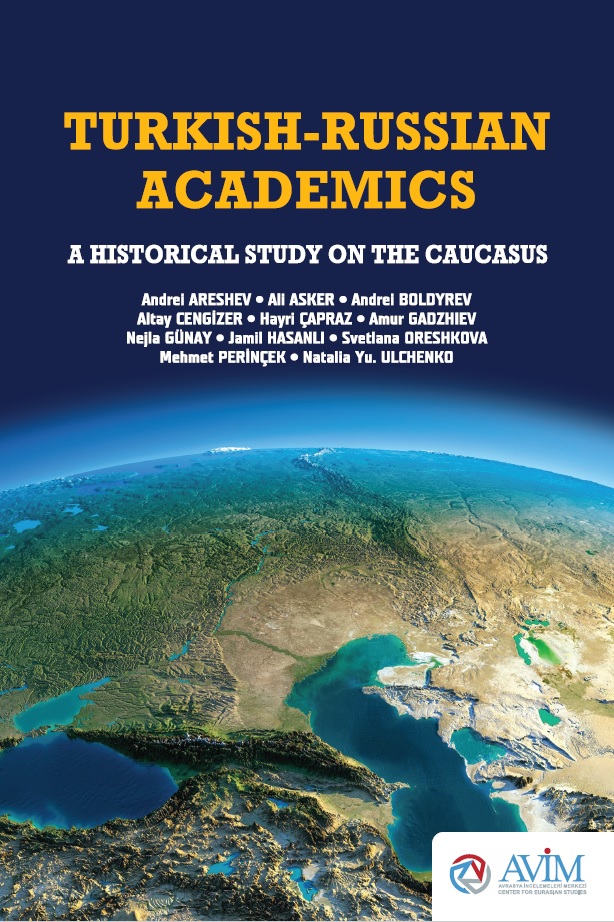
Turkish-Russian Academics: A Historical Study on the Caucasus -
01.07.2016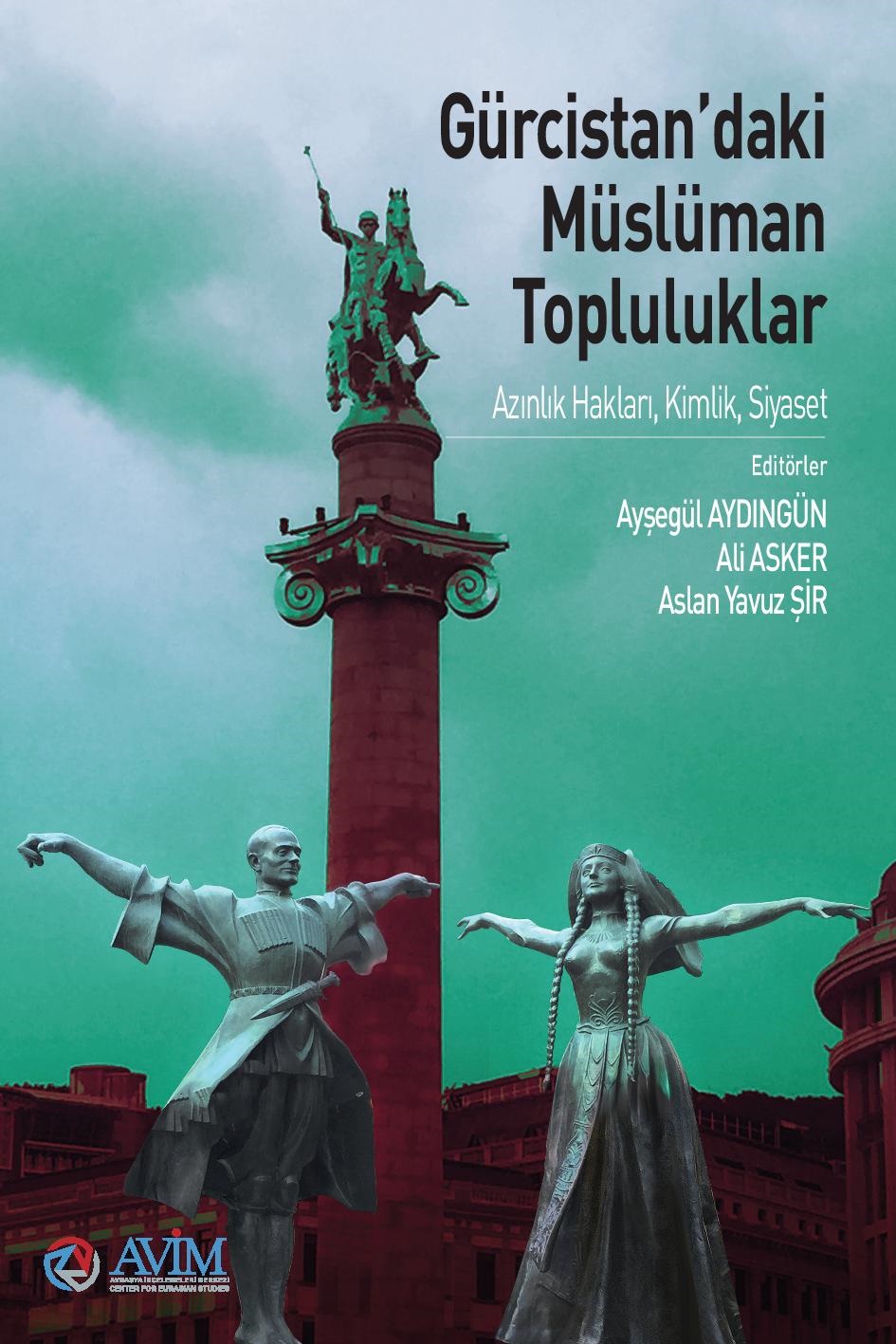
Gürcistan'daki Müslüman Topluluklar: Azınlık Hakları, Kimlik, Siyaset -
10.03.2016
Armenian Diaspora: Diaspora, State and the Imagination of the Republic of Armenia -
24.01.2016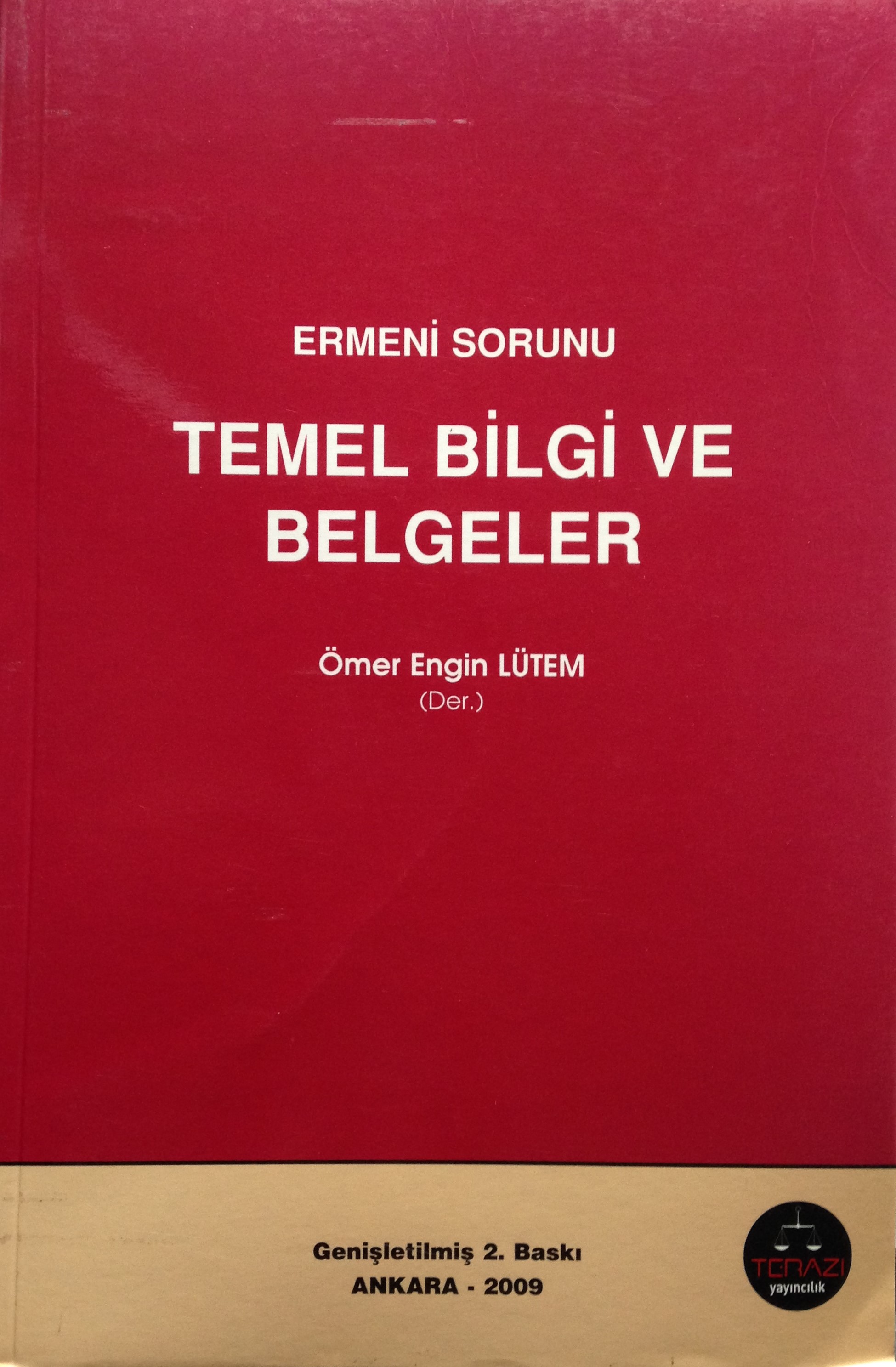
ERMENİ SORUNU - TEMEL BİLGİ VE BELGELER (2. BASKI)
-
AVİM Conference Hall 24.01.2023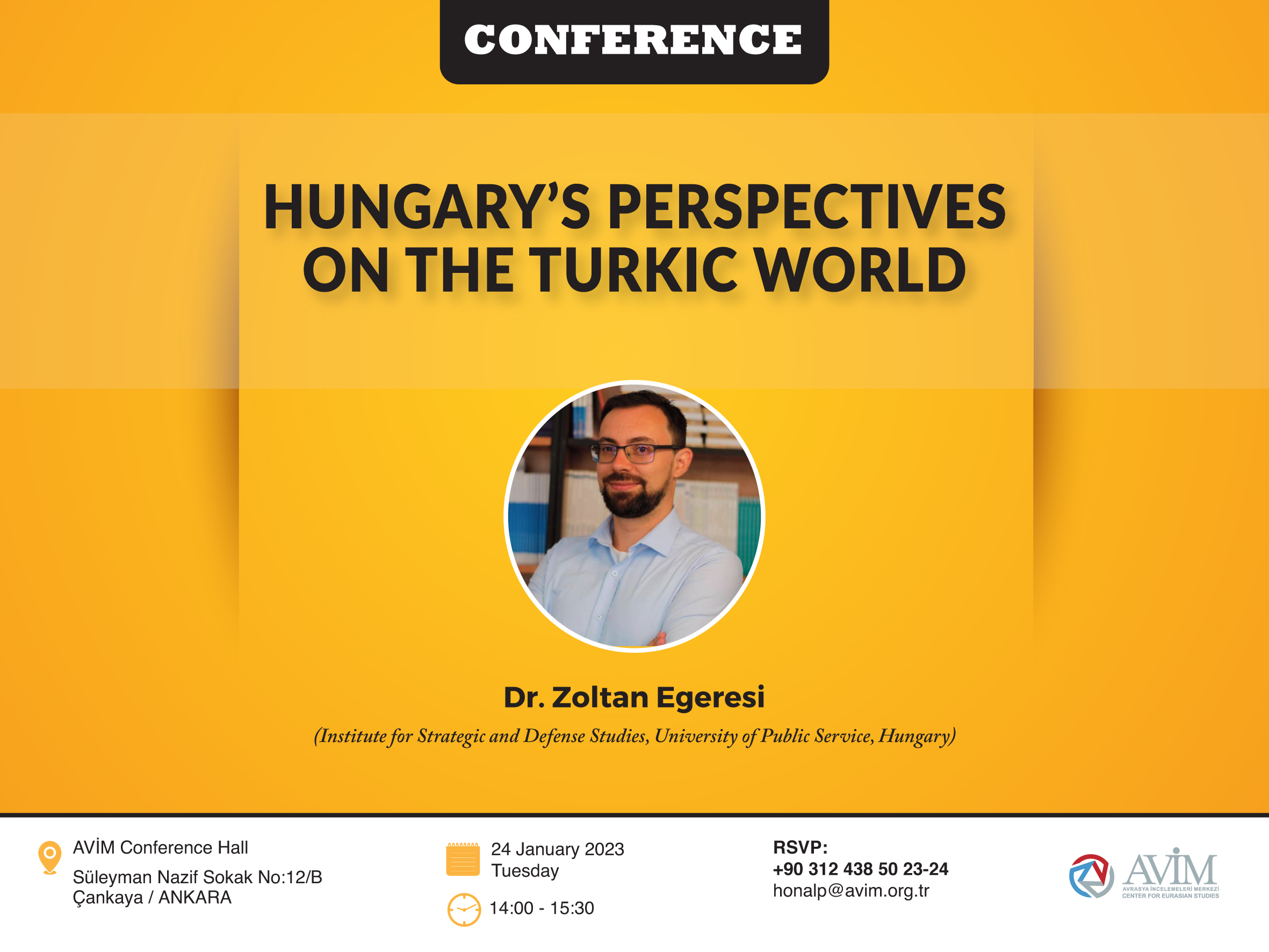
CONFERENCE TITLED “HUNGARY’S PERSPECTIVES ON THE TURKIC WORLD"