
















EU Observer (30 April 2019)
It was a rather awkward response of a young woman, watching the Maastricht debate between five politicians who are their parties' candidates to become the next president of the European Commission.
"Migrants!", she shouted.
She did so after moderator Ryan Heath had asked Alliance of Conservatives and Reformists in Europe candidate Jan Zahradil whether having an EU naval rescue mission without ships was not leading to condemning migrants to drown in the Mediterranean.
The perhaps inappropriate enthusiasm of the woman could be explained by the fact she was playing a bingo game designed with phrases that were expected to be uttered during the election debate - an attempt to make watching the debate more interactive.
The bingo cards handed out to the audience watching the debate on a big screen in the central Vrijthof square in the Dutch city Maastricht included words to cross off like "Russia", "climate change", "euro-crisis" and "Orban", the Hungarian prime minister.
Other moments that could help the players win were when Frans Timmermans, candidate of the Party of European Socialists, mentioned banning plastics - as he did - and when candidates agreed with each other - as they did.
The partial predictability of the debate notwithstanding, several hundred people showed up to the Vrijthof square to watch the 'Spitzenkandidaten' (lead candidate) debate on Monday evening (29 April), ahead of next month's European Parliament elections.
Many of them were students, speaking a variety of European languages - the Maastricht University was one of the debate's organisers - but there were also spectators from an older generation.
Two of the audience members wore EU flags like superhero capes, and there were some with T-shirts that had a print of an outline of Timmermans' face on it.
The debate was mostly tailored to the concerns of young people, with the topics centred around three themes: digital Europe, sustainable Europe, and the future of Europe.
When the sustainable Europe part was announced, Swedish 16-year-old climate activist Greta Thurnberg was mentioned - eliciting a loud cheer from one of the audience members.
When Brexit was mentioned in the future of Europe introduction, some people booed.
Ahead of the debate, two female presenters prepared the audience by describing the five candidates.
Timmermans, they said, was a "grandpa guy", Green candidate Bas Eickhout looked like a "tall professor", and Liberal candidate Guy Verhofstadt could be recognised by "a little gap between the two teeth".
Weber missing
But the big absentee of the evening was Manfred Weber, the lead candidate of the European People's Party (EPP) - currently the largest political force in the European Parliament.
The Bavarian politician had decided to instead attend a symposium held in Munich in honour of the 80th birthday of Theo Waigel - Germany's former finance minister in the 1990s, credited with inventing the name 'euro' for Europe's common currency.
Moderator Heath, of the news website Politico, pointed out at the start of the debate that the invitation to the EPP had already been sent a year ago.
"So make of that what you will," he said.
Violeta Tomic, candidate for the European Left, was the only woman - but all five candidates promised that they would do their best to introduce a gender balance in the make-up of the next EU commission, if they became president.
Tomic, a Slovenian MP, said she was "not a Brussels insider", which could be appealing to some voters.
As a representative of the far left, Tomic could also rile against from neoliberalism and banks.
But she had difficulty expressing herself in English, the language in which the debate was held.
Zahradil meanwhile was in the comfortable position of being the only representative of a (mildly) eurosceptic party on the right side, so that he was able to distinguish himself from the four others.
He seemed to reach out to two pools of voters: those that agree with his anti-federalism, and those from central and eastern Europe.
The Czech MEP started out by pointing out that people in his country earn on average half of what Dutch people earn.
He was the only debater who did not raise his hand when asked if they supported the young climate strikers.
"Some countries are not ready for it," he said about the climate transition.
When Zahradil was called a dinosaur for his views on climate change and fossil fuels, he joked that he "always liked Jurassic Park", so he did not mind being called one.
Timmermans reaches out
Timmermans meanwhile tried to establish a left-leaning coalition, reaching out to the candidates of the far left and the greens.
He said that only his party, the European Left, and the Greens were truly green.
"Go vote green," he said - which was of course interpreted by Eickhout as 'Go vote Green'.
But Timmermans explained that he did not see sustainable policies as only belonging to Eickhout's party.
"We will do it together," said the Social Democrat.
Verhofstadt meanwhile argued for a carbon tax and told Timmermans it was unfair to act as if the liberals never supported green measures in the EU parliament.
The former Belgian prime minister also called for "a European Facebook" - leading to a bearded audience member holding a beer to shake his head, and exchange a disapproving look with another viewer, a young man with glasses and a cap on backwards.
At the end of the 100-minute debate, Timmermans received the most votes (43 percent) from viewers asked online who they thought was "leading the debate".
He was followed by Eickhout (36 percent), Verhofstadt (9 percent), Zahradil (7 percent), and Tomic (5 percent).
The Youtube livestream of the debate had some 129,000 views on Tuesday morning. The next debate is scheduled for 15 May, in the European Parliament.
Elections are from 23 to 26 May.
No comments yet.
- AZERBAIJAN, CROATIA DISCUSS COOPERATION IN VARIOUS SPHERES The Caucasus and Turkish-Armenian Relations 30.04.2019
- BELGIUM LEAVES ARMENIAN GENOCIDE OUT OF LAW PENALIZING DENIAL The Caucasus and Turkish-Armenian Relations 30.04.2019
- EU TOP COURT BACKS CANADA TRADE DEAL IN RULING Europe - EU 30.04.2019
- TIES WITH TURKEY IMPORTANT, STRATEGIC: IRAQ’S KRG Iraq 30.04.2019
- SPITZENKANDIDATEN DEBATE IN MAASTRICHT MINUS WEBER Europe - EU 30.04.2019
-
25.01.2016
THE ARMENIAN QUESTION - BASIC KNOWLEDGE AND DOCUMENTATION -
12.06.2024
THE TRUTH WILL OUT -
27.03.2023
RADİKAL ERMENİ UNSURLARCA GERÇEKLEŞTİRİLEN MEZALİMLER VE VANDALİZM -
17.03.2023
PATRIOTISM PERVERTED -
23.02.2023
MEN ARE LIKE THAT -
03.02.2023
BAKÜ-TİFLİS-CEYHAN BORU HATTININ YAŞANAN TARİHİ -
16.12.2022
INTERNATIONAL SCHOLARS ON THE EVENTS OF 1915 -
07.12.2022
FAKE PHOTOS AND THE ARMENIAN PROPAGANDA -
07.12.2022
ERMENİ PROPAGANDASI VE SAHTE RESİMLER -
01.01.2022
A Letter From Japan - Strategically Mum: The Silence of the Armenians -
01.01.2022
Japonya'dan Bir Mektup - Stratejik Suskunluk: Ermenilerin Sessizliği -
03.06.2020
Anastas Mikoyan: Confessions of an Armenian Bolshevik -
08.04.2020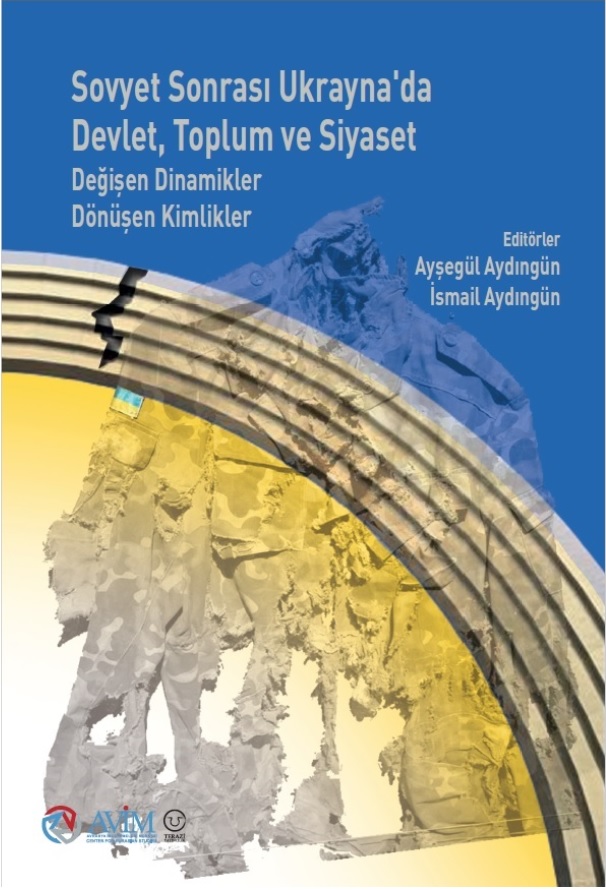
Sovyet Sonrası Ukrayna’da Devlet, Toplum ve Siyaset - Değişen Dinamikler, Dönüşen Kimlikler -
12.06.2018
Ermeni Sorunuyla İlgili İngiliz Belgeleri (1912-1923) - British Documents on Armenian Question (1912-1923) -
02.12.2016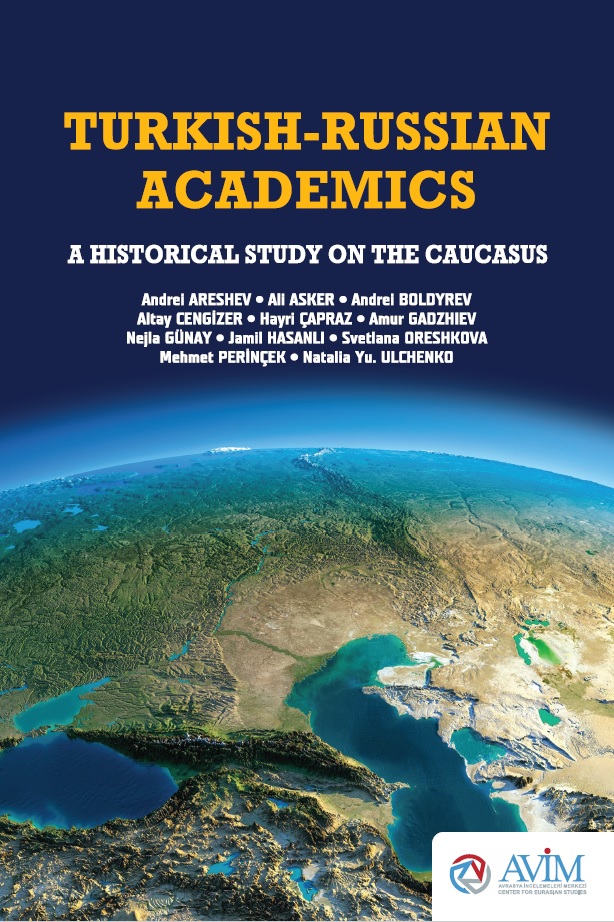
Turkish-Russian Academics: A Historical Study on the Caucasus -
01.07.2016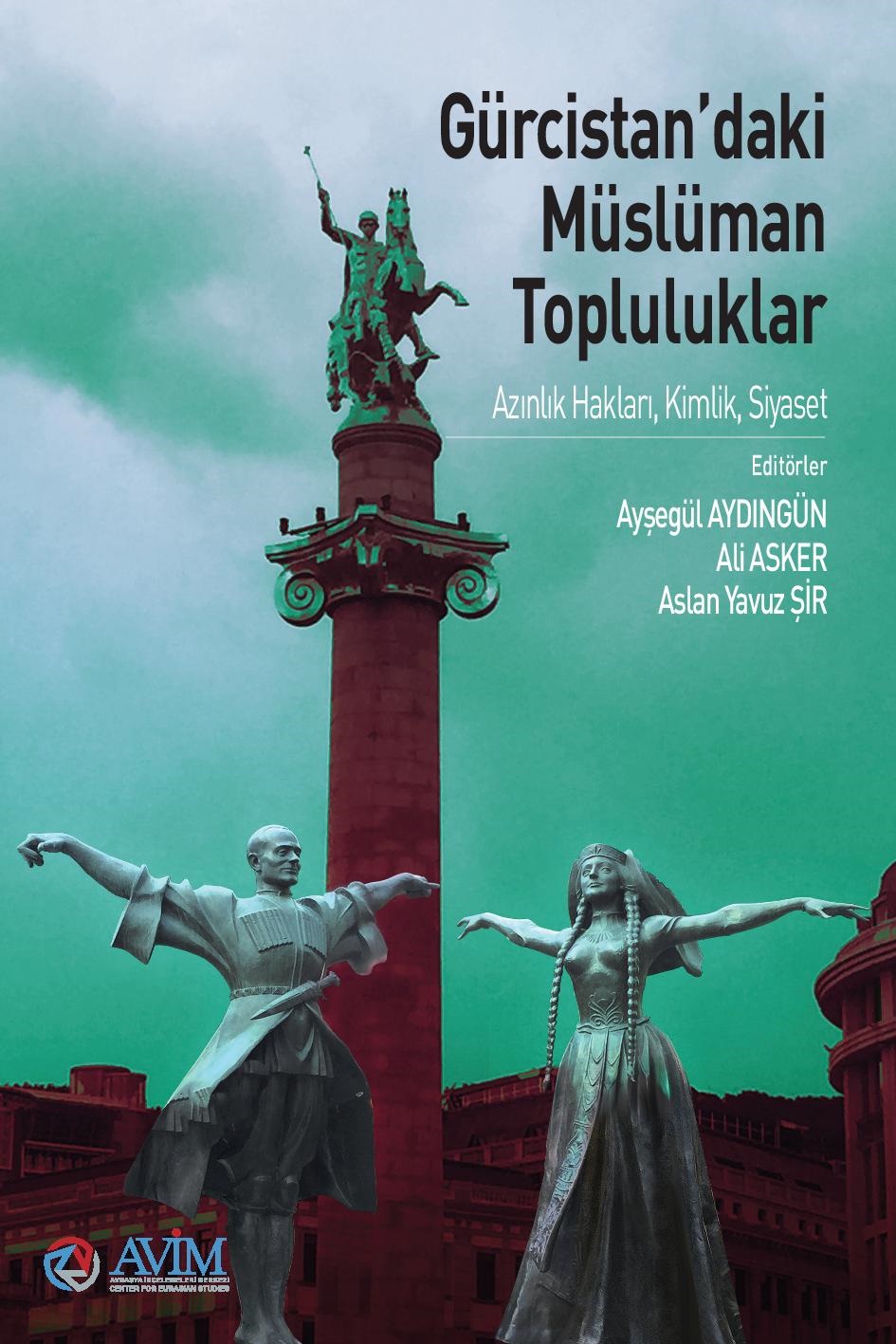
Gürcistan'daki Müslüman Topluluklar: Azınlık Hakları, Kimlik, Siyaset -
10.03.2016
Armenian Diaspora: Diaspora, State and the Imagination of the Republic of Armenia -
24.01.2016
ERMENİ SORUNU - TEMEL BİLGİ VE BELGELER (2. BASKI)
-
AVİM Conference Hall 24.01.2023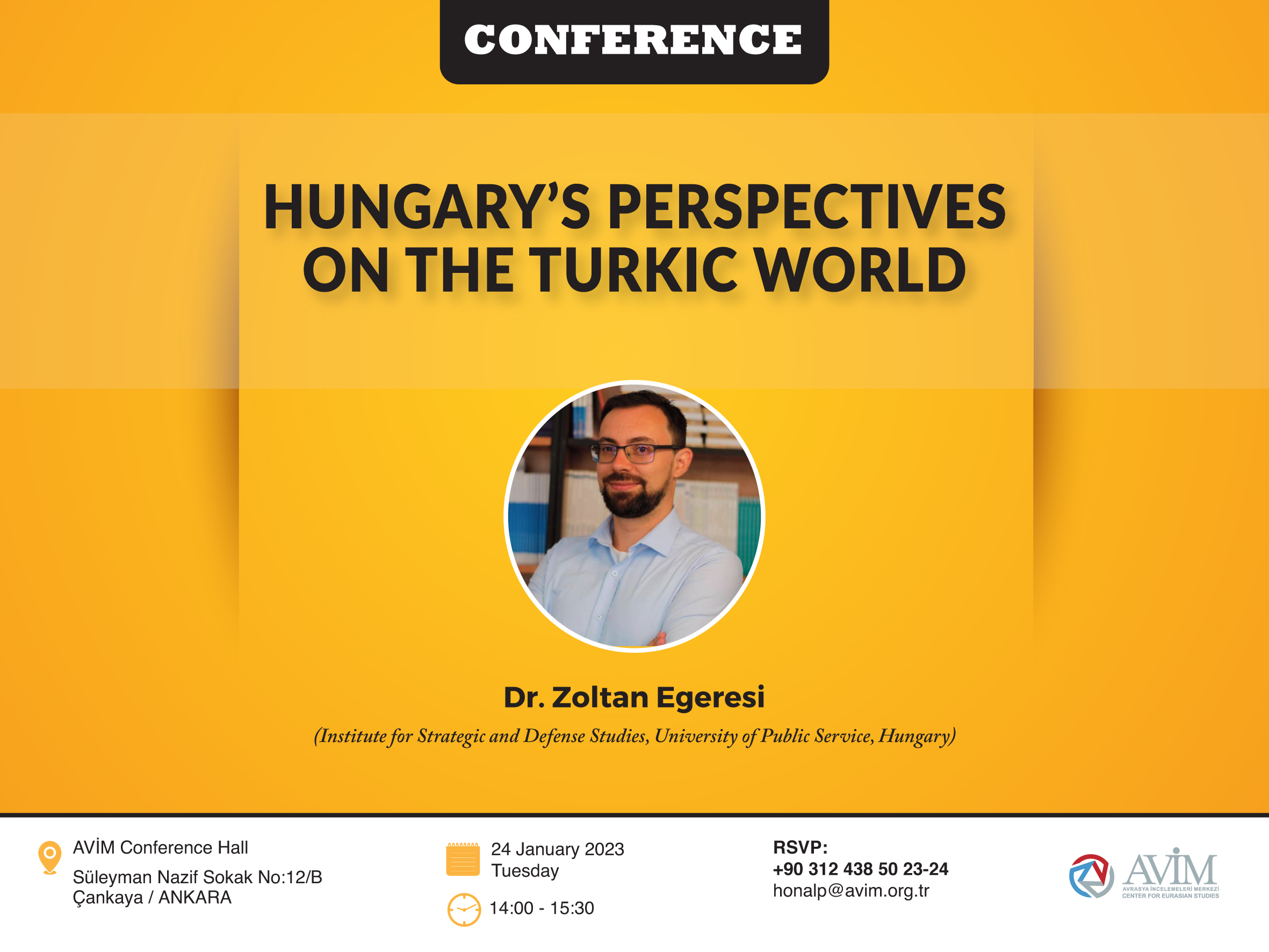
CONFERENCE TITLED “HUNGARY’S PERSPECTIVES ON THE TURKIC WORLD"