

















SARAH LAIN
RESEARCH FELLOW ATTHE ROYAL UNITED SERVICES INSTITUTE
The Telegraph, 26 SEPTEMBER 2016
America’s ambassador accuses Russia of “barbarism” in Aleppo. Britain’s envoy, Matthew Rycroft, goes even further, accusing Vladimir Putin of teaming up with the Syrian dictator Bashar Assad “to carry out war crimes”. This is a rare show of anger aimed directly at one of the world’s major powers at the United Nations. But will it make any difference?
If the past is anything to go by, no. Russia’s own envoys are masters at deflecting such criticism, particularly over who is to blame for civilian deaths. Moscow’s UN ambassador, Vitaliy Churkin, suggests that the latest Syrian peace effort has broken down because the West is supplying Islamist militants. America, he says, can’t tell the difference between opposition groups and terrorists.
Russia’s justification for continuing its bombardment of Aleppo during the ceasefire has rested on the lack of clarity over this term between itself and the US.
For example, Syrian forces, backed by Russian air support, recently struck Handarat, a strategically located Palestinian refugee camp outside Aleppo, with banned phosphorus bombs. As a result, this weekend the Syrian army briefly took control, before being pushed back again by rebels.
Russia insisted that the offensive was aimed at regaining control of the camp from “terrorists”. Most observers say Handarat is broadly controlled by a coalition of fighters known as Jaish al-Fateh, which has not officially been designated a terror group. But it includes militants from the ultra-conservative rebel group Ahrar al-Sham, which Russia thinks should be so designated.
There is a difference, however, between this nit-picking over whether rebel groups should be classified as terrorists and Russia’s assistance to the Assad regime in targeting residential areas or hospitals. And it is here that Western outrage with Moscow is particularly acute. Russia seems unwilling, or unable, to control its client, Assad, in Damascus. The reason Syria has become appallingly resistant to peace breaking out is that no single power – not Assad, not Russia, not Islamic State, not Al-Nusra, not Iran, not America or Britain – has the capacity to swing the war on the ground decisively in its favour. It is, therefore, almost inconceivable that anyone can win outright.
And this is why the UK ambassador’s outpouring of contempt at the UN is more significant than the usual comments on there being no military solution in Syria. His comments are part of a pattern of rhetoric that directly links Assad’s behaviour with Russian weakness, as it shows itself unable to control the Syrian dictator. Ash Carter, the US Defence Secretary, expressed this stance most clearly after the recent destruction of a humanitarian aid convoy near Aleppo. “The Russians are responsible for this strike whether they conducted it or not,” he said, “because they took responsibility for the conduct of the Syrians by associating themselves with the Syrian regime.”
True, Russia is unlikely to be “shamed” by such words into limiting its support for Assad. However, Western diplomats in the UN are finally talking the kind of language Russia understands.
Until now, Putin’s posturing suggested that Russia was supplanting America as the key power in the Middle East. Today, Western diplomats are making it clear that they have seen through that bluster. They should now start identifying specific cases where Russia proves unable to do what it says it can.
Staffan de Mistura, the UN envoy to Syria, thinks there is still a “tiny window of opportunity” for Russia and the US to broker another ceasefire in the days ahead. Until today, co-operation between the two powers has been on counter-terrorism. This is unlikely to lead to substantial trust-building, given that they have very different concepts of who the “terrorists” are.
Any renewed co-operation will be based on a better understanding: no one is strong enough to win this war. It is therefore in the interests of both Russia and the US to end it before either suffers a humiliating reverse as events spiral out of control.
That, unfortunately, may be the best the Syrian people can hope for.
No comments yet.
- SERBIA SEEKS TO BOOST DEFENSE COOPERATION WITH IRAN The Balkans 27.09.2016
- PACE: REFERENDUM IN AZERBAIJAN TRANSPARENT, SMOOTH The Caucasus and Turkish-Armenian Relations 27.09.2016
-
 US MILITARY HITS ANOTHER ISLAMIC STATE CHEMICAL WEAPONS FACILITY IN IRAQ
Iraq
27.09.2016
US MILITARY HITS ANOTHER ISLAMIC STATE CHEMICAL WEAPONS FACILITY IN IRAQ
Iraq
27.09.2016
-
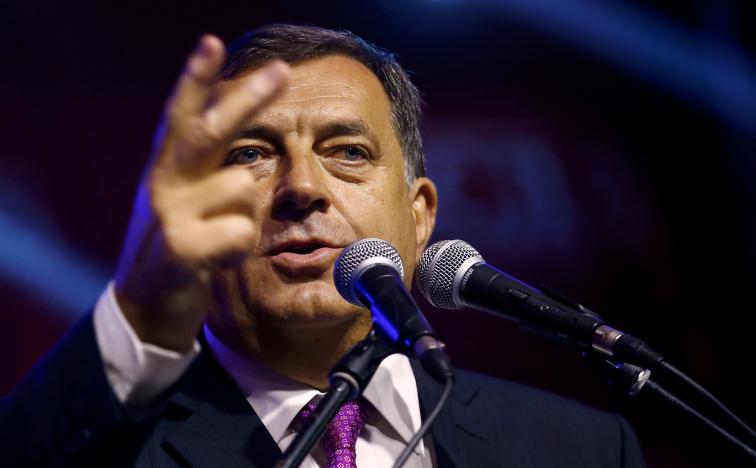 BOSNIAN SERB LEADER SUMMONED FOR QUESTIONING OVER REFERENDUM
The Balkans
27.09.2016
BOSNIAN SERB LEADER SUMMONED FOR QUESTIONING OVER REFERENDUM
The Balkans
27.09.2016
- THE END OF AN ERA IN UZBEKISTAN Asia - Pacific 27.09.2016
-
25.01.2016
THE ARMENIAN QUESTION - BASIC KNOWLEDGE AND DOCUMENTATION -
12.06.2024
THE TRUTH WILL OUT -
27.03.2023
RADİKAL ERMENİ UNSURLARCA GERÇEKLEŞTİRİLEN MEZALİMLER VE VANDALİZM -
17.03.2023
PATRIOTISM PERVERTED -
23.02.2023
MEN ARE LIKE THAT -
03.02.2023
BAKÜ-TİFLİS-CEYHAN BORU HATTININ YAŞANAN TARİHİ -
16.12.2022
INTERNATIONAL SCHOLARS ON THE EVENTS OF 1915 -
07.12.2022
FAKE PHOTOS AND THE ARMENIAN PROPAGANDA -
07.12.2022
ERMENİ PROPAGANDASI VE SAHTE RESİMLER -
01.01.2022
A Letter From Japan - Strategically Mum: The Silence of the Armenians -
01.01.2022
Japonya'dan Bir Mektup - Stratejik Suskunluk: Ermenilerin Sessizliği -
03.06.2020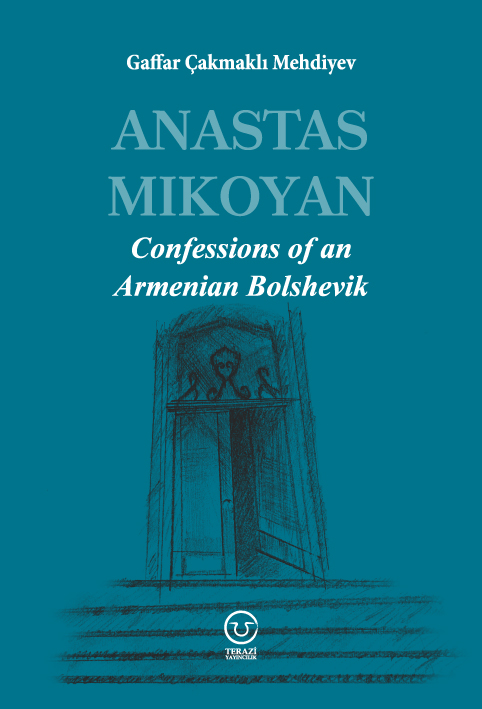
Anastas Mikoyan: Confessions of an Armenian Bolshevik -
08.04.2020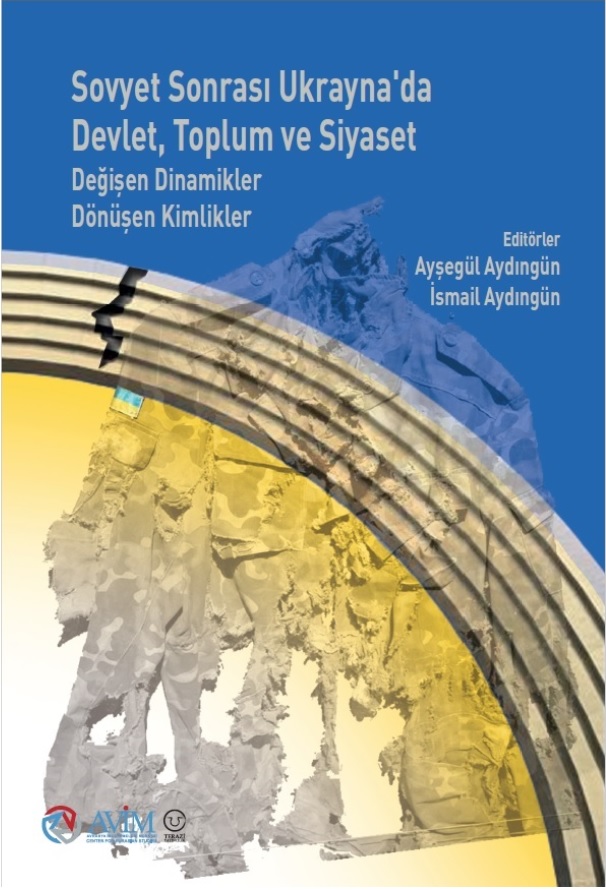
Sovyet Sonrası Ukrayna’da Devlet, Toplum ve Siyaset - Değişen Dinamikler, Dönüşen Kimlikler -
12.06.2018
Ermeni Sorunuyla İlgili İngiliz Belgeleri (1912-1923) - British Documents on Armenian Question (1912-1923) -
02.12.2016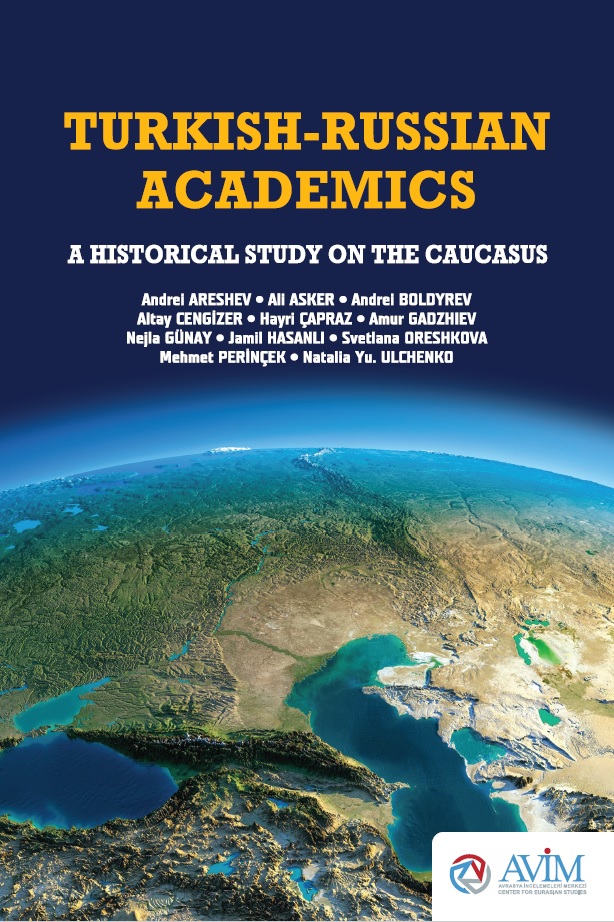
Turkish-Russian Academics: A Historical Study on the Caucasus -
01.07.2016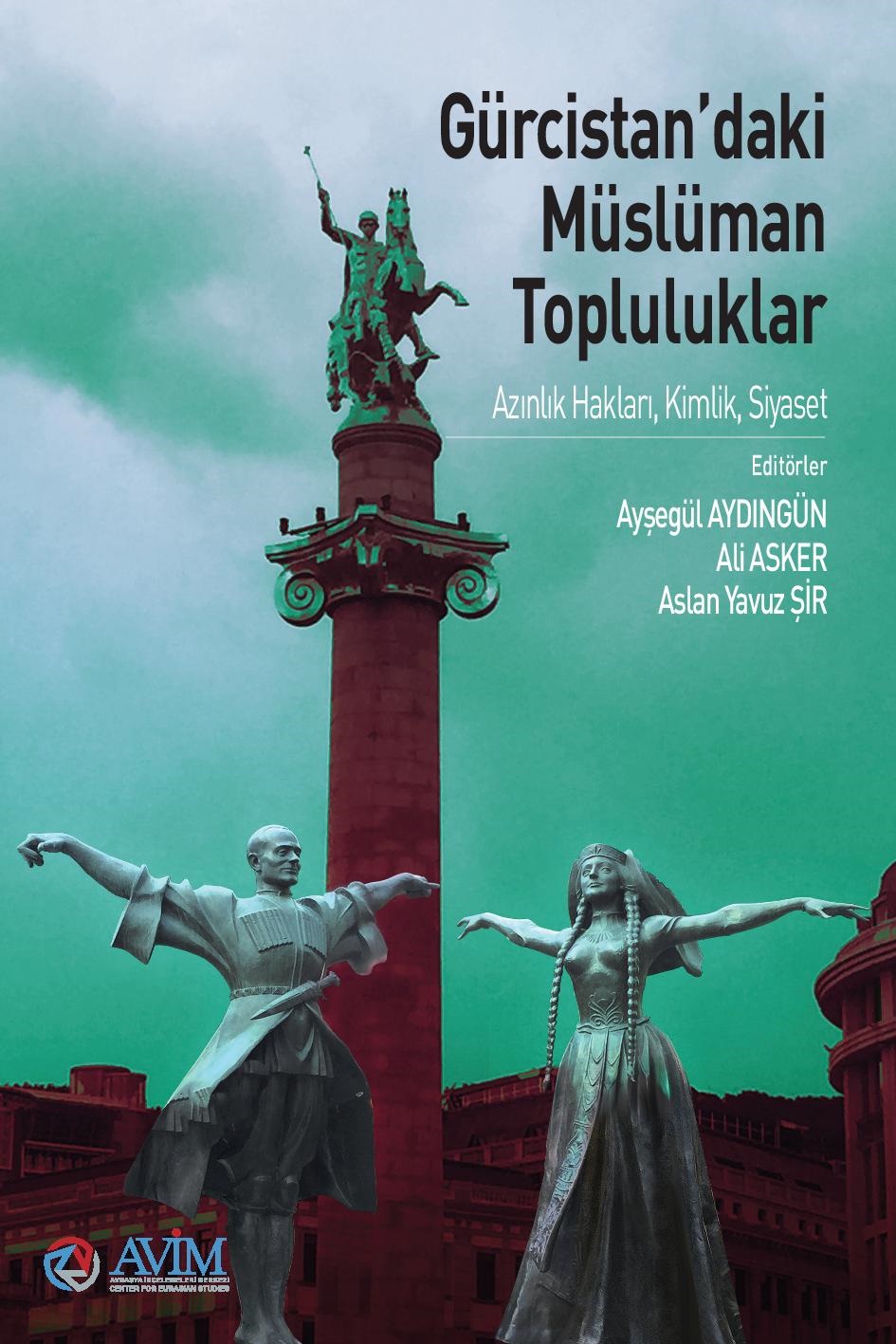
Gürcistan'daki Müslüman Topluluklar: Azınlık Hakları, Kimlik, Siyaset -
10.03.2016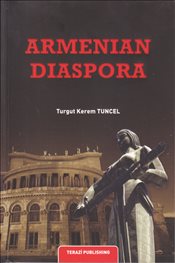
Armenian Diaspora: Diaspora, State and the Imagination of the Republic of Armenia -
24.01.2016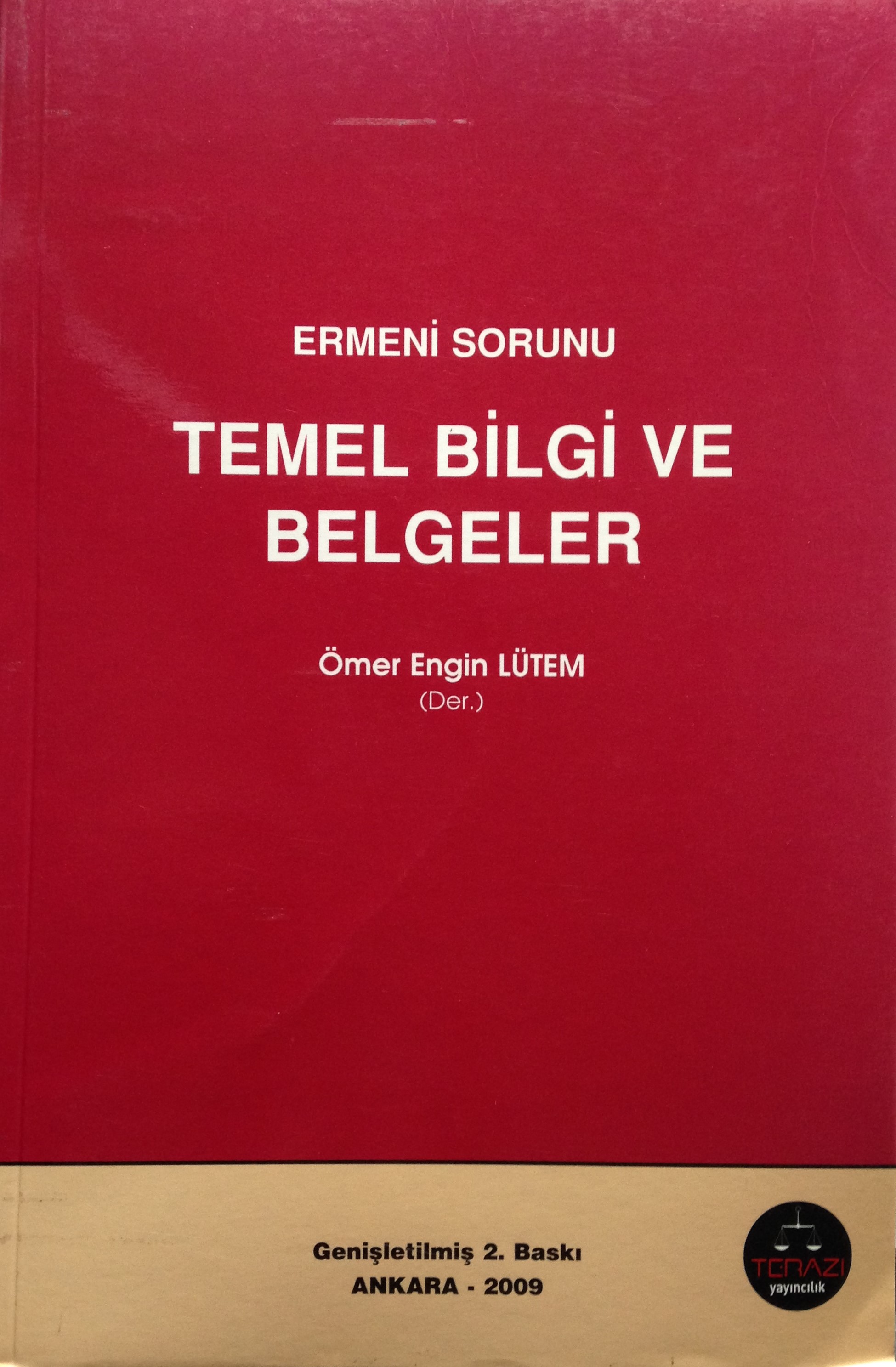
ERMENİ SORUNU - TEMEL BİLGİ VE BELGELER (2. BASKI)
-
AVİM Conference Hall 24.01.2023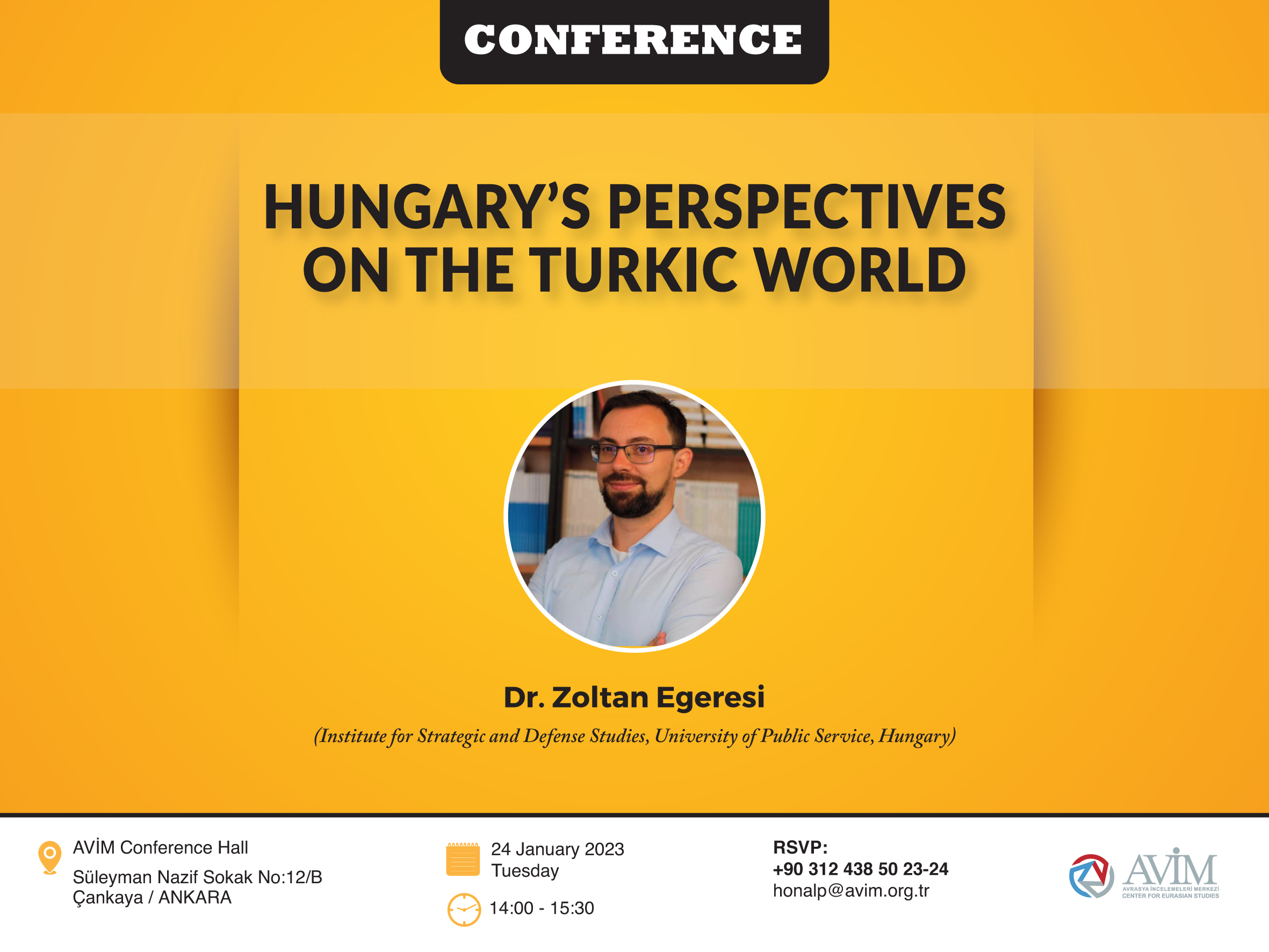
CONFERENCE TITLED “HUNGARY’S PERSPECTIVES ON THE TURKIC WORLD"