

















Wall Street Journal, 18 August 2016
MOSCOW—Russia is bolstering its military presence on its western border, sending tens of thousands of soldiers to newly built installations within easy striking distance of Ukraine.
The moves, which come as Moscow ratchets up confrontation over the Black Sea peninsula of Crimea, are a centerpiece of a new military strategy the Kremlin says is meant to counter perceived threats from the North Atlantic Treaty Organization.
Military analysts say the deployments appear to be an effort to build a more permanent and robust military posture around Ukraine, where Russia has carried out covert military interventions—in support of pro-Russia separatist fighters—aimed at maintaining influence in its West-leaning neighbor.
“Russia’s plans around the Ukrainian border show a real intent to use force if needed,” said Anton Lavrov, a defense analyst at Moscow-based think tank CAST. “They would be Russia’s first line of assistance if the pro-Russian rebels in east Ukraine needed help.”
The Russian Defense Ministry didn’t respond to emailed questions.
U.S. military officials, having closely monitored Russian movements of troops and equipment in the two years since Moscow’s seizure of Crimea from Ukraine, said they haven’t detected signs of an immediate threat. Any shift in Russian military posture reflects broader plans, a senior military official said Thursday.
“It’s a long-term trend; there is nothing new,” the official said.
Some U.S.-based analysts in recent weeks have pointed to Russian plans to reorient forces in various spots to potential areas of conflict, adding the shifts don’t necessarily indicate imminent military activity.
Tensions between Russia and Ukraine have flared in recent days after Russian President Vladimir Putin accused Ukraine’s military of killing two Russian service members during incursions into Crimea, which Russia annexed in 2014. Mr. Putin said Russia would respond to the deaths and met with his security council to discuss “antiterrorist security scenarios” involving Crimea’s borders. Ukrainian officials denied the charges, saying Russia was creating a pretext for further intervention.
Outside the region, Russia has begun using Iran as a launchpad for airstrikes in Syria, further underscoring its assertive military strategy.
The buildup on Ukraine’s frontier represents a significant shift. For years, the Russian-Ukrainian border was viewed by Moscow as little more than an administrative boundary. As late as 2009, Russia didn’t have a single large army unit along its 1,200-mile border with Ukraine. That changed with the 2014 revolution in Kiev and subsequent conflict in eastern Ukraine.
As that conflict unfolded, Russia stationed tens of thousands of troops on the border in makeshift camps and fomented a pro-Russian rebellion with deliveries of weapons and volunteer foot soldiers.
At key points during fighting, regular Russian military units helped to prevent the Ukrainian army from routing the separatists, according to Ukrainian and Western officials, though Moscow denies sending conventional forces into Ukraine.
Violence in eastern Ukraine continues, despite cease-fire attempts brokered by European leaders. July and August saw some of the worst flare-ups in months, with Ukraine saying on Thursday that three of its soldiers had been killed in the previous 24 hours.
Now Russia is building new army installations along the border, creating some new units and redeploying others from further east, in line with its telegraphed intentions to step up its forces in the west.
In May, Russian Minister of Defense Sergei Shoigu said the army would create three new divisions to counter NATO, which in April announced it would send four battalions, or about 4,000 troops, to Poland and ex-Soviet Baltic countries.
“The political situation along the western border of the country remains unstable,” Mr. Shoigu told officers at a televised meeting in June, noting that the U.S. and other NATO members are boosting their military potential in the region.
Russian military officials said two divisions would be created in the Western Military District and one in the Southern Military District, each with 10,000 troops. The focus has also been on combat readiness: Russia has carried out more than 300 training exercises and war games in the Western Military District since the winter.
Several units are being relocated to the region, including those in the Western Military District’s 20th Army, which had been based until last year in Nizhny Novgorod, east of Moscow, the military officials said.
The 20th Army, which had seen lower levels of readiness in previous years, is also getting a major overhaul with new combat units, including two or three motorized rifle brigades and a tank brigade, they said.
A new regional headquarters is now located in Voronezh, some 100 miles from the border with Ukraine. To make way for its relocation, new bases and at least 10 military barracks are being constructed in nearby towns for the incoming soldiers, according to the officials. Construction of some of the new installations began in 2015.
Some of the moves have been made public. In Boguchar, where the 9th Separate Motor Rifle Brigade will be based, a local priest performed a service to bless the construction grounds, where barracks will house more than 5,000 soldiers and 2,200 units of weaponry, according to Defense Ministry contracts. The town is some 25 miles from the Ukrainian border.
Nearby in Valuyki, in the Belgorod Region, the Defense Ministry has stationed the 23rd Separate Motorized Rifle Brigade, previously based in Samara near the border with Kazakhstan. The compound is expected to be completed this year. It is expected to hold some 4,500 servicemen, equipped with tanks and other armor, according to information on the city administration’s website.
The new base will have hangars for weaponry, housing complexes and even an ice rink.
In May, the 28th Separate Motorized Rifle Brigade began arriving in Klintsy, around 200 miles north of Ukraine’s capital Kiev, from Yekaterinburg 600 miles to the east of Moscow. An orchestra, folk singers and local dignitaries bearing traditional welcome gifts of bread and salt greeted the first arrivals at the train station, according to reports and photographs in local media.
Further south, near Rostov-on-Don, the Defense Ministry is reforming the 150th Motorized Rifle Division, the name of the unit that stormed the Reichstag in Berlin in 1945.
Russia is preparing to hold major annual military exercises, called Kavkaz 2016, near the Ukrainian border in September. The exercises are the first aimed at integrating Crimea and the peninsula’s defense into Russian military plans.
A U.S. military official said Russian units are expected to practice conducting amphibious landings and air-defense exercises to reinforce Crimea. U.S. officials also anticipate Russia will continue to rotate troops and equipment, with long convoys of military material moving in and out of the region.
Capt. Danny Hernandez, the chief spokesman for U.S. European Command, said the U.S. was monitoring the region and the planned Russian military exercises closely.
Ukrainian officials have become increasingly nervous about growing violence in the eastern part of Ukraine. Ukrainian President Petro Poroshenko said on Thursday that there had been record levels of artillery shelling against Ukrainian positions the previous night, adding that Ukraine might announce mobilization and martial law if the conflict escalates in Crimea and the country’s east.
U.S. and other allied officials believe Russia’s strategy is to provoke an overreaction by Kiev, one that could help undermine the case in Europe for sanctions.
“Russia wants to show it can turn the heat up and down and put pressure on Kiev to react,” a Western official said.
No comments yet.
- THERE WILL BE NO ‘RESET’ WITH RUSSIA Asia - Pacific 19.08.2016
- POLISH PROSECUTORS OPEN INVESTIGATION INTO TOP COURT CHIEF JUSTICE Europe - EU 19.08.2016
- TSIPRAS-YILDIRIM HAVE TELEPHONE COMMUNICATION The Balkans 19.08.2016
- KAZAKHSTAN AND POLAND: YEARS OF COOPERATION AND PARTNERSHIP Asia - Pacific 19.08.2016
- TWENTY FIVE YEARS AGO THE USSR COLLAPSED Europe - EU 19.08.2016
-
25.01.2016
THE ARMENIAN QUESTION - BASIC KNOWLEDGE AND DOCUMENTATION -
12.06.2024
THE TRUTH WILL OUT -
27.03.2023
RADİKAL ERMENİ UNSURLARCA GERÇEKLEŞTİRİLEN MEZALİMLER VE VANDALİZM -
17.03.2023
PATRIOTISM PERVERTED -
23.02.2023
MEN ARE LIKE THAT -
03.02.2023
BAKÜ-TİFLİS-CEYHAN BORU HATTININ YAŞANAN TARİHİ -
16.12.2022
INTERNATIONAL SCHOLARS ON THE EVENTS OF 1915 -
07.12.2022
FAKE PHOTOS AND THE ARMENIAN PROPAGANDA -
07.12.2022
ERMENİ PROPAGANDASI VE SAHTE RESİMLER -
01.01.2022
A Letter From Japan - Strategically Mum: The Silence of the Armenians -
01.01.2022
Japonya'dan Bir Mektup - Stratejik Suskunluk: Ermenilerin Sessizliği -
03.06.2020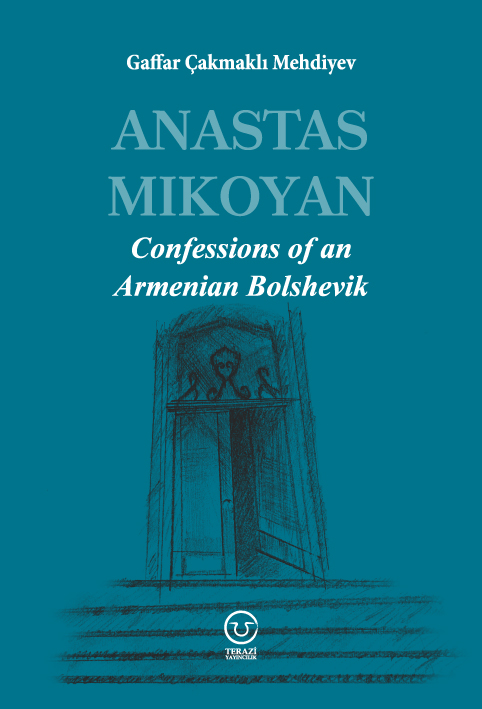
Anastas Mikoyan: Confessions of an Armenian Bolshevik -
08.04.2020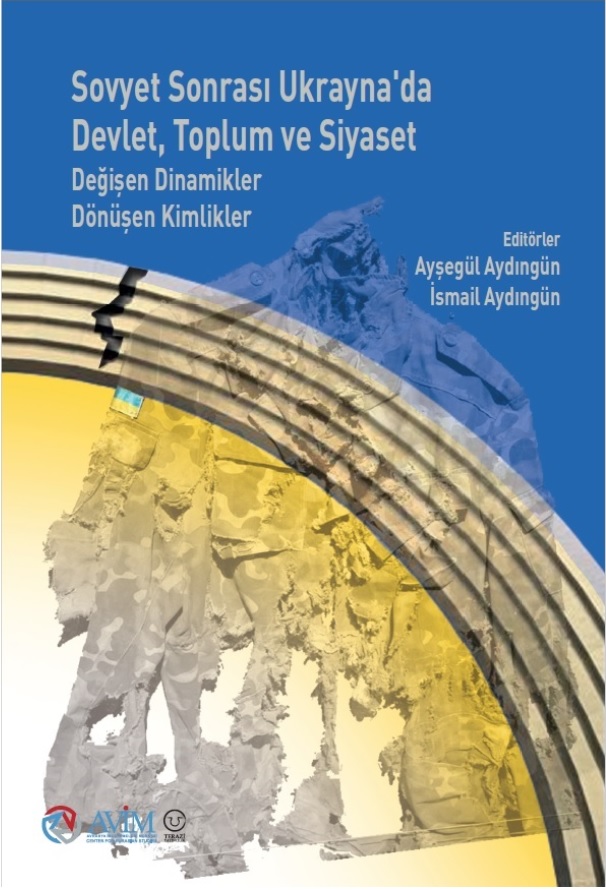
Sovyet Sonrası Ukrayna’da Devlet, Toplum ve Siyaset - Değişen Dinamikler, Dönüşen Kimlikler -
12.06.2018
Ermeni Sorunuyla İlgili İngiliz Belgeleri (1912-1923) - British Documents on Armenian Question (1912-1923) -
02.12.2016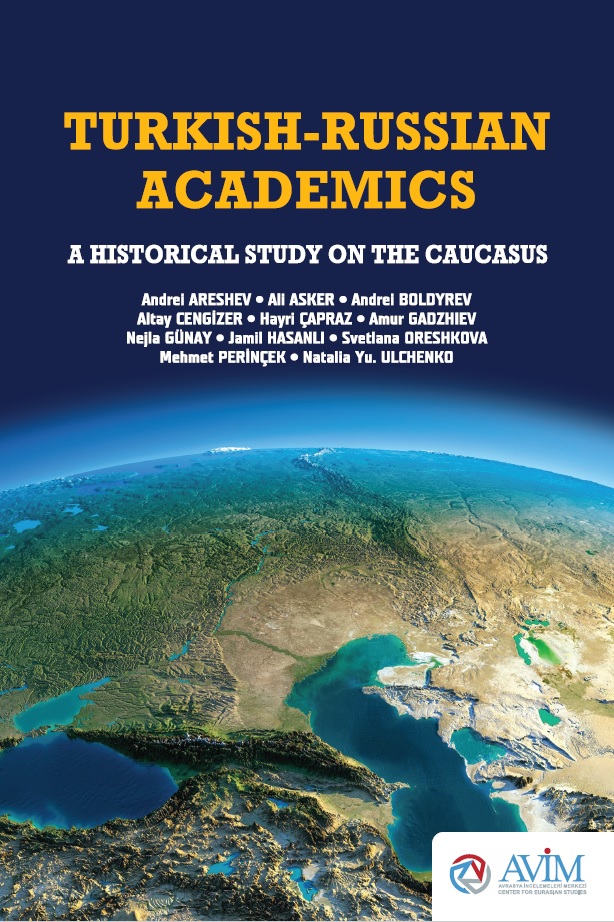
Turkish-Russian Academics: A Historical Study on the Caucasus -
01.07.2016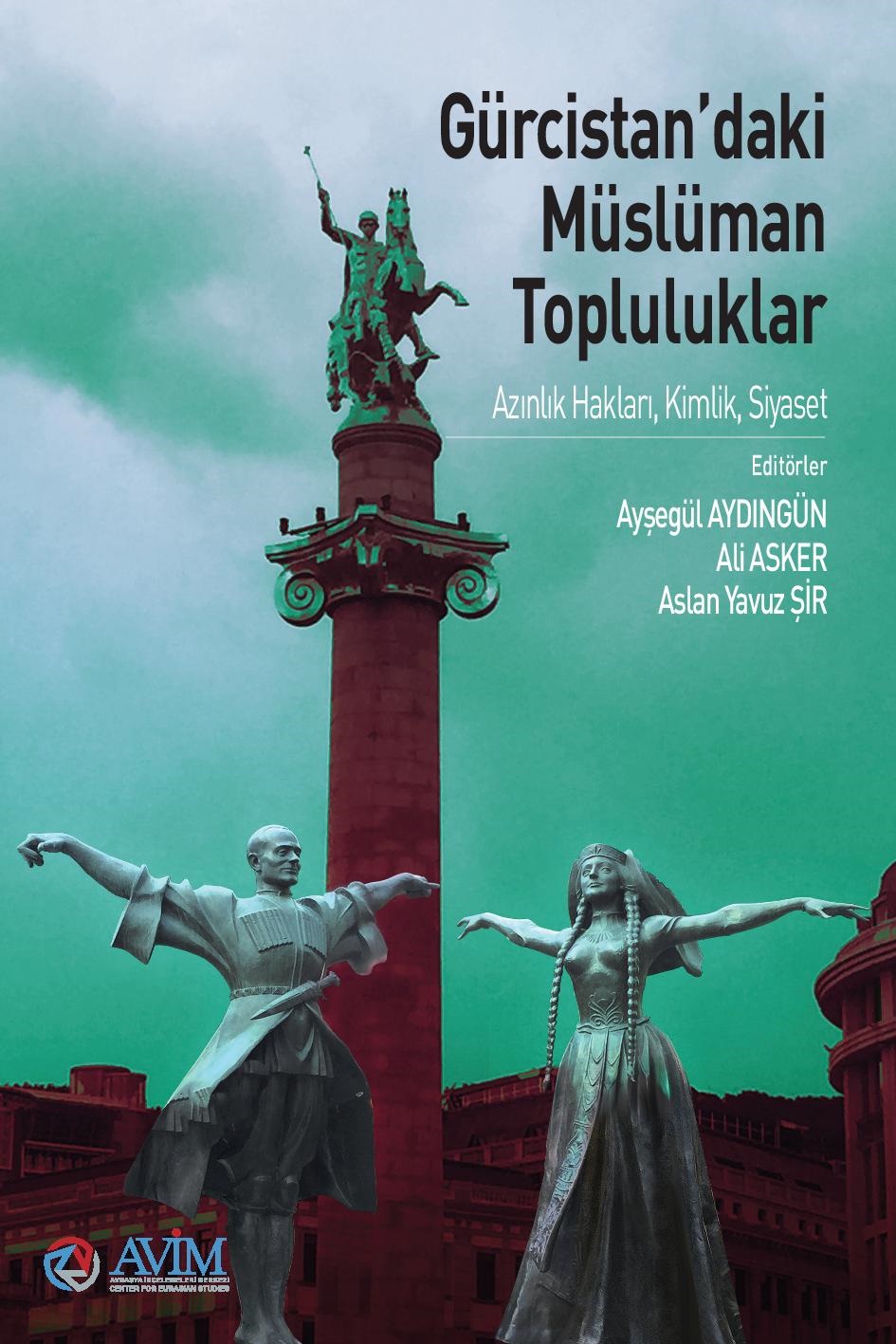
Gürcistan'daki Müslüman Topluluklar: Azınlık Hakları, Kimlik, Siyaset -
10.03.2016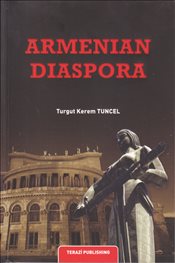
Armenian Diaspora: Diaspora, State and the Imagination of the Republic of Armenia -
24.01.2016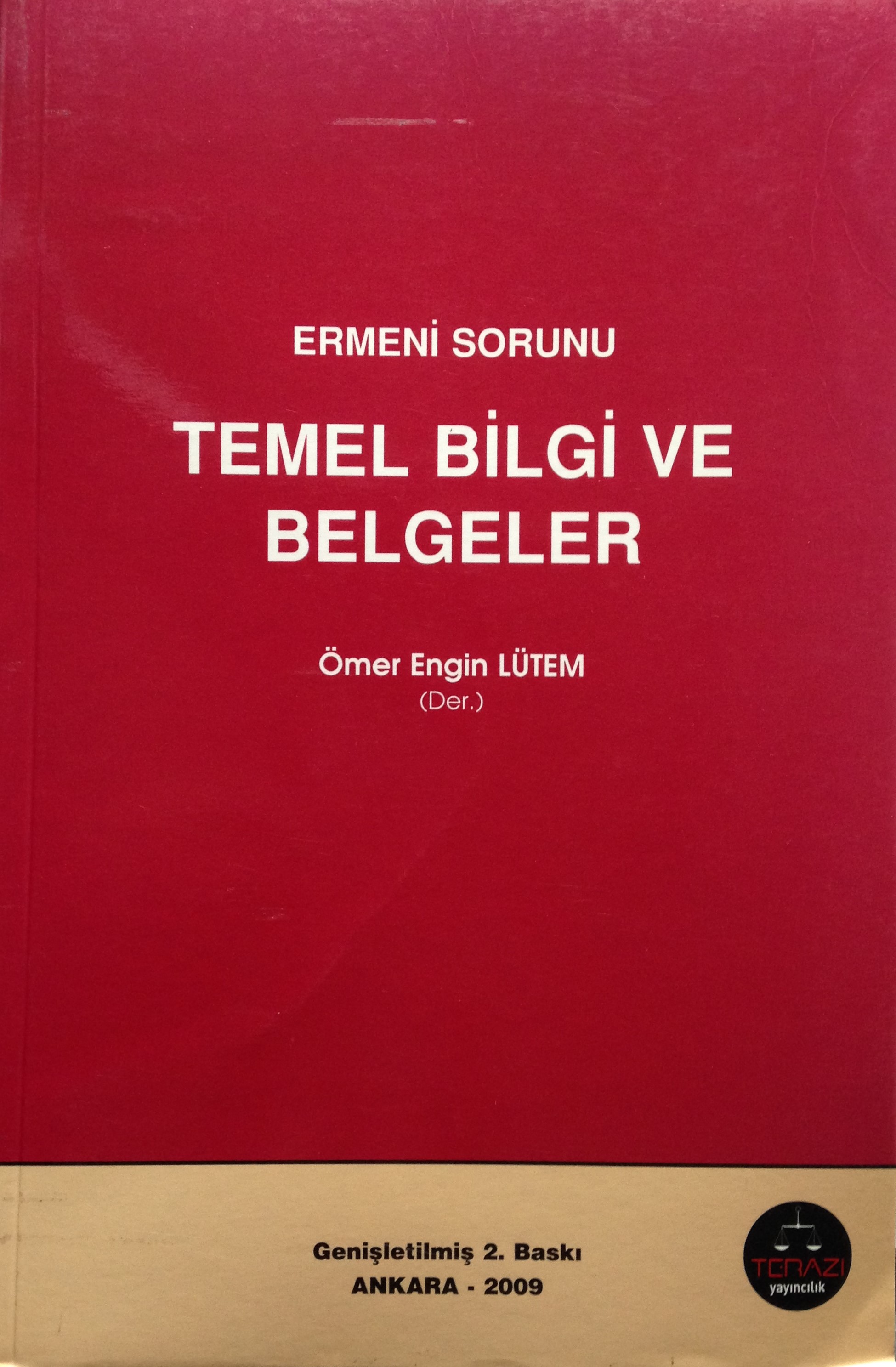
ERMENİ SORUNU - TEMEL BİLGİ VE BELGELER (2. BASKI)

-
AVİM Conference Hall 24.01.2023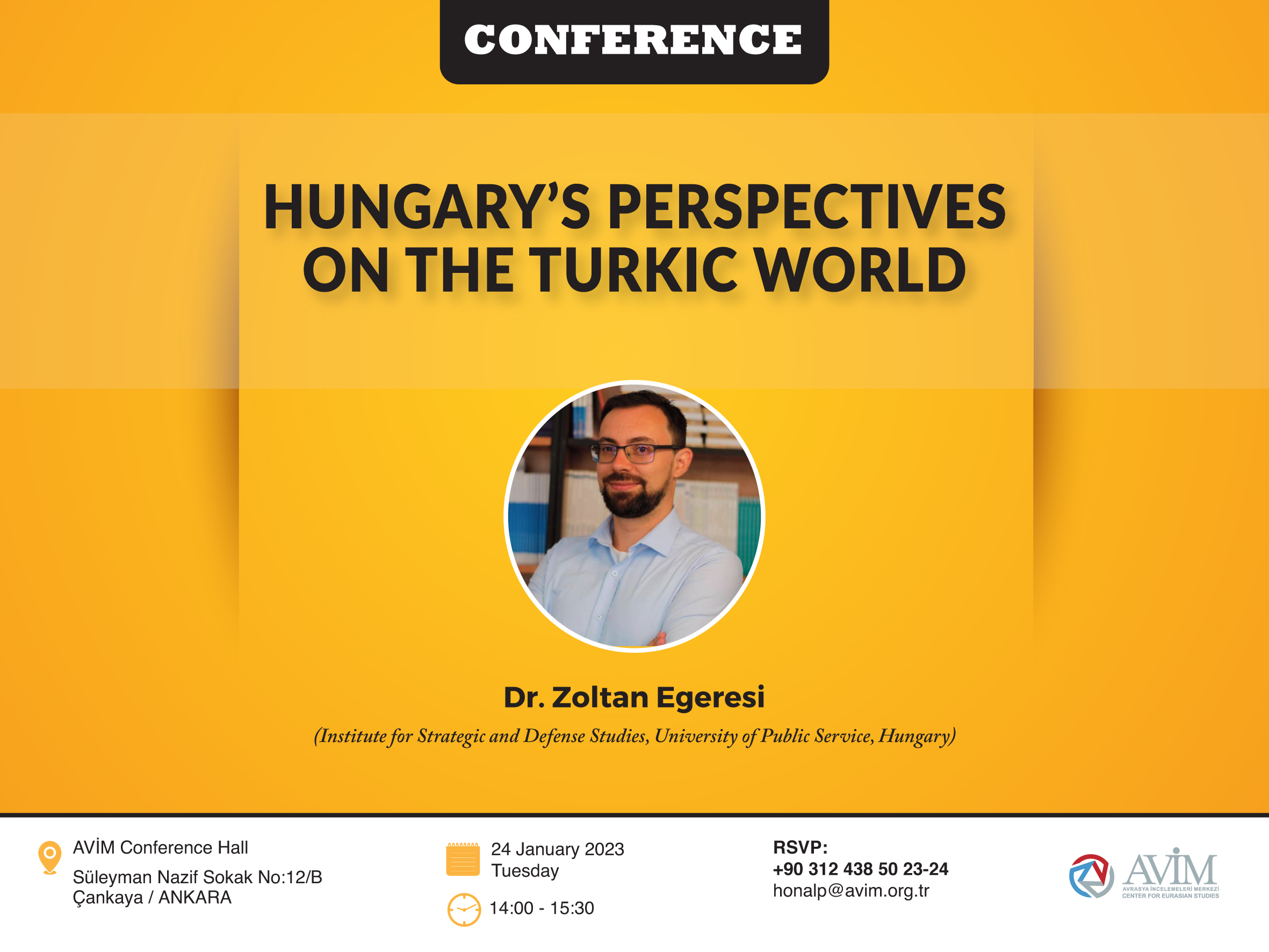
CONFERENCE TITLED “HUNGARY’S PERSPECTIVES ON THE TURKIC WORLD"