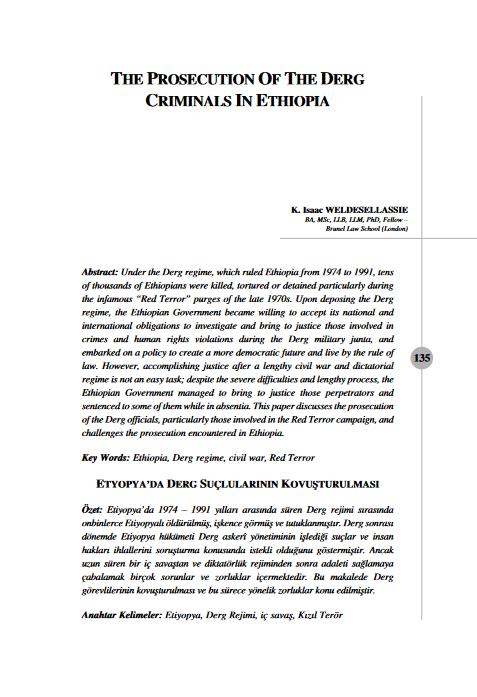
Download PDF :


Financial Times (12 Agust 2018)
Shinzo Abe is gearing up for a contested party election that would allow him to become the longest-serving prime minister in Japanese history, continuing until the 2020 Tokyo Olympics and beyond. Speaking to a crowd of supporters at the weekend, Mr Abe said he was pondering “whether to take up this grave responsibility once again”, after a rival, former defence minister Shigeru Ishiba, threw down the gauntlet and challenged the prime minister. His comments mark the start of a contest that will set the direction of Japan’s government for the next three years, even though Mr Abe is regarded as all-but certain to prevail. Japan’s ruling Liberal Democratic party holds a leadership election every three years. The winner automatically becomes prime minister because of its majority in both houses of parliament. Nobody challenged Mr Abe in 2015, so the first contested party election since 2012 is expected to take place on September 20. Mr Ishiba’s candidacy will test the extent of party discontent with Mr Abe over a series of nepotism scandals, his centralised control over the government and patchy economic progress in Japan’s regions. If Mr Ishiba performs strongly, a weakened Mr Abe will have to cede ground to party rivals.
Speaking to the broadcaster TBS, Mr Ishiba launched a ferocious attack on Mr Abe’s government as self-serving and untrustworthy. “If the government doesn’t have the trust of the public, it can’t do anything,” he said, promising to create a government that is “honest and fair”. Mr Abe has been plagued by a stream of revelations about scandals in which public officials helped out private school operators run by his friends. A collapse in Mr Abe’s approval rating during the spring led to speculation he would be forced out in the party election this autumn. However, Mr Abe’s ratings have recovered against a backdrop of summits with US president Donald Trump, letting the prime minister present himself as an effective champion of Japan’s interests on trade and North Korea. Mr Abe’s most dangerous potential opponents, such as former foreign minister Fumio Kishida, have backed away from a challenge, leaving only Mr Ishiba to take on the prime minister. The party election has two constituencies: 405 votes from sitting LDP members of the two houses of parliament and 405 votes from regional party members. Mr Abe already has the backing of factions representing 257 parliamentary votes. Mr Ishiba’s own faction accounts for just 20 parliamentarians.
That means the main struggle is for the votes of regional party officials. It would be embarrassing for Mr Abe if his support from the grassroots lagged significantly behind his support from the parliamentary party. Mr Ishiba has long sought to cast himself as a voice of the regions. Mr Abe’s determination to pass a modest revision of Japan’s constitution is set to be his main campaign theme. He has proposed a tweak to the constitution’s war-renouncing Article 9 that would make explicit the legality of Japan’s self-defence forces. Setting out one of the battle lines for the leadership contest, Mr Ishiba demanded to know what happened to the LDP’s more radical proposals for constitutional change, agreed by the party in 2012. “What’s the point of a constitutional reform that doesn’t change anything?” he said. “Not a single member of the public thinks the [self-defence forces] are unconstitutional.”
https://www.ft.com/content/625dea36-9e0a-11e8-85da-eeb7a9ce36e4

















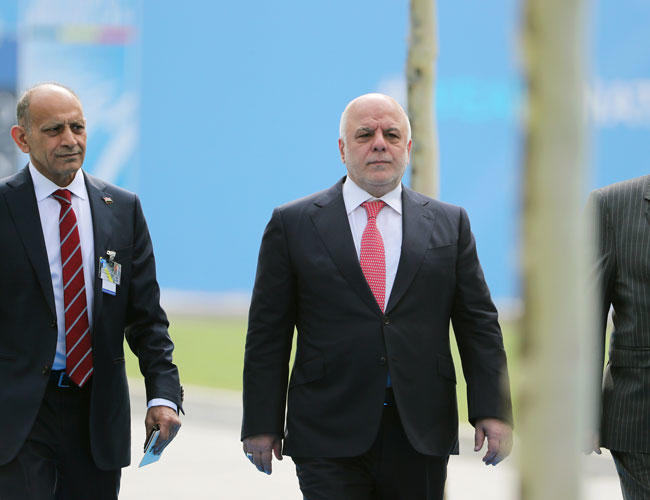 IRAQ PM TO VISIT TURKEY, IRAN
Iraq
13.08.2018
IRAQ PM TO VISIT TURKEY, IRAN
Iraq
13.08.2018
 EU EXPECTS UKRAINE'S ANTI-CORRUPTION COURT TO LAUNCH WORK BEFORE YEAR-END
Europe - EU
13.08.2018
EU EXPECTS UKRAINE'S ANTI-CORRUPTION COURT TO LAUNCH WORK BEFORE YEAR-END
Europe - EU
13.08.2018