

















Reuters, 28 September 2016
Japanese Prime Minister Shinzo Abe is betting that close ties to Russian President Vladimir Putin, Russia's economic woes and regional concerns about China's rise will help him make progress in a decades-old territorial row when the men meet in December.
Abe, 62, who wants to leave a diplomatic legacy with a breakthrough in ties with Russia, may even alter a long-standing demand that the sovereignty of all four disputed islands northeast of Hokkaido be resolved before a peace treaty ending World War Two is signed, politicians and experts said.
Abe's courtship of Putin risks irking key ally the United States, given that Washington is feuding with Moscow over Syria and the annexation of Crimea, although Japanese diplomats have sought to ease American concerns.
"I will resolve the territorial issue, end the abnormal situation in which no peace treaty has been concluded even 71 years after the war and cultivate the major possibility of Japan-Russia cooperation in areas such as the economy and energy," Abe said in a speech to parliament this week.
Those bold pledges belie a tangled disagreement over who owns the islands off the northeast of Japan and Russia's eastern coast, while strong public opposition in Russia to compromise could limit Putin's room for maneuver.
But Abe, who has met Putin 14 times since his first 2006-2007 premiership, has a chance to make headway when he holds a summit with Putin on Dec. 15 in his constituency of Yamaguchi, in southwestern Japan.
They will also meet at gathering in Peru in November.
"For Mr. Abe, a breakthrough needs to be there," a senior Japanese government official said of the December summit.
"Mr. Abe in particular is trying to break the ice in the frozen situation on the peace treaty issue," he said, adding that Japan nevertheless did not expect an "overall resolution".
The territorial feud stems from the Soviet Union's decision in the final days of World War Two to seize the four islands - known in Japan as the Northern Territories and in Russia as the Southern Kuriles - that Tokyo says are its sovereign territory.
Japan has insisted that its sovereignty of all four islands be confirmed before a peace treaty is signed, but there are signs Tokyo may be rethinking that stance.
NEW APPROACH
"It might be possible to get things moving by going ahead with two (smaller) islands first," Masashi Adachi, director of the foreign affairs division of Abe's Liberal Democratic Party told Reuters, reflecting the thinking inside the ruling party.
"There would be a lot of opposition to giving in completely on the other two, but if it's a matter of postponing until a bit later, I think we could get public understanding," Adachi said.
Former Japanese lawmaker Muneo Suzuki, long involved in Russian affairs and now advising Abe, has advocated a similar proposal in the past.
"When we consider how to resolve the problem of the four islands, we cannot stop at the entrance. We have to look to the exit and make realistic suggestions," Suzuki told a news conference on Wednesday.
Last week, Chief Cabinet Secretary Yoshihide Suga denied Japan had altered its basic stance, which risks angering hardliners among Abe's core supporters.
And for Moscow, agreeing to a peace treaty without settling ownership of the bigger islands could spark a domestic backlash.
"The Japanese side is relying on Putin's personal will," said Dmitry Streltsov, a professor at the Moscow State Institute of International Relations. "It seems they are overestimating the room for maneuver that is at Putin's disposal."
Still, some experts including Kazuhiko Togo, an ex-Japanese diplomat who once negotiated with Moscow, said this time might prove different from past failed diplomatic attempts.
One reason for guarded optimism is that Abe, who has already outlasted his recent predecessors since taking office in 2012, will likely be premier for at least two more years.
"In my opinion, there is a possibility to resolve the problem of a peace treaty while Putin and Abe are both in power," said Alexander Panov, a former Russian ambassador to Japan. "After that, it is unlikely."
China's rising clout is a major factor encouraging Japan to court Russia. Sino-Japanese ties have improved from a low point four years ago, but Tokyo is worried by Beijing's growing military assertiveness and a feud over tiny East China Sea isles.
Abe's government also hopes a proposed menu of joint economic projects will be appetizing enough to win Russian concessions, given the pain inflicted on the Russian economy by low global oil prices and Western sanctions, experts said.
Abe has given trade minister Hiroshige Seko, a close ally, a special portfolio in charge of economic cooperation with Russia.
Access to Russian energy resources, meanwhile, would be a plus for Japan.
Abe has personal reasons for wanting to achieve a breakthrough that eluded his father Shintaro, foreign minister from 1982-1986.
"For Shinzo, realizing the dream of normalizing relations with Russia that Shintaro had in mind is one legacy that he wants to leave," former diplomat Togo said.
Skeptics, though, doubt a breakthrough is likely in December, although the summit could produce economic and security deals.
"(Russian) public opinion is strongly against the transfer of any territory whatever ... Japan is already providing economic cooperation," said James Brown, a professor at Temple University, Japan Campus.
"Why would Russia agree to this? It makes much more sense to string it out."
No comments yet.
- WORLD ECONOMIC FORUM REPORT ON ALBANIA The Balkans 29.09.2016
- AZERBAIJAN DRAWS ATTENTION TO ARMENIAN AGGRESSION AT UN The Caucasus and Turkish-Armenian Relations 29.09.2016
- BRITAIN’S CORBYN REJECTS CALL FOR EU IMMIGRATION CURBS AT PARTY CONFERENCE Europe - EU 29.09.2016
- EU EXECUTIVE PROPOSES TIGHTER LOBBYING RULES Europe - EU 29.09.2016
- BULGARIA TO STUDY OPTIONS FOR AZERBAIJANI GAS SUPPLIES - ENERGY MIN The Balkans 29.09.2016
-
25.01.2016
THE ARMENIAN QUESTION - BASIC KNOWLEDGE AND DOCUMENTATION -
12.06.2024
THE TRUTH WILL OUT -
27.03.2023
RADİKAL ERMENİ UNSURLARCA GERÇEKLEŞTİRİLEN MEZALİMLER VE VANDALİZM -
17.03.2023
PATRIOTISM PERVERTED -
23.02.2023
MEN ARE LIKE THAT -
03.02.2023
BAKÜ-TİFLİS-CEYHAN BORU HATTININ YAŞANAN TARİHİ -
16.12.2022
INTERNATIONAL SCHOLARS ON THE EVENTS OF 1915 -
07.12.2022
FAKE PHOTOS AND THE ARMENIAN PROPAGANDA -
07.12.2022
ERMENİ PROPAGANDASI VE SAHTE RESİMLER -
01.01.2022
A Letter From Japan - Strategically Mum: The Silence of the Armenians -
01.01.2022
Japonya'dan Bir Mektup - Stratejik Suskunluk: Ermenilerin Sessizliği -
03.06.2020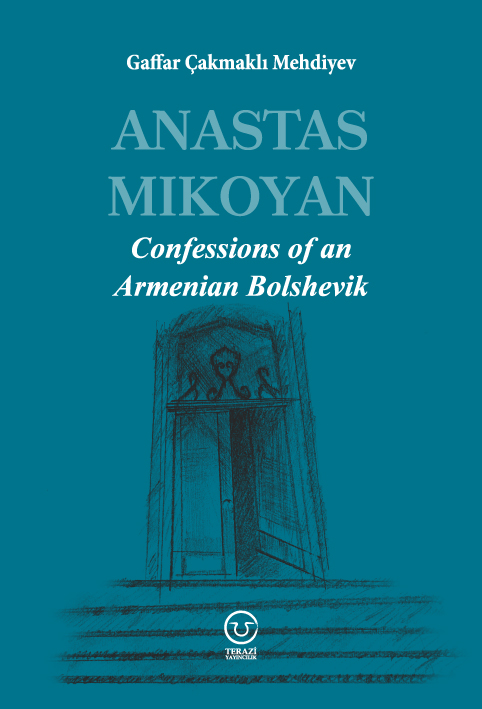
Anastas Mikoyan: Confessions of an Armenian Bolshevik -
08.04.2020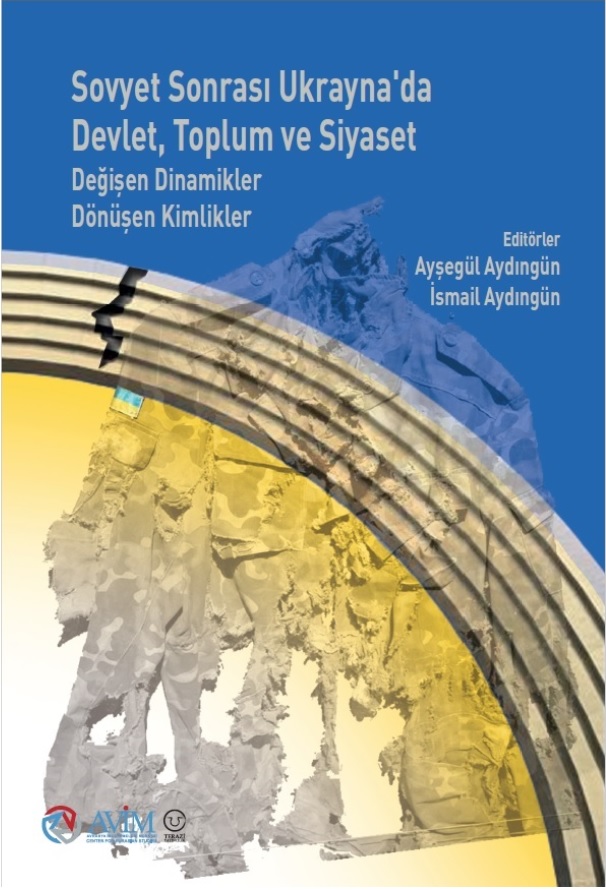
Sovyet Sonrası Ukrayna’da Devlet, Toplum ve Siyaset - Değişen Dinamikler, Dönüşen Kimlikler -
12.06.2018
Ermeni Sorunuyla İlgili İngiliz Belgeleri (1912-1923) - British Documents on Armenian Question (1912-1923) -
02.12.2016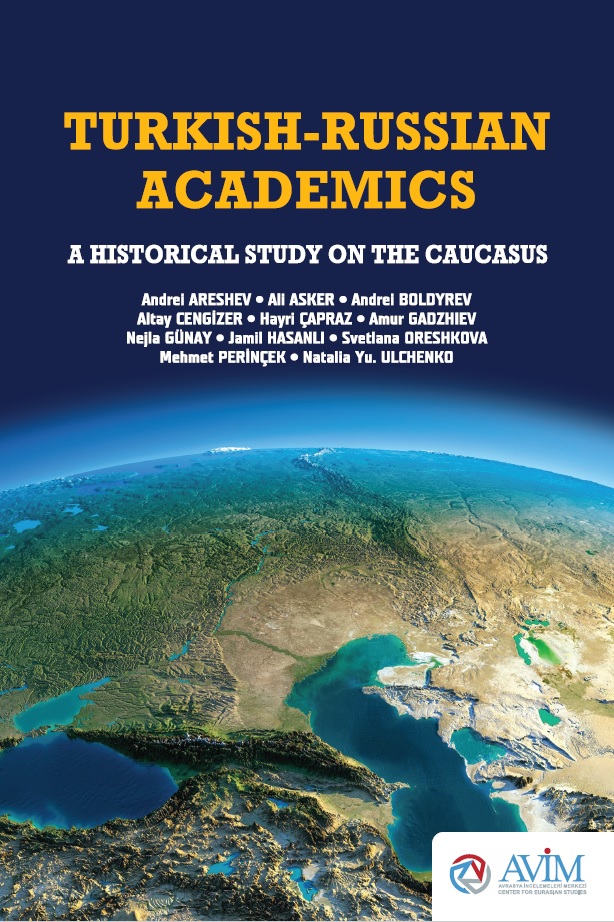
Turkish-Russian Academics: A Historical Study on the Caucasus -
01.07.2016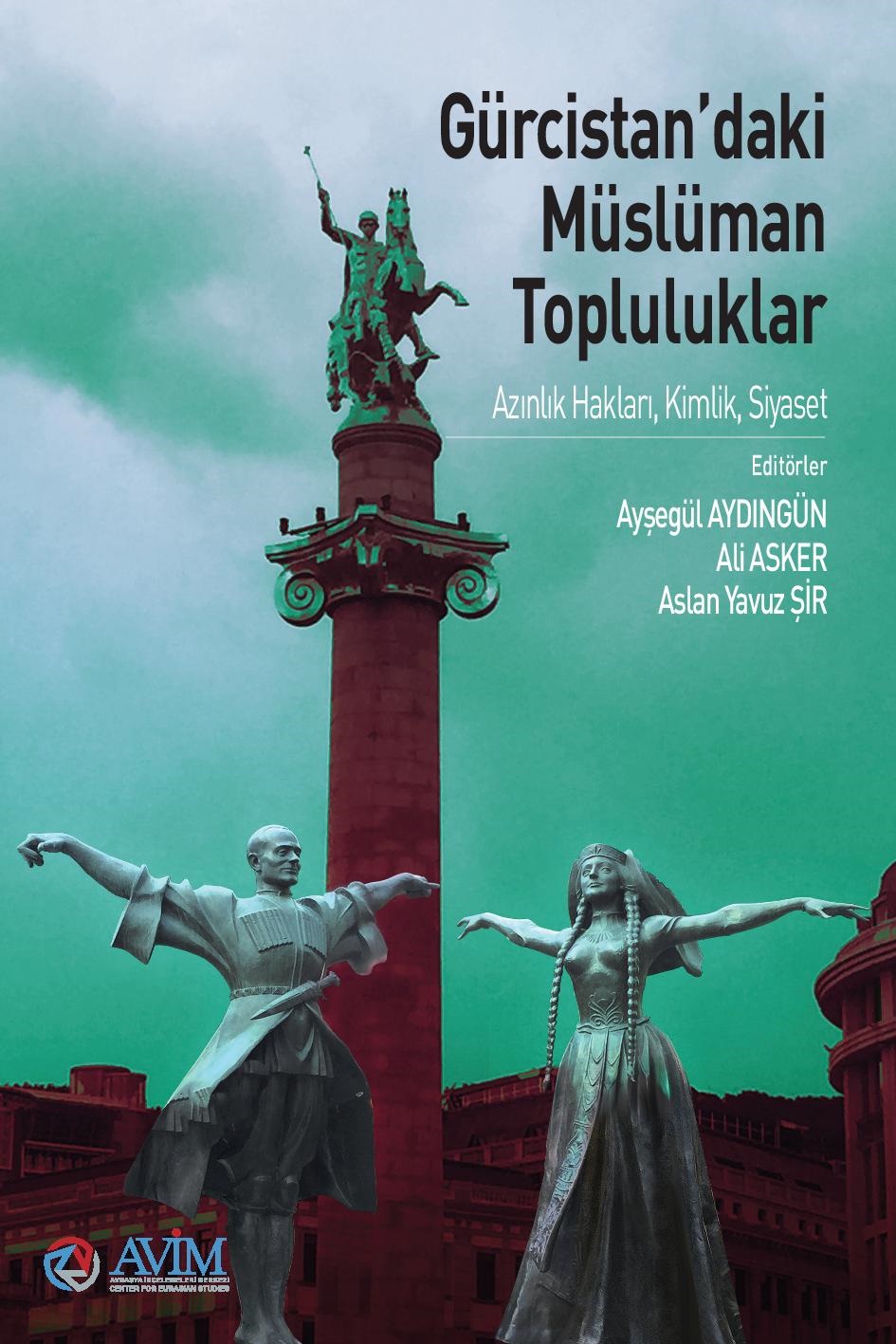
Gürcistan'daki Müslüman Topluluklar: Azınlık Hakları, Kimlik, Siyaset -
10.03.2016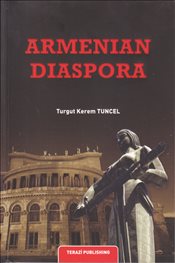
Armenian Diaspora: Diaspora, State and the Imagination of the Republic of Armenia -
24.01.2016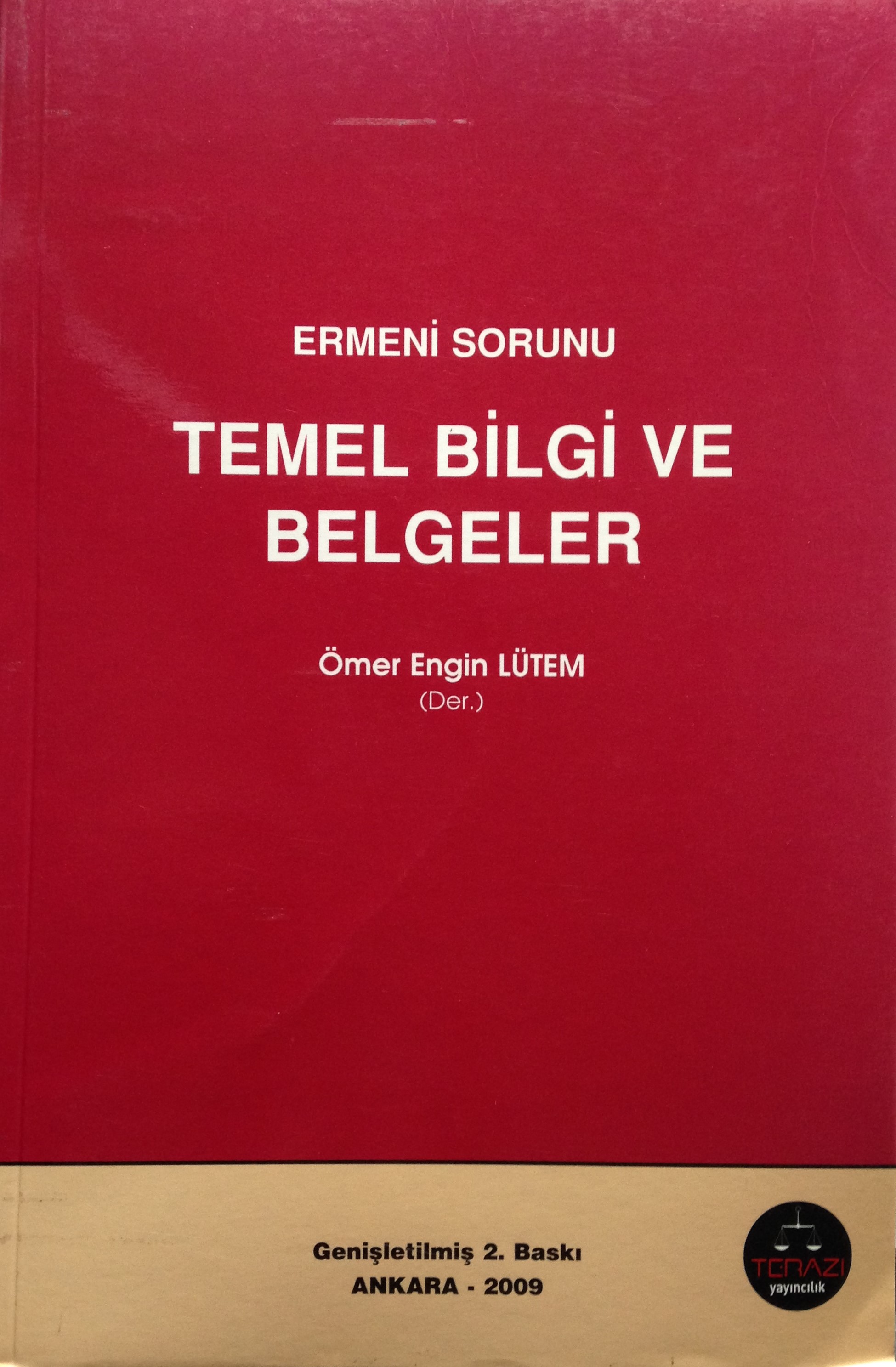
ERMENİ SORUNU - TEMEL BİLGİ VE BELGELER (2. BASKI)



-
AVİM Conference Hall 24.01.2023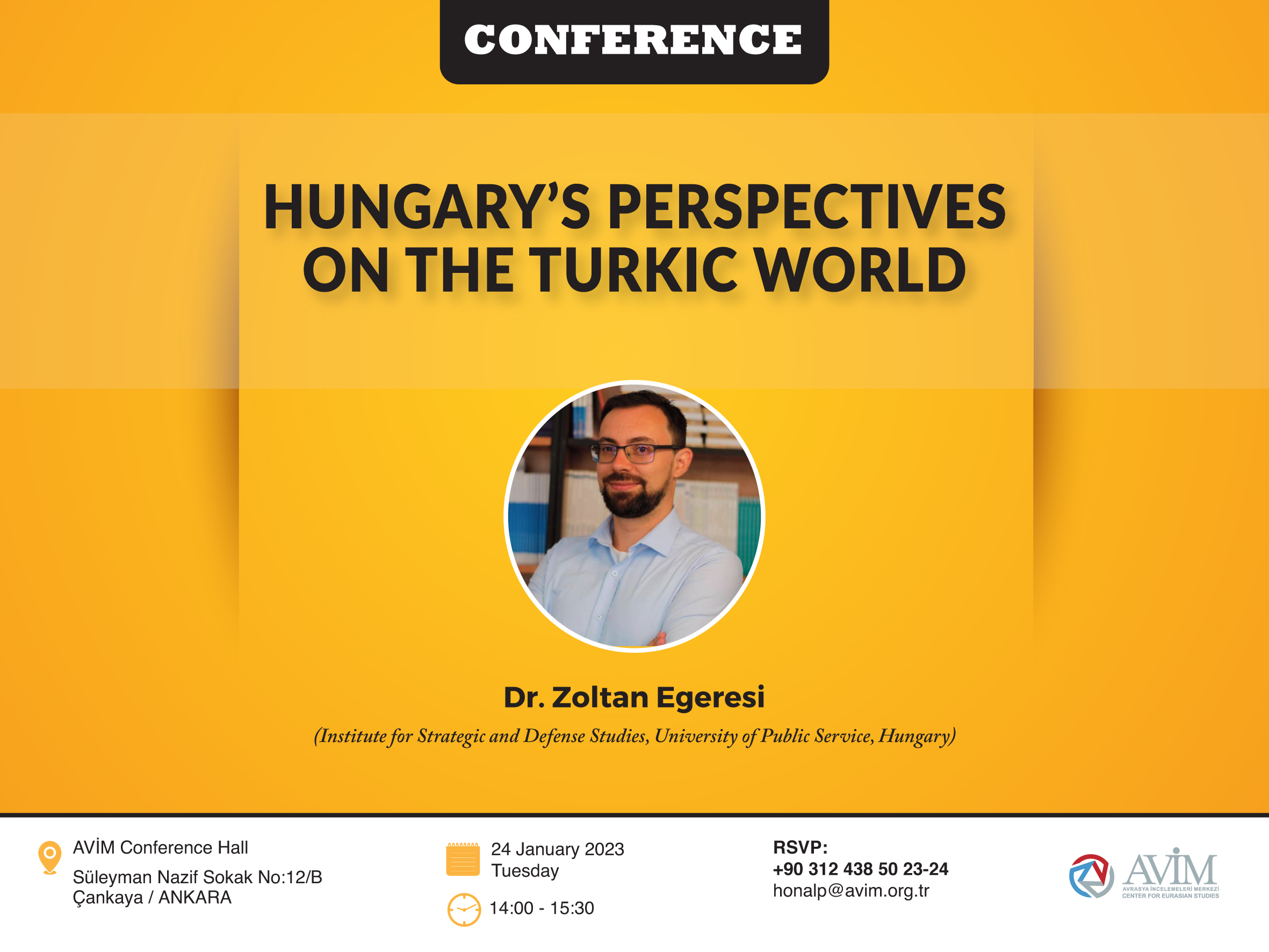
CONFERENCE TITLED “HUNGARY’S PERSPECTIVES ON THE TURKIC WORLD"