
















EurActiv (15 November 2018)
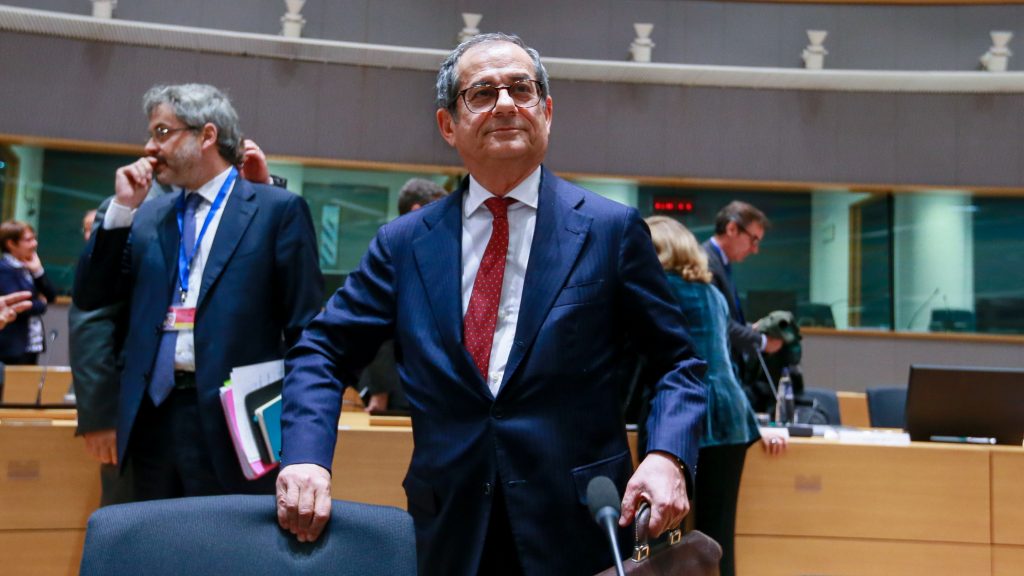
Italy defied Brussels again on Tuesday (13 November) as Finance Minister Giovanni Tria presented only a slightly modified draft budget, despite the European Commission rejecting the previous spending plan in an unprecedented decision.
The fresh Italian draft budget arrived 22 minutes late at 00:22 am according to EU sources and barely differs from the previous text.
The only novelty this time is the government’s decision to raise the objective of privatising public assets to 1% of GDP by 2019.
Tria argued that the privatisation effort constitutes “a safety margin to ensure that the debt reduction targets approved by parliament are achieved”.
But those targets were rejected by the Commission in its previous assessment in October, which was later backed by other members of the eurozone.
The new text confirmed the 2.4% deficit for 2019, which the government considered “an insurmountable limit”.
This involves structural deterioration amounting to 0.8% of GDP, and an “unprecedented breach” of the fiscal pact, according to the Commission.
Nevertheless, the Italian government defended again its decision to present an expansive budget. “The government remains confident about the possibilities of achieving the growth targets,” Tria said.
More flexibility
Rome has once again called for flexibility within the EU fiscal pact for “exceptional events” given recent floods that hit the country and the collapse of the Morandi Bridge in Genoa during the summer.
Tria argued that 0.2% of GDP will be invested in an extraordinary plan to combat hydrogeological instability, as a response to the floods, which killed over thirty people.
The Italian authorities also insisted that the deadly collapse of the Morandi Bridge, which killed a dozen people, “highlighted the need to undertake an extraordinary maintenance programme”.
In 2019, €1 billion will be allocated to improve the safety and maintenance of road network infrastructures. “The plan will be treated as an emergency intervention,” Tria explained.
Both the Commission and the other EU member states will have to assess the request.
According to the Commission, Italy has been the main beneficiary of the flexibility by around €30 billion between 2015 and 2018, intended to support Italy’s response to security threats, the refugee crisis and earthquakes.
Next steps
On Wednesday 21 November, the Commission will issue its assessment of the euro area draft budgets, including Italy’s.
The EU executive is expected to reiterate its criticism that the Italian government expenditure plan breaches the Stability and Growth Pact, despite Rome’s effort.
The Commission is also likely to publish a report on Italy’s debt, which stood at 131.2% in 2017 and is one of the largest in the world.
That might lead to triggering an excessive deficit procedure, which could take months to conclude and trigger a fine of up to 0.2% of the country’s GDP.
Italy has so far avoided sanctions because, despite its enormous debt, the country complied with the Stability and Growth Pact. According to the Commission assessment of the previous draft budget, it does not anymore.
Among EU member states, Dutch Minister for Finance Wopke Hoekstra was the first to voice concerns about Italy’s revised budgetary plans.
In a press statement, Hoekstra said Italy’s public finances were “out of control”. Turning to the Commission, the minister insisted that the budget “does not meet the agreements we have made in Europe”.
Although the EU executive refused to comment on the content of the new proposal, which is still to be assessed, vice-president for the euro Valdis Dombrovskis warned in a tweet (in Latvian) that the Italian expenditure plans “are counterproductive to the Italian economy itself”.
No comments yet.
- AFGHAN OFFICIALS: TALIBAN KILL 30 POLICEMEN IN WEST PROVINCE Asia - Pacific 15.11.2018
- ELEVEN POLITICAL PARTIES REGISTER FOR ARMENIA’S PARLIAMENTARY ELECTIONS The Caucasus and Turkish-Armenian Relations 15.11.2018
- MFA PRESS RELEASE REGARDING THE 74TH ANNIVERSARY OF THE DEPORTATION OF AHISKA TURKS FROM THEIR HOMELAND The Caucasus and Turkish-Armenian Relations 15.11.2018
- MACRON'S 'EUROPEAN ARMY': WHY IS EVERYONE TALKING ABOUT IT? Europe - EU 15.11.2018
- KAZAKHSTAN HOLDS NATIONWIDE EXAM IN SHIFT AWAY FROM CYRILLIC ALPHABET Asia - Pacific 15.11.2018
-
25.01.2016
THE ARMENIAN QUESTION - BASIC KNOWLEDGE AND DOCUMENTATION -
12.06.2024
THE TRUTH WILL OUT -
27.03.2023
RADİKAL ERMENİ UNSURLARCA GERÇEKLEŞTİRİLEN MEZALİMLER VE VANDALİZM -
17.03.2023
PATRIOTISM PERVERTED -
23.02.2023
MEN ARE LIKE THAT -
03.02.2023
BAKÜ-TİFLİS-CEYHAN BORU HATTININ YAŞANAN TARİHİ -
16.12.2022
INTERNATIONAL SCHOLARS ON THE EVENTS OF 1915 -
07.12.2022
FAKE PHOTOS AND THE ARMENIAN PROPAGANDA -
07.12.2022
ERMENİ PROPAGANDASI VE SAHTE RESİMLER -
01.01.2022
A Letter From Japan - Strategically Mum: The Silence of the Armenians -
01.01.2022
Japonya'dan Bir Mektup - Stratejik Suskunluk: Ermenilerin Sessizliği -
03.06.2020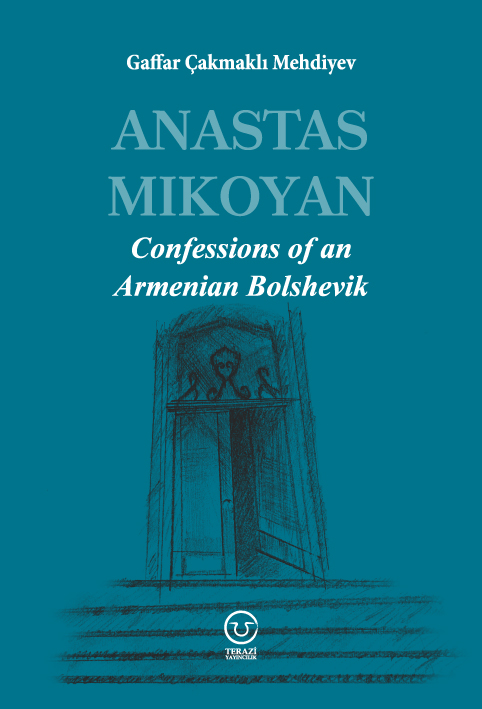
Anastas Mikoyan: Confessions of an Armenian Bolshevik -
08.04.2020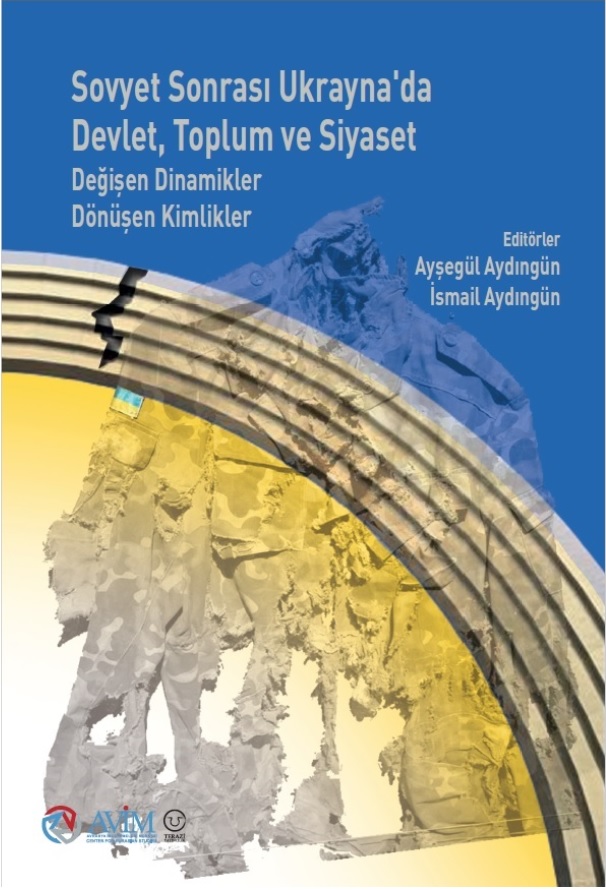
Sovyet Sonrası Ukrayna’da Devlet, Toplum ve Siyaset - Değişen Dinamikler, Dönüşen Kimlikler -
12.06.2018
Ermeni Sorunuyla İlgili İngiliz Belgeleri (1912-1923) - British Documents on Armenian Question (1912-1923) -
02.12.2016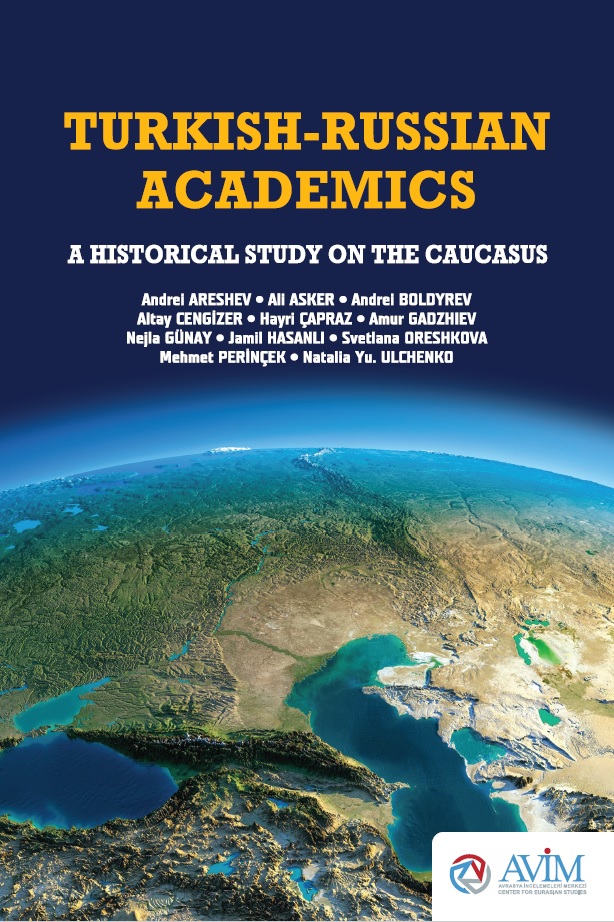
Turkish-Russian Academics: A Historical Study on the Caucasus -
01.07.2016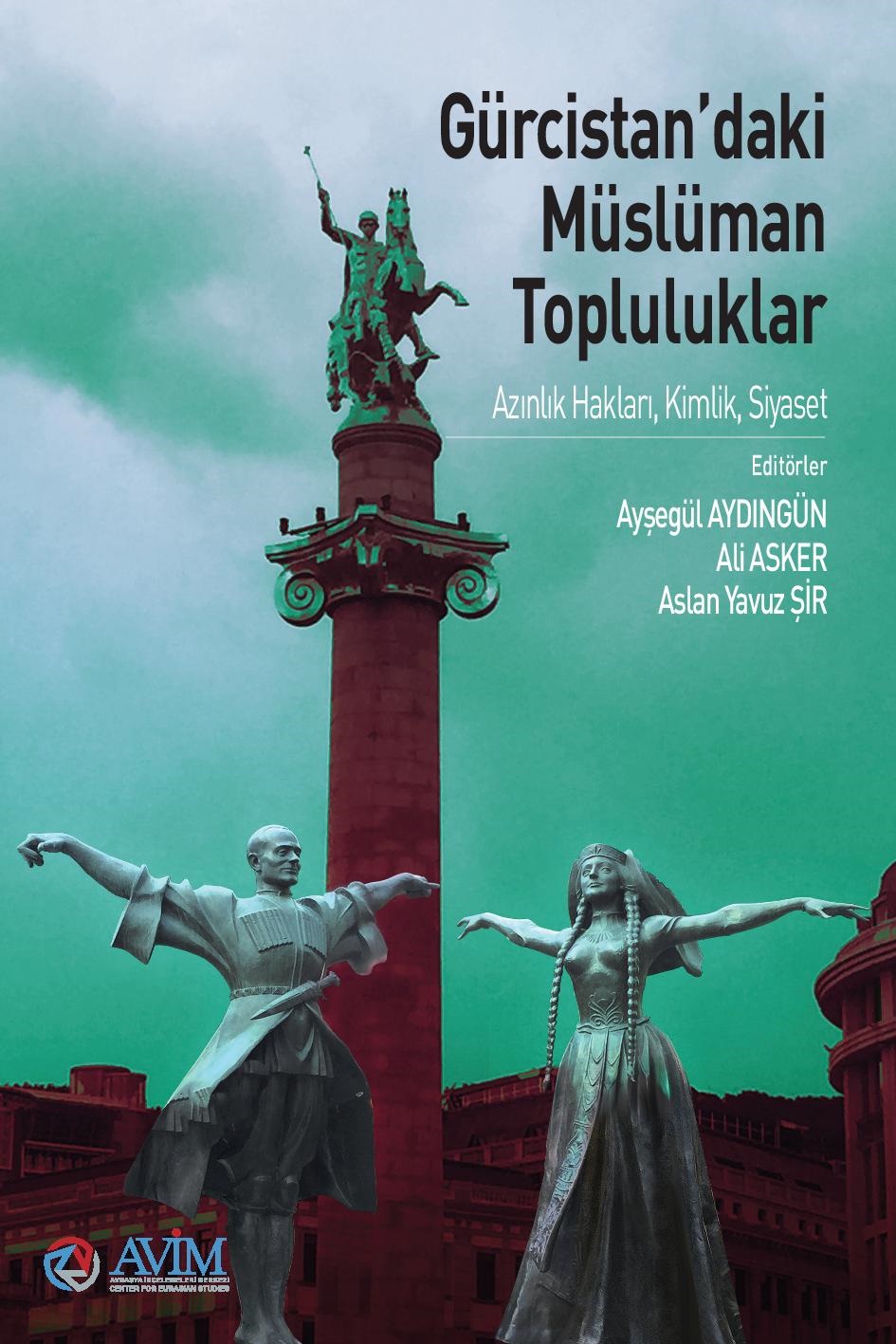
Gürcistan'daki Müslüman Topluluklar: Azınlık Hakları, Kimlik, Siyaset -
10.03.2016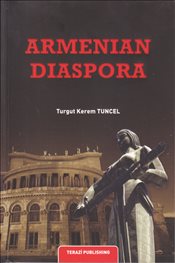
Armenian Diaspora: Diaspora, State and the Imagination of the Republic of Armenia -
24.01.2016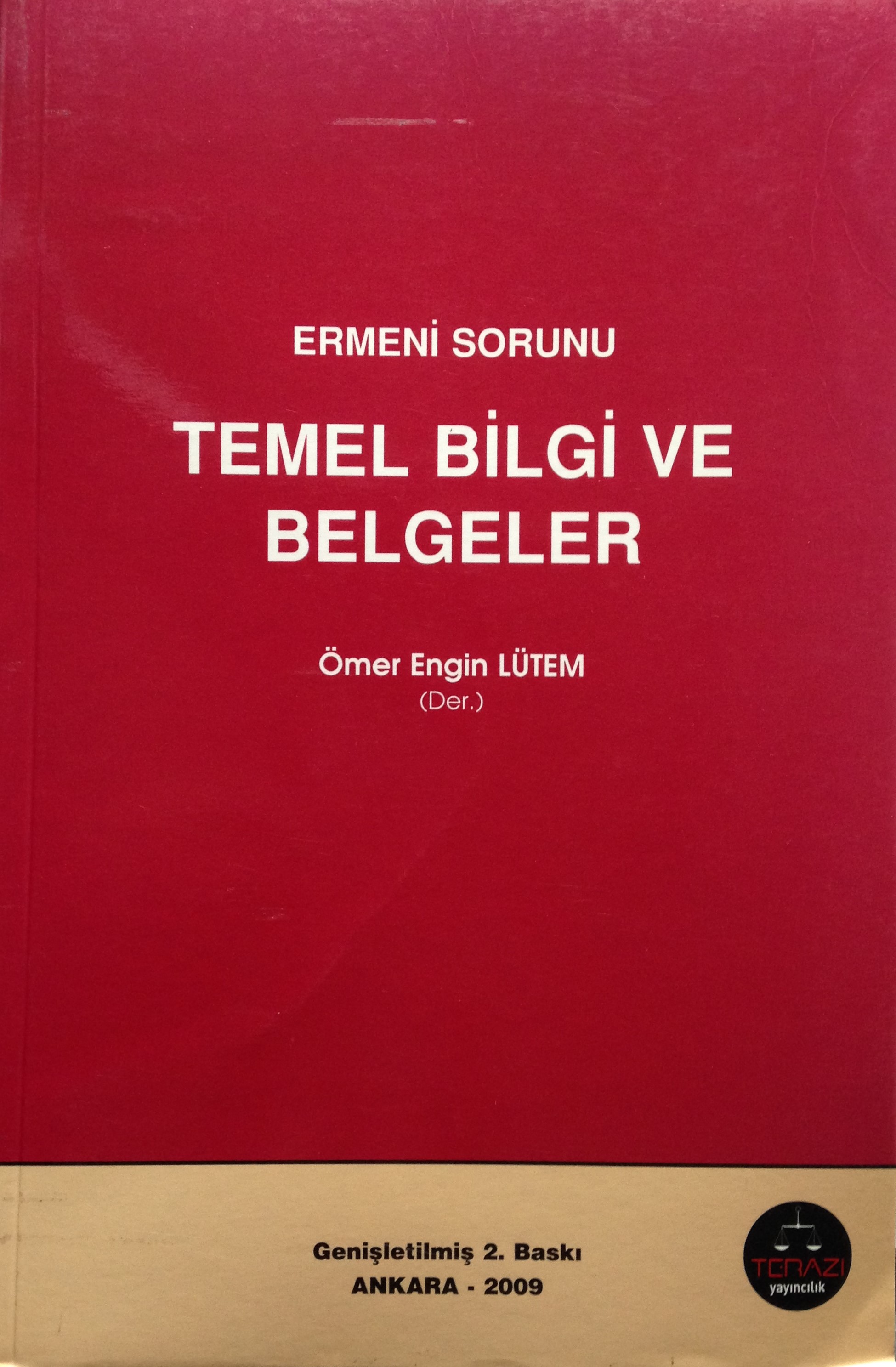
ERMENİ SORUNU - TEMEL BİLGİ VE BELGELER (2. BASKI)
-
AVİM Conference Hall 24.01.2023
CONFERENCE TITLED “HUNGARY’S PERSPECTIVES ON THE TURKIC WORLD"