

















The Arab Weekly, March 04, 2018
Nazli Tarzi
No rain god can reverse the damage wrought by political mismanagement and stubborn ecological factors.
Prolonged drought conditions left Iraq dealing with a water crisis, which was interrupted by heavy rainfall in late February. Overjoyed spectators argued that water reserves, bled dry by upstream irrigation schemes and irregular rainfall, had been replenished — or perhaps this was merely an illusion of drought recovery.
Behind the mirage lurks the recent memory of parched earth cracking because of a lack of moisture, particularly for its cultivators, farmers and a population dependent on the replenishment of its twin rivers. The loving words of late Iraqi poet Muhammad Mahdi al-Jawahiri: “Tigris of abundance,” “mother of orchards” sharpen the contrast.
“The Tigris has resigned in its capacity as one of Iraq’s twin rivers,” wrote Mustafa al-Awsi on Facebook, days before a downpour transformed Iraq into a temporary Venice of the Arab world.
Dry conditions, water abstraction activities and man-made regulation schemes by riparian states — Turkey, Iran and Syria — with which Iraq shares its water, have devastated agricultural and aquatic life and the rural economy, which employs 20% of Iraq’s workforce. The crisis is not new but has grown in the years following the US-led invasion of resource-rich Iraq.
Blame has been assigned to numerous actors. Activists uphold the ruling elite’s demonstrable lack of expertise and mismanagement as one cause. Others accuse the hydraulic diversions led by Iraq’s neighbours.
Levels remain low, despite assurances from Iraqi Minister of Water Resources Hassan al-Janabi. In an interview with Al-Baghdadia TV, Janabi explained that four consecutive days of heavy rainfall compensated the country for “the depletion of strategic summer reserves” to remedy crop failure. Despite Janabi’s optimism, there is no quick fix.
While fingers of blame criss-cross the Iraqi Twittersphere, explanations appear confused at best. However, no rain god can reverse the damage wrought by a crippling blend of political mismanagement and stubborn ecological factors.
Drought episodes in Iraq are recurrent and vary in magnitude from one year to the next. Particularly severe are the drought conditions in Diyala Basin, shared with Iran, during the June-September dry season.
The worst spell struck in 2008, settling “heavily over the fertile crescent region,” NASA, the US space agency, at the time wrote, due to climatic changes, reduced rainfall, searing summers and land degradation. The recent torrential rain may have temporarily reversed the deficit threatening future water wars but offers no blueprint for how to manage Iraq’s impaired river flow.
A more insidious force at play — dam construction by countries whose geographic placement allows them to control the headwaters of shared water basins — must first be overcome. The twin rivers from which Iraq derives its ancient moniker are shared systems extending beyond its territory. Iraq, as denoted by the term “Meso” for middle and “Potamia” for rivers, is the land in between. This fact encouraged the cultivation of sophisticated 1,000 year-old irrigation systems.
The completion of Ilisu, the $1.46 billion dam project in southern Turkey, is exacerbating water scarcity. Although 15 dams have been built in the country, the effects of Ilisu on biodiverse lands, the ancient city of Hasankeyf and its 3,700 largely Kurdish inhabitants will be the most significant.
The flow of water has fallen 40%, Janabi told Reuters in December.
Hydroelectric dams are but one piece of the riverine puzzle.
The unsanctioned digging of wells by farmers and the Iraqi government added a layer of complexity. It has sucked difficult-to-replenish groundwater reserves dry.
Water infrastructure battered in the last decade has strained the operating capacity of facilities and services, resulting in the near total failure of Iraq’s sewage systems.
The situation is complex and the need for a resolution cannot be overstated. Article 110 of the Iraqi Constitution reads: “The federal government shall have exclusive authority in planning policies relating to water sources from outside Iraq.” However, calculated deception by Iraq and its neighbours is not being adequately addressed.
Frustrations have been expressed in articles published by activists aligned with the “Save the Tigris” campaign. One piece argued that “postponement of Ilisu Dam Reservoir is not a success!” Turkey, they said, “continues to suggest falsely that the dam’s work is being delayed” and that “the Iraqi government is aware of this deception… but continues to mislead” its people.
Denial of the scale and magnitude of Iraq’s water crisis works against the vested interests of those in power. Given that 80% of Iraq’s water is at the mercy of upstream neighbours, the risks are known but left to fester as populations remain unshielded from the dam-building sprees of co-riparian states.
Water deficit-inspired disputes between tribal communities that dot vegetated lands are set to rise if deception, inaction and irresponsible spending persist.
No comments yet.
- CENTER FOR VISITORS TO BE ESTABLISHED NEAR ARMENIA-IRAN BORDER CHECKPOINT The Caucasus and Turkish-Armenian Relations 05.03.2018
- AZERBAIJAN-MONTENEGRO RELATIONS STRENGTHEN WITH ENERGY PARTNERSHIP The Caucasus and Turkish-Armenian Relations 05.03.2018
- CHINA TO RAISE DEFENCE BUDGET BY 8.1% IN 2018 Asia - Pacific 05.03.2018
- AZERBAIJAN DESTROYS ANOTHER ARMENIAN UAV The Caucasus and Turkish-Armenian Relations 05.03.2018
- WHY INDIA IS KEEPING A CLOSE EYE ON PAKISTAN PM’S VISIT TO NEPAL Asia - Pacific 05.03.2018
-
25.01.2016
THE ARMENIAN QUESTION - BASIC KNOWLEDGE AND DOCUMENTATION -
12.06.2024
THE TRUTH WILL OUT -
27.03.2023
RADİKAL ERMENİ UNSURLARCA GERÇEKLEŞTİRİLEN MEZALİMLER VE VANDALİZM -
17.03.2023
PATRIOTISM PERVERTED -
23.02.2023
MEN ARE LIKE THAT -
03.02.2023
BAKÜ-TİFLİS-CEYHAN BORU HATTININ YAŞANAN TARİHİ -
16.12.2022
INTERNATIONAL SCHOLARS ON THE EVENTS OF 1915 -
07.12.2022
FAKE PHOTOS AND THE ARMENIAN PROPAGANDA -
07.12.2022
ERMENİ PROPAGANDASI VE SAHTE RESİMLER -
01.01.2022
A Letter From Japan - Strategically Mum: The Silence of the Armenians -
01.01.2022
Japonya'dan Bir Mektup - Stratejik Suskunluk: Ermenilerin Sessizliği -
03.06.2020
Anastas Mikoyan: Confessions of an Armenian Bolshevik -
08.04.2020
Sovyet Sonrası Ukrayna’da Devlet, Toplum ve Siyaset - Değişen Dinamikler, Dönüşen Kimlikler -
12.06.2018
Ermeni Sorunuyla İlgili İngiliz Belgeleri (1912-1923) - British Documents on Armenian Question (1912-1923) -
02.12.2016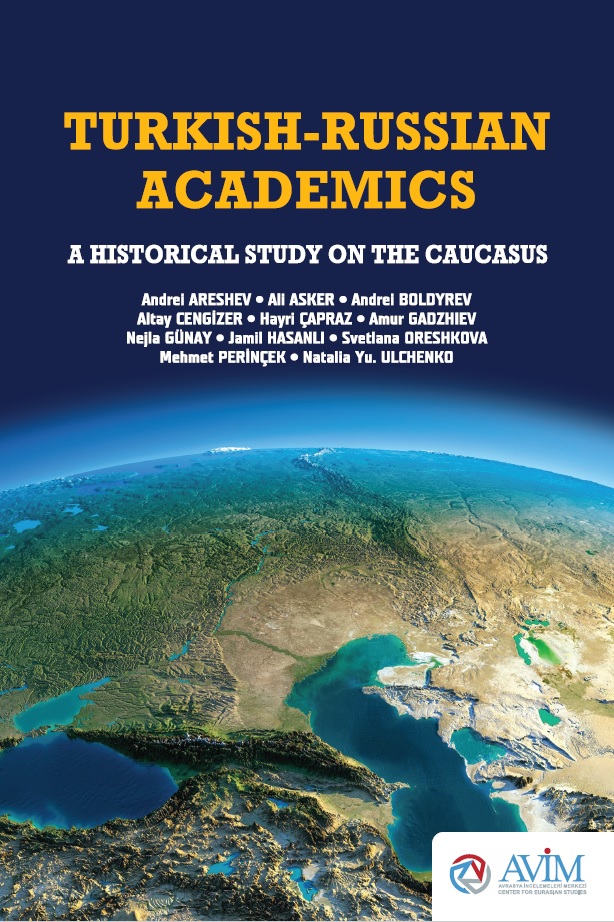
Turkish-Russian Academics: A Historical Study on the Caucasus -
01.07.2016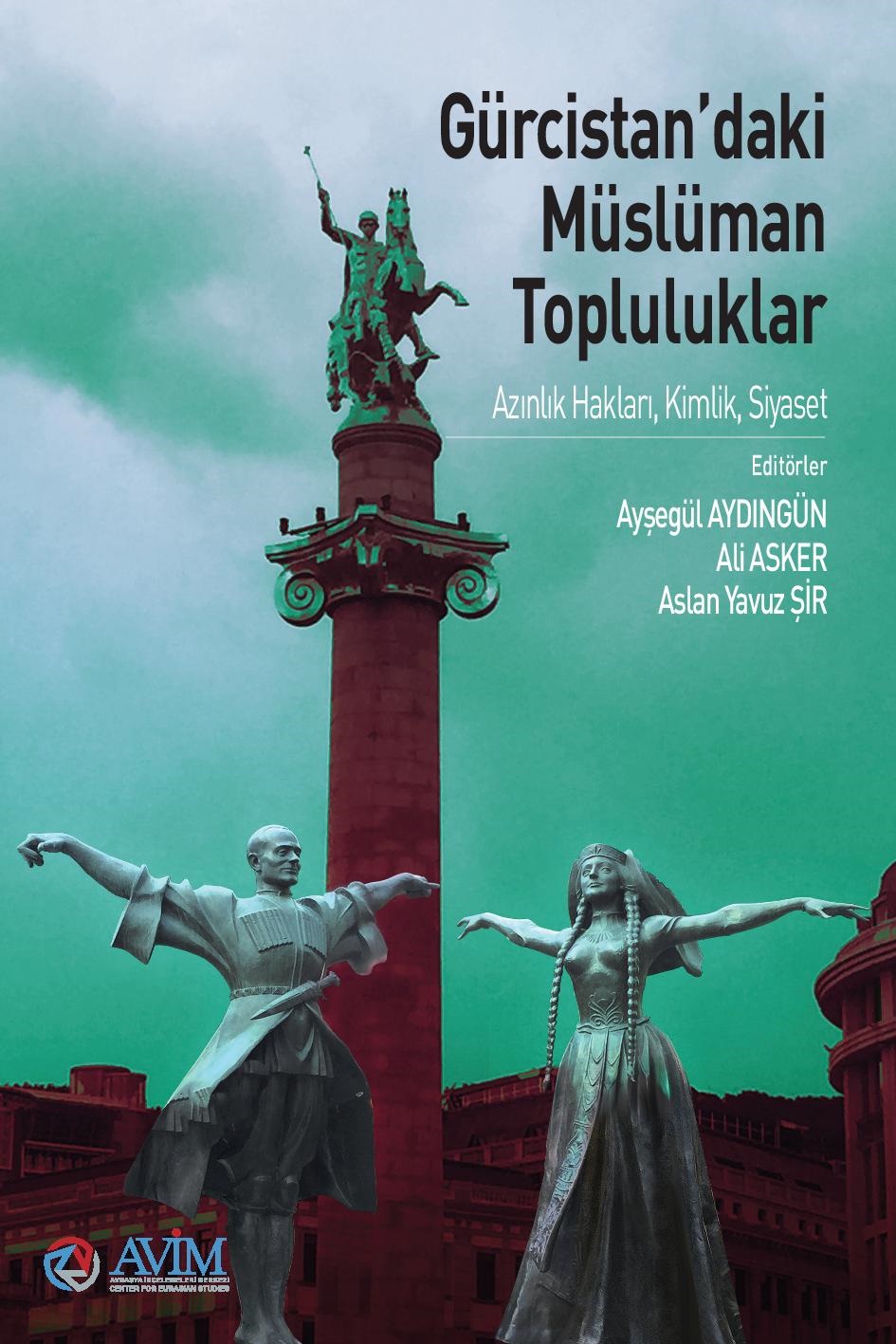
Gürcistan'daki Müslüman Topluluklar: Azınlık Hakları, Kimlik, Siyaset -
10.03.2016
Armenian Diaspora: Diaspora, State and the Imagination of the Republic of Armenia -
24.01.2016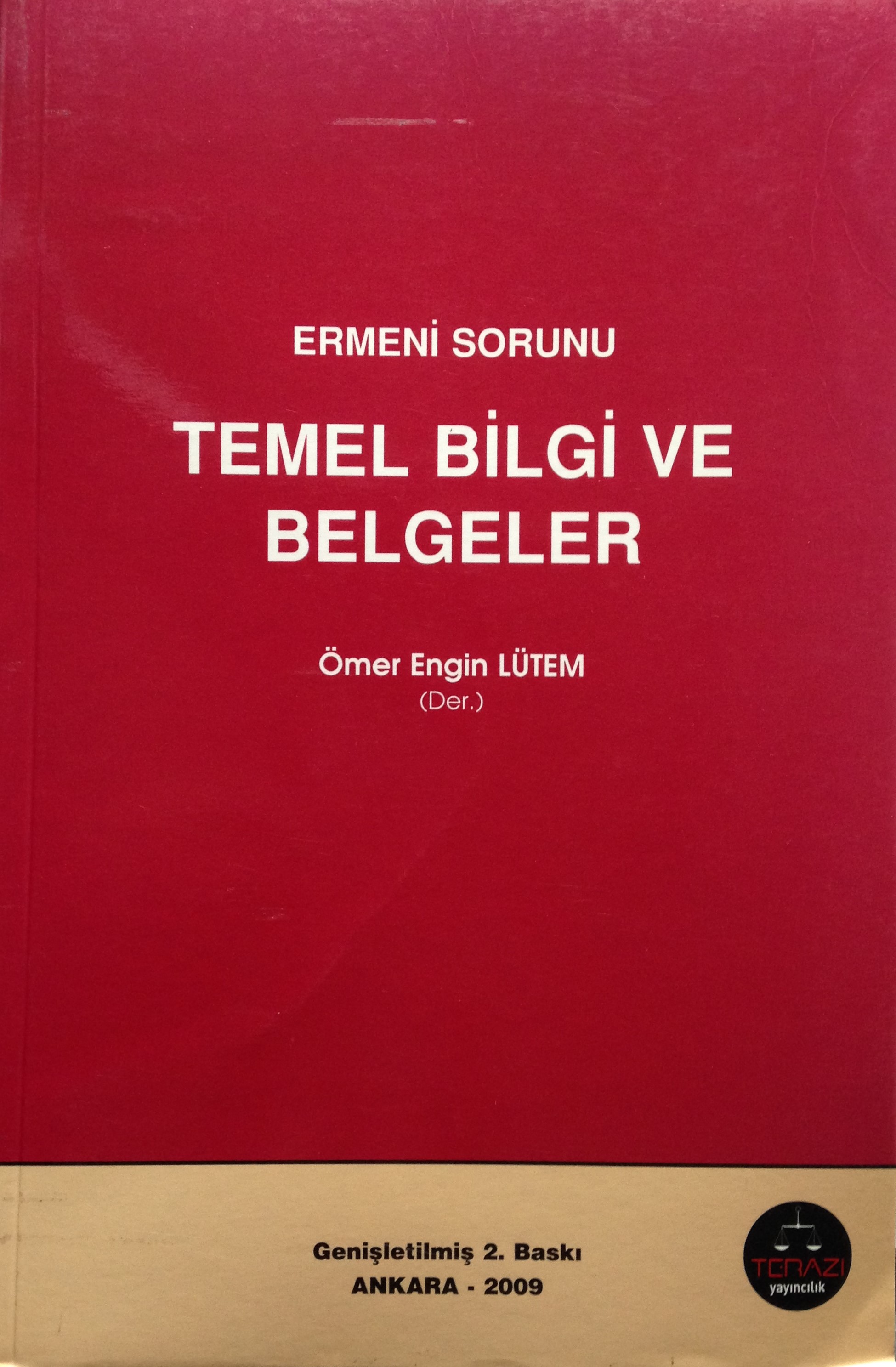
ERMENİ SORUNU - TEMEL BİLGİ VE BELGELER (2. BASKI)

-
AVİM Conference Hall 24.01.2023
CONFERENCE TITLED “HUNGARY’S PERSPECTIVES ON THE TURKIC WORLD"