















EurActiv (27 August 2018)
Many forecasts predict an economic slump for the UK after the country’s exit. But the example of Norway shows that Europe can also do well outside the EU. In an interview with EURACTIV Germany, historian Idar Helle explains possible conclusions from the “Norwegian model” for post-Brexit Britain.
Norwegian historian Idar Helle focuses on the history of the working-class movement. He is involved in the Norwegian campaign for withdrawal from the European Economic Area.
In 1994, Norwegians decided by referendum against EU accession. What were the main arguments for this decision?
At the core, it was about the question of political sovereignty, that is, about maintaining control over political decisions. In Norway, many say that Oslo is already far away from ordinary people, but Brussels is much further. This also has a lot to do with the large spatial distances and the tension between the centre and the periphery. In that sense, this is certainly a bit of a Norwegian specialty.
Moreover, one should not underestimate the actual impact of EU membership on two sectors that are very important in Norway: fisheries and agriculture. In these sectors, there was a very large anti-EU majority and strong mobilisation in the run-up to the referendum.
Beyond the concrete sectors, a strong alliance of the political centre and the left was crucial for the no. There have been very strong social movements that have focused primarily on the issue of social rights and workers standards. A crucial point in the debate was that the Norwegian welfare system would have been hard to sustain under the conditions of the EU single market and the liberal EU directives. However, many EU rules are still valid in Norway because of membership in the European Economic Area (EEA).
You mentioned fishing and agriculture. What were the concerns of employees in these sectors? Where did such a clear rejection of EU membership come from?
It is perfectly clear that within the framework of Common Agricultural Policy, Norwegian farmers have no chance of competing directly with German, Swedish or Danish producers. But the geographical and climatic conditions are too bad here. In addition, we generally have smaller companies that are not as competitive as, for example, large Danish companies. Above all, the fisherman feared a loss of fishing grounds. Norway now has extensive fishing waters which would be transferred to the common fisheries areas through EU membership.
It was therefore mainly about economic self-interests. This does not necessarily apply to the entire EU debate, but for the sectors mentioned it was very clear that they aimed at protecting themselves against economic losses.
Let us move away from the specific sectors: how would the Norwegian economy have developed overall, if the country would have joined the EU just like Sweden and Finland did in 1995?
Generally speaking, the trend would probably have been similar to the real one. This is in favour of a comparison with the other Nordic countries you mentioned, or even the Netherlands, which have a relatively similar economic structure. However, it was not just about keeping the political leeway in hand, to withdraw specific sectors of self-regulation of the market. This concerns, as already mentioned, for example fisheries and agriculture, but also the oil industry.
As you know, the oil industry is an absolute key industry in Norway. Not being in the EU means for Norway to be able to control this industry politically independently, to decide on its future, to be able to promote employment etc. The oil industry in Norway is very largely controlled by the state. That would be impossible under the conditions of EU law.
You also raised the topic of Norway’s EEA membership. Can you say a bit more about what it means not to be in the EU, but in the EEA?
As an EEA member, we are part of the EU single market. We therefore have all the advantages and disadvantages associated with internal market freedoms – but with one important exception: We have a veto right against individual EU directives. This right was rarely used. However, it does mean that we have a constant debate about new EU rules that are at least felt to be detrimental by a part of society. For example, there have been major political disputes in connection with social dumping, labour market liberalisation or, most recently, energy policy.
The result of the 1994 referendum was extremely close. What is the public opinion about membership of the EU and the EEA?
In the recent past, some EU directives have increased skepticism about EEA membership. This applies to public polls as well as to disputes within the parties. There is considerable skepticism about the EEA in all parties except the Conservatives. Conservatives, on the other hand, would like to see Norway as a full member of the EU. However, this is unrealistic in the foreseeable future.
However, public opinion always depends on the economic situation. In a situation where Norway would be worse off than the EU over a longer period of time, public opinion would also shift. Geopolitics also plays an important role. In a situation with Trump in the US and Putin in Russia, there is more support for the idea of finding solutions together with the EU. Most recently, polls in 2001/2002 showed a majority for EU accession. This had a lot to do with US foreign policy under George W. Bush.
Conversely, in the medium term, it is also conceivable that clear majorities will emerge for an exit from the EEA. Of the 200 economies in the world, only Norway, Switzerland and Iceland are faced with having substantial political competences to trade with the EU. Many people are following the Brexit debate with great interest, looking for solutions that combine international trade relations with national sovereignty.
You also follow the Brexit debate intensively. Most forecasts predict a significant decline in economic performance in the UK. Do you share this assessment against the background of Norwegian experience?
That is hard to answer. Norwegian commercial contracts with the European Community and later the EU date back to another time. The EU had other ambitions and other procedures to regulate foreign trade. In general, however, I assume that countries that become more politically independent will also gain economic leeway. This is often misused or underestimated.
So for the long-term trend, I would say that economic developments outside the EU should be the same or even better. There is much empirical evidence for this. One of the reasons is that countries outside the EU are better able to establish trade relations that fit their own developments.
For example, it is clear to Norway that non-participation in EU trade policy has allowed much deeper trade to be built into Asia or America, which makes us less dependent on the EU single market today than it did 20 years ago. That should also apply to the UK in the long run. Perhaps even more intensively, as Britain can bring much more political and economic weight into the balance.
The thing is, however, that the EU integration project is currently very ambitious on the one hand, and in a constant crisis of democracy and legitimacy on the other. In this situation, the EU is prepared to go very far with its measures in order to retain control over the member states, but also the neighbours.
Pressure is also being built on Britain. For example, attempts are being made to enforce guarantees from the British government to not nationalise certain industries such as the rail network in the long term. That is a big hurdle, at least in the short term.
What about the social rights of the British? Many Brexit opponents argue that the British can expect a major loss if these rights are no longer protected by the EU.
It is true that the reduction of social rights in Great Britain went further in many areas than in the rest of the EU. However, one must also realise that this happened mainly in the 1980s and 1990s, when neoliberal ideology was at its peak and there were radical neoliberal governments. The situation today is different. The Tories are far less radical and clear for social cuts. For Labour, the change under Jeremy Corbyn is even more obvious.
Today, it would be up to the British themselves to choose governments that stand for stronger or weaker social rights. In my opinion, this argument is therefore not really well thought out and does not fit in with the real political situation in Great Britain.
No comments yet.
- EU, US OPEN TO CHANGE OF BORDERS AS PART OF KOSOVO-SERBIA DEAL The Balkans 27.08.2018
- ARMENIA CONFIRMS INTEREST IN BUYING INDIAN WEAPONS The Caucasus and Turkish-Armenian Relations 27.08.2018
- MERKEL: AZERBAIJAN IS IMPORTANT IN DIVERSIFYING EUROPE'S ENERGY SECURITY The Caucasus and Turkish-Armenian Relations 27.08.2018
- IRAN RESUMES POWER SUPPLIES TO IRAQ, PAKISTAN, AFGHANISTAN Iraq 27.08.2018
- US WANTS QUICK PROGRESS ON EU TRADE ISSUES, OFFICIALS SAY Europe - EU 27.08.2018
-
25.01.2016
THE ARMENIAN QUESTION - BASIC KNOWLEDGE AND DOCUMENTATION -
12.06.2024
THE TRUTH WILL OUT -
27.03.2023
RADİKAL ERMENİ UNSURLARCA GERÇEKLEŞTİRİLEN MEZALİMLER VE VANDALİZM -
17.03.2023
PATRIOTISM PERVERTED -
23.02.2023
MEN ARE LIKE THAT -
03.02.2023
BAKÜ-TİFLİS-CEYHAN BORU HATTININ YAŞANAN TARİHİ -
16.12.2022
INTERNATIONAL SCHOLARS ON THE EVENTS OF 1915 -
07.12.2022
FAKE PHOTOS AND THE ARMENIAN PROPAGANDA -
07.12.2022
ERMENİ PROPAGANDASI VE SAHTE RESİMLER -
01.01.2022
A Letter From Japan - Strategically Mum: The Silence of the Armenians -
01.01.2022
Japonya'dan Bir Mektup - Stratejik Suskunluk: Ermenilerin Sessizliği -
03.06.2020
Anastas Mikoyan: Confessions of an Armenian Bolshevik -
08.04.2020
Sovyet Sonrası Ukrayna’da Devlet, Toplum ve Siyaset - Değişen Dinamikler, Dönüşen Kimlikler -
12.06.2018
Ermeni Sorunuyla İlgili İngiliz Belgeleri (1912-1923) - British Documents on Armenian Question (1912-1923) -
02.12.2016
Turkish-Russian Academics: A Historical Study on the Caucasus -
01.07.2016
Gürcistan'daki Müslüman Topluluklar: Azınlık Hakları, Kimlik, Siyaset -
10.03.2016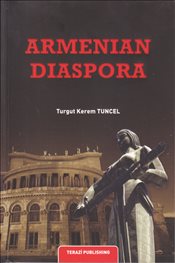
Armenian Diaspora: Diaspora, State and the Imagination of the Republic of Armenia -
24.01.2016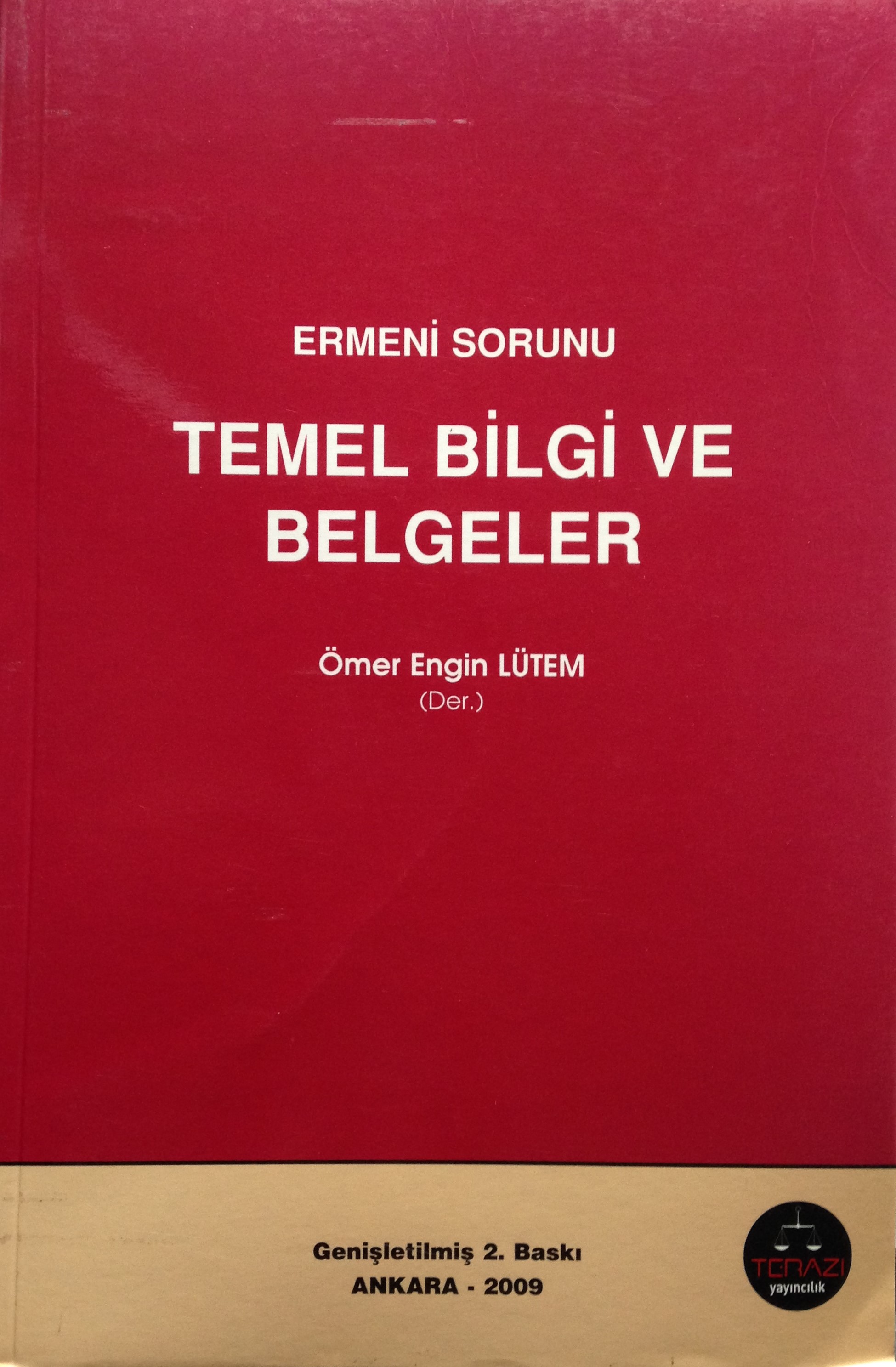
ERMENİ SORUNU - TEMEL BİLGİ VE BELGELER (2. BASKI)
-
AVİM Conference Hall 24.01.2023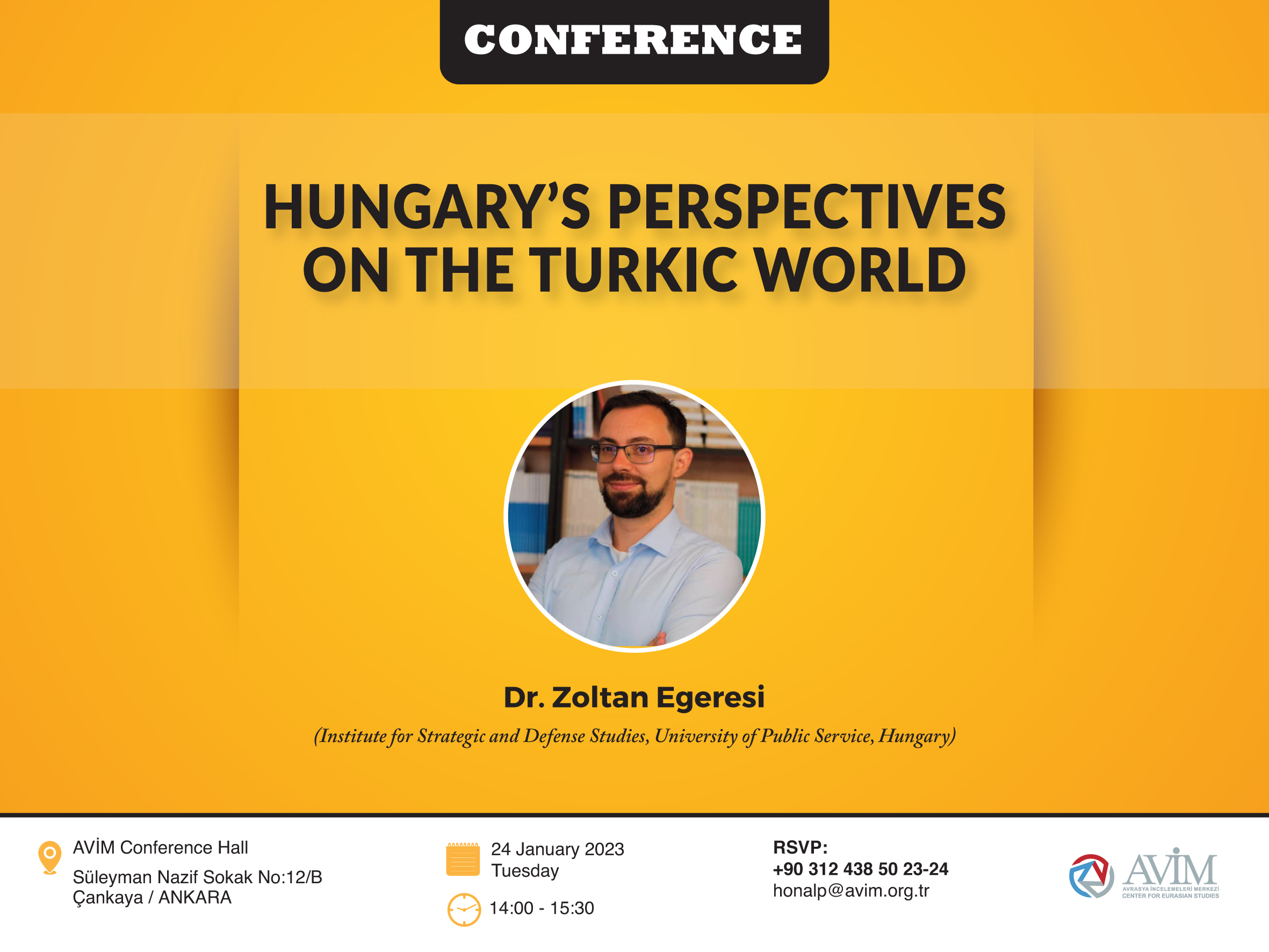
CONFERENCE TITLED “HUNGARY’S PERSPECTIVES ON THE TURKIC WORLD"