Download PDF :

Balkan Insight (19 December 2018)
A joint initiative by Germany and France to address illicit firearms trafficking has moved the issue of controlling the illegal trade in small arms from the Western Balkans up the political agenda, the German Federal Foreign Office told BIRN.
“The relevance of the small arms problem in the Western Balkans for the EU’s security became clear at the latest with the Paris attacks in 2015. The perpetrators used previously deactivated firearms from the Western Balkan region,” the Federal Foreign Office said in a written response.
It said that the Federal Foreign Office has decided to “step up its engagement and increase its contributions to the various trust funds - UNDP, NATO, OSCE” involved in trying to tackle the illegal arms trade.
German Foreign Minister Heiko Mass announced on December 11 that more money will be made available to combat illegal trading in weapons, with the focus on the Western Balkans.
Maas and his French counterpart Jean-Yves Le Drian hosted a conference on the issue in Paris on December 11, attended by ministers from Serbia, Kosovo, Macedonia, Bosnia, Albania and Montenegro.
The conference was told that hundreds of thousands of weapons from the Balkans have been in circulation in Europe since the wars in the region, and that criminals and terrorists throughout Europe use them to kill, according to a press release published on the German Federal Foreign Office website.
“Our objective is not only greater stability in the Balkans. This is also a matter of Germany’s security,” said Maas.
He added that the German government will therefore be significantly raising its contributions and providing more than seven million euros in future to fund projects as part of the Franco‑German Initiative on Small Arms and Light Weapons in the Western Balkans.
“The central themes [of the Franco‑German Initiative] are legal reform, improved border checks, clearer distribution of responsibility and the appointing of national contact persons. The Initiative roadmap is ambitious and necessitates technical and financial support from international donors, first and foremost from the EU,” the German Federal Foreign Office said.
The latest report by the Geneva-based Small Arms Survey, an independent research project, again highlighted how many firearms are believed to be in private possession in the Balkans.
The report, published in June, listed Montenegro, Serbia, Bosnia and Herzegovina, Macedonia and Kosovo among the top 25 countries in the world when it comes to civilian firearms possession.
Montenegro and Serbia shared third place, after the United States and Yemen, the report said.
Bosnia was in tenth place and Macedonia in 12th. Kosovo was ranked 17th.
In Montenegro and Serbia, the possession rate is around 39 firearms per 100 people, in Bosnia around 31, in Macedonia 30 and in Kosovo around 24, the survey estimated.
http://www.balkaninsight.com/en/article/germany-steps-up-efforts-on-balkan-firearms-control-12-19-2018

















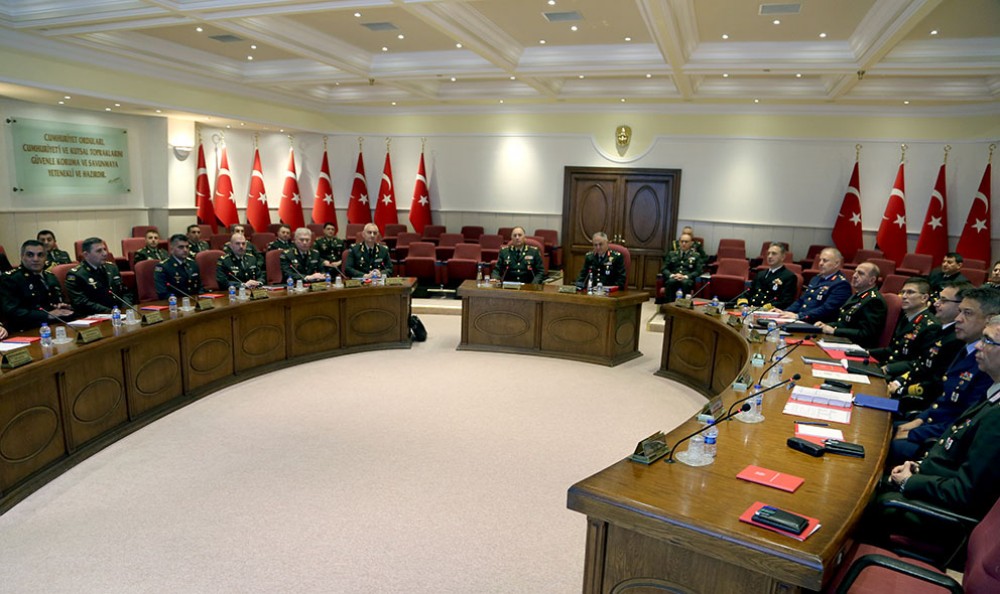 ANKARA HOSTS 11TH MEETING OF AZERBAIJAN-TURKEY HIGH-LEVEL MILITARY DIALOGUE
The Caucasus and Turkish-Armenian Relations
19.12.2018
ANKARA HOSTS 11TH MEETING OF AZERBAIJAN-TURKEY HIGH-LEVEL MILITARY DIALOGUE
The Caucasus and Turkish-Armenian Relations
19.12.2018