

















Defence News, 13 Feb 2018
European Deterrence Initiative funding continues to grow in the fiscal year 2019 defense budget request, this time by $1.7 billion.
The FY19 request released Feb. 12 asks for $6.5 billion. The Pentagon requested $4.8 billion in FY18 and received $3.4 billion in FY17.
The EDI account — initially called the European Reassurance Initiative — was created to help Eastern European allies rest easier and deter Russia from further incursion into Europe following its illegal annexation of Crimea and continued aggression in the region.
The U.S. Army presence at the time of Russia’s move to take Crimea had dwindled from roughly 200,000 troops in Europe in the 1980s to around 33,000 in 2015. The Army had only two permanently stationed brigade combat teams, had closed over 100 sites since 2006 and was concentrated in Italy and Germany, nowhere near NATO’s eastern flank.
Now the Army has another heel-to-toe rotational armored brigade combat team, which first deployed last year, and has already rotated in the next ABCT to take its place.
And the U.S. Army is also part of a network of NATO Enhanced Forward Presence battle groups in Latvia, Lithuania, Estonia and Poland, set up in 2016 to deter Russia.
The increase in EDI funding in FY19 reflects the continued concern over Russian activity and behavior and also reflects the new National Defense Strategy’s focus on China and Russia.
The strategy lays out a world where great-power competition rather than counterterrorism will drive the Pentagon’s decision-making and force structure.
The Army has typically held the lion’s share of the funding and this year is no exception. It’s portion in FY19 is $4.6 billion.
Increased funding this year will cover more exercises, more forward presence and more improvement of the equipment that is forward-stationed.
Now that the funding is focused on deterrence of Russian aggression rather than reassuring allies, more will be injected into munitions, improving tanks and Bradley Fighting Vehicles and priming the pump for a larger rotational presence in Europe that would be episodic and not always predictable, a defense official told Defense News prior to the budget release.
The budget will not contain a request for additional troops in Europe in 2019, but more troops will be funded in 2020 when the Army begins a more dynamic employment of forces, which might include periodic exercises with multiple brigade combat teams and divisional assets, according to the official.
And like the episodic and unpredictable rotational deployments, exercises will take on the same characteristics and will start to test the ability to withdraw and use the Army’s prepositioned stock in Europe, which by 2020 will be fully upgraded and complete, the official said.
The EDI funding, as well as some base budget dollars, in FY19 would include equipment and weapon systems to complete a second set of Army prepositioned stocks in Europe, according to Davis Welch, the deputy director of the Army’s budget office. That equipment includes 40 Abrams tanks for $455 million, 61 Patriot Missile Segment Enhancement missiles for $261 million, 66 Armored Multi-Purpose Vehicles for $230 million, 61 Bradley Fighting Vehicles for $205 million and High-Mobility Artillery Rocket System rockets for $171 million, he said during a budget briefing at the Pentagon on Feb. 12.
According to Pentagon budget documents, $200 million will go toward advising, training and equipping the Ukrainian military so the country can “conduct internal defense operations to defend its sovereignty and territorial integrity, while also supporting needed institutional transformation efforts.”
No comments yet.
- ROMANIA'S SOCIAL DEMOCRATS DEMAND PROBE INTO 'DEEP STATE' The Balkans 13.02.2018
- RUSSIA: PUTIN’S NEW ANTIMISSILE SYSTEM HAS BEEN UNVEILED Asia - Pacific 13.02.2018
-
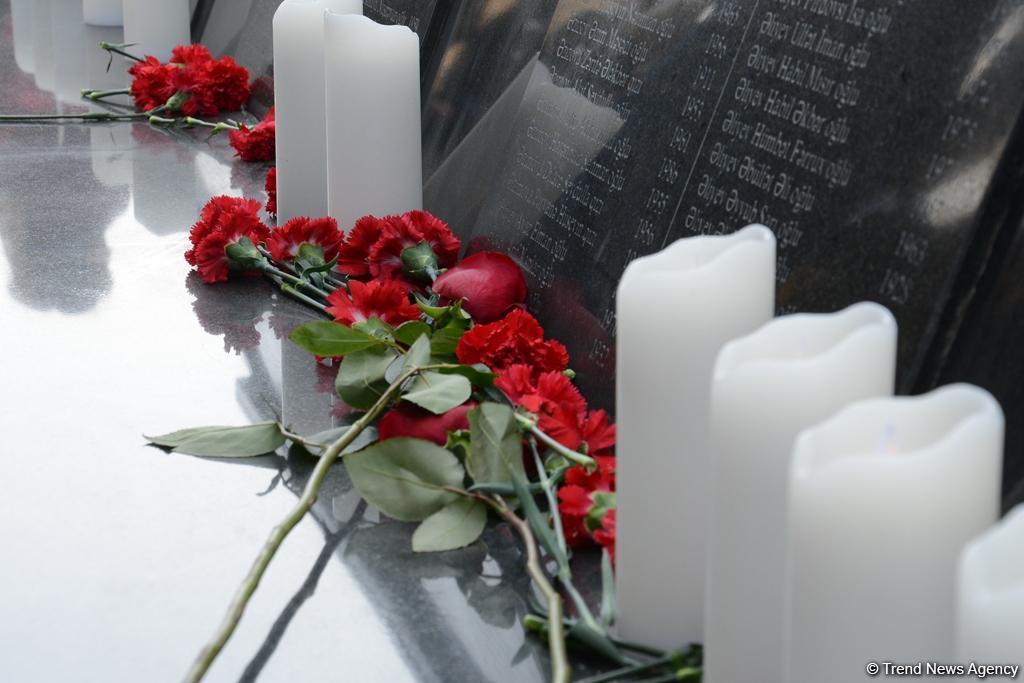 AZERBAIJAN APPROVES ACTION PLAN ON KHOJALY GENOCIDE ANNIVERSARY
The Caucasus and Turkish-Armenian Relations
13.02.2018
AZERBAIJAN APPROVES ACTION PLAN ON KHOJALY GENOCIDE ANNIVERSARY
The Caucasus and Turkish-Armenian Relations
13.02.2018
-
 RUSSIA CLAIMS KILLING ISIL LEADER BAGHDADI
Iraq
13.02.2018
RUSSIA CLAIMS KILLING ISIL LEADER BAGHDADI
Iraq
13.02.2018
- TURKEY EYES LEADING ROLE IN REBUILDING IRAQ, OFFERS NUMEROUS PROJECTS Iraq 13.02.2018
-
25.01.2016
THE ARMENIAN QUESTION - BASIC KNOWLEDGE AND DOCUMENTATION -
12.06.2024
THE TRUTH WILL OUT -
27.03.2023
RADİKAL ERMENİ UNSURLARCA GERÇEKLEŞTİRİLEN MEZALİMLER VE VANDALİZM -
17.03.2023
PATRIOTISM PERVERTED -
23.02.2023
MEN ARE LIKE THAT -
03.02.2023
BAKÜ-TİFLİS-CEYHAN BORU HATTININ YAŞANAN TARİHİ -
16.12.2022
INTERNATIONAL SCHOLARS ON THE EVENTS OF 1915 -
07.12.2022
FAKE PHOTOS AND THE ARMENIAN PROPAGANDA -
07.12.2022
ERMENİ PROPAGANDASI VE SAHTE RESİMLER -
01.01.2022
A Letter From Japan - Strategically Mum: The Silence of the Armenians -
01.01.2022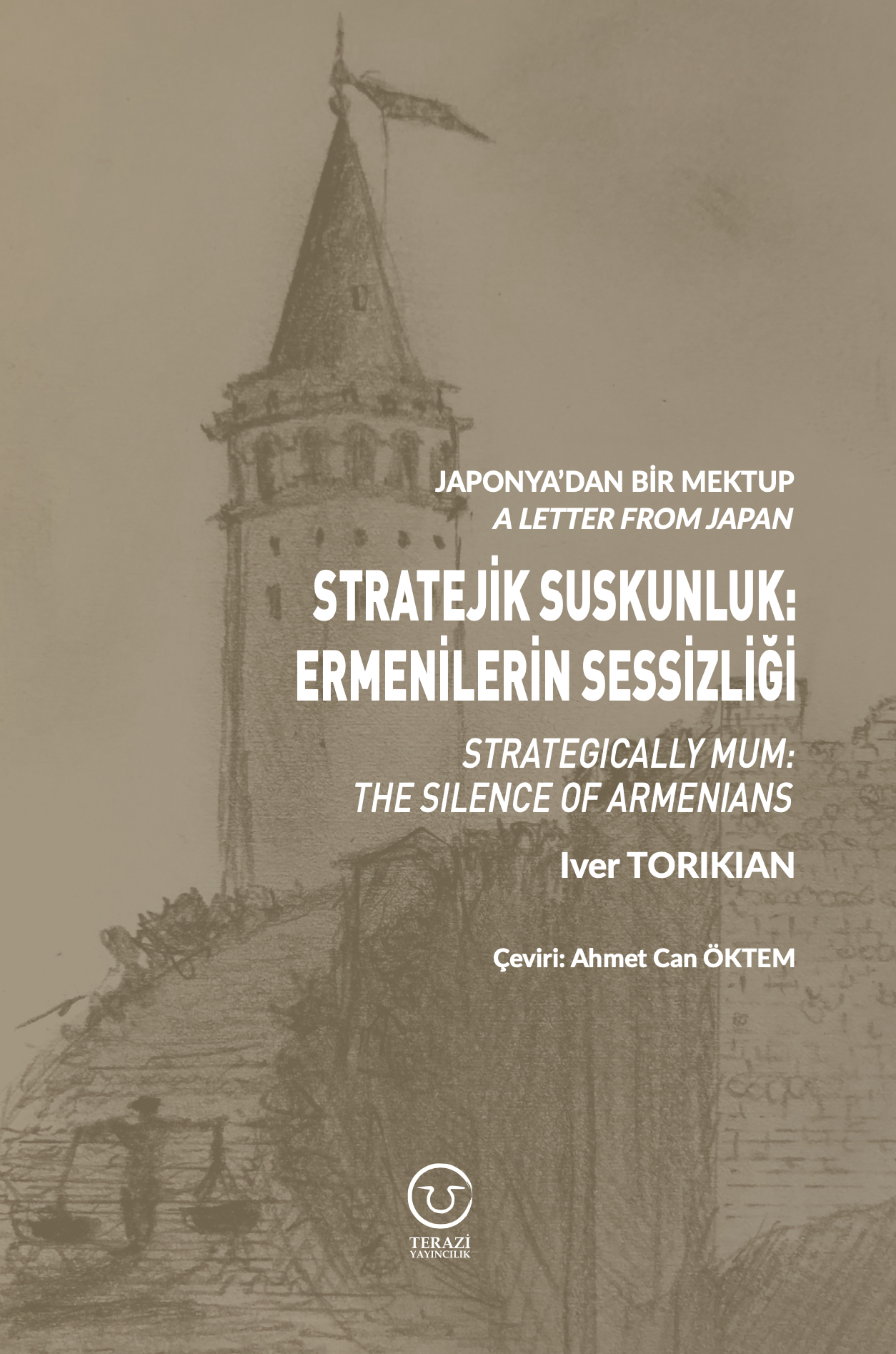
Japonya'dan Bir Mektup - Stratejik Suskunluk: Ermenilerin Sessizliği -
03.06.2020
Anastas Mikoyan: Confessions of an Armenian Bolshevik -
08.04.2020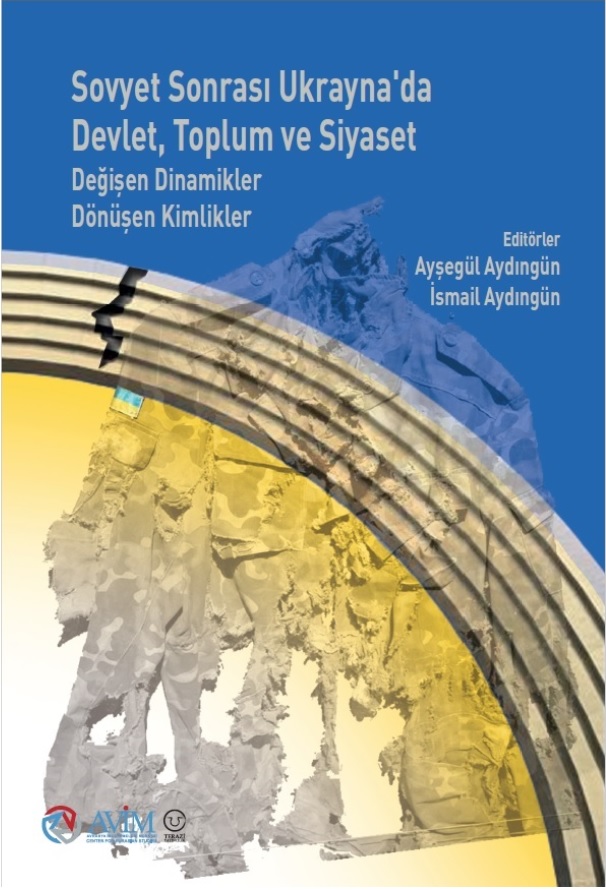
Sovyet Sonrası Ukrayna’da Devlet, Toplum ve Siyaset - Değişen Dinamikler, Dönüşen Kimlikler -
12.06.2018
Ermeni Sorunuyla İlgili İngiliz Belgeleri (1912-1923) - British Documents on Armenian Question (1912-1923) -
02.12.2016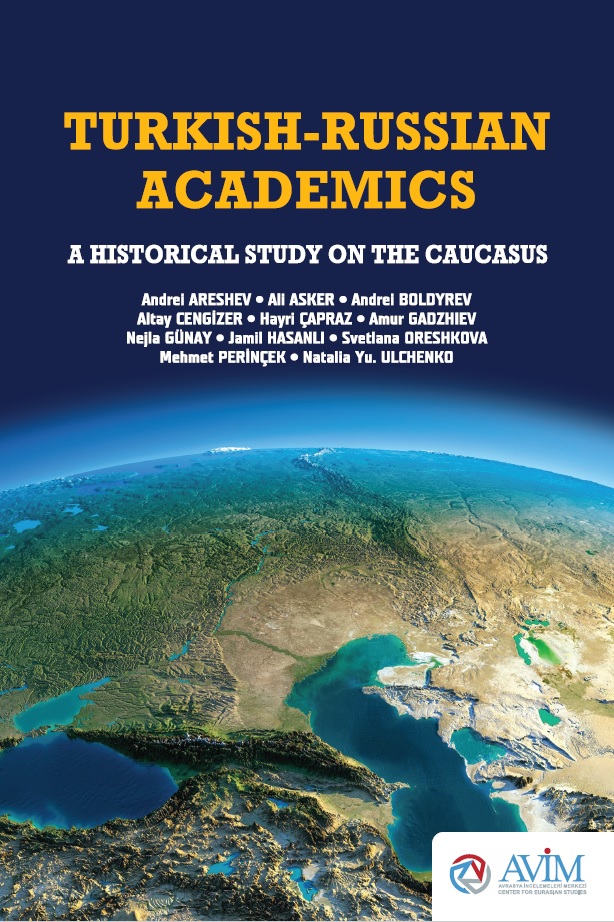
Turkish-Russian Academics: A Historical Study on the Caucasus -
01.07.2016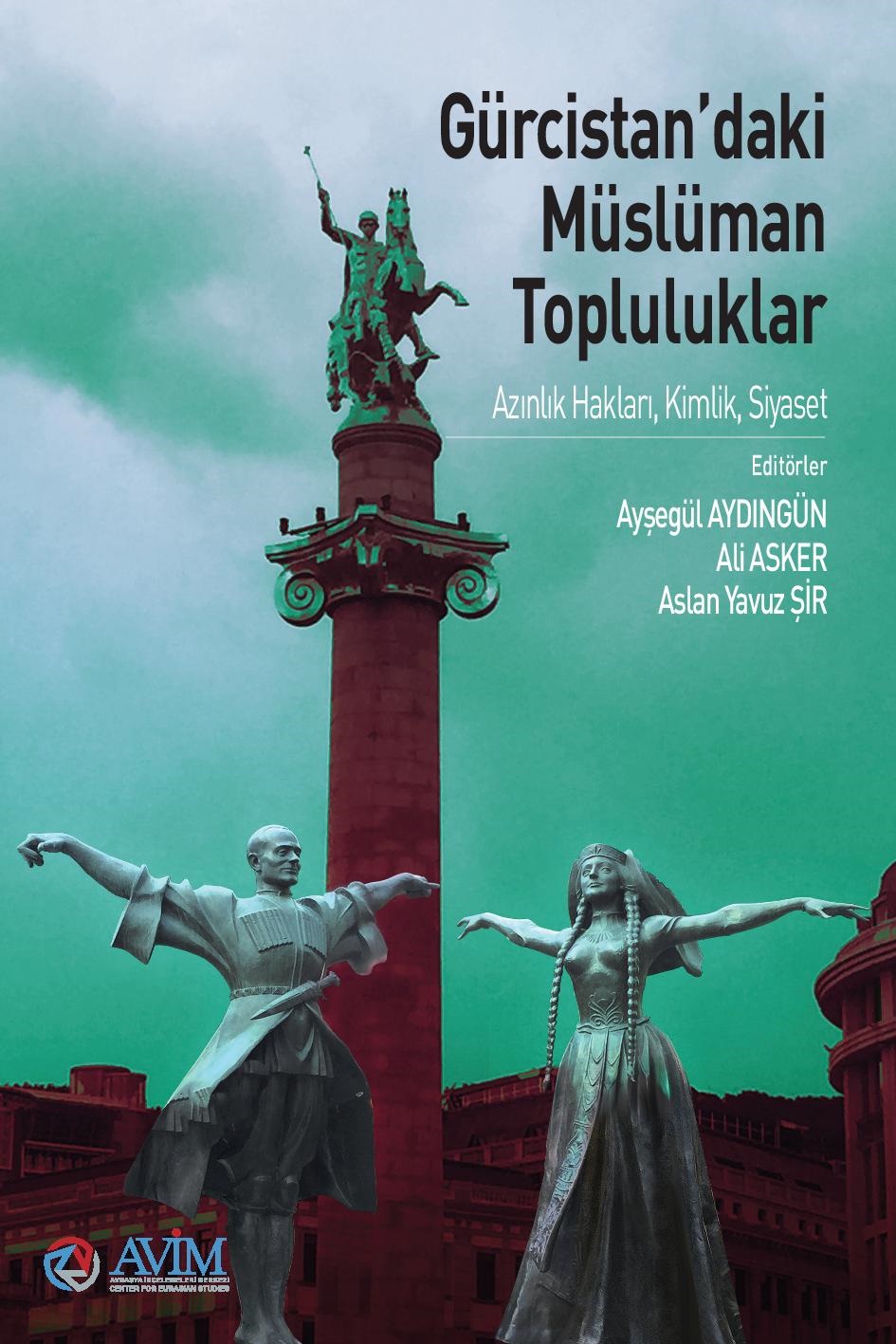
Gürcistan'daki Müslüman Topluluklar: Azınlık Hakları, Kimlik, Siyaset -
10.03.2016
Armenian Diaspora: Diaspora, State and the Imagination of the Republic of Armenia -
24.01.2016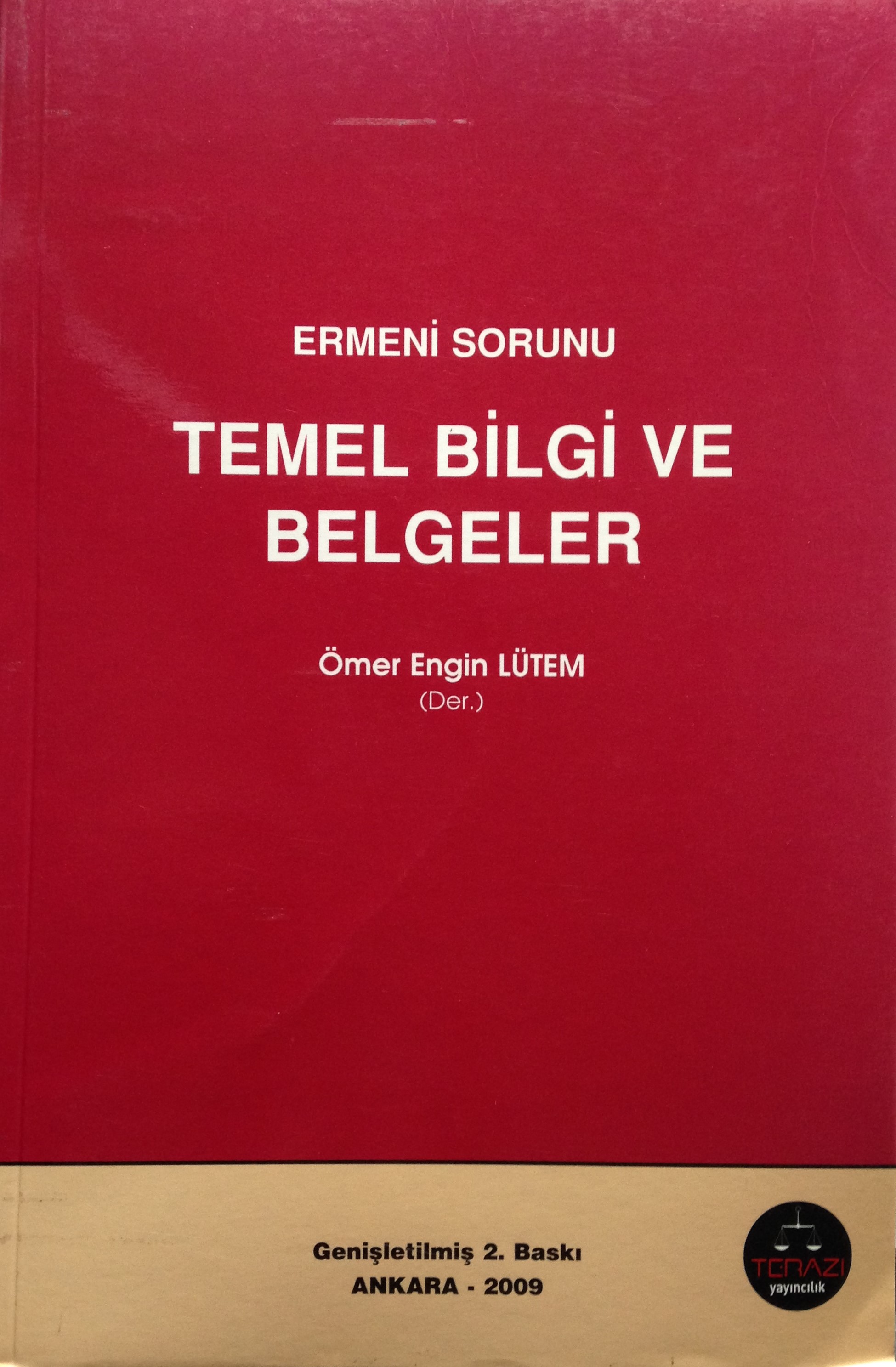
ERMENİ SORUNU - TEMEL BİLGİ VE BELGELER (2. BASKI)
-
AVİM Conference Hall 24.01.2023
CONFERENCE TITLED “HUNGARY’S PERSPECTIVES ON THE TURKIC WORLD"