

















EurActiv (20 December 2018)
The EU delegates 1.7% of its budget to NGOs, while no common definition exists in Europe, a shortcoming which complicates the monitoring of EU-funded projects. EURACTIV France reports.
Who are really non-governmental organisations (NGOs)? There is no easy answer to this question at European level because there is no specific framework to define an NGO.
Each member state has criteria to define a framework for these structures, on the basis of the organisation’s legal form and sometimes on the nature of the activities it performs.
However, the European Court of Auditors believes that the lack of a consistent definition is a serious problem because NGOs implement part of the European budget.
According to a report published by the ECA, Europe entrusts the implementation of 1.7% of its budget to NGOs, notably in the fields of humanitarian and development aid, environmental protection and culture.
NGOs are also asked to play a role in implementing 6.8% of the European Development Fund (EDF), which is not part of the European budget. In total, over the 2014-2017 period, the European Commission distributed around €11.3 billion to NGOs.
Lack of reliability
The auditors noted that “the current system of classifying organisations as NGOs is not reliable […] and the European Commission does not have sufficiently detailed information on how the money is spent.”
The Court of Auditors believed this lack of reliability is due to the fact that the European Commission draws on NGOs’ self-declarations to judge whether they are in fact non-governmental organisations. Moreover, beyond this, the checks are limited, the auditors said.
“The EU is the world’s biggest aid donor and NGOs often play an essential role in delivering that aid. But EU taxpayers need to know that their money is being paid over to properly defined organisations and that the Commission will have to account for it fully,” said Annemie Turtelboom, the ECA member who drafted the report.
European statute on hold
The question of establishing a European statute for NGOs has repeatedly been discussed, has never succeeded due to a lack of political agreement.
In a communication from 1997, the European Commission listed the characteristics for defining an NGO: organisations with a formal or institutional existence; which are non-profit-distributing; independent of government and public authorities, not managed for personal gain; their activities must contribute to the public good. However, these criteria remain illustrative.
In its last attempt, in 2011, the European Parliament adopted a written declaration on establishing Europe statutes for mutual societies, associations and foundations.
This non-binding declaration called on the European Commission “to introduce proposals for European statutes for associations, mutual societies and foundations.” However, this call went unheeded by the European Commission, which was then headed by José Manuel Barroso.
Criticism of sub-granting
Another black mark highlighted by the report was the provision of sub-granting, which does not allow the European Commission to properly monitor how European money is used.
In four of the 14 projects under direct management examined in the report, “the signatory NGOs of the grant agreements [have] used the technique of sub-granting to entrust implementation to other entities from the same network, without this information being recorded in the Commission systems,” the auditors complained.
No comments yet.
- EUROPEAN COURT OF AUDITORS CALLS FOR NGO DEFINITION Europe - EU 20.12.2018
- EUROPEAN COMMISSION ACCEPTS ITALY'S REVISED BUDGET PROPOSAL Europe - EU 20.12.2018
- EX-PRESIDENT'S DAMNING INTERVIEW CAUSES STORM IN ROMANIA The Balkans 20.12.2018
- VESTS & VOTES: HOW PROTESTS HIT MACRON'S EP PROSPECTS Europe - EU 20.12.2018
-
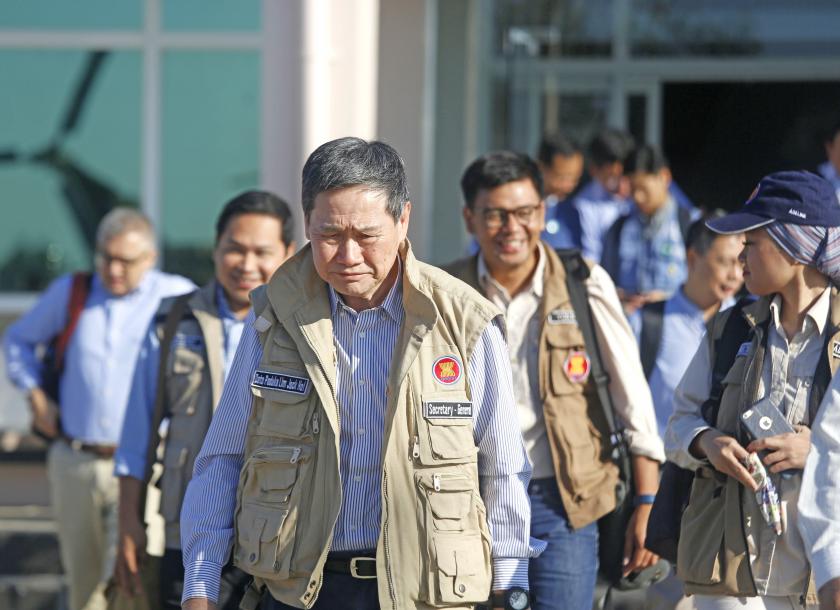 ASEAN, MYANMAR TO FORMALISE COOPERATION ON REFUGEE REPATRIATION
Asia - Pacific
20.12.2018
ASEAN, MYANMAR TO FORMALISE COOPERATION ON REFUGEE REPATRIATION
Asia - Pacific
20.12.2018
-
25.01.2016
THE ARMENIAN QUESTION - BASIC KNOWLEDGE AND DOCUMENTATION -
12.06.2024
THE TRUTH WILL OUT -
27.03.2023
RADİKAL ERMENİ UNSURLARCA GERÇEKLEŞTİRİLEN MEZALİMLER VE VANDALİZM -
17.03.2023
PATRIOTISM PERVERTED -
23.02.2023
MEN ARE LIKE THAT -
03.02.2023
BAKÜ-TİFLİS-CEYHAN BORU HATTININ YAŞANAN TARİHİ -
16.12.2022
INTERNATIONAL SCHOLARS ON THE EVENTS OF 1915 -
07.12.2022
FAKE PHOTOS AND THE ARMENIAN PROPAGANDA -
07.12.2022
ERMENİ PROPAGANDASI VE SAHTE RESİMLER -
01.01.2022
A Letter From Japan - Strategically Mum: The Silence of the Armenians -
01.01.2022
Japonya'dan Bir Mektup - Stratejik Suskunluk: Ermenilerin Sessizliği -
03.06.2020
Anastas Mikoyan: Confessions of an Armenian Bolshevik -
08.04.2020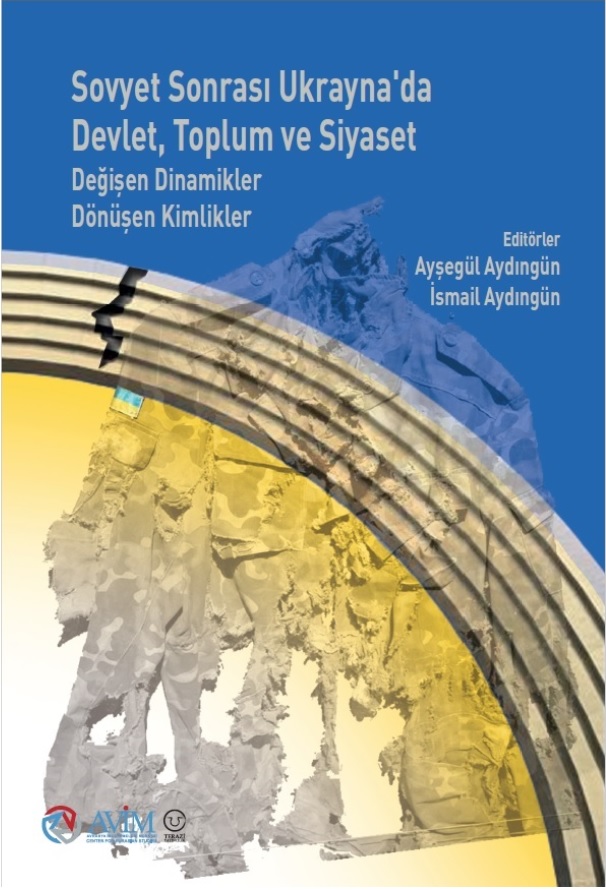
Sovyet Sonrası Ukrayna’da Devlet, Toplum ve Siyaset - Değişen Dinamikler, Dönüşen Kimlikler -
12.06.2018
Ermeni Sorunuyla İlgili İngiliz Belgeleri (1912-1923) - British Documents on Armenian Question (1912-1923) -
02.12.2016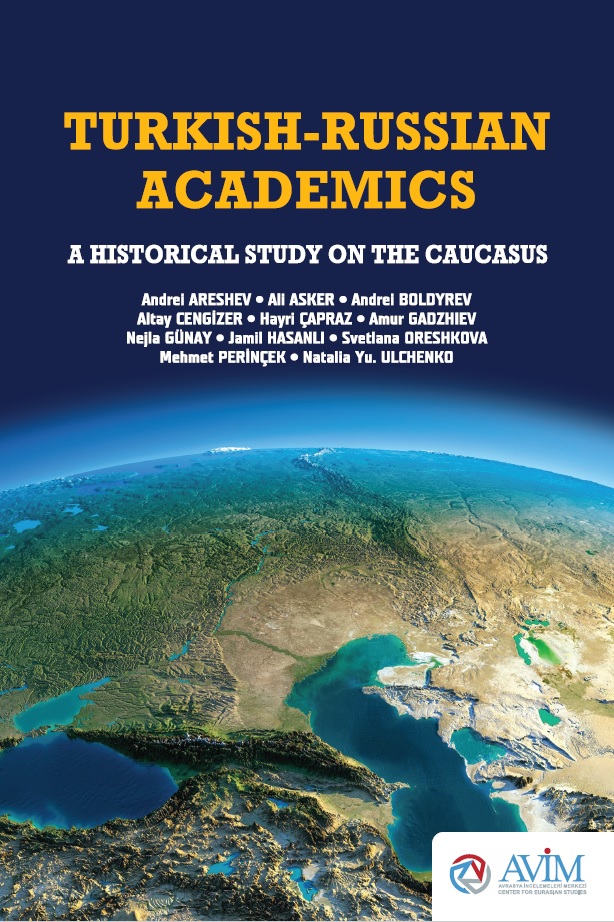
Turkish-Russian Academics: A Historical Study on the Caucasus -
01.07.2016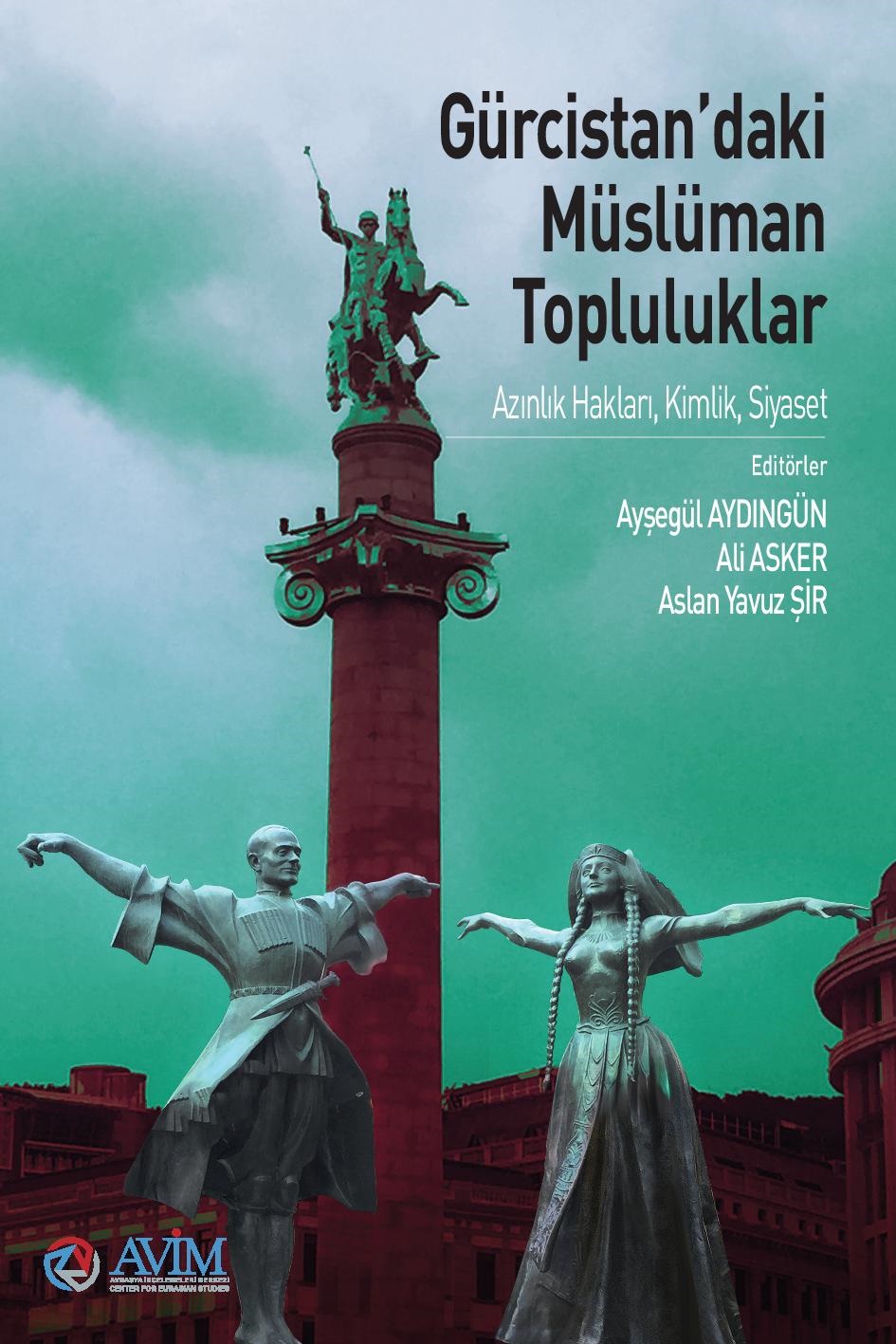
Gürcistan'daki Müslüman Topluluklar: Azınlık Hakları, Kimlik, Siyaset -
10.03.2016
Armenian Diaspora: Diaspora, State and the Imagination of the Republic of Armenia -
24.01.2016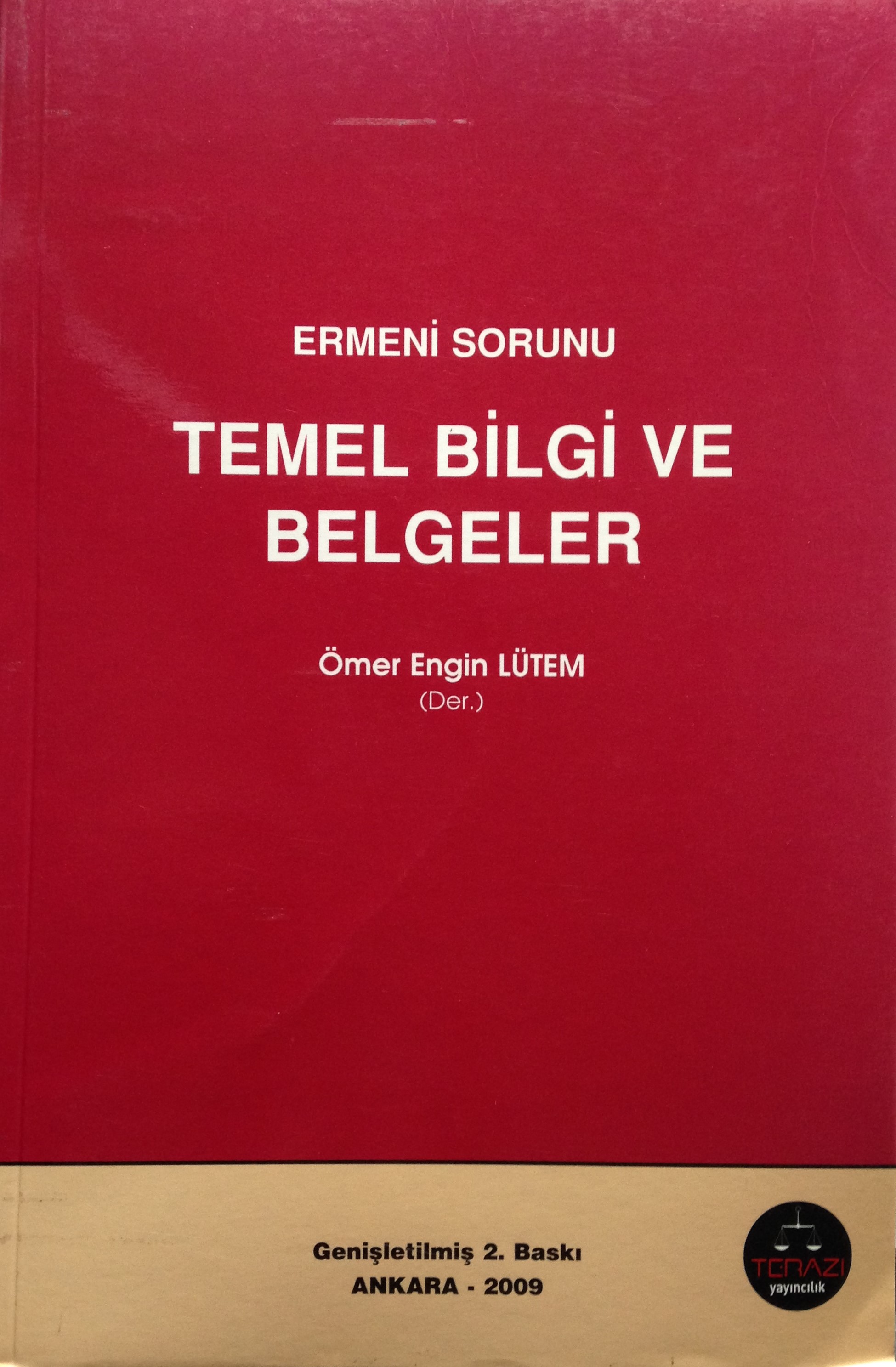
ERMENİ SORUNU - TEMEL BİLGİ VE BELGELER (2. BASKI)
-
AVİM Conference Hall 24.01.2023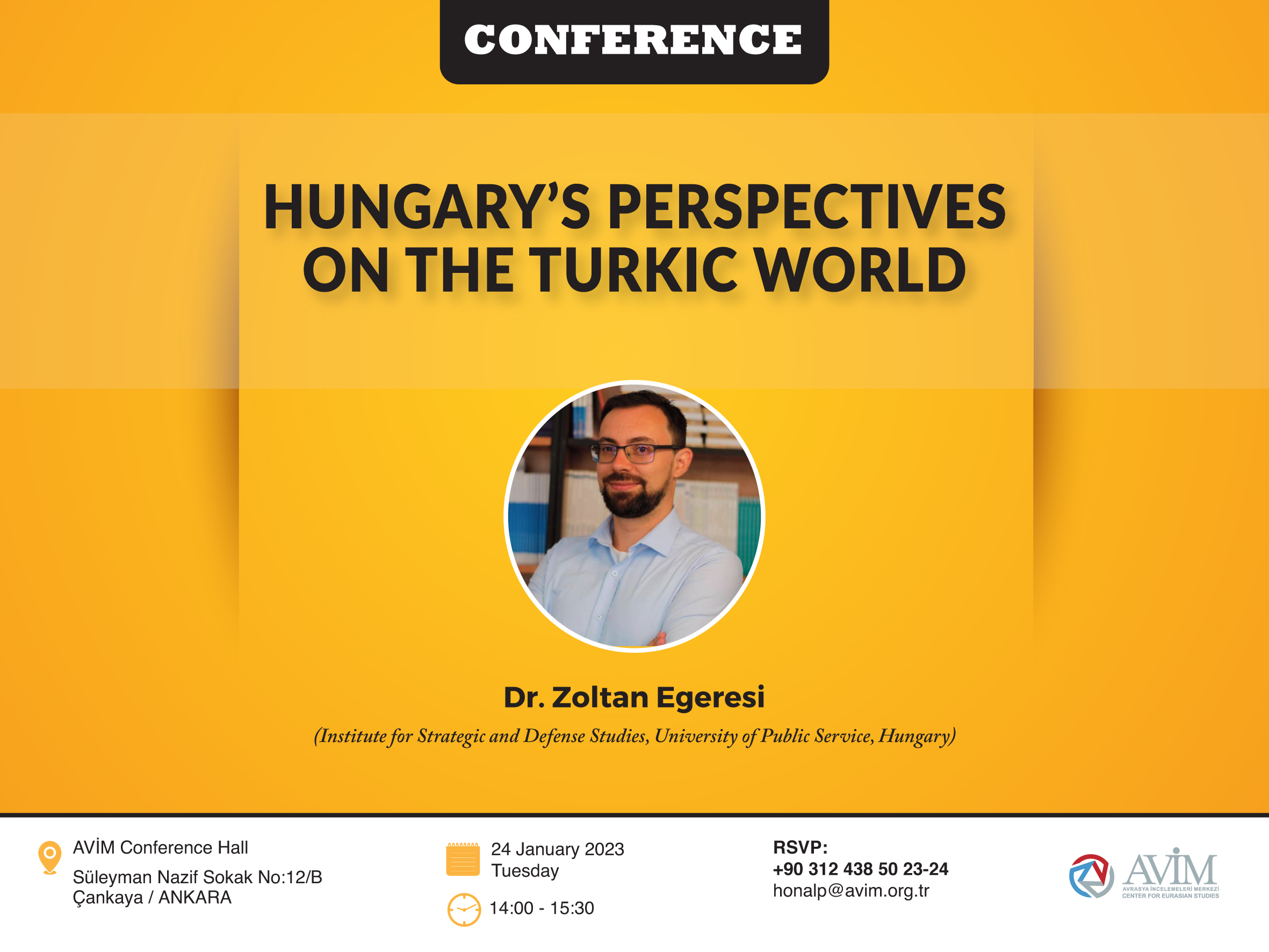
CONFERENCE TITLED “HUNGARY’S PERSPECTIVES ON THE TURKIC WORLD"