

















EU Observer (18 October 2018)
There is a myth out there, pushed by those with no answers: Europe's migration "crisis" continues without solutions at an EU level.
It is wrong factually and politically.
First the facts. This year, we have seen around 100,000 irregular border crossings and just over 400,000 asylum applications so far - representing the lowest numbers in many years and an enormous drop from the peak of 1.8 million crossings and 1.3 million asylum applications in 2015.
At the same time, the humanitarian crisis in the Moria camp on Lesbos continues.
The situation in 2015 was exceptional, but the political hangover from this experience continues to pollute the debate. The sense of crisis remains unabated, fuelled by populists and pseudo-strongmen manipulating the fear among voters for their own short-term political ends.
The one thing that can stop this toxic discourse is a shared EU effort to show that migration management and a common European asylum system offers solutions beyond the short-term and improvised efforts we have seen so far.
It's sad to see, but while the migration 'crisis' has ebbed, the political crisis continues, with many member state leaders mistaking those who shout the loudest for those that actually hold the majority view.
We have seen too many episodes of member states bickering over where people rescued on the high seas should be disembarked. We have seen too many different interpretations of law.
It doesn't have to be this way. Over the past two and a half years, proposals to improve the system have been considered by the European Parliament.
Despite our political differences from left to right and after long negotiations, we have agreed detailed EU laws on equal reception, fair distribution of asylum seekers, efficient asylum procedures, EU agencies for oversight, and consistent rules on who qualifies for asylum.
The European Parliament has done its job. We are now waiting for member states' leaders, who have failed to reach their position on a true Common European Asylum System.
On the key proposal regarding the fair distribution of asylum seekers across the EU, with proper security screening, the so-called "Dublin" rules, member states have been bickering for years now.
The truth is that on many of the other proposals that form the Common European Asylum System, this is grand standing for PR purposes by the member states.
We have provisional agreements between our European parliament and the member states in the Council, such on reception conditions, the resettlement of refugees and on who qualifies for asylum.
However, for some reason, member states keep coming back with new demands and change their mind every so often. It shows that in many European capitals, the urgency and fundamental nature of this challenge are not fully grasped.
The time for political games is over. If we do not agree common rules now, we may never agree.
Today, heads of states and governments are meeting in Brussels.
We urge them to conclude and adopt the asylum package without further delay.
A failure to do so will inevitably put the free movement of Schengen at risk. Not acting together provides the perfect space for populists to exploit the suffering of migrants in the build up to next year's European elections.
Europe deserves better.
Roberta Metsola (EPP) chair of the European Parliament Asylum Contact Group, Sophie in 't Veld (ALDE) rapporteur for the Reception Conditions Directive, Cecila Wikstrom (ALDE), rapporteur for the Dublin Recast Regulation, Sylvie Guillaume(S&D) rapporteur for the Safe Countries of Origin Regulation, Tanja Fajon (S&D) rapporteur for the Qualification Regulation, Peter Niedermueller, rapporteur for the EU Asylum Agency, Jean Lambert (Greens) member of the Asylum Contact Group and shadow rapporteur
No comments yet.
- TURKMENISTAN’S JOINING BTK TO FURTHER STRENGTHEN TIES WITH AZERBAIJAN The Caucasus and Turkish-Armenian Relations 18.10.2018
-
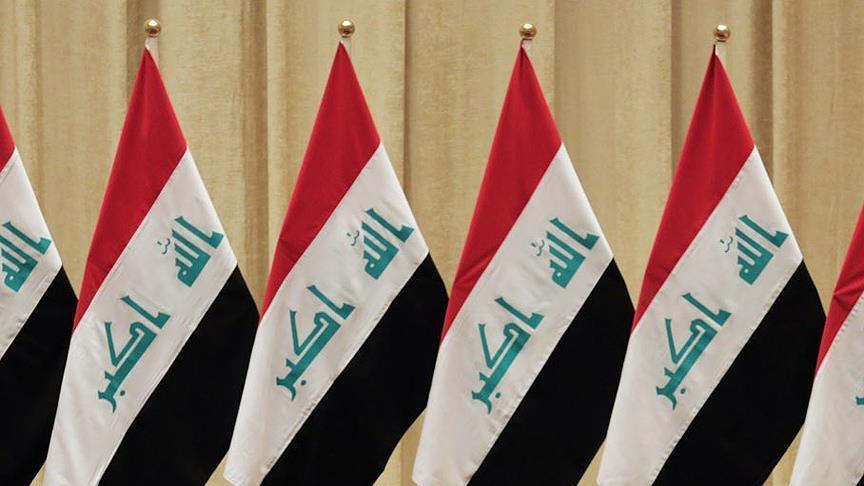 IRAQ LOCAL POLLS DELAYED TO 2019: ELECTORAL COMMISSION
Iraq
18.10.2018
IRAQ LOCAL POLLS DELAYED TO 2019: ELECTORAL COMMISSION
Iraq
18.10.2018
- DOMENICO LUCANO: ITALY'S MIGRANT-FRIENDLY MAYOR BANNED FROM RIACE Europe - EU 18.10.2018
- MAY AND EU CONSIDER EXTENDING TRANSITION TO BREAK BREXIT IMPASSE Europe - EU 18.10.2018
-
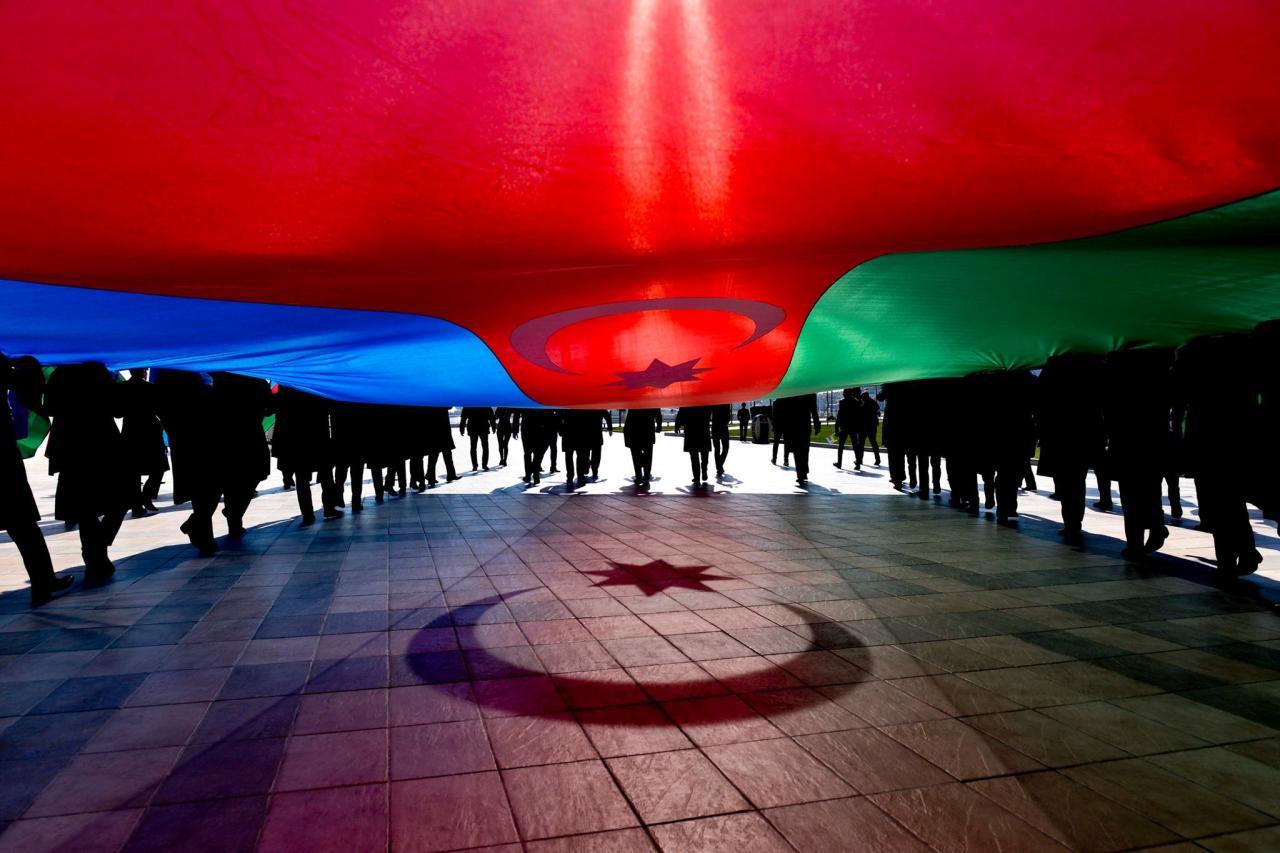 27 YEARS OF INDEPENDENT AZERBAIJAN
The Caucasus and Turkish-Armenian Relations
18.10.2018
27 YEARS OF INDEPENDENT AZERBAIJAN
The Caucasus and Turkish-Armenian Relations
18.10.2018
-
25.01.2016
THE ARMENIAN QUESTION - BASIC KNOWLEDGE AND DOCUMENTATION -
12.06.2024
THE TRUTH WILL OUT -
27.03.2023
RADİKAL ERMENİ UNSURLARCA GERÇEKLEŞTİRİLEN MEZALİMLER VE VANDALİZM -
17.03.2023
PATRIOTISM PERVERTED -
23.02.2023
MEN ARE LIKE THAT -
03.02.2023
BAKÜ-TİFLİS-CEYHAN BORU HATTININ YAŞANAN TARİHİ -
16.12.2022
INTERNATIONAL SCHOLARS ON THE EVENTS OF 1915 -
07.12.2022
FAKE PHOTOS AND THE ARMENIAN PROPAGANDA -
07.12.2022
ERMENİ PROPAGANDASI VE SAHTE RESİMLER -
01.01.2022
A Letter From Japan - Strategically Mum: The Silence of the Armenians -
01.01.2022
Japonya'dan Bir Mektup - Stratejik Suskunluk: Ermenilerin Sessizliği -
03.06.2020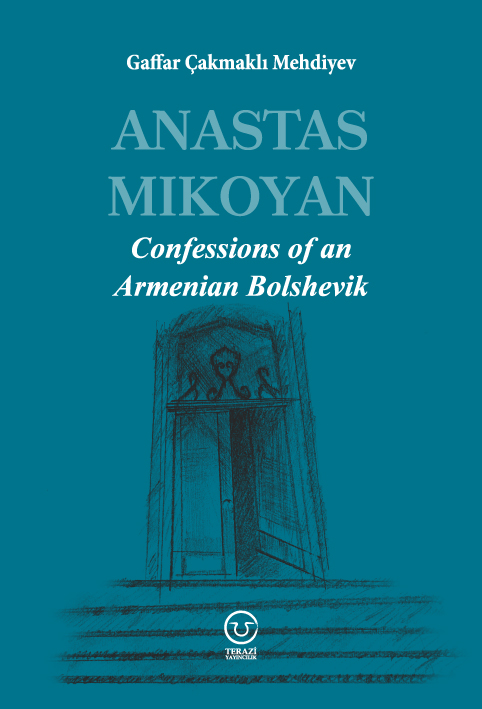
Anastas Mikoyan: Confessions of an Armenian Bolshevik -
08.04.2020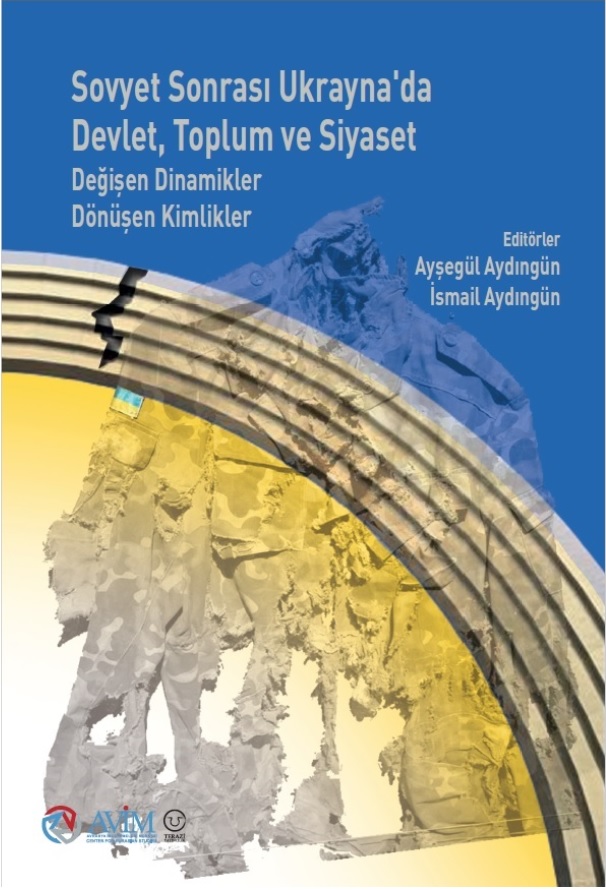
Sovyet Sonrası Ukrayna’da Devlet, Toplum ve Siyaset - Değişen Dinamikler, Dönüşen Kimlikler -
12.06.2018
Ermeni Sorunuyla İlgili İngiliz Belgeleri (1912-1923) - British Documents on Armenian Question (1912-1923) -
02.12.2016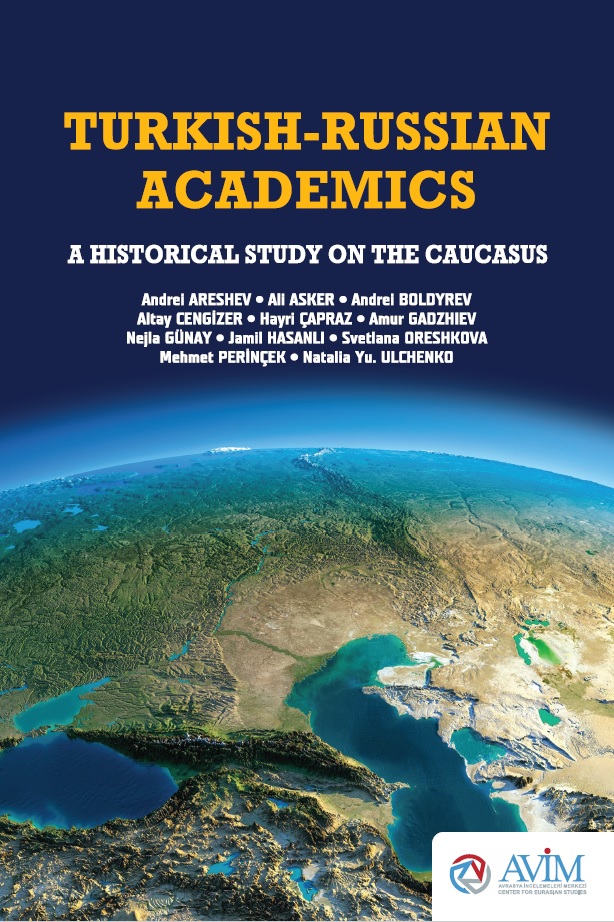
Turkish-Russian Academics: A Historical Study on the Caucasus -
01.07.2016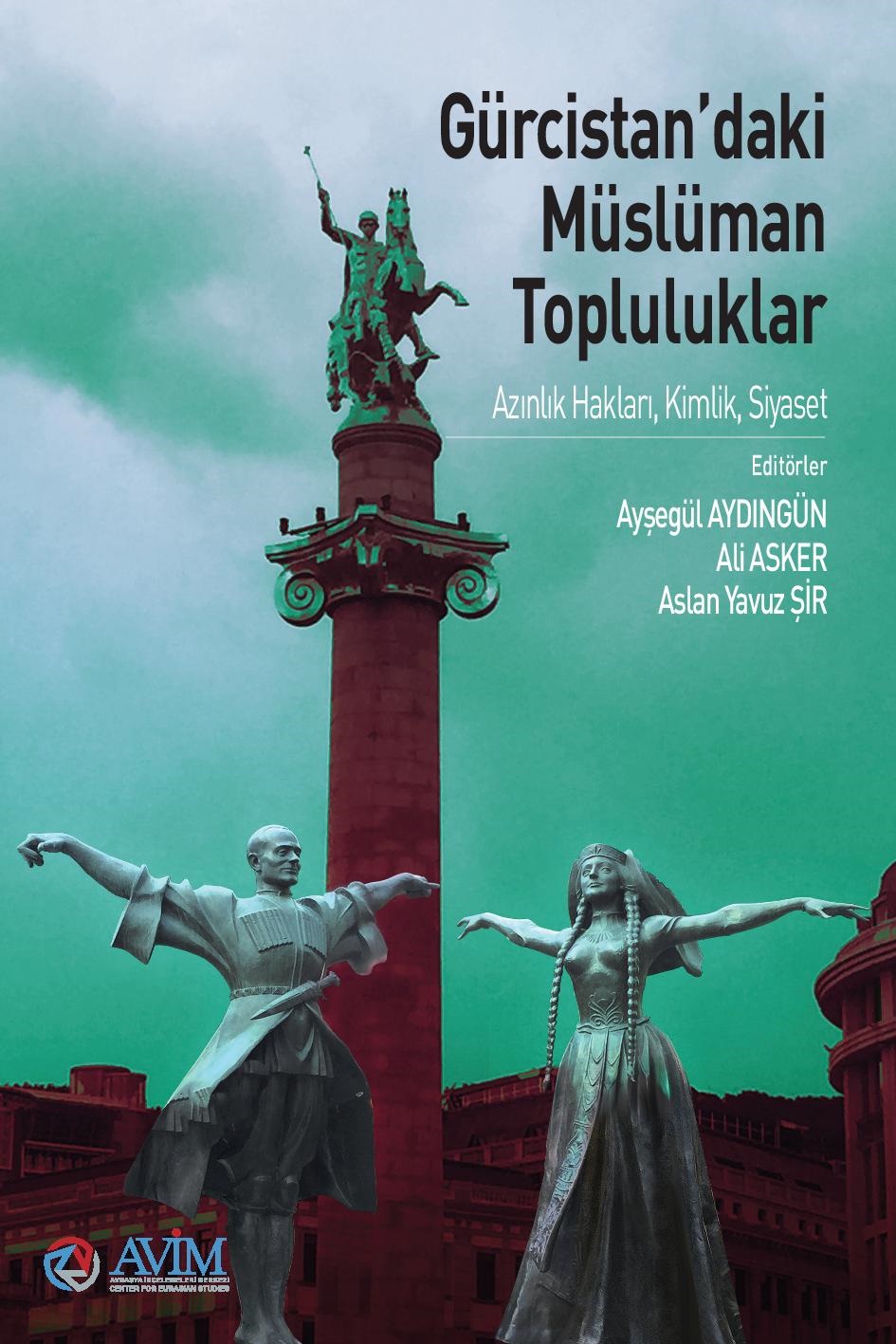
Gürcistan'daki Müslüman Topluluklar: Azınlık Hakları, Kimlik, Siyaset -
10.03.2016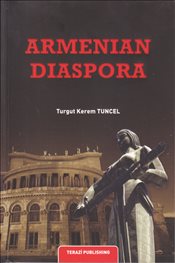
Armenian Diaspora: Diaspora, State and the Imagination of the Republic of Armenia -
24.01.2016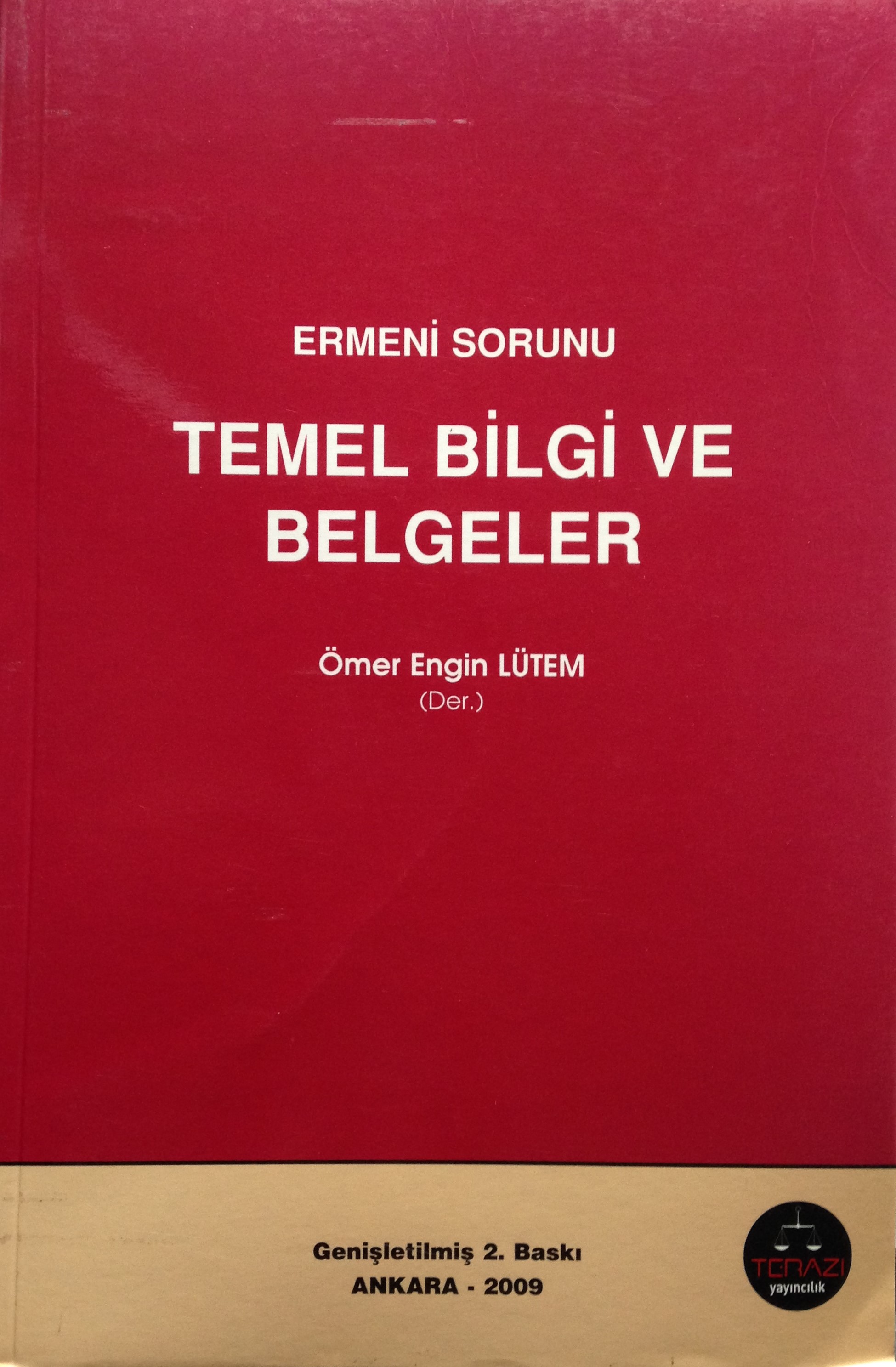
ERMENİ SORUNU - TEMEL BİLGİ VE BELGELER (2. BASKI)
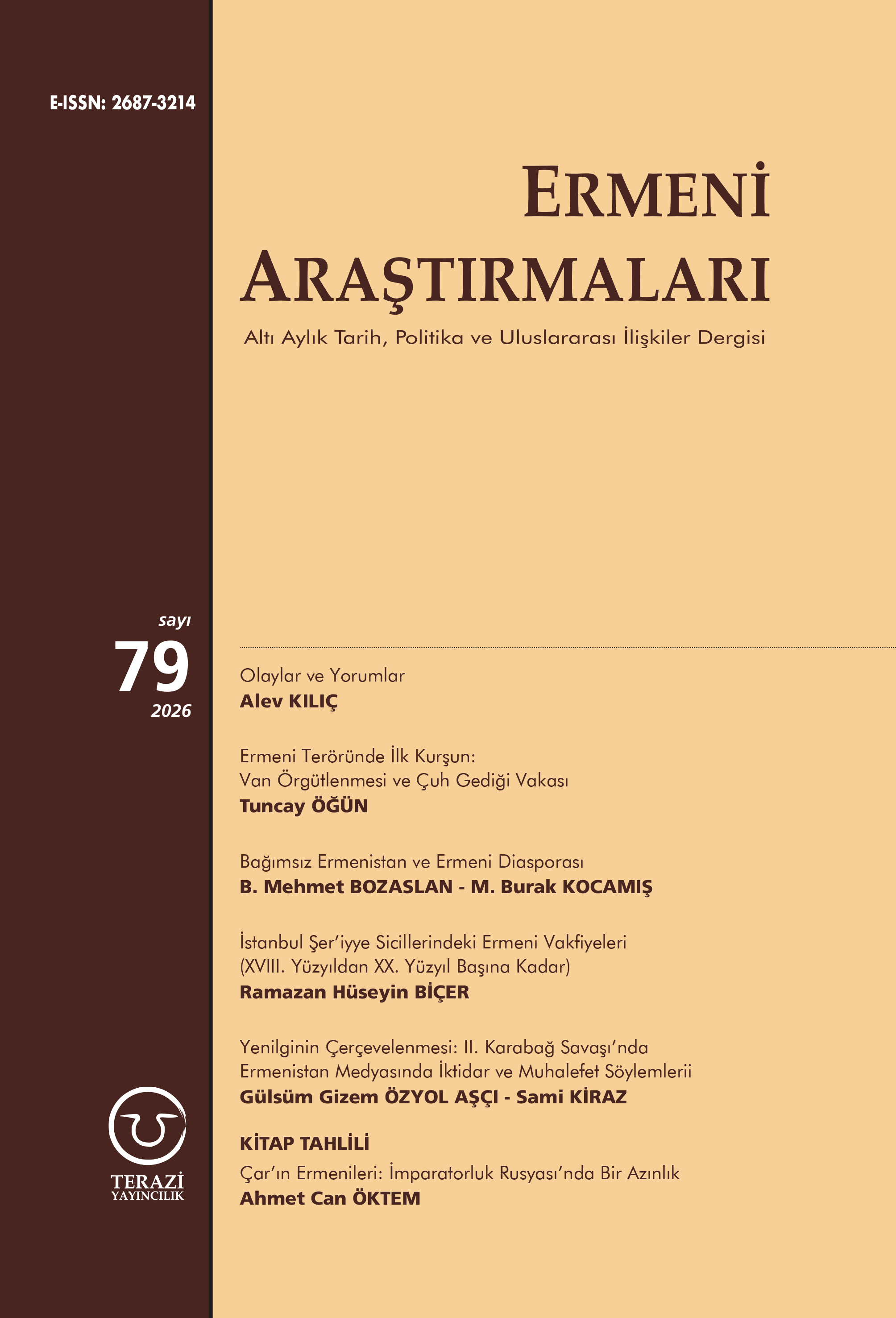
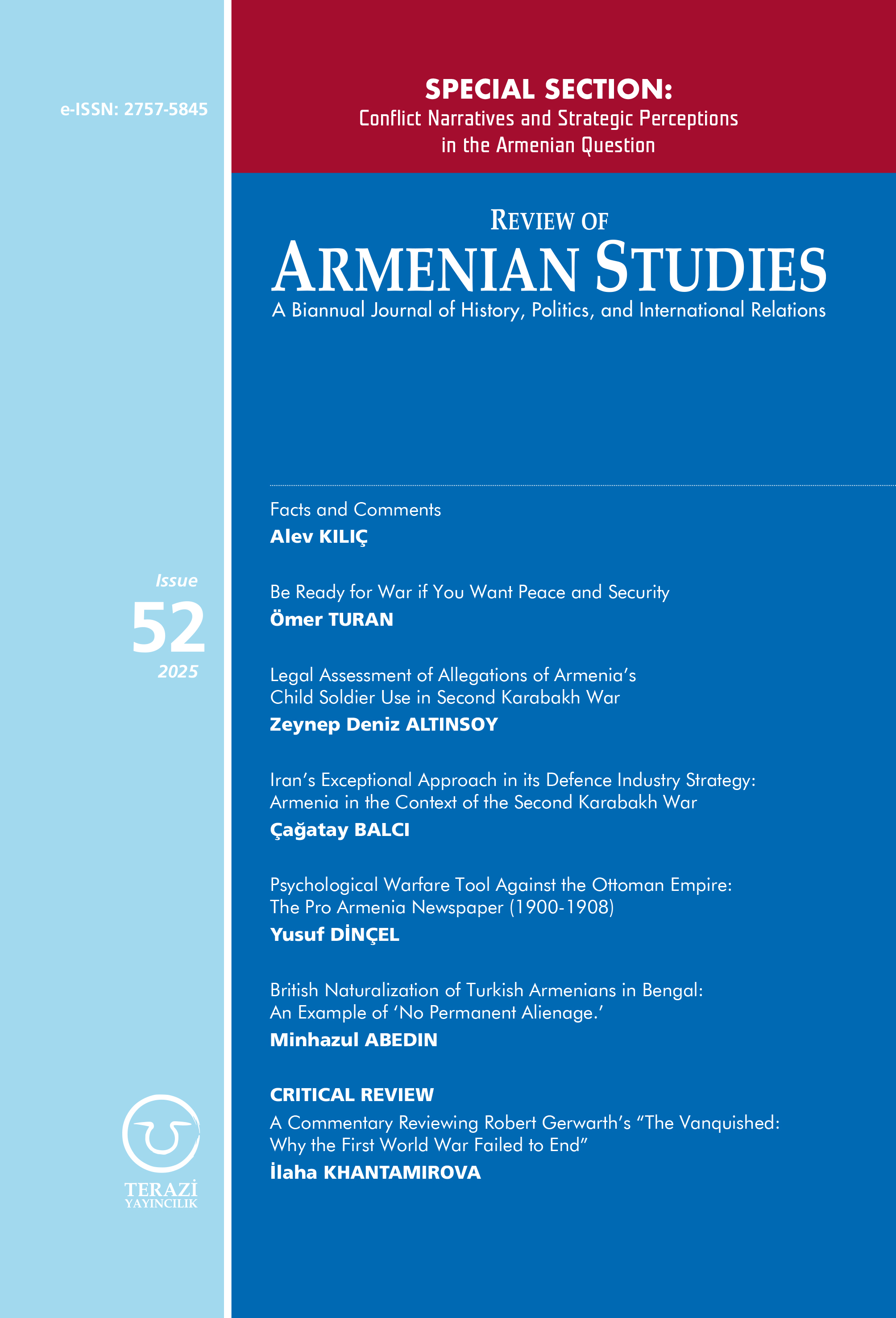
-
AVİM Conference Hall 24.01.2023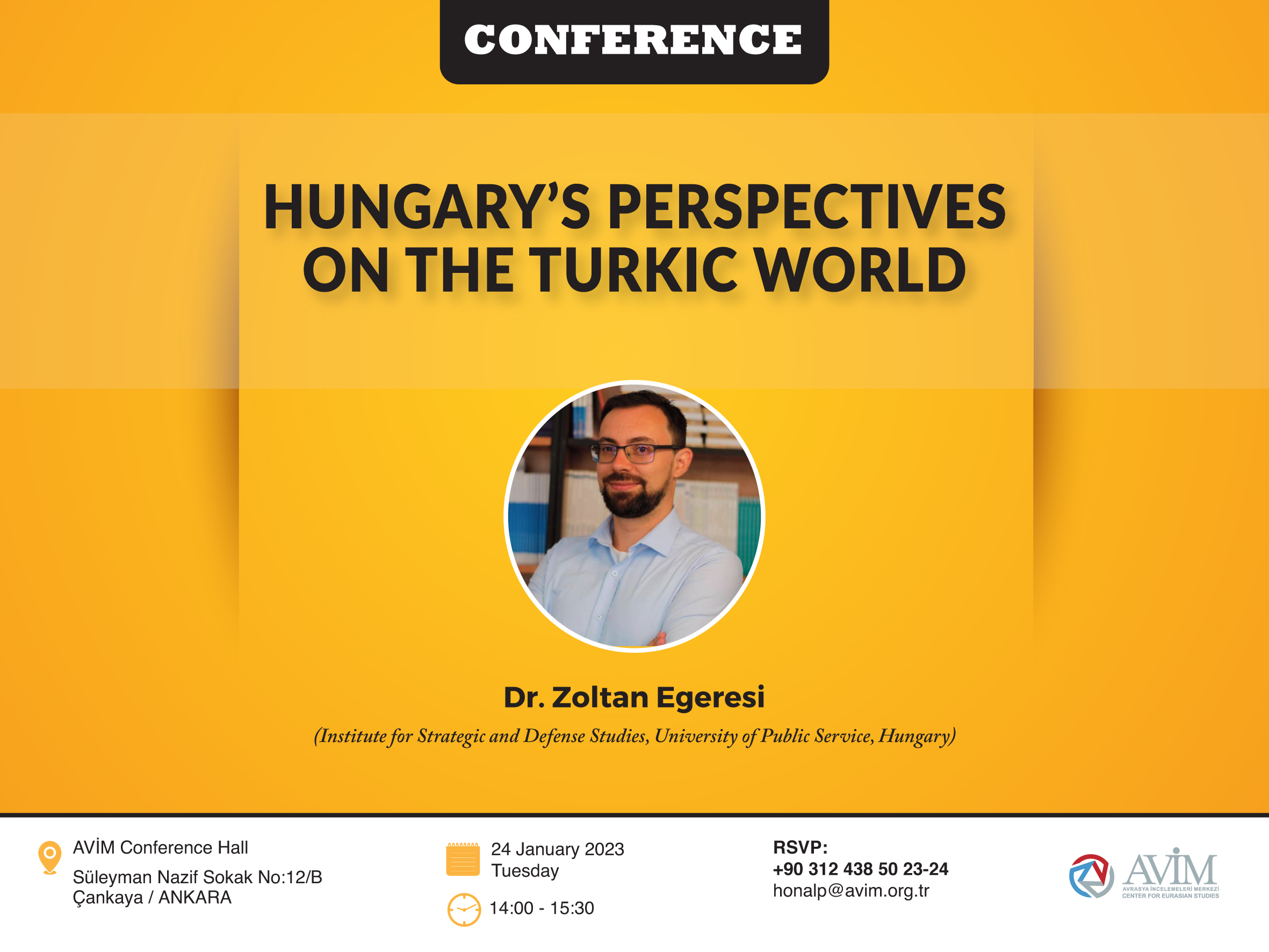
CONFERENCE TITLED “HUNGARY’S PERSPECTIVES ON THE TURKIC WORLD"