

















Balkan Insight, 01 Dec 2016
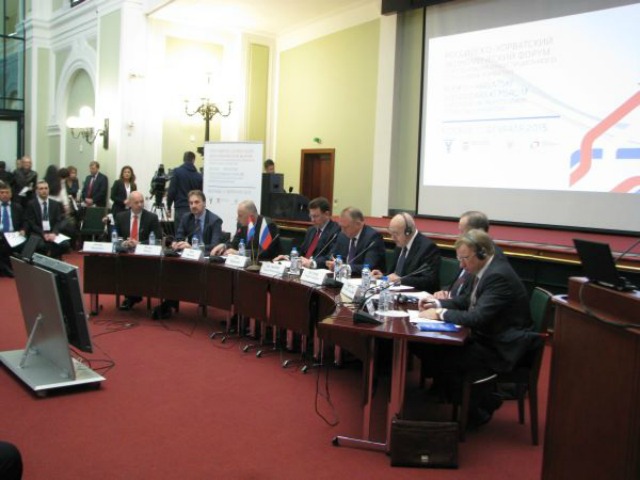
Croatia-Russia economic forum in Moscow in February 2015. Photo: Croatian Ministry of Economy
Recent political tensions between Croatia and Russia are not the only factors behind the steady decline in the value of trade between Russia and Croatia, experts say.
Economic analyst Damir Novotny told BIRN that falling trade levels, mostly caused by a fall in imports from Russia, are not “a dramatic issue for Croatia”.
“Raw materials dominate this trade between us, but can be found easily in other markets,” he said.
He explained that some Croatian exporters to Russia from the food sector had found new ways to export goods through Serbia.
When Russian slapped sanctions on food products from the EU in 2014, as response to EU and US sanctions imposed on Russia over the Ukraine crisis, some Croatian food companied started re-packaging products destined for Russia in Serbia.
As Serbia is not an EU state and is not included in Russia’s sanctions, they were able to by-pass the sanctions regime that way.
“Russia isn’t the most important Croatian foreign trade partner. The most important are three EU states: Italy, Austria and Germany. Neighbouring countries in Southeastern Europe, Serbia and Bosnia and Herzegovina, are also important,” Novotny concluded.
According to Croatia’s Bureau of Statistics, Croatian export to Russia in the first eight months this year were worth 106 million euros, 2.1 per cent lower than in the same period last year.
In the same period, Croatia imported 155 million euros worth of goods from Russia, which was a striking 54.9 per cent less.
Over the whole of 2015, Croatia exported 195 million euros worth of goods to Russia, which was 29.5 per cent less than in 2014 – partly a result of Russia’s sanctions.
Croatia mainly exports pharmaceutical products to Russia, but also food and technical equipment.
Goods imported from Russia fell in 2015 by 49.7 per cent in comparison to the figures for 2014.
Nevertheless, experts note that the falling cost of imports from Russia is mostly a result of falling global prices for oil and gas - encompassing much of Croatia’s imports from Russia, besides stone coal and fertilisers.
The Croatian Chamber of Economy, HGK, told BIRN that falls in imports from Russia were also caused by the economic crisis in Russia in 2014 and by the falling exchange rates of Russian ruble in comparison to the euro or the Croatian currency, the kuna,
Croatia-Russia relations came under the spotlight again on Monday, after Anvar Azimov, the Russian ambassador to Croatia, expressed dissatisfaction with both deteriorating political relations and falling trade levels on regional N1 TV.
“It is no secret that trade in goods with Croatia has decreased nearly 50 per cent. This is a disaster. Croatian exporters and farmers are those who suffer above all,” he said.
“The Croatia-Russia economic forum should have been held in November this year. But Russian entrepreneurs are very patriotic. They don’t agree with the [Western] regime of sanctions. They don’t agree that Croatia supports these sanctions. That is why Russian entrepreneurs weren’t interested in coming to Croatia,” Azimov said.
The last Croatia-Russia economic forum was organised in Moscow in February 2015, when the former centre-left government was in power in Croatia.
But the Forum, used for bagging deals between Croatian and Russian companies, clashed with EU sanctions on Russia and caused dissatisfaction in the US.
In his interview for N1, Azimov also mentioned last week’s hostile comments by Croatian Prime Minister Andrej Plenkovic on Russia's annexation of the Crimea peninsula and on its role in the conflict in Ukraine, which has caused dissatisfaction in Moscow.
HGK president Luka Burilovic said on Monday that the Forum was cancelled in October by the Russian Trade-Industry Chamber because of a lack of interest among Russian entrepreneurs.
“We want to stress that this economic event has nothing to do with political events … We are unpleasantly surprised that this economic event is being put into a political context,” Burilovic concluded, adding that the Forum will be organised eventually.
- See more at: http://www.balkaninsight.com/en/article/croatia-russia-trade-unaffected-by-political-disputes-11-30-2016#sthash.2vAxI53L.dpuf
No comments yet.
- ISIS, AFGHANISTAN’S ACCIDENTAL BROKER? Asia - Pacific 02.12.2016
- UKRAINE LAUNCHED 16 ANTI AIRCRAFT MISSILES ON THURSDAY Asia - Pacific 02.12.2016
- UK PUTS HOPE IN ‘PAY AS YOU GO’ ACCESS TO EU INTERNAL MARKET Europe - EU 02.12.2016
- IRAQ'S SHI'ITE MILITIAS COULD PROVE BIGGER TEST THAN MOSUL Iraq 02.12.2016
- “WE MUST UNITE IN FIGHT FOR LIBERATION OF KARABAKH” The Caucasus and Turkish-Armenian Relations 02.12.2016
-
25.01.2016
THE ARMENIAN QUESTION - BASIC KNOWLEDGE AND DOCUMENTATION -
12.06.2024
THE TRUTH WILL OUT -
27.03.2023
RADİKAL ERMENİ UNSURLARCA GERÇEKLEŞTİRİLEN MEZALİMLER VE VANDALİZM -
17.03.2023
PATRIOTISM PERVERTED -
23.02.2023
MEN ARE LIKE THAT -
03.02.2023
BAKÜ-TİFLİS-CEYHAN BORU HATTININ YAŞANAN TARİHİ -
16.12.2022
INTERNATIONAL SCHOLARS ON THE EVENTS OF 1915 -
07.12.2022
FAKE PHOTOS AND THE ARMENIAN PROPAGANDA -
07.12.2022
ERMENİ PROPAGANDASI VE SAHTE RESİMLER -
01.01.2022
A Letter From Japan - Strategically Mum: The Silence of the Armenians -
01.01.2022
Japonya'dan Bir Mektup - Stratejik Suskunluk: Ermenilerin Sessizliği -
03.06.2020
Anastas Mikoyan: Confessions of an Armenian Bolshevik -
08.04.2020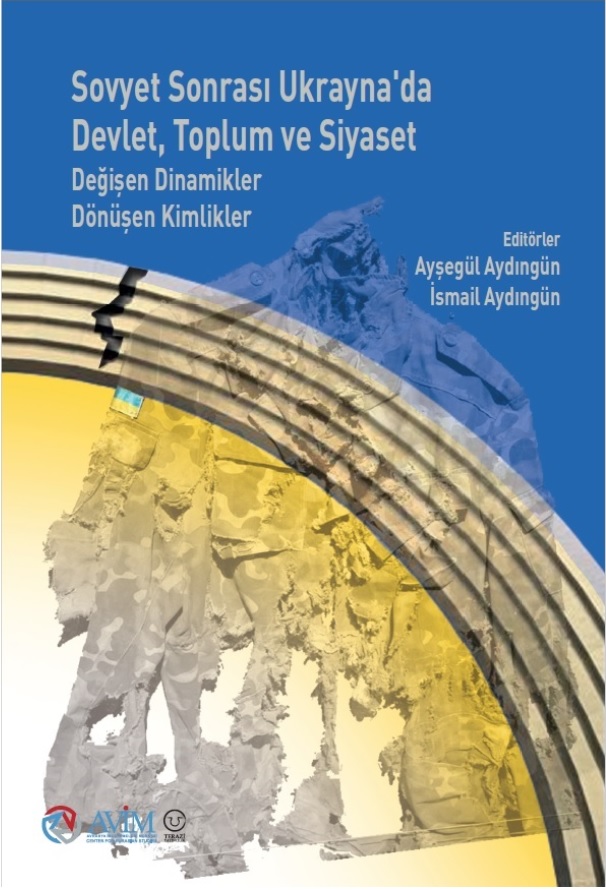
Sovyet Sonrası Ukrayna’da Devlet, Toplum ve Siyaset - Değişen Dinamikler, Dönüşen Kimlikler -
12.06.2018
Ermeni Sorunuyla İlgili İngiliz Belgeleri (1912-1923) - British Documents on Armenian Question (1912-1923) -
02.12.2016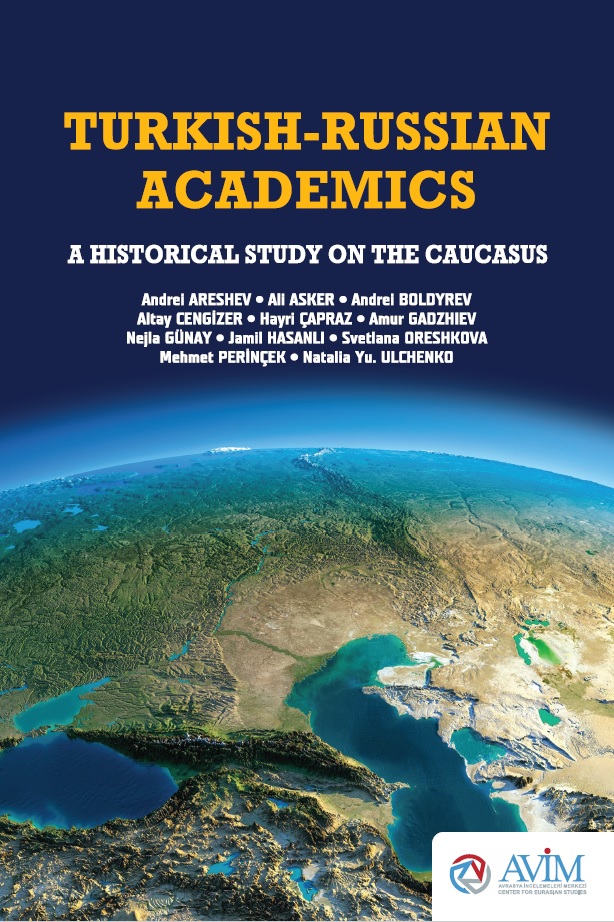
Turkish-Russian Academics: A Historical Study on the Caucasus -
01.07.2016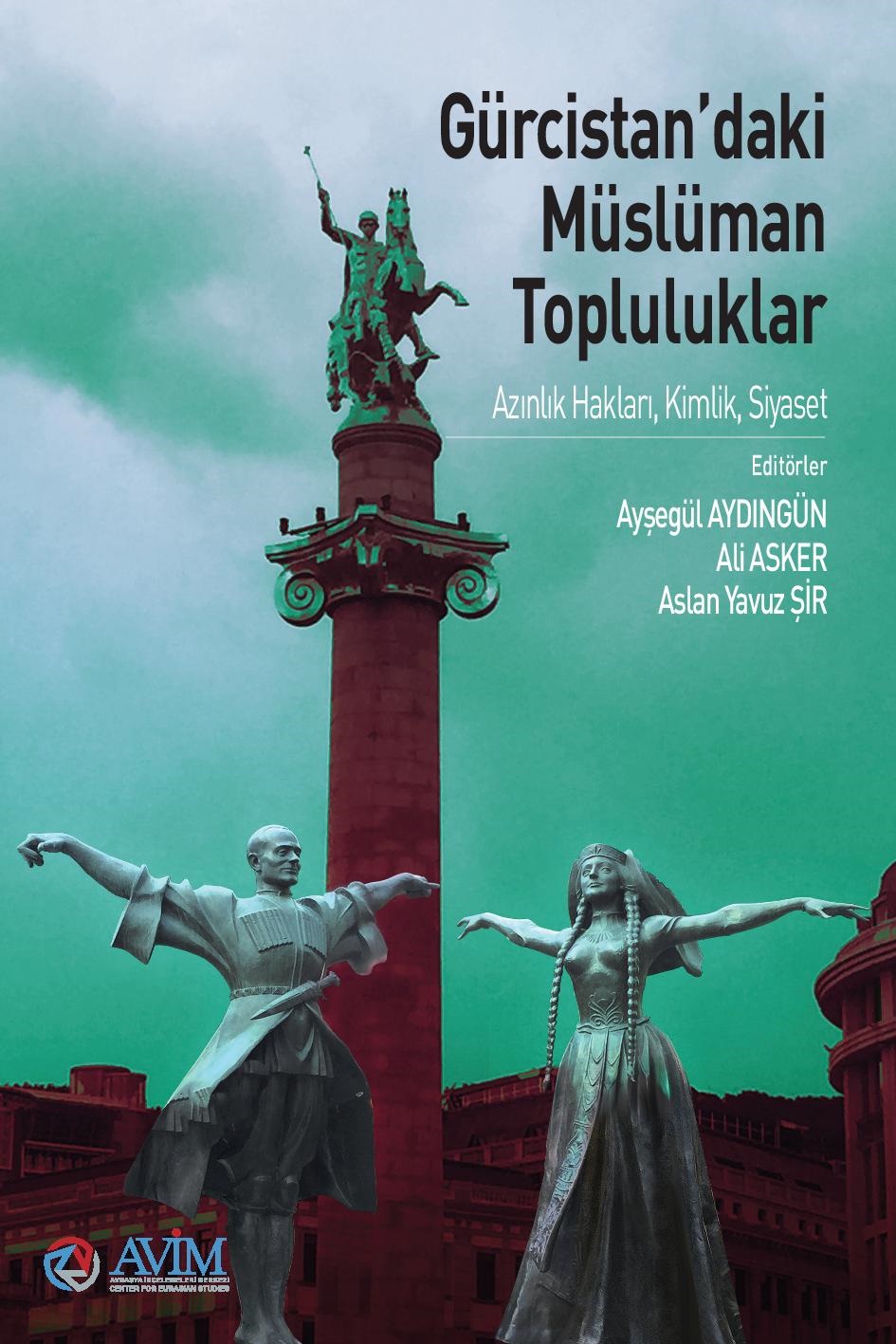
Gürcistan'daki Müslüman Topluluklar: Azınlık Hakları, Kimlik, Siyaset -
10.03.2016
Armenian Diaspora: Diaspora, State and the Imagination of the Republic of Armenia -
24.01.2016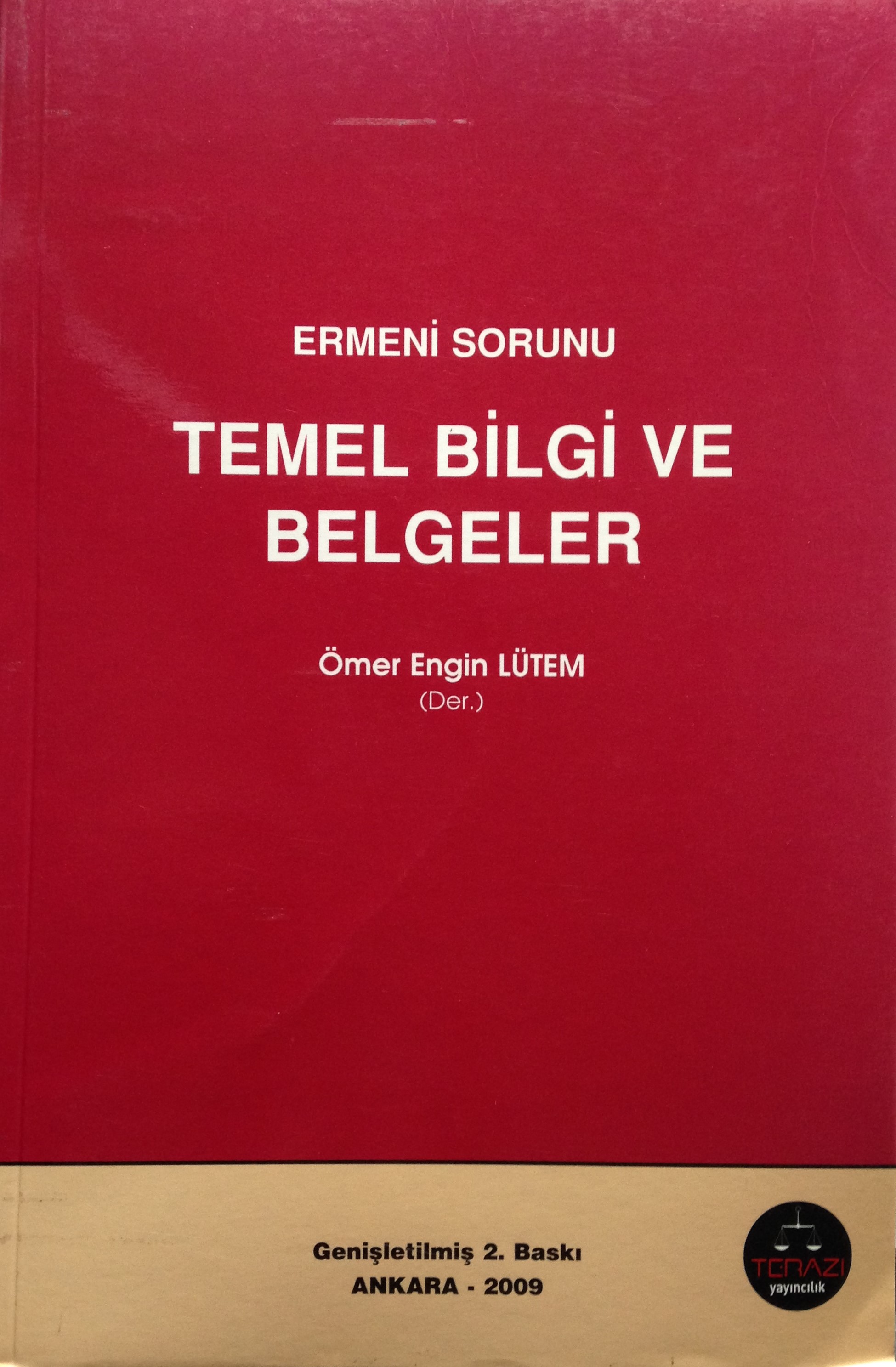
ERMENİ SORUNU - TEMEL BİLGİ VE BELGELER (2. BASKI)


-
AVİM Conference Hall 24.01.2023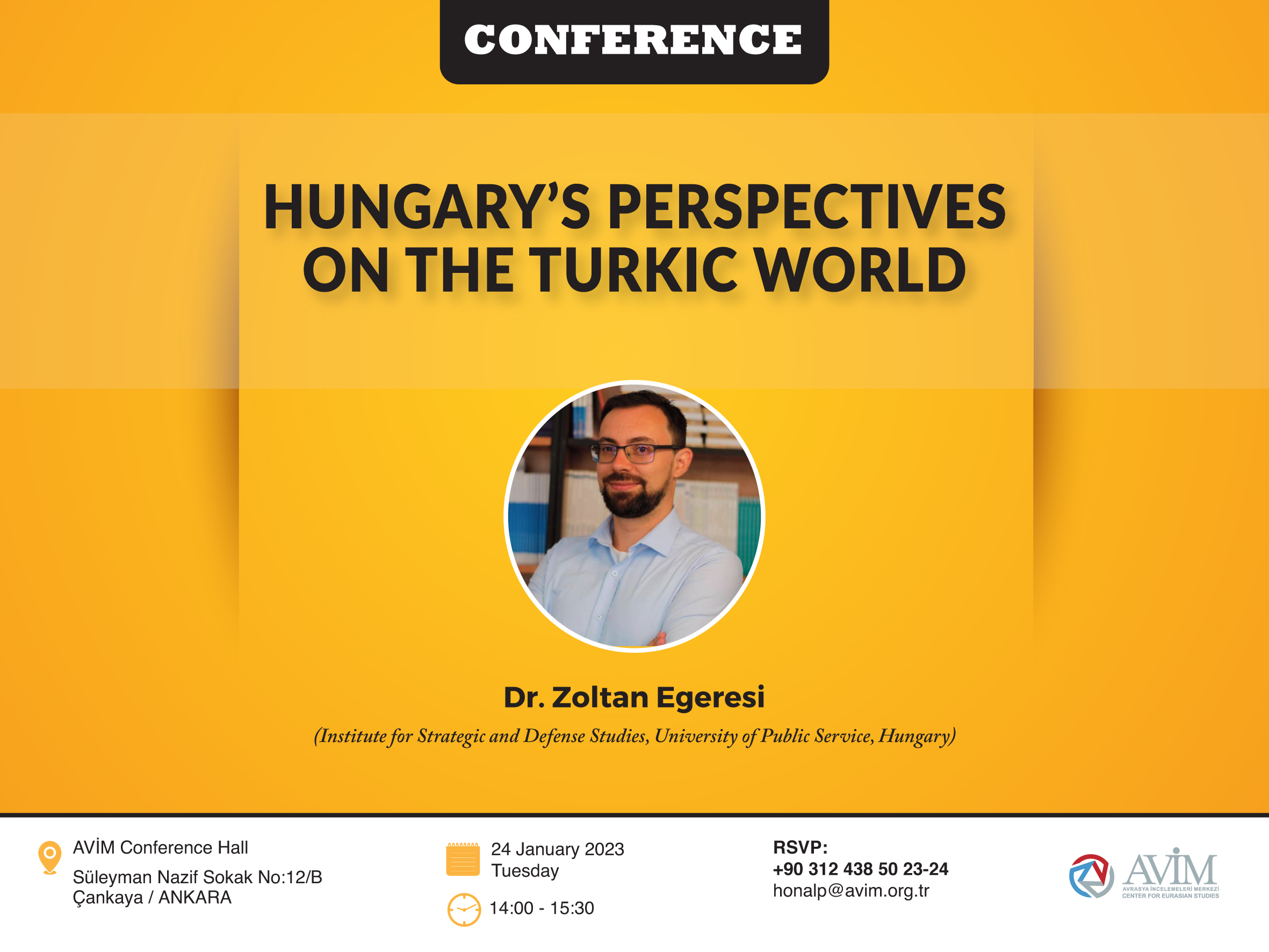
CONFERENCE TITLED “HUNGARY’S PERSPECTIVES ON THE TURKIC WORLD"