
















Deutsche Welle (27 March 2019)
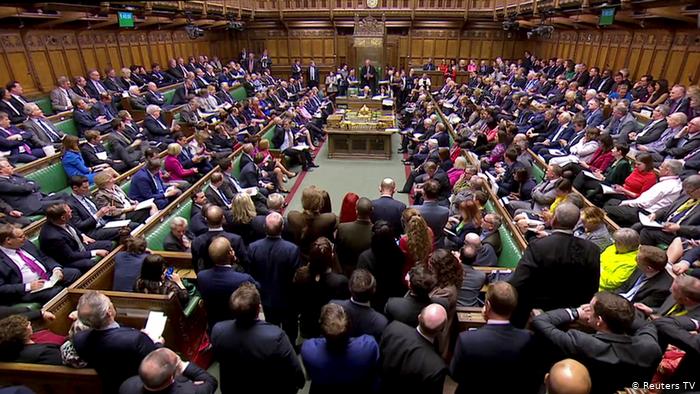
British lawmakers have voted against eight non-binding motions on possible alternatives to Prime Minister Theresa May's Brexit deal. Earlier, May said she would quit if her agreement was passed and Britain left the EU.
Speaking at a Conservative Party meeting at the House of Commons on Wednesday, Prime Minister Theresa May told MPs that she will quit if her twice-defeated plan for leaving the EU finally passes at a third attempt.
"I know there is a desire for a new approach — and new leadership — in the second phase of the Brexit negotiations, and I won't stand in the way of that," May said.
However, Northern Ireland's small but influential Democratic Unionist Party, which gives the Conservative-led government its slender parliamentary majority, has refused to budge, saying it would definitely be voting against May's deal as it posed an "unacceptable threat" to the union of the province with the rest of the UK.
'Spectacular display of indecision'
May's offer came ahead of a series of "indicative votes" in the House of Commons, in which lawmakers voted down eight non-binding motions on possible alternatives to the prime minister's Brexit deal.
MPs rejected a second referendum, rejected attempts to remain in the customs union and said they did not want a no-deal Brexit, all at the same time, in what Conservative Party deputy chairman James Cleverly called "a spectacular display of indecision" on Twitter.
Speaking for the government, Brexit Secretary Stephen Barclay said the results proved there is "no simple way forward." Barclay told MPs that their rejection of alternatives proved that May's deal remains "the best option."
What happens next
The UK now has until April 12 to come up with a new plan, or face leaving the EU without a deal. Following Wednesday's indicative votes, Britain now has four paths to follow. The first is for Parliament to approve the current withdrawal agreement that London and Brussels struck in November 2018.
Brexit: A business community divided
The prime minister's deal has been rejected twice by a large margin of British lawmakers. A new vote could be brought forward, but only if it has enough support to pass.
Should it succeed, Britain would leave the European Union on May 22, Theresa May would step down and a long transition period would take place.
The second path is a no-deal Brexit. If no other course of action is approved, Britain would crash out of the EU on April 12 and face serious economic consequences. But MPs on Wednesday voted against this course of action by a large margin.
A third option would be to negotiate a longer delay with the EU, in order to work out a new strategy. But this is complicated by the fact that European Parliament elections will take place at the end of May.
Rethinking Brexit altogether, whether through revoking the parliamentary decision or allowing for a second referendum, would be a fourth option. Though it remains the most unlikely outcome, the EU has urged the UK to consider it and MPs only narrowly rejected the idea of a second referendum in Wednesday's indicative votes session.
After a shrill referendum campaign, nearly 52 percent of British voters opted to leave the EU on June 24. Polls had shown a close race before the vote with a slight lead for those favoring remaining in the EU. Conservative British Prime Minister David Cameron, who had campaigned for Britain to stay, acknowledged the "will of the British people" and resigned the following morning.
Third time lucky?
Before the indicative votes, Commons Speaker John Bercow referred to talk of the government bringing back its Brexit deal for a third try in the coming days after two heavy defeats.
Bercow said that, for this to be allowed, there would have to be a substantial change to the motion. "Therefore, in order that there should be no misunderstanding, I wish to make clear that I do expect the government to meet the test of change," he told the House.
He also advised the government against attempts to get around his ruling: "They should not seek to circumvent my ruling by means of tabling either a notwithstanding motion or a tabling motion. The table office has been instructed that no such motions will be accepted."
All motions rejected
B - No deal
To leave the European Union without a deal on April 12. The motion received 160 votes in favor and 400 against.
D - Common market 2.0
UK membership of the European Free Trade Association (EFTA) and European Economic Area (EEA) with participation in the single market and a "comprehensive customs arrangement" with the EU after Brexit until a wider trade deal is agreed. The motion received 188 votes in favor and 283 against.
H - EFTA and EEA
Remaining within the EEA and rejoining EFTA, but remaining outside a customs union with the EU. The motion was also signed by Conservative MPs, including former minister Nicky Morgan and head of the Brexit Delivery Group, Simon Hart. The motion received 65 votes in favor and 377 against.
Might Brexit bring a comeback of smuggling?
J - Customs union
Tabled by veteran Conservative Europhile Ken Clarke, this required a commitment to negotiate a "permanent and comprehensive UK-wide customs union with the EU" in any Brexit deal. The motion received 264 votes in favor and 272 against.
K - Customs union and alignment with single market
Labour tabled a motion proposing its plan for a close economic relationship with the EU. The motion received 237 votes in favor and 307 against.
L - Revocation to avoid no deal
Under this plan tabled by Scottish MP Joanna Cherry, if the government has not passed its withdrawal agreement, it would have to stage a vote on a no-deal Brexit two sitting days before the scheduled date of departure. The motion received 184 votes in favor and 293 against.
M - Confirmatory public vote
Former Foreign Secretary Dame Margaret Beckett's motion would have required a public vote to confirm any Brexit deal passed by Parliament before its ratification. The motion received 268 votes in favor and 295 against.
O - Contingent preferential arrangements
This called for the government to seek to agree preferential trade arrangements with the EU, in case the UK is unable to implement a withdrawal agreement with the bloc. The motion received 139 votes in favor and 422 against.
jcg, jm/cmk (Reuters, AP)
No comments yet.
- FORMER MOLDOVAN PM RUNS FOR EUROPEAN PARLIAMENT, IN ROMANIA The Balkans 28.03.2019
-
 28 YEARS ON, IRAQ'S KIRKUK REMEMBERS TURKMEN MASSACRE
Iraq
28.03.2019
28 YEARS ON, IRAQ'S KIRKUK REMEMBERS TURKMEN MASSACRE
Iraq
28.03.2019
- STIGLITZ URGES JOINT EU-CHINA TRADE SANCTIONS AGAINST THE US ON CLIMATE CHANGE Europe - EU 28.03.2019
- ARMENIAN-U.S. RELATIONS POSITIVE: PAUL STRONSKI The Caucasus and Turkish-Armenian Relations 28.03.2019
-
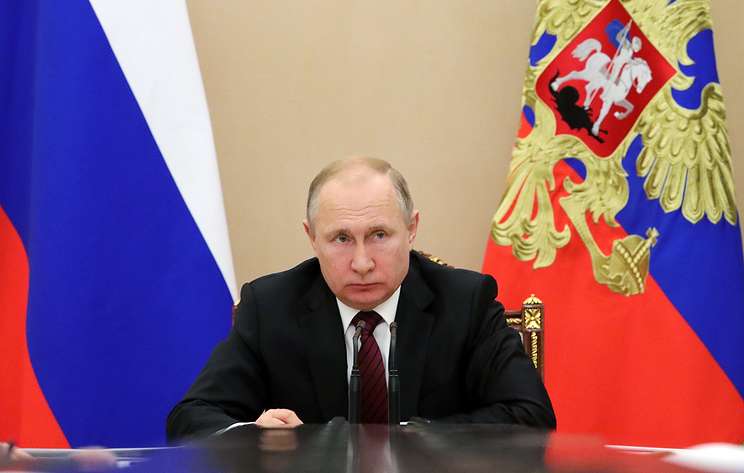 PUTIN ARRIVES IN KYRGYZSTAN FOR STATE VISIT
Asia - Pacific
28.03.2019
PUTIN ARRIVES IN KYRGYZSTAN FOR STATE VISIT
Asia - Pacific
28.03.2019
-
25.01.2016
THE ARMENIAN QUESTION - BASIC KNOWLEDGE AND DOCUMENTATION -
12.06.2024
THE TRUTH WILL OUT -
27.03.2023
RADİKAL ERMENİ UNSURLARCA GERÇEKLEŞTİRİLEN MEZALİMLER VE VANDALİZM -
17.03.2023
PATRIOTISM PERVERTED -
23.02.2023
MEN ARE LIKE THAT -
03.02.2023
BAKÜ-TİFLİS-CEYHAN BORU HATTININ YAŞANAN TARİHİ -
16.12.2022
INTERNATIONAL SCHOLARS ON THE EVENTS OF 1915 -
07.12.2022
FAKE PHOTOS AND THE ARMENIAN PROPAGANDA -
07.12.2022
ERMENİ PROPAGANDASI VE SAHTE RESİMLER -
01.01.2022
A Letter From Japan - Strategically Mum: The Silence of the Armenians -
01.01.2022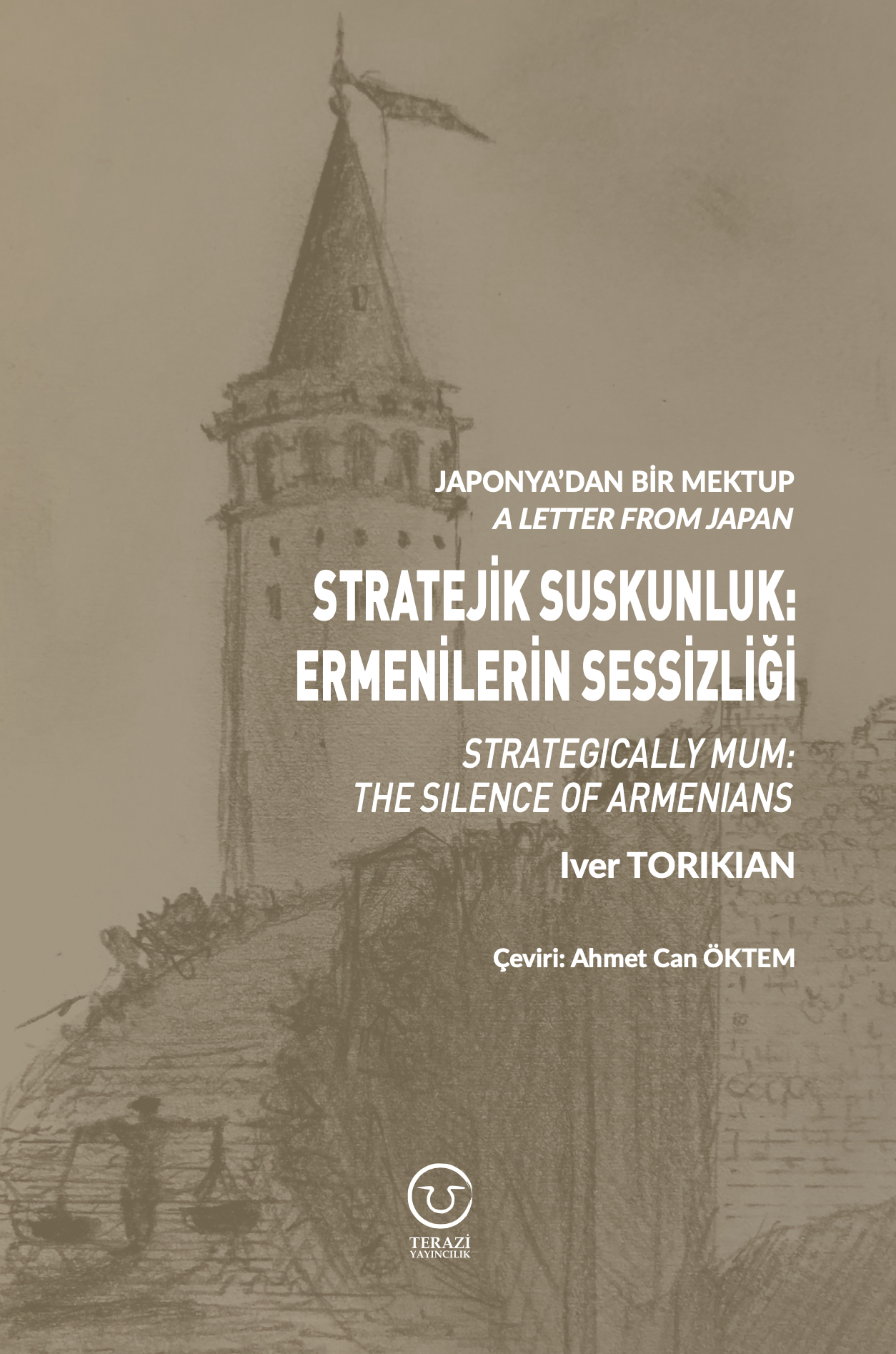
Japonya'dan Bir Mektup - Stratejik Suskunluk: Ermenilerin Sessizliği -
03.06.2020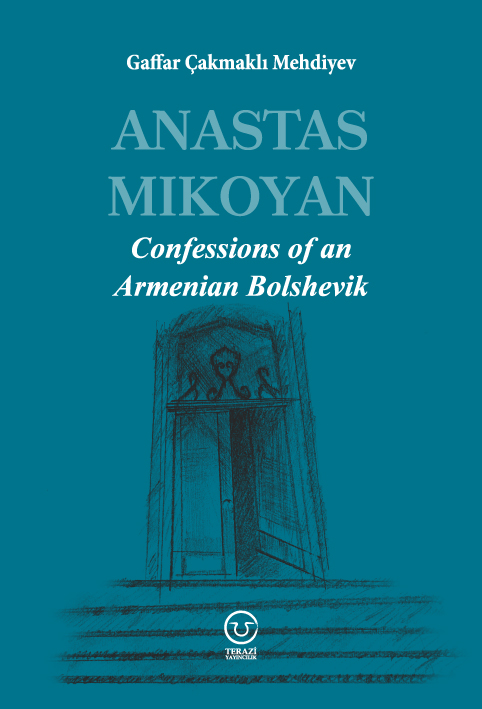
Anastas Mikoyan: Confessions of an Armenian Bolshevik -
08.04.2020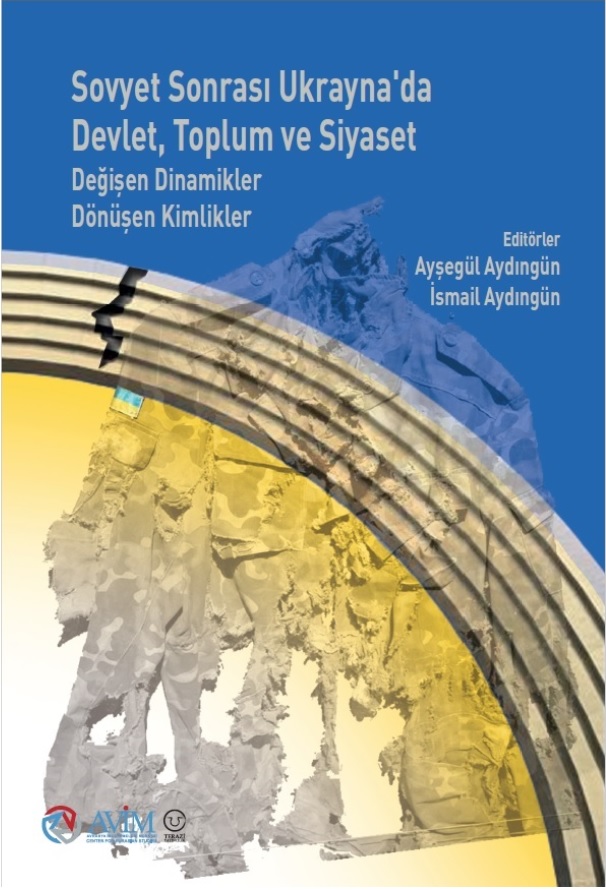
Sovyet Sonrası Ukrayna’da Devlet, Toplum ve Siyaset - Değişen Dinamikler, Dönüşen Kimlikler -
12.06.2018
Ermeni Sorunuyla İlgili İngiliz Belgeleri (1912-1923) - British Documents on Armenian Question (1912-1923) -
02.12.2016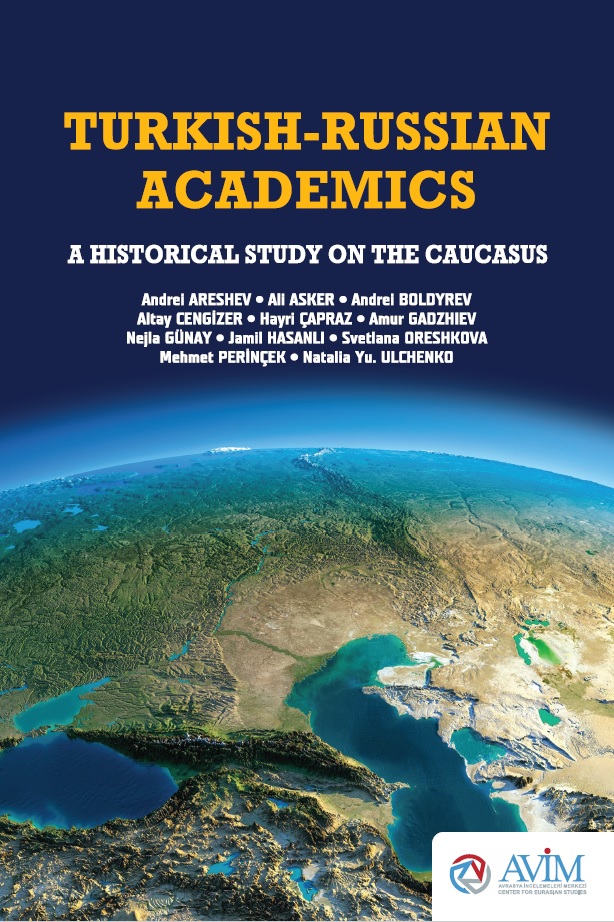
Turkish-Russian Academics: A Historical Study on the Caucasus -
01.07.2016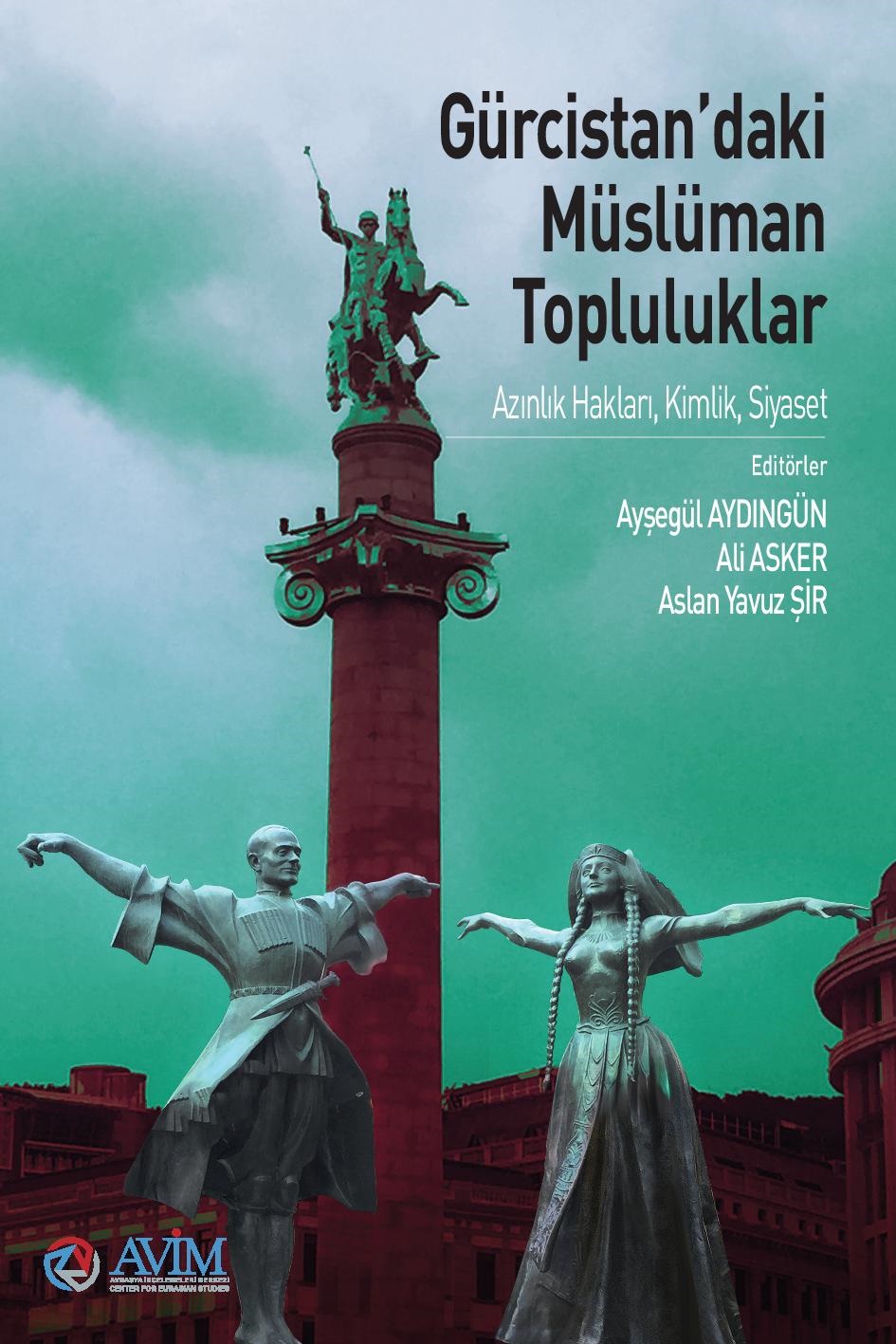
Gürcistan'daki Müslüman Topluluklar: Azınlık Hakları, Kimlik, Siyaset -
10.03.2016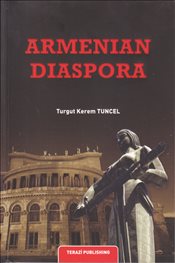
Armenian Diaspora: Diaspora, State and the Imagination of the Republic of Armenia -
24.01.2016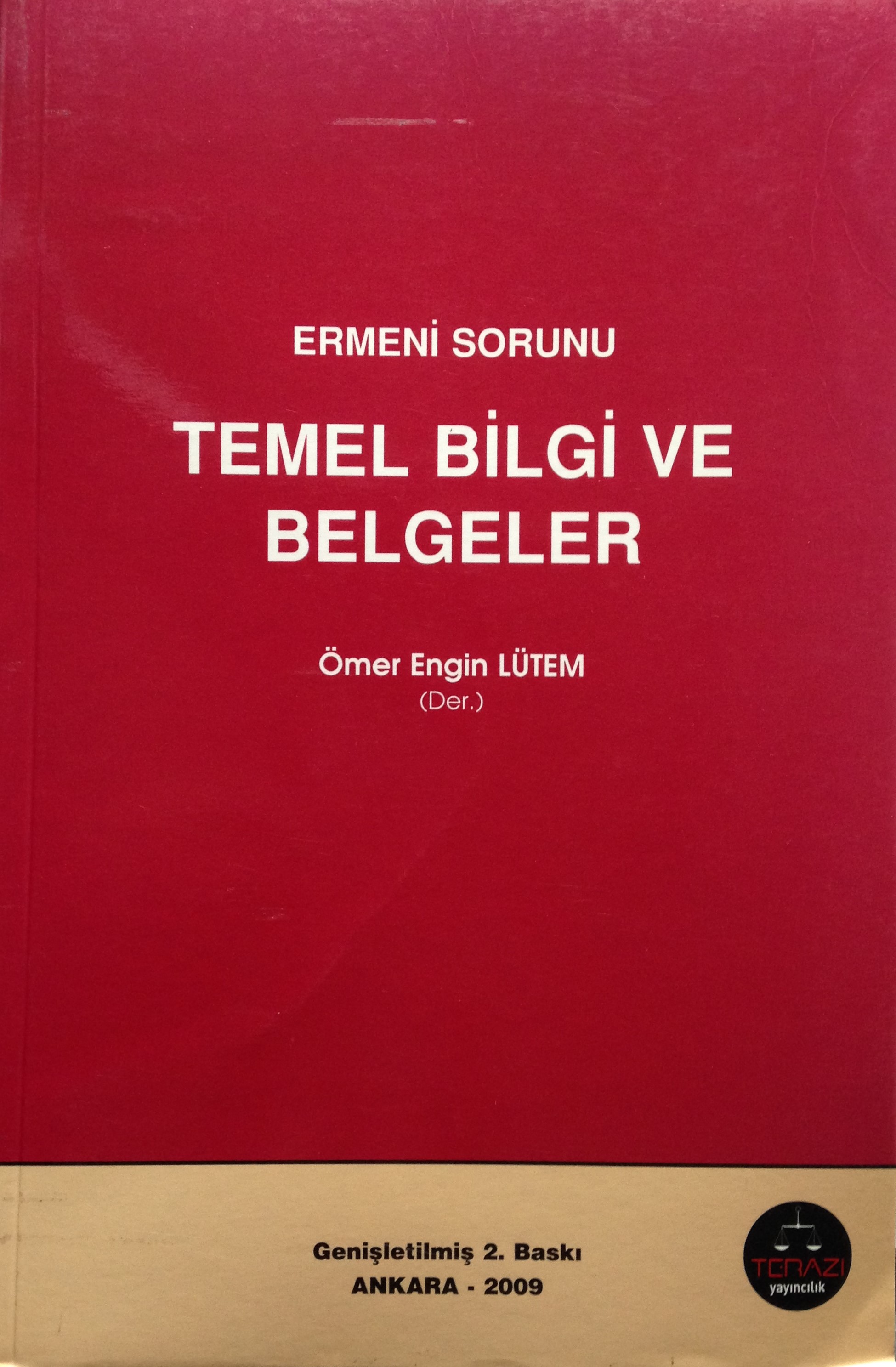
ERMENİ SORUNU - TEMEL BİLGİ VE BELGELER (2. BASKI)


-
AVİM Conference Hall 24.01.2023
CONFERENCE TITLED “HUNGARY’S PERSPECTIVES ON THE TURKIC WORLD"