

















Defence News, 17 Jan 2018
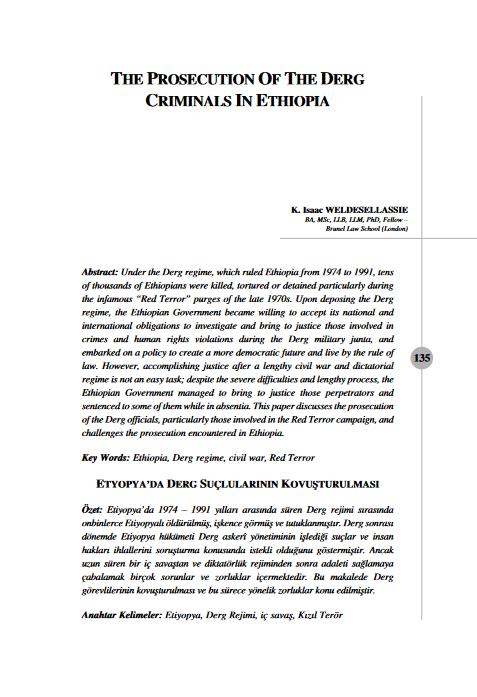
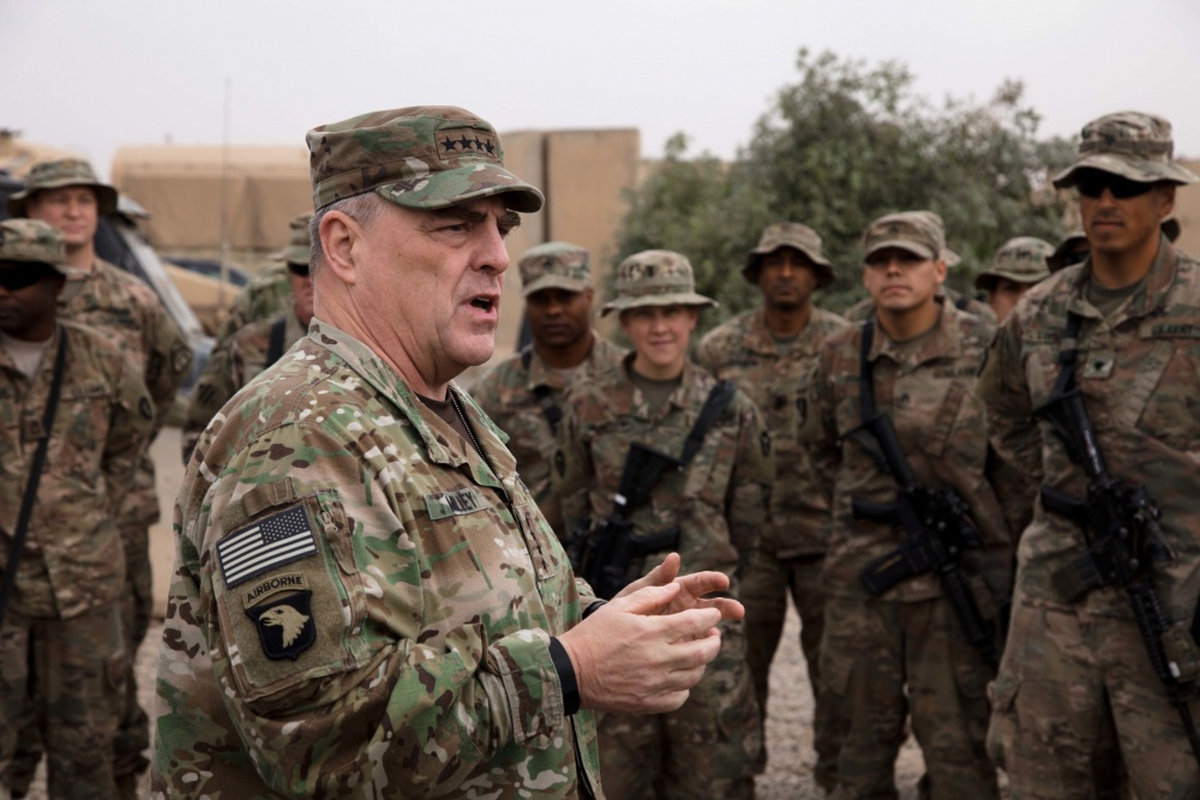
The U.S. Army chief of staff, who recently returned from a trip to Iraq, said U.S. troops there will continue to help Iraqi security forces root out Islamic State militants, but what comes after that for the Army in the war-torn country remains to be seen.
“I think the situation in Iraq is a lot different than it was three or four years ago when ISIS came rolling out of the desert and screaming down the Euphrates River Valley,” Gen. Mark Milley told reporters Jan. 17 following an Association of the U.S. Army breakfast in Arlington, Virginia.
“The caliphate, such as it was in terms of owning land, etc. — that has been destroyed. And the land that ISIS, or Daesh, controlled has been liberated. It’s back in Iraqi hands and that has reverted to what would be called sort of small-scale terrorism,” he said.
Just the other day, for example, there was a small attack in Baghdad, Milley noted, adding that ISIS no longer replicates or has a “proto-state sort of thing, so that is a big step forward.”
But the war against ISIS is not yet over, and Milley has visited Iraq, as well as U.S. soldiers there who are helping Iraqi security forces, to get a sense of what needs to be done. “There is a lot of work left to be done,” he said.
Yet, what the combatant commander decides for future U.S. troop presence in both Iraq and Syria has yet to be determined. “We will see what the combatant commander, how he wants to shift gears” once ISIS is defeated, Milley said. “But the Iraqi security forces are in a consolidation period where they have to continue to eliminate the small pockets of terrorists and insurgents, the ISIS terrorists that are out there, and we will help them do that.”
Milley wouldn’t say whether such troop presence could include the Army’s newly conjured security force assistance brigades designed specifically to train, advise, assist and enable foreign militaries and police forces.
The first SFAB based out of Fort Benning, Georgia, is headed to Afghanistan next month and has been training rigorously at the Joint Readiness Training Center ahead of the deployment.
Sign up for our Daily News Roundup
The top Defense News stories of the daySubscribe
Milley said during the breakfast that SFABs formally institutionalize a practice of training, advising, assisting and enabling indigenous forces that has long been resident in the Army. Funding for the new units were requested for the first time in the fiscal 2018 Army budget yet to be approved by Congress.
“The need has been there for a long time, and we have met that need,” Milley said, “but we have met it in the last 16 years through ad hoc measures, in my opinion, and I’ve been a participant in that.
“That is not say it’s bad, it’s just been ad hoc and it’s been very disruptive to the training of the force structure that does exist for conventional higher-end operations.”
Milley lamented having to previously break up brigade combat teams to create units that could support indigenous forces in an advisory role.
The Army, for example, has trained, advised and assisted forces in Iraq and Afghanistan but had to do so at the expense of the conventional Army. “We only have X amount of these brigade combat teams, and if we take a whole bunch of them and we shrink them and take their leadership apart and they go through an exercise and become advisers, then you are essentially reducing your ground combat capability by whatever amount you commit to the task,” Milley said.
The chief said the second SFAB is being established at Fort Bragg, North Carolina, and will deploy this time next year. The Army is deciding where to station the third SFAB in the U.S. and will stand up the fourth and fifth in 2019 as well as one within the Army National Guard.
No comments yet.
- ANGELA MERKEL TO COME TO BULGARIA ON SATURDAY The Balkans 18.01.2018
- U.S., KAZAKHSTAN SIGN AGREEMENTS WORTH $2.5B Asia - Pacific 18.01.2018
-
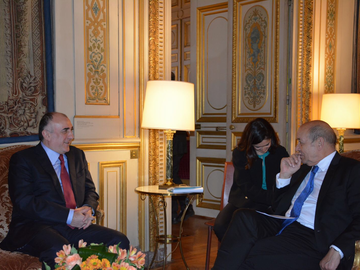 AZERBAIJAN, FRANCE DISCUSS NAGORNO-KARABAKH CONFLICT
The Caucasus and Turkish-Armenian Relations
18.01.2018
AZERBAIJAN, FRANCE DISCUSS NAGORNO-KARABAKH CONFLICT
The Caucasus and Turkish-Armenian Relations
18.01.2018
- IRAQ IS TROUBLING THE OIL MAJORS Iraq 18.01.2018
-
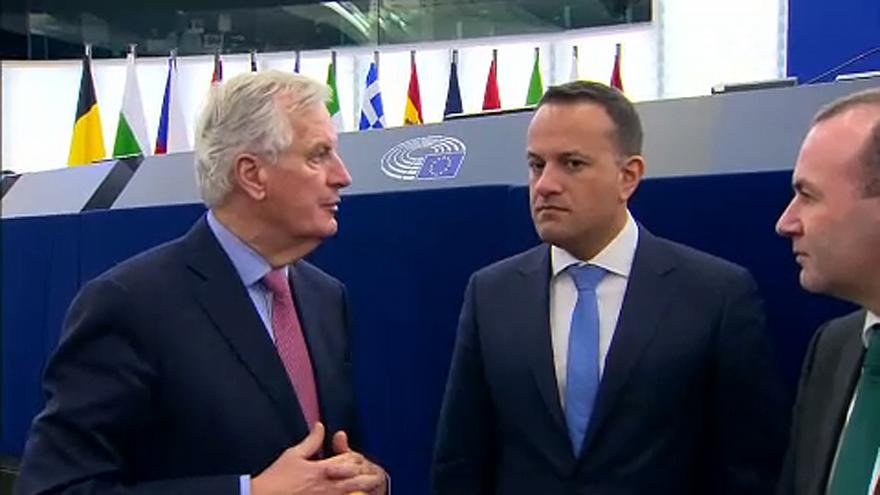 IRISH PM LOOKS TO THE FUTURE OF EUROPE
Europe - EU
18.01.2018
IRISH PM LOOKS TO THE FUTURE OF EUROPE
Europe - EU
18.01.2018
-
25.01.2016
THE ARMENIAN QUESTION - BASIC KNOWLEDGE AND DOCUMENTATION -
12.06.2024
THE TRUTH WILL OUT -
27.03.2023
RADİKAL ERMENİ UNSURLARCA GERÇEKLEŞTİRİLEN MEZALİMLER VE VANDALİZM -
17.03.2023
PATRIOTISM PERVERTED -
23.02.2023
MEN ARE LIKE THAT -
03.02.2023
BAKÜ-TİFLİS-CEYHAN BORU HATTININ YAŞANAN TARİHİ -
16.12.2022
INTERNATIONAL SCHOLARS ON THE EVENTS OF 1915 -
07.12.2022
FAKE PHOTOS AND THE ARMENIAN PROPAGANDA -
07.12.2022
ERMENİ PROPAGANDASI VE SAHTE RESİMLER -
01.01.2022
A Letter From Japan - Strategically Mum: The Silence of the Armenians -
01.01.2022
Japonya'dan Bir Mektup - Stratejik Suskunluk: Ermenilerin Sessizliği -
03.06.2020
Anastas Mikoyan: Confessions of an Armenian Bolshevik -
08.04.2020
Sovyet Sonrası Ukrayna’da Devlet, Toplum ve Siyaset - Değişen Dinamikler, Dönüşen Kimlikler -
12.06.2018
Ermeni Sorunuyla İlgili İngiliz Belgeleri (1912-1923) - British Documents on Armenian Question (1912-1923) -
02.12.2016
Turkish-Russian Academics: A Historical Study on the Caucasus -
01.07.2016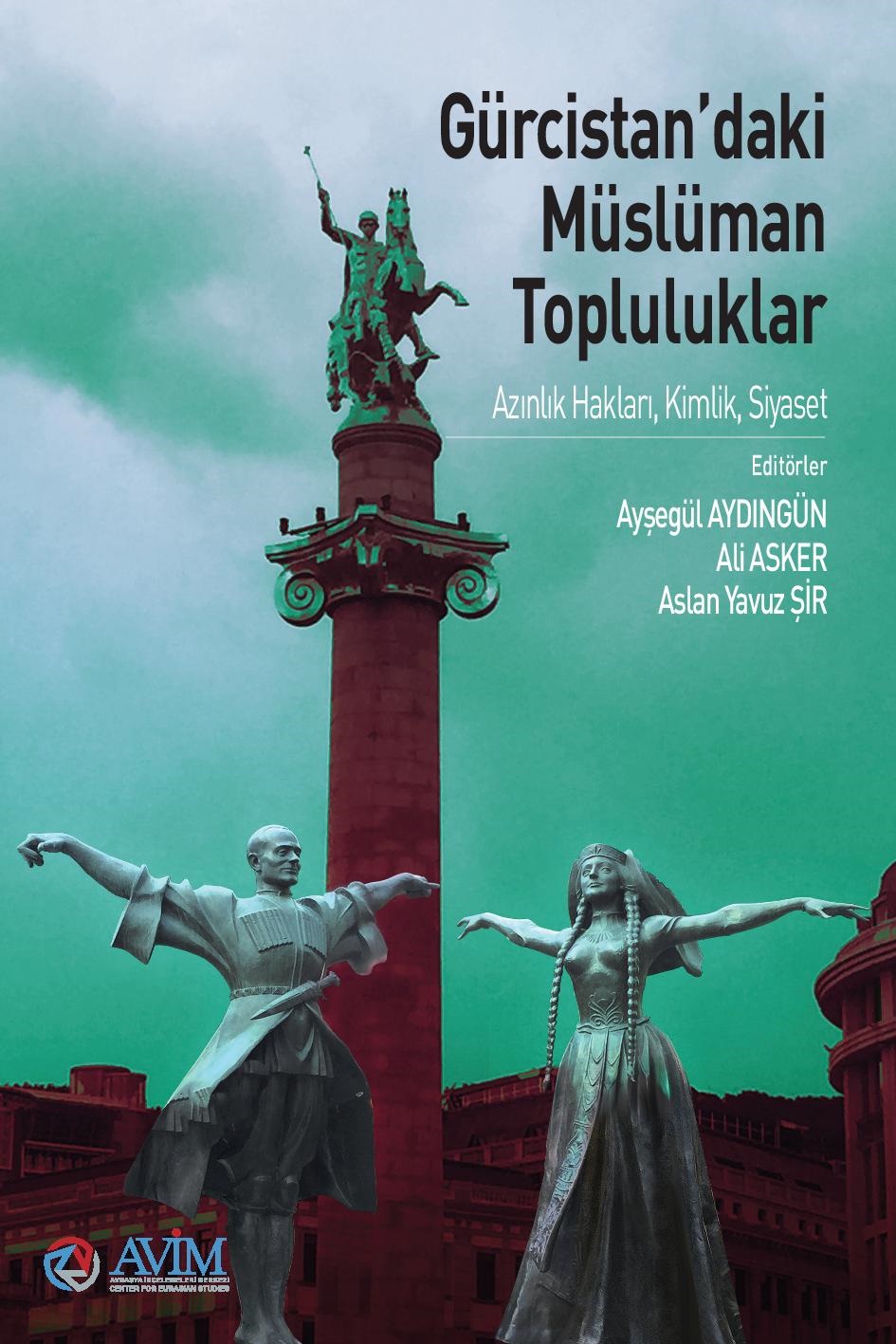
Gürcistan'daki Müslüman Topluluklar: Azınlık Hakları, Kimlik, Siyaset -
10.03.2016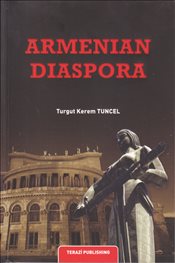
Armenian Diaspora: Diaspora, State and the Imagination of the Republic of Armenia -
24.01.2016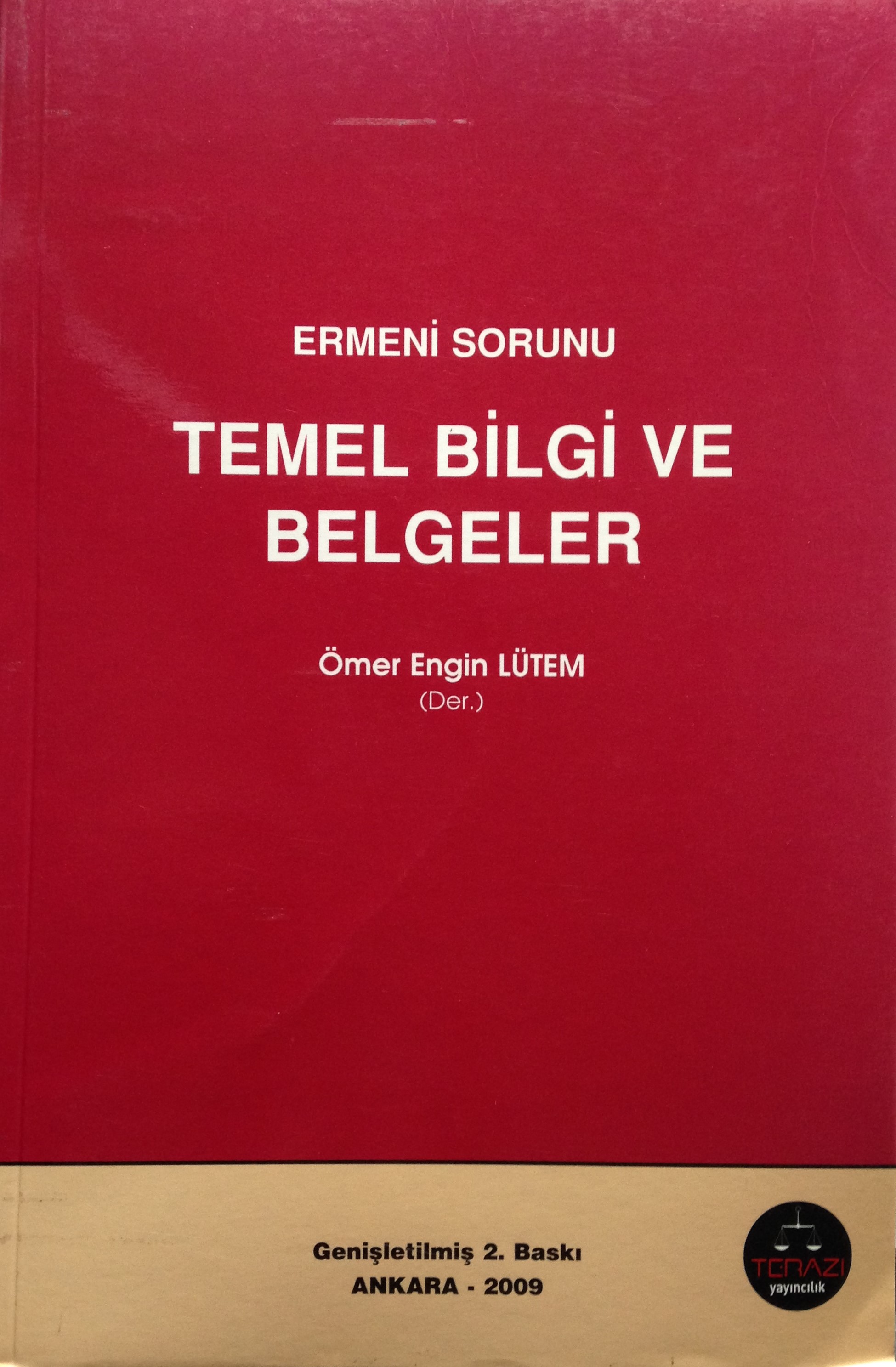
ERMENİ SORUNU - TEMEL BİLGİ VE BELGELER (2. BASKI)
-
AVİM Conference Hall 24.01.2023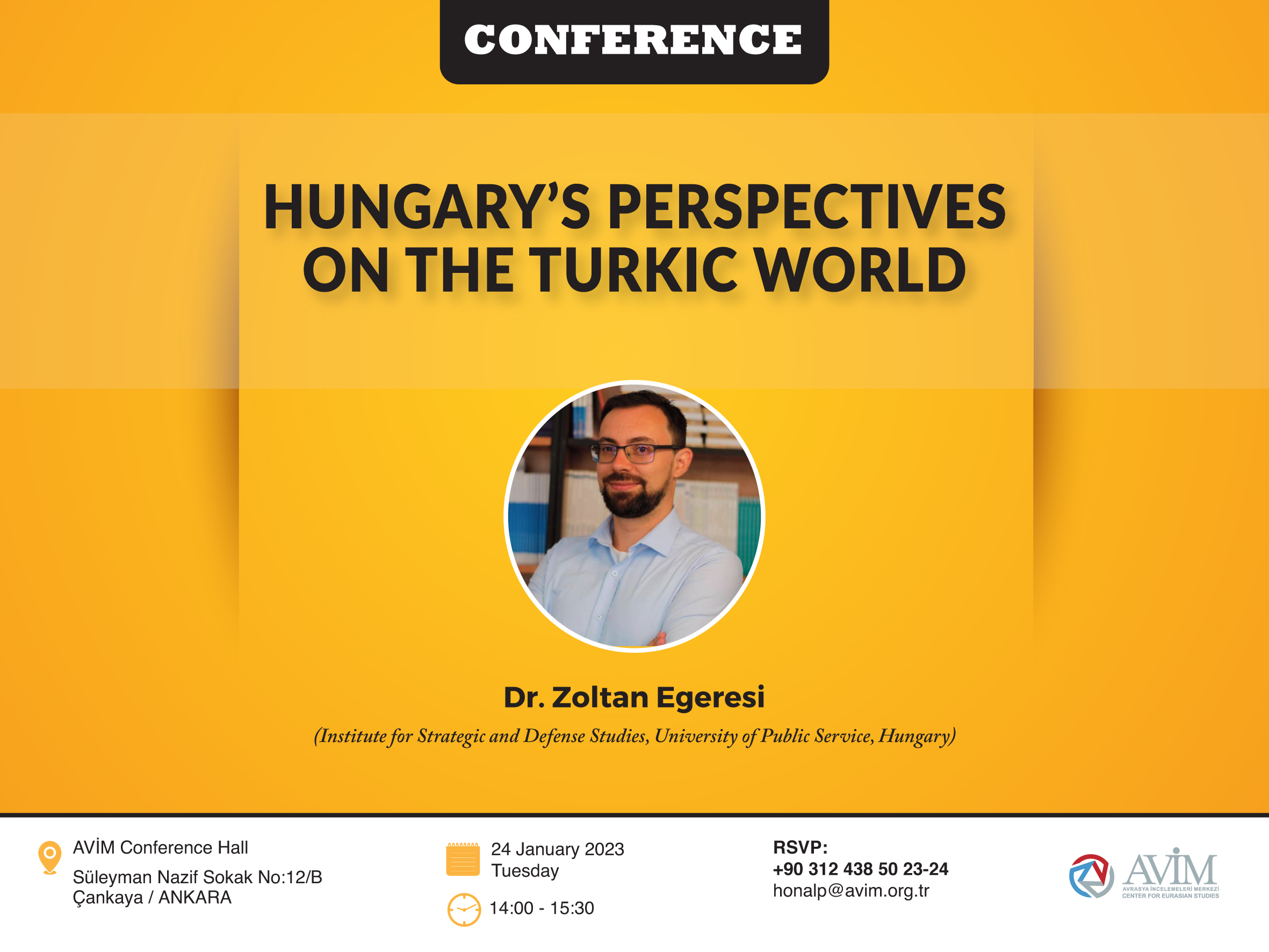
CONFERENCE TITLED “HUNGARY’S PERSPECTIVES ON THE TURKIC WORLD"