

















Euronews, 22 Oct 2017
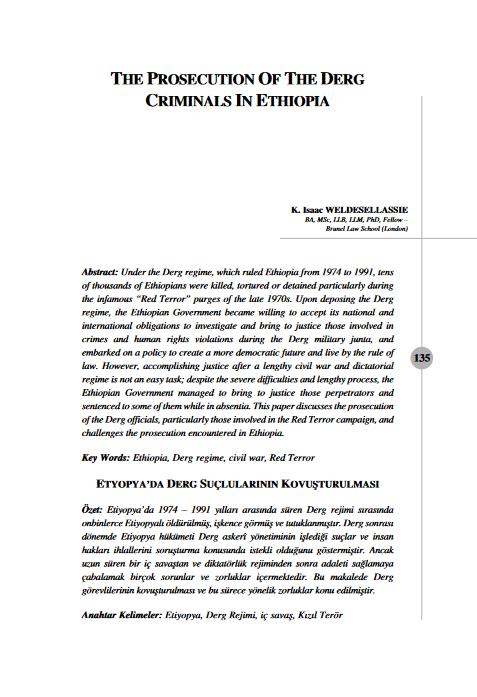
Worried about eroding security, elected officials in Afghanistan sought answers this weekend from President Ashraf Ghani’s administration, asking why more was not done to prevent suicide attacks that have killed nearly 200 people in one of the bloodiest weeks of the year.
“The president gives lectures, and his advisers and minsters are clapping for him,” Saleh Mohammad Saljoqi, a parliament member from the western province of Herat, said during a Saturday evening session with security officials, according to local news reports.
“Alas, they should see what is going on in this country,” he said.
In the past week, Taliban suicide bombers broke through security checkpoints at police and military compounds in Humvees, allowing fighters to storm the gates in commando-style raids that, in one case, nearly wiped out all 60 Afghan National Army soldiers based in a post in the southwestern province of Kandahar. In that attack, 43 soldiers died, while nine were wounded.
Other attacks included the bombing of a Shiite mosque in Kabul that killed 54 people and injured 55, and a rocket attack on the NATO compound inside the city’s fortified “Green Zone” that caused no injuries.
Earlier in the week, several attempts at suicide attacks in the city were foiled when officials arrested three people driving in trucks loaded with explosives.
Some elected officials accused Pakistan, which has aided the Taliban in the past, of facilitating the attacks. Pakistan, threatened with sanctions by President Trump for allowing “safe havens” for terrorists near its border with Afghanistan, denies assisting the group and has made a point of condemning the attacks.
Other Afghan officials, along with security analysts, believe that the attacks are a show of force in reaction to Trump’s plan to add 4,000 U.S. troops in the country — bringing the total U.S. presence to about 13,500 — while increasing nighttime raids and aerial bombing of Taliban forces.
“The attacks show that they are here and are busy fighting and the airstrikes have not affected them,” said Abdul Hafeez Mansoor, a parliament member from the central province of Panjshir. “They are doing their utmost to deteriorate the situation and are using any means and measures for doing so.”
On Sunday, Ghani visited a police compound in Paktia province, which borders Pakistan, to offer condolences to the families of about 80 people killed Tuesday in a Taliban raid. Toryalai Abadani, the local police chief, was among those killed in the attack.
“Terrorists can shed our blood, but they cannot break our will,” Ghani’s Twitter feed read before he headed to Gardez, Paktia’s capital. “RIP Gen. Abdiyani, a brave son & soldier of our soil.”
Mohammad Radmanesh, a Defense Ministry spokesman, noted that 270 Taliban fighters were killed in Kandahar in recent days.
“We are resolved to stop them, prevent them and reduce their might and power to zero with the passage of time with the available resources,” Radmanesh said.
But with the Islamic State militant group — which asserted responsibility for the bombing of the Imam Zaman Shiite mosque in Kabul — also operating in Afghanistan, it’s getting more difficult to prevent all attacks, he said.
“This is true that the terrorists from around the world have gathered in Afghanistan and are involved in sabotage activities,” Radmanesh said.
Mariam Koofi, a parliament member from the northeastern Badakhshan province, lamented what she sees as an increasingly complicated fight for security in Afghanistan.
“Unlike in the past, we have seen the attacks happening more in urban areas,” Koofi said, calling for more resources for the nation’s small air force. “Our intelligence is weak and cannot prevent such attacks.”
No comments yet.
- VOTING IN ELECTIONS TO LOCAL SELF-GOVERNMET OF GEORGIA IS OVER The Caucasus and Turkish-Armenian Relations 23.10.2017
- ROMANIAN GAS TRANSPORTER TRANSGAZ BORROWS EUR 50 MLN FROM EIB FOR REGIONAL PIPELINE The Balkans 23.10.2017
- RUSSIA ‘OPTIMISTIC’ ABOUT VISA-FREE TRAVEL FOR TURKS Asia - Pacific 23.10.2017
- RAQQA BOMBING WAS 'BARBARIC' - RUSSIA Asia - Pacific 23.10.2017
- AUSTRIAN AMBASSADOR: AZERBAIJAN AND ARMENIA CAN NOT BE FORCED INTO ONE WAY OF SOLUTION - INTERVIEW The Caucasus and Turkish-Armenian Relations 23.10.2017
-
25.01.2016
THE ARMENIAN QUESTION - BASIC KNOWLEDGE AND DOCUMENTATION -
12.06.2024
THE TRUTH WILL OUT -
27.03.2023
RADİKAL ERMENİ UNSURLARCA GERÇEKLEŞTİRİLEN MEZALİMLER VE VANDALİZM -
17.03.2023
PATRIOTISM PERVERTED -
23.02.2023
MEN ARE LIKE THAT -
03.02.2023
BAKÜ-TİFLİS-CEYHAN BORU HATTININ YAŞANAN TARİHİ -
16.12.2022
INTERNATIONAL SCHOLARS ON THE EVENTS OF 1915 -
07.12.2022
FAKE PHOTOS AND THE ARMENIAN PROPAGANDA -
07.12.2022
ERMENİ PROPAGANDASI VE SAHTE RESİMLER -
01.01.2022
A Letter From Japan - Strategically Mum: The Silence of the Armenians -
01.01.2022
Japonya'dan Bir Mektup - Stratejik Suskunluk: Ermenilerin Sessizliği -
03.06.2020
Anastas Mikoyan: Confessions of an Armenian Bolshevik -
08.04.2020
Sovyet Sonrası Ukrayna’da Devlet, Toplum ve Siyaset - Değişen Dinamikler, Dönüşen Kimlikler -
12.06.2018
Ermeni Sorunuyla İlgili İngiliz Belgeleri (1912-1923) - British Documents on Armenian Question (1912-1923) -
02.12.2016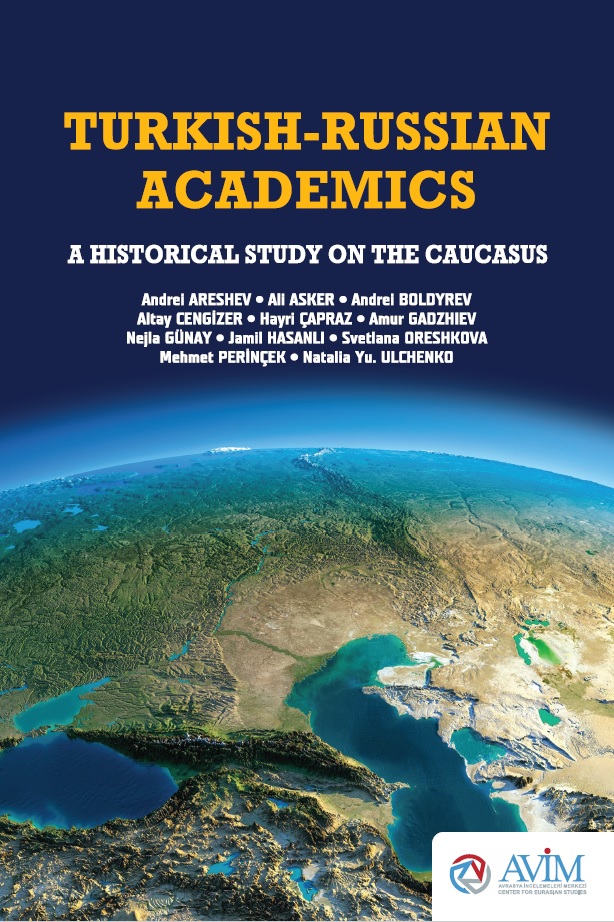
Turkish-Russian Academics: A Historical Study on the Caucasus -
01.07.2016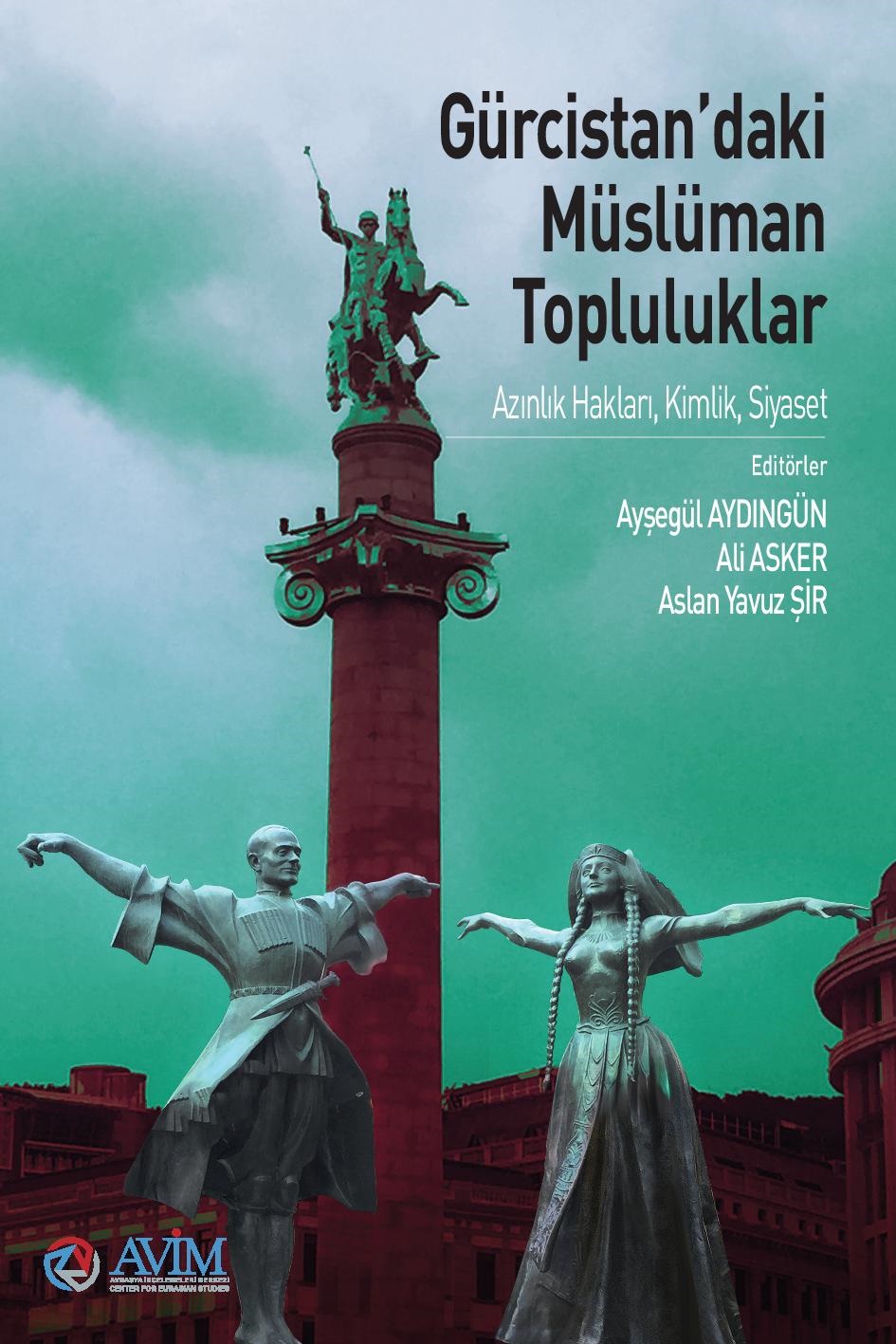
Gürcistan'daki Müslüman Topluluklar: Azınlık Hakları, Kimlik, Siyaset -
10.03.2016
Armenian Diaspora: Diaspora, State and the Imagination of the Republic of Armenia -
24.01.2016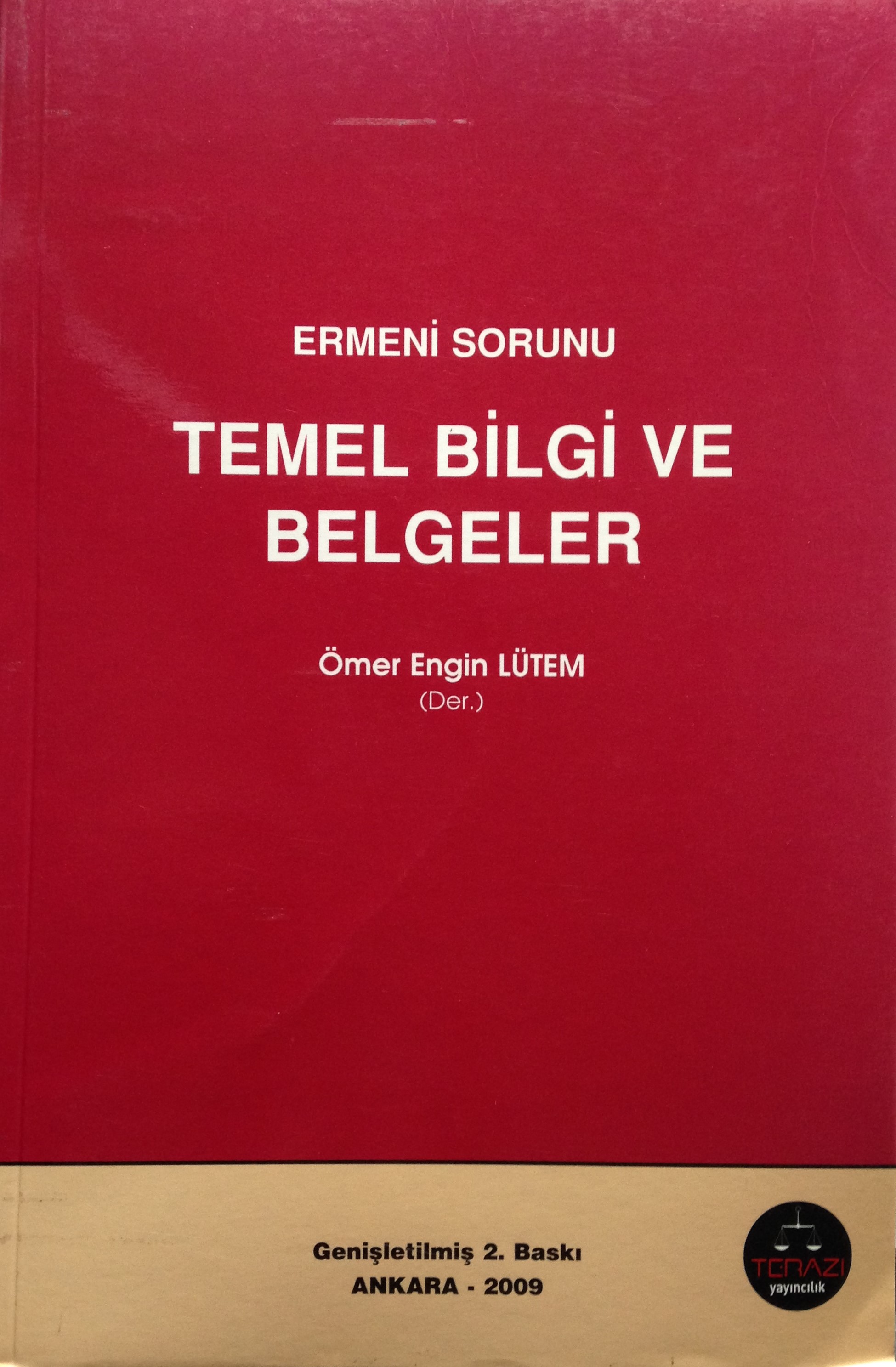
ERMENİ SORUNU - TEMEL BİLGİ VE BELGELER (2. BASKI)
-
AVİM Conference Hall 24.01.2023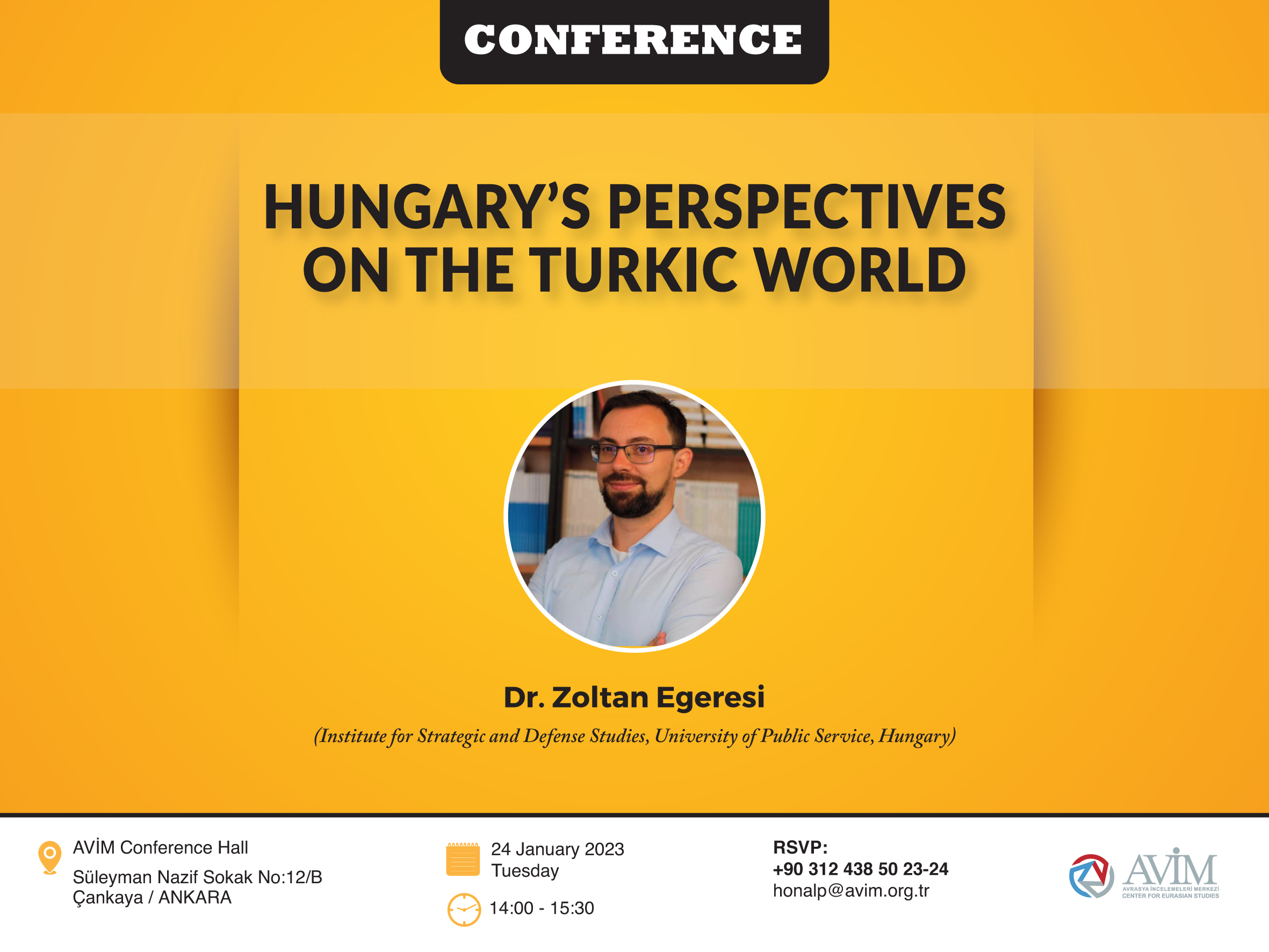
CONFERENCE TITLED “HUNGARY’S PERSPECTIVES ON THE TURKIC WORLD"