

















USA Today, 04 May 2016
When President Obama announced he would commit more U.S. Special Forces in Syria and Iraq, I was not surprised. Likewise, I was saddened but not surprised by the news that a member of the military’s “advise and assist” team had been killed by the Islamic State group in northern Iraq.
I spent over four consecutive years on the ground in Iraq, first advising Multi-National Forces Iraq and then serving in the State Department’s Public Affairs Section at the U.S. Embassy. Every one of us who worked in Iraq in the post-surge years knew the Iraqi military and Iraqi government, were never — I repeat, never — in any shape to truly lead and defend the country. “We’ll be back someday,” we used to say.
For policymakers who believe adding American troops will provide a solution to protracted crises, there are many red flags that suggest they're wrong — starting with the absence of committed, coherent, popular governments and capable militaries.
Despite Obama’s repeated remarks over the years ruling out more American "boots on the ground" in the Middle East (some as recent as one day before his Aug. 25 announcement that he was sending more), Syria will now go from about 50 to 300 American troops. That was a week after the administration said it was sending 200 troops to Iraq to help retake Mosul.
Americans may want to seriously ponder this for a minute. We are sending more “military advisers” to help Iraqi forces retake a city they failed to defend, after the U.S. had spent over eight years fighting in Iraq and training Iraqi forces, with troop strength peaking at around 166,000 in 2007.
Sending more troops now may be deemed admirable by some, or even overdue. Without Western forces “advising,” in Iraq or Syria, there appears to be little hope for progress. Yet how much hope can a couple of hundred advisers spark? American military additions may be just a desperate attempt by the U.S. to try, yet again, to train the untrainable and hope peace somehow manifests.
The Iraqi military was always highly incompetent. A former U.S. Army colonel involved in training Iraqi soldiers told me there was no learning curve, that you would show them how to do something and then you would have to show them the same thing the next day and week and month.
Such realities were often painted over. Capabilities of the Iraqi military and government tended to be grossly overstated even in official U.S. talking points. An Iraq on the rise was marketed as a matter-of-fact. “We have seen steady progress in building Iraqi capacity,” read the State Department press guidance for Aug. 18, 2010. “The Iraqi Security Forces continue to make remarkable progress — not just in size, but in capability and professionalism,” read talking points prepared by the U.S. Embassy in May 2009.
To be fair, such statements were spouted by officials of both the Bush and Obama administrations. Perhaps those in Washington, far away from Iraq, believed there was some truth in such statements. But those of us on the ground, living the realities of Iraq each day, knew otherwise. Some of us resigned ourselves to the view that the Iraq war was more of an exercise in public relations than a battle we could win in a country sincere about reform.
Obama pledged repeatedly in his 2008 campaign to wind down wars in the Middle East. I remember that pledge well because I witnessed him making it firsthand. The day was July 21, 2008. Then-Senator Obama was in Iraq with senators Jack Reed and Chuck Hagel. I was responsible for managing their events and press schedule. One event was a meeting with Gen. David Petraeus in Room M-100 of Saddam Hussein’s former Republican Palace. Obama looked at Petraeus and said: “General, if I'm elected president in November, I'll be telling you: End this war.”
But President Obama is not Senator Obama. The president has found it necessary to keep American troops in Afghanistan, return some to Iraq and send others to Syria.
Obama likely recognizes that sending U.S. forces to the Middle East is unavoidable. If we don't want the region to spiral further out of control — whatever that even means these days — and if we do not want Iran or non-state groups like ISIL to fill power vacuums, we must do something.
Special Forces and "military advisers" are that “something,” and may be Obama's stop-gap until the next president is in office and determines his or her own course of action. But the administration’s recent moves should not be a step toward increasingly militarized solutions to what are fundamentally political, and perhaps cultural, problems in the Middle East.
No comments yet.
- EU VISA LIBERALISATON RECOMMENDED FOR KOSOVO The Balkans 05.05.2016
- KYRGYZSTAN: HOW WILL KUMTOR GAME OF CHICKEN END? Asia - Pacific 05.05.2016
- EU COMMISSION: ACCEPT ASYLUM-SEEKERS OR PAY UP Europe - EU 05.05.2016
- 166,000 TROOPS DIDN'T FIX IRAQ. 250 WON'T FIX SYRIA: COLUMN Iraq 05.05.2016
- AZERBAIJAN WELCOMES RUSSIAN FM'S STATEMENT The Caucasus and Turkish-Armenian Relations 05.05.2016
-
25.01.2016
THE ARMENIAN QUESTION - BASIC KNOWLEDGE AND DOCUMENTATION -
12.06.2024
THE TRUTH WILL OUT -
27.03.2023
RADİKAL ERMENİ UNSURLARCA GERÇEKLEŞTİRİLEN MEZALİMLER VE VANDALİZM -
17.03.2023
PATRIOTISM PERVERTED -
23.02.2023
MEN ARE LIKE THAT -
03.02.2023
BAKÜ-TİFLİS-CEYHAN BORU HATTININ YAŞANAN TARİHİ -
16.12.2022
INTERNATIONAL SCHOLARS ON THE EVENTS OF 1915 -
07.12.2022
FAKE PHOTOS AND THE ARMENIAN PROPAGANDA -
07.12.2022
ERMENİ PROPAGANDASI VE SAHTE RESİMLER -
01.01.2022
A Letter From Japan - Strategically Mum: The Silence of the Armenians -
01.01.2022
Japonya'dan Bir Mektup - Stratejik Suskunluk: Ermenilerin Sessizliği -
03.06.2020
Anastas Mikoyan: Confessions of an Armenian Bolshevik -
08.04.2020
Sovyet Sonrası Ukrayna’da Devlet, Toplum ve Siyaset - Değişen Dinamikler, Dönüşen Kimlikler -
12.06.2018
Ermeni Sorunuyla İlgili İngiliz Belgeleri (1912-1923) - British Documents on Armenian Question (1912-1923) -
02.12.2016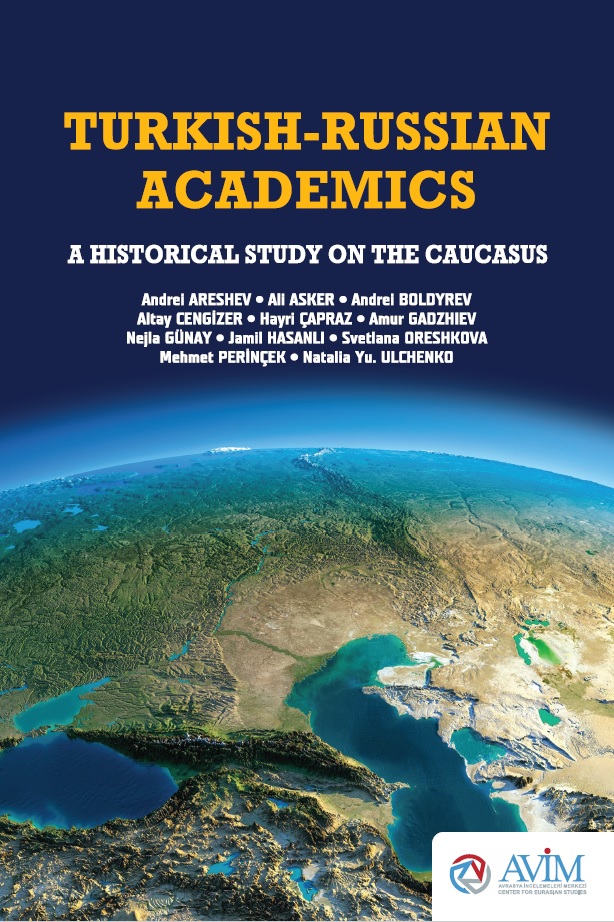
Turkish-Russian Academics: A Historical Study on the Caucasus -
01.07.2016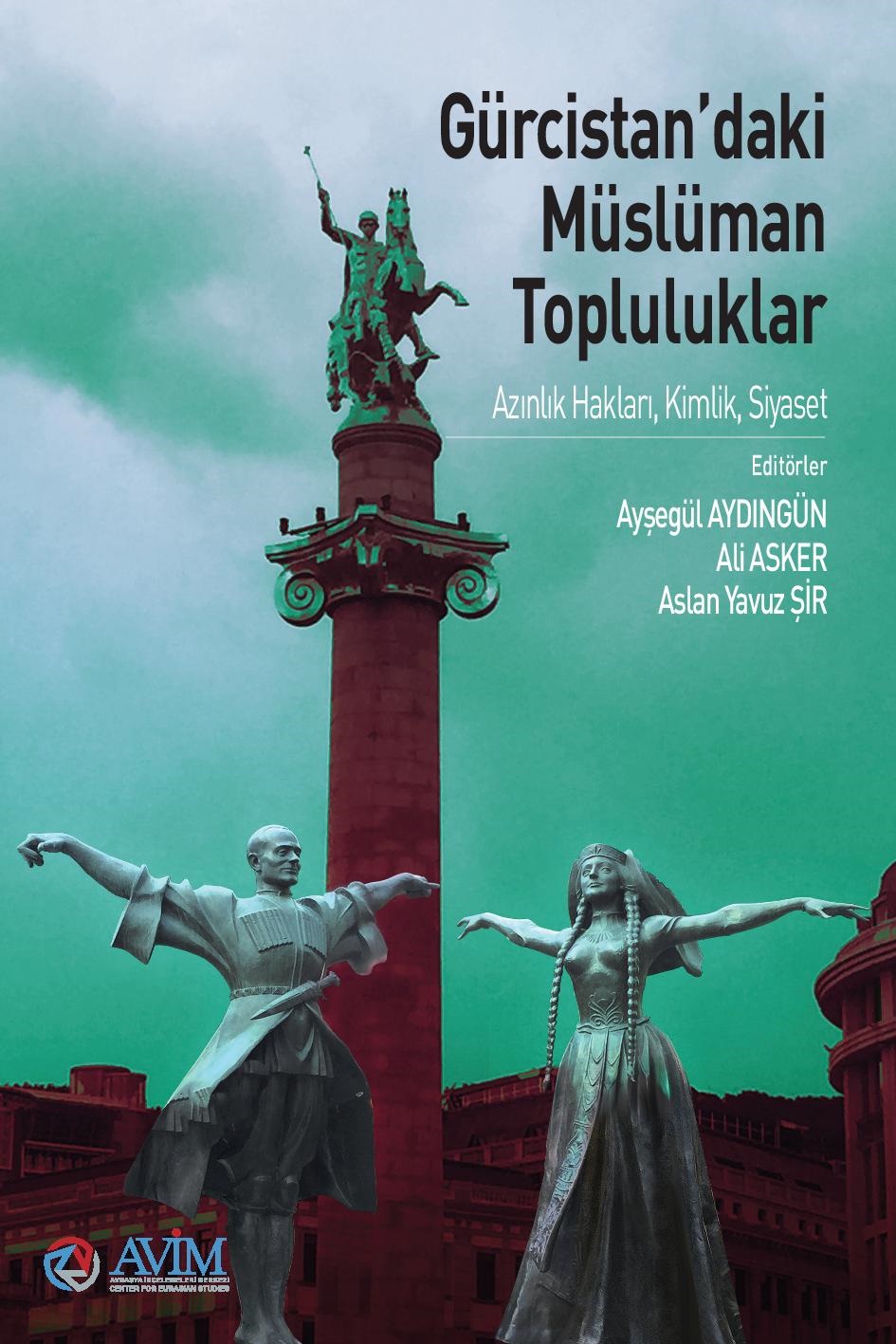
Gürcistan'daki Müslüman Topluluklar: Azınlık Hakları, Kimlik, Siyaset -
10.03.2016
Armenian Diaspora: Diaspora, State and the Imagination of the Republic of Armenia -
24.01.2016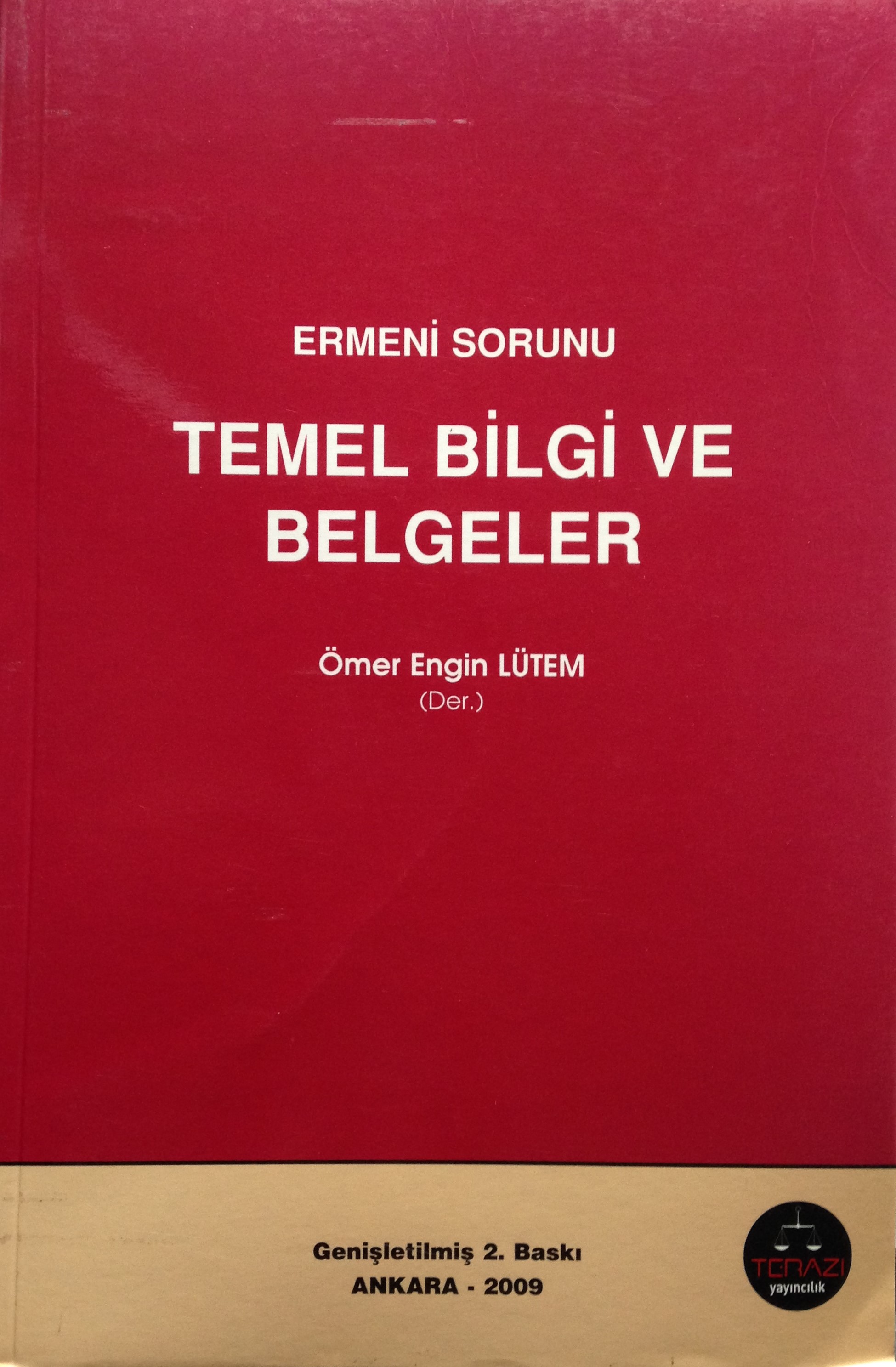
ERMENİ SORUNU - TEMEL BİLGİ VE BELGELER (2. BASKI)
-
AVİM Conference Hall 24.01.2023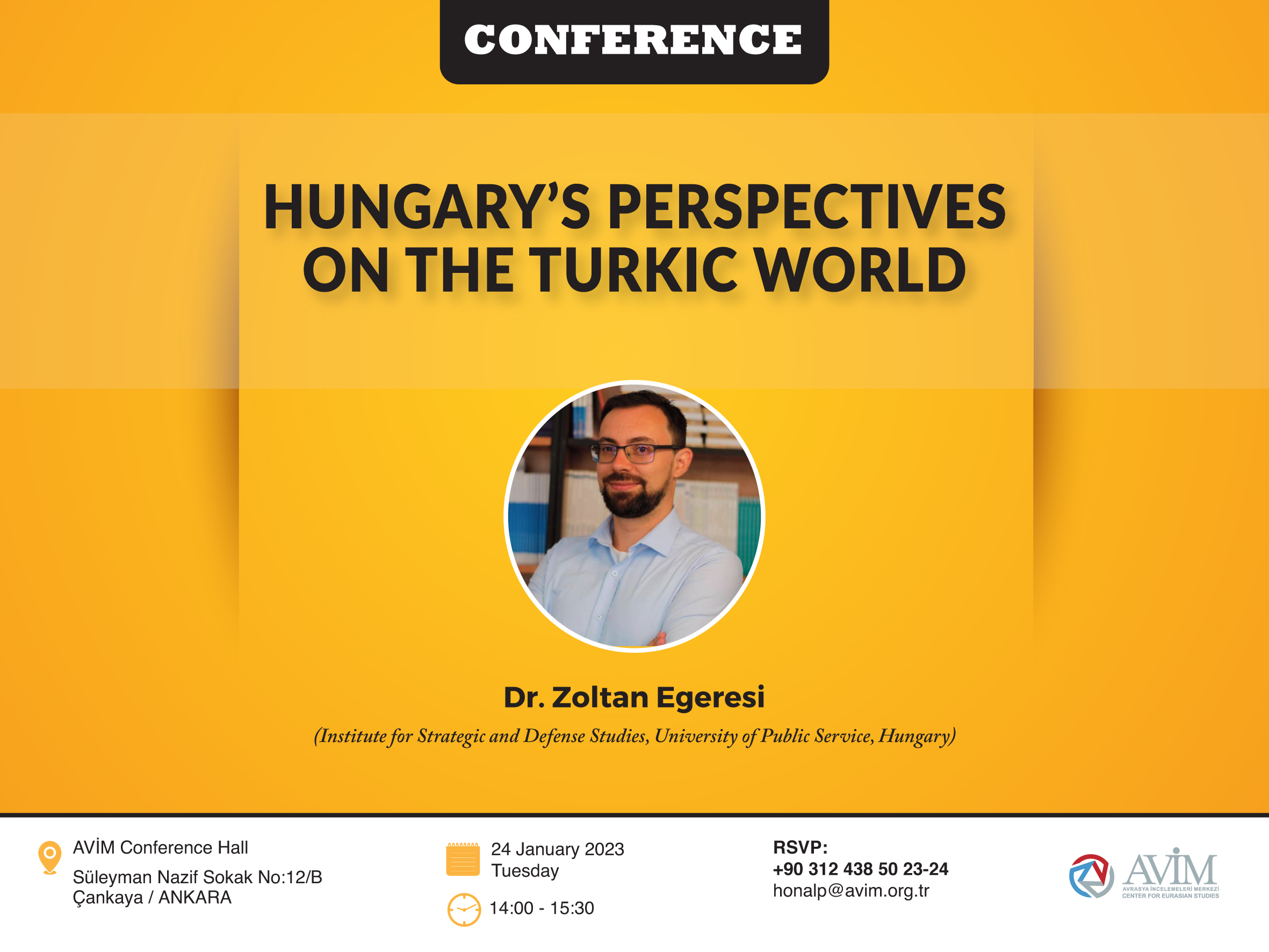
CONFERENCE TITLED “HUNGARY’S PERSPECTIVES ON THE TURKIC WORLD"