














As a sequel to his article on the Armenian revolutionary movement[1], journalist and writer Kyle Orton published a new piece, “Armenians and Academia”[2], noting that “politics has loomed large over this subject from the beginning” as there was “significant Entente propaganda” during the First World War and that propaganda “had an eye on drawing the United States into the war”.
In the vengeful post-war atmosphere, attempts to try and clarify whether the leaders of the Committee of Union and Progress (CUP) had roles in organizing the 1915 Events also failed to produce a satisfactory result since these attempts were made by the CUP’s political opponents who were anxious to pin any blame on the CUP:
“The attempt to prosecute accused CUP war criminals in 1919-20 was by the virulently anti-CUP post-war Turkish government that operated under Allied occupation and had political incentives to produce ‘legal’ findings that vindicated Allied wartime propaganda, an objective made easier by the procedures in no way resembling fair trials.”
Due to the lack of sophisticated research, the British Blue Book, a war-time propaganda publication, and the unreliable memoirs of American Ambassador Henry Morgenthau continued to serve as main references for the Western world. Orton also draws attention to another important phenomenon, namely the fact that after the First World War,
“Armenian revolutionaries and activists [were] fabricating luridly incriminating documentary testimony to influence Western opinion and policy towards Turkey [Türkiye], including the infamous Naim-Andonian Documents that contain forged telegrams purportedly from Ottoman Interior Minister Talat Pasha.”
A revived interest in the subject began after the 1940s, though this was more of a political than an academic interest since “Soviet designs against Turkey from the late 1940s into the 1950s prompted further interest in the Armenian Question”. After the Second World War, “the Soviets made territorial claims in eastern Turkey by proclaiming these were ‘Armenian historical lands’ that should be added to Soviet Armenia.” Türkiye’s entry into the North Atlantic Treaty Organization (NATO) in 1952 further motivated the Soviets to intensify their “political warfare,” leading them capitalize “on the nascent Armenian genocide-recognition campaign as a mechanism to instrumentalise the Armenian diaspora”.
The following decades witnessed the emergence radical Armenian nationalist terrorist groups, namely “the Justice Commandos of the Armenian Genocide (JCAG)” and “Armenian Secret Army for the Liberation of Armenia (ASALA).” The savage terrorist attacks launched by these virulent groups brought the Armenian Question “back into the international discussion”. The recognition campaign also provided a glue for the Armenian Diaspora, emerging as a vehicle to protect the Armenian communities against assimilation:
“The one issue that united everyone—the church, religious dissidents, the Dashnaks, the anti-Dashnak nationalists, the Communists who believed Soviet Armenia was the sole legitimate vehicle of national aspirations—was advocating for recognition of the genocide.”
Two key figures, trying to establish a Western academic framework for the genocide allegations were Richard G. Hovannisian and Vahakn Dadrian, both of whom are Armenian-Americans. Before their involvement, much of the Armenian literature concerning the 1915 Events consisted either of Soviet historiography authored by individuals such as E.K. Sarkissian and R.G. Sahakian, or was influenced by these writings and their methodologies. Orton highlights their roles as follows: “What Hovannisian and Dadrian wanted to do was create an academic corpus making the genocide case in a format respectable by Western standards”.
By this time, there was as yet no established discipline of Ottoman studies outside Türkiye, and in Türkiye itself the issue did not receive much attention. Thus, “the academic neglect of prior decades” served Dadrian and Hovannisian well and enabled them shape narratives and perceptions as they wished. According to Orton, the international developments also favored the efforts of the Armenian nationalists:
“The Armenian genocide-recognition movement also benefited from being part of the zeitgeist. It was in the 1980s that the trend of national and ethnic groups campaigning to have their past or present suffering classified as genocide really took off, and these political campaigns fed into an increasing academic fashion for regarding the [1948 Convention on the Prevention and Punishment of the Crime of Genocide] definition of “genocide” as too narrow and restrictive. The push came from other angles, too, notably those who wanted to criminalise war itself as genocide, a push that has not been abandoned. ‘Genocide’ coming to be used very loosely in everyday language cannot be blamed on popular misunderstanding, since by now there are academic arguments for describing as ‘genocide’ events where there is no bloodshed at all.”
Decades of campaigning and political and academic lobbying paid off and by the early 1990s, and “the Armenian genocide-recognition movement had prevailed in sentiment in academia”. Scholars who criticized or dissented the Armenian narratives were harassed and vilified. In 1994, for example, “Armenian activists in France sued Bernard Lewis for ‘negationism’ because he had expressed the view that what happened to the Armenians in 1915 and the Nazi Holocaust of the Jews were different”. Surely, developments liked these discouraged historians to challenge Armenian narratives.
Orton could have also mentioned the mentioned campaigns actually went far beyond harassment and legal cases. They also involved physical violence, assassination attempts, and targeted bombings as had happened to Stanford J. Shaw, a professor of Ottoman History at the University of California, Los Angeles (UCLA). Moreover, the campaign also involved below the belt tactics, as academics challenging Armenian narratives faced bullying and smearing campaigns that called for their sacking from their academic institutes and, more importantly, denied opportunities and forums to publish and share their research –a gross violation of academic freedom.
These unpleasant developments were also the part of the process by which the Armenian nationalists imposed their forced “consensus” on academia. Though not mentioning such unpleasant aspects of the recognition campaign and academic consensus, Orton still notes that “it would also be naïve to take for granted that an academic consensus generated by so very human a process represents reality”. Orton draws on several examples from natural sciences, noting that certain “facts”, initially considered established, were subsequently called into question, revised and corrected with further research.
“If this is the situation in so ‘hard’ a subject as medical Science, one’s wariness—not nihilistic distrust, but scepticism—should be set higher in general for the findings of ‘softer’ subjects like history, the humanities, and social sciences, and higher still for politicised fields therein”.
In other words, the implications of these lessons should be clear; the right to further research should not be denied as science in general, and social sciences in specific are not “immune to a false consensus driven by politics and self-interest.”
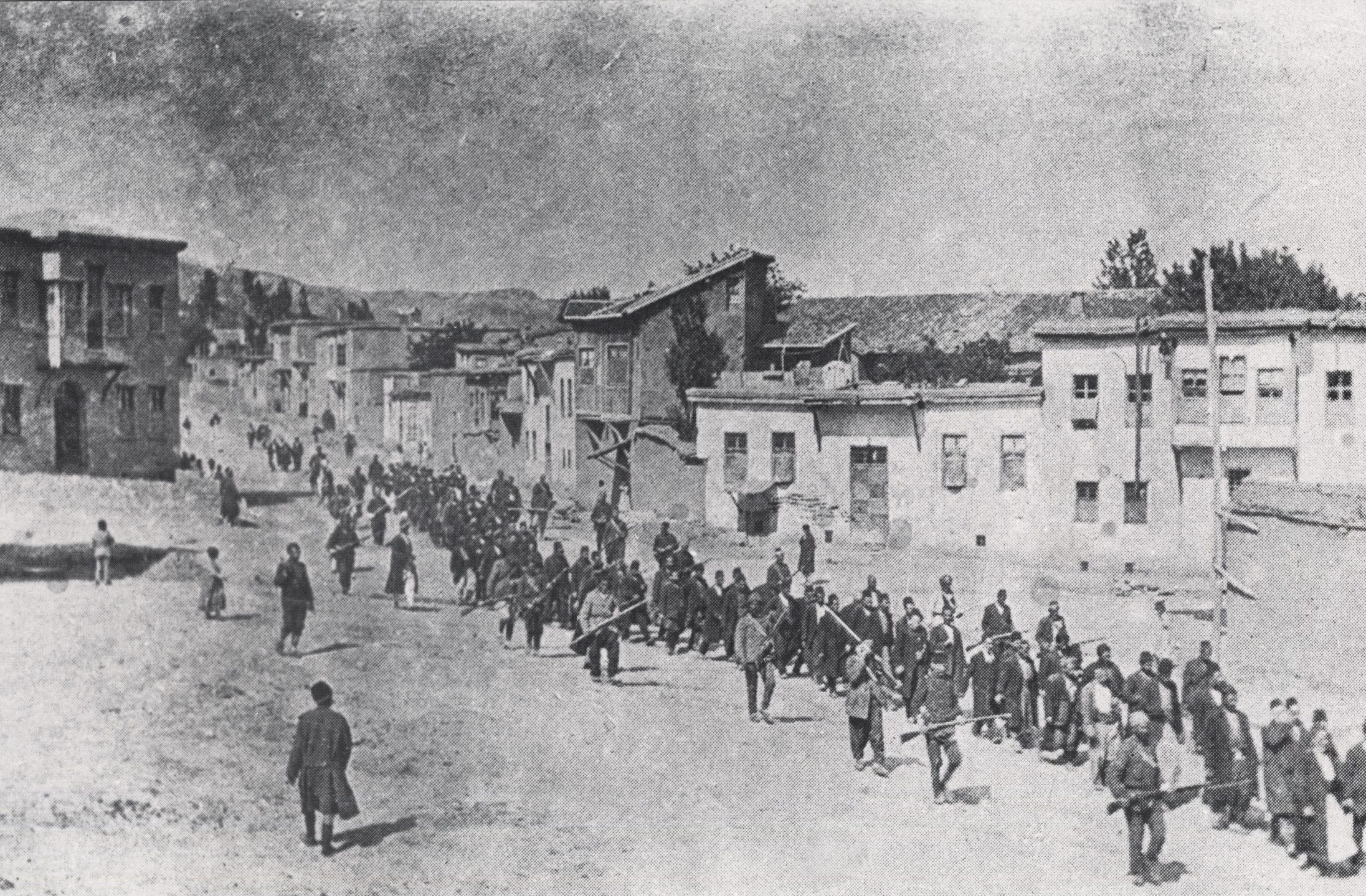
*Picture: Ottoman soldiers escorting Armenians out of Harput in 1915 during the Armenian Relocation and Resettlement - Source: Kyle Orton’s Substack page
[1] AVİM, “An Interesting Article on Armenian Revolutionary Groups”, Center for Eurasian Studies (AVİM), Analysis No: 2026/14, April 15, 2026, https://avim.org.tr/en/Analiz/AN-INTERESTING-ARTICLE-ON-ARMENIAN-REVOLUTIONARY-GROUPS
[2] Kyle Orton, “Armenians and Academia”, It Can Always Get Worse - Substack page by Kyle Orton, April 10, 2026, https://www.kyleorton.com/p/armenians-and-academia
© 2009-2025 Center for Eurasian Studies (AVİM) All Rights Reserved
No comments yet.
-
DIASPORA ARMENIANS AND THEIR INITIATIVES FOR COMPENSATION: THE REFLECTIONS OF THE MOVSESIAN CASE
AVİM 12.02.2012 -
 ARMENIAN JOURNEY FROM “OPERATION NEMESIS”, ASALA MURDERS AND KHOJALY MASSACRE TO PRESENT DAY “ARMENOPHOBIA” FABRICATION
AVİM 06.03.2019 -
 HOW DOES VON DER LEYEN'S DESCRIPTION OF “EUROPEAN WAY OF LIFE” COMPLY WITH EUROPEAN VALUES?
AVİM 30.09.2019 -
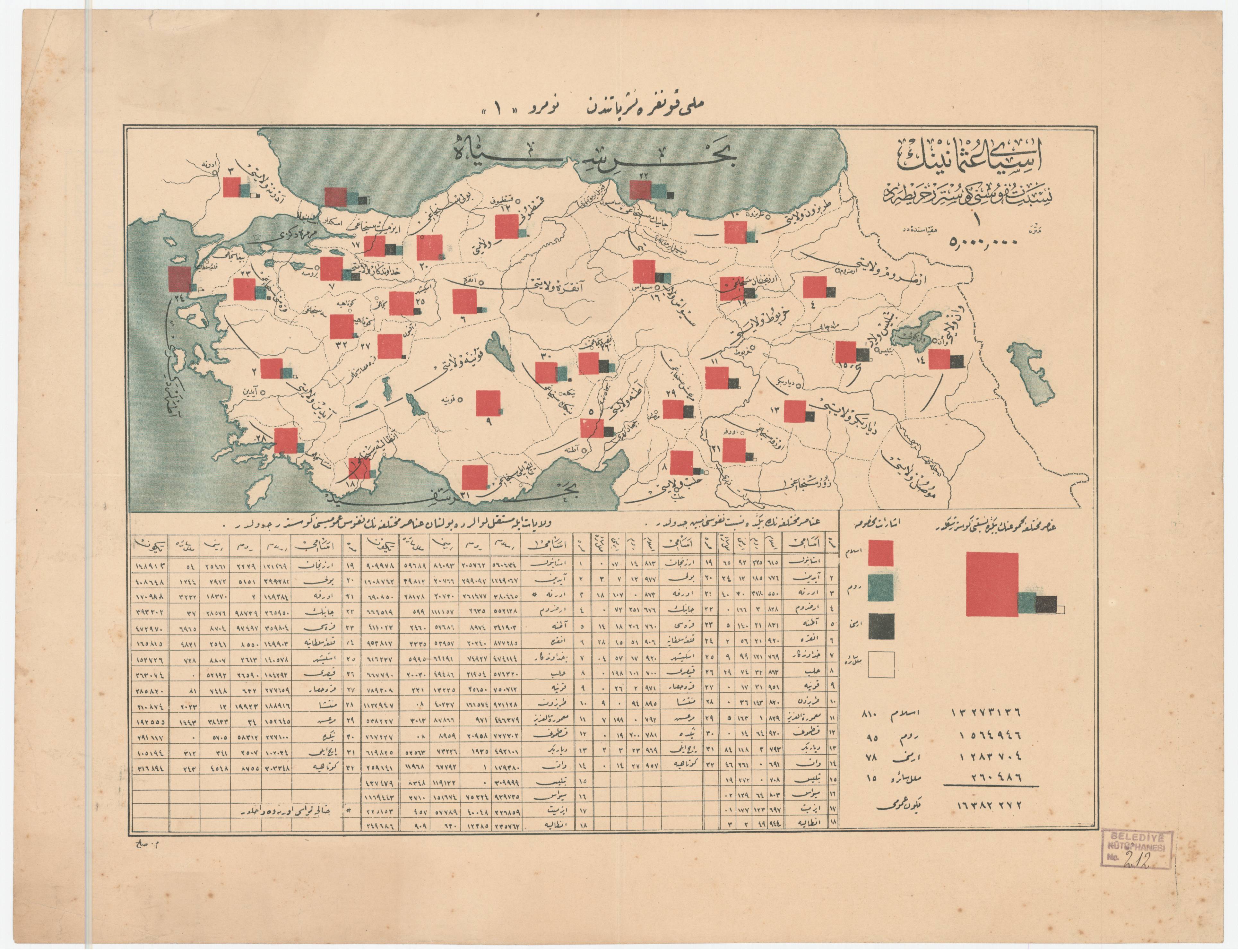 STATISTICAL INFORMATION REGARDING OTTOMAN ARMENIANS AND FOREIGN RESOURCES
AVİM 25.10.2021 -
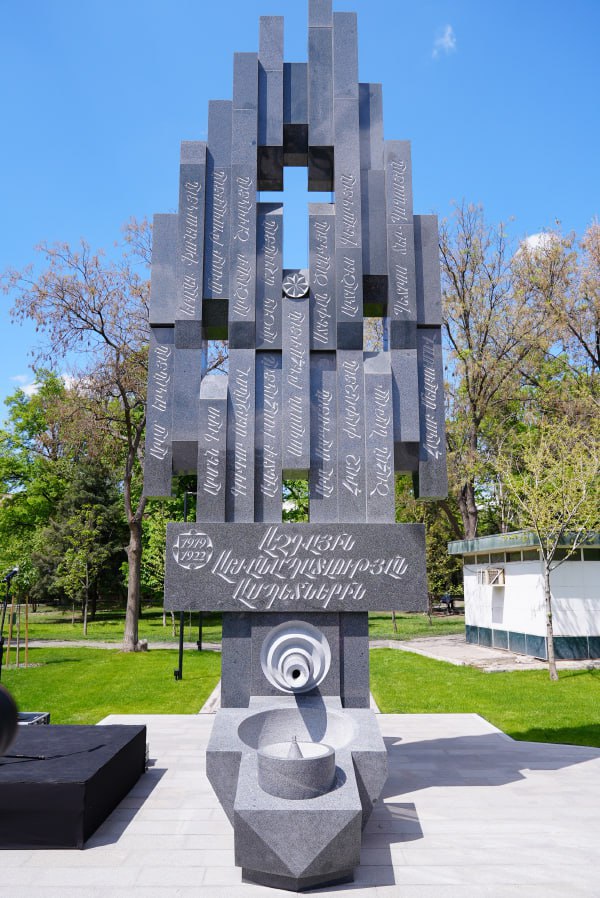 THE ROOTS OF “NEMESIS” AND THE BACKGROUND OF RADICAL ARMENIAN NATIONALIST TERRORISM
AVİM 11.05.2023
-
 THE HARMFUL EFFECTS OF THE POLITICIZATION OF THE FENER GREEK PATRIARCHATE
Mehmet Oğuzhan TULUN 03.09.2025 -
 LEGACY OF "KRISENMANAGERIN": MERKEL AND THE BALKANS
Teoman Ertuğrul TULUN 11.10.2021 -
 24 APRIL 1915: WHAT HAPPENED?
Tutku DİLAVER 27.04.2018 -
 THE GENOCIDE VERDICT OF THE UN BACKED CAMBODIA COURT AND THE 1915 EVENTS
Mehmet Oğuzhan TULUN 30.11.2018 -
 ATTEMPTS TO UNDERMINE THE NORMALIZATION PROCESS OF TÜRKİYE - ARMENIA RELATIONS
Hazel ÇAĞAN ELBİR 29.12.2022
-
25.01.2016
THE ARMENIAN QUESTION - BASIC KNOWLEDGE AND DOCUMENTATION -
12.06.2024
THE TRUTH WILL OUT -
27.03.2023
RADİKAL ERMENİ UNSURLARCA GERÇEKLEŞTİRİLEN MEZALİMLER VE VANDALİZM -
17.03.2023
PATRIOTISM PERVERTED -
23.02.2023
MEN ARE LIKE THAT -
03.02.2023
BAKÜ-TİFLİS-CEYHAN BORU HATTININ YAŞANAN TARİHİ -
16.12.2022
INTERNATIONAL SCHOLARS ON THE EVENTS OF 1915 -
07.12.2022
FAKE PHOTOS AND THE ARMENIAN PROPAGANDA -
07.12.2022
ERMENİ PROPAGANDASI VE SAHTE RESİMLER -
01.01.2022
A Letter From Japan - Strategically Mum: The Silence of the Armenians -
01.01.2022
Japonya'dan Bir Mektup - Stratejik Suskunluk: Ermenilerin Sessizliği -
03.06.2020
Anastas Mikoyan: Confessions of an Armenian Bolshevik -
08.04.2020
Sovyet Sonrası Ukrayna’da Devlet, Toplum ve Siyaset - Değişen Dinamikler, Dönüşen Kimlikler -
12.06.2018
Ermeni Sorunuyla İlgili İngiliz Belgeleri (1912-1923) - British Documents on Armenian Question (1912-1923) -
02.12.2016
Turkish-Russian Academics: A Historical Study on the Caucasus -
01.07.2016
Gürcistan'daki Müslüman Topluluklar: Azınlık Hakları, Kimlik, Siyaset -
10.03.2016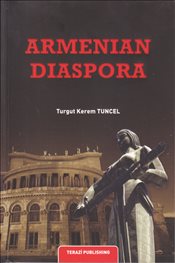
Armenian Diaspora: Diaspora, State and the Imagination of the Republic of Armenia -
24.01.2016
ERMENİ SORUNU - TEMEL BİLGİ VE BELGELER (2. BASKI)
-
AVİM Conference Hall 24.01.2023
CONFERENCE TITLED “HUNGARY’S PERSPECTIVES ON THE TURKIC WORLD"